 The assessment of the antioxidant and antibacterial activity of Mandarin peel powder and its impact on the symbiotic soft cheese quality
Abstract
Mandarin peel powder (MPP), which has a higher polyphenol concentration than edible parts, is the major source of bioactive ingredients. The total phenolic content (TPC), antioxidant content, and antibacterial activity of several mandarin peel extracts were evaluated. A starter containing Lactobacillus acidophilus LA5 and Streptococcus thermophilus as a mixed strain (1:1) with the addition of 1, 3 and 5% of MPP and a control without MPP, was used to make UF soft cheese. The viability, antioxidant value, total solid (TS) content, pH values, acidity, protein and fat contents, and organoleptic properties during storage at 5±2 °C for 21 days of soft cheeses were evaluated. The results revealed that the TPC in methanol extract was the highest and the lowest recorded in acetone extraction, the same trend found in antioxidant and antibacterial activity. The inclusion of both probiotic strains and MPP improved antioxidant activity and cheese quality; symbiotic cheese had considerably higher relative degrees of titratable acidity (TA) and TS than control cheese. The sensory examination revealed that adding the MPP at a ratio of 1% increased the score. Finally, it is proposed that probiotic soft cheese supplemented by MPP as functional food has acceptable composition and good sensory features.
Keywords:
Mandarin peel; Antioxidant; Antibacterial; Probiotic and symbiotic soft cheese
Highlights
Mandarin peel powder (MPP) has a high polyphenol concentration
MPP can be used as a natural preservative in soft cheese production
MPP shows significant antioxidant and antibacterial activity
Incorporation of MPP in soft cheese improves its sensory and functional properties
1. Introduction
Mandarin (Citrus reticulata Blanco) is one of the medicinally essential plants belonging to the Rutaceae family (Rane Zab Anish Kumar & Bhaskar, 2012); for instance, at least 40% of the 1 million t of mandarin produced yearly in South Africa are channeled to juice manufacturing with waste computation for 50-70% of the fresh weight include of pulp (30% to 35%), peels (60% to 65%) and seeds (<10%) (Sharma et al., 2017). Costanzo et al. (2020) found that the mandarin peel is more abundant in antioxidants than pulp and may be potentially used as a dietary supplement; a sustainable re-utilization of peels for industrial and pharmacological applications could represent a vital boost toward a circular economy.
Mandarin peel powders (MPP) can be used as a substitute for synthetic antioxidants to extend the shelf life of food products containing fats and oils, according to several research (Costanzo et al., 2022; Diaz-Uribe et al., 2022; Kaur et al., 2021; Lin et al., 2021; Balaky et al., 2020). Citrus peel has a higher polyphenol content than edible components, thereby making it the most important source of bioactive phenolic compounds, particularly flavonoids. Flavones, isoflavones, flavonones, and anthocyanins are among the flavonoid compounds found in citrus (Diaz-Uribe et al., 2022). When comparing the peel and pulp extract of mandarin to grape peel and seed extract, mandarin peel and pulp extract recorded the highest antibacterial activity on food spoilage bacteria (Pfukwa et al., 2019).
Soft white cheese accounts for around three-quarters of all cheese made and consumed in Egypt. It is created by a variety of methods, including normal and ultra-filtration (UF). The use of UF technology in cheese making has various advantages, including greater output and nutritional value, decreased production costs, and the elimination of whey disposal difficulties (Coker et al., 2005; Mehaia, 2002).
The purpose of this study was to evaluate the antioxidant and antibacterial activities of five mandarin peel powder extracts as well as the physicochemical, antioxidant activity, microbiological, and sensory properties of fortified cheese.
2. Materials and methods
Mandarins (Mediterranean or Willow Leaf Mandarin) were collected from a fruit and vegetable store in El-Fayoum, Egypt. Rennet powder was obtained from Chr. Hansen (Horsholm Company, Denmark). According to Ojha et al. (2016), the whole peel was washed well before and after peeling with tap water, dried at 50°C at a cabinet drier, powdered using an electric 52 grinder, saving at 40 mesh size, packed and storage at 4oC for use in cheese manufacture.
2.1 Extraction preparation
The mandarin peel extracts were prepared by macerating 200 g of peel for 72 h in 800 mL of solvents (water, ethanol, acetone, chloroform, and methanol). The extracts were filtered with Whatman filter paper No. 1 after 72 hours, the solvents were evaporated to dryness, and the samples were kept at 4 oC for use in antibacterial activity tests.
2.2 Total phenolic content
According to Shaiban et al. (2006), the Folin-Ciocalteau method measured the total phenolic contents (TPC) of MPP and their extracts. By using gallic acid as a standard, the results were expressed as gallic acid equivalents (GAE) per g of samples.
2.3 Determination of antioxidant activity
The antioxidant capacity of mandarin peel powder, extracts, and fortified cheese was assessed using the DPPH radical scavenging ability method at concentrations of (0, 2, 4, 6, 8, and 10 g) for powder and dry extracts and 0.1, 0.2, and 0.5 g for fortified cheese treatments. By comparing the tested concentrations to a control, the percent inhibition was calculated. Each concentration was measured three times and the average value was computed. The inhibitory concentration (IC50) and antiradical power (ARP) were determined.
2.4 The antibacterial activity of Mandarin peel extracts
All the bacteria (Escherichia coli ATCC 25922, Bacillus cereus ATCC 13753, and Staphylococcus aureus ATCC 8095) were obtained from the culture collection of Agricultural Microbiology Department, Faculty of Agriculture at Fayoum University. The bacteria were incubated and activated at 30 °C for 24 hours inoculating in Nutrient Broth (OXOID). Inoculums containing 106 bacterial cells were spread on Mueller-Hinton Agar (OXOID) plates (1 cm3 inoculum per plate). The discs injected with mandarin peel extracts were placed on the inoculated agar by slightly pressing and incubated at 35 oC (24 h). The antimicrobial activity was assessed by measuring the clear zones (mm) around each disc. In each case, triplicate tests were performed and the average was taken as the final reading.
Mandarin peel extract (MPE) was tested for minimum inhibitory concentration (MIC). The MIC was measured (Mueller Hinton broth) and incubated at 37 oC for 24 h. For this, serial two-fold concentrations of each extract (8-1024 µg mL -1) were pipetted into tubes containing 4 mL of Mueller Hinton broth media for pathogenic bacteria, For pathogenic bacteria, each tube was inoculated with 0.4 mL (0.5 McFarland medium) of a standardized suspension of bacterial species containing 1x10⁶ cell/mL as the lowest concentration with an optical density (OD) below or equal to that of negative control. The minimum bactericidal concentration (MBC) was determined by subculturing the MIC dilutions as well as higher concentrations onto sterile Mueller Hinton agar plates incubated at 37 ºC for 24 h. The lowest concentration of MPE which completely killed the tested bacteria was documented as MBC level. All steps were implemented in duplicate and the mean values were recorded (Neethu et al., 2018).
2.5 Starter activation
The bacterial strains Lactobacillus acidophilus La5 (obtained from Chr. Hansen's laboratories, Copenhagen, Denmark) and Str. thermophilus (obtained from the Dairy Microbiology Laboratory at National Research Centre (NRC), Dokki, Cairo, Egypt) were individually activated by three repeated transfers in sterile 10% reconstituted skim milk powder.
2.6 Cheese making
The dairy processing pilot facility provided milk retentate (Faculty of Agriculture, Fayoum University). The average milk composition was 35.68% of total solids (TS), 13.05% of protein, and 14.80% of fat, divided into four equal portions. The MPP (protein 4.19%, lipids 3.82%, moisture 9.5%, fibre 7.93%, carbohydrate 71.25% and ash 3.31%) was added at rates of 1, 3, and 5% (the best percentage based on pre-experimental trails) to generate three treatments. The latter section contained no MPP and acted as a control. All milk batches were heated to 75 oC, cooled to 38 oC, and inoculated with the starter culture, L. acidophilus and Str. thermophilus (1:1) at a rate of 1%, and held for 30 minutes until reached pH 6.4, in addition, calcium chloride (0.02%) was added to milk retentate with adequate rennet. The pre-cheese was immediately placed in plastic containers and incubated at the same temperature (38 °C) for 40 minutes to complete coagulation or kept at 38 oC until a uniform coagulum was formed and stored at 5 oC. According to the method described by all cheese treatments, they were maintained in a refrigerator at 5 oC UF-soft cheese (Grandison, 1993; Shekin, 2021). During the first 21 days of storage, the chemical, microbiological, and sensory aspects of the resulting cheese were assessed. Three replications have been completed.
2.7 Chemical composition
Fortified UF soft cheese was analyzed for TS, fat, protein level, and pH value according to (Association of Official Analytical Chemists, 2005).
2.8 Microbiological analysis
Under aseptic conditions, 10 g of UF-soft cheese samples were transferred to a sterilized Hoon porcelain and homogenized in 10 mL of sterile (20%) sodium citrate solution. The dilutions were made by adding (80 ml) sterile saline solution to make the appropriate dilutions required for microbiological tests. Thus, L. acidophilus was counted on MRS agar. Plates were incubated at 37 °C for 48 hours, submerged. Besides, they form shallow colonies and their colony patterns may be compact or pinnate and are small and opaque and these colonies were taken as L. acidophilus. Streptococci counts were enumerated on M17 agar. The plates were incubated at 30 oC under aerobic condition for 72 h.
2.9 Sensory assessment
The sensory evaluation was carried out by 20 members of staff in the Dairy and Food Science and Technology departments, Faculty of Agriculture, Fayoum University (twelve women and eight men, aged between 24 and 52 years), to evaluate the flavour, appearance, body, and texture of cheese samples. Name of the sensory test applied: Difference Tests (Scoring). The soft cheese scorecard was created based on the score offered by (Farrag et al., 2017). The assessors gave the cheese a score of 50 points for flavour, 35 points for body and texture, and 35 points for appearance (out of 15 points).
2.10 Analytical statistical
The mean of at least three replicates is used to calculate the results. All the collected data was statistically analyzed using General Linear Models (GLM) in SPSS (1999) for Windows, version 19. Duncan's multiple range test was used to examine variable differences among treatments, storage period, and the interaction mean at p ≤ 0.05 level of significance (Duncan, 1955).
3. Results and discussion
3.1 Mandarin peel powder and its total phenolic content
Fruits, vegetables, and derived drinks have been linked to the antioxidant activity of polyphenolic substances (Costanzo et al., 2022). The TPC of MPP and extracts of different solvents are shown in Table 1. The TPC of powder was 7.25 (mg/g sample) as gallic acid appeared to be highly significant compared to the extractions 6.98, 6.75, 6.64, 5.59, 4.88 in methanol, water, ethanol, chloroform, and acetone, respectively. (Zhang et al., 2018) showed that the TPC in the peels of mandarin (C. reticulata Blanco) ranged from 1.09 to 34.03 mg (gallic acid equivalent (GAE)) g–1 DW for peels. This difference was probably the result of plant variety and planting conditions of the fruit used in our research. The loss of water content from the peel reduces the weight of the material for simpler handling and storage, minimizes the danger of bacterial growth, and allows for more efficient extraction (Hegde et al., 2015). Oven drying uses heat energy to swiftly remove moisture from samples while preserving phytochemicals. Surface contact between samples and extraction solvents is increased when samples are ground into smaller particle sizes (Azwanida, 2015). For a pre-extraction procedure with mandarin peels, this investigation validated oven drying at 50 °C followed by grinding.
3.2 Antioxidant activity
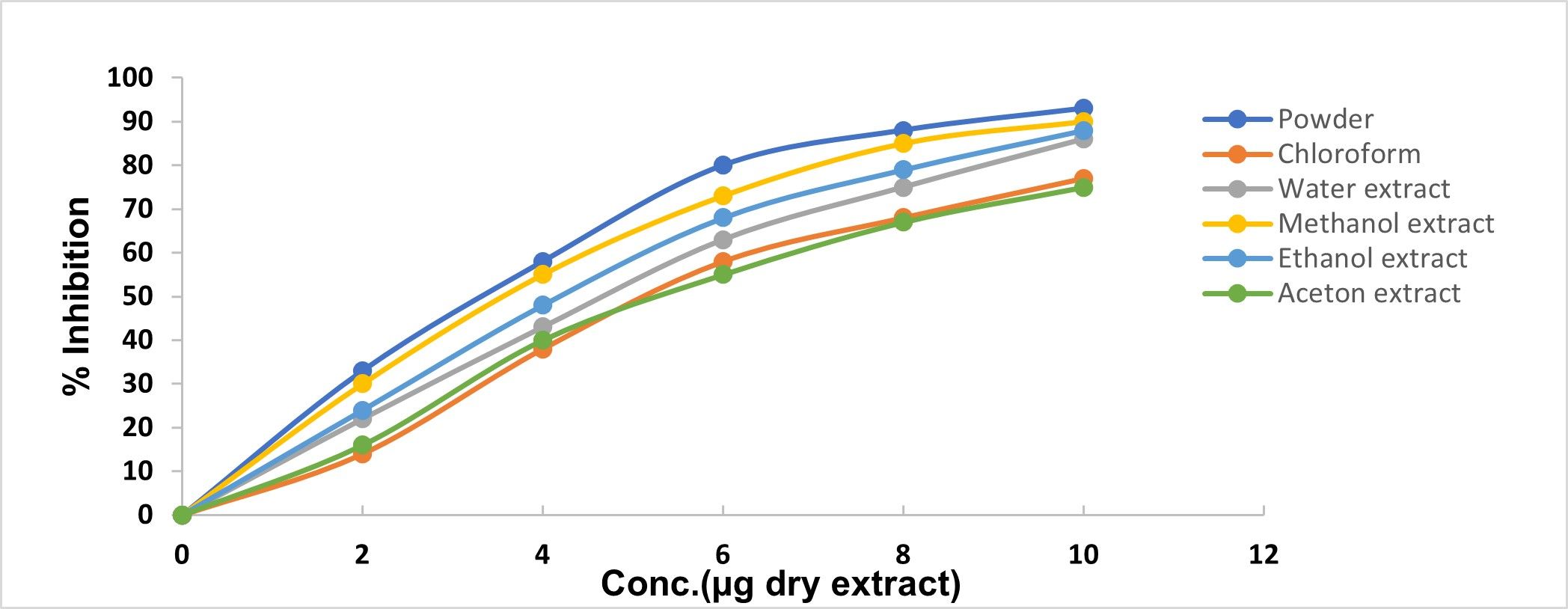
Radical scavenging activities of MPP and solvent extracts were measured to examine the antioxidant activities (data in Figure 1). The free radical scavenging of mandarin powder and methanol extracts of all five concentrations 2, 4, 6, 8 and 10 were (33.58, 80, 88 and 93), (30, 55, 73, 85 and 90), respectively. Acetone extraction, on the other hand, had the lowest free radical scavenging activity at concentrations of 16, 40, 55, 67, and 75, respectively. The antioxidant activity of powder and methanol extractions was higher than that of water, chloroform, ethanol, and acetone extractions (Figure 1). According to (Spigno et al., 2007), phenolic compounds are known to dissolve more readily in higher polarity liquids.
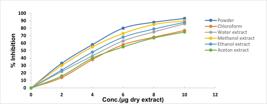
The antioxidant capacity of phenolic and flavonoid compounds in plants is the key contributor to the unique biological actions in disease prevention and therapy, according to Dai & Mumper (2010). Data in Table 2 show that MPP extractions, powder, and methanol extract have the highest percentage of antioxidants, as they have lower IC50 values (3.60 and 4.78 mg/mL, respectively), followed by ethanol and water extractions, with IC50values of 5.09 and 5.38 mg/mL, respectively. On the other hand, chloroform and acetone extractions recorded the lowest antioxidant activity (5.97 and 6.08). Our findings support Balaky et al. (2020) that the solvent extract qualities have a substantial impact on the antioxidant activity of phenolic content. The antiradical powder (ARP) numbers differ from IC50 values in that the greater the IC50, the lower the ARP, and vice versa because high ARP values imply high antioxidant efficiency.
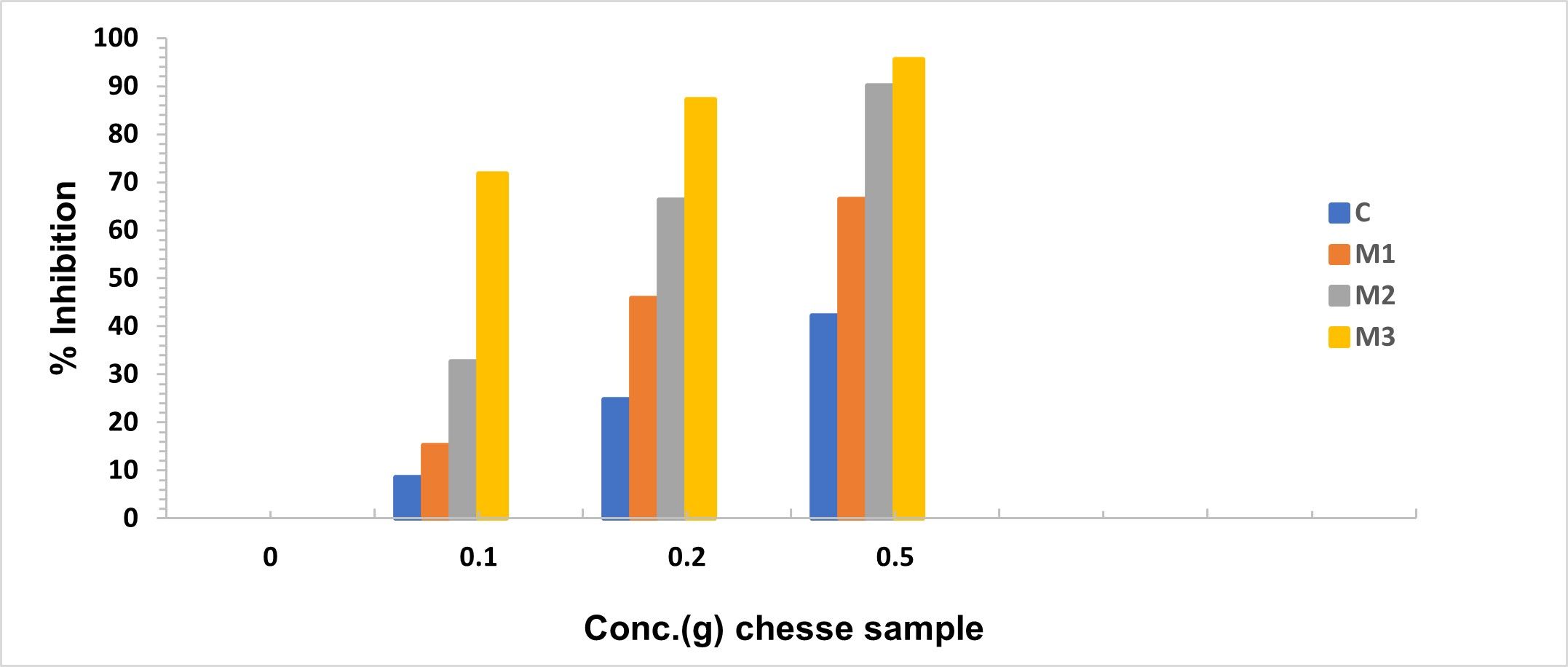
The antioxidant scavenging activity of UF soft cheese fortified with MMP was examined (Figure 2). The inclusion of MPP had a significant impact on the inhibition activity. Cheese with 5% MPP (M3) treatment showed the highest inhibition activity followed by Cheese with 3% MPP (M2) and Cheese with 1% MPP (M1) compared with control samples (C) without any addition of MPP.
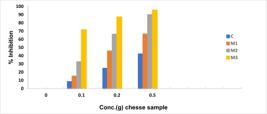
Antioxidant activity of mandarin peel powder (MPP) fortified UF soft cheese using DPPH methods. C: control without MPP; M1: cheese with 1% MPP; M2 cheese with 3% MPP; M3: cheese with 5% MPP.
3.3 Antibacterial activity
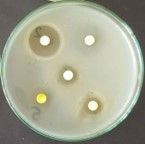
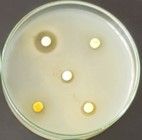
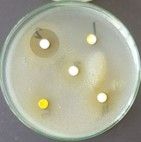
The results in Table 3 revealed that MPE were potent antimicrobials against all tested microorganisms. The methanol extract showed significantly high degree of inhibition than that done by other extracts. As can be seen, methanol extract showed maximum antibacterial activity against E. coli, with maximum inhibition zone diameter recorded at 14 mm and the lowest with B. cereus at 10 mm. No inhibition zone was observed either by chloroform or acetone against bacteria species. The effectiveness of the extracts can be summarized as methanol extract > ethanol extract > water extract of MPP. Shetty et al. (2016) demonstrated that ethanolic extracts of citrus peel are more potent in antimicrobial activity than aqueous extracts.
Inhibition zones of mandarin peel extracts (MPE) against some foodborne pathogens and spoilage bacteria.
The MIC and MBC against E. coli, B. cereus, and Staph. aureus were between different concentrations as 1024, 512, 256, 128, 64, 32, 16, and 8. The data about methanol extract is presented in Table 4. It can be seen that the highest antibacterial activity was obtained with the methanol extract of mandarin peel against E. coli and Staph. Aureus, seeing that they were recorded 16 and 32 from the MIC and MBC, respectively. Similar to Cushnie & Lamb (2005), methanol extract has the highest antioxidants and antimicrobial activity. Balaky et al. (2020) concluded that the phenolic compounds in citrus peels are responsible for the antimicrobial activity. The antimicrobial activities of citrus fruits have been associated with flavonoids and phenols (Viuda-Martos et al., 2008). Pavithra et al. (2009) demonstrated that the active ingredient responsible for the antimicrobial activity of citrus peel oils is a monoterpene. The main factors for the antimicrobial ability of citrus peel oils are D-limonene and linalool. Previous work revealed that the inhibitory effect of citrus peel essential oils is due to the presence of linalool instead of limonene (Fisher & Phillips, 2006).
Minimum Inhibitory Concentration (MIC) and Minimum Bactericidal Concentration (MBC) of mandarin peel methanol extract against bacteria strains.
3.4 Microbiological characteristics of MPP- fortified UF cheese
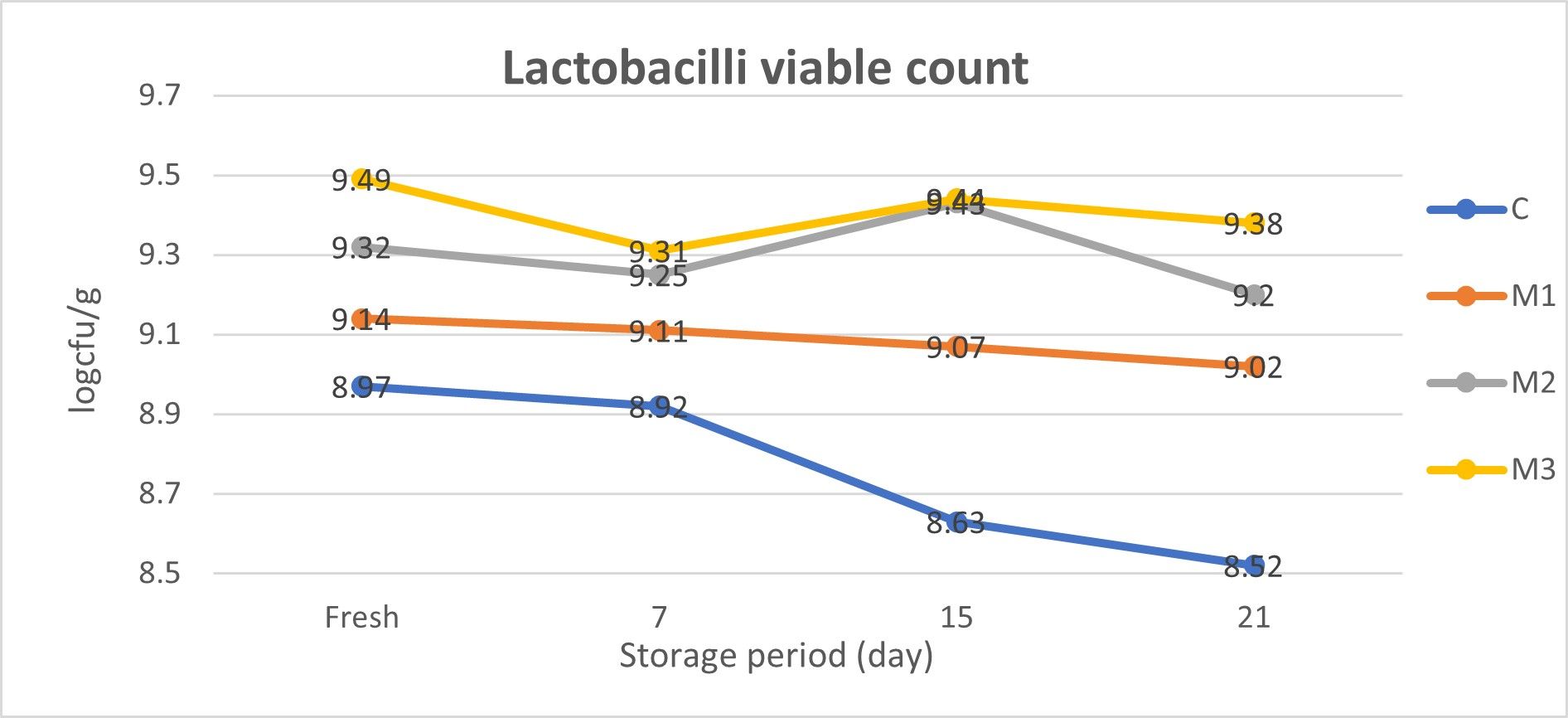
Figure (3) presents the viability of Lactobacilli in UF cheese enriched with MPP throughout storage at 5°C. Thus, Lactobacilli log counts in the fresh sample ranged from 8.52 to 9.49 CFU/mL. The maximum value was found from UF soft cheese that had been fortified with a 5% MPP treatment (M3). Zaki & Naeem (2021) found that adding citrus peels to yoghurt drinks promotes the proliferation of bacteria. During 21 days of storage, Lactobacilli viable counts in treatments with MPP were higher than in controls; this could be related to the presence of MPP, which aided starter growth.

Lactobacilli count of symbiotic UF soft cheese. C: control without MPP; M1: cheese with 1% MPP; M2 cheese with 3% MPP; M3: cheese with 5% MPP.
It is possible to deduce that the presence of MPP caused L. acidophilus to develop faster. Because these treatments had the greatest viable counts both during and after storage, they were chosen. Despite this, all treatments had high L. acidophilus levels. Even after 21 days of storage at 6±1 °C, acidophilus viable counts exceeded 8 log CFU/g (Irkin et al., 2015). Fruit peels have prebiotic effects on lactic acid bacteria (LAB), according to Dias et al. (2020). This result could be due to product enrichment in terms of phenolic compounds and fiber content.
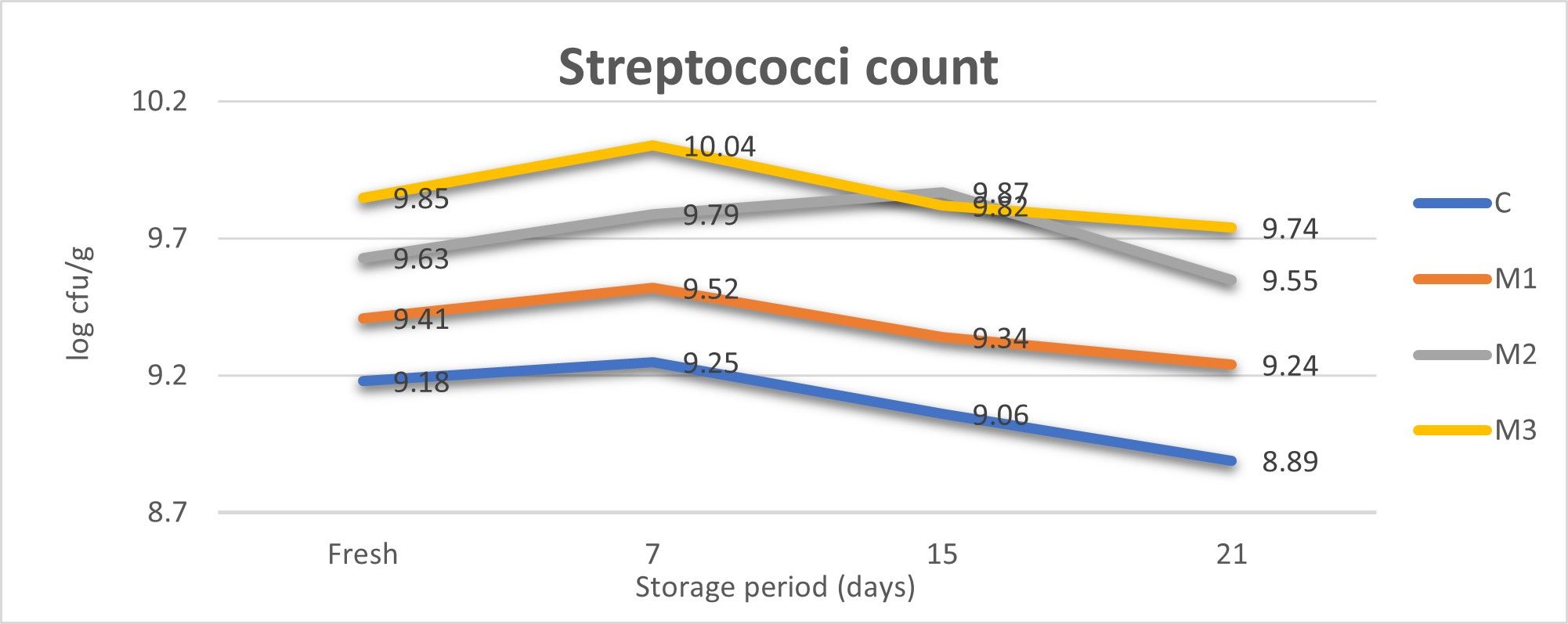
In the present study, there was an increase in Str. thermophilus counts on treatments, increasing the additional level of MPP compared with the minor bacterial count observed in control (Figure 4). In accordance, although mandarin peels have prebiotic actions, Dias et al. (2020) observed that high LAB count could be found in fat and sugar-free yoghurt with 0.5% fruit peel powder incorporation.
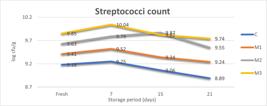
Streptococci count of symbiotic UF soft cheese. C: control without MPP; M1: cheese with 1% MPP; M2 cheese with 3% MPP; M3: cheese with 5% MPP.
3.5 The chemical composition MPP-fortified UF soft cheese
Data presented in Table 5 described the chemical composition of UF soft cheese fortified with MPP. The inclusion of MPP had a significant impact on TS, which grew as the MPP ratio increased. In contrast, the protein and fat contents were not affected (p ≤ 0.05) by the addition of MPP. The lowest values were noted with control and treatments supplemented with 1%; it could be detected that TS content developed by the additional level of MPP. So, this change is due to the high TS content in M2 and M3 treatments compared with control and M1. This increase in TS could be attributed to the addition of MPP, which has a high TS (protein 4.19%, fat 3.82%, moisture 9.5%, fiber 7.93%, carbohydrate 71.25%, and ash 3.31%). These results agree with Ojha et al. (2016) who reported that TS in MPP relatively increases in dry matter.
Table 6 shows the titratable acidity (TA) (%) of symbiotic UF soft cheeses when fresh and after storage (5oC/21 days). The increases in TA of symbiotic UF soft cheese followed the opposite trend in pH, with the TA (%) of symbiotic UF soft cheese being much more relevant than the control cheese, especially near the end of the storage period. Furthermore, statistical analysis demonstrated that the storage length and degree of added MPP at different treatments had a significant (p ≤ 0.05) impact on the TA of symbiotic UF soft cheeses. These findings supported those of Dias et al. (2020), who discovered that raising TA and decreasing pH were positively associated with fiber content in FPP (pineapple and orange peel powder). Symbiotic white soft cheeses, on the other hand, manufactured with S. thermophilus and L. acidophilus (1:1) with an additional 5% MPP had the greatest TA levels (2.45 percent) at the conclusion of the storage period. According to (Rashidinejad et al., 2022), the development of acidity during storage is caused by the conversion of residual lactose in cheese to lactic acid (LA) by the available microflora. Effat et al. (2012) and Ricci et al. (2019) discovered that orange peel is a good matrix for LA fermentation since it allows diverse LAB to grow.
Changes in acidity (%) and symbiotic UF soft cheese pH with mandarin peel powder (MPP) during storage.
3.6 Consumer acceptance of symbiotic UF soft cheese using peel powder
There was a substantial change in appearance, flavour, body, and texture between control (C) and MPP added (M1, M2, M3) symbiotic UF soft cheese in this study. However, a sample containing 5% MPP showed a much lower preference for sensory evaluation (Table 7). The removal of a slightly bitter MPP taste was detected in the first week of the trial. This unusual flavour was favored by several customers over the standard cheese. Because high fiber content affects the fundamental cheese flavour, 5 percent MPP added UF soft cheese had the lowest total scores following appearance, flavour, and body and texture characteristics. However, a 1% MPP mixture mixed with cheese gives the highest total score (Table 8). (Dias et al., 2020) discovered that adding a 0.5% FPP mixture (pineapple and orange peel powder) to fat and sugar-free probiotic yoghurts can help preserve texture and boost customer acceptability.
Changes in acidity (%) and symbiotic UF soft cheese pH with mandarin peel powder (MPP) during storage.
4 Conclusions
The mandarin peel is a promising important part of the mandarin fruit, it has many functional effects. MPP extracts have antioxidant and antibacterial activity. Thus, Probiotic UF-white soft cheese can be fortified with MPP. Cheese fortified with MPP gained higher antioxidant properties, viability, total scores and got better flavor, body and texture and acceptability. MPP can be considered beneficial in the production of healthy and functional white soft cheese.
-
Cite as: Ebid, W. M. A., Mohammed, A. S., & Roby, M. H. (2024). The assessment of the antioxidant and antibacterial activity of Mandarin peel powder and its impact on the symbiotic soft cheese quality. Brazilian Journal of Food Technology, 27, e2023088. https://doi.org/10.1590/1981-6723.08823
-
Funding: None.
References
- Association of Official Analytical Chemists – AOAC. (2005). Official Methods of Analysis of AOAC International Rockville: AOAC
-
Azwanida, N. N. (2015). A review on the extraction methods use in medicinal plants, principle, strength and limitation. Medicinal & Aromatic Plants, 04(03), http://doi.org/10.4172/2167-0412.1000196
» http://doi.org/10.4172/2167-0412.1000196 -
Balaky, H. H., Galali, Y., Osman, A. A., Karaoğul, E., Altuntas, E., Uğuz, M. T., Galalaey, A. M. K., & Alma, M. H. (2020). Evaluation of antioxidant and antimicrobial activities of mandarin peel (Citrus reticulata blanco) with microwave assisted extract using two different solvents. Asian Journal of Plant Sciences, 19(3), 223-229. http://doi.org/10.3923/ajps.2020.223.229
» http://doi.org/10.3923/ajps.2020.223.229 -
Coker, C. J., Crawford, R. A., Johnston, K. A., Singh, H., & Creamer, L. K. (2005). Towards the classification of cheese variety and maturity on the basis of statistical analysis of proteolysis data: A review. International Dairy Journal, 15(6–9), 631-643. http://doi.org/10.1016/j.idairyj.2004.10.011
» http://doi.org/10.1016/j.idairyj.2004.10.011 -
Costanzo, G., Iesce, M. R., Naviglio, D., Ciaravolo, M., Vitale, E., & Arena, C. (2020). Comparative studies on different citrus cultivars: A revaluation of waste mandarin components. Antioxidants, 9(6), 1-12. PMid:32545447. http://doi.org/10.3390/antiox9060517
» http://doi.org/10.3390/antiox9060517 -
Costanzo, G., Vitale, E., Iesce, M. R., Naviglio, D., Amoresano, A., Fontanarosa, C., Spinelli, M., Ciaravolo, M., & Arena, C. (2022). Antioxidant properties of pulp, peel and seeds of phlegrean mandarin (Citrus reticulata Blanco) at different stages of fruit ripening. Antioxidants, 11(2), 187. PMid:35204071. http://doi.org/10.3390/antiox11020187
» http://doi.org/10.3390/antiox11020187 -
Cushnie, T. P., & Lamb, A. J. (2005). Antimicrobial activity of flavonoids. International Journal of Antimicrobial Agents, 26(5), 343-356. PMid:16323269. http://doi.org/10.1016/j.ijantimicag.2005.09.002
» http://doi.org/10.1016/j.ijantimicag.2005.09.002 -
Dai, J., & Mumper, R. J. (2010). Plant phenolics: Extraction, analysis and their antioxidant and anticancer properties. Molecules (Basel, Switzerland), 15(10), 7313-7352. http://doi.org/10.3390/molecules15107313
» http://doi.org/10.3390/molecules15107313 -
Dias, P. G. I., Sajiwanie, J. W. A., & Rathnayaka, R. M. U. S. K. (2020). Formulation and development of composite fruit peel powder incorporated fat and sugar-free probiotic set yogurt. GSC Biological and Pharmaceutical Sciences, 11(1), 93-99. http://doi.org/10.30574/gscbps.2020.11.1.0084
» http://doi.org/10.30574/gscbps.2020.11.1.0084 -
Diaz-Uribe, C., Vallejo, W., De la Hoz, T., Florez, J., Muñoz-Acevedo, A., Zarate, X., & Schott, E. (2022). Theoretical and kinetic study of the singlet oxygen quenching reaction by hesperidin isolated from mandarin (Citrus reticulata) fruit peels. Chemicke Zvesti, 76(1), 169-178. http://doi.org/10.1007/s11696-021-01825-2
» http://doi.org/10.1007/s11696-021-01825-2 -
Duncan, D. B. (1955). Multiple ranges and multiple F- tests. Biometrics, 11(1), 1-42. http://doi.org/10.2307/3001478
» http://doi.org/10.2307/3001478 - Effat, B., Mabrouk, A., Sadek, Z. I., Hussein, G. A. M., & Magdoub, M. N. I. (2012). Production of novel functional white soft cheese. Journal of Microbiology, Biotechnology and Food Sciences, 1, 1259-1278.
-
Farrag, A. F., Bayoumi, H. M., Ibrahim, W. A., El-Sheikh, M. M., & Eissa, H. A. (2017). Characteristics of white soft cheese fortified with hibiscus soft drink as antimicrobial and hypertension treatment. International Journal of Dairy Science, 12(2), 122-129. http://doi.org/10.3923/ijds.2017.122.129
» http://doi.org/10.3923/ijds.2017.122.129 -
Fisher, K., & Phillips, C. A. (2006). The effect of lemon, orange and bergamot essential oils and their components on the survival of Campylobacter jejuni, Escherichia coli O157, Listeria monocytogenes, Bacillus cereus and Staphylococcus aureus in vitro and in food systems. Journal of Applied Microbiology, 101(6), 1232-1240. PMid:17105553. http://doi.org/10.1111/j.1365-2672.2006.03035.x
» http://doi.org/10.1111/j.1365-2672.2006.03035.x -
Grandison, A. S. (1993). Application of ultrafiltration in the dairy industry. Food Control, 4(3), 166. http://doi.org/10.1016/0956-7135(93)90308-B
» http://doi.org/10.1016/0956-7135(93)90308-B - Hegde, P., Agrawal, P., & Gupta, P. K. (2015). Isolation and optimization of polyphenols from the peels of orange fruit. Journal of Chemical and Pharmaceutical Sciences, 8(3), 463-468.
-
Irkin, R., Dogan, S., Degirmenioglu, N., Diken, M. E., & Guldas, M. (2015). Phenolic content, antioxidant activities and stimulatory roles of citrus fruits on some lactic acid bacteria. Archives of Biological Sciences, 67(4), 1313-1321. http://doi.org/10.2298/ABS140909108I
» http://doi.org/10.2298/ABS140909108I -
Kaur, S., Panesar, P. S., & Chopra, H. K. (2021). Standardization of ultrasound-assisted extraction of bioactive compounds from kinnow mandarin peel. Biomass Conversion and Biorefinery, http://doi.org/10.1007/s13399-021-01674-9
» http://doi.org/10.1007/s13399-021-01674-9 -
Lin, X., Cao, S., Sun, J., Lu, D., Zhong, B., & Chun, J. (2021). The chemical compositions, and antibacterial and antioxidant activities of four types of citrus essential oils. Molecules (Basel, Switzerland), 26(11), 3412. PMid:34199966. http://doi.org/10.3390/molecules26113412
» http://doi.org/10.3390/molecules26113412 -
Mehaia, M. A. (2002). Manufacture of fresh soft white cheese (Domiati-type) from ultrafiltered goats’ milk. Food Chemistry, 79(4), 445-452. http://doi.org/10.1016/S0308-8146(02)00195-4
» http://doi.org/10.1016/S0308-8146(02)00195-4 -
Neethu, S., Midhun, S. J., Radhakrishnan, E. K., & Jyothis, M. (2018). Green synthesized silver nanoparticles by marine endophytic fungus Penicillium polonicum and its antibacterial efficacy against biofilm forming, multidrug-resistant Acinetobacter baumanii. Microbial Pathogenesis, 116, 263-272. PMid:29366864. http://doi.org/10.1016/j.micpath.2018.01.033
» http://doi.org/10.1016/j.micpath.2018.01.033 - Norusis, M. J. (1990). Statistical package for social sciences Chicago, IL, USA: SPSS Inc.
- Ojha, P., Bahadur Karki, T., & Sitaula, R. (2016). Physio-chemical and functional quality evaluation of mandarin peel powder. Journal of Agricultural Science and Technology, 18(2), 575-582.
-
Pavithra, P. S., Sreevidya, N., & Verma, R. S. (2009). Antibacterial activity and chemical composition of essential oil of Pamburusmissionis. Journal of Ethnopharmacology, 124(1), 151-153. http://doi.org/10.1016/j.jep.2009.04.016
» http://doi.org/10.1016/j.jep.2009.04.016 -
Pfukwa, T. M., Fawole, O. A., Manley, M., Gouws, P. A., Opara, U. L., & Mapiye, C. (2019). Food preservative capabilities of grape (Vitis vinifera) and clementine mandarin (Citrus reticulata) by-products extracts in South Africa. Sustainability (Basel), 11(6), 1746. http://doi.org/10.3390/su11061746
» http://doi.org/10.3390/su11061746 - Rane Zab Anish Kumar, P., & Bhaskar, A. (2012). Determination of bioactive components from the ethanolic peel extract of Citrus reticulata by gas chromatography - Mass spectrometry. International Journal of Drug Development and Research, 4(4), 166-174.
-
Rashidinejad, A., Bahrami, A., Rehman, A., Rezaei, A., Babazadeh, A., Singh, H., & Jafari, S. M. (2022). Co-encapsulation of probiotics with prebiotics and their application in functional/synbiotic dairy products. Critical Reviews in Food Science and Nutrition, 62(9), 2470-2494. http://doi.org/10.1080/10408398.2020.1854169
» http://doi.org/10.1080/10408398.2020.1854169 -
Ricci, A., Diaz, A. B., Caro, I., Bernini, V., Galaverna, G., Lazzi, C., & Blandino, A. (2019). Orange peels: from by-product to resource through lactic acid fermentation. Journal of the Science of Food and Agriculture, 99(15), 6761-6767. PMid:31353470. http://doi.org/10.1002/jsfa.9958
» http://doi.org/10.1002/jsfa.9958 - Shaiban, M., Al-Mamary, M., & Al-Habori, M. (2006). Total antioxidant activity and total phenolic contents in yemeni smoked cheese. The Sciences, 12(1), 87-92.
-
Sharma, K., Mahato, N., Cho, M. H., & Lee, Y. R. (2017). Converting citrus wastes into value-added products: economic and environmently friendly approaches. Nutrition (Burbank, Los Angeles County, Calif.), 34, 29-46. http://doi.org/10.1016/j.nut.2016.09.006
» http://doi.org/10.1016/j.nut.2016.09.006 -
Shekin, J. J. (2021). Applications of ultrafiltration, reverse osmosis, nanofiltration, and microfiltration in dairy and food industry. Extensive Reviews, 1(1), 39-48. http://doi.org/10.21467/exr.1.1.4468
» http://doi.org/10.21467/exr.1.1.4468 -
Shetty, S. B., Mahin-Syed-Ismail, P., Varghese, S., Thomas-George, B., Kandathil-Thajuraj, P., Baby, D., Haleem, S., Sreedhar, S., & Devang-Divakar, D. (2016). Antimicrobial effects of Citrus sinensis peel extracts against dental caries bacteria: an in vitro study. Journal of Clinical and Experimental Dentistry, 8(1), e71-77. PMid:26855710. http://doi.org/10.4317/jced.52493
» http://doi.org/10.4317/jced.52493 -
Spigno, G., Tramelli, L., & De Faveri, D. M. (2007). Effects of extraction time, temperature and solvent on concentration and antioxidant activity of grape marc phenolics. Journal of Food Engineering, 81(1), 200-208. http://doi.org/10.1016/j.jfoodeng.2006.10.021
» http://doi.org/10.1016/j.jfoodeng.2006.10.021 -
Viuda-Martos, M., Ruiz-Navajas, Y., Fernández-López, J., & Pérez-Álvarez, J. (2008). Antifungal activity of lemon (Citrus lemon L.), mandarin (Citrus reticulata L.), grapefruit (Citrusparadisi L.) and orange (Citrussinensis L.) essential oils. Food Control, 19(12), 1130-1138. http://doi.org/10.1016/j.foodcont.2007.12.003
» http://doi.org/10.1016/j.foodcont.2007.12.003 -
Zaki, N., & Naeem, M. (2021). Antioxidant, antimicrobial and anticancer activities of citrus peels to improve the shelf life of yoghurt drink. Egyptian Journal of Food Science, 49(2), 249-265. http://doi.org/10.21608/ejfs.2021.58310.1092
» http://doi.org/10.21608/ejfs.2021.58310.1092 -
Zhang, H., Yang, Y., & Zhou, Z. (2018). Phenolic and flavonoid contents of mandarin (Citrus reticulata Blanco) fruit tissues and their antioxidant capacity as evaluated by DPPH and ABTS methods. Journal of Integrative Agriculture, 17(1), 256-263. http://doi.org/10.1016/S2095-3119(17)61664-2
» http://doi.org/10.1016/S2095-3119(17)61664-2
Edited by
-
Associate Editor: Eliana Paula Ribeiro.