 A clinical drug-drug interaction assessment using physiologically based pharmacokinetic modeling: a case study with chloroquine and colchicine
Abstract
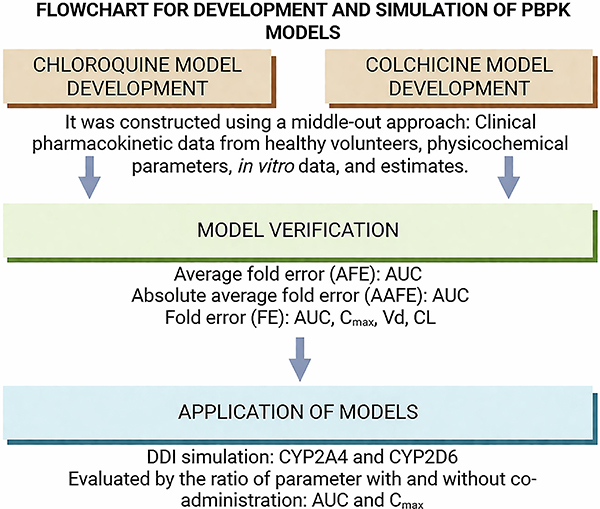
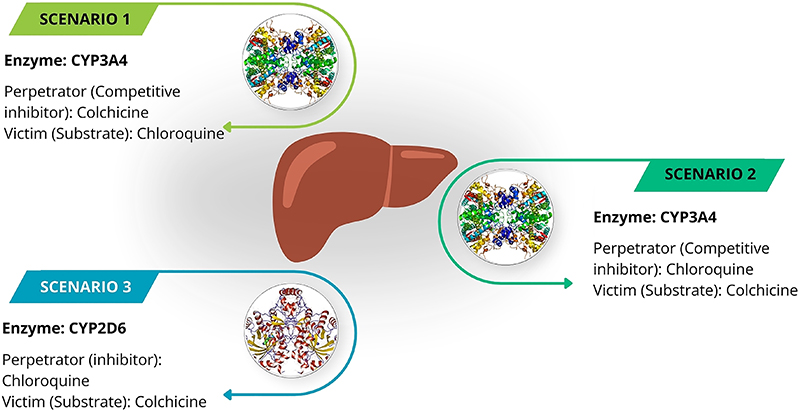
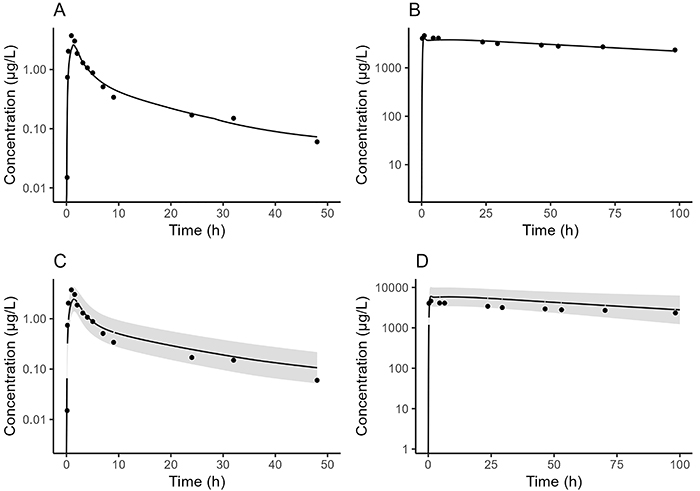
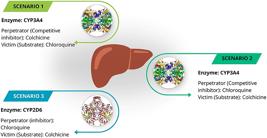
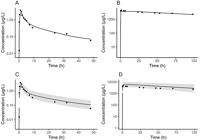
The combination of drugs for malaria treatment holds promise, although the potential for drug-drug interactions remains insufficiently explored in novel therapeutic combinations. This study aims to assess these interactions using physiologically based pharmacokinetic modeling, supported by data-driven parameter optimization, as a step towards the preclinical development of a formulation containing chloroquine and colchicine. Given that both compounds share metabolic pathways involving CYP3A4 and CYP2D6, we developed individual and population models using a middle-out strategy in PK-Sim®, an open-source software, and validated these models by comparing predicted and observed pharmacokinetic parameters. Simulations evaluated competitive inhibition between the compounds. The results indicated no significant changes in systemic exposure, with the area under the curve and maximum concentration values remaining consistent between single and combined administration. Our findings suggest that the proposed modeling is a powerful tool for predicting pharmacokinetic interactions during the preformulation stage, offering mechanistic insight and supporting rational decision-making prior to in vivo studies. The absence of significant drug-drug interactions between chloroquine and colchicine reinforces the feasibility of advancing this combination in future therapeutic development.
Key words:
Data-driven modeling; PBPK; DDI; Chloroquine; Colchicine; Malaria
 Thumbnail
 Thumbnail
 Thumbnail