 Characterization of whitening toothpastes: pH, solid content, abrasive particle morphology, and commercial aspects
Abstract
Aim To evaluate whitening toothpastes by analyzing labels, active ingredients, prices, commercial appeal, pH, and characteristics of abrasives.
Methods 18 whitening toothpastes and 4 regular toothpastes sold by different manufacturers were assessed. The pH of the slurry was determined in triplicate, and the percentage of solid weight by desiccation. The abrasive particles were sieved and analyzed using scanning electron microscopy (SEM). The average price (BRL, USD) was established, the labels were analyzed for advertising approach, type of abrasive, and presence of fluoride, and the whitening active ingredients were categorized as abrasive, chemical, or optical agents. The data were analyzed using the Mann-Whitney test to compare regular and whitening toothpastes (α=0.05), and the categorical data were analyzed by absolute and relative frequencies.
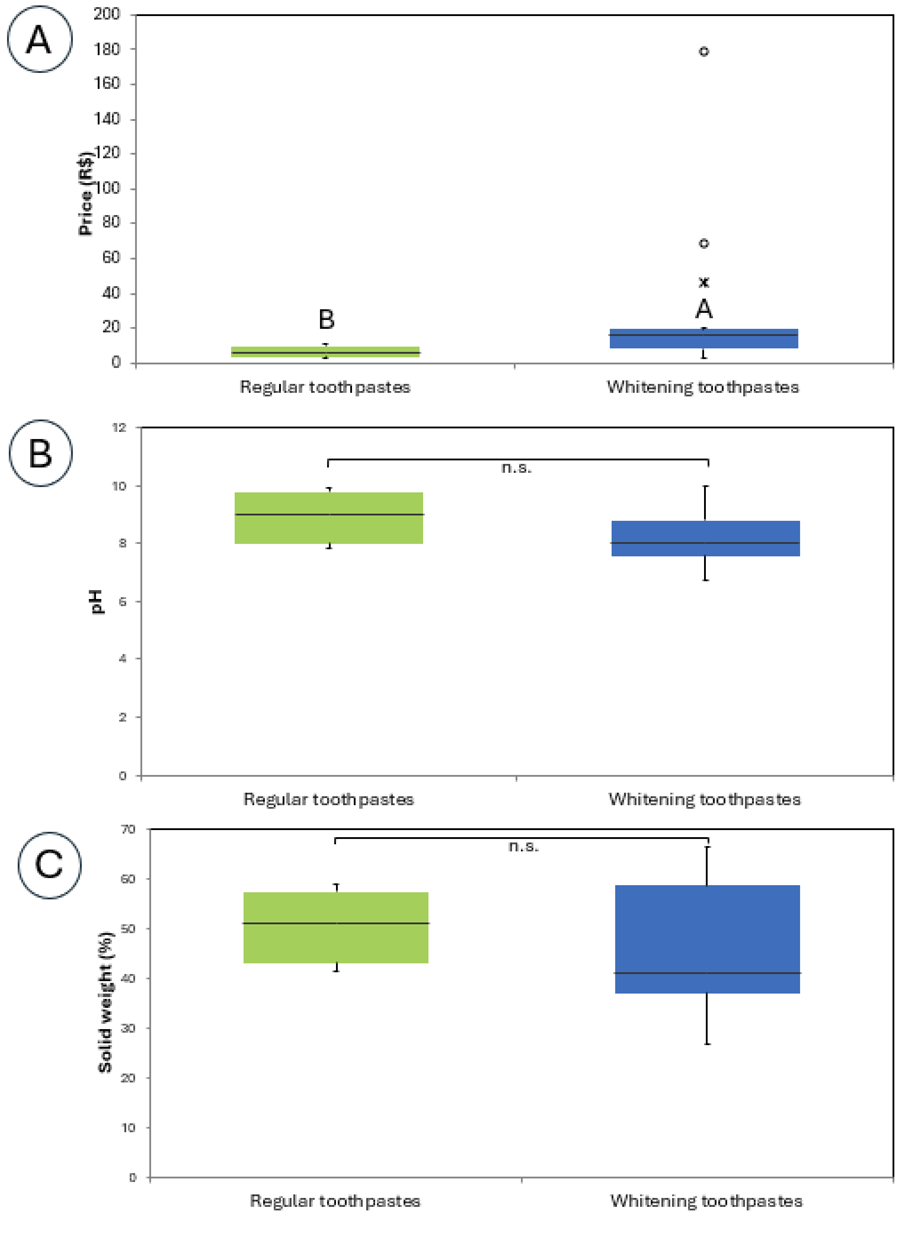
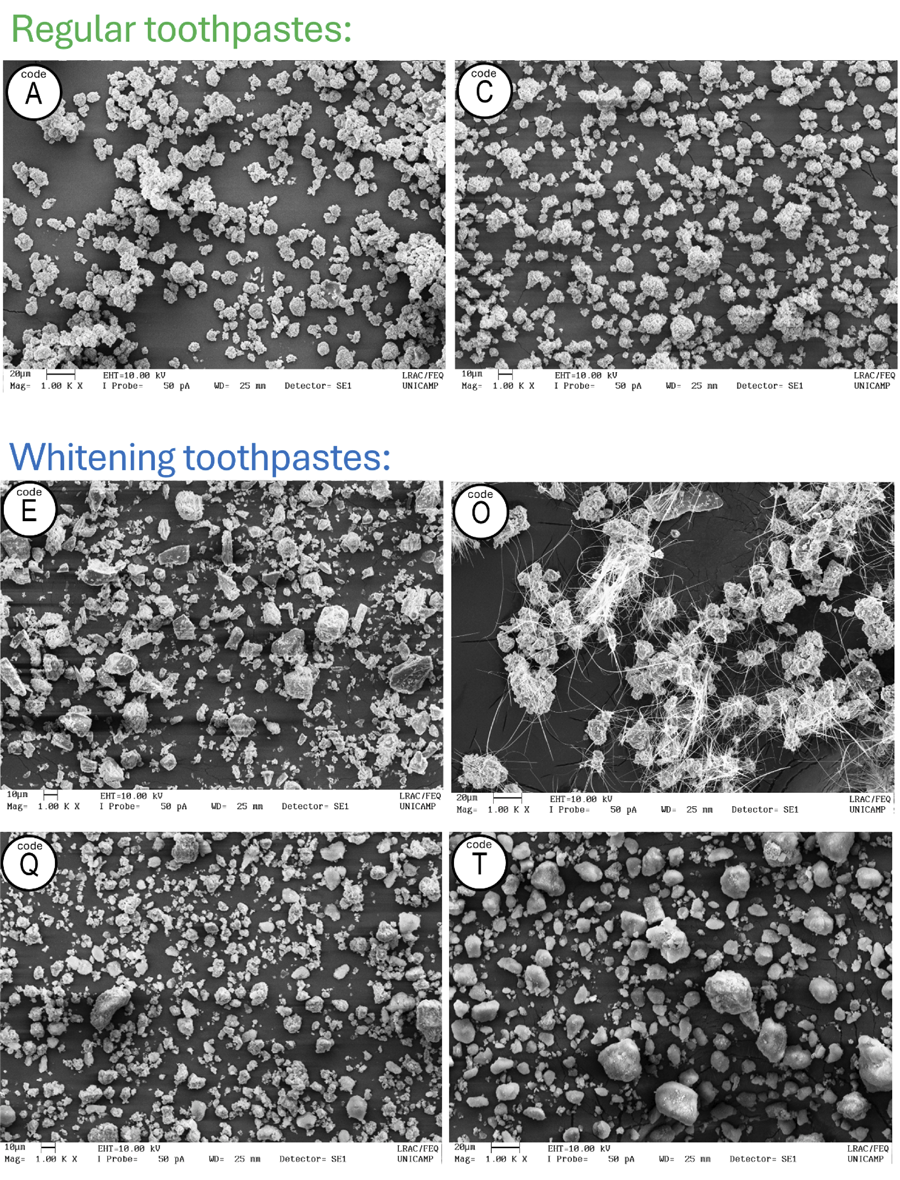
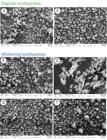
Results The toothpastes had a pH close to neutral or > 7, with no difference between whitening and regular toothpastes (p=0.173). Whitening toothpastes had solids between 26.70% and 66.46% and did not differ statistically from regular ones (p=0.394). The average price of regular toothpastes is lower than that of whitening toothpastes (p=0.033). Concerning whitening toothpastes, the most common abrasive was silica, the chemical agent was sodium pyrophosphate, and the optical agent was blue covarine. SEM analysis revealed that some whitening toothpastes presented amorphous particles of different sizes, unlike the composition of regular toothpastes. In addition, three whitening toothpastes did not contain fluoride in their composition.
Conclusion The whitening toothpastes can differ from regular toothpastes in terms of price, advertising, and the shape and size of the abrasive.
Keywords:
Tooth bleaching; Dentifrices; Color; Tooth abrasion
 Thumbnail
 Thumbnail