 He’s arrived, but he’s not welcome! First record of the golden mussel (Limnoperna fortunei – Dunker, 1857) in the Pajeú River watershed – Brazil
Abstract
Limnoperna fortunei (Dunker, 1857) is an invasive freshwater bivalve that has expanded across South American river basins, causing ecological and socioeconomic impacts. Here, we report the first record of L. fortunei in the Pajeú River basin, northeastern Brazil, an area influenced by the São Francisco River Integration Project (PISF). Surveys conducted in 2022, 2023, and 2025 across four reservoirs detected the species exclusively in the Barra do Juá Reservoir. The first record occurred in 2023, when individuals were observed attached to boats, whereas no specimens were found in sediment samples. In 2025, L. fortunei was recorded at five littoral sampling sites, exhibiting an aggregated distribution consistent with local population establishment. The species occurred in gravel-dominated sediments, clear and well-oxygenated waters (>7.0 mg/L), and water temperatures above 28 °C. This record expands the known distribution of L. fortunei in northeastern Brazil and highlights the importance of continued monitoring of interconnected freshwater systems to detect further spread and support management actions.
Keywords
Freshwater ecosystem; Invasive bivalve; Biodiversity; Hydrological connectivity; Transvases
Resumo
Limnoperna fortunei (Dunker, 1857) é um bivalve de água doce invasor que se expandiu pelas bacias hidrográficas da América do Sul, causando impactos ecológicos e socioeconômicos. Neste trabalho, relatamos o primeiro registro de L. fortunei na bacia do rio Pajeú, no Nordeste do Brasil, uma área influenciada pelo Projeto de Integração do Rio São Francisco (PISF). Levantamentos realizados em 2022, 2023 e 2025 em quatro reservatórios detectaram a espécie exclusivamente no reservatório Barra do Juá. O primeiro registro ocorreu em 2023, quando indivíduos foram observados fixados em embarcações, enquanto nenhum espécime foi encontrado em amostras de sedimento. Em 2025, L. fortunei foi registrada em cinco pontos de amostragem na zona litorânea, apresentando uma distribuição agregada, consistente com o estabelecimento de uma população local. A espécie ocorreu em sedimentos com predominância de cascalho, águas límpidas e bem oxigenadas (>7,0 mg/L) e temperaturas da água acima de 28 °C. Este registro amplia a distribuição conhecida de L. fortunei no Nordeste do Brasil e destaca a importância do monitoramento contínuo de sistemas de água doce interconectados para detectar novas dispersões e subsidiar ações de manejo.
Palavras-chave
Ecossistema de água doce; Bivalves; Invasão Biológica; Conectividade interbacias; Transvases
Introduction
Limnoperna fortunei (Dunker, 1857), popularly known as the golden mussel, is a freshwater bivalve belonging to the family Mytilidae, native to Southeast Asia, that has become one of the most successful aquatic invaders worldwide (Boltovskoy et al., 2025). The species was introduced into South America in the early 1990s, most likely through ballast water discharged in the Río de la Plata estuary, and subsequently expanded throughout major river systems in Argentina, Uruguay, Paraguay, Bolivia, and Brazil (Pastorino et al., 1993; Oliveira et al., 2006; Darrigran & Damborenea, 2011). In Brazil, the first records of L. fortunei were reported in the Paraguay River basin and Lake Guaíba during the late 1990s, followed by a rapid expansion into other basins, including the São Francisco river basin, facilitated by navigation routes, reservoir cascades, and other anthropogenic vectors (Darrigran & Mansur, 2009; Barbosa et al., 2016).
The invasive success of L. fortunei has been attributed to its high physiological plasticity and ability to tolerate a wide range of environmental conditions (e.g., Capurro et al., 2025; Darrigran & Damborenea, 2011), combined with the absence of effective predators in invaded ecosystems. These traits allow the species to survive, reproduce, and establish dense populations across diverse environmental gradients (Darrigran & Damborenea, 2011). As a result, dense populations can establish rapidly, causing significant ecological and economic impacts. Ecologically, the species modifies benthic habitats, alters nutrient cycling, and affects native communities through competition for space and resources. Economically, infestations frequently cause biofouling of water intake systems, irrigation networks, and hydroelectric facilities, resulting in substantial maintenance and operational costs (Boltovskoy & Correa, 2015; Haubrock et al., 2022).
Recent records indicate the continued expansion of L. fortunei into northeastern Brazil, including the São Francisco River basin (Barbosa et al., 2016). This expansion raises particular concern in the context of the São Francisco River Integration Project (PISF), a large-scale water transfer system designed to supply water to semi-arid regions of northeastern Brazil. By establishing permanent hydrological connections between previously isolated basins, the PISF may facilitate the dispersal of non-native aquatic organisms, increasing the risk of biological invasions in recipient basins (Rossiter et al., 2021; Faundez et al., 2023). The Pajeú River is the largest tributary of the São Francisco River in Pernambuco State and has recently experienced increased hydrological connectivity through the Eastern Axis of the PISF (APAC, 2026). Given the presence of L. fortunei in the São Francisco basin and the potential for passive dispersal through interconnected aquatic systems, the establishment of populations in the Pajeú basin is a significant concern for biodiversity conservation and water resource management. Here, we report the first record of L. fortunei in the Pajeú River basin, northeastern Brazil, and discuss its implications in the context of hydrological connectivity promoted by inter-basin water transfer projects.
Material and Methods
1. Study area
The study area was conducted in the Pajeú River watershed (08° 26’ 39.35” S and 38° 04’ 26.14” W). Samplings were conducted in 2022 (June), 2023 (April), and 2025 (April) in four reservoirs within the Pajeú River basin, encompassing varying hydrological conditions: Cachoeira II, Serrinha II, Jazigo, and Barra do Juá. Fifteen sampling sites were established along the reservoir’s littoral zone, distributed randomly (Figure 1). Among the four reservoirs, only Barra do Juá receives water from the Eastern Axis of the São Francisco River Integration Project (PISF) (APAC, 2025), whereas Cachoeira II, Serrinha II, and Jazigo are not directly connected to the water transfer system. Limnoperna fortunei was recorded exclusively in Barra do Juá Reservoir (Figure 1), located between the municipalities of Floresta and Betânia, Pernambuco State. This reservoir has a storage capacity of 71,474,000 m3 and a drainage area of 1,928.40 km2. Its primary uses include urban and rural water supply, livestock watering, and irrigation (ANA, 2017; Pernambuco, 2024). The climate in the region is of the BSh type, hot semi-arid, with an average temperature of 24.5ºC, according to the Köppen-Geiger classification (Alvares et al., 2013). The average annual rainfall is < 700 mm, concentrated in three months (February-April) (Alvares et al., 2013).
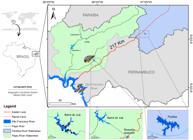
Location of the Barra do Juá reservoir in the Pajeu River basin, northeastern Brazil, and its hydrological connection to the Paraíba River basin via the East Axis of the São Francisco River Integration Project (PISF – represented by red line). The highlighted maps show the Barra do Juá, Muquém, and Poções reservoirs (reservoirs of the PISF). The black dots in the Barra do Juá reservoir indicate sampling locations. The red dots represent locations where Limnoperna fortunei has been recorded. The mollusk icons represent locations with records of L. fortunei.
2. Data collection
The records were obtained during the day, initially with the aim of collecting data on species from the benthic macroinvertebrate group. Benthic macroinvertebrates, including L. fortunei, were collected during sampling using an Ekman–Birge dredge (225 cm2). Samples were fixed in situ with 96% ethanol. In the laboratory, material was washed through a 0.5 mm mesh sieve, sorted, and identified to the genus level using specialized taxonomic keys (ex. Boffi, 1979; Mansur, 2012; Da Paz et al., 2014). After identification, the species was confirmed by a specialist, Dr. Igor Christo Miyahira, through morphological analysis, sent the specimen for deposit under number 12434 in the Mollusk Collection of UERJ, in Rio de Janeiro. Specimen collection was authorized under permit no. 82761-1, issued by the Biodiversity Authorization and Information System (SISBIO).
Results
In June 2021, the reservoir began receiving water as part of the São Francisco River Integration Project, which promotes interbasin water transfer into the Pajeú watershed. During the first field expedition in June 2022, L. fortunei was not detected at any of the sampling sites. Furthermore, no previous records of the species in the Barra do Juá reservoir were found in the scientific literature or technical documents before 2021 (eg. Hermes-Silva et al., 2021). During fieldwork conducted in 2023, the invasive bivalve was attached to canoes operating within the reservoir. The collected specimens were analyzed and identified at the Laboratory of Semi-Arid Water Studies (LabEAS-IFPB). To confirm the identification, the specimens were forwarded to a specialist. Following confirmation, the specimens were cataloged in a scientific collection at the UERJ Mollusk Collection (Figure 2). At that time, the species was not detected in samples obtained through drag sampling at the previously selected sampling sites.

Specimens of L. fortunei (Dunker, 1857) collected in the Barra do Juá reservoir, Pajeú River basin, Pernambuco state – Northeast Brazil, in April 2025. Where: A = external view (closed shell) and dissected visceral mass of the shell; B = open individual showing the accommodation of the visceral mass in one of the valves (part of the shell); C = external view of two individuals of different sizes. Specimens between 20 and 27 mm. Source: LabEAS (Laboratory for Studies of Semi-Arid Waters – IFPB).
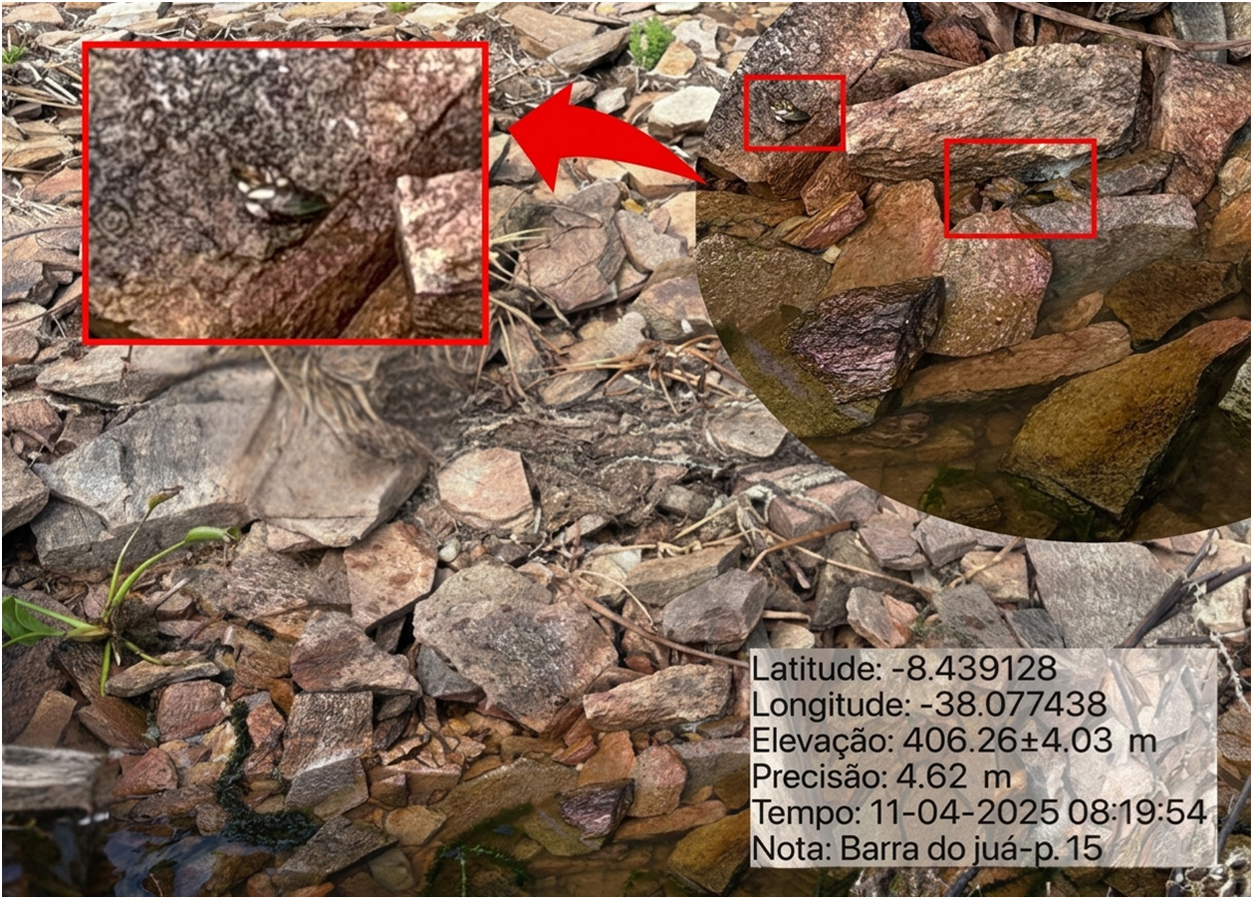
In 2025, L. fortunei was recorded in samples obtained from some sampling sites. The individuals exhibited a pattern of aggregation, indicating population establishment. The species was detected in five distinct locations within the reservoir. At present, L. fortunei remains spatially restricted within the Barra do Juá Reservoir, with its distribution limited to specific sampling sites. The species shows an association with particular environmental conditions, occurring predominantly in sediments with a high proportion of gravel (granules > 1 mm) and in transparent, well-oxygenated waters with temperatures exceeding 28 °C (Figure 3).

Collection site (site 15) in the Barra do Juá reservoir, Pajeú river basin, Pernambuco state – Northeast Brazil, in April 2025. Note some individuals encrusted at the site. Source: LabEAS (Laboratory for Studies of Semi-Arid Waters – IFPB).
Discussion
The detection of L. fortunei in the Pajeú River basin raises significant concerns regarding the ecological integrity and socio-economic sustainability of semi-arid freshwater systems in northeastern Brazil. Biological invasions represent one of the major threats to freshwater ecosystems worldwide, largely due to the intrinsic vulnerability of these systems and their high levels of connectivity, both natural and artificial. Freshwater environments are particularly susceptible to invasions because they often lack effective biogeographic barriers, are subject to intense human use, and are increasingly modified by dam construction, interbasin water transfers, and navigation infrastructure (Barbosa et al., 2021; Faundez et al., 2023).
The occurrence of L. fortunei in Barra do Juá Reservoir shortly after the arrival of water from the São Francisco River Integration Project suggests a possible association between increasing hydrological connectivity and the species’ spread. However, the invasion pathway cannot be determined from the present data. Alternative dispersal vectors, including boats, fishing equipment, and other forms of human-mediated transport, may also contribute to the spread of the species (Belz et al., 2012; Oliveira et al., 2015; Boltovskoy et al., 2025). During field activities, local residents and boatmen informally reported that the species became noticeable only after the opening of the water passage system from PISF. Although these observations were not collected through a structured survey and cannot be considered evidence of the invasion pathway, they provide additional contextual information regarding the recent appearance of the species in the area.
Following arrival, the establishment of L. fortunei is facilitated by a combination of biological and ecological traits that enable population persistence under a wide range of environmental conditions. The species produces planktonic larvae of very small size (approximately 80–120 µm), which disperse passively through the water column and can be readily transported through reservoirs, canals, and water intake systems (Cataldo & Boltovskoy, 2000). Previous studies have shown that L. fortunei can also thrive in artificial water channels characterized by low dissolved oxygen concentrations and high flow rates, reflecting its high physiological tolerance and ecological plasticity. In addition, its opportunistic life-history strategy, marked by rapid sexual maturation and high reproductive rates, favours successful establishment even in highly altered environments (Darrigran & Damborenea, 2015; Zhang et al., 2022; Xiao et al., 2025).
Although the present study did not directly evaluate ecological or economic impacts, the establishment of L. fortunei may represent a future challenge for water infrastructure and aquatic ecosystems in the region. Previous studies have documented biofouling problems in water supply and energy-generation systems, as well as ecological effects associated with changes in plankton communities, nutrient cycling, and benthic habitats (Boltovskoy & Correa, 2015; Adelino et al., 2021; Liu et al., 2024; Boltovskoy et al., 2025).
The occurrence of L. fortunei in the Pajeú River basin (Barra do Juá Reservoir, municipality of Floresta, Pernambuco State) is approximately 217 km from the Paraíba River basin, highlighting the possibility for further range expansion in northeastern Brazil. Given the species’ high dispersal capacity and the increased hydrological connectivity between basins facilitated by the PISF, maintaining continuous monitoring of the interconnected reservoirs and water transfer infrastructure is crucial. Although this study does not demonstrate that the water transfer canals are the primary invasion route, these structures represent strategic monitoring sites, as they connect multiple reservoirs and facilitate water movement between basins. Future studies documenting the occurrence of L. fortunei throughout the PISF network will help clarify the role of water transfers in the regional spread of the species.
Early detection and spatial documentation of invasive species distributions are essential for guiding monitoring programs, informing risk assessments, and prioritizing control efforts. At present, state-level water quality monitoring programs predominantly emphasize physical and chemical variables and cyanobacterial parameters, while biological assessment of mollusk communities is generally not included. Incorporating systematic monitoring of invasive mollusks into these programs, ideally involving the local community to ensure more regular and effective surveillance, would substantially strengthen early-warning capacity and improve regional invasion management.
Conclusion
The detection of established populations at multiple sites indicates that the species has successfully colonized the reservoir and is currently in an early phase of spatial expansion. The observed association with specific environmental conditions suggests that suitable habitats within the reservoir and connected systems may facilitate continued spread. Management plans should prioritize containment strategies to prevent the expansion of the species within the invaded system and its spread to neighboring watersheds. This challenge requires interinstitutional and interstate planning, involving water and environmental management agencies from all river basins connected to the São Francisco River system. Future research should include population dynamics and habitat suitability modeling to predict local environmental conditions that favor the arrival, establishment, and subsequent expansion of L. fortunei. Such predictive approaches are essential for improving risk assessments, supporting proactive management strategies, and optimizing monitoring efforts across connected river basins.
Acknowledgments
BDM thanks to Fundação de Apoio à Pesquisa do Estado da Paraíba (FAPESQ) for granting the doctoral scholarship. The authors acknowledge financial support from the project APQ-0992-2.05/21 (FACEPE call for proposals no. 16/2021) and Conselho Nacional de Desenvolvimento Científico e Tecnológico (CNPq process 409817/2023-6), granted to DJA, which enabled the data collection and the update of the dataset in the Pajeú River included in this study; by FAPESQ through the projects no. 01300.003021/2021-06 (FAPESQ/PELD/RIPA no. 21/2020) and no. 3149/2021 (FAPESQ/UNIVERSAL no. 09/2021); and by the Ministério da Ciência, Tecnologia e Inovações via the Fundo de Recursos Hídricos (CNPq/MCTI/FNDCT/CT-Hidro no. 63/2022; process no. 409348/2022-8). JM also acknowledges the CNPq research productivity scholarship (process no. 304845/2022-1). MJF has the support of national funds through Fundação para a Ciência e Tecnologia, I.P. (FCT), under the strategic projects granted to MARE (UID/04292/2025, https://doi.org/10.54499/UID/PRR/04292/2025), and to the Associate Laboratory ARNET (http://doi.org/10.54499/LA/P/0069/2020), and a Principal Investigator CEECIND grant (https://doi.org/10.54499/2021.02942.CEECIND/CP1656/CT0005). CRM thanks CNPq and FACEPE for the financial support (APQ-0653-2.05/24; DCR-0021-2.05/24 and 303234/2024-5). The authors also thank Dr. Igor Christo Miyahira for confirming the identification and register of the specimen; and to the laboratory LabEAS/IFPB for logistical and processing biological support.
Data Availability
All data are available in the paper.
References
-
ADELINO, J.R.P., HERINGER, G., DIAGNE, C., COURCHAMP, F., DEL BIANCO FARIA, L. & ZENNI, R.D. 2021. The economic costs of biological invasions in Brazil: a first assessment. In: Zenni RD, McDermott S, García-Berthou E, Essl F (Eds) The economic costs of biological invasions around the world. NeoBiota, 67:349–374. https://doi.org/10.3897/neobiota.67.59185.
» https://doi.org/10.3897/neobiota.67.59185 -
ALVARES, C.A., STAPE, J.L., SENTELHAS, P.C., GONÇALVES, J.D.M. & SPAROVEK, G. 2013. Köppen’s climate classification map for Brazil. Meteorologische zeitschrift, 22(6):711–728. https://doi.org/10.1127/0941-2948/2013/0507.
» https://doi.org/10.1127/0941-2948/2013/0507 -
ANA, Agência Nacional das Águas. 2026. Reservatórios do Semiárido Brasileiro: hidrologia, balanço hídrico e operação. Barra do Juá/PE. Disponível em: https://portal1.snirh.gov.br/arquivos/semiarido/204res/SF_Barra_do_Ju%C3%A1.pdf
» https://portal1.snirh.gov.br/arquivos/semiarido/204res/SF_Barra_do_Ju%C3%A1.pdf -
APAC, Agência Pernambucana de águas e clima. 2025. Relatório de acompanhamento do projeto de integração do Rio São Francisco. Disponível em: https://www.apac.pe.gov.br/images/Boletim_PISF___Janeiro.pdf
» https://www.apac.pe.gov.br/images/Boletim_PISF___Janeiro.pdf -
APAC, Agência Pernambucana de águas e clima. 2026. Bacia do Rio Pajeú. Disponível em: https://www.apac.pe.gov.br/169-bacias-hidrograficas-rio-pajeu/202-bacia-do-rio-pajeu
» https://www.apac.pe.gov.br/169-bacias-hidrograficas-rio-pajeu/202-bacia-do-rio-pajeu -
BARBOSA, N.P., SILVA, F.A., DE OLIVEIRA, M.D., DOS SANTOS NETO, M.A., DE CARVALHO, M.D. & CARDOSO, A.V. 2016. Limnoperna fortunei (Dunker, 1857) (Mollusca, Bivalvia, Mytilidae): first record in the São Francisco River basin, Brazil. Check List, v. 12, n. 1, p. 1846–1846. https://doi.or.
» https://doi.org/10.15560/12.1.1846 - BELZ, C.E., DARRIGRAN, G., NETTO, O.S.M., BOEGER, W.A. & RIBEIRO, P.J. 2012. Analysis of four dispersion vectors in inland waters: the case of the invading bivalves in South America. Journal of Shellfish Research, 31(3):777–784.
- BOFFI, A.V. 1979. Moluscos brasileiros de interesse médico e econômico. Fundação de Amparo à Pesquisa do Estado de São Paulo.
-
BOLTOVSKOY, D., CORREA, N., SYLVESTER, F. & CATALDO, D. 2015. Nutrient recycling, phytoplankton grazing, and associated impacts of Limnoperna fortunei In: Limnoperna fortunei: the ecology, distribution and control of a swiftly spreading invasive fouling mussel Cham: Springer International Publishing. p. 153–176. https://doi.org/10.1007/978-3-319-13494-9_9.
» https://doi.org/10.1007/978-3-319-13494-9_9 -
BOLTOVSKOY, D. & CORREA, N. 2015. Ecosystem impacts of the invasive bivalve Limnoperna fortunei (golden mussel) in South America. Hydrobiologia, v. 746, n. 1, p. 81–95. https://doi.org/10.1007/s10750-014-1882-9.
» https://doi.org/10.1007/s10750-014-1882-9 -
BOLTOVSKOY, D., PAOLUCCI, E., MACISAAC, H.J., ZHAN, A., XIA, Z. & CORREA, N. 2025. What we know and don’t know about the invasive golden mussel Limnoperna fortunei Hydrobiologia, v. 852, n. 5, p. 1275–1322. https://doi.org/10.1007/s10750-022-04988-5.
» https://doi.org/10.1007/s10750-022-04988-5 -
CAPURRO, L., PEREIRA, J., CASTRO, M., FERRER, C., FABIÁN, D., MUNIZ, P. & BRUGNOLI, E. 2025. Environmental factors determining the distribution of Limnoperna fortunei and its impact on benthic communities in the reservoirs of the Rio Negro (Uruguay). Biological Invasions, v. 27, n. 1, p. 19. https://doi.org/10.1007/s10530-024-03477-1.
» https://doi.org/10.1007/s10530-024-03477-1 -
CATALDO, D.H. & D. BOLTOVSKOY. 2000. Yearly reproductive activity of Limnoperna fortunei (Bivalvia) as inferred from the occurrence of its larvae in the plankton of the lower Paraná river and the Rio de la Plata estuary (Argentina). Aquactic Ecology, Dordrecht, 34:307–317. https://doi.org/10.1023/A:1009983920942.
» https://doi.org/10.1023/A:1009983920942 -
DA PAZ, R.J., DE BRITO JÚNIOR, L. & DA PAZ, M.C.P. 2014. Exotic molluscs in State of Paraíba, Northeast Brazil: a bibliographic survey. Brazilian Journal of Biological Sciences, v. 1, n. 1, p. e160–e160. https://doi.org/10.21472/bjbs.010102.
» https://doi.org/10.21472/bjbs.010102 -
DARRIGRAN, G. & DAMBORENEA, C. 2011. Ecosystem engineering impact of Limnoperna fortunei in South America. Zoological science, v. 28, n. 1, p. 1–7. https://doi.org/10.2108/zsj.28.1.
» https://doi.org/10.2108/zsj.28.1 - DARRIGRAN, G. & MANSUR, M.C.D. 2009. Introdução e dispersão do Limnoperna fortunei. Introdução à Biologia das Invasões. O mexilhão dourado na América do Sul: biologia, dispersão, impacto, prevenção e controle Cubo Editora. São Carlos, Brasil, p. 89–109.
-
DE LUCENA BARBOSA, J.E., DOS SANTOS SEVERIANO, J., CAVALCANTE, H., DE LUCENA-SILVA, D., MENDES, C.F., BARBOSA, V.V., DOS SANTOS SILVA, R.D., DE OLIVEIRA, D.A. & MOLOZZI, J. 2021. Impacts of inter-basin water transfer on the water quality of receiving reservoirs in a tropical semi-arid region. Hydrobiologia 848:651–673. https://doi.org/10.1007/s10750-020-04471-z.
» https://doi.org/10.1007/s10750-020-04471-z -
DE OLIVEIRA, M.D., TAKEDA, A.M., DE BARROS, L.F., BARBOSA, D.S. & DE RESENDE, E.K. 2006. Invasion by Limnoperna fortunei (Dunker, 1857) (Bivalvia, Mytilidae) of the Pantanal wetland, Brazil. Biological Invasions, v. 8, n. 1, p. 97–104. https://doi.org/10.1007/s10530-005-0331-0.
» https://doi.org/10.1007/s10530-005-0331-0 -
FAUNDEZ, M., ALCAYAGA, H., WALTERS, J., PIZARRO, A. & SOTO-ALVAREZ, M. 2023. Sustainability of water transfer projects: A systematic review. Science of The Total Environment, 860:160500. https://doi.org/10.1016/j.scitotenv.2022.160500.
» https://doi.org/10.1016/j.scitotenv.2022.160500 -
HAUBROCK, P.J., CUTHBERT, R.N., RICCIARDI, A., DIAGNE, C. & COURCHAMP, F. 2022. Economic costs of invasive bivalves in freshwater ecosystems. Diversity and Distributions, v. 28, n. 5, p. 1010–1021. https://doi.org/10.1111/ddi.13501.
» https://doi.org/10.1111/ddi.13501 -
HERMES-SILVA, S., RIBOLLI, J., ÁVILA-SIMAS, S.D., ZANIBONI-FILHO, E., CARDOSO, G.F.M. & NUÑER, A.P.D.O. 2021. Limnoperna fortunei-Updating the geographic distribution in the Brazilian watersheds and mapping the regional occurrence in the Upper Uruguay River basin. Biota Neotropica, v. 21. https://doi.org/10.1590/1676-0611-BN-2020-1175.
» https://doi.org/10.1590/1676-0611-BN-2020-1175 -
LIU, Y., HE, X., YANG, Y., BAI, X. & YUAN, C. 2024. Distribution, tolerance, growth, behaviour and control methods of Limnoperna fortunei (Dunker, 1857) (Bivalvia: Mytilidae): A review. Aquatic Conservation: Marine and Freshwater Ecosystems, 34(7):e4217. https://doi.org/10.1002/aqc.4217.
» https://doi.org/10.1002/aqc.4217 - MANSUR, M.C.D. 2012. Bivalves invasores límnicos: morfologia comparada de Limnoperna fortunei e espécies de Corbicula spp. Moluscos Lımnicos Invasores no Brasil: Biologia, Prevençao, Controle Redes Editora, Porto Alegre, p. 61–74.
- OLIVEIRA, M.D., CAMPOS, M.C., PAOLUCCI, E.M., MANSUR, M.C. & HAMILTON, S.K. 2015. Colonization and spread of Limnoperna fortunei in South America. In Limnoperna fortunei: The ecology, distribution and control of a swiftly spreading invasive fouling mussel (pp. 333–355). Cham: Springer International Publishing.
- PASTORINO, G., DARRIGRAN, G.A., MARTIN, S.M. & LUNASCHI DE REDOLATTI, L.I. 1993. Limnoperna fortunei (Dunker, 1857) (Mytilidae), nuevo bivalvo invasor en aguas del Río de la Plata. Neotropica, v. 39.
-
ROSSITER, K., MARQUES, É.A.T., SOBRAL, M.D.C.M. & DE VASCONCELOS, I.E. 2021. Transposição do Rio São Francisco: avaliação da influência do Rio Pajeú na qualidade da água da captação do eixo leste. Revista de Gestão de Água da América Latina, 18:2021. https://dx.doi.org/10.21168/rega.v18e25.
» https://doi.org/10.21168/rega.v18e25 -
XIAO, R., LIU, D., XU, Y., LI, T. & MA, J. 2025. A Review of the Effects of Limnoperna Fortunei (Dunker, 1857): Invasion on Hydraulic Structures and Ecosystems and Their Control. Sustainability, 17(5):2240. https://doi.org/10.3390/su17052240.
» https://doi.org/10.3390/su17052240 -
ZHANG, R., ZHANG, Y., FEI, X., HOU, Y., SHI, J., LI, E. & CHU, W. 2022. Limnoperna fortunei as an invasive biofouling bivalve species in freshwater: a review of its occurrence, biological traits, risks, and control strategies. AQUA—Water Infrastructure, Ecosystems and Society, 71(12):1364–1383. https://doi.org/10.2166/aqua.2022.238.
» https://doi.org/10.2166/aqua.2022.238