
 Construction of pain-related educational material for people with cancer
ABSTRACT
BACKGROUND AND OBJECTIVES The incorporation of pain as the fifth vital sign represents a significant advance in the care of people with cancer, as it is widely recognized as an indicator of quality of life. Given this, it is important to adopt strategies that minimize pain, which may include complementary therapies, and when necessary, the association with pharmacological interventions. Therefore, this study aimed to build the educational material for people with cancer about strategies to minimize pain resulting from cancer and/or its treatment.
METHODS Methodological study for the construction of educational material, in the format of a folder, based on the real needs of people with cancer, a scoping review on guidelines for minimizing pain, health literacy and guiding principles for the development of educational materials.
RESULTS The educational material was constructed based on seven themes that refer to guidelines for reducing pain: spirituality and religiosity, physical exercises, educational practices, manual therapies, pharmacological treatment, Integrative and complementary health practices (ICHPs), therapeutic communication and monitoring family. The aim is to improve pain and intervene considerably in the quality of life of the person with cancer.
CONCLUSION The construction of the educational material is aimed at people with cancer, their families and caregivers, and summarizes guidelines that contribute to the reduction of pain resulting from cancer and/or its treatment, improving the quality of life of these people and improving nursing care.
Keywords:
Cancer; Cancer pain; Nursing; Nursing care
HIGHLIGHTS
Pain was the priority among the physical and daily living needs of people with cancer
Spirituality, physical exercise, strategies for self-management of pain, manual therapies, integrative and complementary practices, therapeutic communication and family support and pharmacological treatment are all strategies for minimizing pain
Nurses play a key role in care for people with pain related to cancer and/or its treatment, not just physical pain, but also existential pain
RESUMO
JUSTIFICATIVA E OBJETIVOS A incorporação da dor como o quinto sinal vital representa um avanço significativo na assistência às pessoas com câncer, visto que é amplamente reconhecido como um indicador de qualidade de vida. Diante disso, torna-se importante a adoção de estratégias que minimizem a dor, o que pode incluir terapias complementares, e quando necessária, a associação com intervenções farmacológicas. Portanto, este estudo teve como objetivo construir o material educativo para pessoas com câncer sobre estratégias para minimizar a dor decorrente do câncer e/ou do seu tratamento.
MÉTODOS Estudo metodológico para a construção de um material educativo, no formato de folder, fundamentado nas necessidades reais de pessoas com câncer, com base na revisão de escopo, para as orientações de estratégias para minimizar a dor, literácia em saúde e nos princípios norteadores para a elaboração de materiais educativos.
RESULTADOS O material educativo foi construído a partir dos sete temas que remetem às orientações para a redução da dor: espiritualidade e religiosidade, exercícios físicos, práticas educativas, terapias manuais, tratamento farmacológico, Práticas Integrativas e Complementares (PICS), comunicação terapêutica e acompanhamento familiar. O objetivo foi alcançar a melhora da dor e intervir consideravelmente na qualidade de vida da pessoa com câncer.
CONCLUSÃO A construção do material educativo destina-se às pessoas com câncer, familiares e cuidadores, e sintetizam orientações que contribuem para reduzir a dor decorrente do câncer e/ou do seu tratamento com o intuito de melhorar a qualidade de vida dessas pessoas e aprimorar o cuidado de enfermagem.
Descritores:
Câncer; Cuidados de enfermagem; Dor do câncer; Enfermagem
DESTAQUES
Dentre as necessidades físicas e de vida diária da pessoa com câncer, a dor foi a necessidade prioritária
Espiritualidade, exercícios físicos, estratégias para o autogerenciamento da dor, terapias manuais, práticas integrativas e complementares, comunicação terapêutica, apoio familiar e tratamento farmacológico são estratégias para minimizar a dor
Os enfermeiros desempenham papel primordial no cuidado às pessoas com queixas álgicas decorrente do câncer e/ou do seu tratamento, não se limitando à dor física, mas também à dor existencial
INTRODUCTION
Cancer is classified as a chronic non-communicable disease (CNCD) characterized by the disordered growth of cells, which tend to be aggressive and uncontrollable, and can affect other areas of the body and spread between tissues or organs1,2 .
It is considered a serious public health problem worldwide, given its high prevalence, as well as its social and economic impact on the Brazilian health system3 . In the last decade, there has been a 20% increase in the incidence of new cases. For the three-year period from 2023 to 2025, 704,000 new cases of cancer are expected, mainly in the South and Southeast regions1 . The growing incidence of cancer cases is driven by increased exposure to carcinogenic factors, an aging population and advances in diagnosis3 .
Cancer treatment uses radiotherapy, chemotherapy, surgery, hormone therapy and transplants1 . Although this treatment has proven to be effective in the survival of individuals with cancer, it can have major impacts, especially on the physical, social and psychological dimensions. Symptoms such as nausea, vomiting, fatigue, weight loss or gain, diarrhea, insomnia and anxiety are considered common in the daily life of people undergoing cancer treatment. However, pain and fatigue are the most recurrent manifestations and the ones that most compromise activities of daily living4 . Pain permeates all stages of the disease, from diagnosis to treatment, and is therefore characterized as chronic pain5 .
Pain conceptualized as “Total Pain”, a term coined by Dame Cicely Saunders, encompasses the understanding of pain in all its dimensions: physical, psychological, social and spiritual. Individuals with cancer can experience painful sensations in each of these dimensions, with varying intensities6,7 .
The pain that compromises the dimension of physical suffering can be seen in injuries, disease progression and responses to treatment. In the psychological sphere, mood fluctuations, apathy and depression, as well as negative feelings such as fear, insecurity about the future, suffering and compromised sexuality8 . In the social dimension, isolation and demotivation are evident; in economic conditions, the high cost of treatment for the person and their family; and in the spiritual dimension, issues about existence and faith, beliefs, values and principles5 . In this comprehension, there are many difficulties faced by people with cancer, from the discovery of the disease to treatment and the social support of family assistance9 .
Based on this scenario, the present study was carried out, based on a dissertation developed in 2022, entitled “Necessidades de suporte para o cuidado de pessoas com câncer: estudo de métodos mistos”, (“Support needs for the care of people with cancer: a mixed methods study”), carried out on individuals with cancer and health professionals from an oncology reference center in the south of Minas Gerais. Among the results, from the analysis of convergence between people with cancer and health professionals for the hierarchical determination of care support needs, it was found that, among the physical and daily living needs, pain was the priority need10 .
In view of this, it is necessary to provide individuals with cancer the knowledge to ease the pain caused by cancer and/or its treatment, as it can compromise activities of daily living by causing significant changes in these people's lives. It is necessary to provide comprehensible, clear and objective guidance, taking into account sociocultural aspects, precepts that are consistent with health literature.
In the process of health education, nurses are the professionals who have direct and more prolonged contact with the sick person. This interaction makes it possible to share knowledge about care in order to meet needs, with a view to promoting, preventing and recovering health, maintaining quality of life, as well as providing support for living better with the chronic condition11 .
Given this context, the present study’s objective was to create an educational material for people with cancer, containing strategies to minimize the pain caused by cancer and/or its treatment.
METHODS
A methodological study for the construction of an educational material. The methodological study has an approach with a configuration focused on analysis, authentication and the development of research methods and approaches12 . The study followed the stages described below: the scoping review was carried out in order to meet the general objective. The methodology used for this protocol was based on the Joanna Briggs Institute (JBI), Reviewers13 .
In the process of designing the scoping review protocol, the acronym and mnemonic strategy PCC (Population, Concept and Context) was used, as instructed by the JBI protocol. According to the strategy, the question proposed for the review is: “What are the essential nursing guidelines that contribute to reducing pain in individuals with cancer in the outpatient scenario”? Thus, the PCC denominations were as follows: (P) population, individuals with cancer; (C) concept of interest, nursing interventions that contribute to pain reduction; and (C) context based on the outpatient setting.
The survey was carried out in electronic databases: BDENF via the Biblioteca Virtual da Saúde (BVS - Virtual Health Library), CINAHL (EBSCO), Web of Science (Clarivate), Latin American and Caribbean Literature in Health Sciences (LILACS) via the BVS, Pubmed/Medline. The search strategy, as shown in Table 1, was executed with the collaboration of a librarian.
For the inclusion parameters, studies were selected using the following methodologies: narrative and integrative reviews, original research/articles, systematic literature review, clinical trial, qualitative research and primary studies, in Portuguese, English and Spanish, published in the last five years. All contained information related to strategies for reducing pain in people with cancer, with the aim of minimizing physical and daily life impairment during the illness process.
The inclusion criteria were: articles with strategies developed by nurses in the outpatient setting to reduce pain, and exclusion criteria: studies developed with children and adolescents, studies restricted to care in the hospital environment, experience reports, editorials and articles that did not have free access.
As far as the gray literature is concerned, data from the websites of the National Cancer Institute (INCA), Hospital de Amor (Barretos - SP), A. C. Camargo Cancer Center, Albert Einstein Israeli Hospital, as well as course conclusion papers, dissertations and theses, all of which were downloaded from the Capes Portal, in order to obtain strategies for the reduction of pain in individuals with cancer.
Based on the real needs of individuals with cancer and the findings of a scoping review, an educational pamphlet was created. The purpose of this pamphlet is to ensure understanding of essential nursing guidelines that contribute to pain reduction in cancer patients.
The development of this educational pamphlet was guided by criteria related to content, language, layout, design, and illustrations. The content was based on the results of the scoping review, prioritizing guidelines demonstrated to have beneficial outcomes for pain management in people with cancer.
A clear, easy-to-understand language was adopted, with short, self-explanatory sentences, positive affirmations, avoiding scientific terms, in order to cater for socio-cultural diversity. The content was written in topics and subtopics in order to make it easier for the reader to understand the information.
The illustrations were created using an Artificial Intelligence (AI) image generator, Midjourney, known as an extension of Discord. The images were generated by feeding the software information described by the researcher, commanded by key words in English, in order to illustrate the characteristics of the images. The layout and design were built using the Adobe InDesign software to communicate the guidelines that can be used by individuals with cancer to reduce pain. As the educational material is aimed at an adult audience, a 14-point font was used for the title, which was two points larger than that used for the main text, and colors and shading variances were taken into account. The cover was designed to attract and interest the reader in the guidelines described in the folder.
For greater accessibility, a folder was created in the Google Drive cloud with the audios from the folder. This generated a QR code for visually impaired people, allowing them to access the material by pointing the smartphone camera at the page. This process redirects the patient to the content of an audiobook (Appendix A).
RESULTS
From the scoping review, 1460 articles were found. After exporting the articles to the online software Endnote Web, 373 duplicate articles were excluded, leaving a total of 1087 studies. After analysis in the Rayyan Systematic Review online software, 256 articles were duplicates, of which 132 articles were excluded and 124 resolved, that is, 955 articles remained for evaluation. Following the inclusion and exclusion criteria, 868 articles were excluded, 87 of which were selected to be read in full.
For better visibility, a flowchart with information on the articles to review the inclusion criteria was built and, at this stage, 63 articles were excluded for the following reasons: 29 did not have free access; 6 articles aimed to propose protocols; 6 articles did not explicitly present the strategy; 4 articles had uncertain and insufficient risk of bias; 3 articles the research did not show significant differences and/or no improvement in pain; 3 articles targeted children and adolescents; 2 articles did not present a specific intervention; 2 articles targeted analgesia as an intervention; 1 article targeted the burden of symptoms and did not present specific pain guidelines; 1 article did not target people with cancer; 2 articles referred more to the team than the patient; 1 article dealt with an instrument that characterized the quality of pain by patient location; 1 article referred to the high cost of equipment abroad; 1 article was a case study; 1 article was duplicated. Finally, 24 articles were included in the present study.
The search for grey literature, from websites and the Capes portal, resulted in 60 publications, of which 50 were not related to the eligibility criteria, 16 did not meet the objectives of the study; 9 were published more than 5 years ago; 8 did not focus on pain; 7 targeted children and adolescents; 4 were aimed at health professionals and/or caregivers; 2 had no published access; 2 did not target cancer patients; 1 pointed out the need to confirm the strategy in new studies, 1 addressed an analgesia technique. This resulted in a total of 10 articles.
DISCUSSION
From the data analysis, seven themes were constructed, organized by recurring subjects, which refer to the strategies proposed for reducing pain in individuals with cancer.
Spirituality and religiosity
Both spirituality and religiosity are relevant supports for human beings going through life15 . Spirituality encompasses precise and optimistic psychic conceptions regarding the meaning and purpose of life, interpersonal bonds and satisfaction. Even if some people don't consider themselves to be religious, they may search for some meaning outside of themselves, looking for solutions to existential questions that may involve religious beliefs and/or practices in gods, philosophies and doctrines, the arts and family relevance, with the aim of searching for the essence and meaning of life16 .
Religiosity16 is seen as a set of beliefs present in a group of people based on ceremonies and rites, proposing a relationship with God and the divine. Normally, religion designates norms that direct the behavior of the population to be associated with the conduct of that religious practice17 .
Spirituality and religiosity feature significantly in the experiences of people with cancer17 because they seek support to cope with the challenges generated by the illness process15 . People with spiritual well-being can show improvements in social, emotional and functional aspects18 . Thus, spirituality can support and reduce the negative impact of the disease18 , intervening considerably in the quality of life of people with cancer15 .
Physical exercise
Physical exercise boosts endorphins, prevents joint and muscle stiffness, restores blood circulation and produces a significant improvement in strength, helping in the reduction of pain in individuals with cancer19 , as well as restoring self-esteem and reducing fatigue20 . This shows that physical exercise can be beneficial in reducing cancer-related pain, during the progression of the disease and even after treatment21 .
It is important to highlight the need to adapt physical exercise to the particular needs of each person in order to maximize the benefits19 . Therefore, health professionals should encourage individuals with cancer to carry out physical activities and exercise as an adjunct to treatment1 .
Educational practices
Self-management of cancer pain can be achieved through a method in which people with cancer deliberate about pain management, aiming to increase their self-efficacy by adopting pain relief strategies, with the mediation of health professionals22 . In order to cancer pain self-management be effective, nurses need to be able to offer individual and longitudinal education to individuals with cancer, based on issues such as the level of pain, social circumstances, the environment in which they live and knowledge of pain treatment22 . Comprehension of pain of people with cancer is necessary for proper support23 .
By appropriating themselves of knowledge, people can achieve positive results that can last for a long time, especially during treatment24 . The support of a qualified nurse is necessary to improve skills of people with cancer, family members and caregivers, providing an improvement in the self-management of pain25 .
The PRO-SELF Pain Management Program was produced in the German language and is considered to be an effective method for people with cancer, lasting between six and ten weeks25 . The intervention is based on three parameters: nursing coaching; encouragement to develop skills for self-management of pain and related symptoms; and the dissemination of knowledge through a detailed approach. It was implemented in order to ascertain the extent of its effectiveness in mitigating pain and related symptoms, and the results indicated a reduction in the pain intensity of people with cancer26 . Additionally, it is suggested that doctors use pain management diaries in the case of cancer patients, which refers to a psychoeducational intervention25 .
Although they showed extremely satisfactory results, no studies were found nationwide focusing on educational practices, which makes it difficult to adopt them as a pain reduction strategy. It is worth emphasizing that educational practices should provide explanations and solutions, using active listening and effective communication1 in the search for positive advances in cancer treatment.
Manual therapies
Manual treatments, such as massage, are known to relieve cancer pain and can be essential for this porpouse27 . Massage has a significant effect on health as it activates blood and even lymphatic circulation, reduces edema and inflammation, increases the release of dopamine and serotonin, including lymphocytes, providing muscle relaxation and well-being for cancer patients24,28 . Similar effects are also produced by manual massagers29 and by changing position20 .
It is evident that different therapeutic conditions and the type of cancer can affect the effectiveness of massage when dealing with cancer-related pain30 . A reference study of women with breast cancer proposes a tool called DRM Pain Relief, which provides pain relief through digital massage. It is a tool that has been tested in Indonesia, using devices such as notebooks and Android systems, which cause the sensation of receiving a frictional massage. It's considered an interesting discovery, given that manual massage has become an exhausting and even scarce process. The results show that the intervention is beneficial because it significantly reduces pain, providing comfort to people with cancer31 . This strategy was also not included in the educational material because it requires the availability of a laptop computer and the Android operating system, making it difficult for people with cancer to access the intervention.
Pharmacological treatment
Pharmacological treatment using different pharmacological classes has a considerable effect on pain control. They are often combined with other analgesic drugs to achieve better therapeutic effects1 . It is the nurse's responsibility to identify and assess pain using validated scales and correlate the pain complaint with the underlying disease, in order to administer the drugs as prescribed, according to the stages of pain. The first step includes mild to moderate pain, the second severe pain, the third intense and persistent pain, and the fourth degree represents unbearable pain. The forms of treatment are: common analgesics, weak or strong opioids and even ablative surgeries that cause purposeful lesions in the nervous system and non-ablative surgeries, which implement a brain neurostimulation system or drug delivery systems in the central nervous system32 .
Integrative and complementary health practices (ICHPs)
In Brazil, the legitimization and institutionalization of ICHPs began in the 1980s, especially after the creation of the Brazilian Public Health System (Serviço Único de Saúde - SUS)33 . Their objective is to prevent, promote and recover health, with the purpose of providing constant, humanized and comprehensive care. It should be emphasized that this care refers not only to the treatment of the illness, but to the person as a whole, taking into account the social context in which they are inserted34 .
Acupuncture is a non-pharmacological alternative that has a significant effect on musculoskeletal pain in general, as well as cancer pain27 , and is considered reliable and affordable24 . This therapeutic approach aimed at improving the quality of life and well-being of people with cancer should be used specifically as a complement to the clinical treatment prescribed by the doctor and not as the only method of treatment35 .
When combined with drugs, wrist-ankle acupuncture produces a significant improvement compared to the use of pharmacological therapy alone36 , as well as reducing the use of analgesics when combined with auriculotherapy24 , or even wrist-ankle acupuncture associated with auricular acupuncture37 .
Some studies have highlighted the need for more research into the effects of acupuncture, as there are contradictions between its effectiveness in treating cancer pain28 . A landmark study shows that one in two people suffering from cancer would be likely to use acupuncture because they are covered by insurance38 .
Auricular acupuncture is also seen as a method for reducing pain, helping to reduce the adverse effects caused by pharmacological therapy39 , and is considered a quick and easy-to-use method40 .
Acupressure comes from oriental medicine and is based on the principles of acupuncture. However, it is performed by applying hands and fingers to stimulate points on the ear to ease pain or promote the perception of relaxation41 . It can be offered to people with cancer who experience pain during systemic treatment27 to relieve symptoms such as fatigue42 and sleep disorders43 . Thus, auricular point acupressure can be widely used as an alternative to reducing consumption of opioids44 , providing beneficial effects for the pain of individuals with cancer24 .
Another alternative method is foot reflexology, which plays an important role in relation to pain in cancer patients27 . It is indicated for individuals undergoing chemotherapy treatment, due to the signs and symptoms of adverse effects that are common during treatment30 . Its effects include reducing cancer patients' pain, fatigue symptoms and sleep disturbances. In addition, foot reflexology can also help reduce symptoms of depression45 .
Therefore, hypnosis46,47 ; guided imagery28 ; Reiki42,48 ; music therapy47,49 ; art therapy48 ; yoga24,48 ; auriculotherapy39,50 ; meditation47 and cognitive restructuring51 are also considered important strategies for the control and management of cancer pain, with effective repercussions on the quality of life of patients. The best integrative and complementary practices available in SUS were taken into account when preparing the educational material, as well as those which, although not available, showed positive results for pain relief.
Therapeutic communication and family support
Other non-pharmacological methods have been included in the individualized care of people with cancer, since they are showing effectiveness in relieving cancer pain, such as therapeutic communication and family accompaniment20 and active listening52 . It is necessary to provide an environment that is conducive to the practice of active listening, with the objective of exploring the concerns that have intensified the discomfort of the patient and their uncertainties52 , as well as therapeutic communication and family/caregiver support, due to the coexistence in the daily life53 , because these are significant approaches that contribute to the control of cancer pain20 .
It is worth mentioning in this context that non-pharmacological treatment alternatives are aimed at specific care management, generating a positive impact on pain control20 . Nevertheless, although some studies have presented effective strategies for easing the pain of people facing cancer and its treatment, some articles were not included in the preparation of the educational material, as they did not fit in with the life context of the people for whom the folder was intended.
Strategies that depend on the use of electronic devices and specific software were not used in the preparation of the educational material. The unavailability of some articles in their entirety may also be a limitation of this study.
CONCLUSION
This study made it possible to create educational material in the form of a folder for people with cancer, their families and caregivers that summarizes guidelines for reducing pain resulting from cancer and/or its treatment, for improving the quality of life of these people and for improving nursing care.
Nurses play a key role in care for people with pain related to cancer and/or its treatment. This issue is not limited to physical pain, but also existential pain, which is why strategies that make a body-mind connection, providing comprehensive care, have been included.
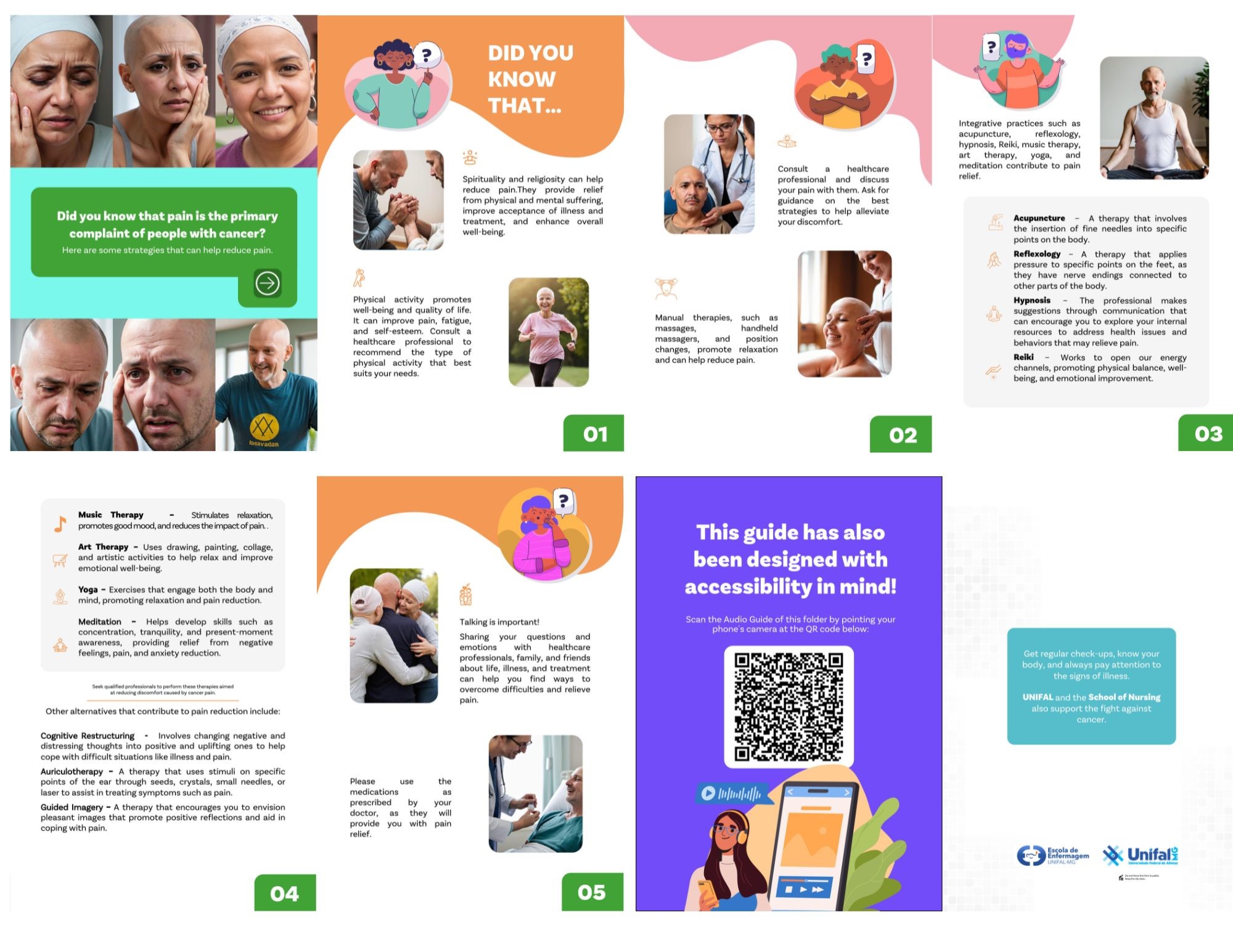
APPENDIX A – ILLUSTRATION (FOLDER)
Maria Coelho Leite Fava, Silvana, 2024. “Replication data for: Did you know that pain is the main complaint of people with cancer? https://doi.org/10.48331/scielodata.ALT6CN, Scielo Data, draft version.

ACKNOWLEDGEMENTS
The authors would like to thank the Federal University of Alfenas and its collaborators for all their support and contributions. All the authors contributed to: conception of the article, collection, analysis and discussion of the data, as well as the writing and critical review of the topic, providing linguistic help, writing assistance or review of the text.
-
Sponsoring sources:
none.
References
-
1 Instituto Nacional de Câncer. O que é câncer? [Internet]. Rio de Janeiro: INCA; 2022 [citado 2024 jun 22]. https://www.gov.br/inca/pt-br/assuntos/cancer/o-que-e-cancer
» https://www.gov.br/inca/pt-br/assuntos/cancer/o-que-e-cancer -
2 Instituto Nacional de Câncer. Introdução [Internet]. Rio de Janeiro: INCA; 2022 [citado 2024 jun 22]. https://www.gov.br/inca/pt-br/assuntos/cancer/numeros/estimativa/introducao
» https://www.gov.br/inca/pt-br/assuntos/cancer/numeros/estimativa/introducao -
3 Santos MO, Lima FCS, Martins LFL, Oliveira JFP, Almeida LM, Cancela MC. Estimativa de incidência de câncer no Brasil, 2023-2025. Rev Bras Cancerol. 2023;69(1):1-12. http://doi.org/10.32635/2176-9745.RBC.2023v69n1.3700
» http://doi.org/10.32635/2176-9745.RBC.2023v69n1.3700 -
4 Salvetti MG, Machado CSP, Donato SCT, Silva AM. Prevalence of symptoms and quality of life of cancer patients. Rev Bras Enferm. 2020;73(2):e20180287. http://doi.org/10.1590/0034-7167-2018-0287
» http://doi.org/10.1590/0034-7167-2018-0287 - 5 Izzo JM, Cunha AMR, Cesarino CB, Martins MR. The impact of chronic pain on the quality of life and on the functional capacity of cancer patients and their caregivers. Br J Pain. 2019;2(4):336-41.
-
6 Phenwan T. Relieving total pain in an adolescent: a case report. BMC Res Notes. 2018;11(1):265. http://doi.org/10.1186/s13104-018-3368-8 PMid:29720253.
» http://doi.org/10.1186/s13104-018-3368-8 -
7 Clark D. Cicely Saunders: a life and legacy. Oxford: Oxford University Press; 2018. http://doi.org/10.1093/oso/9780190637934.001.0001
» http://doi.org/10.1093/oso/9780190637934.001.0001 -
8 Dib RV, Gomes AMT, Ramos RS, França LCM, Paes LS, Fleury MLO. Pacientes com câncer e suas representações sociais sobre a doença: impactos e enfrentamentos do diagnostico. Rev Bras Cancerol. 2022;68(3):e061935. http://doi.org/10.32635/2176-9745.RBC.2022v68n3.1935
» http://doi.org/10.32635/2176-9745.RBC.2022v68n3.1935 -
9 Alexandrino A, Araújo BGS, Souza OM No. Itinerário diagnóstico terapêutico de familiares e pessoas com doença oncológica. Rev Enferm Atual In Derme. 2022;96(38):1-18. http://doi.org/10.31011/reaid-2022-v.96-n.38-art.1358
» http://doi.org/10.31011/reaid-2022-v.96-n.38-art.1358 -
10 Marcelo CAS. Necessidades de suporte para o cuidado de pessoas com câncer: estudo de método misto [dissertação]. Alfenas: Universidade Federal de Alfenas; 2022. https://www.unifal-mg.edu.br/ppgenf/biblioteca-digital-de-teses-e-dissertacoes/
» https://www.unifal-mg.edu.br/ppgenf/biblioteca-digital-de-teses-e-dissertacoes/ -
11 Couto Minuto J, Ceolin T, Fraga Mercali LM, Timm Bonow C, Vasconcelos Lopes C, Alvez Azevedo N. Práticas de cuidado realizadas por pessoas que convivem com o câncer. J Health NPEPS. 2021;6(2):185-201. http://doi.org/10.30681/252610105387
» http://doi.org/10.30681/252610105387 - 12 Polit DF, Beck CT. Fundamentos de pesquisa em enfermagem: avaliação de evidências para a prática da enfermagem. Porto Alegre: Artmed; 2018.
-
13 Aromataris E, Munn Z, editores. JBI manual for evidence synthesis. Adelaide: JBI; 2020. http://doi.org/10.46658/JBIMES-24-01
» http://doi.org/10.46658/JBIMES-24-01 -
14 Moreira MF, Nóbrega MML, Silva MIT. Comunicação escrita: contribuição para a elaboração de material educativo em saúde. Rev Bras Enferm. 2003;56(2):184-8. http://doi.org/10.1590/S0034-71672003000200015 PMid:14692286.
» http://doi.org/10.1590/S0034-71672003000200015 -
15 Ferraz CAG. Dor total de pessoas com câncer de pulmão avançado: estudo com método misto [tese]. Ribeirão Preto: Escola de Enfermagem de Ribeirão Preto, Universidade de São Paulo; 2022. https://www.teses.usp.br/teses/disponiveis/22/22133/tde-08032023-155826/
» https://www.teses.usp.br/teses/disponiveis/22/22133/tde-08032023-155826/ - 16 Koenig HG. Medicina, religião e saúde: o encontro da ciência e da espiritualidade. Trad. I. Abreu. Porto Alegre: L± 2012.
-
17 Prazeres YS. Suporte espiritual e religioso a pacientes com câncer, sob os cuidados paliativos, internados no A.C. Camargo Cancer Center [dissertação]. São Paulo: Fundação Antônio Prudente; 2018. https://accamargo.phlnet.com.br/MESTRADO/2018/YSPrazeres/YSPrazeres.pdf
» https://accamargo.phlnet.com.br/MESTRADO/2018/YSPrazeres/YSPrazeres.pdf -
18 Bai J, Brubaker A, Meghani SH, Bruner DW, Yeager KA. Spirituality and quality of life in black patients with cancer pain. J Pain Symptom Manage. 2018;56(3):390-8. http://doi.org/10.1016/j.jpainsymman.2018.05.020
» http://doi.org/10.1016/j.jpainsymman.2018.05.020 -
19 Cuthbert C, Twomey R, Bansal M, Rana B, Dhruva T, Livingston V, Daun JT, Culos-Reed SN. The role of exercise for pain management in adults living with and beyond cancer: a systematic review and meta-analysis. Support Care Cancer. 2023;31(5):254. http://doi.org/10.1007/s00520-023-07716-4 PMid:37039883.
» http://doi.org/10.1007/s00520-023-07716-4 -
20 Armijos-Pintado AF, García-García MA, Gómez-Salas YJ. Percepciones del paciente oncológico terminal ante intervenciones de enfermería no farmacológicas para el dolor en un hospital público, Bogotá 2021. MedUNAB. 2022;25(3):406-18. http://doi.org/10.29375/01237047.4273
» http://doi.org/10.29375/01237047.4273 -
21 Plinsinga ML, Singh B, Rose GL, Clifford B, Bailey TG, Spence RR, Turner J, Coppieters MW, McCarthy AL, Hayes SC. The effect of exercise on pain in people with cancer: a systematic review with meta-analysis. Sports Med. 2023;53(9):1737-52. http://doi.org/10.1007/s40279-023-01862-9 PMid:37213049.
» http://doi.org/10.1007/s40279-023-01862-9 -
22 Yamanaka M. A concept analysis of self-management of cancer pain. Asia Pac J Oncol Nurs. 2018;5(3):254-61. http://doi.org/10.4103/apjon.apjon_17_18 PMid:29963587.
» http://doi.org/10.4103/apjon.apjon_17_18 -
23 Hassankhani H, Orujlu S, Rahmani A, Sanaat Z, Dadashzadeh A, Allahbakhshian A. Enhancing cancer pain self-management: a holistic supporting model. SAGE Open Nurs. 2023;9:1-11. http://doi.org/10.1177/23779608231197581
» http://doi.org/10.1177/23779608231197581 -
24 Nascimento NS, Santos AT No, Alves PGJM. Métodos e técnicas não farmacológicos no tratamento da dor oncológica: revisão sistemática da literatura. Rev Bras Cancerol. 2022;68(4):e17266. http://doi.org/10.32635/2176-9745.RBC.2022v68n4.2667
» http://doi.org/10.32635/2176-9745.RBC.2022v68n4.2667 -
25 Valenta S, Miaskowski C, Spirig R, Zaugg K, Denhaerynck K, Rettke H, Spichiger E. Randomized clinical trial to evaluate a cancer pain self-management intervention for outpatients. Asia Pac J Oncol Nurs. 2022;9(1):39-47. http://doi.org/10.1016/j.apjon.2021.12.003 PMid:35528799.
» http://doi.org/10.1016/j.apjon.2021.12.003 -
26 Koller A, Miaskowski C, De Geest S, Opitz O, Spichiger E. Supporting self-management of pain in cancer patients: methods and lessons learned from a randomized controlled pilot study. Eur J Oncol Nurs. 2013;17(1):1-8. http://doi.org/10.1016/j.ejon.2012.02.006
» http://doi.org/10.1016/j.ejon.2012.02.006 -
27 Mao JJ, Ismaila N, Bao T, Barton D, Ben-Arye E, Garland EL, Greenlee H, Leblanc T, Lee RT, Lopez AM, Loprinzi C, Lyman GH, MacLeod J, Master VA, Ramchandran K, Wagner LI, Walker EM, Bruner DW, Witt CM, Bruera E. Integrative medicine for pain management in oncology: Society for Integrative Oncology-ASCO guideline. J Clin Oncol. 2022;40(34):3998-4024. http://doi.org/10.1200/JCO.22.01357 PMid:36122322.
» http://doi.org/10.1200/JCO.22.01357 -
28 Lopes-Júnior LC, Rosa GS, Pessanha RM, Schuab SIPC, Nunes KZ, Amorim MHC. Efficacy of the complementary therapies in the management of cancer pain in palliative care: a systematic review. Rev Lat Am Enfermagem. 2020;28:e3377. http://doi.org/10.1590/1518-8345.4213.3377
» http://doi.org/10.1590/1518-8345.4213.3377 -
29 Blackburn LM, Abel S, Green L, Johnson K, Panda S. The use of comfort kits to optimize adult cancer pain management. Pain Manag Nurs. 2019;20(1):25-31. http://doi.org/10.1016/j.pmn.2018.01.004
» http://doi.org/10.1016/j.pmn.2018.01.004 -
30 Zhang Y, Wang S, Ma X, Yuan Y, Cheng H, Lin L, Tian L. Massage therapy can effectively relieve cancer pain: a meta-analysis. Medicine (Baltimore). 2023;102(27):e33939. http://doi.org/10.1097/MD.0000000000033939 PMid:37417622.
» http://doi.org/10.1097/MD.0000000000033939 -
31 Sudirman, Indriyawati N, Dwiningsih SU. Does Digital Rubbing Massage-Pain Relief (DRMPain Relief) affect breast cancer patients’ pain, comfort, and quality of life? SAGE Open Nurs. 2023;9:23779608231176336. http://doi.org/10.1177/23779608231176336 PMid:37228299.
» http://doi.org/10.1177/23779608231176336 -
32 Centro de Câncer A.C. Camargo. Central da dor [Internet]. São Paulo; 2024 [citado 2024 jun 26]. https://accamargo.org.br/
» https://accamargo.org.br/ -
33 Brasil. Política Nacional de Práticas Integrativas e Complementares no SUS (PNPIC) [Internet]. Brasília: Ministério da Saúde; 2015 [citado 2024 maio 24]. https://bvsms.saude.gov.br/bvs/publicacoes/politica_nacional_praticas_integrativas_complementares_2ed.pdf
» https://bvsms.saude.gov.br/bvs/publicacoes/politica_nacional_praticas_integrativas_complementares_2ed.pdf -
34 Brasil. Saúde de A a Z: câncer [Internet]. Brasília: Ministério da Saúde; 2018 [citado 2024 maio 24]. https://www.gov.br/saude/pt-br/assuntos/saude-de-a-a-z/c/cancer
» https://www.gov.br/saude/pt-br/assuntos/saude-de-a-a-z/c/cancer -
35 Dalmedico MM, Toledo CM, Hembecker PK, Ávila JLS, Carvalho CKLD, Ioshii SO. Acupuntura no alívio da dor oncológica: revisão sistemática de ensaios clínicos randomizados. Fisioter Mov. 2021;34:e34203. http://doi.org/10.1590/fm.2021.34203
» http://doi.org/10.1590/fm.2021.34203 -
36 Dong B, Lin L, Chen Q, Qi Y, Wang F, Qian K, Tian L. Wrist-ankle acupuncture has a positive effect on cancer pain: a meta-analysis. BMC Complement Med Ther. 2021;21(1):24. http://doi.org/10.1186/s12906-020-03193-y PMid:33413347.
» http://doi.org/10.1186/s12906-020-03193-y -
37 Xu LP, Yang SL, Su SQ, Huang B-X, Lan X-M, Yao R-J. Effect of wrist-ankle acupuncture therapy combined with auricular acupuncture on cancer pain: a four-parallel arm randomized controlled trial. Complement Ther Clin Pract. 2020;39:101170. http://doi.org/10.1016/j.ctcp.2020.101170
» http://doi.org/10.1016/j.ctcp.2020.101170 -
38 Liou KT, Hung TKW, Meghani SH, Epstein AS, Li QS, Romero SAD, Cohen RB, Mao JJ. What if acupuncture were covered by insurance for pain management? A cross-sectional study of cancer patients at one academic center and 11 community hospitals. Pain Med. 2019;20(10):2060-8. http://doi.org/10.1093/pm/pnz087 PMid:31329938.
» http://doi.org/10.1093/pm/pnz087 -
39 Ruela LO, Iunes DH, Nogueira DA, Stefanello J, Gradim CVC. Efetividade da acupuntura auricular no tratamento da dor oncológica: ensaio clínico randomizado. Rev Esc Enferm USP. 2018;52(0):1-8. http://doi.org/10.1590/s1980-220x2017040503402
» http://doi.org/10.1590/s1980-220x2017040503402 - 40 Lima AB, Oliveira FS, Kochenborger L, Ross T, Eberhardt TD. Cuidados de enfermagem recomendados para avaliação e manejo da dor oncológica. Rev Ciênc Humanização Hosp Clín Passo Fundo. 2022;2(2):105-21.
-
41 Smith CA, Collins CT, Levett KM, Armour M, Dahlen HG, Tan AL, Mesgarpour B. Acupuncture or acupressure for pain management during labour. Cochrane Libr. 2020;2(2):CD009232. http://doi.org/10.1002/14651858.CD009232.pub2 PMid:32032444.
» http://doi.org/10.1002/14651858.CD009232.pub2 -
42 Utli H, Dinç M, Utli MDA. The effect of acupressure or reiki interventions on the levels of pain and fatigue of cancer patients receiving palliative care: a randomized controlled study. Explore. 2023;19(1):91-9. http://doi.org/10.1016/j.explore.2022.11.007 PMid:36476354.
» http://doi.org/10.1016/j.explore.2022.11.007 -
43 van de Castle B, Lukkahatai N, Billing BL, Huang X, Wu H, Zhang J, Abdi S, Kameoka J, Smith TJ. Nurse-administered auricular point acupressure for cancer-related pain. Integr Cancer Ther. 2023;22:15347354231198086. http://doi.org/10.1177/15347354231198086 PMid:37706457.
» http://doi.org/10.1177/15347354231198086 -
44 Yeh CH, Lukkahatai N, Huang X, Wu H, Wang H, Zhang J, Sun X, Smith TJ. Biological correlates of the effects of auricular point acupressure on pain. Pain Manag Nurs. 2023;24(1):19-26. http://doi.org/10.1016/j.pmn.2022.11.004 PMid:36543665.
» http://doi.org/10.1016/j.pmn.2022.11.004 -
45 Sikorskii A, Niyogi PG, Victorson D, Tamkus D, Wyatt G. Symptom response analysis of a randomized controlled trial of reflexology for symptom management among women with advanced breast cancer. Support Care Cancer. 2020;28(3):1395-404. http://doi.org/10.1007/s00520-019-04959-y
» http://doi.org/10.1007/s00520-019-04959-y -
46 Eaton LH, Beck SL, Jensen MP. An audio-recorded hypnosis intervention for chronic pain management in cancer survivors. Int J Clin Exp Hypn. 2021;69(4):422-40. http://doi.org/10.1080/00207144.2021.1951119 PMid:34309480.
» http://doi.org/10.1080/00207144.2021.1951119 -
47 Franco CL. Métodos não farmacológicos no alívio da dor relacionada ao rastreamento e diagnóstico do câncer de mama [dissertação]. Sergipe: Universidade Federal de Sergipe; 2021. http://doi.org/10.33448/rsd-v10i10.19173
» http://doi.org/10.33448/rsd-v10i10.19173 - 48 Instituto Nacional do Câncer. Reabilitação: práticas integrativas, como ioga restaurativa, reiki e arteterapia, ganham cada vez mais espaço no apoio a pacientes oncológicos. Rede Câncer. 2023;52:19-23.
-
49 Yangöz ŞT, Özer Z. The effect of music intervention on patients with cancer‐related pain: a systematic review and meta‐analysis of randomized controlled trials. J Adv Nurs. 2019;75(12):3362-73. http://doi.org/10.1111/jan.14184 PMid:31452232.
» http://doi.org/10.1111/jan.14184 -
50 Contim CLV, Santo FHE, Moretto IG. Aplicabilidade da auriculoterapia em pacientes oncológicos: revisão integrativa da literatura. Rev Esc Enferm USP. 2020;54:1-12. http://doi.org/10.1590/s1980-220x2019001503609
» http://doi.org/10.1590/s1980-220x2019001503609 -
51 Jan F, Singh M, Syed NA, Wani D, Bashir M. effectiveness of cognitive restructuring on intensity of pain in cancer patients: a pilot study in oncology department of tertiary care hospital. Asian Pac J Cancer Prev. 2022;23(6):2035-47. http://doi.org/10.31557/APJCP.2022.23.6.2035
» http://doi.org/10.31557/APJCP.2022.23.6.2035 - 52 Santos S, Grance G, Llanos V. De la subjetividad del dolor a una evaluación multidimensional de enfermería. Dolor. 2018;(69):32-4.
-
53 Ribeiro CO, Nogueira LA, Oshiro NN, Costa PCP, Brito TDJL, Guimarães PRB, Kalinke LP. Qualidade de vida relacionada à saúde e satisfação com o tratamento hospitalar de adultos com câncer: estudo observacional. Rev Bras Cancerol. 2023;69(1):1-9. http://doi.org/10.32635/2176-9745.RBC.2023v69n1.3554
» http://doi.org/10.32635/2176-9745.RBC.2023v69n1.3554
Edited by
-
Associate editor in charge:
Anita Perpetua Carvalho Rocha de Castro https://orcid.org/0000-0002-1451-8164
