 Erector spinae plane block for neuropathic pain management in cardiac surgery via sternotomy: systematic review and meta-analysis
ABSTRACT
BACKGROUND AND OBJECTIVES Neuropathic pain after cardiac surgeries, particularly following sternotomy, is challenging to manage with opioids due to side effects and limited efficacy. The Erector Spinae Plane Block (ESPB), introduced in 2016, offers promising analgesia by reducing postoperative pain and opioid use. However, further trials are needed to validate its efficacy and safety. The objective of this study was evaluate the efficacy of the ESPB compared to conventional analgesia in controlling postoperative pain and reducing opioid consumption in cardiac surgeries.
CONTENTS This systematic review and meta-analysis adhered to PRISMA guidelines. A comprehensive literature search was conducted in PubMed, SCOPUS, Cochrane, EMBASE, and Web of Science. Eligible studies included clinical trials examining the use of ESPB in cardiac surgeries. A total of 8 clinical studies met the inclusion criteria. Data analysis was performed using Review Manager (RevMan), with heterogeneity assessed by the I2 index. ESPB significantly reduced Intensive Care Unit (ICU stay (-27.10 hours, 95% CI: -27.21, -26.99) and intraoperative fentanyl consumption (-17.16 mg morphine-equivalent, 95% CI: -17.43, -16.88). Pain scores also showed notable reductions, particularly at the 4th hour post-extubation (-1.51, 95% CI: -1.98, -1.05) and the 6th hour (-0.67, 95% CI: -1.10, -0.25). Mean arterial pressure and heart rate showed no significant differences between the groups.
CONCLUSION ESPB shows promise in reducing postoperative pain, fentanyl use, extubation time and ICU stay in cardiac surgery. However, due to study heterogeneity, further randomized controlled trials are necessary to establish consistent recommendations.
Keywords:
Analgesia; Cardiac surgery; Erector spinae plane bloc; ERAS (Enhanced Recovery After Surgery); Perioperative,; Systematic review
Highlights
This systematic review and meta-analysis evaluated the effectiveness of the erector spinae plane block (ESPB) in cardiac surgeries with sternotomy, focusing on postoperative pain control and opioid reduction
ESPB significantly reduced pain scores at 4, 6, and 12 hours post-extubation, intraoperative fentanyl use, extubation time, and ICU stay
Despite promising results, the quality of evidence was moderate to low, and current data do not support the routine use of ESPB; further high-quality randomized trials are needed
RESUMO
JUSTIFICATIVA E OBJETIVOS A dor neuropática após cirurgias cardíacas, especialmente esternotomias, é de difícil manejo com opioides, devido à sua eficácia limitada e aos efeitos adversos. O bloqueio do plano do músculo eretor da espinha (ESPB), descrito em 2016, surge como uma alternativa promissora por reduzir a dor pós-operatória e o consumo de opioides. Este estudo teve como objetivo avaliar a eficácia do ESPB em comparação à analgesia convencional no controle da dor e na redução do uso de opioides em cirurgias cardíacas.
CONTEÚDO Esta revisão sistemática com meta-análise seguiu as diretrizes PRISMA. A busca bibliográfica foi realizada nas bases Pubmed, SCOPUS, Cochrane, EMBASE e Web of Science. Foram incluídos ensaios clínicos avaliando o uso do ESPB em cirurgias cardíacas. Oito estudos clínicos preencheram os critérios de inclusão. A análise estatística foi realizada no Review Manager (RevMan), e a heterogeneidade foi avaliada pelo índice I2. O ESPB reduziu significativamente o tempo de internação em Unidade de Terapia Intensiva (UTI) (-27,10 horas; IC 95%: -27,21 a -26,99) e o consumo intraoperatório de fentanil (-17,16 mg equivalentes de morfina; IC 95%: -17,43 a -16,88). As escalas de dor também apresentaram reduções relevantes, especialmente na 4ª hora (-1,51; IC 95%: -1,98 a -1,05) e na 6ª hora (-0,67; IC 95%: -1,10 a -0,25) após a extubação. Pressão arterial média e frequência cardíaca não apresentaram diferenças significativas entre os grupos.
CONCLUSÃO O ESPB demonstrou potencial para reduzir dor pós-operatória, consumo de fentanil, tempo de extubação e de internação em unidade de terapia intensiva em cirurgias cardíacas. No entanto, devido à heterogeneidade metodológica e ao risco de viés dos estudos incluídos, são necessários ensaios clínicos randomizados com maior rigor para confirmar esses achados e orientar recomendações clínicas consistentes.
Descritores:
Analgesia; Bloqueio do músculo eretor da espinha; Cirurgia cardíaca; ERAS (Recuperação Intensificada no Pós-operatório); Perioperatório; Revisão sistemática
Destaques
Esta revisão sistemática e meta-análise avaliou a eficácia do bloqueio do plano eretor da espinha (ESPB) em cirurgias cardíacas com esternotomia, com foco no controle da dor pós-operatória e na redução de opioides
O ESPB reduziu significativamente os escores de dor em 4, 6 e 12 horas após a extubação, o uso de fentanil intraoperatório, o tempo de extubação e a permanência na UTI
Apesar dos resultados promissores, a qualidade da evidência foi de moderada a baixa, e os dados atuais não apoiam o uso rotineiro do ESPB; são necessários mais estudos randomizados de alta qualidade
INTRODUCTION
Neuropathic pain in the postoperative period of cardiac surgeries, such as coronary artery bypass grafting (CABG), can be particularly challenging to manage conventional analgesics, including opioids. Studies suggest that dysesthesia, a form of neuropathic pain, is common following sternotomy and is associated with the severity of postoperative pain, indicating that it may not be adequately relieved by opioids1 . Furthermore, the literature emphasizes that persistent postoperative pain, which may have a neuropathic component, affects a significant proportion of patients after cardiac surgery2 .
Opioid analgesics, widely used for managing acute and chronic pain, are associated with a range of side effects that can limit their clinical application. Common adverse effects include constipation, nausea, vomiting, dizziness, and drowsiness3-5 . Moreover, opioids can cause respiratory depression, a potentially fatal complication considered one of the primary risks associated with their use6 .
The American College of Cardiology Foundation and the American Heart Association highlight that thoracic epidural anesthesia can improve postoperative pulmonary outcomes, but its use must be carefully considered, weighing potential benefits against risks. Epidural hematoma formation is a significant concern, particularly in patients requiring systemic anticoagulation during surgery, with an estimated incidence ranging from 1/1,500 to 1/10,0007 . Another possible complication is sympathetic blockade, resulting in significant hypotension, which can be particularly problematic in patients with compromised cardiac function8 .
The Erector Spinae Plane Block (ESPB) was first described in 20169 as a regional anesthesia technique to provide thoracic analgesia. The technique involves injecting a local anesthetic into the fascial plane deep to the erector spinae muscle near the transverse process of the thoracic vertebrae, allowing for the spread of the anesthetic across multiple vertebral levels.
ESPB has been investigated as a perioperative analgesia modality in cardiac surgeries with sternotomy. Studies suggest that ESPB may reduce postoperative pain and opioid consumption, enhancing patient recovery. For example, a meta-analysis10 demonstrated that ESPB significantly reduced pain scores in the first 12 hours post-extubation and decreased opioid consumption within 24 hours post-surgery. Another study showed that ESPB reduced the need for rescue analgesia and mechanical ventilation time11 . However, the efficacy of ESPB compared to other analgesic techniques, such as Thoracic Epidural Analgesia (TEA), remains debated. A study12 compared ESPB with TEA and found that ESPB provided comparable analgesia with fewer complications.
While ESPB shows promise as an effective analgesic technique in cardiac surgeries with sternotomy, current literature indicates the need for more high-quality randomized controlled trials to validate these findings and establish robust clinical guidelines10,12,13 .
This systematic review with meta-analysis primarily aims to evaluate the efficacy of ESPB in postoperative pain control in cardiac surgery, as assessed by Visual Analogue Scale (VAS) and Numeric Rating Scale (NRS) at 4, 6, and 12 hours post-extubation. Patient age and body mass index (BMI) were also evaluated to understand the homogeneity of the studied populations. Secondary outcomes included intraoperative fentanyl consumption, extubation time, length of intensive care unit (ICU) stay and intraoperative hemodynamic.
The present study’s objective was to evaluate the efficacy of the ESPB compared to conventional analgesia in controlling postoperative pain and reducing opioid consumption in cardiac surgeries.
CONTENTS
This systematic review followed the methodological protocol based on PRISMA (Preferred Reporting Items for Systematic Reviews and Meta-Analyses) guidelines. The search and data analysis were conducted by using Pubmed, SCOPUS, Cochrane, and EMBASE databases from January to July 2024. The search terms used were: ("Spinae Plane Block") AND ("Cardiac surgery" OR "Cardiac surgeries" OR "Coronary bypass" OR "Coronary artery bypass").
First, inclusion and exclusion criteria were defined for the selected studies. Articles discussing the use of ESPB as an analgesic technique in cardiac surgeries, with outcomes related to postoperative pain and opioid consumption in patients over 18 years old, were included. Studies involving other types of surgeries or analgesic techniques, as well as non-original articles such as narrative reviews, letters to the editor, and editorials, were excluded.
The database search yielded an initial set of 149 studies, which underwent screening (Figure 1).
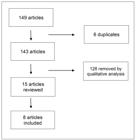
Studies selection. Flow diagram of the study selection process. Out of 149 records, 6 duplicates were removed and 128 excluded by qualitative analysis, resulting in 15 articles reviewed and 8 included in the meta-analysis.
A total of 141 studies were excluded for not meeting eligibility criteria leaving 8 clinical trials. The initial screening was based on titles and abstracts, followed by full-text reading to determine eligibility. Two independent reviewers assessed the selected studies to ensure accuracy and consistency in applying the inclusion and exclusion criteria. Any discrepancies between reviewers were resolved by consensus or by the intervention of a third reviewer.
After the final selection of studies relevant data were extracted, including study characteristics, intervention methods, outcomes of interest, and main results. These data were organized into a data extraction table to facilitate comparative analysis. The risk of bias of the included studies was assessed using the RoB 2 (Risk of Bias 2.0) tool developed by the Cochrane Collaboration, which evaluates five domains of bias in randomized clinical trials. Tables 1 and 2 summarize the studies used in the meta-analysis. Ethical approval and informed consent were not required for this study as it did not involve human or animal subjects.
The risk of bias for the included randomized trials was assessed using the Cochrane RoB 2 tool. Table 3 summarizes the evaluation across five domains. While some studies presented low risk in all domains, others had concerns or high risk related to performance bias and lack of blinding, particularly in subjective outcomes such as pain scores.
Statistical analysis
The statistical analysis involved organizing the data in Microsoft Excel and performing the meta-analysis using Review Manager (RevMan) software. Initially, all data extracted from the included studies were entered into an Excel spreadsheet, which contained columns for study data, including author, year of publication, number of participants, characteristics of the intervention and control groups, outcomes of interest (such as postoperative pain levels and opioid consumption), and other pertinent variables.
For the RevMan, the statistical analysis was configured using fixed or random effects models, as appropriate, based on the heterogeneity of the included studies, measured by the I2 index. The meta-analysis was performed to combine the results of the selected studies and generate overall effect estimates. Forest plots were produced to visualize the meta-analysis results, showing the effect estimates of each individual study and the combined estimate. Additionally, RevMan was used to perform sensitivity analyses, which helped assess the robustness of the results by testing how excluding certain studies or altering analytical parameters impacts the overall results.
Publication bias tests, such as Egger's funnel plot, were also conducted to identify and assess the presence of publication bias in the included studies.
RESULTS
Age is often a critical confounding factor in medical studies. When study and control groups have significantly different mean ages, this disparity can impact outcomes of interest, such as postoperative pain, recovery time, and treatment response. To address this, this meta-analysis included a comparison of the age heterogeneity among patients (Figure 2).

For instance, a study11 reported a mean age difference of -0.70, with a 95% confidence interval (CI) of [-3.60, 2.20], suggesting that the average age in their study group is not significantly different from that in the comparison groups. Similarly, another study12 showed a mean age difference of 2.05 with a 95% CI of [-3.27, 7.37], indicating no significant difference in mean age. Conversely, a third study14 had a mean age difference of -8.10 with a 95% CI of [-16.40, 0.20], suggesting a trend towards younger ages in the study group, although the confidence interval still includes the possibility of no difference.
A study15 presented a mean age difference of 1.10 with a 95% CI of [-2.12, 4.32], again indicating no significant difference in mean age. Another study16 , however, reported a statistically significant mean age difference of -1.30 with a 95% CI of [-1.93, -0.67], suggesting that the study group was slightly younger than the comparison group. Similarly, other study17 reported a mean age difference of -5.12 with a 95% CI of [-14.79, 4.55], indicating a trend towards younger ages in the study group, though the confidence interval also includes the possibility of no difference. A study18 showed a mean age difference of 4.10 with a 95% CI of [-1.31, 9.51], indicating no significant difference in mean age.
Finally, another study19 reported a mean age difference of 0.85 with a 95% CI of [-2.39, 4.09], again showing no significant difference in mean age. The combined mean age difference across all studies was -1.07, with a 95% CI of [-1.65, -0.48], suggesting a statistically significant difference, with a trend towards younger ages in the study groups overall. The heterogeneity analysis yielded a Chi2 value of 11.91 with 7 degrees of freedom (p=0.10) and an I2 value of 41%. The I2 statistic indicates moderate heterogeneity among the studies, suggesting that approximately 41% of the variation between studies is due to real differences rather than chance.
In addition to age, this meta-analysis evaluated the effects of various interventions on BMI. The individual study results varied (Figure 2). A study14 , contributing 10.2% to the meta-analysis weight, reported a mean difference of -1.90 (95% CI: -4.23 to 0.43). Another study18 , contributing 9.9% to the weight, showed a mean difference of -1.30 (95% CI: -3.66 to 1.06). A study19 , with the largest contribution of 62.0%, reported a mean difference of -0.11 (95% CI: -1.05 to 0.83). Another study11 , contributing 17.9%, revealed a mean difference of 0.50 (95% CI: -1.26 to 2.26). The combined mean difference across all studies was -0.30 (95% CI: -1.04 to 0.44), with low heterogeneity indicated by a Chi2 value of 3.46, df = 3 (p=0.33) and an I2 of 13%, suggesting that variations among the studies were small and not statistically significant.
Moreover, pain scores at the 4th hour post-extubation were analyzed across the study groups, with negative values favoring ESPB. A study16 provided data that could not be estimated. Another study19 reported a weight of 0.9% and a pain difference of -0.72 (95% CI: [-5.66, 4.22]), showing no significant difference. A study11 had a weight of 3.1% and a pain difference of -1.43 (95% CI: [-4.04, 1.18]), also with no significant difference. Another study14 showed a weight of 26.9% and a pain difference of -2.10 (95% CI: [-2.99, -1.21]), indicating a significant difference favoring ESPB. A study presented a pain difference of -1.30 (95% CI: [-1.86, -0.74]), again favoring ESPB. The combined pain difference was -1.51 (95% CI: [-1.98, -1.05]), indicating a significant pain reduction in the ESPB group. Heterogeneity was low, with a Chi2 of 2.32, df = 3 (p=0.51) and an I2 of 0%. It is noteworthy that data from a study17 could not be calculated as the mean and standard deviation for the ESPB group were zero (Figure 3A).

By the 6th hour post-extubation, pain differences between study groups showed the following results (Figure 3B). A study11 reported a weight of 27.2% and a pain difference of -1.14 (95% CI: [-1.95, -0.33]), indicating a significant reduction in pain favoring ESPB. Another study14 contributed 20.2% to the weight with a pain difference of -1.80 (95% CI: [-2.74, -0.86]), also indicating a significant reduction in pain favoring ESPB. A study17 had a weight of 52.5% and a pain difference of 0.00 (95% CI: [-0.59, 0.59]), showing no significant difference between the groups. The combined pain difference was -0.67 (95% CI: [-1.10, -0.25]), indicating a significant reduction in pain in the ESPB group. However, heterogeneity was high, with a Chi2 of 11.81, df = 2 (p=0.003) and an I2 of 83%, suggesting considerable variability among the studies.
At the 12th hour post-extubation (Figure 3C). A study11 presented a weight of 8.8% and a pain difference of 1.13 (95% CI: [0.04, 2.22]), indicating a significant increase in pain in the ESPB group. Another study14 had a weight of 14.0% and a pain difference of -0.10 (95% CI: [-0.96, 0.76]), showing no significant difference between groups. A study17 contributed 25.5% with a pain difference of -0.24 (95% CI: [-0.88, 0.40]), again showing no significant difference. Another study17 showed a weight of 51.7% and a pain difference of -1.00 (95% CI: [-1.45, -0.55]), indicating a significant reduction in pain favoring ESPB. The combined pain difference was -0.49 (95% CI: [-0.81, -0.17]), suggesting a slight but significant reduction in pain in the ESPB group. Heterogeneity was high, with a Chi2 of 14.95, df = 3 (p=0.002) and an I2 of 80%, indicating considerable variability among the studies.
The meta-analysis compared intraoperative fentanyl consumption (Figure 3D), converted to its morphine-equivalent dose in milligrams, between the ESPB group and the control group across seven studies. The results showed that the mean difference in morphine-equivalent fentanyl consumption significantly favored the ESPB group, with an overall weighted mean difference of -17.16 mg (95% CI: -17.43 to -16.88; p<0.00001). This conversion was performed to standardize the comparison, as 100 µg of fentanyl is approximately equivalent to 10 mg of morphine. Data indicates a substantial reduction in intraoperative opioid requirements in patients who received ESPB. Although heterogeneity was very high (I2 = 100%), likely due to differences in methodologies and patient populations, the pooled analysis robustly supports the efficacy of ESPB in reducing intraoperative opioid consumption.
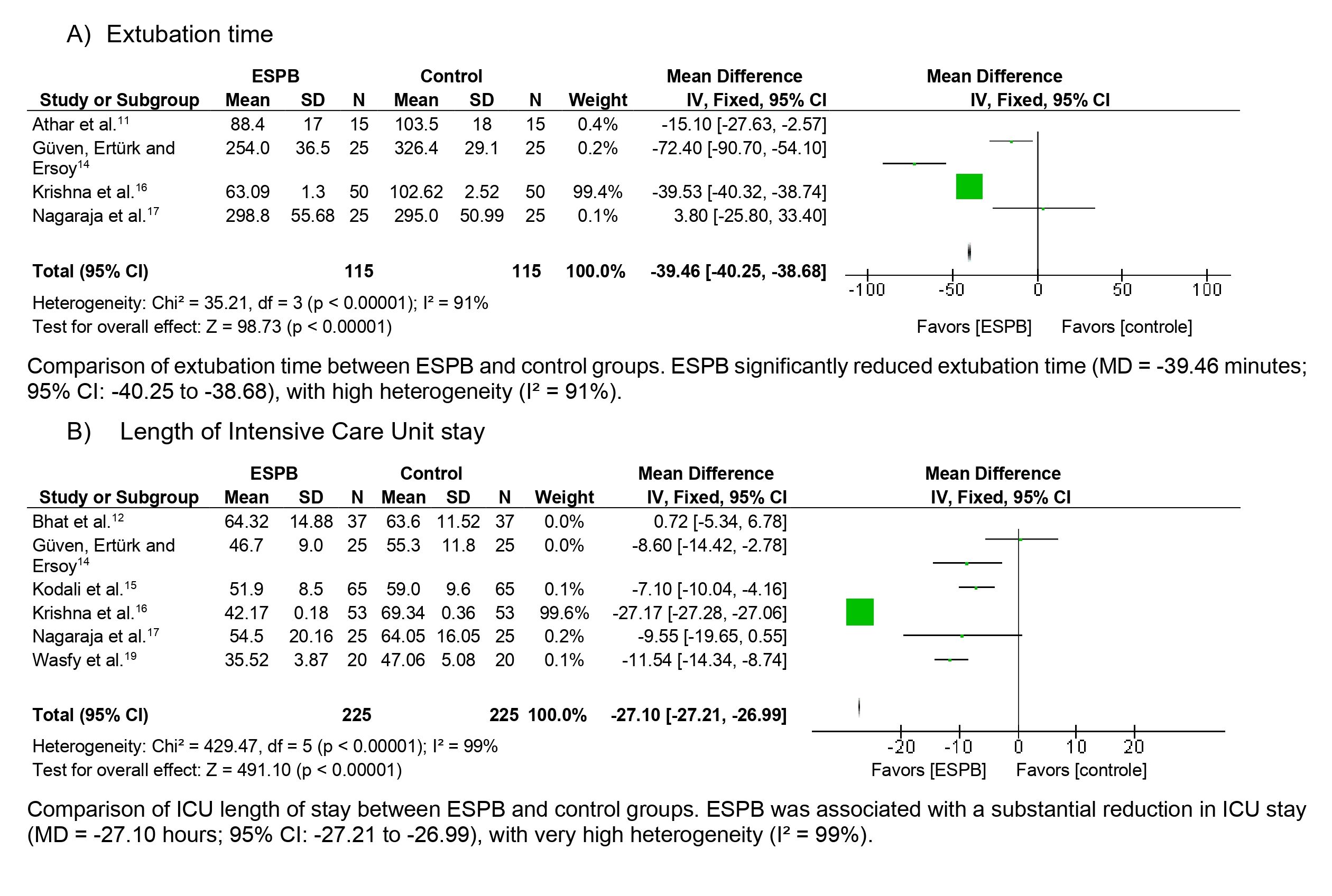
A study16 contributed the majority of the weight in the meta-analysis (99.4%), showing a mean difference of -39.53 minutes with a 95% CI of [-40.32, -38.74], suggesting a consistent and highly significant reduction in extubation time. However, another study17 reported a mean difference of 3.80 minutes with a 95% CI of [-25.80, 33.40], indicating a non-significant variation and possibly no difference in extubation time. The combined mean difference in extubation time was -39.46 minutes with a 95% CI of [-40.25, -38.68], showing a significant reduction. However, heterogeneity among the studies was high, with a Chi2 of 35.21, df = 3 (p<0.00001) and an I2 of 91%. This indicates considerable variability among the studies, which could be due to different clinical practices, types of surgery, or patient characteristics (Figure 4A).
The ICU stay duration analysis in patients undergoing cardiac surgery showed that ESPB significantly reduced ICU stay, with an overall mean difference of -27.10 hours (95% CI: -27.21 to -26.99; p<0.00001). Individual studies consistently supported this finding14,15,17,19 , reporting shorter ICU stays in the ESPB group, while a study16 showed the largest reduction (42.17 vs. 69.34 hours). Despite high heterogeneity (I2 = 99%), the results strongly indicate ESPB’s effectiveness in reducing ICU stay, accelerating recovery, and improving outcomes (Figure 4B).
The intraoperative Heart Rate (HR) results at T1, T2, and T3 demonstrate no statistically significant differences between the ESPB and Control groups across the evaluated time points. At T1, representing baseline heart rate, the standardized mean difference (SMD) was 0.12 (95% CI: [-0.18, 0.43]), indicating comparable baseline HR values in both groups prior to the start of surgical procedures (Figure 5A). Following this, at T2, measured after sternotomy, SMD was -0.26 (95% CI: [-0.57, 0.05]), suggesting a trend toward a lower heart rate in the ESPB group compared to the control group; however, the confidence interval crossed zero, highlighting that the observed difference was not statistically significant (Figure 5B). Finally, at T3, corresponding to the end of surgery, SMD was 0.04 (95% CI: [-0.27, 0.34]), reflecting a negligible and statistically insignificant difference in HR between the groups (Figure 5C). Overall, the results across these times consistently show that the ESPB and control groups exhibited similar intraoperative heart rate patterns, with no meaningful distinctions observed.

The meta-analysis evaluated mean arterial pressure (MAP) at three time points: baseline (T1), after sternotomy (T2), and at the end of surgery (T3). At baseline (T1), SMD was 0.00 (95% CI: -0.31 to 0.31; p = 0.99), indicating no significant difference between the ESPB and control groups, with low heterogeneity (I2 = 29%) (Figure 6A). After sternotomy (T2), the overall SMD was 0.09 (95% CI: -0.26 to 0.43; p=0.62), also showing no significant difference, although high heterogeneity (I2 = 97%) reflected variability in the results (Figure 6B). At the end of surgery (T3), SMD was -0.26 (95% CI: -0.57 to 0.05; p=0.10), again showing no significant difference, with low heterogeneity (I2 = 12%) (Figure 6C). These findings suggest that ESPB has no consistent impact on MAP at any of the evaluated time points, with results remaining comparable to the control group throughout.

DISCUSSION
This systematic review has provided insights into the use of ESPB for postoperative pain management in cardiac surgeries. While locoregional blocks are already recommended by the Enhanced Recovery After Surgery (ERAS) protocol for various surgeries, the lack of consistent evidence has hindered the formal recommendation of ESPB for cardiac procedures. This analysis demonstrates that ESPB offers significant benefits in pain control at the 4th, 6th, and 12th hours post-extubation. Additionally, there was a reduction in intraoperative fentanyl use and a shorter extubation time for patients who received the block.
The pathophysiology behind the reduced intraoperative opioid consumption is attributed to the ESPB blocking spinal nerves and dorsal branches, resulting in effective analgesia in the thoracic region. This leads to a lower perceived pain intensity by patients, which in turn reduces the need for the administration of opioids such as fentanyl20-22 . This reduction may enhance the decrease in postoperative opioid use through the mechanism of opioid-induced hyperalgesia (OIH).
OIH is a well-documented phenomenon where opioid administration, such as fentanyl, paradoxically increases pain sensitivity. Several studies demonstrate this effect and explore its underlying mechanisms. A study conducted a systematic review and meta-analysis suggesting that high intraoperative doses of opioids, particularly remifentanil, are significantly associated with increased acute postoperative pain, potentially indicative of OIH23 . Although the impact of other opioids, such as fentanyl, remains unclear due to limited data, the study highlights the clinical relevance of OIH.
Another study investigated fentanyl-induced hyperalgesia in rats, demonstrating that fentanyl administration can lead to prolonged pain sensitivity, mediated by pain-facilitating processes associated with NMDA receptors24 . This study suggests that OIH may be prevented by using NMDA receptor antagonists, such as ketamine. A study also explored fentanyl-induced hyperalgesia in an animal model, showing that perioperative fentanyl administration increases hyperalgesia and the expression of pro-inflammatory cytokines in the spinal cord and dorsal root ganglia, exacerbating postoperative pain25 . Another study performed a systematic review comparing high and low intraoperative opioid doses, concluding that higher doses are associated with increased postoperative pain and hyperalgesia, although the certainty of the evidence is low26 .
In addition to its advantages in pain control, the block carries a lower risk of causing sympathetic blockades due to its anatomical location and the pattern of local anesthetic spread. Cadaveric studies indicate that ESPB predominantly affects the dorsal branches of the spinal nerves, with limited involvement of the ventral branches and the paravertebral space27,28 . This means the block does not consistently extend to the paravertebral space, where the thoracic sympathetic chains are located, thereby reducing the likelihood of a significant sympathetic blockade28,29 .
Moreover, the ESPB technique, which involves injecting the local anesthetic into the fascial plane deep to the erector spinae muscle, results in spread that is primarily restricted to muscular and fascial tissues, without directly reaching sympathetic structures27,28 . This contrasts with blocks such as the thoracic paravertebral block, which are more likely to affect the sympathetic system due to their proximity to the paravertebral space29 .
However, the meta-analysis revealed some heterogeneity (I2 = 13%), primarily due to the diversity of the included studies. For instance, different pain scales were utilized across studies, such as VAS19 and NRS16 . Although studies indicate a significant correlation between the two scales, they are not entirely interchangeable. For example, a study involving chronic pain patients found that the correlation between the scales was moderate to substantial, but the agreement was not acceptable at the 95% level30 . Another study on pediatric patients with sickle cell disease revealed a significant correlation between VAS and NRS but also noted that VAS scores were consistently lower than NRS scores30 . Additionally, some studies compared ESPB with TEA instead of conventional analgesia12,17 . These methodological variations contribute to the observed heterogeneity, making it challenging to draw more unified conclusions.
The risk of bias assessment, performed using the RoB 2 tool, showed that only part of the studies had a low risk across all domains. The lack of blinding of participants and outcome assessors was the main limitation, especially for subjective outcomes such as postoperative pain. These factors reduce confidence in the estimated effect and underscore the need for cautious interpretation of the results.
Overall, despite the favorable outcomes of ESPB in terms of pain relief and opioid reduction, further research is essential to strengthen the evidence base. Future studies should focus on standardized methodologies and consistent comparisons to enable the formal incorporation of ESPB into pain management protocols for cardiac surgeries.
CONCLUSION
Thus, this systematic review highlighted the potential benefits of ESPB in managing postoperative pain in cardiac surgeries, including significant reductions in pain scores at 4, 6, and 12 hours post-extubation, decreased intraoperative fentanyl use, and shorter extubation times. Therefore, despite promising results, the overall quality of evidence is considered moderate to low, and current data do not support the routine use of ESPB in cardiac surgery. High-quality randomized clinical trials with standardized methodologies are needed to confirm these findings and support the incorporation of ESPB into enhanced recovery protocols for cardiac surgery.
-
Sponsoring sources:
none.
References
-
1 Alston RP, Pechon P. Dysaesthesia associated with sternotomy for heart surgery. Br J Anaesth. 2005;95(2):153-8. http://doi.org/10.1093/bja/aei152 PMid:15894562.
» http://doi.org/10.1093/bja/aei152 -
2 Wiech M, Żurek S, Kurowicki A, Horeczy B, Czuczwar M, Piwowarczyk P, Widenka K, Borys M. Erector spinae plane block decreases chronic postoperative pain severity in patients undergoing coronary artery bypass grafting. J Clin Med. 2022;11(19):5949. http://doi.org/10.3390/jcm11195949 PMid:36233819.
» http://doi.org/10.3390/jcm11195949 -
3 Daoust R, Paquet J, Cournoyer A, Piette É, Morris J, Lessard J, Castonguay V, Williamson D, Chauny JM. Side effects from opioids used for acute pain after emergency department discharge. Am J Emerg Med. 2020;38(4):695-701. http://doi.org/10.1016/j.ajem.2019.06.001 PMid:31182367.
» http://doi.org/10.1016/j.ajem.2019.06.001 -
4 Hatten BW, Cantrill SV, Dubin JS, Ketcham EM, Runde DP, Wall SP, Wolf SJ, Wolf SJ, Byyny R, Carpenter CR, Diercks DB, Gemme SR, Gerardo CJ, Godwin SA, Hahn SA, Hatten BW, Haukoos JS, Hickey SM, Kaji A, Kwok H, Lo BM, Mace SE, Nazarian DJ, Promes SB, Shah KH, Shih RD, Silvers SM, Smith MD, Thiessen MEW, Tomaszewski CA, Valente JH, Wall SP, Winger J, Cantrill SV, Hirshon JM, Mims M, Schulz T, American College of Emergency Physicians Clinical Policies Subcommittee (Writing Committee) on Opioids. Clinical policy: critical issues related to opioids in adult patients presenting to the emergency department. Ann Emerg Med. 2020;76(3):e13-39. http://doi.org/10.1016/j.annemergmed.2020.06.049 PMid:32828340.
» http://doi.org/10.1016/j.annemergmed.2020.06.049 -
5 Paice JA, Portenoy R, Lacchetti C, Campbell T, Cheville A, Citron M, Constine LS, Cooper A, Glare P, Keefe F, Koyyalagunta L, Levy M, Miaskowski C, Otis-Green S, Sloan P, Bruera E. Management of Chronic Pain in Survivors of Adult Cancers: American Society of Clinical Oncology Clinical Practice Guideline. J Clin Oncol. 2016;34(27):3325-45. http://doi.org/10.1200/JCO.2016.68.5206 PMid:27458286.
» http://doi.org/10.1200/JCO.2016.68.5206 -
6 Baldo BA. Toxicities of opioid analgesics: respiratory depression, histamine release, hemodynamic changes, hypersensitivity, serotonin toxicity. Arch Toxicol. 2021;95(8):2627-42. http://doi.org/10.1007/s00204-021-03068-2 PMid:33974096.
» http://doi.org/10.1007/s00204-021-03068-2 -
7 Kleiman AM, Sanders DT, Nemergut EC, Huffmyer JL. Chronic poststernotomy pain: incidence, risk factors, treatment, prevention, and the Anesthesiologistʼs Role. Reg Anesth Pain Med. 2017;42(6):698-708. http://doi.org/10.1097/AAP.0000000000000663 PMid:28937533.
» http://doi.org/10.1097/AAP.0000000000000663 -
8 Lahtinen P, Kokki H, Hynynen M. Pain after cardiac surgery: a prospective cohort study of 1-year incidence and intensity. Anesthesiology. 2006;105(4):794-800. http://doi.org/10.1097/00000542-200610000-00026 PMid:17006079.
» http://doi.org/10.1097/00000542-200610000-00026 -
9 Forero M, Adhikary SD, Lopez H, Tsui C, Chin KJ. The erector spinae plane block: a novel analgesic technique in thoracic neuropathic pain. Reg Anesth Pain Med. 2016;41(5):621-7. http://doi.org/10.1097/AAP.0000000000000451 PMid:27501016.
» http://doi.org/10.1097/AAP.0000000000000451 -
10 Wang W, Yang W, Liu A, Liu J, Yuan C. The analgesic effect of ultrasound-guided erector spinae plane block in median sternotomy cardiac surgery in adults: a systematic review and meta-analysis of randomized controlled trials. J Cardiothorac Vasc Anesth. 2024;38(11):S1053077024003495. http://doi.org/10.1053/j.jvca.2024.05.019 PMid:38890084.
» http://doi.org/10.1053/j.jvca.2024.05.019 -
11 Athar M, Parveen S, Yadav M, Siddiqui OA, Nasreen F, Ali S, Haseen MA. A Randomized Double-Blind Controlled Trial to Assess the Efficacy of Ultrasound-Guided Erector Spinae Plane Block in Cardiac Surgery. J Cardiothorac Vasc Anesth. 2021;35(12):3574-80. http://doi.org/10.1053/j.jvca.2021.03.009 PMid:33832806.
» http://doi.org/10.1053/j.jvca.2021.03.009 -
12 Bhat HA, Khan T, Puri A, Narula J, Mir AH, Wani SQ, Ashraf HZ, Sidiq S, Kabir S. To evaluate the analgesic effectiveness of bilateral erector spinae plane block versus thoracic epidural analgesia in open cardiac surgeries approached through midline sternotomy. J Anesth Analg Crit Care. 2024;4(1):17. http://doi.org/10.1186/s44158-024-00148-4 PMid:38429852.
» http://doi.org/10.1186/s44158-024-00148-4 -
13 Guay J, Kopp S. Epidural analgesia for adults undergoing cardiac surgery with or without cardiopulmonary bypass. Cochrane Database Syst Rev. 2019;3(3):CD006715. http://doi.org/10.1002/14651858.CD006715.pub3 PMid:30821845.
» http://doi.org/10.1002/14651858.CD006715.pub3 -
14 Güven BB, Ertürk T, Ersoy A. Postoperative analgesic effectiveness of bilateral erector spinae plane block for adult cardiac surgery: a randomized controlled trial. J Health Sci Med. 2022;5(1):150-5. http://doi.org/10.32322/jhsm.1013908
» http://doi.org/10.32322/jhsm.1013908 -
15 Kodali VRK, Shree S, Prasad M, Sambandam KKG, Karthekeyan RB, Vakamudi M. A Comparative Study of Bilateral Erector Spinae Block Versus Intravenous Dexmedetomidine for Perioperative Pain Management in Patients Undergoing Off-Pump Coronary Artery Bypass Grafting - A Single-Blind Randomized Controlled Trial. J Cardiothorac Vasc Anesth. 2022;36(11):4085-92. http://doi.org/10.1053/j.jvca.2022.07.015 PMid:35970671.
» http://doi.org/10.1053/j.jvca.2022.07.015 -
16 Krishna SN, Chauhan S, Bhoi D, Kaushal B, Hasija S, Sangdup T, Bisoi AK. Bilateral Erector Spinae Plane Block for Acute Post-Surgical Pain in Adult Cardiac Surgical Patients: A Randomized Controlled Trial. J Cardiothorac Vasc Anesth. 2019;33(2):368-75. http://doi.org/10.1053/j.jvca.2018.05.050 PMid:30055991.
» http://doi.org/10.1053/j.jvca.2018.05.050 -
17 Nagaraja P, Ragavendran S, Singh N, Asai O, Bhavya G, Manjunath N, Rajesh K. Comparison of continuous thoracic epidural analgesia with bilateral erector spinae plane block for perioperative pain management in cardiac surgery. Ann Card Anaesth. 2018;21(3):323-7. http://doi.org/10.4103/aca.ACA_16_18 PMid:30052229.
» http://doi.org/10.4103/aca.ACA_16_18 - 18 Oğur L, Akesen S, Gören S, Kan İİ, Başağan Moğol E, Gurbet A. Comparison of Intra- and postoperative effectiveness of erector spinae plane block and patient controlled analgesia in patients undergoing coronary artery bypass grafting surgery. Am J Transl Res. 2022;14(4):2469-79. PMid:35559403.
-
19 Wasfy SF, Kamhawy GA, Omar AH, Abd El Aziz HF. Bilateral continuous erector spinae block versus multimodal intravenous analgesia in coronary bypass surgery. A Randomized Trial. Egypt J Anaesth. 2021;37(1):152-8. http://doi.org/10.1080/11101849.2021.1904548
» http://doi.org/10.1080/11101849.2021.1904548 -
20 Kwon HM, Kim DH, Jeong SM, Choi KT, Park S, Kwon HJ, Lee JH. Does Erector Spinae Plane Block Have a Visceral Analgesic Effect?: A Randomized Controlled Trial. Sci Rep. 2020;10(1):8389. http://doi.org/10.1038/s41598-020-65172-0 PMid:32439926.
» http://doi.org/10.1038/s41598-020-65172-0 -
21 Park JW, Kim EK, Park S, Han WK, Lee J, Lee JH, Nahm FS. Erector spinae plane block in laparoscopic colorectal surgery for reducing opioid requirement and facilitating early ambulation: a double-blind, randomized trial. Sci Rep. 2023;13(1):12056. http://doi.org/10.1038/s41598-023-39265-5 PMid:37491384.
» http://doi.org/10.1038/s41598-023-39265-5 -
22 Abu Elyazed MM, Mostafa SF, Abdelghany MS, Eid GM. Ultrasound-guided erector spinae plane block in patients undergoing open epigastric hernia repair: a prospective randomized controlled study. Anesth Analg. 2019;129(1):235-40. http://doi.org/10.1213/ANE.0000000000004071 PMid:30801359.
» http://doi.org/10.1213/ANE.0000000000004071 -
23 Fletcher D, Martinez V. Opioid-induced hyperalgesia in patients after surgery: a systematic review and a meta-analysis. Br J Anaesth. 2014;112(6):991-1004. http://doi.org/10.1093/bja/aeu137 PMid:24829420.
» http://doi.org/10.1093/bja/aeu137 -
24 Célèrier E, Rivat C, Jun Y, Laulin JP, Larcher A, Reynier P, Simonnet G. Long-lasting Hyperalgesia Induced by Fentanyl in Rats. Anesthesiology. 2000;92(2):465-465. http://doi.org/10.1097/00000542-200002000-00029 PMid:10691234.
» http://doi.org/10.1097/00000542-200002000-00029 -
25 Chang L, Ye F, Luo Q, Tao Y, Shu H. Increased Hyperalgesia and Proinflammatory Cytokines in the Spinal Cord and Dorsal Root Ganglion After Surgery and/or Fentanyl Administration in Rats. Anesth Analg. 2018;126(1):289-97. http://doi.org/10.1213/ANE.0000000000002601 PMid:29135586.
» http://doi.org/10.1213/ANE.0000000000002601 -
26 Albrecht E, Grape S, Frauenknecht J, Kilchoer L, Kirkham KR. Low‐ versus high‐dose intraoperative opioids: A systematic review with meta‐analyses and trial sequential analyses. Acta Anaesthesiol Scand. 2020;64(1):6-22. http://doi.org/10.1111/aas.13470 PMid:31506922.
» http://doi.org/10.1111/aas.13470 -
27 Ivanusic J, Konishi Y, Barrington MJ. A cadaveric study investigating the mechanism of action of erector spinae blockade. Reg Anesth Pain Med. 2018;43(6):567-71. http://doi.org/10.1097/AAP.0000000000000789 PMid:29746445.
» http://doi.org/10.1097/AAP.0000000000000789 -
28 Luchsinger M, Varela V, Diwan S, Prats-Galino A, Sala-Blanch X. Erector spinae plane infiltration and anterior rami of spinal nerve: a cadaveric study. Reg Anesth Pain Med. 2024;rapm-2024-105691. http://doi.org/10.1136/rapm-2024-105691 PMid:38950933.
» http://doi.org/10.1136/rapm-2024-105691 -
29 Nielsen MV, Moriggl B, Hoermann R, Nielsen TD, Bendtsen TF, Børglum J. Are single‐injection erector spinae plane block and multiple‐injection costotransverse block equivalent to thoracic paravertebral block? Acta Anaesthesiol Scand. 2019;63(9):1231-8. http://doi.org/10.1111/aas.13424 PMid:31332775.
» http://doi.org/10.1111/aas.13424 -
30 Myrvik MP, Drendel AL, Brandow AM, Yan K, Hoffmann RG, Panepinto JA. A comparison of pain assessment measures in pediatric sickle cell disease: visual analog scale versus numeric rating scale. J Pediatr Hematol Oncol. 2015;37(3):190-4. http://doi.org/10.1097/MPH.0000000000000306 PMid:25575295.
» http://doi.org/10.1097/MPH.0000000000000306
Edited by
-
Associate editor in charge:
Ana Flávia Vieira Leite https://orcid.org/0009-0007-1747-1078