 Social role of doulas in Brazil and in the world: a scope review
Abstract
Background: Doulas are an occupational activity that offers emotional, physical, and educational support to pregnant women.
Objective: The aim of the study was mapping available studies on the social role played by doulas in Brazil and worldwide.
Methods: Searches were carried out in the databases of Excerpta Medica dataBASE (EMBASE), the Cochrane Library, SciELO, the Virtual Health Library, and the PubMed search engine for publications up to December 2022 and without chronological restriction. Original articles were included that addressed the social activities carried out by the doulas, studies in the English language, and those available in full.
Results: The final sample consisted of 31 original articles, 51.6% of which highlighted the activities performed by doulas, 34.5% the access of doulas to hospital and community-based health services (CBHS), and 13% highlighted the economic role of the doula in the public and private health systems.
Conclusions: The insertion of doulas in Hospitals and CBHS has proven to be important for the public and private health system, being also fundamental in the health education of women in situations of social vulnerability. The subject is still quite incipient in the scientific literature, requiring studies to be conducted to deepen the area.
Keywords:
doulas; pregnant women; health education
Resumo
Introdução: A doulagem é uma atividade ocupacional que oferece apoio emocional, físico e educacional a mulheres grávidas.
Objetivo: Realizar um mapeamento dos estudos disponíveis sobre o papel social desenvolvido pelas doulas no Brasil e no mundo.
Métodos: Foram realizadas pesquisas nas bases de dados da EMBASE, Cochrane Library, Scientific Electronic Library Online (SciELO), Biblioteca Virtual em Saúde e o buscador de pesquisa da United States National Library of Medicine (PubMed) para publicações até dezembro de 2022 e sem restrição cronológica. Foram incluídos artigos originais que abordavam as atividades sociais realizadas pelas doulas, estudos na língua inglesa e aqueles disponíveis na integra.
Resultados: A amostra final foi composta de 31 artigos originais, dos quais 51,6% destacaram as atividades desempenhadas pelas doulas, 34,5% o acesso delas aos serviços de saúde hospitalares e àqueles de base comunitária (CBD), e 13 % o papel econômico da doula nos sistemas público e privado de saúde.
Conclusões: A inserção das doulas em hospitais e CBD tem se mostrado importante para o sistema de saúde público e privado, sendo também fundamental na educação em saúde das mulheres em situação de vulnerabilidade social. O assunto é ainda bastante incipiente na literatura científica, necessitando que estudos sejam conduzidos para o aprofundamento da área.
Palavras-chave:
doulas; gestantes; educação em saúde
INTRODUCTION
Doulas are professionals who offer emotional, physical, and educational support to pregnant women, before and during childbirth, and in the puerperium. The word "doula" is of Greek origin and means "woman who serves another woman." The aim of the doulas is to help women have a positive childbirth experience and feel safer and more confident during this period. In addition, they can also offer support for breastfeeding and adaptation to the new role of maternity1.
The role of doulas in assisting pregnant women is wide and varied and has been the subject of many studies in recent years. Although it is an old profession, many people are still unaware of the role of doulas2. The first registration of doulas in the United States was made in 1979 by the physician Dana Louise Raphael3, who became a reference in the care of pregnant women. In Brazil, the work of doulas is considered relatively recent and had its first records at the Sophia Feldman Maternity Hospital, in Minas Gerais, in 19974.
The work of community-based doulas (CBD) is limited to some groups of women, such as migrants, high-risk women, black women, and socially vulnerable women. In 2005, the National Plan for Obstetric and Neonatal Care Policies in Brazil5 recognized the work of doulas as extremely important for humanized care in public and private health systems. In developed countries, doulas work both in hospitals and as CBD6-8 .
Therefore, this study aimed to understand the social role played by doulas in assisting pregnant women considering the national and international contexts. The importance of social actions developed by doulas for humanized care in the public and private health system is undeniable, and it is essential to understand the role they play in assisting pregnant women in different territories. For this, a scoping review was carried out to identify available studies on this subject.
METHODS
This scoping review followed the methodological rigor described by the PRISMA-ScR checklist (Preferred Reporting Items for Systematic reviews and Meta-Analyzes extension for Scoping Reviews [PRISMA-ScR])9. The protocol was prospectively registered on the Open Science Framework (OSF) platform (https://osf.io/n9pd8 ; https://doi.org/10.17605/OSF.IO/N9PD8), which allow to obtain comprehensive results by mapping the existing literature.
For this, six methodological steps were defined:
-
Identification of the topic to be addressed10;
-
Identification of relevant research for the study
-
Selection of studies based on the established eligibility criteria
-
Extraction of relevant information
-
Critical analysis of the quality, results, and contributions of each study; and
-
Ability to synthesize the identified knowledge11
The question: "What is the importance of the social work of doulas in Brazil and in the world?" was proposed for this study, through the acronym PCC, representing Population, Concept, and Context. In this study, the P refers to doulas, the C to social actions carried out by the doulas, and the C to the work performed in Brazil and in the world.
Searches were conducted in the databases of EMBASE, Cochrane Library, SciELO, PubMed search engine, and the Virtual Health Library (BVS (Biblioteca Virtual em Saúde), Literatura Latino-Americana e do Caribe em Ciências da Saúde (LILACS), Medical Literature Analysis and Retrieval System Online (MEDLINE), Base de Dados de Enfermagem (BDENF), MOSAICOIntegrative Health, and RHS Repository) for publications up to December 28, 2022, and without chronological restriction. The terms selected for this scoping review were separated by the Boolean algorithms AND OR, and the clinical trial option was chosen for studies from the Cochrane library database (Table 1).
The following inclusion criteria were considered: Original articles that addressed the social activities carried out by the doulas, studies available in full and in English.
Searches were exported to the Rayyan platform (https://www.rayyan.ai/) to exclude duplicates and select information for this study. Two researchers (FIDC and WFE) evaluated the titles and abstracts individually, according to the selection criteria. For conflicting assessments, a third researcher (KCSG) was invited. Therefore, a critical evaluation of the selected studies was done, according to the level of evidence described by Melnyk and Fineout-Overholt12, as follows:
-
Meta-analysis of multiple controlled studies
-
Experimental design
-
Quasi-experimental design
-
Non-experimental design
-
Case reports or systematically obtained data of verifiable quality or program evaluation data
-
Qualitative studies
-
Opinion of reputable authorities based on clinical competence or opinion of expert committees13,14.
Data from the final sample were entered by double typing in Microsoft Excel 2016 spreadsheets, which allowed the data to be checked. Then, the data were imported into the JAMOVI 2.0 statistical program, for descriptive analysis15.
RESULTS
A total of 241 articles were found, of which 71 were duplicates. After reading the titles and abstracts, 97 articles were selected for full reading. With the application of the inclusion criteria, 31 articles made up the final sample5,6,8,7,10,16 -41 (Table 2 and Figure 1).
Studies included in the Scoping Review about the social role of doulas in Brazil and around the world.

In the final sample, 19.3% (n=6) of the studies were published between 2012 and 20158,20,21,28 ,29,41 or >202110,18,19,25,34 ,37 and 51.7% (n=16) between 2016 and 20205-7 ,17,22 ,23,26 ,27,30 -33,35 ,36,38 (Figure 2). The most prevalent countries of publications were the United States7,8,16,19,25 ,26,28 -30,33 ,39 (35.5%), Sweden18,21 ,22,37 ,38 (19.4%), England6,17,31,32 ,35 (16.1%), Australia34,41, and Iran20,36 (6.5%), and Brazil5, Mexico40, Norway27, Taiwan23, and Canada24 (3.2%). Considering the thematic axis of each study, 51.6% of the articles showed "Doula activities"5-8,10,19-22 ,24,27 ,31,32 ,36,38 ,41; 35,4% determined the "access of doulas to health services"16-18,25 ,30,33 -35,37 ,39,40 and 13% described the "Economic Model of Doula work"23,26 ,28,29 (Figure 2).
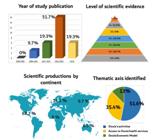
Diagram of the results obtained in the scoping review about social work developed by doulas in Brazil in the World.
Regarding the level of scientific evidence, according to Melnyk and Fineout-Overholt12, 38.6% (n=12) of the articles were classified in Level 4 (Qualitative studies) and 22.6% (n=7) in Level II (Randomized clinical trials) (Figure 2 ).
DISCUSSION
This scope review allowed the identification of the role of doulas in Brazil and internationally. These data are important in the design of public health policies, assistance to the population with social vulnerability, projections of economic and assistance models of the work of doulas and their workplace. Following this logic, the activities carried out by doulas, their access to health services, and their work models will be discussed in this topic6 ,10,22 ,28,29 ,31,36 ,39-41 .
The work of doulas in hospitals has been widely highlighted in several studies. The study by Lanning and Klaman30, conducted in the United States, evaluated the voluntary work model of doulas in hospitals, noting that 96.34% of pregnant women were satisfied with the care offered by hospital doulas. These results are extremely important, as they show that the presence of doulas in hospitals can significantly contribute to a more harmonized and less stressful experience during pregnancy and labor. These results are consistent with those found by Lima et al. in Brazil5, where it was observed that the support of hospital doulas contributed to a safe and humanized pregnancy, in addition to providing comfort to the parturient. In addition, it is important to consider that doulas in hospitals not only provide emotional and physical assistance, but are also concerned with monitoring, guidance, and information for pregnant women and their families during the entire period of pregnancy and childbirth10,19,25 .
CBD play a key role in assisting women in situations of social vulnerability or who have little family support or lack of a support network. Its community actions aim to welcome and understand the cultural and linguistic needs of pregnant women, in addition to creating ties between the community and these women. This is particularly important, as pregnant women from communities with greater social vulnerability may face additional challenges, including economic, social, and cultural barriers, which may interfere with their access to the necessary care and health care network during pregnancy10,18,21 ,22,37 ,38.
Available studies have shown that the assistance of community doulas is highly effective in improving maternal and child health indicators. For example, studies carried out in England6,32 showed that pregnant women included in community programs have high rates of acceptance of doula care, higher breastfeeding rates, and a reduction in the number of cesarean sections. In addition, research carried out in England and in other countries shows that CBD values the cultural and social connection of pregnant women, in addition to improving their communication and interpersonal skills. These doulas also have a positive impact on the birth rate, reduce pre- and postpartum anxiety levels, increase mothers’ selfesteem, and significantly reduce stress. In addition, they play important roles in maternal and child care, and build bridges between pregnant women and their communities. Thus, the strengthening of CBD is a valuable strategy to improve assistance to pregnant women in socially vulnerable communities. The emotional, guidance, and information care provided to pregnant women are essential to ensure that they have a respectful, safe, and humanized pregnancy and delivery, in addition to contributing to the improvement of maternal and child health indicators.
Doulas’ support for pregnant women has resulted in positive health indicators in various public and private health programs in Brazil and around the world, which can serve as a basis for structuring plans and projects for public policies in women’s and children’s health. It is important to emphasize that there is a positive correlation between the economic vulnerability of pregnant women and the need for support from a doula, as observed in studies carried out in Sweden, Norway, the United States and England6,8,21,22,27 ,29. Studies have shown positive results about doula assistance in supporting breastfeeding in low-income North American women and the results demonstrated by these studies point to an increase in the prevalence of breastfeeding when compared to mothers who did not have the care of doulas29. Other studies have shown that women in situations of low social vulnerability need assistance from doulas and access to health education focused on the humanization of childbirth, when compared to women who were not in this situation of vulnerability and had easier access to health services.
As shown above, it is possible to associate worldwide the role of doulas in different population segments, especially in women in situations of greater social vulnerability and immigrants. Access to the CBD points to positive experiences in the birth of children of refugee women in Sweden, due to insertion and support for motherhood and pre- and postpartum care21. These findings were confirmed by another survey, conducted by Haugaard et al.27, who evaluated the support of multicultural doulas for migrant women in Norway, confirming that the health education activities conducted by doulas have a positive influence on increasing self-esteem and care during pregnancy. These data demonstrate how access to doulas by migrant women can contribute to positive outcomes in maternal and child health, and how the education and training of these multicultural doulas is crucial for this assistance to be carried out effectively and without entailing risks for the pregnant woman and the baby.
In this sense, the studies included in this scope review showed that the parturients assisted by volunteer doulas were predominantly migrant and low-income women6,7,21,22 ,27,29 ,32. Analyzing the economic impacts resulting from the activity of the doula, it was possible to notice that 13% of the articles highlighted the benefits of the doulas in the reduction of cesarean sections, hospital admissions and post-abortion care23,26,28,29. A study carried out in the United States28 evaluated birth rates and the financial costs of doula services, pointing out that pre- and postpartum doula support significantly reduced the number of cesarean sections. These results were reported in studies that showed that the activity of the doula as a mechanism for reducing the number of cesarean sections, impacting the financial systems related to health28. Furthermore, pregnant women who received pre- and postnatal care from doulas had lower cesarean rates, which significantly reduced the costs associated with hospitalization and childbirth for these pregnant women.
As a partial limitation of this study, we highlight the high heterogeneity in the level of scientific evidence described by Melnyk and Fineout-Overholt12 and the option for the English language, which may have reduced the sample. Similarly, the non-inclusion of gray literature also reduces the number of articles. Nevertheless, this scope review offers theoretical and practical support to awaken interest in other studies on the doula activity and impact and to outline projects that contribute to the strengthening or implementation of public policies related to maternal and child health.
CONCLUSION
In this way, the insertion of doulas in Hospitals and CBD brings positive results for both the pregnant woman and the unborn child, especially when considering women in a situation of social vulnerability and those with a deficient family or community support network. In addition, doulas can contribute positively to pregnant women’s Health Education, contributing to greater maternal-fetal health.
Despite that and because of the role of doulas, more in-depth studies are needed, especially those that assess the training of doulas.
DATA AVAILABILITY STATEMENT
The datasets generated and/or analyzed during the study are available from the corresponding author upon request.
How to cite:
Caldeira FID, Gasque KCS, Eleutério WF, Bessa JR, Muller GB. Social role of doulas in Brazil and in the world: a scope review. Cad Saúde Colet. 2025;33(4):e33040388. https://doi.org/10.1590/1414-462X202533040388
REFERENCES
-
1 Silva RM, Barros NF, Jorge HMF, Melo LPT, Ferreira Junior AR. Evidências qualitativas sobre o acompanhamento por doulas no trabalho de parto e no parto. Ciênc Saúde Coletiva. 2012;17(10):278394. https://doi.org/10.1590/s1413-81232012001000026
» https://doi.org/10.1590/s1413-81232012001000026 -
2 Rocha GLB, Melo MCP, Morais SRS, Matos KKC. Atuação de doulas no serviço público de saúde. Rev Enferm UFSM. 2020;10:66. https://doi.org/10.5902/2179769237216
» https://doi.org/10.5902/2179769237216 -
3 Dynes MM, Binzen S, Twentyman E, Nguyen H, Lobis S, Mwakatundu N, et al. Client and provider factors associated with companionship during labor and birth in Kigoma Region, Tanzania. Midwifery. 2019;69:92101. https://doi.org/10.1016/j.midw.2018.11.002
» https://doi.org/10.1016/j.midw.2018.11.002 -
4 Oliveira SC, Oliveira MC, Rosa RAO, Cândido JLA, Barbosa PG, Acioli TG. Health’s professionals knowledge on the doulas in amaternity of the Recife, PE. Rev Enferm UFPE on line. 2009;3(1):54-60. https://doi.org/10.5205/reuol.260-1481-3-RV.0301200908
» https://doi.org/10.5205/reuol.260-1481-3-RV.0301200908 -
5 Lima PO, Pinheiro MLP, Miranda JL, Guedes HM, Almeida HF. Comprehension on doula’s work at a maternity in Jequitinhonha Valley – MG. Rev Bras Saude Mater Infant. 2019;19(3):569-74. https://doi.org/10.1590/1806-93042019000300005
» https://doi.org/10.1590/1806-93042019000300005 -
6 Spiby H, Mcleish J, Green J, Darwin Z. ’The greatest feeling you get, knowing you have made a big difference’: survey findings on the motivation and experiences of trained volunteer doulas in England. BMC Pregnancy Childbirth. 2016;16(1):289. https://doi.org/10.1186/s12884-016-1086-6
» https://doi.org/10.1186/s12884-016-1086-6 -
7 Hans SL, Thullen M, Henson LG, Lee H, Edwards RC, Bernstein VJ. Promoting positive mother-infant relationships: a randomized trial of community doula support for young mothers. Infant Mental Health Journal. 2013;34(5):446-57. https://doi.org/10.1002/imhj.21400
» https://doi.org/10.1002/imhj.21400 -
8 8. Hans SL, Edwards RC, Zhang Y. Randomized controlled trial of doula-home-visiting services: impact on maternal and infant health. Matern Child Health J. 2018;22(Suppl 1):105-13. https://doi.org/10.1007/s10995-018-2537-7
» https://doi.org/10.1007/s10995-018-2537-7 -
9 Tricco AC, Lillie E, Zarin W, O’Brien KK, Colquhoun H, Levac D, et al. PRISMA Extension for Scoping Reviews (PRISMA-ScR): checklist and explanation. Ann Intern Med. 2018;169(7):467-73. https://doi.org/10.7326/M18-0850
» https://doi.org/10.7326/M18-0850 -
10 Schytt E, Wahlberg A, Eltayb A, Tsekhmestruk N, Small R, Lindgren H. Community-based bilingual doula support during labour and birth to improve migrant women’s intrapartum care experiences and emotional well-being-Findings from a randomised controlled trial in Stockholm, Sweden [NCT03461640]. PLoS One. 2022;17(11):e0277533. https://doi.org/10.1371/journal.pone.0277533
» https://doi.org/10.1371/journal.pone.0277533 -
11 11. Mallidou AA, Atherton P, Chan L, Frisch N, Glegg S, Scarrow G. Protocol of a scoping review on knowledge translation competencies. Syst Rev. 2017;6(1):93. https://doi.org/10.1186/s13643-017-0481-z
» https://doi.org/10.1186/s13643-017-0481-z - 12 Melnyk BM, Fineout-Overholt E. Evidence-based practice in nursing & healthcare: a guide to best practice. Philadelphia: Lippincott Williams & Wilkins; 2022.
-
13 Esteves D, Caldeira FID, Ifanger I, Lima DC, Gradim CVC. Performance of the dentist in assisting adolescents in Brazil. Res Soc Dev. 2021;10(15):e188101522244. https://doi.org/10.33448/rsdv10i15.22244
» https://doi.org/10.33448/rsdv10i15.22244 -
14 Longhi MTM, Silva RUO, Gasque KCS, Lima DC, Oliveira JM, Caldeira FID. Impact of oral comorbidities on incarcerated women: an integrative review. Rev Esp Sanid Penit. 2022;24(3):94-100. https://doi.org/10.18176/resp.00057
» https://doi.org/10.18176/resp.00057 -
15 Caldeira FID, Carvalho JA, Quil LCC, Alvitos R, Zandim-Barcelos DL. Rehabilitation possibilities for patients with dental erosion: a clinical case review. J. Health NPEPS. 2022;7(2):e10599. https://doi.org/10.30681/2526101010599
» https://doi.org/10.30681/2526101010599 -
16 Campbell DA, Lake MF, Falk M, Backstrand JR. A randomized control trial of continuous support in labor by a lay doula. J Obstet Gynecol Neonatal Nurs. 2006;35(4):456-64. https://doi.org/10.1111/j.15526909.2006.00067.x
» https://doi.org/10.1111/j.15526909.2006.00067.x -
17 Darwin Z, Green J, McLeish J, Willmot H, Spiby H. Evaluation of trained volunteer doula services for disadvantaged women in five areas in England: women’s experiences. Health Soc Care Community. 2017;25(2):466-77. https://doi.org/10.1111/hsc.12331
» https://doi.org/10.1111/hsc.12331 -
18 Ström I, Söderman A, Johansson M. Experiences of working as a cultural doula in Sweden: an interview study. Eur J Midwifery. 2021;5:20. https://doi.org/10.18332/ejm/137365
» https://doi.org/10.18332/ejm/137365 -
19 Adams C. Pregnancy and birth in the United States during the COVID-19 pandemic: the views of doulas. Birth. 2022;49(1):116-22. https://doi.org/10.1111/birt.12580
» https://doi.org/10.1111/birt.12580 - 20 Akbarzadeh M, Masoudi Z, Zare N, Vaziri F. Comparison of the effects of doula supportive care and acupressure at the BL32 point on the mother’s anxiety level and delivery outcome. Iran J Nurs Midwifery Res. 2015;20(2):239-46. PMID: 25878703.
-
21 Akhavan S, Edge D. Foreign-born women’s experiences of Community-Based Doulas in Sweden--a qualitative study. Health Care Women Int. 2012;33(9):833-48. https://doi.org/10.1080/07399332.2011.646107
» https://doi.org/10.1080/07399332.2011.646107 -
22 Byrskog U, Small R, Schytt E. Community-based bilingual doulas for migrant women in labour and birth – findings from a Swedish register-based cohort study. BMC Pregnancy Childbirth. 2020;20(1):721. https://doi.org/10.1186/s12884-020-03412-x
» https://doi.org/10.1186/s12884-020-03412-x -
23 Chen CC, Lee JF. Effectiveness of the doula program in Northern Taiwan. Tzu Chi Med J. 2020;32(4):373-9. https://doi.org/10.4103/tcmj.tcmj_127_19
» https://doi.org/10.4103/tcmj.tcmj_127_19 -
24 Eftekhary S, Klein MC, Xu SY. The life of a Canadian doula: successes, confusion, and conflict. J Obstet Gynaecol Can. 2010;32(7):642-9. https://doi.org/10.1016/s1701-2163(16)34567-4
» https://doi.org/10.1016/s1701-2163(16)34567-4 -
25 Falconi AM, Bromfield SG, Tang T, Malloy D, Blanco D, Disciglio RS, et al. Doula care across the maternity care continuum and impact on maternal health: Evaluation of doula programs across three states using propensity score matching. EClinicalMedicine. 2022;50:101531. https://doi.org/10.1016/j.eclinm.2022.101531
» https://doi.org/10.1016/j.eclinm.2022.101531 -
26 Greiner KS, Hersh AR, Hersh SR, Remer JM, Gallagher AC, Caughey AB, et al. The cost-effectiveness of professional doula care for a woman’s first two births: a decision analysis model. J Midwifery Womens Health. 2019;64(4):410-20. https://doi.org/10.1111/jmwh.12972
» https://doi.org/10.1111/jmwh.12972 -
27 Haugaard A, Tvedte SL, Severinsen MS, Henriksen L. Norwegian multicultural doulas’ experiences of supporting newly-arrived migrant women during pregnancy and childbirth: a qualitative study. Sex Reprod Healthc. 2020;26:100540. https://doi.org/10.1016/j.srhc.2020.100540
» https://doi.org/10.1016/j.srhc.2020.100540 - 28 Kozhimannil KB, Attanasio LB, Jou J, Joarnt LK, Johnson PJ, Gjerdingen DK. Potential benefits of increased access to doula support during childbirth. Am J Manag Care. 2014;20(8):e340-52. PMID: 25295797.
-
29 Kozhimannil KB, Attanasio LB, Hardeman RR, O’Brien M. Doula care supports near-universal breastfeeding initiation among diverse, low-income women. J Midwifery Womens Health. 2013;58(4):378-82. https://doi.org/10.1111/jmwh.12065
» https://doi.org/10.1111/jmwh.12065 -
30 Lanning RK, Klaman SL. Evaluation of an innovative, hospital-based volunteer doula program. J Obstet Gynecol Neonatal Nurs. 2019;48(6):654-63. https://doi.org/10.1016/j.jogn.2019.08.004
» https://doi.org/10.1016/j.jogn.2019.08.004 -
31 McLeish J, Redshaw M. A qualitative study of volunteer doulas working alongside midwives at births in England: mothers’ and doulas’ experiences. Midwifery. 2018;56:53-60. https://doi.org/10.1016/j.midw.2017.10.002
» https://doi.org/10.1016/j.midw.2017.10.002 -
32 McLeish J, Redshaw M. "Being the best person that they can be and the best mum": a qualitative study of community volunteer doula support for disadvantaged mothers before and after birth in England. BMC Pregnancy Childbirth. 2019;19(1):21. https://doi.org/10.1186/s12884-018-2170-x
» https://doi.org/10.1186/s12884-018-2170-x -
33 Neel K, Goldman R, Marte D, Bello G, Nothnagle MB. Hospital-based maternity care practitioners’ perceptions of doulas. Birth. 2019;46(2):355-61. https://doi.org/10.1111/birt.12420
» https://doi.org/10.1111/birt.12420 -
34 O’Rourke K, Yelland J, Newton M, Shafiei T. How and when doula support increases confidence in women experiencing socioeconomic adversity: Findings from a realist evaluation of an Australian volunteer doula program. PLoS One. 2022;17(6):e0270755. https://doi.org/10.1371/journal.pone.0270755
» https://doi.org/10.1371/journal.pone.0270755 -
35 Richards E, Lanning RK. Volunteer doulas’ experiences supporting cesarean births: a qualitative analysis for preliminary program evaluation. Midwifery. 2019;77:117-22. https://doi.org/10.1016/j.midw.2019.07.001
» https://doi.org/10.1016/j.midw.2019.07.001 -
36 Robati A, Molaei B, Motamed N, Hatami R, Gholami H, Birjandi A, et al. Effects of the presence of the doula on pregnant women’s anxiety and pain during delivery: a randomized controlled trial. J Adv Med Biomed Res. 2020;28(131):316-22. https://doi.org/10.30699/jambs.28.131.316
» https://doi.org/10.30699/jambs.28.131.316 -
37 Schytt E, Wahlberg A, Small R, Eltayb A, Lindgren H. The community-based bilingual doula – a new actor filling gaps in labour care for migrant women. Findings from a qualitative study of midwives’ and obstetricians’ experiences. Sex Reprod Healthc. 2021;28:100614. https://doi.org/10.1016/j.srhc.2021.100614
» https://doi.org/10.1016/j.srhc.2021.100614 -
38 Schytt E, Wahlberg A, Eltayb A, Small R, Tsekhmestruk N, Lindgren H. Community-based doula support for migrant women during labour and birth: study protocol for a randomised controlled trial in Stockholm, Sweden (NCT03461640). BMJ Open. 2020;10(2):e031290. https://doi.org/10.1136/bmjopen-2019-031290
» https://doi.org/10.1136/bmjopen-2019-031290 -
39 Shlafer RJ, Hellerstedt WL, Secor-Turner M, Gerrity E, Baker R. Doulas’ perspectives about providing support to incarcerated women: a feasibility study. Public Health Nurs. 2015;32(4):316-26. https://doi.org/10.1111/phn.12137
» https://doi.org/10.1111/phn.12137 -
40 Smid M, Campero L, Cragin L, Gonzalez Hernandez D, Walker D. Bringing two worlds together: exploring the integration of traditional midwives as doulas in Mexican public hospitals. Health Care Women Int. 2010;31(6):475-98. https://doi.org/10.1080/07399331003628438
» https://doi.org/10.1080/07399331003628438 -
41 Stevens J, Dahlen H, Peters K, Jackson D. Midwives’ and doulas’ perspectives of the role of the doula in Australia: a qualitative study. Midwifery. 2011;27(4):509-16. https://doi.org/10.1016/j.midw.2010.04.002
» https://doi.org/10.1016/j.midw.2010.04.002
Edited by
-
Editor:
Guilherme L. Werneck. https://orcid.org/0000-0003-1169-1436