Early selection in a second-generation progeny trial of Eucalyptus urophylla S.T. Blake
Abstract
This study evaluated the efficacy of early selection in a second-generation Eucalyptus urophylla progeny trial by comparing three selection strategies: mass selection, combined selection (among and within families), and within-family selection. A randomized complete block design was used, comprising 23 progenies with 30 single-tree plot replicates. Diameter at breast height (DBH) and total height were measured annually from one to five years after planting. Early selection efficiency was tested for DBH at a selection intensity of 11.9% to compare the percentage of selected individuals across ages. The performance evaluated by the consistency of selected individuals across ages varied greatly. From the third year onward, the estimated proportion of consistently selected individuals reached 75%, indicating reliability of early selection for seed orchard establishment. Among the strategies, combined selection (among and within families) proved most effective at five years, yielding an estimated genetic gain of 6.3%.
Keywords:
Eucalyptus spp.; genetic correlation; microsatellite markers; tree breeding
INTRODUCTION
Forest plantations have evolved considerably in recent decades (Lodh et al. 2025) and Eucalyptus spp. cultivation has achieved substantial genetic advances, particularly for cellulose production. Eucalyptus urophylla is a leading species in Brazil, due to its high productivity, adaptability and significant progress in breeding programs (Silva et al. 2019, Rocha et al. 2025). Selection strategies are critical for optimizing breeding decisions, enhancing the use of data from various approaches to predict genetic gains, which are influenced by the number of selected individuals (Engel et al. 2016, He et al. 2023).
Several selection methods have been applied to Eucalyptus spp., notably individual (mass) selection and combined selection among and within progenies (Silva et al. 2024). Mass selection identifies superior individuals based on ranking for a specific trait, regardless of the number of individuals contributed by each progeny (Martins et al. 2005). Selection among families chooses the progenies with the best performance, considering all individuals and eliminating inferior progenies. On the other hand, within-family selection maintains all progenies, selecting an equal number of superior individuals from each to ensure balanced representation. In the selection strategy among and within progenies, the best progenies are selected and then the best individuals within them. In this way, the same number of individuals in each progeny is maintained (Araujo et al. 2021).
Although forest breeding programs have contributed to the expansion of Eucalyptus spp. cultivation, they require long-term assessments while their success relies on effective short-term strategies (Castro et al. 2021, Wang et al. 2024). Consequently, methods that shorten the selection cycle while ensuring high-quality seeds are critical for further progress in Eucalyptus spp. cultivation (Moura-Queiroz et al. 2019). Early selection is a key time-saving approach (Tambarussi et al. 2017), demonstrating promising results for establishing seed orchards in both clonal and seedling trials. This method involves evaluating traits in the juvenile stage, within the first few years after planting, and correlating them with adult-stage traits to enhance selection efficiency (Oliveira et al. 2020). This study aimed to correlate commercially important traits between juvenile and adult phases in a second-generation E. urophylla progeny trial, simulating early selection and applying different selection strategies to predict genetic gains for the next generation.
MATERIAL AND METHODS
Experimental design and data collection
The study was carried out in a second-generation open-pollinated E. urophylla progeny test (PT2), at the Farm for Teaching, Research and Extension, of the Faculty of Engineering of Ilha Solteira (FEPE/FEIS/UNESP) in Selvíria, State of Mato Grosso do Sul, Brazil. Established in October 2016, PT2 comprised 21 families derived from a second-generation seed orchard (SO2) at the same location, which included 298 trees from 55 families, with 1 to 18 individuals per family (Pupin et al. 2019). For comparative analysis of family performance, seedlings of the widely planted AEC144 E. urophylla clone from Itamarandiba, Minas Gerais, were interplanted between families in the rows in the State of Mato Grosso do Sul. The trial was arranged in an incomplete randomized block design, with 23 progenies (including two half-sib families from specific seed-trees), 30 single-tree plot replicates, at a spacing of 3 × 1.5 m. The study area recorded an average annual temperature of 24.5 °C and annual precipitation of 1,300 mm (Santos and Hernandes 2013). The climate is Aw, according to the Köppen classification; the terrain is moderately flat to undulating, and the soil is a typical clayey Red Dystrophic Latosol, moderately acidic, hypodystrophic, alic, kaolinitic, ferric, compacted and very deep (Santos et al. 2018). Over the first five years, diameter at breast height (DBH, cm) and total tree height (H, m) were measured annually. DBH was measured with a caliper positioned perpendicular to the trunk, at 1.30 m above ground. Height was measured with a telescopic ruler for trees up to 8.0 m tall and with the Forestor Vertex hypsometer for taller trees. The mean annual increment (MAI) for DBH and H was estimated by dividing the average values by tree age. Total survival was determined as the ratio of surviving individuals to the total number of trees planted.
Microsatellite analysis
All individuals from the second-generation seed orchard (SO2, n = 298) and the progeny trial (PT2, n = 605, including replanted trees) were genotyped with 12 microsatellite loci: EMBRA2, EMBRA3, EMBRA10, EMBRA11, EMBRA12, EMBRA28, EMBRA38, EMBRA63, EMBRA128, EMBRA157, EMBRA204, and EMBRA210 (Brondani et al. 1998). Details of DNA extraction and microsatellite marker application were described by Pupin et al. (2017). Paternity analysis, conducted by Pupin et al. (2019), previously assessed the mating system in the reproductive event of the parental population (SO2) that generated the 23 families of PT2. Paternal parents for all 605 trees in PT2 were identified, revealing that 92.6% of the individuals originated from outcrossing and 7.4% from selfing. Of the outcrossed individuals, 6.6% resulted from biparental inbreeding. Additionally, 13.7% of individuals within families were full-siblings (sharing the same paternal parent) and the mean coancestry coefficient within families () was estimated at 0.152 (Pupin et al. 2019).
Estimation of genetic parameters
Genetic parameters and variance components were estimated using restricted maximum likelihood and best linear unbiased prediction (REML/BLUP) with software SELEGEN-REML/BLUP (Resende 2016). Analysis of variance was conducted using the additive model: , where , , , and represent the data vector; fixed effect of repetitions; random additive genetic effects; and random error effects, respectively; and and are incidence matrices for r and a, respectively. The analysis estimated variance components, including genetic variance among families (), environmental variance (), and phenotypic variance whitin families (). Additive genetic variance () was calculated as =, where (0.152) is the mean coancestry coefficient within families from PT2 (Pupin et al. 2019). Estimated parameters included: individual additive heritability in the strict sense (), family mean heritability (], where n is the number of plants per family and r the number of replications; within-family-heritability (); accuracy of progeny selection (=); coefficient of individual additive genetic variation =/m), where m is the trait mean; coefficient of environmental variance =/m and coefficient of relative variation (). Genetic correlations () between diameter at breast height (DBH) and total height (H) of one to five years-old trees were also estimated using SELEGEN-REML/BLUP.
To evaluate the feasibility of early selection, DBH was selected as the target trait due to its ease of measurement and genetic correlation with H (Henriques et al. 2018). Three selection strategies for DBH were simulated for one to five years-old plants, considering a selection intensity of 11.9% (46) and 386 surviving trees at age five. The three strategies consisted of: i) S1- mass selection of the 46 best individuals based on DBH; ii) S2- Combined selection among and within families. Selection of 46 individuals, with approximately three individuals ( ≈ 3), from each of the 15 best-performing families; iii) S3- Within-family selection. Selection of two individuals ( = 2) per family.
Direct and indirect genetic gains, along with the standardized selection index (i) of each trait were estimated following Falconer and Makay (1996). The standardized selection indices were: S1, i= 1.667; S2: among families, i= 0.5705, within families, i= 1.159; S3, i= 1.4. Direct genetic gain () was calculated as ], where is the standard deviation of phenotypic variance and the population mean for the trait. Indirect genetic gain (%) for trait y (e.g., DBH5), under direct selection for trait x (e.g., DBH3) was estimated as: , where is the standardized selection index for trait x; and are the standard deviations of the mean heritabilities for traits x and y, respectively; is the genetic correlation between traits x and y; is the standard deviation of the phenotypic variance in the population for trait y; and is the population mean for trait y.
The genetic correlation () between DBH and H across ages was estimated as: , where is the genetic covariance between traits x (DBH) and y (H), and and are the genetic variances for traits x and y, respectively. The statistical significance of was assessed by a t-test with -2 degrees of freedom, calculated as: , where is the number of families (Cruz and Regazzi 1997).
The effective population size () was estimated for all surviving trees in the progeny tests and for each of the three selection strategies by (Lindgren at al. 1996), where is the group coancestry, calculated by , where is the sample size and the pairwise coancestry coefficients between individuals, calculated based on microsatellite loci, using software SPAGEDI 1.5a (Hardy and Vekemans 2002). To evaluate the impact of selection, the total number of alleles (), observed heterozygosity (), and inbreeding coefficient () were estimated for all surviving trees in the progeny test and for trees selected by three selection strategies, using software FSTAT 2.9.3.2 (Goudet 2002).
RESULTS AND DISCUSSION
Survival, growth and genetic parameters
Significant differences in survival were detected among families in 2, 3, 4, and 5 years-old trees, with survival rates decreasing from 80% at age one to 64% at age five (Table 1). Despite this decline, establishment and adaptation to local edaphoclimatic conditions were satisfactory, particularly when compared to clone AEC144, with a markedly lower survival rate (32%). This low survival of clone AEC144 may be attributed to several factors, e.g., difficulty in controlling leaf-cutting ants in the surroundings of the experimental site, which is adjacent to a riparian forest; the lack of seedling hardening, as the seedlings were sent directly from a tree nursery in Itamarandiba-MG; and the interplanted arrangement of the trial. Leaf-cutting ants, recognized as significant forest pests, cause substantial damage to plantations (Chile et al. 2021). Their attacks, which can occur at any growth stage, may cause mortality of even mature trees and increase susceptibility to secondary insect attacks or pathogen infections (Buratto et al. 2012). In the early years of the trial, frequent leaf-cutting ant attacks, particularly on clone AEC144, resulted in significant losses without stand replacement, leading to numerous forest gaps.
Significant differences among families were detected for DBH and H across all evaluation years (Table 1), indicating potential for breeding using family-based selection. Heritability decreased from age one to five for both DBH and H. Heritability values were classified as low ( < 0.15), moderate (0.15-0.5), high (0.51-0.8), and very high (> 0.81), and these thresholds were applied to and (Resende 2015). Thus, for DBH decreased from moderate at one to three years (0.33-0.16) to low at four and five years (0.13), while for H, values remained moderate (0.32-0.2) across all years. declined from very high at one (0.82) to high at five years (0.62) for both traits. decreased for DBH and H from moderate (0.23) at age one to low (0.08) at age five for both DBH and H. Selective accuracy () was high (> 70%) for DBH and H across all years, indicating a strong correlation between predicted and true genetic values (Resende and Alves 2022). Consequently, selection based on family means is likely to be more efficient than individual tree (mass) selection or within-family selection, at the same selection intensity. The coefficient of individual additive genetic variation () was high across years for both DBH and H (12.4-21.1%). High values are critical for breeding programs, since low genetic variation in quantitative traits can cause inbreeding issues and result in the end of a breeding program after a few selection cycles (Cheung 2020). The coefficient of relative variation () was moderate for both traits (0.26-0.4), decreasing from age one to five, confirming the potential for achieving genetic gains through selection for DBH and H.
Genetic correlation between traits and ages
Genetic correlations () for the same traits across ages were high (> 0.7), with stronger correlations between closer ages than more distant ones for both H (0.78-0.96) and DBH (0.75-0.99) (Table 2), Notably, correlations for trees aged three to five years exceeded 0.9. At the same age, between H and DBH ranged from 0.88 to 0.92, higher than or comparable to correlations across different ages (0.63-0.89). These findings support the feasibility of early selection for both traits (correlated selection), particularly at age three. In addition, direct selection on one trait can yield indirect gains for the other. The strong correlation between H and DBH, already reported in literature for Eucalyptus spp., may result from pleiotropy in genetic control or gene linkage among loci (Oliveira et al. 2020).
Genetic gains for different selection strategies
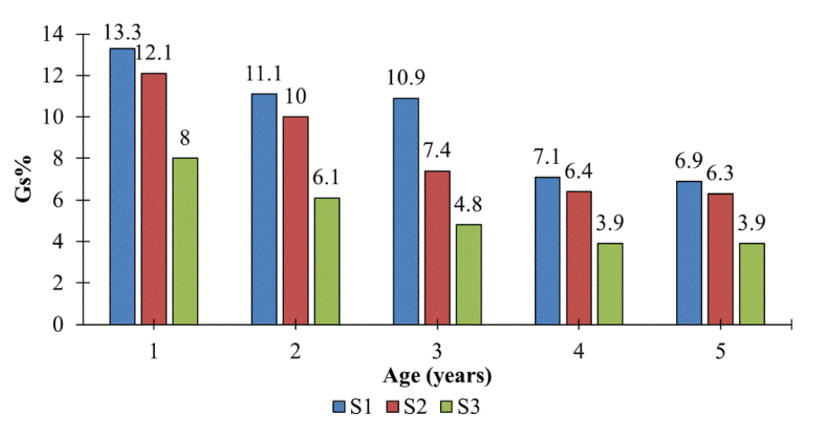
At five years of age, the mass selection (S1) strategy produced the highest genetic gain estimate (= 6.9%) followed by combined selection among and within families (S2, 6.3%) and within-family selection (S3, 3.9%) (Table 3). These results are in line with findings by Azevedo et al. (2015) and Engel et al. (2016), where mass selection of best individuals outperformed S2. Nevertheless, although S1 maximizes genetic gains, S2 can be a practical alternative to balance genetic gains with maintenance of the genetic diversity of the evaluated population (Almeida et al. 2025).
Simulations of selection from ages two to five showed that early selection at younger ages did not compromise expected gains in subsequent years (Figure 1), indicating the viability of early selection during juvenile stages. Direct genetic gains () exceeded indirect gains across all strategies and evaluation years (Table 4). Both direct and most indirect values decreased with age. For S1, direct selection at age four resulted in the highest indirect at age five. For S2, direct selection at age three maximized indirect at age five, while for S3, direct selection at ages one and three produced the highest indirect at age five. In an evaluation of Eucalyptus macarthuri,Engel et al. (2016) similarly found that early selection from age two onward was viable without compromising future gains, ensuring high selection reliability.
Estimates of direct predicted genetic gains () for different selection strategies over five years. S1: mass selection of 46 individuals; S2: selection of 46 individuals among and within families (15 families: selection of 3 individuals from 14 families and 4 individuals from one family): S3: selection of 46 individuals within 23 families (2 trees per family).
Mass selection results showed that 39.1% of individuals and 68.8% of families selected at age one remained in the selection at age five (Table 5). These percentages increased over time, with 69.9 and 88.4% of individuals, and 87.5 and 93.8% of families, selected at ages three and four, respectively, remaining in the selection up to age five. This trend suggests that early selections were initially influenced by maternal effects, which diminished from age three onward, indicating age three as a suitable time for selection. Similar results were described by Dias et al. (2016) and Almeida et al. (2025), who noted stronger correlations in years three and four. These results confirm the potential of early selection for establishing seedling seed orchards, as high correlations between individual and family performance across assessment years indicate promising prospects for early selection from age three onward. Previous studies also demonstrated the efficiency of early selection for growth and wood density traits in E. urophylla clones with strong correlations between traits measured at ages three and six, ensuring high selection coincidence across ages (Pinto et al. 2014).
Percentage (%) of the 46 selected individuals (upper diagonal) and families (lower diagonal) retained across ages 1 to 5 years
Genetic diversity and effective population size
At five years of age, all selection strategies resulted in a reduction in the total number of alleles (), inbreeding coefficient () and effective population size () (Table 3). In contrast, observed heterozygosity () increased and was comparable across all selection strategies. Selection strategy S3 presented the lowest loss of alleles, while S1 and S2 showed greater reductions, attributed to S3 retaining all families, whereas S1 and S2 reduced the number of families from 23 to 16 and 15, respectively. The progeny trial initially had an inbreeding coefficient of 0.123, due to the fact that the progenies included a substantial number of inbred individuals (14%) from selfing (7.4%) and biparental inbreeding (6.6%) (Pupin et al. 2019). Mortality, together with selection at age five, reduced inbreeding to 26.8% for S2 and 29.3% for S3, though some selected trees remained inbred. Notably, inbreeding did not result in inbreeding depression for DBH, as inbred trees showed comparable DBH growth to trees originated from outcrossing among unrelated trees. The largest reduction in occurred in S1 (25.2%) and S2 (18.3%), driven by the reduction in family numbers. The greater reduction of in S1 compared to S2 was due to the fact that despite the larger number of families selected for S1, the number of trees selected within families varied from 1 to 7, leading to higher group coancestry. In S2, three trees were selected per family (except one family with four trees), resulting in lower within-family and group coancestry and a higher than for S1. Overall, S2 provided the best balance, with a genetic gain of 6.3%, and a moderate reduction in (20.8%), and (18.3%).
Maintaining genetic gains over the long term in breeding programs requires careful planning to preserve genetic diversity in the base population, ensuring a sustainable selection limit across multiple generations (Resende et al. 2021, Porto et al. 2024). Understanding and maintaining the is critical for developing strategies that balance breeding and conservation goals. An of 30-60 unrelated individuals is considered adequate to sustain selection gains (Pereira and Vencovsky 1988). In the current study, for all three selection strategies was relatively low, potentially limiting the genetic base for long-term breeding in the Selvíria region. To address ongoing inbreeding and enhance genetic diversity, it is recommended to establish a new second-generation progeny trial from a seed collection in the SO2 seed orchard, incorporating a larger number of families (e.g., 60). For instance, selecting 50% of these families (30 families) with one individual per family would yield an of 30, sufficient to support continued breeding efforts in the region. Given the demonstrated feasibility of early selection at age three, combined with one year for seed collection, seedling preparation and trial establishment, an improved population could be developed within four years.
CONCLUSION
Significant genetic variation in DBH and H across all evaluation years confirmed the potential for breeding through family-based selection. Heritability estimates decreased with tree age, and was the highest across all years, indicating that the selection strategy S2 is more effective for achieving genetic gains. Strong between DBH and H both within and across ages showed that early direct selection for one trait can yield indirect genetic gains for the other at later ages. Genetic gain declined over time for all strategies. The high proportion of individuals and families selected at age three hat remained selected by age five indicates age three as an optimal time for early selection. Mortality and selection at age five reduced inbreeding in the population. Overall, the S2 strategy was the most suitable, offering the best balance between maximizing genetic gain and .
Data Availability
The datasets generated and/or analyzed in this study, as well as the supplementary tables and figures, are available from the corresponding author upon reasonable request.
REFERENCES
- Almeida RS, Oliveira LB, Silva Júnior AL, Cunha FL, Luz MS, Melo LA2025 Breeding Eremanthus erythropappus for industrial uses: insights from long-term early selection and genetic analysisEuphytica 221:52
- Azevedo LPA, Costa RB, Martinezi DT, Filho AAT, Brondani GE, Barettai MC, Ajala WV2015 Genetic selection in Eucalyptus camaldulensis progenies in savanna area of Mato Grosso State, BrazilCiência Rural 45:2001-2006
- Araujo MJ, Paula RC, Moraes CB, Pieroni G, Silva PHM2021 Thinning strategies for Eucalyptus dunnii population: balance between breeding and conservation using spatial variation and competition modelTree Genetics & Genomes 17:42
- Brondani RP, Brondani C, Tarchini R, Grattapaglia D1998 Development, characterization and mapping of microsatellite markers in E. grandis and E. urophyllaTheoretical and Applied Genetics 97:816-827
- Buratto DA, Cardoso JT, Rolim FA, Filho WR2012 Avaliação dos danos causados por formigas-cortadeiras do gênero Acromyrmex (Hymenoptera) aos plantios de Pinus taeda no planalto sul-catarinenseFloresta 42:683-690
- Castro CA, Santos GA, Takahashi EK, Nunes AC, Souza GA, Resende MDV2021 Accelerating Eucalyptus breeding strategies through top grafting applied to young seedlingsIndustrial Crops and Products 171:113906
- Cruz C, Regazzi C1997 Modelos biométricos aplicados ao melhoramento genético. 2ª edn, Universidade Federal de Viçosa, Viçosa, 390p.
- Cheung BY2020 Genetic coefficient of variance. In Zeigler-Hill V and Shackelford TK (eds) Encyclopedia of personality and individual differences. Springer, Cham, pp. 1787-1791
- Chile CR, Melo RS, Otto MS, Zanini AM, Godoy WA, Ferraz SF2021 How can structure and composition of Eucalyptus plantation landscape reduce leaf-cutting ants? Forest Ecology and Management 518:120250
- Dias PC, Xavier A, Resende MDV, Biernaski FA, Estopa RA, Pires IE2016 Juvenile-mature genetic correlations in Pinus taeda clones propagated via somatic embryogenesisÁrvore 40:255-267
- Engel ML, Higa AR, Andrejow GP, Flôres Junior PC, Soares OD2016 Genetic gain from different selection methods in Eucalyptus macarthurii progenies in different environmentsCerne 22:299-308
- Falconer D, Mackay T1996 Introduction to quantitative genetics. 4th edn., Longman, New York, 464p.
- Goudet J2002 FSTAT (Version 2.9.3.2.): a computer program to calculate F-statisticsJournal of Heredity 86:485-486
- Hardy O, Vekemans X2002 SPAGeDI: a versatile computer program to analyze spatial genetic structure at the individual or population levelsMolecular Ecology Notes 2:618-620
- Henriques EP, Nunes ACP, Moraes MLT, Resende MDV, Sebbenn AM, Moraes MA2018 Seleção genética em teste de progênies de irmãos completos de Eucalyptus para seleção de carvão vegetalScientia Forestalis 46:405-413
- He ZH, Xiao Y, Lv YW, Yeh FC, Wang X, Hu XS2023 Prediction of genetic gains from selection in tree breedingForests 14:520
- Lindgren D, Gea L, Jefferson P1996 Loss of genetic diversity by status numberSilva Genetica 45:52-59
- Lodh UK, Chauhan V, Verma S, Chand K2025 Plantation forestry. In Mandal AK and Nicodemus A (eds) Textbook of forest science. Springer, London, pp. 495-504
- Martins IS, Cruz CD, Rocha MG, Regazzi AJ, Pires IE2005 Comparação entre os processos de seleção entre e dentro e o de seleção combinada, em progênies de E. grandisCerne 11:16-24
- Moura-Queiroz M, Arriel DA, Tsukamoto Filho AA, Oliveira OE, Moraes PM, Skowronski L, Costa RB2019 Early selection in Eucalyptus camaldulensis Dehnh. progenies in Savanna, BrazilAfrican Journal of Biotechnology 18:347-351
- Oliveira RS, Ribeiro CV, Neres DF, Porto AC, Ribeiro D, Siqueira L, Zauza EA, Coelho AS, Reis CA, Alfenas AC, Novaes E2020 Evaluation of genetic parameters and clonal selection of Eucalyptus in the Cerrado region. Crop Breeding and Applied Biotechnology 20:e29982031
- Pereira MB, Vencovsky R1998 Limites da seleção recorrente: I. Fatores que afetam as frequências alélicasPesquisa Agropecuária Brasileira 23:769-780
- Pinto DS, Resende RT, Mesquita AG, Rosado AM, Cruz CD2014 Seleção precoce para características de crescimento em testes clonais de Eucalyptus urophyllaScientia Forestalis 42:251-257
- Porto AC, Gonçalves JM, Nagaychi M, Oda S, Mello EJ, Graça RN2024 Impact of progeny size on genetic parameter estimation and selection gain in progeny trials of Eucalyptus sppSilvae Genetica 74:44-52
- Pupin S, Rosse LN, Souza ICG, Cambuim J, Marino CL, Moraes MLT, Sebbenn AM2017 Analysis of Mendelian inheritance and genetic linkage in microsatellite loci of Eucalyptus urophylla S.T. Blake. Genetic and Molecular Research 16: gmr16039713.
- Pupin S, Sebbenn AM, Cambuim J, Silva AM, Zaruma DUG, Silva PHM, Moraes MLT2019 Effects of pollen contamination and non-random mating on inbreeding and outbreeding depression in a seedling seed orchard of Eucalyptus urophyllaForest Ecology and Management 437:272-281
- Resende MDV2015 Genética quantitativa e de populações. Editora Suprema, Viçosa. 422p.
- Resende MDV2016 Software SELEGEN - REML/BLUP: a useful tool for plant breedingCrop Breeding and Applied Biotechnology 16:330-339
- Resende RT, Silva PIT, Silva-Júnior OB, Freitas MLM, Sebbenn AM, Valderês AS, Aguiar AV, Grattapaglia D2021 Age trends in genetic parameters for growth performance across country-wide provenances of the iconic conifer tree Araucaria angustifolia show strong prospects for systematic breeding and early selectionForest Ecology and Management 501:119671
- Resende MDV, Alves RS2022 Statistical significance, selection accuracy, and experimental precision in plant breeding. Crop Breeding and Applied Biotechnology 22:e42712238
- Rocha GN, Sebbenn AM, Araujo M, Costa LOS, Novaes E, Miranda AC, Moraes MLT, Lee DJ, Grattapaglia D, Silva PHM2025 Genetic diversity in wild and breeding populations and clones of Eucalyptus urophylla and Eucalyptus grandisSilvae Genetica 74:216-233
- Santos GO, Hernandez FB2013 Uso do solo e monitoramento dos recursos hídricos no córrego do Ipê, Ilha SolteiraRevista Brasileira de Engenharia Agronômica e Ambiental 17:60-68
- Santos HG, Almeida JÁ, Filho JCA, Oliveira JB, Cunha TJF2018 Sistema brasileiro de classificação de solosEmbrapa 5:357
- Silva PHM, Marco M, Alvares CA, Lee D, Moraes MLT, Paula RC2019 Selection of Eucalyptus grandis families across contrasting environmental conditionsCrop Breeding and Applied Biotechnology 19:47-54
- Silva PHM, Rocha GN, Araujo M, Nune AC, Paula RC2024 Thinning strategies to optimize genetic gain and population size in E. pellita breedingTree Genetics & Genomes 20:43
- Tambarussi EV, Lima BM, Queiroz RC, Peres FSB, Dias CD, Pagliarini MK, Pereira FB, Rosa JRBF, Rezende GDSP2017 Estimativas de parâmetros genéticos para a seleção precoce em clones de Eucalyptus sppScientia Forestalis 45:507-517
- Wang Y, Wu Z, Li X, Shang X2024 Regeneration and genetic transformation in Eucalyptus species, current research and future perspectivesPlants 13:2843