
 Safety recommendations on laboratory and blood count values for early mobilization in critically ill adults: an expert consensus
Abstract
Although early mobilization is a cornerstone of modern critical care for reducing intensive care unit-acquired weakness, the duration of mechanical ventilation, and length of stay, its implementation remains highly variable due to the absence of standardized laboratory criteria to guide clinical decision-making. Therefore, this study aimed to generate safety recommendations regarding laboratory and blood count values to be considered prior to initiating early mobilization in critically ill adults, both with and without invasive supports, across different clinical conditions. To address this evidence gap, a modified Delphi process was conducted with 24 highly experienced intensive care unit staff, including physiotherapists, physicians, and nurses. All panelists met strict criteria related to clinical expertise, advanced training, and scientific productivity. Over eight iterative rounds, the panel achieved at least 85% agreement on 119 items across six clinical domains: respiratory, cardiovascular, renal, surgical, hematological/immunological, and neurological. Key laboratory parameters considered included hemoglobin, platelets, lactate, glucose, international normalized ratio, acid-base state (pH), and potassium in selected clinical contexts. The consensus also provides novel guidance in two previously underexplored areas: first, mobilization during blood product transfusions, recommending postponement of early mobilization until transfusion completion; and second, the importance of dynamic trends in routine laboratory tests, identifying clinically meaningful declines in hemoglobin: ≥ 2g/dL/24 hours and platelets: ≥ 20% within 24 hours as contraindications to mobilization. This consensus offers a pragmatic framework that has the potential to reduce interprofessional variability, enhance patient safety, and inform the development of local and national protocols, including in resource-limited settings. Nonetheless, prospective validation across different healthcare contexts is required to confirm its clinical impact and generalizability.
Keywords:
Early ambulation; Exercise; Critical illness; Laboratory critical values; Patient safety; Respiration, artificial; Clinical decision-making; Consensus
INTRODUCTION
Early mobilization (EM) in critically ill patients is a key strategy in the recovery of intensive care unit (ICU) hospitalized individuals.(1,2) Previous studies have demonstrated multiple benefits, including a reduction in the duration of mechanical ventilation and the minimization of ICU-acquired weakness.(3,4)
Despite several recommendations supporting its implementation,(5,6) a substantial gap remains in the standardization of clinical criteria. To date, clinical criteria are available across several domains, including cardiovascular, respiratory, neurological, and musculoskeletal systems;(7) however, there are currently no globally accepted guidelines defining laboratory values that determine safety prior to the initiation of EM in ICU patients, resulting in marked variability in clinical judgment among professionals.
Laboratory parameters such as hemoglobin, platelet count, and lactate(8-10) are of critical importance, as they provide essential information regarding physiological stability.(11-13) However, the available literature proposes heterogeneous clinical reference points suggested by different authors. In this context, significant discrepancies have been described in the laboratory thresholds considered safe for mobilization in critically ill patients. For example, acceptable lactate values vary widely across studies, with proposed cut-off points ranging from < 2 millimoles per liter (mmol/L)(14) to < 3mmol/L(15) and even < 6mmol/L.(16) Similarly, recommended hemoglobin levels show variability, with thresholds ranging from >7 grams per decilitre (g/dL)(17) to > 8g/dL.(18) This heterogeneity is also observed in platelet counts, where the suggested minimum values fluctuate between > 20,000 per microlitre (mcL)(16) and > 50,000mcL.(18)
These discrepancies generate uncertainty among healthcare professionals and may lead to unnecessary delays or inappropriate initiation of mobilization, potentially compromising patient safety or increasing variability in clinical decision-making. Moreover, given that critical illness requires an individualized and condition-specific approach, and that each pathology exhibits distinct clinical behavior, EM should be tailored from the initial assessment phase, incorporating the evaluation of laboratory parameters into clinical decision-making.(19)
This evidence gap underscores the need to develop consensus-based recommendations to guide clinical practice and reduce heterogeneity in decision-making. Therefore, this study aimed to generate safety recommendations regarding laboratory and blood count values to be considered prior to initiating EM in critically ill adults, both with and without invasive supports, across different clinical conditions.
METHODS
Study design
A consensus study was conducted using a modified Delphi methodology.(20,21) The use of a modified Delphi approach is well aligned with the present study, given the limited and heterogeneous nature of the available evidence on laboratory safety thresholds for EM in critically ill patients. Existing studies report inconsistent reference values, often fragmented across clinical contexts, hindering the development of standardized recommendations. In this context, the modified Delphi method enables the systematic integration of expert judgment through iterative rounds and controlled feedback, making it particularly well-suited to inform clinical decision-making in areas with limited evidence.
The panel comprised a multidisciplinary group (physiotherapists, physicians, nurses) of experts selected according to predefined criteria that ensured both representativeness and expertise in critical care. These criteria were defined and benchmarked against recommendations available in the literature.
Expert selection criteria
Expert selection criteria included: more than 10 years of experience in critical care;(22) advanced postgraduate training (specialty, Master's degree, or Doctorate) in related fields;(23) authorship of at least one scientific research article;(24) participation as a speaker or lecturer in at least two academic events within the past 5 years.(25)
These criteria ensured the inclusion of professionals with a solid career trajectory, a comprehensive perspective, and the scientific competence required to formulate recommendations.
Recruitment strategy
Potential experts were identified through targeted searches of academic networks and scientific societies related to critical care. Eligible experts were contacted individually via email.
Consensus development
Phase 1: Literature review
Two independent investigators conducted a structured literature search in PubMed®, ScienceDirect, Literatura Latino-Americana e do Caribe em Ciências da Saúde (Lilacs), the Cochrane Library, Europe PMC, and Scopus, from database inception to June 2025. Additionally, a manual search of the reference lists of included studies was performed to identify potentially relevant articles.
Although this process followed systematic search principles, it was not intended as a formal systematic review but rather as an evidence-informed scoping approach to identify relevant laboratory parameters for the Delphi process.
The screening process was conducted using Rayyan,(26) allowing independent and blinded study selection. Titles and abstracts were initially screened, followed by full-text assessment of potentially eligible studies. Discrepancies were resolved by consensus or, when necessary, through consultation with a third reviewer.
Eligible studies included randomized controlled trials, prospective and retrospective cohort studies, and systematic reviews that evaluated laboratory parameters in relation to the safety or feasibility of EM in critically ill patients. Studies that did not address laboratory parameters or were not related to EM in the ICU setting were excluded.
Given that the available evidence on specific laboratory thresholds is limited and heterogeneous, the review was primarily oriented towards identifying the most frequently reported laboratory parameters and the range of values suggested across different clinical contexts, rather than establishing standardized cut-off points.
This review allowed the identification of laboratory tests most frequently reported in relation to EM safety, the compilation of suggested value ranges, and the definition of the initial parameters included as response options in the Delphi questionnaire.
The search strategy combined controlled vocabulary and free-text terms related to EM, laboratory parameters, and critical care. Example search terms included:
"early mobilisation" OR "early mobilization" OR "mobilisation" OR "mobilization".
"Intensive care unit" OR "ICU" OR "critical care".
"Laboratory parameters" OR "laboratory values" OR "biomarkers".
"hemoglobin" OR "haemoglobin" OR "platelet count "OR "platelets" OR "lactate".
"safety" OR "clinical thresholds" OR "cut-off values" OR "reference values".
The final search strategy was adapted for each database by combining these terms with Boolean operators (AND/OR) according to each database's specific indexing system.
Phase 2: Delphi questionnaire design
Based on the preliminary review, two investigators developed the questionnaire using Google Forms. The form included information on confidentiality and the study's purpose, instructions for rating each laboratory parameter, and multiple-choice questions to quantitatively assess the level of agreement.
For each parameter (hemoglobin, platelets, lactate, glucose, international normalized ratio, acid-base state (pH), and potassium), three to four potential reference levels were presented as safety criteria for active EM, active-assisted EM, or contraindication. These categories were predefined and remained visible throughout the questionnaire.
Experts responded to six different clinical scenarios: respiratory, cardiovascular, renal, surgical, hematological/immunological, and neurological, each accompanied by clinical reference points. The response options were generated based on the different cut-off points identified in the literature and were complemented by options proposed at the investigators’ discretion. Each section included an open-ended field for comments or suggestions. The observations suggested by the experts were shared anonymously as comments in the subsequent rounds.
The initial questionnaire consisted of 111 items distributed across all defined sections and parameters. The document was structured into individual sections, each dedicated to a specific predominant pathology. This was followed by a section focusing on the transfusion of blood products during EM. Finally, the document concluded with a section addressing the follow-up of routine laboratory tests.
Phase 3: Delphi process
Professionals who met the selection criteria and voluntarily agreed to participate received detailed information about the study objectives and the functioning of the Delphi method. To ensure anonymity and reduce the risk of bias, each participant responded independently under an assigned numerical code and had no access to other experts’ responses or identities.
Consensus was defined as ≥ 85% agreement among participants for a given item. This threshold was established based on prior literature, where agreement levels within this range are widely recognized as indicative of a high level of consensus.(27)
Voting rounds were conducted electronically. Items that achieved consensus were considered definitive and excluded from subsequent rounds. Items that did not reach consensus were redistributed in successive rounds, accompanied by a statistical summary (median, interquartile range, and percentage of agreement), allowing experts to reconsider their individual judgments.
Operational coordination was undertaken by a member of the research team who was not part of the expert panel to preserve the independence of the process. This individual managed questionnaire distribution and follow-up and performed initial data cleaning.
Data were exported to a Microsoft Excel database for storage and analysis. The entire Delphi process lasted three months, from the first to the final round, with predefined deadlines for response submission and review.
Qualitative comments provided by panel members during each Delphi round were analyzed using an iterative thematic approach. The research team reviewed and synthesized the feedback to identify recurring themes and areas of disagreement, which informed item refinement, clarification of ambiguities, and the design of subsequent Delphi rounds, while preserving the intent of the expert input.
Interpretation of laboratory tests consensus
The laboratory thresholds presented are expressed using boundary values (≥ or ≤) rather than continuous intervals. When a threshold includes the symbol ≥, it indicates that values equal to or above the specified cut-off are considered safe for initiating EM in relation to that laboratory parameter. Conversely, when the symbol ≤ is used, values equal to or below the specified limit indicate that EM should not be initiated. When both limits are present, the interval between them represents the range considered safe for initiating EM. This approach was applied consistently across all laboratory parameters presented.
Values falling between defined thresholds should be interpreted with caution and in conjunction with clinical judgment, as they may represent transitional or context-dependent states rather than strict categorical cut-offs.
Ethical considerations
This study complied with international guidelines, including the Declaration of Helsinki, the Nuremberg Code, and Colombian research regulations regarding informed consent, data protection, and risk classification (Resolution 8430 of 1993, Ministry of Health). The study was approved by the Health Research Ethics Committee (CEIS) of the Hospital Regional de la Orinoquía (Minutes No. 011, 20 June 2025).
Statistical analysis
Data analysis was performed using descriptive statistics, in accordance with the nature of the Delphi method. All responses were exported from Google Forms and organized in a Microsoft Excel database, then processed and analyzed using R software version 4.4.2.
For each questionnaire item, the following measures were calculated: percentage of agreement for each response option; median and interquartile range (IQR) of ratings, where applicable (Likert scale 1 - 9); absolute and relative frequencies for selected clinical reference point categories; and identification of consensus, defined as ≥ 85% agreement among experts.
In each round, items that met the consensus criterion were excluded from analysis in subsequent rounds. Items without consensus were descriptively reanalyzed, and their results were summarized to provide participants with feedback in the following round, using measures of central tendency and dispersion.
Qualitative comments provided in open-ended fields were analyzed using simple thematic categorization to identify convergent patterns relevant to the final interpretation of the results.
RESULTS
A total of 24 experts were recruited, and all completed every round of the Delphi process. The sample showed a predominance of male participants (66.7%), while female participants represented 33.3%. Experts were drawn from ten countries, with Colombia and Peru each accounting for 16.7% of participants. Argentina, Chile, and Spain contributed 12.5% each, while Brazil and China accounted for 8.3%, and Mexico, Bolivia, and the Netherlands each represented 4.2%.
The sample was composed primarily of physiotherapists (58.3%), followed by physicians (25.0%) and nurses (16.7%) (Table 1). All participants had advanced training in the field: 75% were ICU specialists, 8% held a cardiopulmonary specialty, 8% had a Master's degree, and 8% held a Doctoral degree. Additionally, 46% of experts had at least two advanced qualifications, and 17% held all three levels. Median professional experience was 18 years (IQR 15 - 26), with a median of 16 years of ICU experience (IQR 13 - 20). The median number of publications was 14 (IQR 7 - 40), and the median number of academic events as speakers in the past five years was 16 (IQR 6 - 21) (Table 1).
The initial questionnaire items were derived from the literature search described in the Methods section and served as the basis for the first Delphi round.
Consensus development: Delphi process
A total of eight rounds were conducted until ≥ 85% agreement was achieved across all items. New items proposed during rounds 3 and 4 were incorporated, resulting in a final questionnaire of 119 items. Only items reaching the predefined consensus threshold were retained (Figure 1). A 100% response rate was maintained across all rounds. The final percentage of agreement achieved for each item evaluated throughout the Delphi process is available in the Supplementary Material.

A color-coded system was established to facilitate interpretation of EM safety levels: active EM (green), active-assisted EM (yellow), and contraindication (red) (Table 2).
Safety recommendations were organized into six clinical domains: respiratory, cardiovascular, renal, surgical, hematological/immunological, and neurological. Across these domains, consensus was reached on key laboratory parameters, including hemoglobin, platelets, lactate, glucose, international normalized ratio, and pH. Potassium was included only in selected clinical contexts.
Common platelet ranges were identified across several domains during active and active-assisted EM. Hemoglobin thresholds were consistent across all domains for contraindication, as observed for acid-base status (pH) during active EM (Figure 2).

Safety recommendations on laboratory and blood count values for early mobilization in critically ill adults, both with and without invasive supports.
Variation in laboratory reference values was observed in parameters such as lactate, international normalized ratio, and platelet count, reflecting differences in clinical decision-making contexts. For example, a higher lactate threshold may be considered acceptable in a hemodynamically stable postoperative patient. In contrast, a more conservative threshold may be preferred in a patient with ongoing shock, reflecting differences in physiological reserve and clinical context.
Recommendations for EM during blood product transfusion are summarized in table 3, while guidance on routine laboratory monitoring is presented in table 4.
DISCUSSION
Although there are currently documents that offer safety recommendations, they do not provide detailed laboratory-based thresholds or criteria to support their systematic implementation in routine clinical practice. To our knowledge, this international consensus is among the first efforts to define laboratory-informed criteria for initiating EM in critically ill adults. High levels of agreement were achieved across all items within the six clinical domains, as well as in transfusion and follow-up scenarios, thereby helping to address this evidence gap and inform clinical decision-making in intensive care practice.
One of the main contributions of this consensus is the incorporation of context-specific and individualized criteria. Jackson et al.(28) highlight that the care of critically ill patients requires a meticulous approach, from initial assessment through to dosing. Accordingly, our study categorizes patients into six diagnostic groups rather than proposing a universal set of laboratory thresholds, allowing each group to reflect a predominant clinical condition and supporting more context-informed decision-making related to EM.
Although the available evidence in this field remains limited, our findings are broadly consistent with previous studies. Regarding platelet count, Sepúlveda et al.(29) recommend a minimum threshold of 20,000 platelets per microliter for initiating EM, a value supported across several clinical domains in our consensus. Similarly, Yang et al.(30) identify hemoglobin levels below 7g/dL as a contraindication, which also showed consistent agreement. However, discrepancies were observed for other biomarkers, such as lactate. Presneill et al.(31) permitted EM at levels below 4mmol/L, whereas our consensus supported a more conservative range between 2 and 3mmol/L, which may reflect differences in clinical context and institutional practices.
Another relevant contribution concerns recommendations for EM during blood product transfusions. Raasveld et al.(32) report that red blood cell transfusion is common among ICU patients, with rates ranging from 25 - 80% depending on the setting. Despite this, current literature and guidelines provide limited guidance on mobilization safety during transfusion. Existing recommendations emphasize close monitoring before, during, and after transfusion, particularly during the initial minutes, to detect adverse reactions and ensure patient safety.(33-35) In this context, our consensus provides structured, operational guidance for a common clinical scenario. Additionally, incorporating dynamic changes in laboratory values – such as trends in hemoglobin and platelet counts – is an important contribution, as it supports a more anticipatory, trajectory-based approach to clinical decision-making.
These recommendations also provide operational clarity for this frequent clinical scenario. Likewise, the recommendations concerning variations in routine laboratory tests associated with EM represent an additional contribution to the current evidence base. These recommendations consider not only absolute values but also trends that may anticipate physiological deterioration before parameters exceed critical ranges, thereby supporting a more dynamic and clinically informed approach to decision-making that integrates patient trajectories.
Regarding specific recommendations in this field, few publications are available. Consensus statements developed by Hodgson et al.,(36) Raurell-Torredà et al.,(37) and Schaller et al.(38) mainly address global safety recommendations, specific subpopulations, and patient positioning, respectively. In contrast, our manuscript focuses on laboratory-informed aspects relevant to daily clinical practice and aims to complement previous consensus statements in a coherent and additive manner.
From a methodological perspective, McMillan et al.(39) report that consensus methods across different disciplines have proven useful when available evidence is variable, fragmented, or limited. In this context, the variability and scarcity of studies on laboratory thresholds – often with divergent recommendations, as reported for hemoglobin(40,41) and platelets(42,43) – support the use of the Delphi method as an approach to synthesize expert judgment and provide structured guidance in areas of uncertainty. Similarly, although reviews focusing on safety recommendations for initiating EM exist, such as those by Nydahl et al.(44) and Adler et al.,(45) these do not detail or include criteria related to laboratory tests. Only a few reviews suggest specific reference values for certain tests;(28,46) however, none comprehensively integrate all the laboratory parameters considered in our consensus. Consequently, the Delphi method was considered appropriate, as it achieved a high level of agreement (≥ 85%) across the items analyzed. This outcome reflects the consistency of expert agreement within this panel. It suggests a perceived need within the clinical community to standardize criteria that may reduce variability in practice, given the inconsistencies and gaps in the available literature on laboratory-based safety criteria for mobilization. These findings support the role of structured expert consensus as a methodological approach to inform clinical decision-making in contexts of uncertainty.
Furthermore, the development of a consensus by an international panel of experts represents a relevant contribution. Byrne et al.(47) note that the participation of experts from different countries allows a consensus to reflect broader perspectives and reduces biases specific to a single national context. In our case, representation from ten countries may help to mitigate biases related to local practice patterns or cultural approaches. Kansal et al.(48) state that multidisciplinary consensus implies strong professional endorsement. In our study, the panel's multidisciplinary composition may reflect a range of perspectives, as supported by the rigorous selection criteria applied. The high level of intensive care experience, continuous training, scientific output, and participation in academic activities are recognized characteristics of expertise, as expert judgment integrates clinical experience, specialized knowledge, and research, thereby supporting the development of these recommendations.
The clinical impact of our research lies in providing structured, clear, and easy-to-interpret information applicable across diverse hospital settings, including those with limited infrastructure or technological resources. The recommendations from this consensus may be useful for both students and clinicians who routinely apply EM. Their implementation may support safer patient selection and more consistent clinical decision-making, potentially reducing variability in practice and improving the structure of mobilization strategies. In addition, these recommendations may facilitate the development of institutional protocols that reduce interprofessional variability. This work can therefore support clinical decision-making and represents a step towards more consistent and patient-centered practice in critical care. It is important to emphasize that standardization of laboratory criteria does not replace comprehensive clinical judgment but rather complements it by providing an objective framework to support decision-making in uncertain scenarios. Finally, this consensus highlights areas for future research, particularly regarding the prospective validation of the proposed thresholds, including mobilization-associated adverse events.
Although this consensus represents a relevant contribution due to its international scope and the high level of expertise of its panel, several limitations should be acknowledged. First, there are currently no controlled trials that precisely define which specific value of each laboratory test corresponds to a completely safe threshold for clinical decision-making. The available evidence is derived mainly from observational studies, reviews, or case reports. Therefore, future research should prospectively validate these proposed thresholds and explore their applicability across larger, more diverse populations. Second, laboratory reference values may vary across institutions due to differences in analytical methods, equipment, and locally defined ranges, which may affect the applicability of the proposed thresholds. Nevertheless, this consensus should be interpreted in light of these limitations, as its primary purpose is to provide a structured clinical framework in the absence of definitive evidence. In addition, the selection of experts may have introduced selection bias, and although the panel included participants from multiple countries, its geographical representation may not fully reflect global practice patterns.
CONCLUSION
The recommendations derived from this consensus, based on laboratory-informed thresholds from various laboratory and blood count parameters as safety criteria for early mobilization in critically ill adult patients, may support clinical decision-making and help to optimize rehabilitation processes in the intensive care unit.
Nevertheless, further research is required to validate the safety and applicability of the proposed thresholds through studies using diverse methodologies, larger samples, and populations with different pathological conditions.
Availability of data and materials
The contents underlying the research text are included in the manuscript.
REFERENCES
- 1 Aboshoushah E, Alhefzi F, Alasiri A, AlMubali F, Alqahtani K, Alshahrani A, et al. The role of early mobilization and physiotherapy interventions in the recovery of critically ill patients in the intensive care unit. J Health Sci. 2023;3(6)181-8.
- 2 Yang X, Zhang T, Cao L, Ye L, Song W. Early mobilization for critically ill patients. Respir Care. 2023;68(6):781-95.
- 3 Wang L, Hua Y, Wang L, Zou X, Zhang Y, Ou X. The effects of early mobilization in mechanically ventilated adult ICU patients: systematic review and meta-analysis. Front Med (Lausanne). 2023;10:1202754.
- 4 Zhang L, Hu W, Cai Z, Liu J, Wu J, Deng Y, et al. Early mobilization of critically ill patients in the intensive care unit: a systematic review and meta-analysis. PLoS One. 2019;14(10):e0223185.
- 5 Unoki T, Hayashida K, Kawai Y, Taito S, Ando M, Iida Y, et al.; Committee for the Clinical Practice Guidelines of Early Mobilization and Rehabilitation in Intensive Care of the Japanese Society of Intensive Care Medicine. Japanese clinical practice guidelines for rehabilitation in critically ill patients 2023 (J-ReCIP 2023). J Intensive Care. 2023;11(1):47.
- 6 Hodgson CL, Broadley T, Paton M, Higgins AM, Anderson S, Brennan S, et al. Australian clinical practice guideline for physical rehabilitation and mobilisation in adult intensive care units. Aust Crit Care. 2025;38(4):101235.
- 7 Conceição TM, Gonzáles AI, Figueiredo FC, Vieira DS, Bündchen DC. Safety criteria to start early mobilization in intensive care units. Systematic review. Rev Bras Ter Intensiva. 2017;29(4):509-19.
- 8 Song MJ, Seo WI, Jang Y, Park S, Ko R, Suh GY, et al.; Korean Sepsis Alliance (KSA) Investigators. RBC transfusion practices in critically ill patients with sepsis. Crit Care Med. 2025;53(12):e2596-606.
- 9 Pène F, Russell L, Aubron C. Thrombocytopenia in the intensive care unit: diagnosis and management. Ann Intensive Care. 2025;15(1):25.
- 10 Deulkar P, Singam A, Mudiganti VN, Jain A. Lactate monitoring in intensive care: a comprehensive review of its utility and interpretation. Cureus. 2024;16(8):e66356.
- 11 Tyler PD, Du H, Feng M, Bai R, Xu Z, Horowitz GL, et al. Assessment of intensive care unit laboratory values that differ from reference ranges and association with patient mortality and length of stay. JAMA Netw Open. 2018;1(7):e184521.
- 12 Pitamberwale A, Mahmood T, Ansari AK, Ansari SA, Limgaokar K, Singh L, et al. Biochemical parameters as prognostic markers in severely ill COVID-19 patients. Cureus. 2022;14(8):e28594.
- 13 Kim SY, Kim D, Ju H, Lee SI. Prognostic value of laboratory markers and clinical scores for mortality in intensive care unit patients with sepsis. PLoS One. 2025;20(12):e0337396.
- 14 Martínez Camacho MA, Jones Baro RA, Gómez González A, Pérez Nieto OR, Guerrero Gutiérrez MA, Zamarrón López EI, et al. Movilización temprana en la unidad de cuidados intensivos. Med Crit [Col Mex Med Crit]. 2021;35(2):89-95.
- 15 Cassina T, Putzu A, Santambrogio L, Villa M, Licker MJ. Hemodynamic challenge to early mobilization after cardiac surgery: a pilot study. Ann Card Anaesth. 2016;19(3):425-32.
- 16 Enriquez-Popayan AM, Gutiérrez-Arias R. Early active mobilization in critically ill patients on vasopressor or inotropic support: a prospective cohort study. J Card Crit Care TSS. 2025;9:211-8.
- 17 Borges LF, Fraga Righetti R, de Souza Francisco D, Pereira Yamaguti W, Barros CF. Hemodynamic impact of early mobilization in critical patients receiving vasoactive drugs: a prospective cohort study. PLoS One. 2022;17(12):e0279269.
- 18 Parada-Gereda HM, Merchán-Chaverra R, Medina-Parra J, Benavides-Cruz J, Gaitán-Duarte H. Safety of early mobilisation in the intensive care unit: a prospective and multicentre cohort study protocol. BMJ Open. 2025;15(8):e101772.
- 19 Fuest KE, Ulm B, Daum N, Lindholz M, Lorenz M, Blobner K, et al. Clustering critically ill patients using an individualized learning approach enables dose optimization of mobilization in the ICU. Crit Care. 2023;27(1):1.
- 20 Boulkedid R, Abdoul H, Loustau M, Sibony O, Alberti C. Using and reporting the Delphi method for selecting healthcare quality indicators: a systematic review. PLoS One. 2011;6(6):e20476.
- 21 Schifano J, Niederberger M. How Delphi studies in the health sciences find consensus: a scoping review. Syst Rev. 2025;14(1):14.
- 22 Wang Q, Zhang Y, Li L, Zhao C, Song J, Zhang X, et al. A Delphi consensus-based frailty screening scale for community-dwelling older adults in China. BMC Geriatr. 2025;25(1):743.
- 23 Lin GS, Pow KJ, Yahya NA, Foong CC, Noorani TY. Identifying relevant topics and their competency levels for dental materials science: a fuzzy Delphi study. BMC Oral Health. 2023;23(1):243.
- 24 Tada Y, Imafuku S, Sugiura K, Fujita H, Tsuruta N, Mitsuma T, et al. Treating generalized pustular psoriasis: timing and rationale for biologic treatment switching — a Japanese e-Delphi survey. Dermatol Ther (Heidelb). 2025;15(4):1009-24.
- 25 Ribera M, Ros S, Madrid B, Ruiz-Villaverde R, Rebollo F, Gómez S, et al. Documento de consenso sobre las necesidades psicológicas de los pacientes con enfermedades inflamatorias crónicas dermatológicas. Actas Dermosifiliogr (Engl Ed). 2019;110(2):102-14.
- 26 Ouzzani M, Hammady H, Fedorowicz Z, Elmagarmid A. Rayyan-a web and mobile app for systematic reviews. Syst Rev. 2016;5(1):210.
- 27 Fandim JV, Hinman RS, Øverås CK, Sharma S, Belton J, Oliveira VC, et al. One step at a time. Shaping consensus on research priorities and terminology in telehealth in musculoskeletal pain: an international modified e-Delphi study. BMC Musculoskelet Disord. 2023;24(1):783.
- 28 Jackson M, Cairns T. Care of the critically ill patient. Surgery (Oxf). 2021;39(1):29-36.
- 29 Sepúlveda P, Gallardo A, Arriagada R, González E, Rocco PR, Battaglini D. Protocolized strategies to encourage early mobilization of critical care patients: challenges and success. Crit Care Sci. 2025;37:e20250128.
- 30 Yang R, Zheng Q, Zuo D, Zhang C, Gan X. Safety assessment criteria for early active mobilization in mechanically ventilated ICU subjects. Respir Care. 2021;66(2):307-15.
- 31 Presneill JJ, Bellomo R, Brickell K, Buhr H, Gabbe BJ, Gould DW, et al.; TEAM Study Investigators. Protocol and statistical analysis plan for the phase 3 randomized controlled TEAM III trial. Crit Care Resusc. 2023;23(3):262-72.
- 32 Raasveld SJ, de Bruin S, Reuland MC, van den Oord C, Schenk J, Aubron C, et al. Red blood cell transfusion in the intensive care unit: an international prospective cohort study. JAMA. 2023;330(19):1852.
- 33 National Blood Authority (Australia). Patient blood management guideline for adults with critical bleeding 2023. V 1.7. Canberra: National Blood Authority; 2024.
- 34 Carson JL, Stanworth SJ, Guyatt G, Valentine S, Dennis J, Bakhtary S, et al. Red blood cell transfusion: 2023 AABB international guidelines. JAMA. 2023;330(19):1892-902.
- 35 Yataco AC, Soghier I, Hébert PC, Belley-Cote E, Disselkamp M, Flynn D, et al. Transfusion of fresh frozen plasma and platelets in critically ill adults: an American College of Chest Physicians Clinical Practice Guideline. Chest. 2025;168(3):661-76.
- 36 Hodgson CL, Stiller K, Needham DM, Tipping CJ, Harrold M, Baldwin CE, et al. Expert consensus and recommendations on safety criteria for active mobilization of mechanically ventilated critically ill adults. Crit Care. 2014;18(6):658.
- 37 Raurell-Torredà M, Regaira-Martínez E, Planas-Pascual B, Ferrer-Roca R, Martí JD, Blazquez-Martínez E, et al. Early mobilisation algorithm for the critical patient. Expert recommendations. Enferm Intensiva (Engl Ed). 2021;32(3):153-63.
- 38 Schaller SJ, Scheffenbichler FT, Bein T, Blobner M, Grunow JJ, Hamsen U, et al. Guideline on positioning and early mobilisation in the critically ill by an expert panel. Intensive Care Med. 2024;50(8):1211-27.
- 39 McMillan SS, King M, Tully MP. How to use the nominal group and Delphi techniques. Int J Clin Pharm. 2016;38(3):655-62.
- 40 Genc A, Ozyurek S, Koca U, Gunerli A. Respiratory and hemodynamic responses to mobilization of critically ill obese patients. Cardiopulm Phys Ther J. 2012;23(1):14-8.
- 41 Tordoff SL, DiGiulio FB. Implementing an early mobility program in the ICU. Nurs Crit Care. 2010;5(2):22-4.
- 42 Destro TR, Biazon TM, Pott-Junior H, Caruso FC, Andaku DK, Garcia NM, et al. Early passive mobilization increases vascular reactivity in septic critically ill patients: a quasi-experimental study. Rev Bras Ter Intensiva. 2022;34(4):461-8.
- 43 Jeevanantham D, Rajendran V, McGillis Z, Tremblay L, Larivière C, Knight A. Mobilization and exercise intervention for patients with multiple myeloma: clinical practice guidelines. Phys Ther. 2021;101(1):pzaa180.
- 44 Nydahl P, Sricharoenchai T, Chandra S, Kundt FS, Huang M, Fischill M, et al. Safety of patient mobilization and rehabilitation in the intensive care unit: systematic review with meta-analysis. Ann Am Thorac Soc. 2017;14(5):766-77.
- 45 Adler J, Malone D. Early mobilization in the intensive care unit: a systematic review. Cardiopulm Phys Ther J. 2012;23(1):5-13.
- 46 Lang JK, Paykel MS, Haines KJ, Hodgson CL. Clinical practice guidelines for early mobilization in the ICU: a systematic review. Crit Care Med. 2020;48(11):e1121-8.
- 47 Byrne M, McSharry J, Meade O, Lavoie KL, Bacon SL. An international, Delphi consensus study to identify priorities for methodological research in behavioral trials in health research. Trials. 2020;21(1):292.
- 48 Kansal A, Latour JM, See KC, Rai S, Cecconi M, Britto C, et al. Interventions to promote cost-effectiveness in adult intensive care units: consensus statement and considerations for best practice from a multidisciplinary and multinational eDelphi study. Crit Care. 2023;27(1):487.
Edited by
-
Responsible editor:
Dimitri Gusmao-Flores https://orcid.org/0000-0003-2847-8439

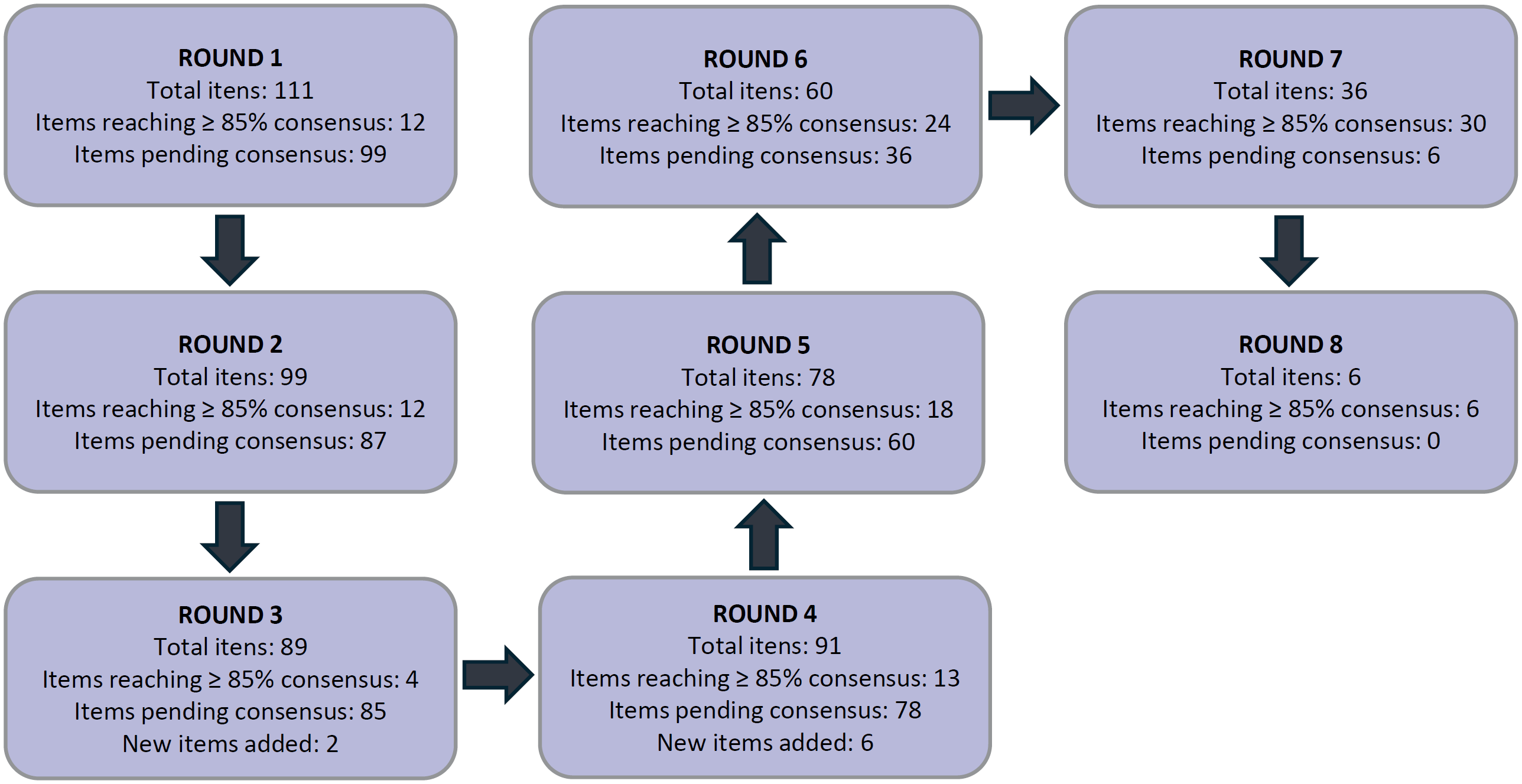
 Source: Author's own Delphi consensus.