
 Rapid Response Teams in low and middle-income countries: a scoping review
ABSTRACT
Background Rapid Response Teams have been widely implemented in high-income countries and play a crucial role in the early identification and management of clinically deteriorating patients. However, their implementation in low and middle-income settings has not been adequately described. Our goal was to map the current evidence in this setting.
Methods We conducted a scoping review to map the published literature about Rapid Response Teams in low- and middle-income countries, according to year of publication, study type, team composition, reported outcomes, and potential roles of the team.
Results After screening 6,679 studies, 52 fulfilled eligibility criteria: 36 full-text studies and 16 conference abstracts. Most of the studies were from Brazil (51.2%), followed by India (19.2%) and Turkey (7.7%), with the two earliest reports being conference abstracts published in 2009. The predominant design was before-and-after studies (20; 38.4%), followed by cohort studies (16; 30.8%). An intensive care unit physician was always a member of the Rapid Response Teams in 55.9% of the studies and an intensive care unit nurse in 23.5%. The number of Rapid Response Teams calls in the before-and-after studies ranged from 2.39 to 124 per 1,000 admissions. Reported outcomes varied, with most studies focusing on mortality (26, 50%) and code blue incidence (21; 40.4%). Four (7.7%) studies reported an active role of Rapid Response Teams in goals of care discussions.
Conclusion We found that evidence on Rapid Response Teams in low- and middle-income countries remains limited, with a time lag in publications compared to high-income countries. Our findings highlight the need for further studies and policy initiatives to evaluate the effectiveness of implementing Rapid Response Teams in resource-constrained settings.
Keywords:
Developing countries; Hospital rapid response team; Goals; Incidence; Critical illness; Patient reported outcome measures; Patient care planning; Cardiopulmonary resuscitation; Intensive care units; Brazil
INTRODUCTION
Rapid Response Teams (RRTs) are expert teams that review patients with signs of objective clinical deterioration outside of the intensive care unit (ICU).(1)Implementing RRTs has been associated with decreased intra-hospital cardiac arrests and mortality outside the ICU.(2-5) Quality commissions established that the presence of RRT is a parameter of good hospital care.(6,7) A mature Rapid Response System (RRS) identifies respiratory distress, sepsis, altered consciousness, and further organ dysfunction in the wards.(8,9) The main components of the RRS include the afferent limb, efferent limb, administrative structure, and data collection for quality improvement, as illustrated in figure 1. Furthermore, RRT calls can sometimes trigger goals of care discussions and do-not-resuscitate decisions.(10,11)Composition of the team is heterogeneous in the literature, with models varying from nurse-lead in England and the United States to an intensive care doctor as the team leader in Australia, referred to as Medical Emergency Team (MET).(1) Critical care outreach teams (CCOT) usually consist of specialized nurses who, besides attending RRT calls, follow patients after ICU discharge and reevaluate patients with multiple RRT activations.(12)
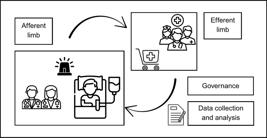
Components of the Rapid Response System.
The Rapid Response System consists of four key components: the afferent limb, responsible for detecting clinical deterioration and triggering the response; the efferent limb, which includes the Rapid Response Team; the quality improvement limb, focused on data collection and feedback; and the administrative limb, which oversees coordination and system governance.
Although RRT, MET, and CCOT are well established in high-income countries (HICs), data from low- and middle-income countries (LMICs) are less reported. Up to 96% of the countries included in published systematic reviews are HICs from Europe, North America, and Oceania,(5,9,13)even though the burden of critical illness in LMICs may comprise up to 85% of critically ill patients worldwide. There is a shortage of trained staff, research funding, and cultural barriers that decelerate growth and may prevent adequate implementation of initiatives as RRTs in constrained settings.(14) However, in these resource-constrained settings, the benefits of RRTs on hospital outcomes could be even higher. In such settings, the RRTs might evolve to perform as a true “ICU without borders”,(15) as organ support provision in the wards for some days may occur because of the scarcity of ICU beds.(16) Even though RRTs may be an intuitive solution for management of critically ill patients in LMICs, whether there are consolidated teams in LMICs and if the potential benefit described for HICs on hospital mortality and cardiac arrest sustains in LMICs is underreported.
To address this question, we conducted a scoping review to map the published literature about RRT in LMICs and analyze knowledge gaps, focusing on team composition, potential roles of the RRT, and impact on hospital outcomes.
METHODS
Study design
We performed a scoping review to identify the published literature about RRT in LMICs, adhering to the Preferred Reporting Items for Systematic reviews and Meta-Analyses Extension for Scoping Reviews (PRISMA-Scr).(17)We followed the Joanna Briggs Institute (JBI) Manual for Evidence Synthesis to develop the study protocol and registered the protocol in the Open Science Framework (https://osf.io/3zsae/). The study question was structured using the acronym “PCC” as follows: “Among hospitalized patients with clinical deterioration (population), what is the role of MET / RRT / CCOT (concept) in low and middle-income countries (context)?”
Eligibility criteria
This review included studies reporting on characteristics, implementation, or outcomes of an adult RRT, MET, or CCOT in low and middle-income countries (LIMCs) based on the World Bank Atlas 2021 classification.(18) We included only original studies, such as randomized and non-randomized clinical trials, cohort studies, descriptive cross-sectional studies, and qualitative studies available as full-text or conference papers. Conference papers were also included in this review to account for underrepresentation of LMICs in peer-reviewed journals.(14,19) We excluded research protocols, meta-analyses, and non-original articles, such as viewpoints and narrative reviews.
Search strategy
We developed a comprehensive search strategy informed by a professional librarian to identify relevant articles with search strings for the two main concepts: RRT/MET/CCOT and LMICs. We searched the following databases: MEDLINE Ovid (1946 to August 23, 2024), Embase Ovid (1974 to 2024 August 23), and Emcare Ovid (1995 to 2024 Week 34) to retrieve published studies. Preliminary research was conducted to identify relevant papers - 12 were identified, which comprised the gold set of key references. The gold set was examined for relevant Medical Subject Headings (MeSH) terms and keywords/phrases in the title and abstract using Yale MeSH Analyzer for the two main concepts. The final MEDLINE search strategy is available in the Supplementary Material.
Study selection and data extraction
The results were uploaded to the Rayyan® platform, a literature management software. After duplicates were removed, two researchers independently screened the titles and abstracts of the studies for the inclusion and exclusion criteria. A study was included if at least one researcher classified it as eligible. Then, two researchers read the full text or the conference abstract and determined its suitability for inclusion. In case of any discrepancies regarding the eligibility of specific studies, the reviewers decided through consensus.
We developed a standardized and pre-tested form in Microsoft Excel® to extract data from the included studies for evidence synthesis. Data extracted contained details including the study design, setting, composition of the RRT, presence of a CCOT, baseline period and period after implementation of RRT, reported outcomes, role of the RRT/MET, number of RRT/ MET calls, number of observed blue codes, ICU transfer, ICU length of stay (LOS), hospital LOS and hospital mortality. Code blue was defined as a hospital emergency code used to indicate a patient requiring immediate resuscitation, typically due to cardiac or respiratory arrest.(20)
Risk of bias of individual studies
Considering the purpose of this study to map the available evidence regarding RRT/ MET/ CCOT in LMICs, we did not assess the risk of bias of included studies, as recommended by JBI for scoping reviews.(21)
Data synthesis and analysis
Results were summarized using descriptive statistics, and study characteristics are reported as frequencies and percentages. We used the PAGER (acronym from Patterns, Advances, Gaps, Evidence for practice and Research recommendations) framework(22) to synthesize the domains assessed in this review. We used R version 4.4.1 for graphical presentations with the packages ‘tidyverse’, ‘maps’, and ‘ggrepel’. We did not perform quantitative synthesis.
RESULTS
Literature search
We retrieved 6,679 records from the primary search, of which 996 were duplicate records and 5,683 records were screened for title and abstract. Subsequently, 185 studies were assessed for eligibility, and 52 were included. The main reasons for exclusion were a different theme from the main question (n = 78) and being settled in a high-income country (n = 52). Full-text studies accounted for 36 (69%) of the studies included, and 16 (31%) were conference abstracts (Figure 2).

Study characteristics
After reviewing the studies, we identified five main themes synthesized at the PAGER framework: study design, reported outcomes, impact on clinical outcomes, team composition, and additional roles (Table 1).
Study design
The main characteristics of the selected studies are summarized in table 2. Countries from South America, Asia, and Africa (Figure 1S - Supplementary Material) have published manuscripts about the concept. Most of the studies were from Brazil (51.2%), followed by India (19.2%) and Turkey (7.7%). The predominant study design was a before-and-after format (38.4%), followed by cohort studies (30.8%) and cross-sectional studies (21.1%). Three qualitative studies were addressing RRT members and their perceptions about the provided care and system organization.(23-25)Fifty-one studies were single-center and usually conducted in public (50%) or private hospitals (34.6%). The two earliest reports were published in 2009 as conference abstracts, and there was an increase in the number of published studies over the following years (Figure 3).

Reported outcomes and impact on clinical outcomes
Table 3 summarizes the characteristics of all published studies and reported outcomes. The number of RRT calls in the before-and-after studies varied from 2.39(26)to 124(27) per 1,000 admissions. Several studies described only the absolute number of RRT calls or number of assessed patients.(16,23,28-58) Reported outcomes in the before-and-after studies also varied, with most studies focusing on mortality and code blue incidence. Twenty-six studies described hospital mortality,(26-28,30-32,34-36,42-44,47,48,50,52,57,59-67) one study described 30-day survival(46)and another study also reported the hospitalization cost before and after RRT implementation.(48)
Comparative incidence of code blues before and after RRT was reported in 12 studies using different metrics.(28,29,32,52,54,62-64,66,68-70) The full-text studies that described the rate of code blue per 1,000 patient admissions or discharges identified 3.54 to 7.41 code blues per 1,000 patient admissions or discharges before RRT implementation compared to 1.69 to 2.6 code blues per 1,000 patient admissions or discharges after RRT(27,60,61,68) (Table 1S - Supplementary Material). Four studies reported an active role of RRT in goals of care discussion, with a reported change of code status to do not resuscitate after RRT evaluation.(33,47,59,63) None of the studies(16,23-73) reported the use of an automated electronic system for RRT activation. One study reported that delayed medical emergency calls were associated with increased mortality (61.8% versus 41.9%) compared to timely MET activation.(69)
Team composition
Thirty-four studies(16,23,26,27,29-36,38-41,43-47,49,58-64,66-69,71) provided data on the composition of RRT. Four studies(23,44,46,71) reported an exclusive nurse-led team and ICU nurses were always present in 23% of the RRTs. In 56% of the teams, an ICU physician was involved in RRT calls, and less frequently, emergency physicians (6%), internal medicine physicians (6%), and anesthesiologists (3%) were present. The mandatory participation of ICU fellows in RRT was described in 9% of the studies. A physical or respiratory therapist was always involved in 18% of the studies and sometimes involved in 3% (Table 2S - Supplementary Material).
Additional roles
There was no clear description of additional roles of RRT beyond those reported above.
DISCUSSION
We found in this scoping review that the published literature regarding RRT on LMICs is scarce and limited to a few countries -, even though there is a trend towards increasing the number of publications in recent years. We observed methodological heterogeneity in study design and reported outcomes, often presentation of incomplete data, which limits the interpretation of the actual impact of RRT in these settings. In addition, team composition was not reported in 34% of the studies. These findings highlight that a significant knowledge gap regarding RRTs in LMICs remains despite ongoing efforts.
Uptake in low and middle-income countries
One of the first reports of a MET was by Lee et al. in 1995 from a hospital in Australia.(74) Rapid Response Teams spread in the following years, and they were present in over 60% of ICU-equipped Australian hospitals in 2005,(75) even though the only multicentric randomized controlled trial evaluating the benefit of this intervention was neutral.(76) In this review, the first study we retrieved from LMICs was from 2009, and most of the studies are from the last 10 years, evincing an important time difference until the beginning of the implementation of RRTs in LMICs. We found studies particularly from middle-income countries; low-income countries were further underrepresented (there were only two studies from the African continent: one from Egypt and another from Tunisia, both lower-middle-income countries). This highlights an important gap to be addressed, as critically ill patients in the African continent are frequently treated in general wards.(77)In addition, the preferred study design was a before-and-after format or cohorts, with no standardized metrics for evaluation.
Another topic increasingly explored in recent years is how the activation flow of RRTs can be optimized to improve patient outcomes. Electronic systems based on early warning scores (EWS) or other clinical triggers automate RRT activation and enable early identification of deterioration.(78) These systems aim to overcome delays in activation, which have consistently been associated with increased mortality in both high-income and low- and middle-income settings.(69,79)
Reported outcomes
Reported outcomes varied in the included studies, and not all of them contained information about the number of RRT calls, cardiac arrests, and mortality before and after implementation of this system. The number of RRT calls per 1,000 patient admissions or discharges, known as “RRT dose”, is directly related to improvement of patient outcomes and is a necessary process measure to evaluate the implementation of RRT.(80) The minority of included studies reported RRT calls using the proper metric, and many of them showed an activation rate smaller than the 20 - 40 per 1,000 admissions or discharges recommended in the literature.(1) Even so, most of the studies showed a reduction in the primary outcome evaluated, whether it was the number of code blues, mortality or ICU admission. The four before-and-after studies presented as full-text all reported a decrease in code blue after RRT implementation to less than 2.6 per 1,000 admissions or discharges, consistent with the benefit observed in HICs.(20) Considering the lack of robust reporting of RRT dose or outcome measurement, the interpretation and generalization of these results are limited.
Team composition
Ideal RRT composition is uncertain in HIC: composition of MET in Australia includes a physician as team leader, usually an ICU fellow, and a skilled nurse as a team member;(81) in the United States, over 70% of hospitals present a nurse-led RRT; in England, CCOT in a nurse-led service, with frequent consultations from ICU physicians.(82)Our review showed a higher prevalence of physicians in RRTs, including physician-exclusive teams, with a lesser presence of a dedicated nurse. Compared to HIC, LMICs frequently face worse nurse-to-patient ratios, longer working hours, lower remuneration, and reduced nurse autonomy related to work overload.(83,84) These factors may contribute to the predominance of physician-centered models in RRTs across many LMICs.
Other roles of Rapid Response Teams
Considering that the initial focus of RRT implementation is to reduce intra-hospital cardiac arrest, it is not surprising that other roles, such as goals of care discussion, educative initiatives, and technical support for non-specialists for reducing moral distress, were scarcely reported. These approaches were only later described as benefits of RRT in HICs.(10,11) However, especially in resource-constrained settings, these initiatives could also optimize resource utilization by prioritizing ICU transfers for patients who would most likely benefit from scarce ICU beds, and prompt discussions based on other patient-centered outcomes.
Implications
Implementation of RRT is feasible and strategic in managing clinical deterioration outside of the ICU. Current evidence in LMICs lacks consistency, rigorous study design and standardized evaluation of outcomes. To properly evaluate the impact of RRS, studies should consistently report a core set of data elements that include: RRT dose; the rate of in-hospital cardiac arrests per 1,000 admissions; overall hospital mortality; unexpected ICU admissions; hospital characteristics; how the response team is structured; how activations are triggered; whether staff are trained using standardized tools or protocols; for each event, patient demographics, the reasons for activation, timing, clinical interventions, patient destination, and any changes in code status (such as new do-not-resuscitate orders).(12,85)Adapting team composition to available resources is also important, since there is no consensus for optimal team composition.
Furthermore, automated RRT activation systems and the increasing use of artificial intelligence to recognize triggers of clinical deterioration should be further explored as promising strategies to enhance the effectiveness of rapid response interventions, and their cost-effectiveness needs to be evaluated in LMICs. There is an urgent need for well-designed studies, ideally hybrid effectiveness-implementation(86) studies, that integrate the assessment of digital alert systems, RRT structure, and training in LMICs and that identify and address barriers to implementation, given the evidence base in the overall literature supporting RRS. Future research should also explore the expanding roles of RRTs, including goals of care discussions, ICU triage, and the development of communication skills and educational strategies.
Strengths and limitations
We chose a scoping review model because we anticipated that evidence on RRT at LMICs would be heterogeneous, precluding meta-analysis to analyze the findings. In addition, our main goals were to identify the available evidence in the literature, identify equity-related challenges, knowledge gaps, and research opportunities.(87)
There are several limitations to our scoping review, inherent to the characteristics of the published literature. Variability in design and reported outcomes of the studies implies difficulty in extracting data and gathering information for a global interpretation. Although using conference abstracts aims to expand the search considering lesser publication of LMICs in high-impact journals, it also adds a layer of incomplete data because only main results are usually reported, and secondary outcomes that may have been relevant are omitted. Finally, we limited our research to three databases and did not include other sources, such as dissertations, government reports, and further gray literature, which may have added information. Nonetheless, this choice stresses the existing knowledge gap in the most common and accessible sources of medical information.
CONCLUSION
Our findings demonstrate a lagged published literature describing the implementation of Rapid Response Teams in low- and middle-income countries, with inconsistent team composition, inconsistent outcome reporting, and ultimately unclear best practices to be followed. Further studies addressing the best team composition, automated electronic system activation, and additional desired roles of Rapid Response Teams with proper impact and cost-effectiveness evaluation are needed to advance the concept of low and middle-income countries, where it could have an even greater impact on clinical outcomes.
SUPPLEMENTARY MATERIAL
SUPPLEMENTARY MATERIAL
REFERENCES
- 1 Jones DA, DeVita MA, Bellomo R. Rapid-Response Teams. N Engl J Med. 2011;365(2):139-46.
- 2 Solomon RS, Corwin GS, Barclay DC, Quddusi SF, Dannenberg MD. Effectiveness of rapid response teams on rates of in-hospital cardiopulmonary arrest and mortality: A systematic review and meta-analysis. J Hosp Med. 2016;11(6):438 -45.
- 3 Chan PS, Jain R, Nallmothu BK, Berg RA, Sasson C. Rapid Response Teams: A Systematic Review and Meta-analysis. Arch Intern Med. 2010;170(1):18.
- 4 De Jong A, Jung B, Daurat A, Chanques G, Mahul M, Monnin M, et al. Effect of rapid response systems on hospital mortality: a systematic review and meta-analysis. Intensive Care Med. 2016;42(4):615-7.
- 5 Maharaj R, Raffaele I, Wendon J. Rapid response systems: a systematic review and meta-analysis. Crit Care. 2015;19(1):254.
-
6 Department of Health. Comprehensive critical care: a review of adult critical care services, 2000. Available from: http://webarchive.nationalarchives.gov.uk/+/www.dh.gov.uk/en/publicationsandstatistics/publications/publicationspolicyandguidance/dh_4006585
» http://webarchive.nationalarchives.gov.uk/+/www.dh.gov.uk/en/publicationsandstatistics/publications/publicationspolicyandguidance/dh_4006585 - 7 Wachter RM, Pronovost PJ. The 100,000 Lives Campaign: a scientific and policy review. Jt Comm J Qual Patient Saf. 2006;32(11):621-7.
- 8 Jones D, Rubulotta F, Welch J. Rapid response teams improve outcomes: yes. Intensive Care Med. 2016;42(4):593-5.
- 9 Zhang Q, Lee K, Mansor Z, Ismail I, Guo Y, Xiao Q, et al. Effects of a Rapid Response Team on patient outcomes: a systematic review. Heart Lung. 2024;63:51-64.
- 10 Kerkham T, Brain M. Goals of care conversations and documentation in patients triggering medical emergency team calls. Intern Med J. 2020;50(11):1373-6.
- 11 Pronko A, Chung S, Kim P, Reid M, Adelman R, Hayward B. Goals of care conversations during initial critical cre consultation. Chest. 2019;156(4):A1106.
- 12 De Vita MA, Bellomo R, Hillman K, Kellum J, Rotondi A, Teres D, et al. Findings of the First Consensus Conference on Medical Emergency Teams. Crit Care Med. 2006;34(9):2463-78.
- 13 Tirkkonen J, Tamminen T, Skrifvars MB. Outcome of adult patients attended by rapid response teams: a systematic review of the literature. Resuscitation. 2017;112:43-52.
- 14 Salluh JI, Besen BA, González-Dambrauskas S, Ranjit S, Souza DC, Veiga VC, et al. Closing the critical care knowledge gap: the importance of publications from low-income and middle-income countries. Crit. Care Sci. 2024;36:e20240251eden.
- 15 Ostermann M, Vincent JL. ICU without borders. Crit Care. 2023;27(1):186.
- 16 Bergamasco E PaulaR, Tanita MT, Festti J, Queiroz Cardoso LT, Carvalho Grion CM. Analysis of readmission rates to the intensive care unit after implementation of a rapid response team in a University Hospital. Med Intensiva. 2017;41(7):411 -7.
- 17 Tricco AC, Lillie E, Zarin W, O'Brien KK, Colquhoun H, Levac D, et al. PRISMA Extension for Scoping Reviews (PRISMA-ScR): Checklist and Explanation. Ann Intern Med. 2018;169(7):467-73.
-
18 World Bank Atlas (2021). Atlas of Sustainable Development Goals 2020 from World Development Indicators. Available from: https://datatopics.worldbank.org/sdgatlas/archive/2020/
» https://datatopics.worldbank.org/sdgatlas/archive/2020/ - 19 Bol JA, Sheffel A, Zia N, Meghani A. How to address the geographical bias in academic publishing. BMJ Glob Health. 2023;8(12):e013111.
- 20 Jones D, Bellomo R, Bates S, Warrillow S, Goldsmith D, Hart G, et al. Long term effect of a medical emergency team on cardiac arrests in a teaching hospital. Crit Care. 2005;9(6):R808-15.
- 21 Peters MDJ, Marnie C, Tricco AC, Pollock D, Munn Z, Alexander L, et al. Updated methodological guidance for the conduct of scoping reviews. JBI Evid Synth. 2020;18(10):2119-26.
- 22 Bradbury-Jones C, Aveyard H, Herber OR, Isham L, Taylor J, O'Malley L. Scoping reviews: the PAGER framework for improving the quality of reporting. Int J Soc Res Methodol. 2022;25(4):457-70.
- 23 Jeddian A, Lindenmeyer A, Marshall T, Howard AF, Sayadi L, Rashidian A, et al. Implementation of a critical care outreach service: a qualitative study. Int Nurs Rev. 2017;64(3):353-62.
- 24 Dias AO, Martins EA, Haddad MC. [Instrument for assessing the quality of the Rapid Response Team at a university public hospital]. Rev Bras Enferm. 2014;67(5):700-7. Portuguese.
- 25 Yuan X, Wan S, Chen Y, Qin W. Competency expectations of nurses in rapid response teams: an interview-based qualitative study. Ann Palliat Med. 2022;11(6):2043-9.
- 26 Gong XY, Wang YG, Shao HY, Lan P, Yan RS, Pan KH, et al. A rapid response team is associated with reduced overall hospital mortality in a Chinese tertiary hospital: a 9-year cohort study. Ann Transl Med. 2020;8(6):317.
- 27 Viana MV, Nunes DS, Teixeira C, Vieira SR, Torres G, Brauner JS, et al. Changes in cardiac arrest profiles after the implementation of a Rapid Response Team. Rev Bras Ter Intensiva. 2021;33(1):96-101.
- 28 Alves Silva LM, Moroço DM, Pintya JP, Miranda CH. Clinical impact of implementing a rapid-response team based on the Modified Early Warning Score in wards that offer emergency department support. PLoS One. 2021;16(11):e0259577.
- 29 Rocha HA, Alcântara AC, Netto FC, Ibiapina FL, Lopes LA, Rocha SG, et al. Dealing with the impact of the COVID-19 pandemic on a rapid response team operation in Brazil: quality in practice. Int J Qual Health Care. 2021;33(1):mzaa114.
- 30 Sabahi M, Fanaei SA, Ziaee SA, Falsafi FS. Efficacy of a Rapid Response Team on reducing the incidence and mortality of unexpected cardiac arrests. Trauma Mon. 2012;17(2):270-4.
- 31 Sedghiani I, Doghri H, Hamdi D, Cherif MA, Hechmi YZ, Zouheir J. In hospital medical emergency calls: Epidemiology and patients outcomes. Ann Intensive Care. 2017;7(Suppl 1):045.
- 32 Taguti PD, Dotti AZ, Araujo KP, Pariz PS, Dias GF, Kauss IA, et al. The performance of a rapid response team in the management of code yellow events at a university hospital. Rev Bras Ter Intensiva. 2013;25(2):99-105.
- 33 Boniatti MM, Azzolini N, da Fonseca DL, Ribeiro BS, de Oliveira VM, Castilho RK, et al. Prognostic value of the calling criteria in patients receiving a medical emergency team review. Resuscitation. 2010;81(6):667-70.
- 34 Boniatti MM, de Loreto MS, Mazzutti G, Benedetto IG, John JF, Zorzi LA, et al. Association between time of day for rapid response team activation and mortality. J Crit Care. 2023;77:154353.
- 35 Tezcan B, Can M, Bayindir Dicle Ç, Mungan I, Ademoglu D. Predictors of in-hospital mortality after rapid response system activation in a newly established tertiary hospital. Turk J Intensive Care. 2022;20(3):124-31.
- 36 Duger C, Kaygusuz K, Isbir AC, Kol IO, Gursoy S, Avci O, et al. Evaluation of incoming calls to intensive care unit for emergency assistance. Cumhur Med J. 2013;35(2):244-9.
- 37 Chandrasegarane S, Amte RK. Medical Emergency Team: a game changer in the wards. Indian J Crit Care Med. 2023;27(1):77.
- 38 Srivastava N, Kaur M, Sharma S. Evaluation of critical care outreach services in a tertiary care hospital in India: a retrospective analysis. Int J Crit Illn Inj Sci. 2014;4(1):10-3.
- 39 Mangal K, Javeri Y, Yadav R, Singh O, Singh A, Garg S. Evaluation of rapid response team implementation in medical emergencies: a gallant evidence based medicine initiative. Indian J Crit Care Med. 2014;18(Suppl 1):S30-1.
- 40 Gülaçti U, Lök U, Aydin I, Gurger M, Hatipoglu S, Polat H. Outcomes of in-hospital cardiopulmonary resuscitation after introduction of medical emergency team. Kuwait Med J. 2016;48(2):127-31.
- 41 Eroglu SE, Onur O, Urgan O, Denizbasi A, Akoglu H. Blue code: is it a real emergency? World J Emerg Med. 2014;5(1):20-3.
- 42 Santos PK, Oliveira GN, Sichieri K, Cruz DA, Nogueira LS. Features of the triggering of the yellow code and factors associated with the occurrence of adverse events. Rev Bras Enferm. 2023;76(2):e20220181.
- 43 Yang M, Zhang L, Wang Y, Zhan Y, Zhang X, Jin J. Improving rapid response system performance in a Chinese Joint Commission International Hospital. J Int Med Res. 2019;47(7):2961-9.
- 44 Jeddian A, Hemming K, Lindenmeyer A, Rashidian A, Sayadi L, Jafari N, et al. Evaluation of a critical care outreach service in a middle-income country: a stepped wedge cluster randomized trial and nested qualitative study. J Crit Care. 2016;36:212-7.
- 45 YekeFallah L, Eskandari Z, Shahrokhi A, Javadi A. Effect of Rapid Response Nursing Team on Outcome of Patient Care. Trauma Mon. 2018;23(4):e14488.
- 46 Hajjar L, Galas F, Vieira S, Almeida J, Osawa E, Park C, et al. Multidisciplinary Medical Emergency Team System increases survival in cancer patients undergoing cardiopulmonary resuscitation. Crit Care. 2013;17(Suppl 2):P298.
- 47 Georgeto A, Tanita MT, Taguti PS, Pariz PS, Kamiji D, Sacon MF, et al. Improved outcome of critically ill patients treated by the Rapid Response Team outside the intensive care unit. Crit Care. 2011;15(Suppl 2):P56.
- 48 Sessim FilhoJ, Azevedo RP, Assuncao AN, Sa MM, Silva FD, Pastore L, et al. Abstract 288: Rapid Response Team Implementation Associated with reductions in in-hospital mortality rate and hospitalization costs: a retrospective analysis. Circulation. 2020;142 Suppl 4:288.
- 49 Flato UA, Vilela M, Costa F, Rocco I, Almeida L, Abreu B, Improvement of healthcare quality in tertiary hospital after implementation of a Rapid Response Team. Intensive Care Med Exp. 2021; 9(Suppl 1):001464.
- 50 Oliveira RP, Teixeira C, Balzano PC, MacCari JG, Barth JH, Alves F, et al. The effect of a rapid response team implementation in a private hospital. Intensive Care Med. 2009;35:S100.
- 51 Bolinedi V, Shah M, Shalia K, Tisekar O. A clinical audit of code blue and MET call in a tertiary care hospital of 2 years. Indian J Crit Care Med. 2022;26(Suppl 1):S33-4.
- 52 Pardini A, Jaures M, Shiramizo SC. Rapid response team: the early identification of septic patients. Crit Care. 2013;17(Suppl 4):P33.
- 53 Tiwari A, Gurav S, Deshmukh A, Pathak M, Zirpe K. The medical emergency team (MET): does it really make a difference in outcome? Indian J Crit Care Med. 2013;17(Suppl 2):14-5.
- 54 Palomba H, Piza F, Jaures M, Capone A. Hospital mortality predictive factors following Rapid Response Team activation. Crit Care. 2014;18 (Suppl 1):P82.
- 55 Grion CM, Cardoso LT, Carrilho CM, Anami EH, Kauss IA, Okamoto TY, et al. Introduction of a rapid response team in a Brazilian teaching hospital. Intensive Care Med. 2009;35(Suppl 1):S100.
- 56 Galindo VB, Midega TI, Souza GM, Hohmann F, Assis M, Pardini A, et al. Outcomes and predictors of hospital death among patients attended by rapid response team admitted to the intensive care/stepdown unit. Intensive Care Med Exp. 2023;11(Suppl 1):000513.
- 57 Kapadia F, Ambapkar S. Rapid response team at P.D. Hinduja Hospital: a one year experience. Indian J Crit Care Med. 2013;17(Suppl 2):26.
- 58 Bonatto AM, Rodrigues RD, Tierno PF, Becker RA, Bento RV, Lima GS, et al. Rapid response team: what is the best team for the medical care? Comparative study of patient care by the intensivist physician and the emergency physician in a tertiary hospital in Guarulhos-Sao Paulo, Brazil. Intensive Care Med Exp. 2017;5(Suppl 2):0725.
- 59 Yousaf M, Bano S, Attaur-Rehman M, Nazar CM, Qadeer A, Khudaidad S, et al. Comparison of hospital-wide code rates and mortality before and after the implementation of a rapid Response Team. Cureus. 2018;10(1):e2043.
- 60 Hosny R, Hussein RS, Hussein WM, Hakim SA, Habil IS. Effectiveness of Rapid Response Team implementation in a tertiary hospital in Egypt: an interventional study. BMJ Open Qual. 2024;13(3):e002540.
- 61 Gonçales PD, Polessi JA, Bass LM, Santos GD, Yokota PK, Laselva CR, et al. Reduced frequency of cardiopulmonary arrests by rapid response teams. Einstein (Sao Paulo). 2012;10(4):442-8.
- 62 Mezzaroba AL, Tanita MT, Festti J, Carrilho CM Cardoso LT, Grion CM. Evaluation of the five-year operation period of a rapid response team led by an intensive care physician at a university hospital. Rev Bras Ter Intensiva. 2016;28(3):278-84.
- 63 Carvalho GD, Costa FP, Peruchi JA, Mazzutti G, Benedetto IG, John JF, et al. The quality of end-of-life care after limitations of medical treatment as defined by a Rapid Response Team: a retrospective cohort study. J Palliat Med. 2019;22(1):71-4.
- 64 Arora V, Juneja D, Singh O, Singh A, Tiwari D, Gupta A. The epidemiology and outcomes of adult rapid response team patients in a tertiary care hospital in India. Med Intensiva (Engl Ed). 2022;46(10):577-80.
- 65 Sudarshan Reddy B, Chacko J, Karanth S, Gagan B, Asha R, Ranajani S. Impact of an ICU-led medical emergency team (MET) on outcomes in an Indian corporate hospital. Indian J Crit Care Med. 2013;17(Suppl 2):F12.
- 66 Narakurthi P, Jakkinaboina S, Khan MR. Outcome of patients before and after implementation of RRT in a tertiary hospital. Indian J Crit Care Med. 2022;26(Suppl 1):S96-7.
- 67 Almeida MC, Portela MC, Paiva EP, Guimarães RR, Pereira Neto WC, Cardoso PR, et al. Implementation of a rapid response team in a large nonprofit Brazilian hospital: improving the quality of emergency care through Plan-Do-Study-Act. Rev Bras Ter Intensiva. 2019;31(2):217-26.
- 68 Menon VP, Prasanna P, Edathadathil F, Balachandran S, Moni M, Sathyapalan D, et al. A quality improvement initiative to reduce "Out-of-ICU" cardiopulmonary arrests in a tertiary care hospital in India: a 2-year learning experience. Qual Manag Health Care. 2018;27(1):39-49.
- 69 Boniatti MM, Azzolini N, Viana MV, Ribeiro BS, Coelho RS, Castilho RK, et al. Delayed medical emergency team calls and associated outcomes. Crit Care Med. 2014;42(1):26-30.
- 70 Queiroz AS, Nogueira LS. Nurses' perception of the quality of the Rapid Response Team. Rev Bras Enferm. 2019;72(Suppl 1):22-34.
- 71 Jamous SE, Kouatly I, Irani J, Badr LK. Implementing a Rapid Response Team: a quality improvement project in a low- to middle-income country. Dimens Crit Care Nurs. 2023;42(3):171-8.
- 72 Dias AO, Bernardes A, Chaves LD, Sonobe HM, Grion CM, Haddad MD. Critical incidents as perceived by rapid response teams in emergency services. Rev Esc Enferm USP. 2020;54:e03595.
- 73 Viana MV, Brauner JS, Nedel WL, Muller H, França J, Vieira SR, et al. Changes in cardiac arrest profile after rapid response team implementation. Intensive Care Med Exp. 2018;6(Suppl 2):0315.
- 74 Lee A, Bishop G, Hillman KM, Daffurn K. The Medical Emergency Team. Anaesth Intensive Care. 1995;23(2):183-6.
- 75 Jones D, George C, Hart GK, Bellomo R, Martin J. Introduction of Medical Emergency Teams in Australia and New Zealand: a multi-centre study. Crit Care. 2008;12(2):R46.
- 76 Hillman K, Chen J, Cretikos M, Bellomo R, Brown D, Doig G, et al.; MERIT study investigators Introduction of the medical emergency team (MET) system: a cluster-randomised controlled trial. Lancet. 2005;365(9477):2091-7.
- 77 African Critical Illness Outcomes Study (ACIOS) Investigators. The African Critical Illness Outcomes Study (ACIOS): a point prevalence study of critical illness in 22 nations in Africa. Lancet. 2025;405(10480):715-24.
- 78 Cho KJ, Kim JS, Lee DH, Lee S, Song MJ, Lim SY, et al. Prospective, multicenter validation of the deep learning-based cardiac arrest risk management system for predicting in-hospital cardiac arrest or unplanned intensive care unit transfer in patients admitted to general wards. Crit Care. 2023;27(1):346.
- 79 Arabi YM, Alsaawi A, Alzahrani M, Al Khathaami AM, AlHazme RH, Al Mutrafy A, et al.; SCREEN Trial Group and the Saudi Critical Care Trials Group. Electronic sepsis screening among patients admitted to hospital wards: a stepped-wedge cluster randomized trial. JAMA. 2025;333(9):763-73.
- 80 Jones D, Bellomo R, DeVita MA. Effectiveness of the Medical Emergency Team: the importance of dose. Crit Care. 2009;13(5):313.
- 81 Jones D, Drennan K, Hart GK, Bellomo R, Web SA; ANZICS-CORE MET dose Investigators. Rapid Response Team composition, resourcing and calling criteria in Australia. Resuscitation. 2012;83(5):563-7.
- 82 McDonnell A, Esmonde L, Morgan R, Brown R, Bray K, Parry G, et al. The provision of critical care outreach services in England: findings from a national survey. J Crit Care. 2007;22(3):212-8.
- 83 Konlan KD, Lee TW, Damiran D. The factors that are associated with nurse immigration in lower- and middle-income countries: an integrative review. Nurs Open. 2023;10(12):7454-66.
- 84 Tirupakuzhi Vijayaraghavan BK, Gupta E, Ramakrishnan N, Beane A, Haniffa R, Lone N, et al. Barriers and facilitators to the conduct of critical care research in low and lower-middle income countries: a scoping review. PLoS One. 2022;17(5):e0266836.
- 85 Honarmand K, Wax RS, Penoyer D, Lighthall G, Danesh V, Rochwerg B, et al. Society of Critical Care Medicine Guidelines on Recognizing and Responding to Clinical Deterioration Outside the ICU: 2023. Crit Care Med. 2024;52(2):314-30.
- 86 Curran GM, Bauer M, Mittman B, Pyne JM, Stetler C. Effectiveness-implementation hybrid designs: combining elements of clinical effectiveness and implementation research to enhance public health impact. Med Care. 2012;50(3):217-26.
- 87 Khalil H, Jia R, Moraes EB, Munn Z, Alexander L, Peters M, et al. Scoping reviews and their role in identifying research priorities. J Clin Epidemiol. 2025;181:111712.
- Open Science Framework Registry:
Edited by
-
Responsible editor:
Regis Goulart Rosa https://orcid.org/0000-0001-7881-9866


