Potentially MOdifiable factors To ImproVe outcomes of mechanically Ventilated patients in a low-income country Intensive Care Units (MOTIVATE-ICU): rationale and protocol for a registry-embedded prospective observational study
ABSTRACT
Objective To identify modifiable intensive care unit factors associated with outcomes among patients receiving invasive mechanical ventilation in a low-income setting.
Methods This prospective, multicenter, registry-embedded observational study has two components: a prospective registry-based cohort assessing patient- and care-process-related factors and a cross-sectional intensive care unit survey evaluating organizational structure. Functional intensive care units in Uganda will be included. Patients aged ≥ 15 years old requiring invasive mechanical ventilation will be enrolled. Patients extubated within 48 hours, transferred after > 24 hours, and imminent early death will be excluded. Primary outcomes will include 28-day intensive care unit mortality, intensive care unit length of stay, and mechanical ventilation duration. Tracheostomy-related outcomes will be explored in a pre-planned sub-study. Factors potentially associated with outcomes will be categorized into non-modifiable and potentially modifiable factors. Non-modifiable factors will include patient-related factors like age, comorbidities, and illness severity; potentially modifiable factors include processes of care (e.g., sedation levels) and intensive care unit organizational structure (e.g., staffing patterns). Multilevel multivariable logistic regression models will assess association outcomes. Survival analysis (Kaplan-Meier curves) will explore mortality trends. Confounders will be identified using directed acyclic graphs.
Results (anticipated findings) This study will generate high-quality data on modifiable intensive care unit factors associated with ventilated patient outcomes in low-resource settings.
Conclusion This is Uganda’s first registry-embedded, multicenter intensive care unit study to systematically potentially modifiable factors associated with ventilated patient outcomes. This study will provide evidence-based insights to optimize critical care management in low- and middle-income countries by leveraging real-time intensive care unit registry data.
Keywords:
Respiration, artificial; Developing countries; Tracheostomy; Length of stay; Routinely collected health data; Registries; Critical care; Survival analysis; Intensive care units; Uganda
INTRODUCTION
In low and middle-income countries (LMICs), up to two-thirds of intensive care unit (ICU) admissions necessitate invasive mechanical ventilation (IMV), compared to half of ICU admissions globally.1-3Though IMV is a lifesaving organ support technique, it is also linked to complications like ventilator-associated lung injury and requires complex processes of care.4 Despite being younger, ventilated patients in LMICs have two to four times higher mortality than high-income countries (HICs).5-8Patients with acute respiratory distress syndrome (ARDS) in LMICs face an even greater risk, 70% higher than in HICs.9
Several modifiable factors to improve ICU outcomes in HICs have been identified – such as adherence to low tidal volume ventilation, optimal sedation practices, fluid conservative management, and ventilator-associated pneumonia bundles – these interventions have shown significant mortality reductions and shorter ventilation durations.1,10-13A pooled analysis revealed that while disease severity and ventilation management were similar in both middle-income countries (MICs) and HICs, the risk of ICU mortality was 16% higher in MICs.10 Unfortunately, data on determinants of poor outcomes among ventilated patients in LMICs remains scarce. Yet, LMICs grapple with challenges like understaffing, limited protocol usage, suboptimal ICU processes organization, and lack of daily care plans.10-16There is a paucity of data from LMICs targeted to address these challenges; however, directly applying HIC evidence-based management strategies to LMICs is not always effective. For example, attempts to implement HIC protocols on fluid management in the African setting, in both pediatric and adult patients increased mortality contrary to expectations.17,18These studies highlight the risks of directly applying HIC protocols in LMICs without accounting for local organizational structure and preexisting care processes.
Recently, the use of critical care registries for data collection, including patient care, indicators, and outcomes, has expanded in both HICs and LMICs.19-21This streamlines research and offers cost benefits. In 2022, Uganda launched the Intensive Care Registry of Uganda (ICRU) for quality improvement and research infrastructure. This registry-embedded study aims to identify modifiable factors impacting outcomes for mechanically ventilated patients in LMICs leveraging ICRU’s data pipeline. We hypothesize that specific patient-level and organizational factors can be identified that contribute to the ICU mortality of ventilated patients in Uganda.
METHODS AND ANALYSIS
Study design
The Potentially MOdifiable factors To ImproVe outcomes of mechanically Ventilated patients in ICUs in a Low-income Country (MOTIVATE-ICU) study is a prospective multicentre registry-embedded observational study with two main components. The first will be a prospective observational multicenter registry-embedded study aimed at assessing patient-related and process-related factors. The second component will be a cross-sectional survey to assess the organizational structure of the ICUs included. This study protocol was registered at clinicaltrials.gov (NCT06288724). The results of the study will be reported according to the Strengthening the Reporting of Observational Studies in Epidemiology (STROBE) Statement.22
Study setting
Intensive care units will be defined as geographically designated area/unit within a hospital that routinely provides IMV therapy with continuous vital sign monitoring (electrocardiographic monitoring, heart/pulse rate, noninvasive blood pressure, peripheral oxygen saturation) and designated nursing care for each bed in the unit i.e., at least three patients per week, for at least 24 hours. A descriptive study conducted in Uganda assessing the ICU capacity before the coronavirus-induced disease 2019 (COVID-19) revealed that there were 14 ICUs, with 12 being functional at the time.15 However, post-COVID-19, anecdotal evidence shows nearly a doubling of the ICU capacity, with nearly 25 functional ICUs to date. All ICUs currently functional in Uganda will be eligible to participate (Table 1S - Supplementary Material).
Participants
Patients aged ≥ 15 years admitted to study ICUs during the study period and receiving IMV will be eligible for recruitment. We selected patients aged ≥ 15 years because, in Uganda and many LMICs, patients aged 15 years and above are typically managed in adult ICUs. Exclusion criteria include successful extubation under two calendar days, admissions for end-of-life care and/or ICU palliative support or deemed so during ICU admission, and patients transferred ≥ 24 hours after the initiation of IMV.
Outcomes
Primary outcomes
The co-primary outcomes will be 28-day ICU mortality, ICU length of stay (LOS), and duration of mechanical ventilation. Table 1 details the outcome definitions.
Secondary outcomes
These will include hospital mortality censored at 30 days, duration of non-pulmonary organ support, ICU-free days, ventilator-free days at day 28, ventilator-associated pneumonia, tracheobronchitis, non-infectious pulmonary complication (clinician suspicion or radiological diagnosis of pleural effusion, atelectasis or pneumothorax), readmission, unplanned extubations. Tracheostomy-related outcomes will be explored as part of a preplanned sub-study, including tracheostomy timing, decannulation rate, decannulation failure, and complications such as stoma infection, major bleeding, tube dislodgement, and malfunction.
Associated factors
Factors potentially associated with outcomes among mechanically ventilated patients will be analyzed as ‘non-modifiable’ factors and ‘potentially modifiable’ factors. Non-modifiable factors include patient-related factors such as age, illness severity at initiation of mechanical ventilation, comorbidities, medical versus surgical admission, and indication for IMV (Table 2). Potentially modifiable factors will be subcategorized into care process-related factors such as Richmond Agitation Sedation Scale (RASS) targets, initial ventilator settings on day 0, use of daily spontaneous awakening and spontaneous breathing trials, use of stress ulcer and deep vein thrombosis (DVT) prophylaxis. The second subcategory will be the ICU organizational structure, which includes ICU staffing, staff-patient ratios, empowerment of non-physician staff, multidisciplinary team rounds, and protocols and checklists (Table 2).
Data collection
To ensure high-quality and standardized data collection, the following procedures will be implemented:
1.Direct Electronic Data Entry:
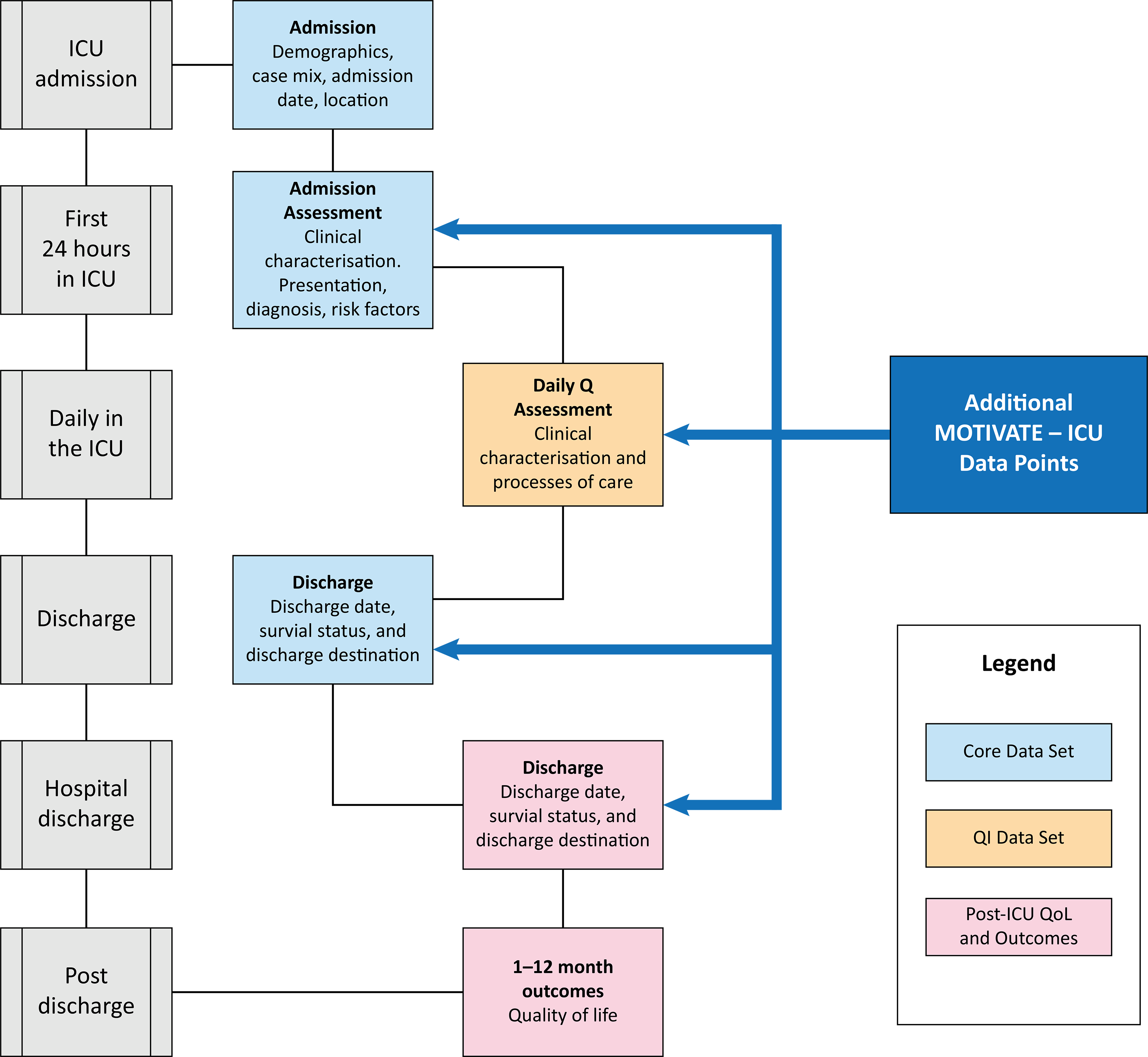
–Patient-level data will be entered directly into the PROTECT cloud-based ICU registry platform, which is managed by the ICRU, via a laptop or tablet (Figure 1).
–This platform enables real-time data capture and seamlessly integrates with existing ICU records.
2.The ICRU registry collects patient-level data, including core ICU admission data, daily ICU care variables, and outcomes at ICU discharge (Tables 2SA and 2SB - Supplementary Material). Illness severity estimation already exists in the platform using both the APACHE II and the Tropical Intensive Care Score (e-TropICS).26
3.Registry-Embedded Data Collection for MOTIVATE-ICU:
–The MOTIVATE-ICU study variables are fully integrated within the ICRU as an additional data layer.
–Additional variables captured in this study include clinical frailty scale,41 ventilator settings, tracheostomy data, sedation care processes, fluid monitoring, primary indication for IMV, and related complications. To assess organ dysfunction, we shall use the modified Sequential Organ Function Assessment score (mSOFA)27 by embedding urine output into the core ICU admission data (Table 3S - Supplementary Material).
–These variables are recorded prospectively within the ICRU framework to maintain consistency and minimize duplication.
4.Data extraction and quality assurance:
–Data extraction will occur directly from the ICRU platform. The platform operates on a standard data model, enabling standardized case-mix reporting, management insights, and real-time analytics (Figure 1).
–To ensure data integrity, periodic validation checks, audit trails, and cross-verification procedures will be conducted.
5.ICU organizational and process data collection:
–Hospital and ICU-level characteristics will be collected at each site via an interviewer-administered questionnaire (Table 4S - Supplementary Material) with the ICU director and/or in-charge nurse.
–Variables of interest include ICU type (medical-surgical versus specialty), Presence of critical care training programs, ICU admission volumes (preceding year), staffing patterns and multidisciplinary team presence, and organizational and care process characteristics.
6.Table 2SA and 2SB (Supplementary Material) details a complete list of ICU patient-level variables.
Follow-up
Given the potential burden of data collection, the patient recruitment period in each participating ICU will be a minimum of 3 months up to a maximum of six months, with a follow-up period of up to 30 days in-hospital or until hospital discharge, whichever comes first.
Sample size
We aim to include all consecutive patients admitted to participating ICUs to reduce potential selection bias and minimize the temporal variation of care processes. Based on aggregated data (published and unpublished) from LMICs including Uganda’s ICU cohorts2,10,12,28-32,38 the lowest measured mortality among patients receiving IMV was approximately 40%. A total of 250 events (deaths) would allow us to evaluate at least 25 associated variables in multivariable models. We will therefore target to enroll 625 patients receiving IMV.
Procedures to ensure data quality
The following site-level procedures will be followed:
-
To ensure standardization of the study procedures, each site shall have a site lead and dedicated data entrant(s) responsible for data collection while using the ICU registry platform. Before beginning recruitment, each site lead and data entrant(s) will receive training.
-
Each site will have a site lead responsible for weekly validation of patient episodes regarding completion and data quality.
-
Each site will have IT support and participate in monthly meetings to dispel doubts and solve potential challenges related to data entry.
Handling of missing data
All data pertinent to the study objectives will be mandated for all study ICUs during the study period. The study platform will flag missing data to the data collector in case of incompleteness. All sites will be monitored weekly to ensure the validation of patients entered and the completeness and accuracy of the data to ensure there is no missing data. This is being a prospective registry-embedded study, we expect a low percentage of missing data pertinent to the primary objectives of the study.
Statistical analysis
Descriptive statistics: ICU and patient characteristics will be summarized using appropriate descriptive statistics; for continuous variables, reported as mean ± standard deviation (SD) or median (interquartile range [IQR]) based on their distribution, and for categorical variables, summarized as counts (n) and percentages (%). Statistical tests will be applied appropriately for univariate associations between patient-, care process-, and ICU-level factors and the primary outcomes (ICU mortality, ICU LOS, and mechanical ventilation duration). For normally distributed continuous variables, we shall use the Student’s t-test (for two groups) and analysis of variance (ANOVA) (for ≥ 3 groups), while for non-normally distributed continuous variables, we shall use the Mann-Whitney U test (for two groups) and Kruskal-Wallis test (for ≥ 3 groups). For categorical variables, we shall use the Chi-square test (if the expected counts are ≥ 5 in all cells) and Fisher’s exact test (for small sample sizes). Eligible variables include patient-related, care process and organizational factors potentially associated with ICU mortality, LOS, and mechanical ventilation duration (Table 2). According to Marshall et al. (Table 5SA - Supplementary Material), we shall classify ICUs based on the proposed classification of ICUs.42 These analyses will inform the multivariable modeling approach.
Primary outcomes & multivariable models: we shall have the following co-primary outcomes for the study: for ICU mortality, binary outcome: alive versus dead; for ICU LOS, continuous, right-skewed; for mechanical ventilation duration, continuous, right-skewed. We shall use pre-specified multilevel models to assess the association between patient-related-, care process-related-, and ICU organizational factors and patient outcomes. For ICU mortality (primary outcome), we shall use multilevel logistic regression (Random-Intercept Model):
–Level 1 (patient-level factors) including age, e-TropICS, mSOFA, Charlson comorbidity index, clinical frailty scale, reason for admission, admission type, surgical urgency, immunosuppression. In addition, care process-related factors – potentially modifiable: sedation practices: deep sedation as percentage of patient-days, sedative medication (benzodiazepines versus non-benzos); ventilation strategies: spontaneous awakening trial (percentage of patient-days), spontaneous breathing trial (percentage of patient-days), ventilator settings (median tidal volume [mL/kg predicted body weight], median inspiratory pressure, median positive end-expiratory pressure); preventive and supportive care: DVT prophylaxis (percentage of patient-days), stress ulcer prophylaxis (percentage of patient-days), head-of-bed elevation (percentage of patient-days); organ support measures: vasopressor therapy duration (median time), antimicrobial therapy duration (median time), tracheostomy timing (median time), cumulative fluid balance (median); lay-care provider presence: (yes/no).
–Level 2 (ICU-level organizational factors – potentially modifiable); ICU staffing ratios, presence of 24/7 intensivist, multidisciplinary rounds, presence of a clinical pharmacist, physiotherapist, nutritionist, use of care protocols.
–ICU site as a random intercept to account for clustering effects based on the classification listed in table 5SB (Supplementary Material).
We shall use the above factors for ICU LOS and mechanical ventilation duration. For ICU LOS) we shall use the negative binomial regression (chosen due to overdispersion in count data), and for mechanical ventilation duration, we shall use the Cox Proportional Hazards Model, with ICU discharge and death as competing risks.
In addition to the primary outcomes, we will conduct secondary outcome analyses to assess the impact of patient-related, care process-related, and ICU organizational factors on key clinical and process-related outcomes. These secondary outcomes include duration of non-pulmonary organ support, hospital mortality (censored at 30 days from ICU admission), ICU-free days, ventilator-free days, ventilator-associated pneumonia, tracheobronchitis, non-infectious pulmonary complications, readmission, unplanned extubations, incidence of pressure sores, and tracheostomy-related outcomes.
Confounder selection using directed acyclic graphs: to ensure proper confounder control and avoid overfitting, we will construct a directed acyclic graph (DAG) to identify the minimum adjustment set necessary for estimating the effect of patient-related factors, ICU organizational and care process factors on patient outcomes. The DAG will be based on prior literature on ICU outcomes and modifiable factors in LMICs, expert consensus from intensivists and methodologists, preliminary analysis of data distribution, and collinearity among predictors. Confounders identified via DAG analysis will be retained in all models regardless of statistical significance, ensuring robust estimation of patient-related factors, ICU care processes, and organizational factors on mortality and other outcomes.
Handling of missing data: multiple imputation with chain equations will be used to address missing data in key variables. Sensitivity analysis will compare: complete case analysis versus imputed datasets and exclusion of ICUs with > 30% missing data. False discovery rate correction will be applied for subgroup analyses to control for multiple comparisons.
All statistical analyses will be conducted using R (http://www.r-project.org) and Statistical Package for the Social Sciences (SPSS) 21 (IBM Corp.), which may be used for additional descriptive analyses. The final detailed statistical analysis plan will be available on the ClinicalTrials.gov (NCT0628872) record before the database is locked.
Ethical approval and consent to participate
This study will be conducted according to the principles of the Declaration of Helsinki (revision Fortaleza, Brazil, October 2013). Ethical approval was obtained from the Uganda Heart Institute Research and Ethics Committee (UHIREC-0009), and 15 hospital administrative approvals were in place at the time of this writing.
We shall obtain deferred consent from the legal representative within 72 hours of recruitment into the study since most ICU admissions are emergency admissions, and informed consent during the initial 48 hours of admission may not be possible. In addition, without exception, patients admitted to ICU for ventilator support are unable to give informed consent. Persons who may take the role of legal representative following the Medical Treatment Agreement Act (WGBO) are: a predefined representative, husband or wife, registered partner or other life partner, a parent or child, brother or sister, and incidentally a curator appointed by a judge. For patients with no legal representative and are unable to give informed consent during in-hospital stay, we were granted a waiver of informed consent. The experience of ICU patients enrolled under deferred consent is mainly positive, as shown in the NICE-SUGAR trial, in which participants were included using deferred consent.43 Most of the patients were happy with the decision made by the representative (93%) and would have granted consent if asked (96%).44
Oral consent from each ICU director and/or in-charge nurse will be sought to conduct the interviewer-administered survey.
Dissemination
The study results will be submitted for publication regardless of the results after completion and analysis. We shall make the study findings widely available and disseminate them through conferences and peer-reviewed journals.
Data sharing
The authors encourage interested parties to contact the corresponding author with data sharing requests, including requests for access to additional unpublished data. The Intensive Care Registry of Uganda is part of a larger network that has appointed a Data Access Committee (DAC). Curated data may be shared with third parties for research purposes following written approval from the DAC.
Discussion and study status
The MOTIVATE-ICU registry-embedded study aims to identify potentially modifiable factors associated with outcomes among invasively ventilated patients in a low-income country.
As ICU registries are expanding in LMICs, it is pivotal understanding the practical outputs of such data collection systems and how the data generated can be leveraged to improve patient care. The ICRU was initiated in 2020 and uses a cloud-based platform (PROTECT-ICU), a standard data model, and standardized nomenclature to ensure interoperability of reporting between local, national, and other international stakeholders. When writing this, 8 of Uganda’s 25 ICUs were part of the ICRU, and approximately 5,000 patients were therein. Leveraging this, we embedded the MOTIVATE-ICU study into the registry by adding extra necessary variables (Tables 2SA and 2SB - Supplementary Material) relevant to address the objectives.
According to the Donabedian model, improving the quality of healthcare and improving outcomes of interest, rests on three components; the structure, care processes, and outcomes.45 Various studies from HICs on ICU organization structure, care bundles, and protocols have shown a significant impact on the reduction of mortality, duration of ventilation, and ICU length of stay, albeit with some inconsistencies.6,28-30,38 Based on what we currently know from the ORCHESTRA study done in Brazil, an upper middle-income country (UMIC), organizational factors, including protocol implementation, are the key targets to improve ICU outcomes and efficiency.31,32There has been considerable data describing the physical structural set-up and staffing of ICUs in LMICs.15,40,46,47 However, there is limited data on organizational features and care processes and their impact on outcomes in lower-income settings like Uganda.
Directly implementing evidence-based care processes from higher income settings may not yield similar results when implemented in resource-poor settings. For example, two African studies that implemented fluid therapy as per protocols used in HICs revealed more harm than benefit in both critically ill adults and pediatric populations.(17,18) For other processes, implementation in LMICs has improved consistently, but outcomes remain lagging compared to HICs, which are probably affected by many factors. For instance, the use of protective mechanical ventilation in patients without ARDS was shown to be comparable between MICs and HICS during the first days of ventilation, but with a significant difference in ICU mortality.10 The same was seen for ventilation in ARDS patients, albeit with a slight difference in protective ventilation implementation.(1,6)
One of the key potential interventions likely to show impact in low-resource settings compared to HICs is tracheostomy placement and timing. Tracheostomy timing, while improving ICU length of stay and duration of mechanical ventilation, has not impacted mortality in HICs,33-35 but may have a significant impact in a setting with limited resources. A preplanned sub-study of MOTIVATE-ICU will explore timing, complications, and outcomes in patients undergoing tracheostomy in a low-income country like Uganda, complementing data from LMICs from other African countries.36,37
The strengths of the current study are its prospective design, registry-embedded nature, and multicenter inclusion. Integrating this study with the ongoing national ICU registry is a significant strength. This approach ensures comprehensive and high-quality data collection and demonstrates the feasibility of embedding research within existing clinical infrastructure in resource-limited settings. By leveraging the established registry platform, the study minimizes operational costs, enhances data accessibility, and improves scalability. This model provides a practical framework for other LMICs to develop similar research initiatives by utilizing their existing registries or creating adaptable systems tailored to their healthcare contexts. Such integration has the potential to facilitate regional collaborations, foster data-driven quality improvement programs, and standardize critical care practices across diverse settings.
This study has several potential limitations. While the study’s findings will be highly relevant to low-income ICU settings, several limitations must be acknowledged. Variations in documentation quality across participating ICUs may affect data completeness and accuracy. To mitigate this, we will implement standardized data entry protocols, periodic audits, and cross-validation checks between registry data and source documents to enhance reliability. To assess the robustness of our findings, we will perform sensitivity analyses, such as excluding sites with higher proportions of missing data, conducting subgroup analyses by ICU level, and using multiple imputation techniques for incomplete records where appropriate.
Recognizing that findings from Uganda may not be directly transferable to all LMICs, we will compare key study outcomes with existing ICU studies from other African and LMIC settings. Additionally, by aligning our data variables with global critical care registries, our findings can inform broader discussions on ICU care in resource-limited settings beyond Uganda. These strategies will enhance the study’s internal validity while strengthening its external applicability.
The study’s findings, especially those related to organizational structure and process-related factors, may be specific to the context of low-income countries and thus may not be generalizable to settings with different healthcare systems, resources, and ICU capabilities. The cross-sectional survey assessing the organizational structure of ICUs relies on self-reported data, which can introduce biases and inaccuracies.
Acknowledgements
We thank all the site leads and data entrants at each participating hospital and the Critical Care Asia Africa network for their support and involvement in this study’s success.
REFERENCES
- 1 Laffey JG, Bellani G, Pham T, Fan E, Madotto F, Bajwa EK, et al.; LUNG SAFE Investigators and the ESICM Trials Group. Potentially modifiable factors contributing to outcome from acute respiratory distress syndrome: the LUNG SAFE study. Intensive Care Med. 2016;42(12):1865-76.
- 2 Prin M, Itaye T, Clark S, Fernando RJ, Namboya F, Pollach G, et al. Critical care in a tertiary hospital in Malawi. World J Surg. 2016;40(11):2635-42.
- 3 Adhikari NK, Fowler RA, Bhagwanjee S, Rubenfeld GD. Critical care and the global burden of critical illness in adults. Lancet. 2010;376(9749):1339-46.
- 4 Goligher EC, Ferguson ND, Brochard LJ. Clinical challenges in mechanical ventilation. Lancet. 2016;387(10030):1856-66.
- 5 Inglis R, Ayebale E, Schultz MJ. Optimizing respiratory management in resource-limited settings. Curr Opin Crit Care. 2019;25(1):45-53.
- 6 Bellani G, Laffey JG, Pham T, Fan E, Brochard L, Esteban A, et al.; LUNG SAFE Investigators; ESICM Trials Group. Epidemiology, patterns of care, and mortality for patients with acute respiratory distress syndrome in intensive care units in 50 countries. JAMA. 2016;315(8):788-800.
- 7 Serpa Neto A, Barbas CS, Simonis FD, Artigas-Raventós A, Canet J, Determann RM, et al.; PRoVENT; PROVE Network investigators. Epidemiological characteristics, practice of ventilation, and clinical outcome in patients at risk of acute respiratory distress syndrome in intensive care units from 16 countries (PRoVENT): an international, multicentre, prospective study. Lancet Respir Med. 2016;4(11):882-93.
- 8 Khatib KI, Dixit SB, Joshi MM. Factors determining outcomes in adult patient undergoing mechanical ventilation: a "real-world" retrospective study in an Indian Intensive Care Unit. Int J Crit Illn Inj Sci. 2018;8(1):9-16.
- 9 Laffey JG, Madotto F, Bellani G, Pham T, Fan E, Brochard L, et al.; LUNG SAFE Investigators; ESICM Trials Group. Geo-economic variations in epidemiology, patterns of care, and outcomes in patients with acute respiratory distress syndrome: insights from the LUNG SAFE prospective cohort study. Lancet Respir Med. 2017;5(8):627-38.
- 10 Pisani L, Algera AG, Neto AS, Azevedo L, Pham T, Paulus F, et al.; ERICC study investigators; LUNG SAFE study investigators; PRoVENT study investigators; PRoVENT-iMiC study investigators. Geoeconomic variations in epidemiology, ventilation management, and outcomes in invasively ventilated intensive care unit patients without acute respiratory distress syndrome: a pooled analysis of four observational studies. Lancet Glob Health. 2022;10(2):e227-35.
- 11 Karthikeyan B, Kadhiravan T, Deepanjali S, Swaminathan RP. Case-mix, care processes, and outcomes in medically-ill patients receiving mechanical ventilation in a low-resource setting from Southern India: a prospective clinical case series. PLoS One. 2015;10(8):e0135336.
- 12 Vukoja M, Riviello E, Gavrilovic S, Adhikari NKJ, Kashyap R, Bhagwanjee S, et al. A survey on critical care resources and practices in low- and middle-income countries. Glob Heart. 2014;9(3):337-42.e1-5.
- 13 Murthy S, Leligdowicz A, Adhikari NK. Intensive care unit capacity in low-income countries: a systematic review. PLoS One. 2015;10(1):e0116949.
- 14 Mendsaikhan N, Begzjav T, Lundeg G, Dünser MW. Potentially preventable deaths by intensive care medicine in Mongolian hospitals. Crit Care Res Pract. 2016;2016:8624035.
- 15 Atumanya P, Sendagire C, Wabule A, Mukisa J, Ssemogerere L, Kwizera A, et al. Assessment of the current capacity of intensive care units in Uganda; A descriptive study. J Crit Care. 2020;55:95-9.
- 16 Barber RM, Fullman N, Sorensen RJ, Bollyky T, McKee M, Nolte E, et al.; GBD 2015 Healthcare Access and Quality Collaborators. Healthcare Access and Quality Index based on mortality from causes amenable to personal health care in 195 countries and territories, 1990-2015: a novel analysis from the Global Burden of Disease Study 2015. Lancet. 2017;390(10091):231-66.
- 17 Maitland K, Kiguli S, Opoka RO, Engoru C, Olupot-Olupot P, Akech SO, et al.; FEAST Trial Group. Mortality after fluid bolus in African children with severe infection. N Engl J Med. 2011;364(26):2483-95.
- 18 Andrews B, Semler MW, Muchemwa L, Kelly P, Lakhi S, Heimburger DC, et al. Effect of an early resuscitation protocol on in-hospital mortality among adults with sepsis and hypotension: a randomized clinical trial. JAMA. 2017;318(13):1233-40.
- 19 Aryal D, Beane A, Dondorp AM, Green C, Haniffa R, Hashmi M, et al. Operationalization of the randomized embedded multifactorial adaptive platform for COVID-19 trials in a low and lower-middle income critical care learning health system. Wellcome Open Res. 2021;6:14.
- 20 Vijayaraghavan BK, Venkatraman R, Ramakrishnan N. Critical care registries: the next big stride? Indian J Crit Care Med. 2019;23(8):387.
- 21 Pisani L, Waweru-Siika W, Sendagire C, Beane A, Haniffa R. Critically ill COVID-19 patients in Africa: it is time for quality registry data. Lancet. 2021;398(10299):485-6.
- 22 Cuschieri S. The STROBE guidelines. Saudi J Anaesth. 2019;13(5 Suppl 1):S31-4.
- 23 Renard Triché L, Futier E, De Carvalho M, Piñol-Domenech N, Bodet-Contentin L, Jabaudon M, et al. Sample size estimation in clinical trials using ventilator-free days as the primary outcome: a systematic review. Crit Care. 2023;27(1):303.
- 24 Kalil AC, Metersky ML, Klompas M, Muscedere J, Sweeney DA, Palmer LB, et al. Management of Adults With Hospital-acquired and Ventilator-associated Pneumonia: 2016 Clinical Practice Guidelines by the Infectious Diseases Society of America and the American Thoracic Society. Clin Infect Dis. 2016 Sep;63(5):e61-111.
- 25 Esteban A, Anzueto A, Frutos F, Alía I, Brochard L, Stewart TE, et al.; Mechanical Ventilation International Study Group. Characteristics and outcomes in adult patients receiving mechanical ventilation: a 28-day international study. JAMA. 2002;287(3):345-55.
- 26 Tirupakuzhi Vijayaraghavan BK, PriyadarshiniD, Rashan A, Beane A, Venkataraman R, Ramakrishnan N, et al.; Indian Registry of IntenSive care (IRIS) collaborators. Validation of a simplified risk prediction model using a cloud based critical care registry in a lower-middle income country. PLoS One. 2020;15(12):e0244989.
- 27 Rahmatinejad Z, Reihani H, Tohidinezhad F, Rahmatinejad F, Peyravi S, Pourmand A, et al. Predictive performance of the SOFA and mSOFA scoring systems for predicting in-hospital mortality in the emergency department. Am J Emerg Med. 2019;37(7):1237-41.
- 28 Simonis FD, Barbas CS, Artigas-Raventós A, Canet J, Determann RM, Anstey J, et al.; PRoVENT investigators; PROVE Network investigators. Potentially modifiable respiratory variables contributing to outcome in ICU patients without ARDS: a secondary analysis of PRoVENT. Ann Intensive Care. 2018;8(1):39.
- 29 Pun BT, Balas MC, Barnes-Daly MA, Thompson JL, Aldrich JM, Barr J, et al. Caring for critically ill patients with the ABCDEF bundle: results of the ICU liberation collaborative in over 15,000 adults. Crit Care Med. 2019;47(1):3-14.
- 30 Barr J, Ghaferi AA, Costa DK, Hedlin HK, Ding VY, Ross C, et al. Organizational characteristics associated with ICU liberation (ABCDEF) bundle implementation by adult ICUs in Michigan. Crit Care Explor. 2020;2(8):e0169.
- 31 Soares M, Bozza FA, Angus DC, Japiassú AM, Viana WN, Costa R, et al. Organizational characteristics, outcomes, and resource use in 78 Brazilian intensive care units: the ORCHESTRA study. Intensive Care Med. 2015;41(12):2149-60.
- 32 Zampieri FG, Salluh JI, Azevedo LC, Kahn JM, Damiani LP, Borges LP, et al.; ORCHESTRA Study Investigators. ICU staffing feature phenotypes and their relationship with patients’ outcomes: an unsupervised machine learning analysis. Intensive Care Med. 2019;45(11):1599-607.
- 33 Chorath K, Hoang A, Rajasekaran K, Moreira A. Association of early vs late tracheostomy placement with pneumonia and ventilator days in critically ill patients: a meta-analysis. JAMA Otolaryngol Head Neck Surg. 2021;147(5):450-9.
- 34 Alali AS, Scales DC, Fowler RA, Mainprize TG, Ray JG, Kiss A, et al. Tracheostomy timing in traumatic brain injury: a propensity-matched cohort study. J Trauma Acute Care Surg. 2014;76(1):70-6.
- 35 Breik O, Nankivell P, Sharma N, Bangash MN, Dawson C, Idle M, et al.; Queen Elizabeth Hospital Birmingham COVID-19 airway team. Safety and 30-day outcomes of tracheostomy for COVID-19: a prospective observational cohort study. Br J Anaesth. 2020;125(6):872-9.
- 36 Prin M, Kaizer A, Cardenas J, Mtalimanja O, Kadyaudzu C, Charles A, et al. Tracheostomy practices for mechanically ventilated patients in Malawi. World J Surg. 2021;45(9):2638-42.
- 37 Mulima G, Lie SA, Charles A, Hanif AB, Varela CG, Banza LN, et al. Tracheostomy without mechanical ventilation in patients with traumatic brain injury at a tertiary referral hospital in Malawi: a cross sectional study. Malawi Med J. 2022;34(3):152-6.
- 38 Kerlin MP, Adhikari NK, Rose L, Wilcox ME, Bellamy CJ, Costa DK, et al.; ATS Ad Hoc Committee on ICU Organization. An Official American Thoracic Society Systematic Review: the effect of nighttime intensivist staffing on mortality and length of stay among intensive care unit patients. Am J Respir Crit Care Med. 2017;195(3):383-93.
- 39 Weled BJ, Adzhigirey LA, Hodgman TM, Brilli RJ, Spevetz A, Kline AM, et al.; Task Force on Models for Critical Care. Critical care delivery: the importance of process of care and ICU structure to improved outcomes: an update from the American College of Critical Care Medicine Task Force on models of critical care. Crit Care Med. 2015;43(7):1520-5.
- 40 Haniffa R, De Silva AP, Iddagoda S, Batawalage H, De Silva ST, Mahipala PG, et al. A cross-sectional survey of critical care services in Sri Lanka: a lower middle-income country. J Crit Care. 2014;29(5):764-8.
- 41 Rockwood K, Theou O. Using the clinical frailty scale in allocating scarce health care resources. Can Geriatr J. 2020;23(3):210-5.
- 42 Marshall JC, Bosco L, Adhikari NK, Connolly B, Diaz JV, Dorman T, et al. What is an intensive care unit? A report of the task force of the World Federation of Societies of Intensive and Critical Care Medicine. J Crit Care. 2017;37:270-6.
- 43 Arabi YM, Dabbagh OC, Tamim HM, Al-Shimemeri AA, Memish ZA, Haddad SH, et al. Intensive versus conventional insulin therapy: a randomized controlled trial in medical and surgical critically ill patients. Crit Care Med. 2008;36(12):3190-7.
- 44 Potter JE, McKinley S, Delaney A. Research participants' opinions of delayed consent for a randomised controlled trial of glucose control in intensive care. Intensive Care Med. 2013;39(3):472-80.
- 45 Donabedian A. Evaluating the quality of medical care. 1966. Milbank Q. 2005;83(4):691-729.
- 46 Kwizera A, Dünser M, Nakibuuka J. National intensive care unit bed capacity and ICU patient characteristics in a low income country. BMC Res Notes. 2012;5(1):475.
- 47 Phua J, Faruq MO, Kulkarni AP, Redjeki IS, Detleuxay K, Mendsaikhan N, et al.; Asian Analysis of Bed Capacity in Critical Care (ABC) Study Investigators, and the Asian Critical Care Clinical Trials Group. Critical care bed capacity in Asian countries and regions. Crit Care Med. 2020;48(5):654-62.
- ClinicalTrials.gov identifier:
-
Funding:
The study will be supported by the Wellcome award, Collaboration for Research, Implementation and Training in Critical Care in Asia and Africa (Grant number: 224048/Z/21/Z).
SUPPLEMENTARY MATERIAL
MOTIVATE-ICU eCRF ICU registry platform variables
Data points - MOTIVATE additions in blue; ICRU in black
Core variables
These variables provide essential information to enable reporting of case mix, acuity, and risk adjusted outcome. The patient identifiers are used to enable individual intensive care unit (ICU) stakeholders to track patients during the encounter. These are removed during data curation and an encounter ID is generated. Variables in bold are the parent variable, subsequent non bold variables provide greater granularity.
Edited by
-
Responsible editor:
Otávio Ranzani https://orcid.org/0000-0002-4677-6862