
 A target trial emulation of dexmedetomidine to treat agitation in the intensive care unit
ABSTRACT
Objective Agitation is a major problem in the intensive care unit. However, no treatment has clearly emerged as effective and safe. Using target trial emulation, we aimed to test the hypothesis that early intervention with dexmedetomidine would accelerate agitation resolution.
Methods We read clinical notes in an electronic medical records system with natural language processing to identify patients with agitation. We obtained their demographics, trajectories, associations, and outcomes. We used g-formulas to study the possible effects of dexmedetomidine on agitation resolution and key outcomes.
Results We screened 7525 patients. Overall, 2242 patients (29.8%) developed within-intensive care unit agitation, and 2052 (27.3%) were eligible for inclusion in the target trial emulation, with 314 treated with dexmedetomidine. Dexmedetomidine-treated patients had more severe illness and were more likely to have unplanned emergency admissions with medical diagnoses. However, they achieved higher rates of resolution of within-intensive care unit agitation (94% versus 72%; p < 0.001) and lower 30-day mortality (5% versus 9%; p = 0.033). Early initiation of dexmedetomidine accelerated the resolution of agitation (risk ratio [RR] 1.13 [95%CI 1.03 - 1.21]; risk difference [RD] 9.8% [95%CI 2.6% - 15.4%]); extubation by Day 30 (RR 1.03 [95%CI 1.02 - 1.04]; RD 3.1% [95%CI 2.2% - 4.2%]); and reduced the chance of having a tracheostomy by Day 30 (RR 0.67 [95%CI 0.34 - 0.99]; RD -3.5% [95%CI -7.0% - -0.0%])
Conclusion Through target trial emulation analysis, early dexmedetomidine was associated with an increased rate of resolution of agitation and extubation and decreased tracheostomy risk.
Dexmedetomidine; Agitation; Delirium; Target trial emulation; Intensive care units
INTRODUCTION
Psychomotor agitation is a major and dangerous type of behavioral disturbance in intensive care patients.1,2 However, no treatment has been demonstrated to be effective in increasing its resolution and decreasing its associated adverse clinical outcomes in randomized trials.3
Haloperidol appears to be the most studied treatment for agitation.4 In support of its possible efficacy, in a randomized controlled trial (RCT) of prophylactic haloperidol, a lower proportion of patients developed agitation (assessed by the Richmond Agitation-Sedation Scale [RASS] score) than did those in the placebo group.5 On the other hand, once agitation occurs, no RCT has demonstrated that haloperidol treatment increases the speed or rate of its resolution or changes its associated outcomes.4,6,7
Given these limitations, alternative pharmacological options have been explored, with dexmedetomidine emerging as a potential agent for agitation management. Notably, none of the above studies included patients treated with dexmedetomidine. This is a major limitation because dexmedetomidine was shown to be superior to haloperidol in a single-center pilot comparative RCT of the treatment of agitated and ventilated intensive care unit (ICU) patients.8 Moreover, a multicenter double-blind RCT of dexmedetomidine for the treatment of agitated delirium in ventilated patients also revealed a faster time to extubation.9 Thus, dexmedetomidine may be a good option for controlling agitation. However, no RCT data exist on the possible efficacy of dexmedetomidine as a primary treatment for agitation in all ICU patients, including those not receiving mechanical ventilation (MV).
Ideally, the question of whether dexmedetomidine-based treatment of all ICU patients with agitation affects patient-centered outcomes should be studied in an adequately powered RCT. However, until such trials are available, clinical decision-making could be aided by well-conducted observational studies that explicitly mimic the strict design criteria of a clinical trial. Such studies can also be used to provide the basis for and inform the power and sample size of subsequent trials. Accordingly, we combined granular real-word data from a tertiary hospital in Australia with natural language processing (NLP) identification of agitation,1,2 and with the novel statistical technique of target trial emulation.10-12 We aimed to provide a framework for causal inference from observational data and to investigate the possible effects of early use of dexmedetomidine on the outcomes of ICU patients with agitation. We also aimed to test the primary hypothesis that dexmedetomidine would increase the odds of resolution of such agitation and the secondary hypothesis that it would also improve other relevant clinical outcomes.
METHODS
Study design
We conducted a target trial emulation comparing the effects of early dexmedetomidine on the outcomes of ICU patients with agitation.10-12 The details of the target trial emulation are presented in table 1. Explicit emulation of a trial, particularly aligning the start of follow-up with the assignment of treatment strategies, eliminates the impact of immortal time bias, selection/survivor bias, and lead time bias.10 This study was approved by the Austin Hospital Human Research Ethics Committee (LNR/19/Austin/38), with a waiver of informed consent.
Patients
All adult patients (≥ 18 years old) admitted to the ICUs of Austin Hospital, Melbourne, between June 2016 and April 2021 were eligible for inclusion. If a patient had multiple admissions, only the first admission was considered. Patients were eligible if they developed agitation (see below for definition) during their ICU stay. Patients who started dexmedetomidine before the first episode of agitation and patients with missing data for in-hospital mortality were excluded. The baseline was defined as the first time that all eligibility criteria for the target trial emulation were met.
Data collection and manipulation
All baseline and outcome data were collected from the Australian and New Zealand Intensive Care Society Adult ICU Patient Database run by the Centre for Outcome and Resource Evaluation.13 During the study period, according to ICU policy, patients received general care aimed at decreasing the risk of delirium, including frequent family visits, dimmed lights at night, minimal interaction to facilitate nighttime sleep cycling, and ensuring the use of spectacles and hearing aids as necessary.
Natural language processing techniques were used to extract the details of the assessments from the caregiver notes. Furthermore, the clinical progress notes of all caregivers were analyzed via NLP tokenizing techniques as previously described (natural language toolkit; NLTK 3.5).14,15 Each note was then searched for the presence of words, terms, or expressions, suggestive of agitation.16 Notes were completed at least every shift (8 hours), and additional notes could be written by different healthcare workers on the basis of patients’ needs. Data on medications, including ketamine, dexmedetomidine, benzodiazepine, clonidine, and antipsychotics (haloperidol, olanzapine, quetiapine, and risperidone), were obtained from the hospital electronic medical records (EMRs). All notes and medications were time stamped.
Data definition
Agitation was defined when words suggestive of agitation (e.g., agitation, agitated, combative, restrained, or aggressive) were present in at least one progress note, as previously described.1,2,14,16 All notes were logically assessed for words that indicated nonpatient centeredness, resolution, timing and negation (e.g., not, no absent, resolved, etc.).
Intervention
The use of dexmedetomidine within 30 days of agitation onset was the intervention of interest. During the study period, dexmedetomidine was not used as a sedative agent and was only used for the treatment of agitated delirium on the basis of clinical judgment.
The strategy under investigation was based solely on the development of agitation prior to the start of dexmedetomidine therapy and did not include other factors that may have driven the decision to start dexmedetomidine in clinical practice. Different timings of the start of dexmedetomidine following the onset of NLP-identified agitation were also investigated via sensitivity analyses. The comparators were a strategy that never used dexmedetomidine to treat agitation and the natural course, which represents the usual care used for each patient.
Outcomes
The primary outcome was the resolution of agitation for up to 30 days. Resolution of agitation was defined as the first moment when the patient was free of agitation for at least 12 consecutive hours (no notes with words suggestive of agitation). Discharge from the ICU or death before the resolution of agitation was considered a competing event because it precluded the later occurrence of the primary outcome.
Patients were followed from the onset of agitation (Day 0) until resolution of agitation, ICU discharge, death, or Day 30 in the ICU (in blocks of six hours), whichever occurred first. In all analyses, as in a trial, time zero was the onset of agitation, and the maximum follow-up time was 30 days from agitation onset. The 30-day period was considered because more than 99% of the patients had a length of stay of less than 30 days. The follow-up was divided into blocks of six hours.
The following secondary clinical outcomes were also assessed: 30-day extubation and duration of ventilation (with death before extubation treated as a competing event) and the 30-day tracheostomy rate and time until tracheostomy (only patients receiving MV at agitation onset and with extubation or death without tracheostomy treated as a competing event).
Analysis plan
In this target trial emulation, dexmedetomidine was a time-dependent exposure because its use was documented at multiple times until Day 30. In addition, there were time-dependent confounders that were affected by prior treatment and that also predicted future treatment with dexmedetomidine and future outcomes, all of which were conditional on past treatment. The use of standard regression methods in this situation results in biased estimates.17,18 In this setting, target trial emulation using parametric g-formulas is an accepted statistical option. This is because it addresses these points when comparing dynamic treatment regimens (Supplementary Material).19 In the present study, a g-formula considering a survival outcome was used. In the main analysis, two groups were created. The ‘always received’ group represents a counterfactual scenario where patients are assumed to have received dexmedetomidine from time zero onward, with transition probabilities estimated at each 6-hour time point on the basis of observed covariates. Similarly, the ‘never received’ group represents the scenario in which patients did not receive dexmedetomidine at any time. Competing events were handled using cause-specific hazards.
Target trial emulation creates a framework for likely causal inference from observational data. It explicitly emulates the components of an RCT. It includes screening patients and identifying patients eligible for treatment allocation on the basis of their baseline characteristics and inclusion criteria for the intervention (e.g., agitation). It then follows patients from “randomization emulation time” (time 0 in this case when agitation developed) to the end of planned follow-up and conducts the same analysis as would be conducted for the corresponding target trial.
Statistical analysis
All continuous data are reported as medians (quartile 25% - quartile 75%), and categorical data are reported as numbers and percentages. The clinical characteristics of the patients were compared among the groups via Fisher’s exact test and the Wilcoxon rank-sum test.
All models were adjusted for the following baseline covariates: age, sex, type of admission (medical or surgical), planned or unplanned admission, the Australian and New Zealand Risk of Death (ANZROD) value after log transformation, days between ICU admission and development of agitation, admission after medical emergency team call, cardiac arrest in the first 24 hours, acute kidney injury at ICU admission, admission diagnosis, ICU source of admission, chronic cardiovascular disease, hepatic failure, metastatic cancer, leukemia, use of renal replacement therapy, use of vasopressors and use of MV. The ANZROD is a validated and accurate predictor of mortality in ICUs in Australia and New Zealand.20,21 All baseline variables were selected on the basis of clinical relevance, previous evidence and differences between groups. The daily use of ketamine, clonidine, benzodiazepines and antipsychotics and the development of delirium14 were included as time-dependent variables. All models included the hour (in blocks of six hours), and the time-dependent intercept was estimated by a smooth function of the day since the beginning of follow-up using natural cubic splines with five knots.
Missing data are reported in table 1S (Supplementary Material). Missing baseline data from the first 24 hours after ICU admission were imputed using multiple imputation by chained equations. The list of predictors included the outcome variable, failure time, baseline covariates and laboratory tests. In the case of missing covariate values during the follow-up, the last observed value of a covariate was carried forward, reflecting clinical practice at the bedside.
Subgroup analyses were performed according to age (< 65 versus ≥ 65 years), type of admission (medical versus surgical), presence of sepsis (yes versus no), use of MV (yes versus no) and severity of illness (Acute Physiology and Chronic Health Evaluation [APACHE] III < 48 versus ≥ 48). A sensitivity analysis assessing the impact of the timing of initiation and duration of treatment with dexmedetomidine on the outcomes was performed (Supplementary Material).
As the g-formula estimates marginal risk measures, risk ratios (RR), rather than hazard ratios, are reported because the model focuses on absolute differences in risk over time rather than instantaneous rates of events. All analyses were performed in R Version 4.3.3 (R Foundation for Statistical Computing, Vienna, Austria).
RESULTS
Patients
From June 2016 until April 2021, 7,525 patients were available for inclusion. Overall, 2,242 patients (29.8%) had at least one episode of agitation in the ICU and were eligible for inclusion. One hundred sixty-seven patients were excluded because they received dexmedetomidine before the episode of agitation, and 23 patients were excluded because of missing hospital outcome data. After such exclusions, 2,052 patients were available for analysis, 314 patients of which were treated with dexmedetomidine (Figure 1S - Supplementary Material).
The baseline characteristics of the included patients are shown in table 2. Patients who received dexmedetomidine were younger, had more severe illness, and were more likely to have unplanned emergency department admissions with a medical diagnosis. During the ICU stay, patients who received dexmedetomidine also received vasopressors, invasive ventilation, and renal replacement therapy more often (Table 2). The median time between ICU admission and the first episode of agitation was 24 (11 - 52) hours, and it was similar between the dexmedetomidine-treated and untreated patients. The median number of notes assessed per patient was 25 (12 - 53), and the median number of notes per patient per day was 9 (7 - 14) (i.e., approximately one note every 2.7 hours).
Dexmedetomidine infusion characteristics
The median number of days between ICU admission and the start of dexmedetomidine treatment was 3 (2 - 6), and the median number of hours between agitation onset and the start of dexmedetomidine treatment was 38 (12 - 92) (Figure 2S - Supplementary Material). The mean daily dose of dexmedetomidine was 51 (31 - 78) µg/h (0.56 [0.34 - 0.87] µg/kg/h), the median total dose of dexmedetomidine used per patient was 1966 (597 - 5,035) µg, and dexmedetomidine was used for a median of 2 (1 - 4) days (Table 3 and Figure 3S - Supplementary Material). Data on additional medications are also shown in table 3.

Subgroup analyses of the resolution of agitation within 30 days with early use of dexmedetomidine.
Outcomes
Unadjusted outcomes are reported in table 2S (Supplementary Material). Resolution of agitation was achieved in 94% of the patients who received dexmedetomidine and 72% of the patients who did not receive dexmedetomidine. At 30 days, 5% of the patients who received dexmedetomidine and 9% of the patients who did not receive dexmedetomidine had died. The time to death was 11 [4 - 14] days in the dexmedetomidine group and 3 [1 - 7] days in the no dexmedetomidine group (Figure 4S - Supplementary Material).
Dexmedetomidine for agitation treatment
Early initiation of dexmedetomidine significantly increased the rate of resolution of agitation within 30 days (RR 1.13 [95%CI 1.03 to 1.21]; risk difference (RD) 9.8% [95% CI, 2.6% to 15.4%]) (Table 4, Figure 1 and Table 3S - Supplementary Material). This possible effect was sustained in situations where the drug was started earlier but was used only for 24 or 48 hours (Table 3S and Figures 5S and 6S - Supplementary Material). However, no possible effect of dexmedetomidine was found when the drug was initiated at ≥ 12 hours after the onset of agitation.

Results of the target trial emulation on the estimated resolution of agitation within 30 days with early use of dexmedetomidine.
Subgroup analyses are reported in figure 2. Dexmedetomidine increased the resolution of agitation within 30 days in patients older than 65 years, admitted for surgical reasons, with diagnoses other than sepsis, not on MV and with lower APACHE III scores, with a particularly strong signal in nonventilated patients.
Dexmedetomidine and 30-day extubation and the duration of ventilation
Early initiation of dexmedetomidine increased the chance of extubation by Day 30 and reduced the time until extubation (RR 1.03 [95%CI 1.02 - 1.04]; RD 3.1% [95%CI 2.2% - 4.2%]) (Table 4, Table 4S and Figure 7S - Supplementary Material). In addition, a strategy that simulated a situation where dexmedetomidine was never used demonstrated a reduced chance of being extubated by Day 30 compared with the emulated natural course (RR 1.00 [95%CI 0.99 - 1.00]; RD -0.4% [95%CI -0.6% - -0.1%]) (Table 4, Table 4S and Figure 7S - Supplementary Material). This possible effect was sustained in situations where the drug was started at different timepoints and used for different durations (Table 4S and Figures 7A and 8S - Supplementary Material).
Dexmedetomidine and 30-day tracheostomy
Early initiation of dexmedetomidine reduced the chance of having a tracheostomy by Day 30 (RR 0.67 [95%CI 0.34 - 0.99]; RD -3.5% [95%CI -7.0% to -0.0%]) (Table 4, Table 5S and Figures 9S and 10S - Supplementary Material). In addition, a strategy that simulated a situation where dexmedetomidine was never used increased the chance of having a tracheostomy by Day 30 compared with the natural course (RR 1.06 [95%CI 1.00 - 1.12]; RD 0.6% [95%CI, 0.0% - 1.3%]) (Table 4, Table 5S and Figures 9S and 10S - Supplementary Material).
DISCUSSION
Key findings
Using granular EMR data extraction, NLP analytics to identify agitation, and target trial emulation to test for possible causal inferences, we tested whether treatment with dexmedetomidine increased the resolution of agitation. We found that early dexmedetomidine appeared to significantly increase the likelihood of agitation resolution within 30 days of treatment initiation. Moreover, we found that early dexmedetomidine treatment appeared to increase the chance of being extubated, decreased the chance of receiving a tracheostomy and potentially modified the risk of death. Finally, we found that these effects were robust to several sensitivity analyses and were observed in all predefined subgroups.
Relationship to previous studies
Although dexmedetomidine was tested as a sedative agent in the SPICE-3 clinical trial,22 its use for the treatment of agitation in the full ICU population (ventilated and nonventilated patients) has not been explored in RCTs of the general population of patients who might develop agitation in the ICU. However, the Dahlia trial was a double-blind RCT in 15 ICUs in Australia and New Zealand9that randomized 74 patients with agitated delirium to dexmedetomidine. However, dexmedetomidine was only used in those receiving invasive ventilation who would have been extubated on physiological grounds but could not be extubated because of agitated delirium. In such highly selected patients, the use of dexmedetomidine increased the number of ventilator-free days to day seven, decreased the time to extubation, and accelerated the resolution of agitated delirium.9 Such suggestive observations, however, did not address the effect of dexmedetomidine in more general cohorts of ICU patients, including nonventilated patients.
In addition to the above considerations, the role of dexmedetomidine in critically ill patients remains controversial,4,23 especially as a sedative agent.22,24 In this regard, studies thus far have focused on the use of dexmedetomidine either as a sedative agent25 or as a means of preventing delirium.26 Thus, there have been only a few dedicated investigations of the use of dexmedetomidine for the treatment of agitation.8,9,27-29 Moreover, few studies have focused on agitation8,9 or have focused only on postoperative patients.28 However, despite these limitations, they have suggested that dexmedetomidine may be associated with a reduced duration of ventilation,8,9,28 a reduced duration of delirium,8 and a reduced ICU length of stay.9 In addition, studies have suggested that dexmedetomidine may decrease agitation without causing excessive sedation by enabling titration to effect.30,31 In agreement with such notions, an observational study reported that dexmedetomidine was useful as a rescue treatment for agitation when haloperidol failed.29 The approximate 90% success rate with dexmedetomidine in this observational study aligns with our findings of 94% resolution of agitation. Moreover, similar to our study, this signal was observed in nonventilated patients.29
Implications of the study findings
Agitation in ICU patients is associated with an increased risk of self-extubation, ventilator asynchrony, longer ICU stays, and worse overall outcomes, reinforcing the importance of effective management strategies.32 While our findings suggest that dexmedetomidine is associated with reduced agitation, it is essential to acknowledge that not all cases require pharmacological intervention. Nonpharmacological strategies, such as optimizing the environment, reorienting patients, and addressing underlying causes such as pain or delirium, may be preferable in certain cases, minimizing drug-related side effects and costs.33
Our findings suggest that early dexmedetomidine may be an effective agent for controlling agitation in critically ill patients. This success rate exceeds the reported performance of haloperidol. Moreover, this study’s observations also imply that early treatment with dexmedetomidine is desirable. The observation that the effect of dexmedetomidine is more pronounced in older patients, surgical patients without sepsis, and those with lower severity of illness aligns with the findings of previous studies.22,34-36Thus, these findings suggest that these patients, if agitated, may be particularly appropriate targets for early dexmedetomidine, and its alignment with previous studies provides a degree of robustness to our results. Finally, our findings suggest that such control of agitation may be associated with improved patient-centered outcomes and that such effects are consistent across different subgroups and robust to sensitivity analyses.
Importantly, this is not a study of early dexmedetomidine for sedation, as was the case in the SPICE III study.22 This was, instead, a study of the treatment of psychomotor agitation. We deliberately targeted agitation and not sedation or the generic diagnosis of delirium as the subject of our investigation. We did this for three key reasons: 1) the DAHLIA study demonstrated an effect in patients who could not be extubated because of their psychomotor agitation;9 2) dexmedetomidine, like all other psychotropic medications, has never been shown to be effective in patients with hypoactive delirium; and 3) psychomotor agitation is what puts the patient at risk of self-injury and staff at risk of patient-induced injury. Thus, it is an immediate safety priority.
Study strengths and limitations
Our study has several strengths. This is the largest assessment of the impact of dexmedetomidine on agitation in critically ill patients. It applies several novel techniques of investigation on the basis of granular electronic data extracted from patient EMRs, the application of NLP, and the conduct of a target trial emulation. It assesses outcomes via g-modeling and adjusts for > 15 baseline and/or time-dependent variables, increasing the likelihood that the observed associations reflect a true effect of the intervention. Finally, it confirms the robustness of its findings in multiple subgroups and sensitivity analyses.
We acknowledge several limitations. Even though target trial emulation is a powerful technique that approximates the conduct of true RCTs in a less biased way than other statistical approaches,10-12 it cannot yet be used to fully infer causality. Additionally, some potential confounders, such as the pain level, RASS score, and prior history of mental illness or addiction to psychotropic medications, were not included in the models. Thus, our findings remain hypothesis-generating, and the outcomes observed could be explained by other unmeasured effects. Second, this was a single-center study, and the generalizability of our findings is uncertain. However, our resolution of the agitation rate is consistent with that reported in a previous study29 and the median dose of dexmedetomidine used is similar to that used in other studies of this drug as a treatment for delirium.9 We did not systematically collect data on the side effects of dexmedetomidine, such as bradycardia or hypotension. However, the clinical meaning of such pharmacological and physiological effects is unclear, and the clinical outcomes observed support its safety even in a cohort with a high rate of vasopressor therapy. Early dexmedetomidine use was low, which may have limited the precision of the estimates. However, all estimates (for all outcomes and in all sensitivity analyses) point in the same direction, which confirms the consistency of the findings.
CONCLUSION
In a target trial emulation study using granular electronic medical record data and natural language processing, early treatment with dexmedetomidine was associated with an increased rate of agitation resolution, a higher extubation rate, and a lower tracheostomy rate. These findings were robust to several sensitivity analyses and were observed in all predefined subgroups. These findings support randomized clinical trials of the use of dexmedetomidine for the treatment of within-intensive care unit psychomotor agitation.
REFERENCES
- 1 Young M, Holmes N, Kishore K, Marhoon N, Amjad S, Serpa-Neto A, et al. Natural language processing diagnosed behavioral disturbance vs confusion assessment method for the intensive care unit: prevalence, patient characteristics, overlap, and association with treatment and outcome. Intensive Care Med. 2022;48(5):559-69.
- 2 Young M, Holmes NE, Kishore K, Amjad S, Gaca M, Serpa Neto A, et al. Natural language processing diagnosed behavioural disturbance phenotypes in the intensive care unit: characteristics, prevalence, trajectory, treatment, and outcomes. Crit Care. 2023;27(1):425.
- 3 Dubois MJ, Bergeron N, Dumont M, Dial S, Skrobik Y. Delirium in an intensive care unit: a study of risk factors. Intensive Care Med. 2001;27(8):1297-304.
- 4 Devlin JW, Skrobik Y, Gélinas C, Needham DM, Slooter AJ, Pandharipande PP, et al. Clinical practice guidelines for the prevention and management of pain, agitation/sedation, delirium, immobility, and sleep disruption in adult patients in the ICU. Crit Care Med. 2018;46(9):e825-73.
- 5 Page VJ, Ely EW, Gates S, Zhao XB, Alce T, Shintani A, et al. Effect of intravenous haloperidol on the duration of delirium and coma in critically ill patients (Hope-ICU): a randomised, double-blind, placebo-controlled trial. Lancet Respir Med. 2013;1(7):515-23.
- 6 Smit L, Slooter AJ, Devlin JW, Trogrlic Z, Hunfeld NG, Osse RJ, et al.; EuRIDICE study group. Efficacy of haloperidol to decrease the burden of delirium in adult critically ill patients: the EuRIDICE randomized clinical trial. Crit Care. 2023;27(1):413.
- 7 Wang M, Yankama TT, Abdallah GT, Eche IJ, Knoph KN, Wong A, et al. A Retrospective comparison of the effectiveness and safety of intravenous olanzapine versus intravenous haloperidol for agitation in adult intensive care unit patients. J Intensive Care Med. 2022;37(2):222-30.
- 8 Reade MC, O'Sullivan K, Bates S, Goldsmith D, Ainslie WR, Bellomo R. Dexmedetomidine vs. haloperidol in delirious, agitated, intubated patients: a randomised open-label trial. Crit Care. 2009;13(3):R75.
- 9 Reade MC, Eastwood GM, Bellomo R, Bailey M, Bersten A, Cheung B, et al. Efect of dexmedetomidine added to standard care on ventilator-free time in patients with agitated delirium. JAMA. 2016;315(14):1460-8.
- 10 Hernán MA, Sauer BC, Hernández-Díaz S, Platt R, Shrier I. Specifying a target trial prevents immortal time bias and other self-inflicted injuries in observational analyses. J Clin Epidemiol. 2016;79:70-5.
- 11 Hernán MA, Robins JM. Using big data to emulate a target trial when a randomized trial is not available. Am J Epidemiol. 2016;183(8):758-64.
- 12 Hernán MA, Wang W, Leaf DE. Target trial emulation: a framework for causal inference from observational data. JAMA. 2022;328(24):2446-7.
- 13 Stow PJ, Hart GK, Higlett T, George C, Herkes R, McWilliam D, et al.; ANZICS Database Management Committee. Development and implementation of a high-quality clinical database: the Australian and New Zealand Intensive Care Society Adult Patient Database. J Crit Care. 2006;21(2):133-41.
- 14 Young M, Holmes N, Robbins R, Marhoon N, Amjad S, Neto AS, et al. Natural language processing to assess the epidemiology of delirium-suggestive behavioural disturbances in critically ill patients. Crit Care Resusc. 2023;23(2):144-53.
- 15 Bird S, Klein E, Loper E. Natural language processing with Python. Sebastopol (CA): O’Reilly Media; 2009.
- 16 Holmes NE, Amjad S, Young M, Berlowitz DJ, Bellomo R. Using language descriptors to recognise delirium: a survey of clinicians and medical coders to identify delirium-suggestive words. Crit Care Resusc. 2019;21(4):299-302.
- 17 Hernán MA, Brumback B, Robins JM. Marginal structural models to estimate the causal effect of zidovudine on the survival of HIV-positive men. Epidemiology. 2000;11(5):561-70.
- 18 Gerhard T, Delaney JA, Cooper-Dehoff RM, Shuster J, Brumback BA, Johnson JA, et al. Comparing marginal structural models to standard methods for estimating treatment effects of antihypertensive combination therapy. BMC Med Res Methodol. 2012;12(1):119.
- 19 McGrath S, Lin V, Zhang Z, Petito LC, Logan RW, Hernán MA, et al. gfoRmula: an R package for estimating the effects of sustained treatment strategies via the parametric g-formula. Patterns (N Y). 2020;1(3):100008.
- 20 Paul E, Bailey M, Pilcher D. Risk prediction of hospital mortality for adult patients admitted to Australian and New Zealand intensive care units: development and validation of the Australian and New Zealand Risk of Death model. J Crit Care. 2013;28(6):935-41.
- 21 Paul E, Bailey M, Kasza J, Pilcher D. The ANZROD model: better benchmarking of ICU outcomes and detection of outliers. Crit Care Resusc. 2016;18(1):25-36.
- 22 Shehabi Y, Howe BD, Bellomo R, Arabi YM, Bailey M, Bass FE, et al.; ANZICS Clinical Trials Group and the SPICE III Investigators. Early sedation with dexmedetomidine in critically ill patients. N Engl J Med. 2019;380(26):2506-17.
- 23 Chanques G, Constantin JM, Devlin JW, Ely EW, Fraser GL, Gélinas C, et al. Analgesia and sedation in patients with ARDS. Intensive Care Med. 2020;46(12):2342-56.
- 24 Jakob SM, Ruokonen E, Grounds RM, Sarapohja T, Garratt C, Pocock SJ, et al.; Dexmedetomidine for Long-Term Sedation Investigators. Dexmedetomidine vs midazolam or propofol for sedation during prolonged mechanical ventilation: two randomized controlled trials. JAMA. 2012;307(11):1151-60.
- 25 Lewis K, Alshamsi F, Carayannopoulos KL, Granholm A, Piticaru J, Al Duhailib Z, et al.; GUIDE group. Dexmedetomidine vs other sedatives in critically ill mechanically ventilated adults: a systematic review and meta-analysis of randomized trials. Intensive Care Med. 2022;48(7):811-40.
- 26 Maagaard M, Barbateskovic M, Andersen-Ranberg NC, Kronborg JR, Chen YX, Xi HH, et al. Dexmedetomidine for the prevention of delirium in adults admitted to the intensive care unit or post-operative care unit: A systematic review of randomised clinical trials with meta-analysis and Trial Sequential Analysis. Acta Anaesthesiol Scand. 2023;67(4):382-411.
- 27 Flükiger J, Hollinger A, Speich B, Meier V, Tontsch J, Zehnder T, et al. Dexmedetomidine in prevention and treatment of postoperative and intensive care unit delirium: a systematic review and meta-analysis. Ann Intensive Care. 2018;8(1):92.
- 28 Yapici N, Coruh T, Kehlibar T, Yapici F, Tarhan A, Can Y, et al. Dexmedetomidine in cardiac surgery patients who fail extubation and present with a delirium state. Heart Surg Forum. 2011;14(2):E93-8.
- 29 Carrasco G, Baeza N, Cabré L, Portillo E, Gimeno G, Manzanedo D, et al. Dexmedetomidine for the treatment of hyperactive delirium refractory to haloperidol in nonintubated ICU patients: a nonrandomized controlled trial. Crit Care Med. 2016;44(7):1295-306.
- 30 Teegarden BM, Prough DS. What to do when Haloperidol fails to treat agitated delirium: is Dexmedetomidine the next step? Crit Care Med. 2016;44(7):1426-8.
- 31 Hollinger A, Ledergerber K, von Felten S, Sutter R, Rüegg S, Gantner L, et al. Comparison of propofol and dexmedetomidine infused overnight to treat hyperactive and mixed ICU delirium: a protocol for the Basel ProDex clinical trial. BMJ Open. 2017;7(7):e015783.
- 32 Prendergast NT, Onyemekwu CA, Potter KM, Tiberio PJ, Turnbull AE, Girard TD. Agitation is a common barrier to recovery of ICU patients. J Intensive Care Med. 2023;38(2):208-14.
- 33 Adams AM, Chamberlain D, Grønkjær M, Brun Thorup C, Conroy T. Nonpharmacological interventions for agitation in the adult intensive care unit: A systematic review. Aust Crit Care. 2023;36(3):385-400.
- 34 Shehabi Y, Serpa Neto A, Howe BD, Bellomo R, Arabi YM, Bailey M, et al.; SPICE III Study Investigators. Early sedation with dexmedetomidine in ventilated critically ill patients and heterogeneity of treatment effect in the SPICE III randomised controlled trial. Intensive Care Med. 2021 Apr;47(4):455-66.
- 35 Shehabi Y, Serpa Neto A, Bellomo R, Howe BD, Arabi YM, Bailey M, et al.; SPICE III Study Investigators. Dexmedetomidine and propofol sedation in critically ill patients and dose-associated 90-day mortality: a secondary cohort analysis of a randomized controlled trial (SPICE III). Am J Respir Crit Care Med. 2023;207(7):876-86.
- 36 Hughes CG, Mailloux PT, Devlin JW, Swan JT, Sanders RD, Anzueto A, et al.; MENDS2 Study Investigators. Dexmedetomidine or propofol for sedation in mechanically ventilated adults with sepsis. N Engl J Med. 2021;384(15):1424-36.
Edited by
-
Responsible editor:
Jorge Ibrain Figueira Salluh

 Forest plot showing the impact of dexmedetomidine on the resolution of agitation in different predefined subgroups. The findings were consistent across all the subgroups and particularly strong in the nonventilated group of patients. The sizes of the data markers are proportional to the number of patients included in the analysis.
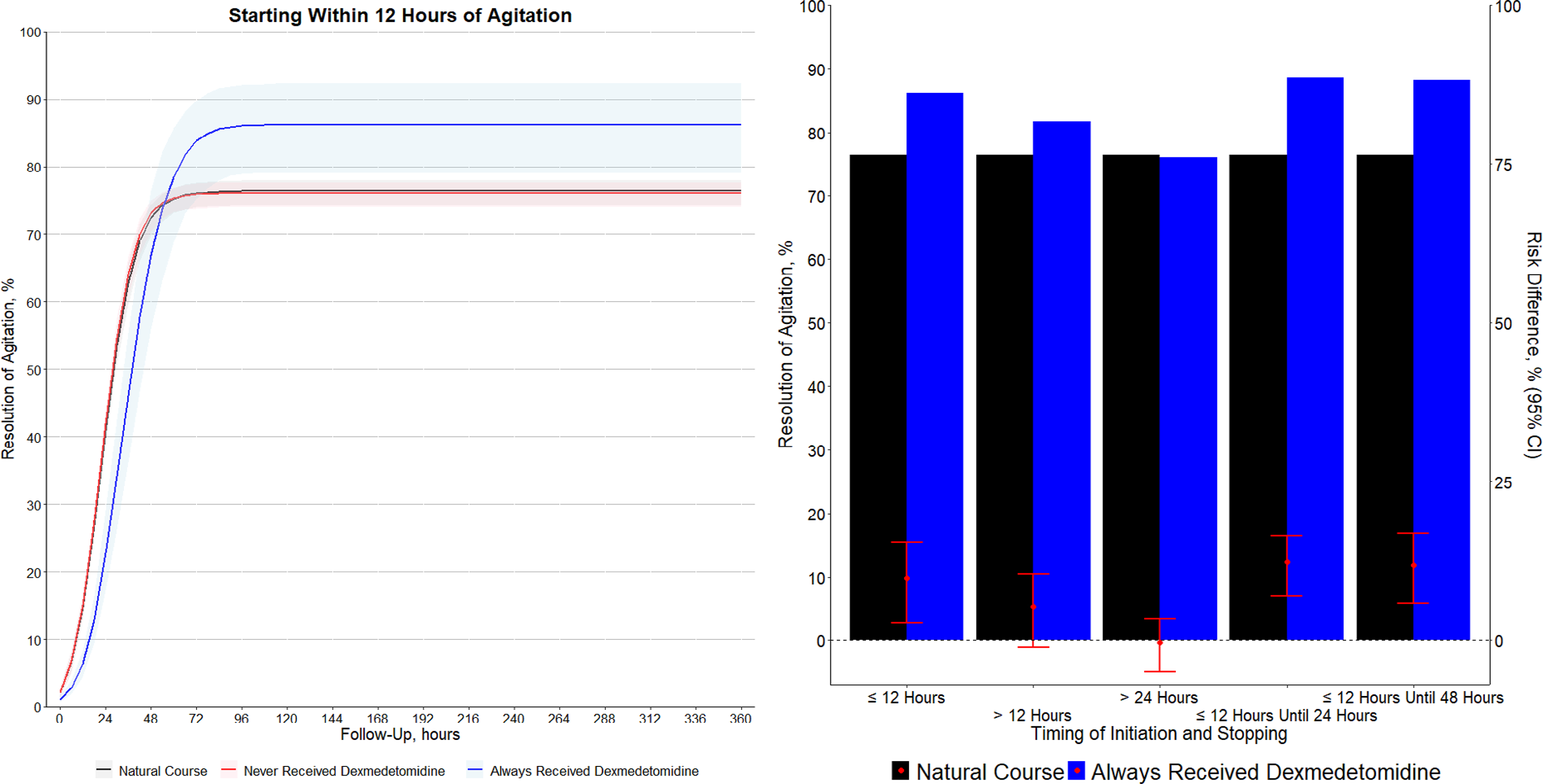 Left panel, resolution of agitation according to the treatment over time. Estimates from the parametric g-formula. The shaded areas represent the 95% confidence intervals. The numerical results are reported in