45S5 bio-glass flame spheroidization. Chemical composition and bioactivity
Abstract
45S5 bioglass microspheres are very attractive in the biomedical field, as they can stimulate and guide bone and soft tissue regeneration. One of the main factors influencing the success of these materials is their chemical composition. Therefore, knowing the effect of the microsphere synthesis method on this composition is extremely important. In this work, microspheres with a diameter distribution of 35-150 µm were prepared from a bio-glass with the composition 45S5 using the flame spheroidization method. Their bioactivity was studied in a simulated biological fluid (SBF) at 37 ºC. An important loss in the concentration of Na and P was detected in the spheroidization process, reaching 85% and 73%, respectively, in microspheres smaller than 65 µm. The P distribution was heterogeneous. These modifications affected the early stages of the hydroxyapatite formation mechanism, delaying its deposition on the surface of the microspheres concerning the parent bio-glass.
Keywords:
Bioactive glass; microspheres; hydroxyapatite; tissue engineering
INTRODUCTION
Since its discovery by Hench in the 1960s 1, 45S5 bioglass has been the subject of countless studies for its application in regenerative medicine 1)-(3. Upon contact with body fluids, this glass of the Na2O-CaO-SiO2-P2O5 system forms a surface layer of calcium phosphate apatite-type that chemically binds the glass to living tissue 2. In vitro, in vivo and cell culture studies also confirm the ability of bioactive glasses to stimulate and guide bone and soft tissue regeneration 2)-(6.
Three characteristics are key in the formulation of these bioglasses, which differentiate them from conventional glasses and allow high reactivity on the surface of the biomaterial when exposed to an aqueous biological medium 7: less than 60 mol% SiO2, high content of Na2O and CaO, and high CaO / P2O5 ratio.
The formula called 45S5 is named this way because its composition contains: 45 wt.% of SiO2 and CaO/P2O5 ratio= 5 designated with the letter S. The high reactivity of 45S5 bioglass demonstrated in vivo has led to multiple investigations that have allowed the development of various bioactive glasses and glass-ceramics of different chemical compositions. Today, research on this topic includes the study of conventional silica-based glasses (bioglass type), phosphate-based glasses, borate-based glasses, and metallic glasses 8), (9. But in addition to the investigation of the composition of glasses, many studies have focused on analyzing them in massive form, rods, discs, and more recently fibers 9), (10. However, the uses of these materials in the form of microspheres are currently receiving a lot of attention because they present several advantages over other morphologies: they can be designed and manufactured to be solid, hollow, or porous, providing a greater surface area for therapeutic coatings, an increased degradation rate, beneficial ion release profile, improved drug absorption and release kinetics, superior cell attachment and proliferation 9)-(11.
There are a variety of methods for the preparation of glassy microspheres including vertical tube furnace 9), (12, pouring molten glass onto stainless steel plates to create droplets 13, sol-gel method, and spray drying of sols 14, and via the flame spheroidization process 2), (9)-(11), (15. In particular, the flame spheroidization method has the following advantages over the previously mentioned techniques: it is a fast, economical method and allows the manufacturing of microspheres on a large scale 2), (9), (11), (15. It consists of spraying glass particles with the desired composition onto a flame. This decreases the viscosity of the material and due to the effects of surface tension, the particles develop a spherical shape 2), (16), (17.
Since flame forming exposes previously fabricated glass particles to an aggressive chemical and thermal environment, it is desirable to investigate the effects of this fabrication process on the chemical integrity and bioactivity of the obtained bio-glass microspheres.
In this work, we present the synthesis of microspheres from a bio-glass with the 45S5 composition by flame spheroidization, its structural and microstructural characterization, and the effect of its chemical composition on its in-vitro bioactivity.
MATERIAL AND METHODS
Reagents used in glass microspheres and SBF preparation: bio-glass with the 45S5 composition: 45SiO2·24.5Na2O·24.5CaO·6P2O5 (in wt.%) was prepared using analytical grade reagents, purity> 99%: SiO2 (Fluka), CaCO3, Na2CO3 and P2O5 (Sigma-Aldrich). These reagents were dried for 16 h at 90 ºC and weighed in the stoichiometric amounts suitable for obtaining 200 g of glass (Table I). The SBF used in the in-vitro tests was prepared following the Kokubo protocol 18. The reagents and quantities used are also listed in Table I.
Bio-glass preparation: to achieve homogeneous mixing, the components cited in Table I were placed in an airtight container and mixed on a roller shaker for 20 h. Subsequently, the mixture was placed in a high purity platinum crucible and heated at 1350 ºC for 2 h in a Deltech DT-31 oven. The molten material was poured onto a thick steel plate and rapidly pressed with another plate of the same material to vitrify the casting (Splat cooling).
Microspheres preparation: Fig. 1 illustrates the assembly used to obtain the glassy microspheres. In this system, which belongs to the Department of Nuclear Materials, three basic zones stand out: one for feeding the powder, another for spheroidization, and one for collecting the microspheres. The spheroidization region works with a flame obtained from the combustion of propane-butane-oxygen and reaches a temperature close to 2000 ºC 16), (17. The methodology followed for the preparation of the microspheres is described in more detail below.

Bio-glass with the 45S5 composition prepared by fusion was pulverized in an alumina mill and separated granulometrically in the range of 25 to 70 µm. The bio-glass powder was placed in a feed hopper with constant vibration and sprinkled into the hottest region of the flame. The irregular glass particles underwent a decrease in viscosity, adopting a spherical shape due to the action of surface tension 15),(16. The formed microspheres passed through the coldest zone of the flame to a cyclonic collection system and were finally collected in a metal plug as seen in Fig.1. Once the system had cooled, the microspheres were transferred to a beaker with alcohol and were subjected to ultrasound for a few minutes and then dried in an oven at 80 ºC.
In-vitro bioactivity tests: the bioactivity of the microspheres was studied in SBF to reproduce the chemical environment to which they could be subjected in a medical application.
The bio-glass microspheres were immersed in SBF and kept at 37 ºC for 7, 14, and 21 days. The SBF solution was replaced every 48 h to ensure the availability of fresh reagent ions and to favor the reaction with the samples. At the end of the immersion time, the samples were removed from the SBF, rinsed with distilled water, and left to dry at room temperature before carrying out the characterization tests.
X-ray diffraction (XRD): the phase analysis was conducted by X-ray powder diffraction (XRD) employing an XRPD, Bruker D8 using CuKα radiation, λ= 1.54060 A°, graphite monochromator, 40 kV-30 mA, 2θ= 10-90 °, and step size of 0.0260°.
Fourier-transform infrared spectroscopy (FT-IR): Fourier-Transform Infrared Spectroscopy (FT-IR) was used to investigate the functional groups present in the samples before and after immersion in SBF for 7, 14, and 21 days. The infrared transmittance spectra of the bio-glass samples were recorded at room temperature in the frequency range 4000-400 cm-1 using a PerkinElmer Spectrum 400 spectrometer.
Scanning electron microscopy and Energy dispersive X-ray analysis (SEM-EDS): the morphology and elemental composition of the samples before and after the storage in SBF were investigated by scanning electron microscopy (SEM) and energy dispersive X-ray spectroscopy analysis (SEM-EDS) using Zeiss crossbeam 340 Equipment. To study the morphology of the microspheres, the samples were mounted on carbon tape and covered with a layer of gold, while to perform the EDS analysis the samples were coated with a layer of carbon. To investigate the microstructure and composition inside the bio-glass microspheres they were embedded in epoxy resin, polished with SiC paper, followed by diamond paste, and finally 0.25 µm alumina. The mount was washed with ethyl alcohol and allowed to air dry. As in the previous case, the samples were covered with a gold layer for imaging and a carbon layer for the EDS analysis. The images were analyzed using the ImageJ program to extract information about the size of the particles.
Optical microscopy (OM): the presence of bubbles inside the manufactured bio-glass microspheres was visualized using a Leica DM2500M microscopy. Images were acquired with transmitted light.
RESULTS AND DISCUSSION
Fig. 2 shows the XRD patterns of the ground bio-glass and of the microspheres obtained by flame spheroidization (Figs. 2a and 2b, respectively). In both cases, a broad peak at 2θ around 32° can be observed, which is characteristic of amorphous glass structures 19), (20. This indicates that no crystallization occurs during the spheronization of the bio-glass, probably due to the short residence time of the particles in the flame 16.

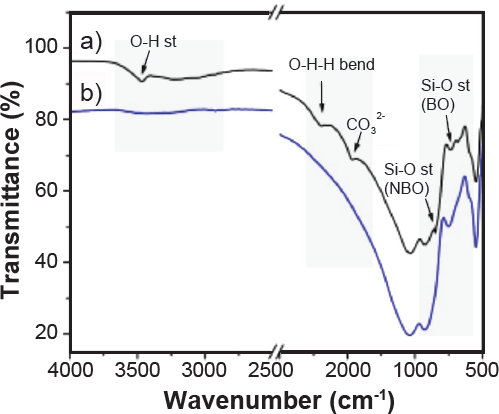
Fig. 3a shows the infrared spectrum of the 45S5 glass used for the fabrication of the microspheres.

FTIR spectra of a) Starting bio-glass. b) Microspheres obtained by flame spheroidization of bio-glass irregular particles.
The absorption band at 1036 cm-1 is assigned to the asymmetric Si-O-Si stretching of the bridging oxygen atoms, while the bands at ~928 cm-1 and 850 cm-1 may be related to Si-O stretching of non-bridging oxygen atoms (NBO) 19), (21)-(23. Bands in the range of 732 to 805 cm-1 are attributed in the literature to the Si-O-Si bending mode, which is characteristic of several silicate species containing unbridged oxygen atoms 19. Lebeqc 23 and Araujo et al. 24 attributed the band at 738 cm-1 to the Si-O symmetric stretching vibration mode with 3 or 4 bridging oxygen (BO) atoms. The zone between 450 and 550 cm-1 comprises symmetric Si-O-Si vibrations 19, and the shoulder at 600 cm-1 can be assigned to the presence of symmetric P-O vibrations 19. The band at ~1460 cm-1 can be assigned to the presence of residual CaCO3 and CO2 carbonate groups, while the bands at ~1630 cm-1 and 3472 cm-1 correspond to the bending of the H-O-H bonds and O-H stretching of water adsorbed on the surface 19), (21), (22.
After the spheroidization process, the shoulder at 850 cm-1 disappears, and a shift of the band at 738 cm-1 to 750 cm-1 is observed (Fig. 3b). These changes can be associated with the modification of the Si-O NBO and Si-O BO stretching due to the modification of the glass composition, particularly the loss of network modifiers such as Ca and Na in the spheroidization process. The intense absorption band at ~3472 cm-1 present in the starting bio-glass, attributed to the stretching vibrations of the O-H group (Fig. 3 a), is not present in the spectrum of bio-glass microspheres (Fig. 3b). This effect can be attributed to the decomposition of the hydroxyl groups during the passage of the glass powder through the torch 11.
The morphology, surface, and cross-section of the obtained microspheres can be observed in Figs. 4a and 4b, and their size distribution can be seen in Fig. 4c.

a) SEM image of microspheres obtained by flame spheroidization from starting bio-glass. b) Optical micrograph of microspheres. Yellow arrows indicate the presence of bubbles inside microspheres. c) Particle diameter distribution.
SEM images show solid microspheres, porous ones, semi-hollow ones, as well as microspheres inside hollow microspheres (Fig. 4a), while MO images allow to distinguish bubbles inside the microspheres (Fig. 4b). A result of this type was found and analyzed by Poitier and Quercia when they used the flame synthesis method 25. They proposed that during the spheroidization process bubbles are generated inside each particle. These bubbles can come from gases remaining in the starting glass or from the volatilization of elements, and the evolution of these bubbles is similar to that observed in magmas 25), (26. In the case of fine particles, during their flight in the flame, heat transfer is high, and several small bubbles arise inside each globally heated particle. Some of these bubbles can migrate to the surface and explode outside producing open cavities, others fuse inside resulting in semi-hollow microspheres (Fig. 4a), even hollow spheres can originate when the coalescence of the bubbles inside the sphere is complete. In this case, the crust of the hollow spheres may collapse and the molten sphere remains may be converted into smaller solid spheres by surface tension 25. When the particles are larger, the heat transfer during their flight takes longer to reach equilibrium, which produces a temperature gradient in them, creating microspheres with a cold core and a hotter surface. In this case, bubbles form in this hot zone, grow, and coalesce, opening on the surface of the microspheres, while other bubbles remain trapped inside the sphere (Fig. 4b). Bulk spheres are often seen inside larger hollow spheres. This is because the bubbles originating near the hot surface, as they grow and coalesce, isolate the cold core inside the microsphere until at some point the growth and coalescence of the bubbles are such that the surface of the microsphere breaks, leaving the cold core exposed to the heat, which by surface tension spheroids 25.
From the SEM images, the diameter of 400 microspheres was measured. The particle diameter distribution was 35-150 µm, with an average diameter of 69 µm (Fig. 4c). Despite having used bio-glass powder sieved in a certain range of particle size (25-70 µm), larger microspheres were obtained. This can be due to several causes such as: i) the presence of acicular particles in the sieved powder. These particles have a mass that gives rise to microspheres of larger diameters than desired; ii) the fusion in the flame of agglomerated particles from the feed hopper. This is due to the increase in relative humidity inside the feed hopper as a consequence of the high temperatures in that area, and iii) the bubbles that originate inside the particles in the spheroidization process (Fig. 4b).
The elemental composition of the microspheres prepared was determined in the first instance over the entire diameter distribution (35-150 microns) using the SEM-EDS technique. Secondly, to carry out a more in-depth study of their elemental composition, the element concentration and distribution were investigated as a function of the microsphere size using the linear scanning method. Table II summarizes these results.
Fig. 5a shows the elemental composition of the starting bio-glass (BG) and its variation after passing through the flame. A decrease in the concentration of the elements Ca, Na, and P can be observed (red arrows), being more marked in the case of P and Na (~59% and ~52%, respectively) and an increase in the content of Si and O after the spheroidization process (blue arrows). The results of the EDS line scan analysis presented in Fig. 5b show that the concentration of the elements varies according to the diameter of the microspheres, but it was possible to distinguish that certain elements such as Si, Ca, P and Na individually showed a similar concentration profile within groups of microspheres whose diameters were < 65 µm, 65-90 µm and > 90 µm (Fig. 5b). Based on these observations three groups of microspheres with the diameter distribution mentioned above were considered. The average concentration of each element within each group was calculated and compared with the composition of the starting glass (Table II, Fig. 6a).

a) Elemental composition of the starting bio-glass (BG) and its variation after the spheronization process (the blue arrow indicates an increase in elemental concentration and the red arrow a decrease). b) Elemental composition of BG-M included in epoxy resin by EDS line scan analysis as a function of particle diameter.

a) Elemental composition of microspheres in different size ranges by line scan. b) SEM image and EDS line scanning profile across a microsphere showing P signal.
As can be seen in Fig. 6a and Table II, the concentration of Na and P elements was lower in microspheres of smaller diameter, only 2.1 wt.% of Na and 0.6 wt.% of P were determined in the group of microspheres with a diameter < 65 µm. This is equivalent to a concentration decrease of ~85% and ~73%, respectively, compared to that of the starting BG. Calcium showed the opposite behavior to Na and P, in which the microspheres with a larger diameter presented a lower concentration of this element (Fig. 6a). In the BG-M > 90 µm sample, a decrease of approximately 18% was detected concerning BG (Table II). Microspheres BG-M 65-90 µm and BG-M < 65 µm did not show a significant concentration variation.
The distribution of the elements inside the microspheres was generally homogeneous, with the exception of P, which had a higher concentration near the surface of the microspheres (Fig. 6b).
The microspheres were immersed in SBF at 37 ºC, and their bioactivity was studied at different immersion times using SEM-EDS, XRD, and FTIR techniques. After the first 7 days of immersion, the microspheres showed a surface with sediments and deposits distributed in a heterogeneous manner (Fig 7a). However, as the immersion time passed, a layer with rounded agglomerates deposited on the surface of the microspheres was observed (Figs. 7b and 7c).

SEM images of microspheres immersed in SBF at 37 ºC during a) 7 days, b) 14 days, and c) 21 days.
EDS analyses showed a notable increase in the concentration of Ca and P along with a decrease in the concentration of Si, Na, and the appearance of Mg in the microspheres after immersion in SBF for 7, 14, and 21 days (Fig. 8).

The increase of Ca and P on the surface suggests the formation of compounds of Ca-P. The Ca/P molar ratio calculated from SEM-EDS analyses was 1.81, 1.89, and 1.75 for 7, 14, and 21 days of immersion in SBF, respectively. These results differ from the Ca/P ratio= 1.67 of stoichiometric hydroxyapatite 23, but agree with non-stoichiometric carbonated hydroxyapatite reported by Stanciu et. al27, who observed a variable Ca/P ratio between 1.6-1.8 after 9 days of immersion of bioactive glass in SBF. The decrease in Si concerning the starting microspheres can be attributed to the layer of hydroxyapatite that forms on the surface 27), (28. These results were investigated by FTIR and XRD.
Fig. 9 shows the FTIR spectra of the microspheres immersed in SBF at 37 ºC, during 7, 14, and 21 days. The absorption band observed at approximately 930 cm-1 in the sample immersed for 7 days, associated with Si-O stretching of non-bridging oxygen atoms (NBO), disappears after 14 and 21 days of immersion. This has been related to the leaching of Ca and dissolution of soluble silica at the glass interface during the period of immersion in SBF solution 28. A shoulder around 570 cm-1 assigned to a P-O bend in amorphous calcium phosphate was observed 28. After 14 and 21 days of immersion of the microspheres in SBF two bands at 564 and 604 cm-1 associated with the P-O bending vibration of the groups (PO4)3-were observed in this zone (Figs 9b and 9c). Simultaneously, new bands were found at 1415 cm-1 and 1440-1550 cm-1 that can be attributed to the split asymmetric stretching vibration of (CO3)2- groups. This indicates the incorporation of these groups in the HA structure 27), (28, giving rise to a hydroxycarbonated apatite (HCA).

FTIR spectra of microspheres after immersion in SBF at 37 ºC during a) 7 days, b) 14 days, and c) 21 days
According to some authors, such as Bano et al. 29 and Markovic et al. 30, if the position of the band due to asymmetric stretching ν3 of carbonate is located at ~1548 cm-1 the apatite is A-type with the (CO3)2- substituting the OH- in the HAP lattice, and if the positions of the asymmetric stretching ν3 of carbonate is located at 1410 cm-1 and 1452 cm-1 it is B-type, with the (CO3)2- substituting the (PO4)3- groups in the HAP lattice. In our work, the positions of the bands corresponding to the asymmetric stretching vibration of (CO3)2- groups are in agreement with those reported by Markovic et al. 30, suggesting a Type-B HCA. In addition, as observed in Fig. 9, the intensity of the band centered at 3429 cm-1 corresponding to OH groups increases from 7 to 21 days of immersion in SBF.
Fig. 10 shows the diffraction pattern of bio-glass microspheres immersed in SBF at 37 ºC, during 7, 14, and 21 days. After 14 days of immersion, new diffraction peaks were observed at 2θ = 25.9°, 31.8º, 46.8º and 49.5º, corresponding to planes (002), (211), (222) and (213) of the HA, in agreement with JCPDS 9-432 card 29), (31. These peaks intensify after 21 days of immersion (Fig. 10 c). These results demonstrate the bioactivity of the prepared microspheres after 14 days of immersion in SBF at 37 °C however it was not possible to corroborate the presence of HA at shorter times. To compare the bioactivity of the microspheres with the starting bio-glass, the bio-glass was immersed for 7 days in SBF at 37 ºC.

XRD pattern of bio-glass microspheres immersed in SBF at 37 ºC during a) 7 days, b) 14 days, and c) 21 days. d) HA JCPDS 9-432 card.
After the experiment, the irregular particles showed the rounded agglomerate characteristics of HA deposited on their surface (Fig. 11a). XRD analysis confirmed the presence of this phase (Fig. 11b). Therefore, the changes that occurred in the composition and structure of the bio-glass due to the spheroidization process delayed the growth of HA during the first days of immersion in SBF.

a) SEM image of a bio-glass irregular particle immersed in SBF during 7 days. b) XRD pattern of bio-glass irregular particles immersed in SBF during 7 days showing the main HA peaks (JCPDS 009-432).
The flame spheroidization process of bio-glass particles with the 45S5 composition produced a modification in the chemical structure and composition of the bio-glass as determined by FTIR and SEM-EDS analyses (Fig. 3 and Fig. 5, respectively). These modifications associated with a decrease in the concentration of the elements Na and P, mainly in microspheres smaller than 65 µm (Table II) influence the bioactivity of the microspheres when they are immersed in SBF at 37 ºC.
It is known that the mechanism of HA formation in bioactive glasses comprises different stages observable in vitro 32)-(37. Fig. 12 shows a scheme of the stages and reactions that occur therein.

In the first stage, a leaching process takes place in which the surface of the bio-glass loses sodium and calcium ions in an ion exchange process with H+ or H3O+ from the immersion solution. This generates an increase in local alkalinity causing the breaking of the O-Si-O bonds. In the second stage, the disruption of the glass network permits the release of silicon into the fluid in the form of silanol Si(OH)4 groups. In the third step, Si(OH)4 groups condensate and form a polymerized silica gel layer on the surface of the glass (SiO2-rich rich-layer). In the next stage, Ca2+ and PO4 3- ions solubilized from the glass migrate to the surface through the SiO2-rich layer, and together with the Ca2+ and PO4 3- from the surrounding SBF solution they form a second layer rich in amorphous CaO-P2O5 (ACP). Finally, the ACP layer incorporates hydroxyls and carbonate anions from the solution, crystallizing in carbonated hydroxyapatite (HCA) 32)-(37.
In the present work, HCA crystallization was detected after 14 days of immersion of the microspheres in SBF a 37 ºC, as verified by SEM (Fig. 7), FTIR (Fig. 9) and XRD (Fig. 10). The absence of HCA during the first 7 days of immersion could be related to the first stage of the HCA formation mechanism proposed by Hench 1 and other authors 32)-(37 (Fig. 12).
The lower concentration of Na ions on the surface of the microspheres compared to that of the starting bio-glass produces a lower ionic exchange with the H+ or H3O+ of the SBF and therefore a lower local alkalinity. This effect, added to the rearrangement of the chemical structure of the bio-glass due to the loss of this element during the spheroidization process, makes it more difficult breakage of the O-Si-O bonds affecting the solubility of the matrix. As a consequence, there is a delay in the formation of silanol groups, (2nd stage of the HCA formation mechanism) (Fig. 12) as well as in the formation of the characteristic SiO2 rich-layer on the surface of the bio-glass microspheres necessary for the deposition of Ca2+ and PO4 - that allow the crystallization of the HCA layer (4th and 5th stages of HCA formation) 35.
In addition, another factor that could interfere with the appearance of HCA within the first seven days of immersion in SBF could be related to the concentration and distribution of P inside the microspheres obtained. In the present work, a significant loss of P was detected after the spheroidization process of bio-glass particles. SEM-EDS analysis showed a P concentration in the range of 0.6-1.6 wt.% depending on the size of the microspheres (Table II), and with a heterogeneous distribution inside them (Fig. 6b). These results could affect the 4th stage of HCA formation mechanism (Fig. 12), since the concentration of PO4 - ions migrating during the dissolution of the glass with Ca2+ ions to form the ACP on the SiO2 rich-layer is lower 38),(39, and is not released homogeneously from the interior of the microspheres.
CONCLUSIONS
Microspheres with a diameter distribution of 35-150 µm were obtained from a bio-glass with the composition 45S5 using a low-cost flame spheroidization method. The significant decrease in the concentration of Na and P together with the modification of the chemical structure of the bio-glass caused by the spheroidization process decreased the kinetics of HA formation on the surface of the microspheres compared to that of the starting bio-glass. These results and the understanding acquired in this work about the synthesis method/chemical composition relationship, and their impact on bioactivity, may allow us to optimize the obtaining of bioactive microspheres with potential application in the biomedical field in future works.
ACKNOWLEDGEMENT
The authors are grateful to the Comisión Nacional de Energía Atómica (CNEA) for its financial support and the Fisicoquímica de Materiales research group of the Centro Atómico Bariloche for the provision of equipment and technical assistance for the characterization of the samples.
REFERENCES
-
1 Hench LL. The story of Bioglass®. J Mater Sci Mater Med. 17; 2006:967. doi:10.1007/s10856-006-0432-z.
» https://doi.org/10.1007/s10856-006-0432-z -
2 Sinitsyna P, Karlström O, Sevonius C, Hupa L. In vitro dissolution and characterisation of flame-sprayed bioactive glass microspheres S53P4 and 13-93. J Non-Cryst Solids. 591; 2022:121736. doi:10.1016/j.jnoncrysol.2022.121736.
» https://doi.org/10.1016/j.jnoncrysol.2022.121736 -
3 Philip DG, Surdu VA, Paduraru AV, Andronescu E. Current Development in Biomaterials-Hydroxyapatite and Bioglass for Applications in Biomedical Field: A Review. J Funct Biomater. 13; 2022:248. doi:10.3390/jfb13040248.
» https://doi.org/10.3390/jfb13040248 -
4 Hoppe A, Güldal NS, Bocaccini A. A review of the biological response to ionic dissolution products from bioactive glasses and glass-ceramics. Biomaterials. 32; 2011:2757. doi:10.1016/j.biomaterials.2011.01.004.
» https://doi.org/10.1016/j.biomaterials.2011.01.00 -
5 Miguez Pacheco V, Greenspan D, Hench LL, Boccaccini AR. Bioactive glasses beyond bone and teeth: Emerging applications in contact with soft tissues. Am Ceram Soc Bull. 94; 2015:27. doi:10.1016/j.actbio.2014.11.004.
» https://doi.org/10.1016/j.actbio.2014.11.004 -
6 Pernaa K, Koski I, Mattila K, Gullichsen E, Heikkil J, Aho AJ, Lindfors NC. Bioactive Glass S53P4 and Autograft Bone in Treatment of Depressed Tibial Plateau Fractures - A Prospective Randomized 11-year Follow-Up. J Long Term Eff Med Implants. 21; 2011:139. doi:10.1615/jlongtermeffmedimplants.v21.i2.40.
» https://doi.org/10.1615/jlongtermeffmedimplants.v21.i2.40 -
7 Fernández Monjes J, Maresca BM, Bregni C. Recomendaciones del CACI sobre el tratamiento intervencionista durante la pandemia COVID-19. Rev Ateneo Argentino Odontol. LXII; 2020:31. doi:10.30567/raci/202002/0065-0069.
» https://doi.org/10.30567/raci/202002/0065-0069 -
8 Morejón Alonso L. Análisis de la biorremoción de hidrocarburos aromáticos policíclicos en agua por SPME-GC/MS. Rev CENIC Cienc Químicas. 46; 2015:137. doi:10.20937/rica.2019.35.esp03.04.
» https://doi.org/10.20937/rica.2019.35.esp03.04 -
9 Hossain KMZ, Patel U, Ahmed I. Development of microspheres for biomedical applications: a review. Prog Biomater. 4; 2015:1. doi:10.1007/s40204-014-0033-8.
» https://doi.org/10.1007/s40204-014-0033-8 -
10 Gupta D, Hossain KMZ, Ahmed I, Sottile V, et al. Flame-Spheroidized Phosphate-Based Glass Particles with Improved Characteristics for Applications in Mesenchymal Stem Cell Culture Therapy and Tissue Engineering. ACS Appl Mater Interfaces. 10; 2018:25972. doi:10.1021/acsami.8b05267.
» https://doi.org/10.1021/acsami.8b05267 -
11 Kraxner J, Michalek M, Rincon Romero A, Elsayed H, et al. Porous bioactive glass microspheres prepared by flame synthesis process. Mater Lett. 256; 2019:126625. doi:10.1016/j.matlet.2019.126625.
» https://doi.org/10.1016/j.matlet.2019.126625 -
12 Fu H, Rahaman MN, Day DE. Effect of Process Variables on the Microstructure of Hollow Hydroxyapatite Microspheres Prepared by a Glass Conversion Method. J Am Ceram Soc. 93; 2010:3116. doi:10.1111/j.1551-2916.2010.03833.x.
» https://doi.org/10.1111/j.1551-2916.2010.03833.x -
13 Huang W, Rahaman MN, Day DE, Miller BA. Strength of hollow hydroxyapatite microspheres prepared by a glass conversion process. J Mater Sci Mater Med . 20; 2008:123. doi:10.1007/s10856-008-3554-7.
» https://doi.org/10.1007/s10856-008-3554-7 -
14 Todea M, Vanea E, Bran S, Berce P, Simon S. XPS analysis of aluminosilicate microspheres bioactivity tested in vitro. Appl Surf Sci. 270; 2013:777. doi:10.1016/j.apsusc.2013.01.178.
» https://doi.org/10.1016/j.apsusc.2013.01.178 -
15 Hossain KMZ, Patel U, Kennedy A, Macri Pellizzeri L, et al. Porous calcium phosphate glass microspheres for orthobiologic applications. Acta Biomater. 72; 2018:396. doi:10.1016/j.actbio.2018.03.040.
» https://doi.org/10.1016/j.actbio.2018.03.040 -
16 Bortot MB, Pastralo S, Prado MO. Production and Characterization of Glass Microspheres for Hepatic Cancer Treatment. Proc Mater Sci. 1; 2012:351. doi:10.1016/j.mspro.2012.06.047.
» https://doi.org/10.1016/j.mspro.2012.06.047 - 17 Rivera Figueroa E. Desarrollo de microesferas porosas cerámicas para aplicaciones en quimioterapia interna selectiva a tumores malignos. Master’s Thesis, Instituto Balseiro, Univ Nacional de Cuyo; 2012.
-
18 Kokubo T, Takadama H. How useful is SBF in predicting in vivo bone bioactivity? Biomaterials . 27; 2006:2907. doi:10.1016/j.biomaterials.2006.01.017.
» https://doi.org/10.1016/j.biomaterials.2006.01.017 -
19 Dziadek M, Zagrajczuk B, Jelen P, Olejniczak Z, Cholewa Kowalska K. Structural variations of bioactive glasses obtained by different synthesis routes. Ceram Int. 42; 2016:14700. doi:10.1016/j.ceramint.2016.06.095.
» https://doi.org/10.1016/j.ceramint.2016.06.095 -
20 Bahniuk MS, Pirayesh H, Singh HD, Nychka JA, Unsworth LD. Bioactive Glass 45S5 Powders: Effect of Synthesis Route and Resultant Surface Chemistry and Crystallinity on Protein Adsorption from Human Plasma. Biointerphases. 7; 2012:15. doi:10.1007/s13758-012-0041-y.
» https://doi.org/10.1007/s13758-012-0041-y -
21 Mačković M, Hoppe A, Detsch R, Mohn D, Stark WJ, Spiecker E, Boccaccini AR. Bioactive glass (type 45S5) nanoparticles: in vitro reactivity on nanoscale and biocompatibility. J Nanopart Res. 14; 2012:22. doi:10.1007/s11051-012-0966-6.
» https://doi.org/10.1007/s11051-012-0966-6 -
22 Ouis MA, Abdelghany AM, ElBatal MH. Corrosion mechanism and bioactivity of borate glasses analogue to Hench’s bioglass. Process Appl Ceram. 6; 2012:141. doi:10.2298/pac1203141o.
» https://doi.org/10.2298/pac1203141o -
23 Lebecq I, Désanglois F, Leriche A, Follet-Houttemane C. Compositional dependence on the in vitro bioactivity of invert or conventional bioglasses in the Si‐Ca‐Na‐P system. J Biomed Mater Res A. 83; 2007:156. doi:10.1002/jbm.a.31228.
» https://doi.org/10.1002/jbm.a.31228 -
24 Araujo M, Miola M, Baldi G, Perez J, et al. Bioactive Glasses with Low Ca/P Ratio and Enhanced Bioactivity. Materials. 9; 2016:15. doi:10.3390/ma9040226.
» https://doi.org/10.3390/ma9040226 -
25 Poirier T, Quercia G. Formation of hollow vitreous and semi-crystalline microspheres in slag flame spraying. Ceram Int . 41; 2015:369-77. doi:10.1016/j.ceramint.2014.08.080.
» https://doi.org/10.1016/j.ceramint.2014.08.080 -
26 Bai L, Baker D, Rivers M. Experimental study of bubble growth in Stromboli basalt melts at 1 atm. Earth Planet Sci Lett. 267; 2008:533. doi:10.1016/j.epsl.2007.11.063.
» https://doi.org/10.1016/j.epsl.2007.11.063 -
27 Stanciu GA, Sandulescu I, Savu B, Stanciu SG, et al. Investigation on CdS: Mn quantum dots using scanning laser microscopy. J Biomed Pharm Eng. 1(1); 2007:34. doi:10.1109/ictonmw.2007.4446918.
» https://doi.org/10.1109/ictonmw.2007.4446918 -
28 Essien ER, Adams LA, Shaibu RO, Olasupo IA, Oki A. Economic route to sodium-containing silicate bioactive glass scaffold. Open J Regen Med. 1; 2012:33. doi:10.4236/ojrm.2012.13006.
» https://doi.org/10.4236/ojrm.2012.13006 -
29 Bano N, Jikan SS, Basri H, Adzila S, Zago DM. XRD and FTIR study of A&B type carbonated hydroxyapatite extracted from bovine bone. AIP Conf Proc. 2068; 2019:020100-1-020100-6. doi:10.1063/1.5089399.
» https://doi.org/10.1063/1.5089399 -
30 Markovic M, Fowler BO, Tung MS. Preparation and comprehensive characterization of a calcium hydroxyapatite reference material. J Res Natl Inst Stand Technol. 109; 2004:553. doi:10.6028/jres.109.042.
» https://doi.org/10.6028/jres.109.042 -
31 Wang Y, Pan H, Chen X. Analysis of 210Pb and 210Po emissions from coal-fired power plants. Front Chem. 7; 2019:283. doi:10.1016/j.fuel.2018.08.075.
» https://doi.org/10.1016/j.fuel.2018.08.075 -
32 Ferraris S, Yamaguchi S, Barbani N, Cazzola M, et al. Bioactive materials: In vitro investigation of different mechanisms of hydroxyapatite precipitation. Acta Biomater . 15; 2020:468. doi:10.1016/j.actbio.2019.11.024.
» https://doi.org/10.1016/j.actbio.2019.11.024 -
33 Lopes JH, Mazali IO, Landers R, Bertran CA. Structural investigation of the surface of bioglass 45S5 enriched with calcium ions. J Am Ceram Soc . 96; 2013:1464. doi:10.1111/jace.12305.
» https://doi.org/10.1111/jace.12305 -
34 Loh ZW, Zaid MHM, Kechik MM, Fen YW, et al. New formulation calcium-based 45S5 bioactive glass: In vitro assessment in PBS solution for potential dental applications. J Mater Res Technol. 24; 2023:3815. doi:10.1016/j.jmrt.2023.04.071.
» https://doi.org/10.1016/j.jmrt.2023.04.071 -
35 Fernandes HR, Gaddam A, Rebelo A, Brazete D, et al. Bioactive Glasses and Glass-Ceramics for Healthcare Applications in Bone Regeneration and Tissue Engineering. Materials. 11; 2018:2530. doi:10.3390/ma11122530.
» https://doi.org/10.3390/ma11122530 -
36 Tilocca A. Structural models of bioactive glasses from molecular dynamics simulations. Proc R Soc A. 465; 2009:1003. doi:10.1098/rspa.2008.0462.
» https://doi.org/10.1098/rspa.2008.0462 -
37 Farag MM. Recent trends on biomaterials for tissue regeneration applications: review. J Mater Sci. 58; 2023:527. doi:10.1007/s10853-022-08102-x.
» https://doi.org/10.1007/s10853-022-08102-x -
38 Adam SNFS, Zainuddin F, Osman AF. Effect of varying phosphate content on the structure and properties of sol-gel derived SiO₂-CaO-P₂O₅ bio-glass. J Phys Conf Ser. 2080; 2021:012018. doi:10.1088/1742-6596/2080/1/012018.
» https://doi.org/10.1088/1742-6596/2080/1/012018 -
39 Jones JR. Reprint of: Review of bioactive glass: From Hench to hybrids. Acta Biomater . 23; 2015:S53. doi:10.1016/j.actbio.2015.07.019.
» https://doi.org/10.1016/j.actbio.2015.07.019