 Evaluation of single-dose umbilical cord blood-derived mononuclear cell injection immediately and 7 days after spinal cord trauma in mice
Study design Experimental study utilizing a standardized Balb C mouse model.
Objectives Evaluate histological changes and motor function recovery in the acute and subacute phases of Spinal Cord Injury (SCI) in mice using human Umbilical cord blood-derived mononuclear cells.
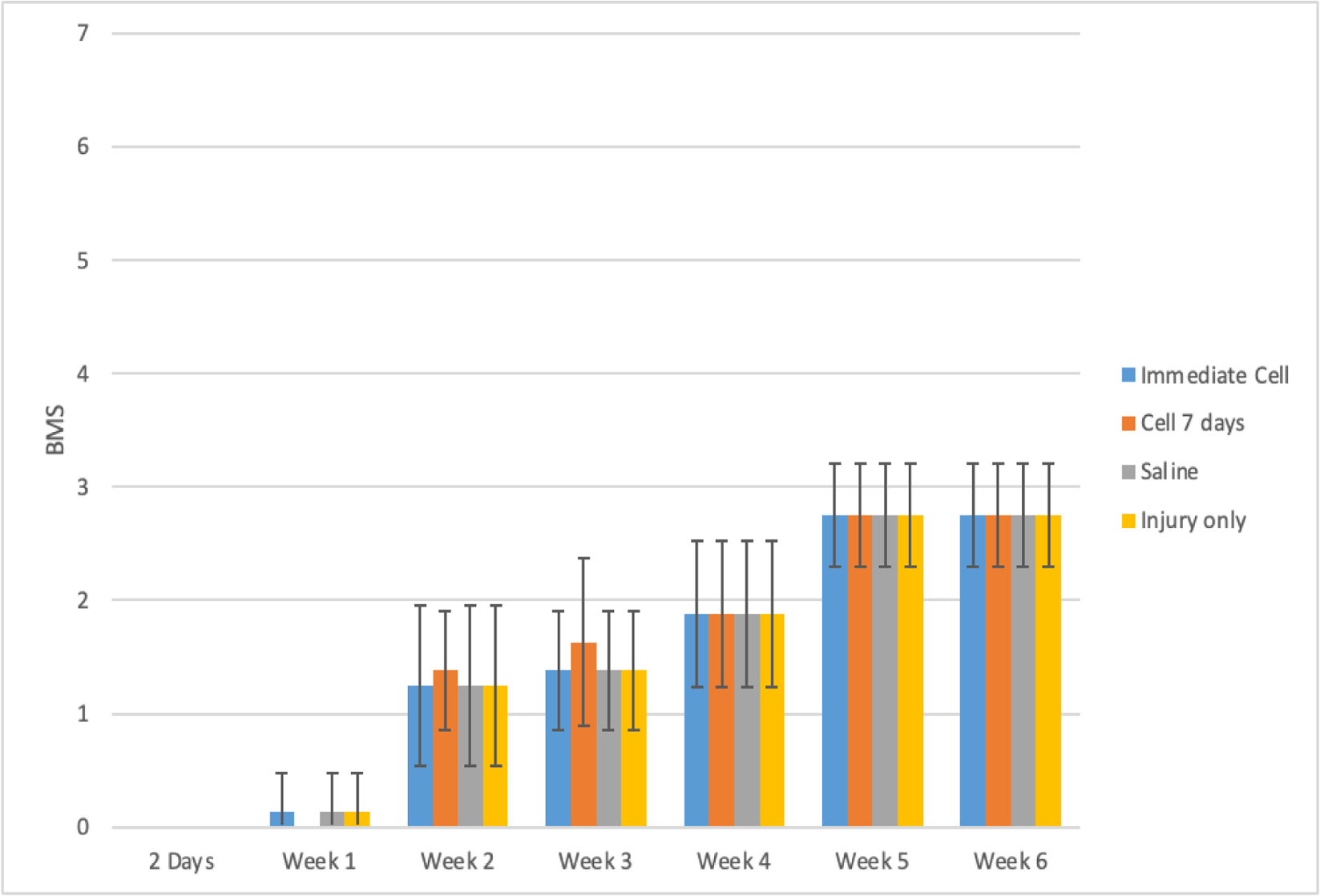
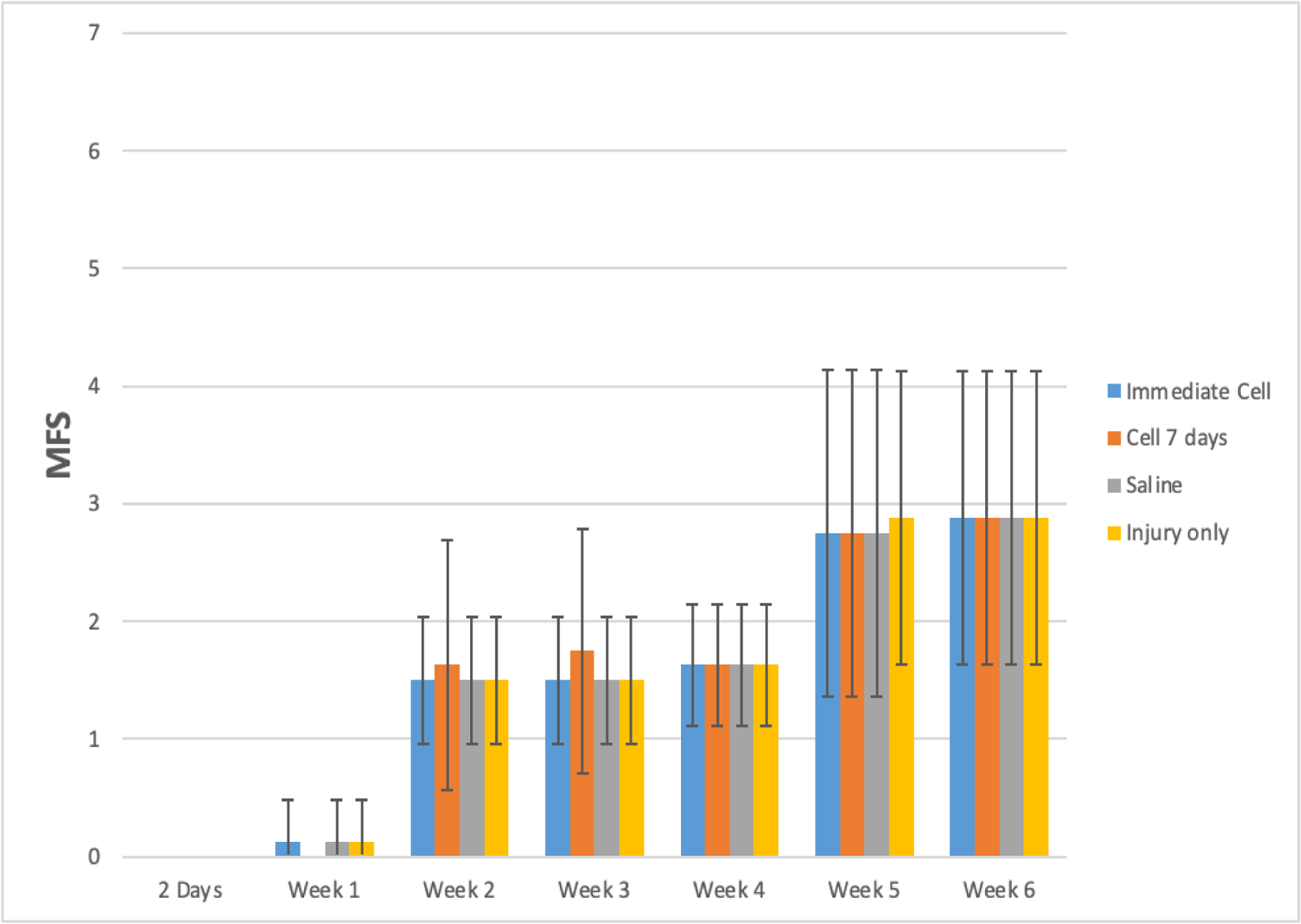
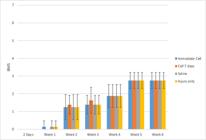
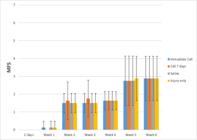
Methods Forty mice were divided into five groups, with two receiving human Umbilical cord blood-derived mononuclear cells immediately after SCI and after 7 days, and three control groups. Motor assessment utilized BMS, MFS, and horizontal plane scales over six weeks. Necropsy evaluated macroscopic and histological spinal cord changes.
Results Histologically, Umbilical cord blood-derived mononuclear cells-treated groups exhibited significant reductions in necrosis, hemorrhage, and degeneration compared to controls. Motor recovery showed partial improvement across all groups, with no statistically significant differences in scales between intervention and control groups.
Conclusions In the acute phases of SCI, Umbilical cord blood-derived mononuclear cells applied directly to Balb C mice lesions demonstrated histological improvement but played a limited role in functional enhancement. The study highlights distinctions in the treatment's efficacy, potentially related to these cells' diverse differentiation capacities and intrinsic properties.
Keywords
Mononuclear stem cells; Spinal cord injury; Umbilical cord blood-derived mononuclear cell; Motor assessment; Histopathological assessment
Stem cell therapy is a promising alternative in the spinal cord injury arsenal.
Challenges in stem cell treatment in SCI: phase uncertainty and cell type controversy.
Umbilical cord mononuclear cells may enhance recovery via multiple mechanisms.
Umbilical cord mononuclear cells can promote histological improvement after SCI.
 Thumbnail
 Thumbnail
 Thumbnail
 Thumbnail