
 Invisible cities, amazing people: Between self-management and resistance in Latin American peripheries
Abstract
This article analyzes how self-management and community leadership practices in informal settlements in Brazil and Mexico reveal the political potential of Latin American peripheries, often rendered invisible in dominant urban narratives. Drawing on a qualitative and collaborative approach, the study combines a bibliographic review, a documentary analysis, and the production of a participatory video in three contexts: Chico Dias (Macapá), Paraisópolis (São Paulo), and Senderos de San Isidro (Ciudad Juárez). These territories, marked by structural inequalities and state neglect, express both vulnerability and political invention. Participatory media is approached not merely as a methodological tool but as a political practice that enables the co-construction of territorial narratives and strengthens grassroots voices. The findings show that collective and solidarity-based practices transform urban life, reshape state-society relations, and propose new forms of local governance.
Keywords
urban peripheries; self-management; community leadership; participatory media; Latin America
Resumo
Este artigo analisa como práticas de autogestão e liderança comunitária em assentamentos informais no Brasil e no México revelam o potencial político das periferias latino-americanas, frequentemente invisibilizadas nas narrativas urbanas dominantes. Com base em uma abordagem qualitativa e colaborativa, o estudo combina revisão bibliográfica, análise documental e a produção de um vídeo participativo desenvolvido em três contextos: Chico Dias (Macapá), Paraisópolis (São Paulo) e Senderos de San Isidro (Ciudad Juárez). Esses territórios, marcados por desigualdades estruturais e pela negligência do Estado, expressam vulnerabilidade e invenção política. A mídia participativa é abordada não apenas como uma ferramenta metodológica, mas como uma prática política que possibilita a co-construção de narrativas territoriais e fortalece as vozes de base. Os resultados mostram que práticas coletivas e solidárias transformam a vida urbana, reconfiguram as relações entre Estado e sociedade e propõem novas formas de governança local.
Palavras-chave
periferias urbanas; autogestão; liderança comunitária; mídia participativa; América Latina
Introduction
Latin American urban peripheries are spaces where the contradictions of unequal urbanisation manifest themselves intensely, but also where forms of organisation, solidarity, and political power emerge. Far from being homogeneous or passive territories, these spaces condense material and symbolic struggles, in which precariousness, collective action, and social invention are intertwined.
The peripheries are often visible as a problem, but rendered invisible as a political subject and as producers of knowledge and urban alternatives. It is in this sense that this article proposes to interrogate the notion of ‘invisibility’. It is not a question of asserting the absence of these peripheries in the urban space – whether in morphological, demographic, or even public policy terms – but of highlighting their persistent political, epistemic, and narrative under-representation. Similarly, the expression ‘amazing people’ does not refer to individual exceptionalism, but to the collective capacity to construct creative and politically significant responses in contexts of structural inequality.
Building on this tension between visibility and invisibility, this article1 analyses experiences of community leadership in peripheral areas of Brazil and Mexico, seeking to understand how collective and self-managed practices transform everyday urban life and produce new forms of belonging and political action. It starts from the hypothesis that these contexts function as laboratories of political innovation, articulating the construction of the common good and the struggle for the right to the city.
In this sense, we adopt a broader understanding of the right to the city, inspired by Henri Lefebvre and developed by David Harvey, who view it not merely as access to urban goods and services, but as the right to active participation in the production, management, and transformation of urban space. This approach allows us to understand the practices analysed not as adaptive responses to precariousness, but as forms of political action that challenge and reconfigure existing institutional structures.
Brazil and Mexico, which account for a large proportion of the Latin American population,2 face significant challenges in the housing sector. Brazil has around five million dwellings in informal settlements (Pasternak and Bógus, 2022). In Mexico, millions of families experience housing shortages, whilst around 650,000 homes have been abandoned due to poor location or construction (Bocanegra, 2023; Nájar, 2019). In both countries, policies that displace developments to peripheral areas reinforce socio-spatial segregation.
Urban informality, however, is not defined solely by material deficits: it constitutes a fertile ground for resistance, creativity and collective action, in which residents claim the right to the city, challenge exclusionary policies and build local solutions based on solidarity (Caldeira, 2016; Holston, 1991). Informal settlements thus become spaces for learning and social agency.
Against this backdrop, the article asks: how do community leaders in informal settlements in Brazil and Mexico construct strategies of resistance and transformation in the face of exclusionary urban policies and the limited presence of the state? To answer this, the study analyses the agency of these leaders, their everyday practices and the construction of territorial narratives strengthened by the use of participatory media.
The methodology combines a literature review, documentary analysis and the production of the participatory video Invisible Cities, Amazing People in 2022, which brings together interviews with leaders from three case studies: Chico Dias (Macapá), Paraisópolis (São Paulo) and Senderos de San Isidro (Ciudad Juárez). These territories were chosen because they represent different expressions of urban precarisation and highlight diverse forms of mobilisation and political recognition.
The adoption of participatory media is not merely a methodological tool, but an integral part of the analysis, as it allows the subjects themselves to produce narratives about their territories and practices, shifting the traditional academic perspective and broadening the field of knowledge production regarding the peripheries.
Self-management, leadership, and the construction of the commons
Understanding Latin American peripheries as spaces of political invention requires the articulation of two dimensions: the structural processes of unequal urbanisation and the everyday practices of resistance and self-management that emerge in these territories. This approach brings together debates on insurgent citizenship, the right to the city, and the collective production of the urban.
The housing deficit reflects the inequalities of Latin American urbanisation and results from a logic of spatial production marked by speculation, and selective public investment. As Duhau (1998) points out, this rationale limits low-income populations’ access to consolidated urban land, displacing them to informal and self-built areas. In this regard, Abramo (2012) highlights how the popular land market structures self-build practices, whilst Ziccardi (2015) emphasises the structural nature of urban poverty and socio-spatial exclusion. These settlements – favelas, ressacas, or peripheral housing estates – constitute dynamic urban forms that reveal creative strategies of permanence and belonging. Fernandes (2011) and Perlman (1976) emphasise that classifying them as ‘illegal’ or ‘marginal’ obscures their centrality as legitimate forms of access to the city.
The peripheries are also territories of resistance and collective innovation. As Caldeira (2016) and Holston (1991, 2009) demonstrate, popular urbanisation and self-construction shape practices of survival and insurgency, constituting what Holston terms ‘insurgent citizenship’. This perspective engages with Lefebvre’s (2008) right to the city and its extensions by Harvey (2014), understanding it as the right to participation and the fair appropriation of urban resources.
It is within this framework that self-management takes centre stage. The theoretical framework draws on authors who discuss community practices of resistance (Maricato, 2011; Rolnik, 2015) and the construction of the common (Dardot and Laval, 2014; Harvey, 2014; Stavrides, 2016), enabling us to understand community leadership as a shared practice of reconfiguring space and social relations. Leadership emerges from collective action and shared responsibility, proposing new forms of local governance.
The construction of the common manifests itself in networks of solidarity and in spatial practices – community gardens, collective work initiatives, community schools, occupations – which transform urban space into a shared good, approaching the ‘praxis of the common’ formulated by Dardot and Laval (2014).
Thus, the suburbs are no longer seen as areas where the state is absent, but assert themselves as territories of political innovation, in which alternatives to the neoliberal logic of exclusion are built. Community leadership, diverse in terms of gender, race, and generation, acts as a mediator between residents and various institutional bodies, expanding plural forms of citizenship and belonging.
The participatory media used in this research reinforces this process. As highlighted by Lucas (2012) and Olivieri (2007), participatory video enables communities to challenge narratives and produce their own representations of their territories and struggles, aligning with action-research methodologies and decolonial epistemic practices.
The theoretical framework, therefore, integrates three fundamental dimensions: the structural processes of peripheral and exclusionary urbanisation; collective practices of resistance, participation and leadership in informal settlements; and the use of participatory media as a tool for analysis and socio-political empowerment.
Methodology
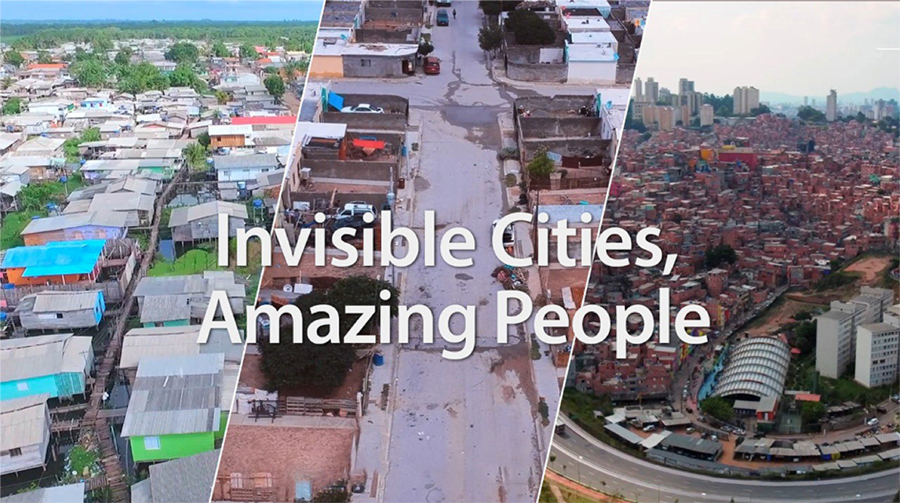
This research adopts a qualitative, exploratory and collaborative methodological approach, combining participatory action research tools with participatory media practices. The study integrates bibliographic and documentary research with the production of a participatory audiovisual documentary entitled Invisible Cities, Amazing People (Figure 1), with the aim of listening to, representing, and valuing the practices and narratives of community leaders in informal settlements in Latin America. The documentary is the result of a collaborative working method that seeks to capture, through semi-structured interviews and audiovisual recordings, community leaders’ perceptions of the settlements where they live, their use of public space and their efforts to mobilise social action in marginalised areas. The first stage involved conducting research in the three selected Latin American locations: Amazon and São Paulo, in Brazil, and Mexico. For this stage, the team carried out a series of interviews with community leaders,3 which were fundamental in highlighting the problems and potential of these locations.

The three territories were selected for their socio-spatial diversity, the relevance of peripheral urban contexts with strong community movements, and the contrast between different forms of social production of urban space, such as self-construction in environmentally fragile areas, informal densification in unequal metropolises, and state--led housing estates in frontier areas.
Furthermore, the selection of cases reflects the authors’ direct involvement with these territories, through long-term academic research, outreach activities, or personal and residential ties to the settlements. Each case has been the subject of ongoing study by one or more authors, drawing on different analytical perspectives – including housing policies, spatial justice, social mobilisation and popular territorial appropriation. This proximity has enabled the establishment of trust and collaboration with local leaders, which was fundamental to the development of the documentary.
The case studies selected for this research – Chico Dias (Macapá), Paraisópolis (São Paulo), and San Isidro (Ciudad Juárez) – were chosen due to their strategic locations and characteristics representative of the housing challenges faced in Latin America. These settlements illustrate the complexity and diversity of the housing problems faced by vulnerable urban communities in different socio-economic and geographical contexts.
Chico Dias, an informal settlement in Macapá known as a ressaca,4 located in the wetlands of the Brazilian Amazon, exemplifies the challenges of occupation in legally protected ecosystems, as provided for by Law n. 4,455/1999, which aims to protect the coastal ecosystem of Amapá (Thomaz, Santos and Ferreira, 2017).
Paraisópolis, the second-largest favela in São Paulo, borders the Morumbi neighbourhood, one of the city’s wealthiest. This proximity highlights urban inequality and stark socio-economic contrasts. Paraisópolis stands out for its strong social mobilisation and community initiatives that have gained national recognition.
The San Isidro housing estate5 in Ciudad Juárez, Mexico, on the border with the United States, was built by the Mexican government between 2001 and 2010 as part of a social housing programme. However, the remote location of this complex, geographically distant from the main urban centres, has resulted in a high rate of housing abandonment. Furthermore, the lack of basic infrastructure and the proximity to the United States border expose residents to risks related to drug trafficking and violence.
Drawing on authors such as Lucas (2012) and Olivieri (2007), the methodology of participatory media is understood here as a political-pedagogical tool that connects the theory of the right to the city (Harvey, 2014; Lefebvre, 2008) to the practice of constructing territorial meaning, recognising residents as subjects of knowledge and rights. From this perspective, the videos do not merely represent, but actively construct visibility, affection, and a sense of belonging, bringing peripheral voices to the centre of the urban debate.
The documentary was produced between June 2022 and January 2023. Audiovisual recordings and semi-structured interviews were conducted in everyday community spaces, such as streets, bridges, association headquarters, and public areas. Each territory formally appointed a community leader to act as the main point of contact for the research, based on criteria of local recognition and legitimacy. The selected leaders were José Elenildo da Silva (Munjoca) in Macapá, Gilson Rodrigues in São Paulo, and Leticia Herrera in Ciudad Juárez.6
Although the research team conducted the filming, the interview scripts, topics, and filming locations were determined in consultation with local representatives. In Macapá and Paraisópolis, audiovisual workshops were also held with local young people to raise awareness and increase participation. The documentary was screened publicly in each community as a means of collective validation and dissemination of the narratives produced.
The choice of participatory media as a method is directly aligned with the theoretical framework, which understands the city as a space of symbolic and political contestation, and communication as a tool for emancipation and territorial justice. This methodology values listening, co-authorship, and social transformation through the visibility of subjects and territories historically silenced. The photographic record of urban life, together with its inhabitants, constitutes an effective means of communication and dissemination, which stimulates reflection on collective issues inherent to the public space, through an approach that fosters awareness “[...] and which, with each passing day, seems more essential to the survival of positive values in urban ways of life” (Vogel, Mello and Mollica, 2016, p. 31).
As Olivieri (2007) argues, audiovisual media is a powerful tool that democratises debates about the city and raises awareness of the importance of public space. By amplifying the voices of residents in marginalised areas, participatory media strengthens the struggle for social inclusion and the right to the city, demonstrating that community participation is fundamental to transforming unequal urban realities.
Finally, we acknowledge certain methodological limitations that help to contextualise the scope of the study. The decision to interview a single leader per territory may not reflect the full internal diversity of each community. Similarly, the use of audiovisual methods – whilst empowering and inclusive – may introduce subjectivities through self--representation and editing choices. Time constraints also limited opportunities for broader feedback and the continuous refinement of the research process. These limitations, however, are understood as intrinsic to an ethical and situated mode of knowledge production, rooted in dialogue, territory, and collective action. Future research could complement this approach with additional methods, such as quantitative research or interviews with a more diverse range of participants, in order to expand and deepen the insights generated.
Case studies and local narratives
This section presents the three case studies explored through the participatory video Invisible Cities, Amazing People, which compiles narratives from community leaders in Macapá, São Paulo and Ciudad Juárez. The aim is to highlight lived experiences, leadership trajectories, and local strategies of resistance that emerge from these precarious contexts.
The leaders’ testimonies were collected through semi-structured interviews and audiovisual fieldwork, with shared decisions on themes, filming locations, and the focus of the content. The analysis is structured by territory and pays particular attention to specific forms of community organisation, infrastructure deficits, and visions of the future articulated by each leader.
Ressaca Chico Dias, Macapá, Brazilian Amazon
Macapá, the capital of the state of Amapá, is situated at the mouth of the Amazon River, where the city meets the vastness of the waters and forests. This privileged location, however, brings profound environmental and social challenges, particularly in the areas known as ressacas – zones of wet floodplains, periodically flooded, which have increasingly been occupied by precarious dwellings. The 2022 IBGE Demographic Census, the data from which was published only in 2023, recorded 442,933 inhabitants, demonstrating that a large proportion of the poorest population lives in these vulnerable areas, where territorial exclusion is starkly evident.
The ressacas are ambiguous territories: they are simultaneously close to the established urban fabric and marked by constant vulnerability. The construction of the houses, usually made of wood, built on stilts and connected by makeshift walkways, represents an attempt to adapt to the environment, but also highlights the absence of the State. Self-construction is the norm – a practice that reflects both the creativity and the precariousness of the residents, who live on the margins of the formal housing market (Carvalho, 2020).
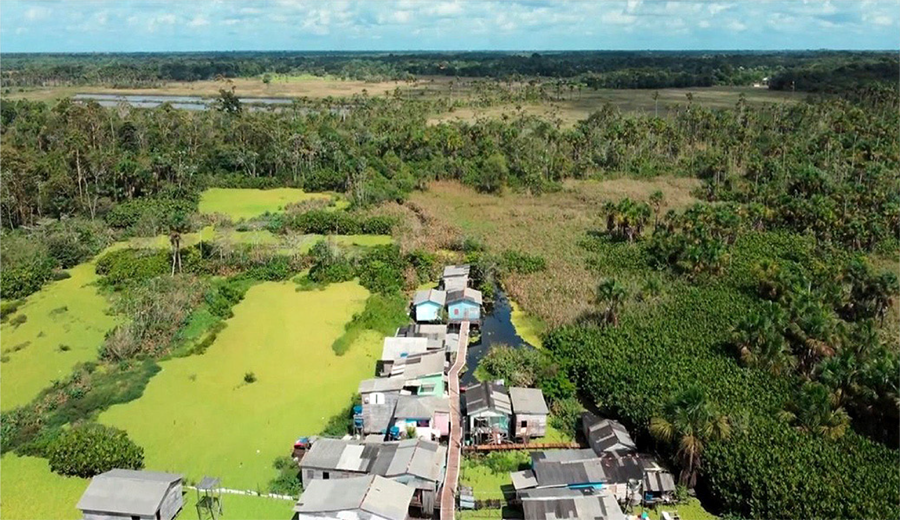
Among the settlements that have expanded across the tidal flats, Chico Dias stands out, situated between the neighbourhoods of Novo Buritizal and Congós, It recorded a population of 11,843 inhabitants in the 2022 Demographic Census, conducted by the Brazilian Institute of Geography and Statistics (IBGE, 2024a) (Figure 2). Its landscape reveals a mosaic of stilt houses built over dark, stagnant waters, flanked by degraded riverside vegetation, with precarious infrastructure: drinking water is supplied irregularly, sewage flows in the open, and the electricity network is makeshift, with exposed wires posing a constant risk of electric shock. The wooden walkways, which serve simultaneously as streets and backyards, are also places for socialising, trade, and children’s play. However, they are fragile and, not infrequently, become instruments of political patronage, rebuilt or repaired only during election periods.

Life in the slums settlement demands a constant struggle against nature and neglect. During floods, the houses sway with the movement of the water; during droughts, the stench of waste makes the air almost unbreathable. Even so, Chico Dias pulsates with an intense community life, marked by solidarity, creativity, and resilience.
The leadership of Munjoca
Against this backdrop of structural vulnerability and lack of public support, the figure of José Elenildo da Silva emerges, known to all as Munjoca – a community leader who embodies the resilience of the slums. Born in Macapá, in the quilombola community of Lagoa dos Índios, Munjoca carries within his life story the memory of the city’s Black and peripheral territories. The land on which the Congós neighbourhood now stands, home to the Chico Dias settlement, belonged to his great-grandfather, and part of it was sold to the state government decades ago. His struggle, therefore, is not merely social, but also historical and territorial – the defence of the permanence and dignity of a population that has been pushed to the margins for generations.
Munjoca’s childhood was marked by extreme deprivation. He left school early to help his mother and sisters survive: “I went hungry. I’d wake up early to gather firewood and sell coconuts. We got by as best we could”, recalls Munjoca. These experiences shaped her sense of solidarity and her outrage at injustice. Since the 1980s, she has worked as a community worker in various neighbourhoods of Macapá.
At the time of the interview in 2022, Munjoca was coordinating the Congós Neighbourhood Security Council and chairing the Federation of Security Councils of Macapá – bodies that bring together local leaders in the fight for basic rights.
Despite material hardships, his leadership was underpinned by networks of solidarity. The family’s livelihood comes largely from the sewing work of his wife, his main life partner, and from donations by local traders who recognise the importance of his work. With creativity, Munjoca has incorporated digital technologies into his activism: he uses Facebook and WhatsApp to organise community work parties, publicise demands, and even resolve practical issues, such as requesting birth certificates for undocumented people.
In his speeches, Munjoca denounces the historical neglect of riverside communities and the state’s dereliction of duty: “People need decent housing. We live here on the banks of the world’s largest freshwater river and yet we lack water. We go three days without water, and when it does arrive, it’s muddy, the colour of tucupí. That’s no way to live”.
This outrage is accompanied by a deep sadness in the face of daily tragedies: “I’ve already lost a friend here; he died from an electric shock whilst trying to pump water with an electric pump. This is a failure of public policy. It’s a lack of respect. And when a child dies, we all mourn together – because it’s us who live through this, not those who give orders from on high.” These accounts resonate in a context where Macapá ranks among the lowest in the national basic sanitation rankings (Machado, 2022).
The city, surrounded by rivers and streams, paradoxically faces a shortage of drinking water, a lack of sewage collection, and the fragility of public policies aimed at flooded areas. Munjoca’s work is, above all, practical and based on solidarity. He defines himself as a worker for the people, someone who does what he can with what he has. He mobilises resources, runs campaigns, mediates conflicts by bringing residents and institutions together, and organises community work parties to rebuild footbridges and carry out emergency repairs. His aim is not merely to make demands, but to take action: “We can’t expect the government to do everything. If that were the case, nobody would survive. So we get together and do it ourselves”.
Even though he did not complete his formal education, Munjoca deeply values education. He considers his greatest achievement to be seeing all his children finish their studies. This personal achievement is also a collective victory: “It was a promise I made to God – that my children would not go through what I went through”. For him, social transformation begins with awareness, and raising awareness is the hardest path, yet the most necessary: “The city needs unity as a whole. We work on raising awareness. Our people still need to understand. But I have faith that, with persistence and partnership, we can improve a great deal”. His faith is part of the strength that sustains him. In a territory marked by loss and frustration, spirituality becomes an element of community cohesion.
Munjoca is respected not only for his political resolve, but also for his humanity. This leader’s journey encapsulates the dilemma of the favelas: how to remain in a threatened territory without losing the right to dignity? His struggle is guided by a vision of the city that recognises the value of local ways of life and advocates for fair housing policies, capable of combining security, sustainability, and respect for cultural identities. He insists on the need for integrated solutions – urban, environmental, and social – that take into account the specific characteristics of each location. His words are incisive and reveal his outrage at the neglect by the authorities. For him, “[...] people need decent housing, and the government often fails to provide it, especially in vulnerable areas such as the ressacas”.
Paraisópolis, São Paulo, Southeast Brazil
The metropolis of São Paulo, the country’s largest city and one of the largest in the world, consolidated its position throughout the 20th century through an accelerated process of urbanisation and industrialisation . This growth, driven by the concentration of investment and the expansion of industry, resulted in a profoundly unequal urban structure. Favelas emerged as a stark expression of the contradictions of the modern city, revealing the hallmarks of precarious housing, income concentration, and territorial segregation that have become structural features of the São Paulo landscape.
According to the 2022 IBGE Census, around 2.2 million São Paulo residents – approximately 10.6% of the city’s population – live in informal settlements or substandard housing clusters. These figures confirm the persistence of urban inequality, even in the face of specific advances in infrastructure and housing policies. Among these territories, Paraisópolis stands out for its size, location and organisational capacity, ranking as the capital’s second-largest favela, with an estimated population exceeding 100,000 inhabitants (Pasternak and Bógus, 2023).
The territory of Paraisópolis (Figure 3) dates back to 1921, when the União Mútua Companhia Construtora e de Crédito Popular launched a housing development aimed at the middle class in the Morumbi valley. The project, however, failed due to the rugged topography and the lack of infrastructure, which hindered settlement. In the following decades, the land remained virtually empty until it was gradually occupied by migrant workers, particularly from the 1950s onwards, drawn by the major construction projects underway in the region – the Morumbi Stadium, the Palácio dos Bandeirantes, and the Albert Einstein Hospital (Santiago, 2022).

From then on, the settlement expanded continuously, though confined between upmarket residential estates and avenues with restricted access. From the 1990s onwards, a process of informal verticalisation transformed Paraisópolis into one of the most densely populated areas in the municipality. Three- to five-storey buildings multiplied, often built over precariously channelled streams, with inadequate sewage systems, and recurring risks of flooding and collapse. The urban fabric became extremely heterogeneous, mirroring the internal inequalities of the territory.
Areas such as the Centre, Brejo and Prédios feature larger buildings, paved streets and regular water and electricity supplies, whilst areas such as Antonico, Grotão and Grotinho remain more vulnerable, characterised by poor infrastructure and exposure to environmental risks (Alvim and Campos, 2024). Social diversity is also striking: families without a stable income, small traders, formal sector workers and local entrepreneurs all live side by side. On the same block, it is possible to find wooden shacks alongside self-built three- or four-storey brick buildings. The main streets, with their well-maintained façades and bustling trade, contrast with the labyrinthine internal alleys that retain the typical appearance of São Paulo’s favelas (Tessari, 2022).
Community organisation and entrepreneurship7
Community organisation is one of the most distinctive features of Paraisópolis’s trajectory. Since 1983, the Union of Residents and Shopkeepers has acted as the primary body for local representation. At the time of the interview, the community leader was Gilson Rodrigues, founder of G10 Favelas.8 During his leadership, a network of social, cultural, and economic projects was consolidated, focused on income generation, digital inclusion, and professional training. G10 Favelas has become a platform for articulation between the favela and the private sector, promoting entrepreneurship and innovation.
The interviewee recounted a life journey marked by hardship, resilience, and a commitment to the local area. He revisited the history of the favela and emphasised how the neighbourhood’s unplanned growth – a consequence of the lack of planning and effective public policies – has shaped a reality of extreme contrasts, where a lack of infrastructure coexists with the community’s social and economic vitality. Gilson states: Paraisópolis grew in a haphazard manner. We realise that the favela is often seen as a problem, but I see it as a solution.
Gilson highlighted that the lack of sanitation, precarious housing conditions, and the absence of public services during the Covid-19 pandemic became dramatic challenges. It was in this context that self-organisation demonstrated its strength: the Movement of Street Presidents, which he founded, established a monitoring and solidarity network, ensuring direct support for families and coordinating health, food, and safety initiatives. This experience reinforced the conviction that favelas can be managed autonomously and efficiently. The community network also enabled the swift implementation of health initiatives, food distribution, and psychological support. The model gained national and international recognition, serving as an inspiration for other urban communities.
The experience of Paraisópolis exemplifies how grassroots mobilisation can transform the reality of a community. The Association’s actions, in partnership with G10 Favelas, served as an example for other favelas in Brazil, demonstrating that it is possible to reorganise the community, public authorities, and the private sector to resolve complex social problems. The Paraisópolis experience reinforces the idea that grassroots mobilisation can reshape the relationships between civil society, public authorities, and the private sector.
The Senderos de San Isidro housing estate on the Mexican border
As in Brazil, housing policy in Mexico, particularly since the 2000s, has been structured around a model driven by credit and large-scale development, with a prominent role for financial institutions and private developers. This arrangement expanded formal access to housing, but also produced contradictory territorial effects, by inducing peripheral expansion and displacing low-income populations to distant areas, often lacking infrastructure, services, and opportunities.
Between 2001 and 2012, around twenty million people left central and rural areas, drawn by the promise of home ownership in subsidised housing estates (Maycotte, 2015). The spread of these developments was accompanied by marketing strategies that emphasised ideal standards of urbanisation and quality of life. However, in many cases, these promises were not fulfilled, resulting in settlements with incomplete or poor infrastructure and a lack of access to basic services such as electricity, piped water, and sanitation (Inegi, 2022).
Ciudad Juárez, on Mexico’s northern border, is a prime example of this process. With over 1.5 million inhabitants, the city experienced rapid growth driven by migratory flows linked to industrial dynamics and its proximity to the United States. Between 2005 and 2012, the National Institute of the Workers’ Housing Fund (Infonavit) authorised more than 100,000 housing loans in the city (Maycotte, 2015), promoting a rapid expansion of peripheral housing estates.
Despite the significant housing production, this process was accompanied by high vacancy rates: in 2020, more than 50,000 units were unoccupied (Inegi, 2020). This scenario highlights the contradictions of the adopted model, in which formal access to housing did not translate into effective conditions of habitability and permanence.
As a result, a formal peripheral suburb has taken shape, characterised by housing estates built in run-down urban areas, with poor construction quality and inadequate public infrastructure. On the outskirts of Ciudad Juárez, the Municipal Institute for Research and Planning acknowledges that the materials used were of poor quality, reflecting the limitations of mass housing production (IMIP, 2019). Generally speaking, the peripheral location of these developments was linked to the logic of profit maximisation by construction companies, to the detriment of urban integration.
A striking example of this process is the Senderos de San Isidro housing estate, comprising 5,570 dwellings and 11,642 inhabitants in 2010, built by a local developer and financed through Infonavit loans (Figure 4). In this development, 38% of the units are unoccupied (Inegi, 2010). The homes were built on 104 m2 plots, with units of 38 m2 and 47.58 m2, constructed in blocks with solid floors and concrete beam roofs (Contreras-Saldaña, 2021). Although structurally sound, mass production and the pursuit of cost reduction have resulted in the use of inferior-quality materials in various urban areas of the country (Boils, 2008).
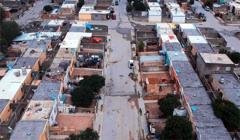
The development’s peripheral location imposes high transport costs: on average, 20.87% of households’ monthly income is spent on travel (Contreras-Saldaña, 2021, p. 157). With regard to urban services, the main problem lies not in their formal availability, but in the low quality and intermittent provision of these services.
Housing vacancy is the most acute problem in the region, triggering a cumulative process of urban decay. The decline in the number of residents undermines the vitality of public spaces, exacerbates the sense of insecurity – linked to poor lighting and low footfall – and weakens the social fabric. In outlying housing estates, inadequate waste collection contributes to the formation of illegal dumps on vacant lots and in neighbouring areas. In Senderos de San Isidro, 256 vacant dwellings have come to be used as dumping grounds (ibid, 2021), impacting public health, the urban landscape, and the upkeep of neighbouring buildings.
The abandoned properties exhibit varying degrees of deterioration: graffiti, accumulation of rubbish, and vegetation, missing doors, windows, and railings; and, in more extreme cases, structural damage, with loss of electrical and plumbing installations. This situation, combined with the presence of wasteland, open-air rubbish dumps, and soil erosion, increases the exposure of homes to sandstorms and contributes to the consolidation of an urban landscape characterised by precariousness.
The voice of leadership and community mobilisation
The experience of the families who remained in the area reveals, in concrete terms, the human costs of this model of housing policy. Leticia Herrera’s journey is particularly revealing in this regard. Upon arriving in Ciudad Juárez in 2007 and subsequently moving to the San Isidro Housing Complex in 2017, Herrera found herself in a territory formally produced by the state and the market, yet devoid of the minimum conditions of urbanity. Her narrative highlights the contrast between the promise of home ownership and the daily reality of isolation, precariousness, and a lack of services.
In recounting this process, Leticia not only describes an individual experience but constructs a critical reading of the territory: “Without the support of local authorities, we began to organise the community to create decent public spaces”. Her words reveal the moment when the absence of the state ceases to be merely a structural condition and begins to be confronted through collective action.
More than just a one-off reaction, this mobilisation represents a form of social production of space. Leticia and other residents began organising community work parties, cleaning up neglected areas and reclaiming communal spaces, transforming abandoned plots into places for people to come together. In this process, what is at stake is not merely the physical improvement of the environment, but the rebuilding of social ties and a sense of belonging. As she herself suggests, mobilisation becomes a condition for staying: it is not just about living in that space, but about making it habitable.
Her leadership also highlights the political dimension of this everyday practice. By asserting the need to review developers’ practices and regulatory frameworks, Leticia shifts the discussion from the local level to the institutional sphere: “We need laws and regulations that ensure new developments contribute positively to the community”. In this sense, her speech articulates lived experience and structural critique, pointing to the limitations of a housing production model driven predominantly by financial logic and cost-cutting.
At the same time, her narrative projects a proactive and collective dimension of the right to the city: “Together, we can redefine what it means to live in Ciudad Juárez – not just to survive, but to thrive”. This statement encapsulates a shift in position – from passive beneficiaries of public policies to active agents in the production of urban space.
The rhetoric of leadership thus, like the lack of urban planning disconnected from everyday life, produces new forms of vulnerability. The physical distance of housing estates from urban centres becomes a social, economic, and symbolic barrier. In this context, the San Isidro housing estate comes to represent not merely a housing development, but the embodiment of the contradictions of an urbanisation model which, whilst reducing the quantitative housing deficit, deepens processes of spatial exclusion and urban precarity (Maycotte, 2015).
In recent years, the Mexican government has begun to partially recognise these effects and has formulated the National Housing Programme 2021-2024, coordinated by the Secretariat of Agrarian, Territorial and Urban Development, with guidelines focused on the rehabilitation of abandoned housing and the prioritisation of consolidated urban areas (Government of Mexico, 2021). In parallel, Infonavit has been implementing housing recovery strategies, reporting in 2023 the reactivation of thousands of units in the state of Chihuahua through partnerships with local governments and community organisations (Infonavit, 2023).
The state-led urbanisation of these territories has failed to provide access to decent housing. This is particularly evident in a context where cost-cutting is prioritised and quantity takes precedence over quality, resulting in areas of concentrated inequality that become spaces of urban precarity (Whitaker Ferreira, 2015). Such an approach impoverishes residents, deprives them of resources, and limits their access to a safe and healthy environment. Herrera’s account of community mobilisation demonstrates, however, that collective action can rebuild social ties, transform urban space, and reaffirm the right to the city. This remains an ongoing struggle, through which the residents of Ciudad Juárez continue to demand, through their everyday practices, a fairer, more sustainable, and more humane city.
Community mobilisation and the right to the city on the frontiers of inequality
The three case studies brought together here – Chico Dias in Macapá, Paraisópolis in São Paulo, and Senderos de San Isidro in Ciudad Juárez – highlight how the peripheral territories of Latin America concentrate the most acute contradictions of contemporary urbanisation. In distinct contexts, yet connected by dynamics of inequality and precarisation, these experiences reveal both the limitations of public policies and the power of local collective action. Rather than merely depicting urban deprivation, the cases allow us to understand how precarity, when confronted by local forms of organisation, can become a space for political construction, the production of the common good, and the reinvention of the urban (Dardot and Laval, 2014; Holston, 2009; Stavrides, 2016).
Based on the narratives of their community leaders, it is observed that social mobilisation emerges as a concrete way of claiming the right to the city, transforming the lack of infrastructure and institutional neglect into practices of solidarity, innovation, and resistance. In these urban margins, the struggle for decent housing transcends the material dimension and asserts itself as an everyday political practice, through which residents build a sense of belonging and reconfigure urban space. Thus, the cases not only highlight situations of vulnerability but reveal forms of insurgent citizenship, in which collective responses are produced in the face of the state’s inadequacy, selectivity, or absence (Caldeira, 2016; Holston, 1991, 2009).
A comparative analysis of the interviews reveals a common basis for engagement, rooted in the direct experience of precariousness and the daily reality of urban vulnerability. This condition not only motivates collective action but also shapes forms of political action characterised by a close connection to the local area, conflict mediation, and the development of pragmatic responses to institutional failures. In this sense, community mobilisation takes the form of a situated practice, rooted in the urgencies of daily life and in the creation of minimum conditions for habitability.
At the same time, this shared framework does not eliminate differences in forms of action and horizons of transformation. Leaders draw on distinct repertoires, which vary according to the degree of institutionalisation, access to networks, and resources, and the possibilities for coordination with external actors. Whilst in Paraisópolis a more structured approach is observed – with a greater capacity to influence at different levels, in Macapá and Senderos de San Isidro more emergent and territorially situated forms of mobilisation predominate, often focused on the immediate resolution of problems. These variations indicate that self-management is not a homogeneous model, but a plural field of practices adapted to local conditions.
The empirical cases elaborate on the distinctions summarised in the table. In Paraisópolis, the role of G10 Favelas in coordinating social and infrastructure projects stands out, highlighting a more structured mobilisation with the capacity for political and economic influence. In Macapá and Senderos de San Isidro, on the other hand, forms of mobilisation more directly linked to local conditions of precariousness are observed. In the first case, partnerships with academia help to raise the profile of the areas affected by tidal flooding; in the second, autonomous mobilisation, still in the process of consolidation, seeks institutional recognition in a context marked by structural limitations.
These differences suggest that self-management takes on different forms, varying according to the local context and the conditions of political engagement. Nevertheless, in all three cases, collective action acts as a bridge between immediate needs and broader horizons of urban transformation (Harvey, 2014; Stavrides, 2016).
The responses from public authorities also vary significantly. In Paraisópolis, social pressure and territorial visibility contributed to more consistent urban interventions. In Macapá, state action remains limited, reflecting the socio--environmental complexity of the floodplain areas. In Senderos de San Isidro, housing policy has produced a degraded urban environment, with low institutional responsiveness. These contrasts demonstrate that the relationship between the peripheries and the state cannot be understood in binary terms, but rather as a field of conflict, negotiation, and struggle for recognition, in which leaders operate “with”, “against” and “despite” institutions (Holston, 2009; Caldeira, 2016; Rolnik, 2015).
The cases analysed show that social exclusion and precarious infrastructure constitute shared challenges across different Latin American contexts, but they also reveal the peripheries as active spaces of negotiation, resistance, and collective construction. In these territories, the right to the city takes on a concrete dimension: not merely as a demand for access to goods and services, but as a practice of participation, appropriation, and transformation of lived space (Lefebvre, 2008; Harvey, 2014).
In Chico Dias, the struggle centres on visibility and access to essential infrastructure in an environmentally vulnerable territory. Munjoca’s action expresses a form of citizenship rooted in proximity and solidarity, an agent that transforms daily precarity into a public demand (Fernandes, 2011; Holston, 1991).
Paraisópolis demonstrates a highly structured mobilisation, in which entrepreneurship, networks and political coordination expand the capacity to influence urban governance. The leadership of Gilson Rodrigues exemplifies an approach that combines grassroots action and institutional dialogue, strengthening the struggle for recognition and resources (Harvey, 2014; Stavrides, 2016).
In Senderos de San Isidro, the housing crisis reveals the contradictions of a mass production model disconnected from urban dynamics. Leticia Herrera’s work points to forms of insurgent planning that emerge in contexts of neglect, reaffirming the right to the city through the reappropriation of spaces produced without urbanity (Duhau, 1998; Lefebvre, 2008; Ziccardi, 2015).
These cases challenge traditional paradigms of urban planning and reinforce the need for public policies grounded in territorial listening and inclusive governance. The right to the city, in this context, is not granted, but constructed on a daily basis through situated practices. At the same time, the analysis highlights that the visibility of the peripheries remains contested: frequently recognised as an urban problem, yet still rendered invisible as political subjects and producers of knowledge (Caldeira, 2016; Lucas, 2012; Olivieri, 2007).
Concluding remarks
The experiences examined demonstrate that the peripheries are territories of political creation, where everyday life becomes a space for resistance, learning and the reinvention of the city. Community leadership, by constituting itself as a collective and relational practice, transcends traditional models of representation and affirms new forms of political action. These practices challenge the boundaries between the institutional and the informal, proposing ways of governing and producing the city based on cooperation, care, and sharing. More than just contingent responses to precariousness, they express situated forms of building the common and asserting the right to the city (Dardot and Laval, 2014; Harvey, 2014; Stavrides, 2016).
The common, in this context, is not merely a normative ideal, but a process lived out and built on the margins, which redefines the meaning of citizenship and urban belonging. It follows that the peripheries, by mobilising self-managed and solidarity-based practices, not only resist the precariousness imposed by unequal urbanisation, but point towards alternative forms of an urban future – ones that are fairer, more democratic, and more sustainable.
Urban social movements, in this sense, remain central to the ongoing struggle for the right to the city in Latin America. This right, theorised by Lefebvre (2008) and developed by Harvey (2014), Soja (2010) and Holston (1991), goes beyond access to housing or urban services: it affirms the collective capacity of inhabitants to shape, negotiate and reimagine their urban environments. It is a right that involves spatial justice, political participation and symbolic recognition – urgent dimensions in contexts marked by informal urbanisation and structural inequality.
Macapá, Paraisópolis and Ciudad Juárez convergingly illustrate the political power of urban peripheries. Although marked by state neglect and precarious infrastructure, these territories demonstrate forms of social creativity and political invention that reconfigure urban practices. In Macapá, we observe the emergence of an insurgent citizenship, expressed through community action based on solidarity and the development of local responses in environmentally vulnerable contexts. In Paraisópolis, collective organisation reveals a capacity to structure entrepreneurial strategies and influence public policy, broadening its dialogue with the state. In Ciudad Juárez, meanwhile, local initiatives seek to address the failings of the state housing model through insurgent practices that challenge traditional forms of housing provision (Miraftab, 2009). Taken together, these cases indicate that self--management does not act as a substitute for the state, but as a force that challenges its limits, highlights its omissions, and expands the scope of what is possible in urban planning (Rolnik, 2015; Maricato, 2011).
Among the findings of this research, the methodological dimension stands out as a constitutive part of the very process of knowledge production. The use of participatory media functioned as a political-pedagogical tool, enabling community leaders to narrate their own experiences and construct counter-narratives against the dominant representations of favelas, resettlements, and housing estates. As Cornwall (2002) and Fraser (1990) observe, democratic participation is not limited to formal inclusion, requiring the creation of arenas that broaden the expression of subalternised groups and facilitate their effective influence on the formulation of urban policies. In this sense, participatory media is not limited to recording experiences, but acts directly to reconfigure regimes of visibility by shifting the sites of enunciation and legitimising historically marginalised territories as producers of knowledge about the city (Fraser, 1990; Lucas, 2012; Olivieri, 2007).
This approach aligns with decolonial methodologies, which value knowledge rooted in lived experience and local agency. Thus, participatory media emerges as a tool for inclusive urban planning, sensitive to the context and aspirations of those inhabiting precarious territories. It enables us to address, albeit partially, the political and epistemic invisibility that falls upon the peripheries, making visible not only their problems but also their capacities for interpretation, formulation, and proposal (Lucas, 2012; Olivieri, 2007).
A comparative analysis of the three experiences reveals convergences in peripheral demands that transcend national borders and point to a Latin American grammar of resistance: decent housing, infrastructure, security, recognition, and respect. These demands express not only the search for material resources, but also the desire for political and symbolic belonging – the right to transform urban space through collective action. As Herrera Flores (2009, p. 110) observes, these are “[...] institutional and social processes that open up and consolidate spaces for the struggle for human dignity”.
The right to the city is understood, in this article, as a situated and relational process, constructed “with”, “against” and “despite” the state, and not merely as a normative horizon. This perspective allows us to interpret the peripheries not as spaces devoid of rights, but as territories where rights are continually contested, reinterpreted, and produced in practice.
In Latin America, the peripheries do not constitute the margins of urban development, but rather active spaces for its reinvention. If they are often treated as “invisible cities”, it is less due to their physical absence and more to the persistent invisibilisation of their practices, knowledge, and forms of political action. Similarly, the “Amazing people” referred to in this article are not individual exceptions, but express a collective power, rooted in self-management, solidarity, and the building of the common good.
Recognising these practices and voices, and incorporating them into planning processes, constitutes not only an ethical imperative but a strategic condition for building more democratic, solidarity-based, and territorially just urban futures.
References
- ABRAMO, P. (2012). "A cidade informal confusa: o mercado e a produção da territorialidade urbana popular". In: SALAZAR, C. (ed.). Irregular. Solo e mercado na América Latina México, El Colegio de México, pp. 85-124.
- ALVIM, A. T. B.; CAMPOS, L. M. G. (2024). Ações locais nos assentamentos precários no contexto da Covid-19: o caso da favela Paraisópolis, São Paulo, Brasil. In: SEMINÁRIO AEAULP, 5, 2024, Brasília. Proximidades distantes Lisboa, Academia de Escolas de Arquitectura e Urbanismo de Língua Portuguesa, v. I. pp. 141-162.
-
BOCANEGRA, R. (2023). Existem mais de 600.000 casas do Infonavit abandonadas. Mercado Imobiliário, 19 jun. Disponível em: https://shre.ink/DUta Acesso em: 12 jul 2024.
» https://shre.ink/DUta - BOILS, G. (2008). "Segregação e modelo habitacional em grandes conjuntos habitacionais no México". In: CORDERA, R.; RAMÍREZ, P.; ZICCARDI, A. (ed.). Pobreza, desigualdade e exclusão social na cidade do século XXI Cidade do México, Universidade Autônoma do México, pp. 273-287.
- CALDEIRA, T. (2016). Urbanização periférica: autoconstrução, lógicas transversais e políticas nas cidades do sul global. Environ and Planning D: Society and Space, v. 35, n. 1, pp. 3-20.
- CARVALHO, B. M. (2020). Habitação popular na Amazônia: o caso das ressacas na cidade de Macapá. Curitiba, Appris.
-
CARVALHO, B. M.; CONTRERAS-SALDAÑA, M.; SANTIAGO, W. (2022). Cidades invisíveis, pessoas incríveis. Vídeo. Publicado pelo canal PPGAU FAU Mackenzie. Disponível em: https://youtu.be/0XFJCtVAOQA Acesso em: 7 jun 2024.
» https://youtu.be/0XFJCtVAOQA -
CONTRERAS-SALDAÑA, M. (2021). Habitando territorios de expulsión: efectos socioterritoriales en dos fraccionamientos de interés social en Ciudad Juárez, 2008-2019. Tese de doutorado. Cidade do México, Universidade Autônoma do México. Disponível em: http://132.248.9.195/ptd2021/enero/0806130/Index.html Acesso em: 21 fev 2022.
» http://132.248.9.195/ptd2021/enero/0806130/Index.html - CORNWALL, A. (2002). "Localizando a participação cidadã". In: COOKE, B.; KOTHARI U. (ed.). Participação: a nova tirania ? Londres, Zed Books, pp. 49-61.
- DUHAU, E. (1998). Habitat popular e política urbana Cidade do México, Miguel Ángel Porrúa/UAM.
-
CEPAL - Comissão Econômica para a América Latina e o Caribe (2024). Observatório Demográfico América Latina e Caribe - 2023. Disponível em: https://repositorio.cepal.org/server/api/core/bitstreams/0906c925-9e69-42ca-bcae-8dd82127c6d2/content Acesso em: 12 jul 2024.
» https://repositorio.cepal.org/server/api/core/bitstreams/0906c925-9e69-42ca-bcae-8dd82127c6d2/content - DARDOT, P.; LAVAL, C. (2014). Comum: ensaio sobre a revolução no século XXI São Paulo, Boitempo.
- FERNANDES, E. (2011). Regularização de assentamentos informais na América Latina Cambridge/MA, Lincoln Institute of Land and Policy.
- FRASER, N. (1990). Repensando a esfera pública: uma contribuição para a crítica da democracia realmente existente. Social Text, n. 25/26, pp. 56-80.
-
GOBIERNO DE MEXICO (2021). Programa Nacional de Vivienda 2021-2024. Secretaría de Desarrollo Agrario, Territorial y Urbano (Sedatu). Disponível em: https://www.gob.mx/sedatu Acesso em: 12 jun 2025.
» https://www.gob.mx/sedatu - HARVEY, D. (2014). Cidades rebeldes: do direito à cidade à revolução urbana São Paulo, Martins Fontes.
- HERRERA FLORES, J. (2009). A reinvenção dos direitos humanos Florianópolis, Boiteux.
-
HOLSTON, J. (1991). Autoconstrução na classe trabalhadora brasileira. Antropologia Cultural, v. 6, n. 4, pp. 447-465. Disponível em: https://escholarship.org/uc/item/716990r5 Acesso em: 12 jul 2024.
» https://escholarship.org/uc/item/716990r5 - HOLSTON, J. (2009). Insurgent citizenship: disjunctions of democracy and modernity in Brazil. Princeton, Princeton University Press.
- IBGE - Instituto Brasileiro de Geografia e Estatística (2013). Sinopse do Censo Demográfico 2010 Brasil. Rio de Janeiro, IBGE.
-
IBGE - Instituto Brasileiro de Geografia e Estatística (2021). Perfil dos municípios brasileiros: 2020. Rio de Janeiro, IBGE. Disponível em: https://biblioteca.ibge.gov.br/visualizacao/livros/liv101871.pdf Acesso em: 7 jun 2024.
» https://biblioteca.ibge.gov.br/visualizacao/livros/liv101871.pdf -
IBGE - Instituto Brasileiro de Geografia e Estatística (2023). Panorama do Censo 2022. Rio de Janeiro, IBGE. Disponível em: https://censo2022.ibge.gov.br/panorama/?localidade=BR Acesso em: 1º jun 2026.
» https://censo2022.ibge.gov.br/panorama/?localidade=BR -
IBGE - Instituto Brasileiro de Geografia e Estatística (2024). Portal Cidades e Estados Rio de Janeiro, IBGE. Disponível em: www.ibge.gov.br/cidades-e-estados.html Acesso em: 12 jul 2024.
» www.ibge.gov.br/cidades-e-estados.html - IMIP - Instituto Municipal de Investigación y Planeación (2019). Radiografía socioeconómica del municipio de Juárez 2019, así comenzó 2019. Ciudad Juárez.
- INEGI - Instituto Nacional de Estadística y Geografía (2000). Censo de Población y Vivienda - 2000. Aguascalientes, Inegi.
-
INEGI - Instituto Nacional de Estadística y Geografía (2010). Tabulados de Infraestrutura y características del entorno urbano. Aguascalientes, Inegi. Disponível em: http://www.inegi.org.mx/est/contenidos/proyectos/ccpv/cpv2010/tabulados_urbano.aspx Acesso em: 12 jul 2024.
» http://www.inegi.org.mx/est/contenidos/proyectos/ccpv/cpv2010/tabulados_urbano.aspx - INEGI - Instituto Nacional de Estadística y Geografía (2020). Censo de Población y Vivienda - 2020. Aguascalientes, Inegi.
- INEGI - Instituto Nacional de Estadística y Geografía (2022). Censo de Población y Vivienda - 2022. México, Inegi.
- LEFEBVRE, H. (2008). O direito à cidade São Paulo, Centauro.
-
LUCAS, P. (2012). Viva Favela: direitos humanos e inclusão visual no Brasil, dez anos de fotojornalismo. Rio de Janeiro, Viva Favela. Disponível em: https://vivafavelamovement.squarespace.com/pdf-download Acesso em: 27 abr 2025.
» https://vivafavelamovement.squarespace.com/pdf-download -
MACHADO, L. (2022). Macapá lidera ranking de cidades com o pior saneamento básico: 'Uso água do vizinho', diz moradora que paga R$50 para acessar poço. G1, 23 mar. Disponível em: https://g1.globo.com/ap/amapa/noticia/2022/03/23/macapa-lidera-ranking-de-cidades-com-o-pior-saneamento-basico-uso-agua-do-vizinho-diz-moradora-que-paga-r-50-para-acessar-poco.ghtml Acesso em: 12 jul 2024.
» https://g1.globo.com/ap/amapa/noticia/2022/03/23/macapa-lidera-ranking-de-cidades-com-o-pior-saneamento-basico-uso-agua-do-vizinho-diz-moradora-que-paga-r-50-para-acessar-poco.ghtml - MARICATO, E. (2011). O impasse da política urbana no Brasil Petrópolis, Vozes.
- MAYCOTTE, E. (2015). "A habitação e a cidade do século XXI. Dez anos de produção habitacional em Ciudad Juárez, Chihuahua". In: ZICCARDI, A.; GONZÁLES, A. (ed.). Habitabilidade e política habitacional no México Cidade do México, Unam-Puec, pp. 657-680.
- MIRAFTAB, F. (2009). Planejamento insurgente: situando o planejamento radical no Sul Global. Teoria do Planejamento, v. 8, n. 1, pp. 32-50.
-
NÁJAR, A. (2019). Por que no México há 5 milhões de casas desabitadas. BBC News Mundo, 19 fev. Disponível em: https://www.bbc.com/mundo/noticias-america-latina-47263282 Acesso em: 12 jul 2024.
» https://www.bbc.com/mundo/noticias-america-latina-47263282 -
OLIVIERI, S. (2007). Quando o cinema vira urbanismo: o documentário como ferramenta de abordagem da cidade. Dissertação de mestrado. Salvador, Universidade Federal da Bahia. Disponível em: https://repositorio.ufba.br/handle/ri/8811 Acesso em: 12 jul 2024.
» https://repositorio.ufba.br/handle/ri/8811 - PASTERNAK, S.; BÓGUS, L. (2022). "Favelas em números". In: ALVIM, A. T. B.; RÚBIO V. M. (ed.). Sustentabilidade em projetos para urbanização de assentamentos precários no Brasil: contexto, dimensões e perspectivas. Barueri, Manole, pp 70-99.
- PASTERNAK, S.; BÓGUS, L. (2023). Favelas na metrópole paulistana: permanências e mudanças. Observatório da Economia Latino- -Americana, v. 21, n. 1, pp. 301-322.
- PERLMAN, J. (1976). O mito da marginalidade: pobreza urbana e política no Rio de Janeiro Berkeley, University of California Press.
- ROLNIK, R. (2015). Guerra dos lugares: a colonização da terra e da moradia na era das finanças. São Paulo, Boitempo.
- SANTIAGO, W. G. (2022). Paraisópolis: morfologia urbana por meio da escola inglesa. Dissertação de mestrado. São Paulo, Universidade Presbiteriana Mackenzie.
- SOJA, E. (2010). Em busca da justiça espacial Minneapolis, University of Minnesota Press.
- STAVRIDES, S. (2016). Common space: the city as commons Londres, Zed Books.
- TESSARI, A. (2022). "Sobre a forma da favela". In: ALVIM, A. T. B.; RÚBIO V. M. (ed.). Sustentabilidade em projetos para urbanização de assentamentos precários no Brasil: contexto, dimensões e perspectivas. Barueri, Manole, pp. 100-123.
- THOMAZ, D.; SANTOS, S.; FERREIRA, S. (2017). Afirmação do espaço construído e a negação do ambiental: análise da Lagoa dos Índios em Macapá. In: XVII ENCONTRO NACIONAL DA ASSOCIAÇÃO NACIONAL DE PÓS-GRADUAÇÃO E PESQUISA EM PLANEJAMENTO URBANO E REGIONAL, 17, São Paulo, 22-26, pp. 2-14.
- VOGEL, A.; MELLO, M. A.; MOLLICA, O. (2016). Quando a rua vira casa Rio de Janeiro, Universidade Federal Fluminense.
- WHITAKER FERREIRA, J. S. F. (2015). "Experiencias internacionales de producción de vivienda social, Brasil". In: ZICCARDI, A.; GONZÁLES, A. Habitabilidad y política de vivienda en México México D.F., Universidad Autónoma de México, pp. 39-46.
- ZICCARDI, A. (2015). Cómo viven los mexicanos. Análisis regional de las condiciones de habitabilidad de la vivienda. Cidade do México, Universidade Autônoma do México.
Notes
-
1
This article results from research developed by the Contemporary Urbanism Research Group: Networks, Systems and Processes, in collaboration with researchers from the Federal University of Amapá (Brazil), Mackenzie Presbyterian University (Brazil), and the Autonomous University of Ciudad Juárez (Mexico). The study was conducted within the framework of a postdoctoral fellowship funded by the Coordination for the Improvement of Higher Education Personnel – Capes PrInt/UPM (Project n. 88881.720575/2022-01) and is part of the research project Climate Emergency and Urban Policies in Brazilian Cities, funded by the Mackenzie Research and Innovation Fund – MackPesquisa (Project n. 251016) and the National Council for Scientific and Technological Development – CNPq (Universal Call, Process n. 406466/2025-4).
-
2
According to estimates, Latin America was projected to reach a population of 652.4 million people by the end of 2023 (Economic Commission for Latin America and the Caribbean [ECLAC], 2024, p. 5). A large proportion of this population is concentrated in just two countries, Mexico and Brazil, which together account for more than half of the Latin American population, with 127 million and 203.1 million inhabitants, respectively (IBGE, 2023).
-
3
The study was approved by the local Ethics Committee under authorisation number [CAAE: 53240421.3.0000.0084]. All participants provided informed consent before the interviews.
-
4
“Ressacas” are stilt settlements located in the Amazonian wetlands, built over watercourses and marshes. These are environmentally sensitive areas with a high risk of flooding, typically inhabited by low-income populations without access to basic infrastructure (Thomaz, Santos and Ferreira, 2017).
-
5
Housing estates in Mexico refer to mass-produced residential complexes, often located on the urban periphery. Built under national housing programmes, such as Infonavit, these estates are frequently characterised by poor construction quality, neglect and a lack of essential services (Boils, 2008; Whitaker Ferreira, 2015).
-
6
The full interviews with the community leaders were conducted between 2021 and 2022 and are available on Carvalho, Contreras-Saldaña and Santiago (2022).
-
7
“To conduct the interview with the community leader from Paraisópolis, we had the support of architect and resident William Santiago, to whom we extend our thanks”.
-
8
“The G10 das Favelas is a bloc of leaders and social impact entrepreneurs from the favelas who, much like the rich nations of the G7 (Canada, France, Germany, Italy, Japan, the United Kingdom, and the United States), have joined forces to foster economic development and community empowerment, aiming for the economic and social development of these urban areas” (Alvim and Campos, 2024).
-
Data availability statement:
The entire dataset supporting the results of this study has been made available at Canal PPGAU FAU Mackenzie. (2022). Cidades invisíveis, pessoas incríveis [Video]. YouTube. https://youtu.be/Ccw1QtriDtk.
Edited by
-
Editors:
Lucia BógusLuiz César de Queiroz Ribeiro
The entire dataset supporting the results of this study has been made available at Canal PPGAU FAU Mackenzie. (2022). Cidades invisíveis, pessoas incríveis [Video]. YouTube. https://youtu.be/Ccw1QtriDtk.

 Source: Carvalho, Contreras-Saldaña and
  Source: Carvalho, Contreras-Saldaña and
  Source: Carvalho, Contreras-Saldaña and
  Source: Carvalho, Contreras-Saldaña and