person Angélica Tanus Benatti ALVIM
conceptualisation · methodology · organisation of the theoretical framework · comparative case analysis · article writing · writing–review and editing · funding acquisition
schoolUniversidade Presbiteriana Mackenzie, Faculdade de Arquitetura e Urbanismo. Programa de Pós-Graduação em Arquitetura e Urbanismo. São Paulo, SP/Brasil. angelica.alvim@mackenzie.brUniversidade Presbiteriana Mackenzie, Faculdade de Arquitetura e Urbanismo. Programa de Pós-Graduação em Arquitetura e Urbanismo. São Paulo, SP/Brasil. angelica.alvim@mackenzie.brBrasilBrasilUniversidade Presbiteriana Mackenzie, Faculdade de Arquitetura e Urbanismo. Programa de Pós-Graduação em Arquitetura e Urbanismo. São Paulo, SP/Brasil. angelica.alvim@mackenzie.br
person Bianca Moro de CARVALHO
investigation (São Paulo and Amapá case studies) · conducting interviews · data curation · formal analysis · validation · visualisation · writing of the empirical sections · funding acquisition
schoolUniversidade Federal do Amapá, Faculdade de Arquitetura e Urbanismo. Macapá, AP/Brasil. biancamoro@unifap.brUniversidade Federal do Amapá, Faculdade de Arquitetura e Urbanismo. Macapá, AP/Brasil. biancamoro@unifap.brBrasilBrasilUniversidade Federal do Amapá, Faculdade de Arquitetura e Urbanismo. Macapá, AP/Brasil. biancamoro@unifap.br
person Marina Erendina CONTRERAS-SALDAÑA
investigation and analysis of the Mexico case study · conducting interviews · data curation · validation · visualisation · writing of the section related to Mexico
schoolUniversidad Autónoma de Ciudad Juárez, Centro de Investigaciones Sociales, Ciudad Juárez, México. marina.contreras@uacj.mxUniversidad Autónoma de Ciudad Juárez, Centro de Investigaciones Sociales, Ciudad Juárez, México. marina.contreras@uacj.mxMéxicoMéxicoUniversidad Autónoma de Ciudad Juárez, Centro de Investigaciones Sociales, Ciudad Juárez, México. marina.contreras@uacj.mx
Declaration of conflict of interest:
The authors declare that there is no conflict of interest.
Editors:
Lucia Bógus
Luiz César de Queiroz Ribeiro
Organizers of this issue:
Thiago Canettieri
Luciana Teixeira de Andrade
Luís Renato Bezerra Pequeno
Translation:
the original Portuguese manuscript was translated into English using DeepL and subsequently revised for language accuracy and readability by Marília Grieco Rodrigues, e-mail:
ninagriec@gmail.com

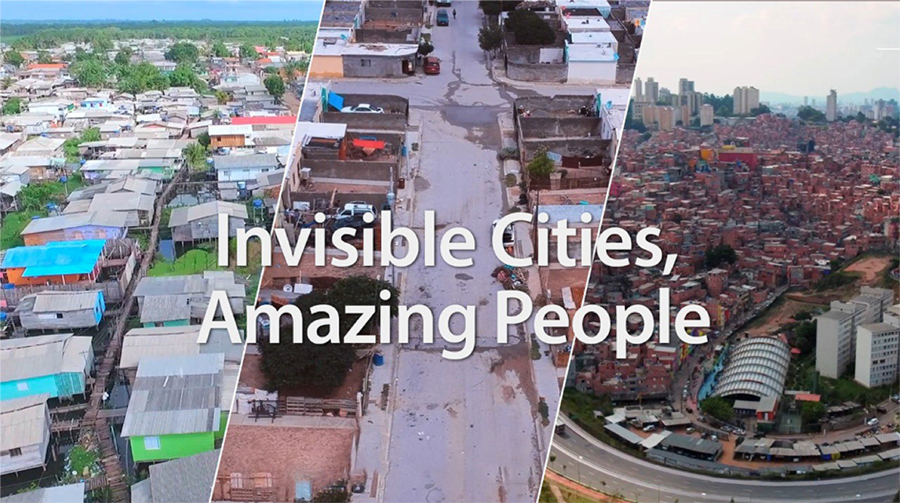
 Invisible cities, amazing people: Between self-management and resistance in Latin American peripheries
 Thumbnail
 Thumbnail
 Thumbnail
 Thumbnail
 Source: Carvalho, Contreras-Saldaña and
  Source: Carvalho, Contreras-Saldaña and
  Source: Carvalho, Contreras-Saldaña and
  Source: Carvalho, Contreras-Saldaña and