 Intelligibility in Context Scale: validity of the Brazilian-Portuguese version
Purpose The aim of the study was to validate the Brazilian-Portuguese version of the Intelligibility in Context Scale (ICS-BP).
Methods Sixty children (mean age in months = 55.05, SD = 4.2), 15 with parental or teacher concerns regarding their speech and 45 without concerns, underwent assessment using the phonology subtest of ABFW – Child Language Test. The percentage of consonants correct (PCC) was calculated and parents completed the ICS to evaluate their children's intelligibility with various communication partners. Descriptive statistics were obtained. Kruskal-Wallis and Spearman’ tests were used for independent group comparisons and correlation calculations, respectively. Linear regression models were established to predict PCC. Internal consistency was calculated using Cronbach's alpha. A Receiver Operating Characteristic (ROC) was used to analyse sensitivity and specificity. Significance was considered for p-values under 0.05.
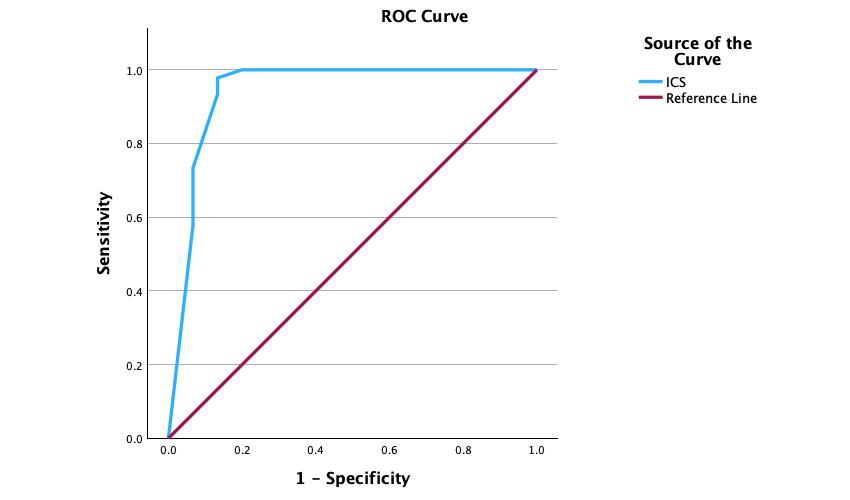
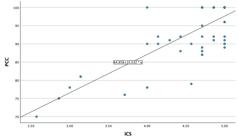
Results The majority of parents reported a mean score of 4.6 in a total of 5 (SD .10) at the ICS responses with different listeners, with better performance with other acquaintances and members of the family. The ICS demonstrated excellent internal consistency (α = 0.95). Positive correlations were found between ICS scores and PCC (r = .790) and a simple linear model was established between the ICS mean score and PCC. Sensitivity (0.98) and specificity (0.87) were considered high.
Conclusion The ICS-BP indicated high psychometric values, suggesting that this instrument can be used to measure the intelligibility of Brazilian children.
Keywords:
Speech Intelligibility; Validation Study; Child Language; Speech, Language and Hearing Sciences
 Thumbnail
 Thumbnail