 Efficacy of the Adapted Cycles Intervention Program (PROCICLOS-A) and the influence of severity on the performance of children with Speech Sound Disorders
ABSTRACT
Purpose To verify the efficacy of PROCICLOS-A in children with SSD, according to the weekly frequency of sessions, and the severity's influence on the sessions' performance.
Methods Eight children with SSD participated, both sexes, ages between 5:03 and 7:07 years, divided into two groups: C1, once a week; C2, twice a week. The efficacy of PROCICLOS-A was verified in C1 and C2 by analyzing variables from the phonology tests of the ABFW assessment across three evaluation moments. The performance in the sessions was obtained through scoring the activities.
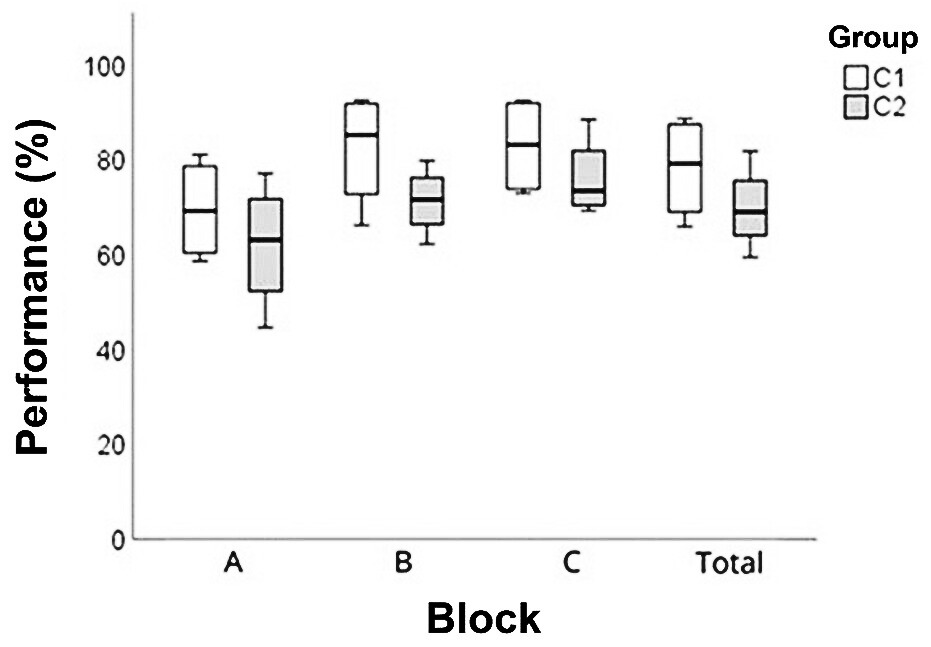
Results All measures significantly differed, indicating improved performance in the evaluations after the intervention. Regarding the influence of the frequency of the sessions, there was no significant difference between C1 and C2 in the three evaluation moments. Blocks of sessions analyzed the performance in the sessions: A (sessions 1, 4, 7, 10), B (sessions 2, 5, 8, 11), C (sessions 3, 6, 9, 12). The analysis revealed lower performance during the sessions of Block A, while Blocks B and C demonstrated better performance.
Conclusion The study provided evidence for the efficacy of PROCICLOS-A, regardless of the dosage and frequency of sessions. It suggests that maintaining the cumulative intensity of the intervention is vital, indicating that the total number of intervention hours may have a greater impact than the number of sessions held per week. There was an improvement in each child's performance throughout the program, regardless of the target sound and severity at the beginning of the intervention.
Keywords:
Speech Therapy; Speech; Child; Speech Sound Disorders; Intervention
RESUMO
Objetivo Verificar a eficácia do PROCICLOS-A em crianças com TSF, em função da frequência semanal das sessões, e a influência da gravidade no desempenho das sessões.
Método Participaram oito crianças com TSF, ambos os sexos, idades entre 5:03 e 7:07 anos, alocadas em dois grupos: C1, uma vez por semana; C2, duas vezes por semana. A eficácia do PROCICLOS-A foi verificada em C1 e C2, com análise de variáveis nas provas da fonologia do teste ABFW, em três momentos de avaliação. O desempenho nas sessões foi obtido através de pontuação das atividades.
Resultados Houve diferença significante para todas as medidas, indicando melhora do desempenho nas avaliações após intervenção. Sobre a influência da dose de frequência das sessões, não houve diferença significante entre C1 e C2, nos três momentos de avaliação. O desempenho nas sessões foi analisado por meio da média dos blocos de sessões: A (sessões 1, 4, 7 e 10), B (sessões 2, 5, 8 e 11), C (sessões 3, 6, 9 e 12). Houve um menor desempenho nas sessões do bloco A e, melhor desempenho nos blocos B e C.
Conclusão O estudo mostrou evidências da eficácia do PROCICLOS-A, independentemente da dose da frequência das sessões, sugerindo que, com a manutenção da intensidade cumulativa da intervenção, o número total de horas de intervenção parece interferir mais do que o número de sessões por semana. Houve melhora no desempenho de cada criança no decorrer do programa, independentemente do som alvo e da gravidade no início da intervenção.
Descritores:
Fonoaudiologia; Fala; Criança; Transtornos dos Sons da Fala; Intervenção
INTRODUCTION
Speech sound disorder (SSD) refers to speech difficulties that can manifest in different combinations of phonological, perceptual, and motor production aspects. The SSD addressed in this study is of unknown cause, with its main characteristic being phonological impairment, characterized by a cognitive-linguistic difficulty involving the phonological rules of the language(1-3).
Children with phonological impairment and SSD have difficulties in the phonological representations of speech segments, phonotactic structure, and/or stress patterns, observed in how they use, represent, and mentally organize the phonological system of their language(3). They may also have difficulties in speech perception skills and/or phonological processing, including phonological awareness skills(4,5).
Combined manifestations in the speech of children with SSD are quite variable, characterizing heterogeneity among them. Therefore, severity and speech intelligibility are variable, requiring Speech-Language Pathologist (SLP) evaluation with tests that allow a detailed description of the child's speech and indicate their strengths and weaknesses.
The literature has proposed some measures to describe the severity of SSD and enable comparisons between the speech of different children. These include the Percentage of Consonants Correct (PCC)(6), the Percentage of Consonants Correct-Revised (PCC-R)(7), and the Phonological Density Index (PDI)(8). These three severity measures have been used to indicate the efficacy of intervention approaches in SSD(9-11).
SSD intervention
It is recommended that intervention in SSD occurs as early as possible, due to the risk of children with SSD having difficulties in learning to read and write and in literacy, besides academic, social, and vocational failure. Such difficulties can have long-term consequences, preventing children from reaching their full potential(3,12-15).
Some approaches to SSD are generally more focused on the production of speech sounds, cognitive-linguistic (phonological) aspects, and/or perception, each of them being applicable to a type of SSD. Considering this great division between approaches, there are several proposals for each of them and an attempt to classify and better understand the elements that make up such interventions(13,16,17). Selecting the intervention approach for SSD of unknown cause depends on what the SLP assessment has found.
Another essential factor to be considered in SSD intervention is the intensity and frequency required to obtain effective results when applying a therapeutic approach. Studies have addressed this issue by exploring the relationship between intensive sound production and the regularity of the intervention. Thus, the weekly frequency of the sessions and the dose of stimuli offered in the sessions represent the intensity of the intervention(9,18-20).
The literature highlights that, in general, more favorable prognoses for children are associated with a therapeutic approach characterized by greater frequency and intensity(9,18,19,21,22). Thus, it is essential to understand the importance not only of effective therapeutic approaches but also the need for an intensive and consistent approach to optimize children’s speech development results.
A systematic review study verified the efficacy and efficiency of the available approaches and suggested that some of them lack details and clarification, as they are ambiguous regarding their application and the way they are delivered to children by SLP(17).
They also highlight the need for randomized studies that investigate the efficacy, frequency of sessions, and dose of stimuli per session.
Cycles approach
The cycles approach, proposed by Hodson and Paden(23) stands out among those that seek to intervene in SSD. It is based on the interaction of cognitive-linguistic, perceptive, and speech production processes. In this approach, intervention priorities must be set considering the child’s phonological processes in the initial assessment and the stimulability of the sounds absent from their phonetic inventory.
The intervention is developed in cycles, with each one corresponding to the period when the phonological processes that most affect the intelligibility of the child's speech are addressed. Each target sound of the selected phonological process is addressed for 60 minutes and then switched to another target sound. Thus, several sounds are addressed in a cycle. Moreover, specific activities are proposed using semantic, tactile-kinesthetic, auditory, and visual cues, guiding the child through strategies that favor the development of speech and language skills.
A study by Rudolph and Wendt(24) shows that the cycles approach proposed by Hodson and Paden(23) is effective, as it combines an appropriate selection of each child's phonological processes, treated in a cyclical format, through activities that work on auditory input and practice in producing the target sound. Thus, the approach improves the exchanges in the child's speech, even generalizing unworked sounds. Furthermore, the study suggests that it is possible to apply variations to the approach, such as intensity, strategies to work on the target sound, and the order in which each target sound is addressed, as ways to achieve better performances in children.
Another study by Cabbage et al.(25), which investigates the choice of therapists in view of the different therapeutic approaches available, shows that among the most diverse interventions, those involving a traditional articulatory approach, such as the Hodson and Paden Cycles approach(23), are the most chosen by SLP pathologists. The results showed that not only did the interviewees use the Cycles approach for treatment, but they also tended to combine it with other approaches, according to each case and need.
Based on the original Cycles proposal by Hodson and Paden(23), an adaptation for Brazilian Portuguese speakers was developed by Wertzner and Pagan-Neves(26). In the Adapted Cycles approach, the authors propose 7-session cycles, in which the phonological process and the stimulable target sound are selected based on the initial assessment. Sessions 1 to 3 use auditory bombardment activities of the target sound, phonemic placement, articulatory reinforcement of the target sound, auditory discrimination activities, and activities with minimal pairs involving the chosen target sound. Sessions 4 to 7 add metaphonology activities; also, at the end of the 7th session, the verification test is applied to observe the generalization that has occurred(26).
This study presents the Adapted Cycles Program (PROCICLOS-A, in Portuguese), in which each cycle has 12 sessions. Two phonological processes and a total of four target sounds are addressed throughout the sessions. The child's performance in each activity of the sessions is scored, allowing us to observe the easiest and most difficult target sound and the skills that represent the greatest challenge for the child. It aims to answer the following questions: “Do children who obtained lower values in the ABFW Phonology measures in the initial assessment perform better in the PROCICLOS-A sessions? Does the number of sessions per week affect the children's improvement?”.
The study aimed to verify the efficacy of PROCICLOS-A in children with SSD according to the weekly frequency of sessions and the influence of severity on session performance.
METHODS
Participants
This prospective, experimental, randomized study was approved by the Research Ethics Committee (CAAE 87068318.2.0000.0065). The parents/guardians signed an informed consent form, and the children signed an assent form. This study is part of intervention research, in which children are randomly assigned to three different intervention programs with different weekly frequencies.
Randomization was performed electronically, using the “random” function of the Excel program, by the last author of the study, and was designed to ensure a balanced distribution among the three interventions. Eight children participated in this study and were randomly allocated to PROCICLOS-A in two different groups, according to the frequency of the sessions: the first group, with four children, underwent the intervention once a week (C1); the second group, also with four children, underwent the intervention twice a week (C2).
The speech-language diagnostic assessment was performed in a research laboratory linked to a university, using the following protocols: ABFW Child Language Test in the areas of phonology, vocabulary, fluency, and pragmatics(27), Phonological Sensitivity Test – Auditory (TSF-A)(28,29), Comprehensive Test of Phonological Processing (CTOPP – Rapid Naming)(30), Auditory Discrimination (an unpublished protocol developed in the research laboratory, which includes contrasts of point, mode, and voicing, in one and two-syllable words), Speech Inconsistency Test(31), Orofacial Myofunctional Evaluation with Scores (OMES)(32), and the Speech Sound Stimulability Test (TESF)(33).
The eight children with SSD, of both sexes, were aged 5:3 to 7:7 years. Inclusion criteria were obtaining below 93.4%(34) PCC-R(7) in the initial assessment with the naming test of the ABFW Phonology Child Language Test in phonology, vocabulary, fluency, and pragmatics (ABFW Phonology)(35); manifesting at least one phonological process with a minimum occurrence of 25% in one of the two ABFW Phonology tests; having an audiological evaluation within normal limits (below 20 dB at 500, 1000, 2000, and 4000 Hz); having a non-verbal IQ within normal limits(36), verified by a professional psychologist; having Brazilian Portuguese as their native language.
Procedures
Baseline assessment and reassessments
The children were assessed at three different moments. The first one, before beginning the therapeutic intervention, was called the baseline assessment (A1); the second assessment (A2) occurred after applying PROCICLOS-A; and the third assessment (A3) was carried out 6 weeks after the second assessment, in which the children were left without intervention. The baseline (A1) and reassessments considered the ABFW(35) phonology naming and imitation tests, for which the following measures were calculated: PCC(6), PCC-R(7), PDI(8), and the number of phonological processes (NPP) with occurrence > 25%. The assessments were recorded on video and analyzed by two SLP pathologists, with 85% agreement. The results of the evaluations were analyzed to verify the efficacy of PROCICLOS-A.
Each child’s diagnostic assessment and reassessments throughout and at the end of the intervention programs were performed by a SLP pathologist, a graduate student, who was blind to the study intervention procedure. Likewise, the SLP pathologist who applied PROCICLOS-A was blind to the assessment, and the senior researcher (fourth author) selected the target sounds to be addressed in the sessions.
The criteria for selecting the phonological processes and target sounds were preferably phonological processes with occurrence > 25%, no longer expected for the child's age, and which compromised their speech intelligibility. The stimulability of the sounds was also considered, choosing stimulable ones.
PROCICLOS-A
PROCICLOS-A(37) is an adaptation of the Adapted Cycles Approach(26) which, in turn, was developed as a modification of the Hodson and Paden Cycles approach(23). PROCICLOS-A has 12 intervention sessions, with an average duration of 50 minutes, which aim to develop auditory perception, proprioception of articulatory movements, phonological rules, and phonological awareness.
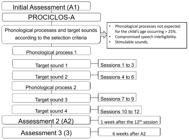
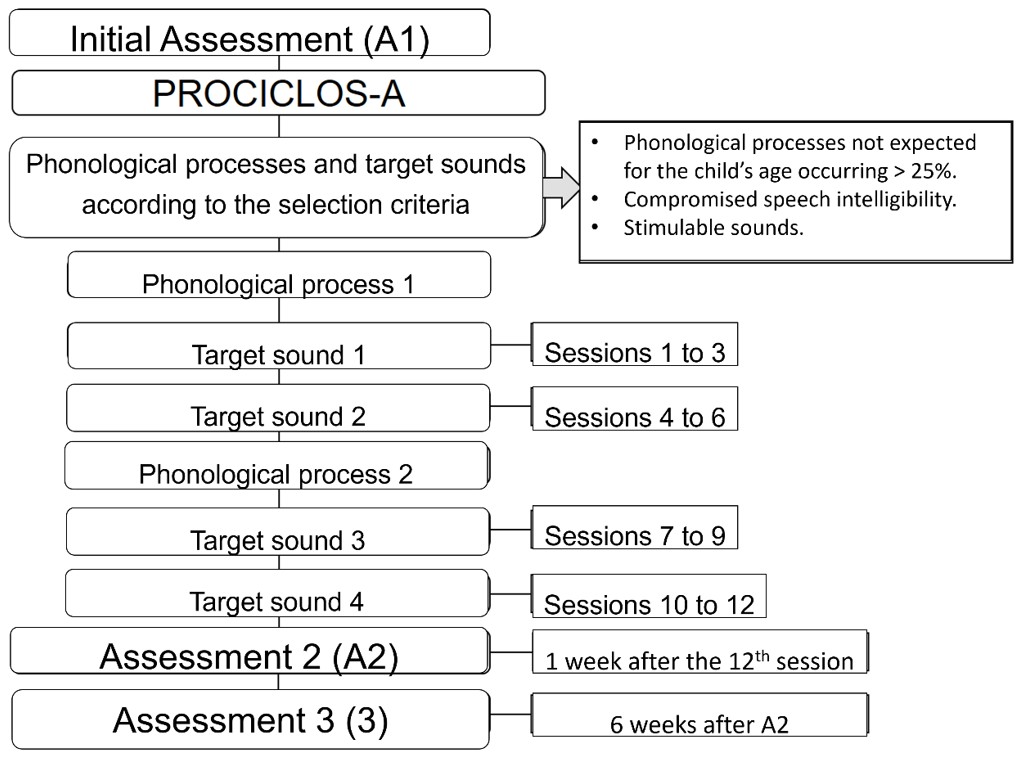
As PROCICLOS-A in the Cycles approach(23) considers that mastery of sounds and phonological rules is acquired gradually, SSD intervention should gradually expose the child to speech sounds. Thus, new target sounds are introduced in the treatment before the previous ones are mastered. Two phonological processes and two target sounds in each of them are selected to be worked on during the 12 sessions. The criteria for selecting phonological processes include those that most compromise speech intelligibility and that are in accordance with what is expected for the child's age. Stimulable target sounds are chosen for each phonological process. Sessions 1 to 6 address the two target sounds of the first phonological process, with sessions 1 to 3 referring to the first, and sessions 4 to 6 to the second process. Sessions 7 to 12 deal with the second phonological process, with the first target sound being addressed in sessions 7 to 9, and the second target sound in sessions 10 to 12, as shown in Figure 1.
Six types of activities are developed in each of the 12 SLP intervention sessions, covering the target sounds selected for each session. The selected activities were Auditory Bombardment (at the beginning and end of the session); Placement of the Target Sound; Recognition of the Target Sound and Auditory Discrimination with Minimal Pairs; Activities with Minimal Pairs for Understanding the Rule; Word Training with the Target Sound in Initial, Medial, and Final Position; and Phonological Awareness Activities (Chart 1). The activities were planned for the sessions to last an average of 50 minutes and for the child to produce the target sound at least 100 times during each session.
Different strategies were developed for each activity, and their analysis in the 12 sessions considered their performance by block of sessions: A, B, and C. Block A corresponds to sessions numbers 1, 4, 7, and 10, referring to the introduction of a new target sound. Block B corresponds to sessions numbers 2, 5, 8, and 11, and refers to the medial sessions of each target sound. Block C corresponds to sessions numbers 3, 6, 9, and 12, and refers to the last sessions worked with each chosen target sound.
Session Performance Scoring
A scoring system was developed to analyze performance in each of the 12 sessions and in the PROCICLOS-A activities. Hence, 2 points are assigned for correct answers, 1 point for partially correct answers, and 0 for errors. Answers were partially correct when the target sound was produced with distortion, or correct answers were obtained on the second attempt at production. Activities 2, 3, 4, 5, and 6 are scored (Chart 1). Since the stimuli for each phonological process and target sound vary, the total value expected in each session also varies.
Excel® spreadsheets were created for each target sound to record the children's performance, indicating the expected values for each activity, and recording the results. Each child's score per session in this study was assigned by the first two authors, calculating their agreement, which remained above 80% for all sessions of the eight children in the study.
Statistical analysis
Descriptive data analysis included calculation of measures of central tendency and dispersion. The Mann-Whitney U test was used for intergroup comparisons, and Friedman's univariate analysis of variance (ANOVA) for intragroup comparisons, with post hoc analysis using the Wilcoxon signed-rank test with Bonferroni correction for multiple comparisons. Correlation analyses were performed using Spearman's correlation test. Due to the low sample size, all hypotheses were tested using nonparametric procedures; in addition to the significance level set at 5% (p ≤ 0.05), the effect size was also measured by calculating the r coefficient(38) to complement the interpretation of the results. To interpret the effect size (ES), it is suggested to use the classification proposed by Cohen(39): small (between |0.200| and |0.499|); medium (between |0.500| and |0.799|); and large (above |0.800|).
RESULTS
The study results include verification of the efficacy of PROCICLOS-A, comparing the three evaluation moments for each of the groups C1 and C2, the analysis of the influence of the frequency dose per session, and the performance in the PROCICLOS-A sessions.
Chart 2 describes the children participating in the study, according to the groups, including the phonological processes and target sounds addressed in PROCICLOS-A.
Efficacy of PROCICLOS-A
PCC, PCC-R, PDI, and NPP were compared at the three assessment times to verify the efficacy of PROCICLOS-A in each group. The results presented in Tables 1 and 2 show a significant difference for all measures, except for NPP-Naming in C1 and C2 and PCC-Imitation in C2. It is noteworthy that performance improved in the assessments after the intervention.
Descriptive values and comparative analysis of ABFW Phonology measures between C1 and C2, according to the assessment time
The ES was also analyzed, finding results that varied between moderate and large for all measures at different evaluation moments in both C1 and C2. This indicates better performance of the children after applying PROCICLOS-A.
Analysis of the Influence of Dose and Session Frequency
The performance of C1 and C2 in the three evaluation moments was used to analyze the influence of the frequency dose of the sessions. Table 2 shows no significant difference between C1 and C2 in relation to NPP, PCC, PCC-R, or PDI in the ABFW Phonology tests (naming and imitation) in the three evaluation moments. However, the ES shows moderate to large values in the PCC-Naming measures for C1 in A2, and for NPP-Imitation for C2 in A3. The analyses indicate that C1 and C2 had similar performances in A1, and, after PROCICLOS-A, a large ES was observed for C1, and a moderate ES for C2.
Performance in PROCICLOS-A sessions
The scoring system was used for each of the 12 sessions and for the activities to analyze the children’s mean performance in the sessions. Table 3 presents the PCC, PCC-R, and PDI in the initial assessment per child, and the mean performance in the 12 sessions. The latter was obtained through each session’s score, then calculating the performance in percentage and the mean performance in the 12 PROCICLOS-A sessions per child.
Values of ABFW phonology measures in A1 and children‘s mean performance in the 12 PROCICLOS-A sessions.
Figure 2 shows the measures of central tendency and dispersion of the performance of the sessions grouped into blocks of sessions: A (sessions 1, 4, 7, and 10), B (sessions 2, 5, 8, and 11), C (sessions 3, 6, 9, and 12) and the total number of sessions, through descriptive data analysis. The children obtained a lower performance in the sessions of block A, which correspond to the presentation of a new target sound. Observing the total performance, C1 had a higher average performance (78%) than C2 (72%).
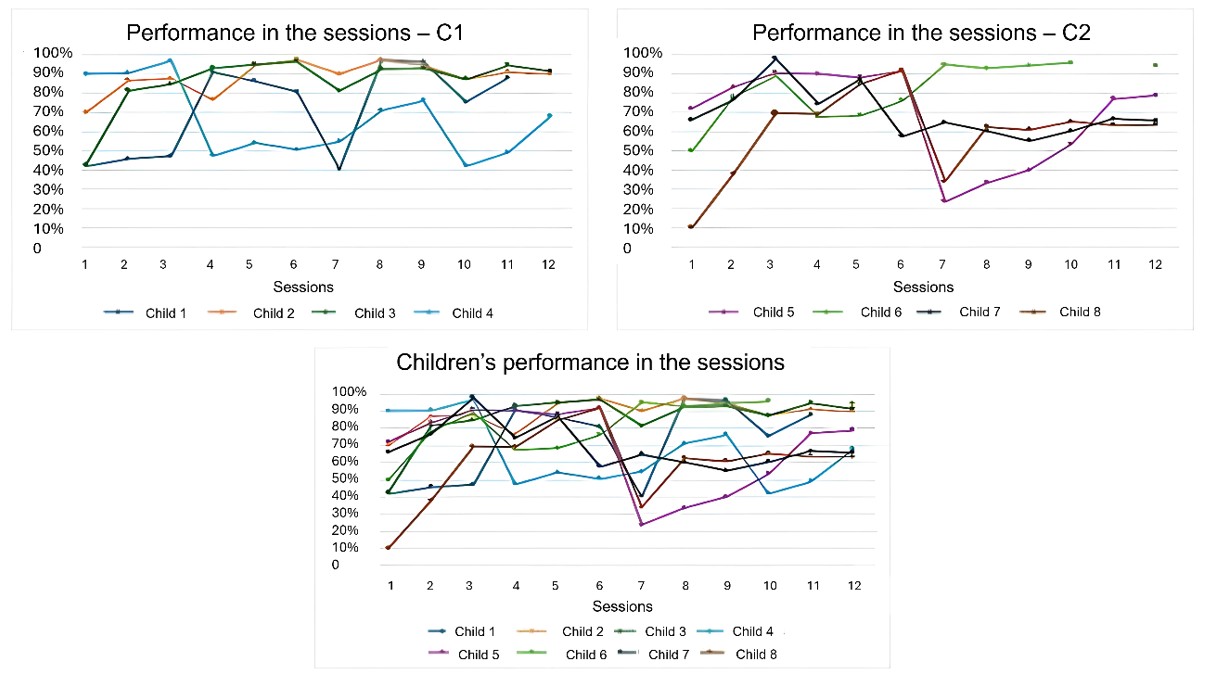
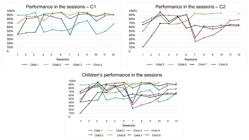
Each child’s mean performance for each of the 12 sessions is presented in Figure 3. Children performed worse in the sessions of block A and improved in performance in the sessions of blocks B and C.
Spearman's correlation was analyzed between the mean performance in each of the blocks of sessions A, B, and C and each of the measures of the ABFW phonology tests obtained in assessments A1, A2, and A3 (Table 4). No statistically significant correlations were observed for any of the analyses.
Correlation between performance in blocks of sessions with ABFW phonology measures according to the time of assessment.
DISCUSSION
Some studies have discussed the efficacy of SSD intervention approaches(9,11,40). Specifically, interventions in SSD of unknown cause and of the phonological type are the most studied(13,17), among which is the Cycles approach(23). This study investigated the efficacy of PROCICLOS-A in children with SSD and phonological impairment, comparing the children's performance at three different times: before the program was implemented, immediately after the program was implemented, and 6 weeks after the end of the program.
Efficacy of PROCICLOS-A
The study results indicate evidence of the efficacy of PROCICLOS-A, as better results were observed for each of the children, regardless of the frequency of the sessions, in the post-intervention evaluations (A2 and A3). The inferential analysis considering NPP, PCC, PCC-R, and PDI in the three evaluation moments (A1, A2, and A3) found a significant difference for all, except for NPP in the Naming test and PCC in the Imitation test, both for C1 and C2. Regarding NPP, it is worth noting that many times a phonological process is still present in the speech of a child with SSD after the first intervention cycle, but its occurrence decreases(24). Regarding PCC, one factor that can interfere is that sound distortions are considered errors. The ES observed in the various analyses reinforces the evidence of the efficacy of PROCICLOS-A, since the values were between moderate and large for all measures for C1 and C2. This indicates better performance by children after the application of PROCICLOS-A, regardless of the frequency to which they were subjected.
PROCICLOS-A is an intervention program with a cycle of 12 sessions, in which two phonological processes and four target sounds are worked on, preferably those that are stimulable, considering the proposal of the Hodson and Paden Cycle approach(23). Thus, the child is exposed to new sounds before the previous target sound is necessarily mastered(24), stimulating the child with SSD to the tendency to generalize and eliminate error patterns gradually.
Another important highlight of the efficacy of PROCICLOS-A is the six activities developed in all sessions, which work on different skills, including auditory stimulation and articulation of the target sound, and the use of minimal pairs and phonological awareness. Farquharson(41) mentions that children with SSD need approaches that encompass different skills to overcome the difficulties of each case, and this type of approach can have better results than those focused on a single skill.
Stimulating different skills in the intervention for SSD of unknown cause was also highlighted by Brosseau-Lapré and Roepke(5), in an approach that involves auditory perception and speech production, effective for children with SSD. The authors recommend that interventions ensure that children develop good perceptual knowledge of the target sound, provide production practice with sufficient intensity, and incorporate metaphonological activities during speech therapy to promote accuracy of speech production in the therapeutic environment, generalization to spontaneous speech, and establish the foundation for reading skills.
Analysis of the Influence of Dose and Session Frequency
One of the objectives of the present study was to verify the influence of the weekly frequency of sessions on the efficacy of PROCICLOS-A. Exploring this issue was motivated by a common doubt about what is best for children with SSD. However, the influence of the dose and frequency of sessions is still a topic discussed in the literature and deserves the attention of researchers to identify which components of intervention intensity most influence the efficacy of intervention approaches(9,20,22,40,42).
Some factors may interfere with the performance of a child with SSD during the intervention, regardless of the approach. Among these is the cumulative intensity of the intervention, proposed by Warren et al.(43), which can provide a general indicator of the total intensity of an intervention. Three components are important to calculate this index: the first is the dose of moments of stimulation of the intervention target; the second is the frequency of the dose of the intervention sessions in a period, such as per week; and the total duration of the intervention, such as the number of weeks. The cumulative intensity of intervention has been indicated as an important aspect for analyzing intervention approaches(13). In addition to the three components of the cumulative intensity of the intervention, Warren et al.(43) indicate that the form of the dose is an important element of the intervention. This refers to the typical task or activity applied to stimulate the intervention target, and the form of the dose facilitates the identification of the dose.
The variation of each of the components of cumulative intensity can be studied, which would allow identifying which of them would provide better intervention results. In PROCICLOS-A, the four components were structured with the form of the dose established through the activities and strategies for each session, the dose of stimuli per session around 100 for 50 minutes, the frequency of the sessions once or twice a week for C1 or C2, and the total duration of the cycle was 12 weeks for C1 and 6 weeks for C2. Thus, in this study, the controlled variables were the form of the dose, the dose and cumulative intensity of the intervention, and the independent variables were the dose frequency and the total duration of the intervention. The cumulative intensity of the intervention(43) is calculated considering the dose x frequency of the sessions x total duration of the intervention, which results in 1200 for both C1 and C2. Considering this concept of intervention intensity, this was the same for both groups, since for C1 the intervention lasted 12 weeks and for C2 it lasted 6 weeks. The study results suggest that the total duration of the intervention, in number of hours, was more important for the improvement of the children, making the frequency of once or twice a week a variable with less impact.
Performance in PROCICLOS-A sessions
In PROCICLOS-A, the form of the dose – i.e., the definition of the activities applied in the sessions – was previously outlined to reach the skills that interfere with speech(5,11,23,42). In addition to the activities, all stimuli were selected according to the target sounds involved in the error patterns or phonological processes most observed in children with SSD who speak Brazilian Portuguese.
As indicated in the method, a scoring system for the activities was created to verify the performance of the children in the study, with the total expected for each target sound calculated based on the stimuli present in the sessions. This enables the observation of the percentage of correct answers obtained in the sessions and specifically in each of the activities, indicating the skills in which there was greater or lesser difficulty for children with SSD.
The results of the analysis of performance during the intervention sessions showed that children with SSD made good use of the activities that involved auditory perception, phonological awareness, minimal pairs, and articulatory training, which are skills identified as deficient in children with SSD and phonological impairment(5,11,44).
The children’s performance per session was not statistically significantly correlated with the improvement observed in the measures analyzed at the evaluation times (Table 4). Thus, regardless of the performance in the sessions, the ABFW phonology measures reflected improvement in the children with SSD in this study. This finding suggests that during the PROCICLOS-A sessions, the form of the dose, the planned activities, and the dose of the stimuli allowed changes in the children's performance observed in the comparison of the ABFW phonology measures between the evaluation times (Table 1).
The data obtained through the PROCICLOS-A score proved useful for understanding the difficulties and potential of each child, since different skills are worked on in the session, and each activity has a specific objective. In general, the children performed worse in the sessions in which they were presented with a new target sound and performed better in the following sessions. This shows the children's learning during the three sessions in which a target sound is worked on. In the study by Rudolph and Wendt(24), one of the subjects experienced something similar when submitted to the Hodson and Paden Cycles approach(23). The child in question performed better in the production of target sounds during the treatment. However, when new sounds were introduced, they clearly declined in performance. The authors suggest that, although the introduction of a new sound worsened the performance, the child improved during the treatment, indicating learning and subsequent stabilization of a new target sound in the child's phonological inventory.
The limitations of this study include the few children per group, which is an important factor in confirming the efficacy of the PROCICLOS-A approach as a function of the dose and frequency of sessions. Furthermore, it is important to conduct further research that correlates the dose of stimuli and its relationship with the dose and frequency of sessions to better understand the impact of each of these variables on SSD intervention.
CONCLUSION
The study showed evidence of the efficacy of PROCICLOS-A, as all children improved, regardless of the initial values of the measures analyzed in ABFW phonology, and the ES was medium to large between the evaluation moments. Regarding the frequency dose of the sessions, the study indicates that the total number of hours of intervention seems to interfere more than the number of sessions per week when the cumulative intensity of the intervention is maintained.
The study also presented results that show improvements in each child's performance throughout the therapeutic process, regardless of the target sound. This indicates that the PROCICLOS-A activities contribute to the learning of each sound gradually in each session, regardless of the severity at the beginning of the intervention.
These first results show that the PROCICLOS-A intervention approach is promising for the treatment of children with idiopathic phonological SSD.
-
Trabalho realizado no Departamento de Fisioterapia, Fonoaudiologia e Terapia Ocupacional, Faculdade de Medicina, Universidade de São Paulo – USP - São Paulo (SP), Brasil.
-
Financial support:
São Paulo Research Foundation – FAPESP (Grant 2017/19175-6; 2019/00066-8).
-
Data Availability:
Research data is available in the body of the article.
References
-
1 ASHA: American Speech-Language-Hearing Association. Speech Sound Disorders: Articulation and Phonology. Practice Portal [Internet]. Rockville: ASHA; 2014 [cited 2024 May 8]. Available from: www.asha.org/Practice-Portal/Clinical-Topics/Articulation-and-Phonology/
» www.asha.org/Practice-Portal/Clinical-Topics/Articulation-and-Phonology/ -
2 Dodd B. Differential diagnosis of pediatric speech sound disorder. Curr Dev Disord Rep. 2014;1(3):189-96. http://doi.org/10.1007/s40474-014-0017-3
» http://doi.org/10.1007/s40474-014-0017-3 - 3 McLeod S, Baker E. Children’s speech: an evidence-based approach to assessment and intervention. Boston, USA: Pearson, 2017. 632 p.
-
4 Cabbage KL, Farquharson K, Hogan TP. Speech Perception and working memory in children with residual speech errors: a case study analysis. Semin Speech Lang. 2015;36(4):234-46. http://doi.org/10.1055/s-0035-1562907 PMid:26458199.
» http://doi.org/10.1055/s-0035-1562907 -
5 Brosseau-Lapré F, Roepke E. Implementing speech perception and phonological awareness intervention for children with speech sound disorders. Lang Speech Hear Serv Sch. 2022;53(3):646-58. http://doi.org/10.1044/2022_LSHSS-21-00117 PMid:35377730.
» http://doi.org/10.1044/2022_LSHSS-21-00117 -
6 Shriberg LD, Kwiatkowski J. Phonological disorders III: a procedure for assessing severity of involvement. J Speech Hear Disord. 1982;47(3):256-70. http://doi.org/10.1044/jshd.4703.256 PMid:7186561.
» http://doi.org/10.1044/jshd.4703.256 -
7 Shriberg LD, Austin D, Lewis BA, McSweeny JL, Wilson DL. The percentage of consonants correct (PCC) metric: extensions and reliability data. J Speech Lang Hear Res. 1997;40(4):708-22. http://doi.org/10.1044/jslhr.4004.708 PMid:9263938.
» http://doi.org/10.1044/jslhr.4004.708 -
8 Edwards ML. In support of phonological processes. Lang Speech Hear Serv Sch. 1992;23(3):233-40. http://doi.org/10.1044/0161-1461.2303.233
» http://doi.org/10.1044/0161-1461.2303.233 -
9 Allen MM. Intervention efficacy and intensity for children with speech sound disorder. J Speech Lang Hear Res. 2013;56(3):865-77. http://doi.org/10.1044/1092-4388(2012/11-0076). PMid:23275415.
» http://doi.org/10.1044/1092-4388(2012/11-0076). -
10 Sugden E, Baker E, Williams AL, Munro N, Trivette CM. Evaluation of parent and speech-language pathologist delivered multiple oppositions intervention for children with phonological impairment: a multiple-baseline design study. Am J Speech Lang Pathol. 2020;29(1):111-26. http://doi.org/10.1044/2019_AJSLP-18-0248 PMid:31765232.
» http://doi.org/10.1044/2019_AJSLP-18-0248 -
11 Storkel HL. Minimal, maximal, or multiple: which contrastive intervention approach to use with children with speech sound disorders? Lang Speech Hear Serv Sch. 2022;53(3):632-45. http://doi.org/10.1044/2021_LSHSS-21-00105 PMid:35179980.
» http://doi.org/10.1044/2021_LSHSS-21-00105 -
12 Baker E, McLeod S. Evidence-based practice for children with speech sound disorders: part 1 narrative review. Lang Speech Hear Serv Sch. 2011;42(2):102-39. http://doi.org/10.1044/0161-1461(2010/09-0075) PMid:20844274.
» http://doi.org/10.1044/0161-1461(2010/09-0075) -
13 Baker E, Williams AL, McLeod S, McCauley R. Elements of phonological interventions for children with speech sound disorders: the development of a taxonomy. Am J Speech Lang Pathol. 2018;27(3):906-35. http://doi.org/10.1044/2018_AJSLP-17-0127 PMid:29801043.
» http://doi.org/10.1044/2018_AJSLP-17-0127 -
14 Dodd B, Reilly S, Ttofari Eecen K, Morgan AT. Articulation or phonology? Evidence from longitudinal error data. Clin Linguist Phon. 2018;32(11):1027-41. http://doi.org/10.1080/02699206.2018.1488994 PMid:29969299.
» http://doi.org/10.1080/02699206.2018.1488994 -
15 Krueger B. Eligibility and speech sound disorders: assessment of social impact. Perspect ASHA Spec Interest Groups. 2019;4(1):85-90. http://doi.org/10.1044/2018_PERS-SIG1-2018-0016
» http://doi.org/10.1044/2018_PERS-SIG1-2018-0016 -
16 Kamhi AG. Treatment decisions for children with speech-sound disorders. Lang Speech Hear Serv Sch. 2006;37(4):271-9. http://doi.org/10.1044/0161-1461(2006/031) PMid:17041076.
» http://doi.org/10.1044/0161-1461(2006/031) -
17 Wren Y, Harding S, Goldbart J, Roulstone S. A systematic review and classification of interventions for speech-sound disorder in preschool children. Int J Lang Commun Disord. 2018;53(3):446-67. http://doi.org/10.1111/1460-6984.12371 PMid:29341346.
» http://doi.org/10.1111/1460-6984.12371 -
18 Hegarty N, Titterington J, Taggart L. A qualitative exploration of speech-language pathologists’ intervention and intensity provision for children with phonological impairment. Int J Speech Lang Pathol. 2021;23(2):213-24. http://doi.org/10.1080/17549507.2020.1769728 PMid:32635749.
» http://doi.org/10.1080/17549507.2020.1769728 -
19 Hegarty N, Titterington J, McLeod S, Taggart L. Intervention for children with phonological impairment: Knowledge, practices and intervention intensity in the UK. Int J Lang Commun Disord. 2018;53(5):995-1006. http://doi.org/10.1111/1460-6984.12416 PMid:30047190.
» http://doi.org/10.1111/1460-6984.12416 -
20 Kaipa R, Peterson AM. A systematic review of treatment intensity in speech disorders. Int J Speech Lang Pathol. 2016;18(6):507-20. http://doi.org/10.3109/17549507.2015.1126640 PMid:27063688.
» http://doi.org/10.3109/17549507.2015.1126640 -
21 Brosseau-Lapré F, Roepke E. Speech errors and phonological awareness in children ages 4 and 5 years with and without speech sound disorder. J Speech Lang Hear Res. 2019;62(9):3276-89. http://doi.org/10.1044/2019_JSLHR-S-17-0461 PMid:31433730.
» http://doi.org/10.1044/2019_JSLHR-S-17-0461 -
22 McFaul H, Mulgrew L, Smyth J, Titterington J. Applying evidence to practice by increasing intensity of intervention for children with severe speech sound disorder: a quality improvement project. BMJ Open Qual. 2022;11(2):e001761. http://doi.org/10.1136/bmjoq-2021-001761 PMid:35545259.
» http://doi.org/10.1136/bmjoq-2021-001761 - 23 Hodson BW, Paden EP. Targeting intelligible speech: a phonological approach to remediation. 2nd ed. Austin, Texas: Pró-ed.; 1991. 190 p.
-
24 Rudolph JM, Wendt O. The efficacy of the cycles approach: a multiple baseline design. J Commun Disord. 2014;47:1-16. http://doi.org/10.1016/j.jcomdis.2013.12.003 PMid:24438911.
» http://doi.org/10.1016/j.jcomdis.2013.12.003 -
25 Cabbage K, Farquharson K, DeVeney S. Speech sound disorder treatment approaches used by school-based clinicians: an application of the experience sampling method. Lang Speech Hear Serv Sch. 2022;53(3):860-73. http://doi.org/10.1044/2022_LSHSS-21-00167 PMid:35640104.
» http://doi.org/10.1044/2022_LSHSS-21-00167 - 26 Wertzner HF, Pagan-Neves LO. PTF para intervenção no transtorno fonológico-modelo de ciclos adaptado. In: Pró-Fono, organizador. Planos Terapêuticos Fonoaudiológicos (PTFs). Barueri: Pró-Fono; 2015. p. 3-10.
- 27 Andrade CRF, Befi-Lopes DM, Fernandes FDM, Wertzner HF. ABFW: Teste de linguagem infantil nas áreas de Fonologia, Vocabulário, Fluência e Pragmática. 2. ed. Barueri: Pró-Fono; 2004.
- 28 Herrero SF. Perfil das crianças: pré-escolares e escolares no teste de sensibilidade fonológica [dissertação]. São Paulo: Universidade de São Paulo; 2001.
- 29 Herrero SF. Desempenho de crianças com distúrbio fonológico no teste de sensibilidade fonológica e de leitura e escrita [tese]. São Paulo: Universidade de São Paulo; 2007.
- 30 Rosal CAR. Habilidades de segmentação fonêmica em crianças normais de primeira, segunda e terceira séries do ensino fundamental [dissertação]. São Paulo: Universidade de São Paulo; 2002.
-
31 Castro MM, Wertzner HF. Speech Inconsistency Index in Brazilian Portuguese-Speaking Children. Folia Phoniatr Logop. 2011;63(5):237-41. http://doi.org/10.1159/000323183 PMid:21273781.
» http://doi.org/10.1159/000323183 -
32 Felício CM, Ferreira CLP. Protocol of orofacial myofunctional evaluation with scores. Int J Pediatr Otorhinolaryngol. 2008;72(3):367-75. http://doi.org/10.1016/j.ijporl.2007.11.012 PMid:18187209.
» http://doi.org/10.1016/j.ijporl.2007.11.012 - 33 Castro MM, Pagan-Neves LO, Barrozo TF, Francisco DT, Wertzner HF. Teste de Estimulabilidade dos Sons da Fala - TESF. Ribeirão Preto: BookToy; 2022. Vol. 1, 85 p.
-
34 Barrozo TF, Pagan-Neves LO, Pinheiro da Silva J, Wertzner HF. Sensibilidade e especificidade da Porcentagem de Consoantes Corretas Revisada na identificação do transtorno fonológico. CoDAS. 2017;29(3):e20160038. http://doi.org/10.1590/2317-1782/20172016038 PMid:28538824.
» http://doi.org/10.1590/2317-1782/20172016038 - 35 Wertzner HF. Fonologia. In: Andrade CRF, Befi-Lopes DM, Fernandes FDM, Wertzner HF. ABFW: teste de linguagem infantil nas áreas de fonologia, vocabulário, fluência e pragmática. 2. ed. Carapicuíba: PróFono; 2004. p. 5-40.
- 36 Wechsler D. WISC III - Escala de inteligência Wechsler para crianças. 3. ed. São Paulo: Casa do Psicólogo; 2002.
- 37 Wertzer HF. Abordagem de ciclos e de ciclos adaptado. In: Wertzner HF, Mota HB, Keske-Soares M, organizadores. Transtornos dos sons da fala. Carapicuiba: Editora Pró-Fono; 2024. p. 253-61.
-
38 Rosenthal R. Meta-analytic procedures for social research. 2nd ed. Newbury Park: Sage; 1991. 168 p. http://doi.org/10.4135/9781412984997
» http://doi.org/10.4135/9781412984997 -
39 Cohen J. A power primer. Psychol Bull. 1992;112(1):155-9. http://doi.org/10.1037/0033-2909.112.1.155 PMid:19565683.
» http://doi.org/10.1037/0033-2909.112.1.155 -
40 Namasivayam AK, Pukonen M, Goshulak D, Granata F, Le DJ, Kroll R, et al. Investigating intervention dose frequency for children with speech sound disorders and motor speech involvement. Int J Lang Commun Disord. 2019;54(4):673-86. http://doi.org/10.1111/1460-6984.12472 PMid:30941860.
» http://doi.org/10.1111/1460-6984.12472 -
41 Farquharson K, Tambyraja S. Introduction: innovations in treatment for children with speech sound disorders. Lang Speech Hear Serv Sch. 2022;53(3):627-31. http://doi.org/10.1044/2022_LSHSS-22-00065 PMid:35763415.
» http://doi.org/10.1044/2022_LSHSS-22-00065 -
42 Williams AL. Intensity in phonological intervention: is there a prescribed amount? Int J Speech Lang Pathol. 2012;14(5):456-61. http://doi.org/10.3109/17549507.2012.688866 PMid:22686582.
» http://doi.org/10.3109/17549507.2012.688866 -
43 Warren SF, Fey ME, Yoder PJ. Differential treatment intensity research: a missing link to creating optimally effective communication interventions. Ment Retard Dev Disabil Res Rev. 2007;13(1):70-7. http://doi.org/10.1002/mrdd.20139 PMid:17326112.
» http://doi.org/10.1002/mrdd.20139 -
44 Roepke E. Assessing phonological processing in children with speech sound disorders. Perspect ASHA Spec Interest Groups. 2024;9(1):14-34. https://doi.org/10.1044/2023_PERSP-23-000
» https://doi.org/10.1044/2023_PERSP-23-000
Edited by
-
Editor:
Stela Maris Aguiar Lemos.
Research data is available in the body of the article.

 Caption: Block: A (sessions 1, 4, 7, and 10), B (sessions 2, 5, 8, and 11), and C (sessions 3, 6, 9, and 12)