 EWING TUMOR: DIFFERENTIAL DIAGNOSIS AND BASIS FOR ONCOLOGICAL AND SURGICAL TREATMENT
ABSTRACT
Ewing sarcoma (ES) is a highly aggressive primary bone tumor that poses significant diagnostic and therapeutic challenges when affecting the spinal column. This review synthesizes current literature on spinal ES, covering its epidemiology, clinical manifestations, diagnostic methods, differential diagnoses, and multimodal treatment strategies. The focus is for spinal surgeons, highlighting the balance between oncological control and neurological preservation. Early recognition and a rigorous multidisciplinary approach are key for optimizing oncological efficacy and neurological outcomes. Systemic chemotherapy is fundamental, while surgical resection is vital for local control, neurological decompression, and spinal stability. En bloc resection, when feasible, shows advantages in local control and disease-free survival. Radiation therapy is an important adjuvant or primary local treatment. This review clarifies managing spinal ES, emphasizing specialized, integrated care to improve patient prognosis and quality of life. Level of Evidence III; Review Article.
Descriptors:
Sarcoma, Ewing; Spinal Neoplasms; Spine, Combined Modality Therapy
Resumo:
O sarcoma de Ewing (SE) é um tumor ósseo primário altamente agressivo que apresenta desafios diagnósticos e terapêuticos significativos quando afeta a coluna vertebral. Esta revisão sintetiza a literatura atual sobre o SE vertebral, abrangendo sua epidemiologia, manifestações clínicas, métodos diagnósticos, diagnósticos diferenciais e estratégias de tratamento multimodal. O foco é para cirurgiões de coluna, destacando o equilíbrio entre o controle oncológico e a preservação neurológica. O reconhecimento precoce e uma abordagem multidisciplinar rigorosa são cruciais para otimizar a eficácia oncológica e os resultados neurológicos. A quimioterapia sistêmica é fundamental, enquanto a ressecção cirúrgica é vital para o controle local, descompressão neurológica e estabilidade espinhal. A ressecção em bloco, quando viável, mostra vantagens no controle local e na sobrevida livre de doença. A radioterapia é um tratamento local adjuvante ou primário importante. Esta revisão esclarece o manejo do SE espinhal, enfatizando o cuidado especializado e integrado para melhorar o prognóstico e a qualidade de vida do paciente. Nível de Evidência III; Artigo de Revisão.
Descritores:
Sarcoma de Ewing; Neoplasias da Coluna Vertebral; Coluna Vertebral, Terapia Combinada
Resumen:
El sarcoma de Ewing (SE) es un tumor óseo primario altamente agresivo que plantea desafíos diagnósticos y terapéuticos significativos cuando afecta la columna vertebral. Esta revisión sintetiza la literatura actual sobre el SE espinal, cubriendo su epidemiología, manifestaciones clínicas, métodos diagnósticos, diagnósticos diferenciales y estrategias de tratamiento multimodal. El enfoque es para cirujanos de columna, destacando el equilibrio entre el control oncológico y la preservación neurológica. El reconocimiento temprano y un enfoque multidisciplinario riguroso son clave para optimizar la eficacia oncológica y los resultados neurológicos. La quimioterapia sistémica es fundamental, mientras que la resección quirúrgica es vital para el control local, la descompresión neurológica y la estabilidad espinal. La resección en bloc, cuando es factible, muestra ventajas en el control local y la supervivencia libre de enfermedad. La radioterapia es un tratamiento local adyuvante o primario importante. Esta revisión aclara el manejo del SE espinal, enfatizando el cuidado especializado e integrado para mejorar el pronóstico y la calidad de vida del paciente. Nivel de Evidencia III; Artículo de Revisión.
Descriptores:
Sarcoma de Ewing; Neoplasias de la Columna Vertebral; Columna Vertebral; Terapia Combinada
INTRODUCTION
Ewing sarcoma (ES) is an aggressive primary bone tumor and the second most common malignant bone neoplasm, accounting for approximately 10–15% of primary bone sarcomas.1,2 It predominantly affects adolescents and young adults, with peak incidence between 10 and 20 years of age.3 While most cases (80–85%) arise in the appendicular skeleton, spinal involvement – seen in 5–15% of cases – poses unique clinical challenges.1,4,5 Spinal ES is particularly concerning due to its proximity to critical neural structures. Tumor growth can lead to myelopathy or radiculopathy from spinal cord or nerve root compression,6 and progressive osteolysis may compromise stability, resulting in pathological fractures.3 Early symptoms are often non-specific and may resemble benign conditions, contributing to diagnostic delays.3,6,7 Given the tumor’s aggressiveness and potential for rapid progression, timely diagnosis and multidisciplinary management are essential.8 This review summarizes the current knowledge on spinal Ewing sarcoma, emphasizing its clinical features and therapeutic complexities.
Epidemiology of Spinal Ewing Sarcoma
Ewing Sarcoma (ES) is the second most common primary malignant bone tumor in children and young adults, accounting for 10% to 15% of all primary bone sarcomas globally, with an incidence of about 0.3 cases per 100,000 person-years.2 While primarily affecting individuals aged 10 to 20, cases can occur in younger children and older adults, with a slight male predominance (1.2:1 to 1.5:1).3,5
Spinal involvement in ES, though not the most frequent, is clinically significant, occurring in 5% to 15% of all ES cases, predominantly in the mobile spine (lumbar, then thoracic, then cervical).4,5 Rarely, ES can manifest as extraosseous forms in soft tissues, including the extradural space of the spine.9 Even rarer are primary intradural extramedullary presentations, especially in the cervical region.10,11 The rarity of these atypical presentations highlights the need for high clinical suspicion and advanced diagnostic imaging. Understanding these patterns is crucial for early detection and guiding diagnostic investigations for patients with spinal symptoms.
Clinical Presentation of Spinal Ewing Sarcoma
The clinical presentation of spinal Ewing sarcoma varies widely based on tumor location, size, and neural involvement. Symptoms typically develop insidiously, though acute neurologic decline may occur.6 Localized back pain, reported in over 90% of cases, is the most frequent symptom. It is dull, persistent, worsens at night or with activity, and is unrelieved by rest or standard analgesics – distinct from mechanical back pain. In young patients, progressive pain should raise suspicion for aggressive spinal tumors.2 Neurological deficits due to spinal cord or nerve root compression are common, affecting up to 70–80% of patients5,6 and may present with motor weakness, dermatomal sensory loss, radiculopathy, or myelopathy. Sacral or cauda equina involvement may cause bowel or bladder dysfunction, a neurological emergency.3 Tumor-induced bone destruction can cause spinal instability, tenderness, palpable masses, or pathological fractures.3 Vertebral collapse in children may lead to “flat vertebra,” a non-specific finding also seen in other conditions like Langerhans cell histiocytosis.7 Systemic symptoms – fever, weight loss, fatigue – reflect advanced disease or inflammatory response and may mimic infections like spondylodiscitis or tuberculosis, delaying diagnosis.3,7 Given its rarity and non-specific early signs, especially in adolescents, persistent back pain with neurologic symptoms warrants high clinical suspicion to enable timely diagnosis and prevent irreversible deficits.
Diagnostic Methods and Radiological Characteristics
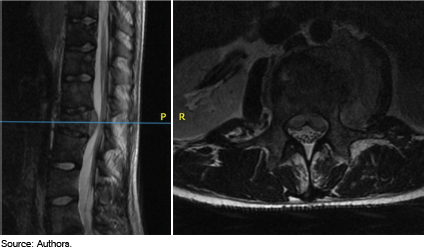
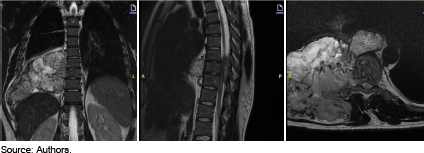
Diagnosis requires clinical suspicion, imaging, and pathological confirmation. Timely evaluation is critical due to early metastasis. Plain radiographs are often the first imaging modality for assessing spinal Ewing sarcoma (ES), though they have limited sensitivity in early stages. Typical findings include osteolytic lesions, permeative bone destruction, and soft tissue masses.1,7 In children, diffuse vertebral collapse may produce a “vertebra plana” appearance – suggestive but non-specific.7 Computed tomography (CT) offers superior detail of bone architecture, aiding in the evaluation of cortical erosion, bone destruction, and occasional intralesional calcifications.1 It is especially helpful for assessing spinal stability, detecting pathological fractures, and guiding percutaneous biopsies. Contrast-enhanced CT can also delineate tumor vascularity and relationships with adjacent structures. Magnetic resonance imaging (MRI) remains the gold standard due to its excellent soft tissue contrast and ability to evaluate tumor extension into the spinal canal. On T1-weighted sequences, ES appears hypointense relative to muscle, often with heterogeneous signal.10 T2-weighted images show hyperintense lesions due to high water content and cellularity, with possible necrosis.11 Gadolinium-enhanced T1 images demonstrate strong, heterogeneous enhancement, useful for defining tumor margins, epidural extension, and rare intradural involvement.10,11 (Figure 1)

MRI of T1-weighted (left), T2-weighted (center), and T1-weighted with gadolinium enhancement (right) sequences, evidencing Ewing's tumor in the T5 vertebra with altered bone signal and adjacent soft tissue lesion.
MRI is also essential for evaluating spinal cord compression, nerve root involvement, and infiltration of adjacent soft tissues such as the paraspinal muscles and psoas. Additionally, it is useful for detecting skip lesions. In this context, whole-spine MRI is frequently recommended to exclude multifocal disease.6 (Figure 2)

MRI image of a patient with Ewing's tumor in the pelvis, with a secondary lesion in the spine showing intraspinal extension and contact with the dural sac and neurological structures.
PET-CT with 18F-FDG is valuable for staging, detecting metastases, and monitoring chemotherapy response, as ES shows intense metabolic activity.2 It helps identify occult lesions in lungs, bone, and marrow – key for prognosis. Whole-body MRI or skeletal survey may be alternatives when PET-CT is unavailable. Biopsy is essential for diagnosis and should be performed by experienced specialists to ensure adequate sampling and minimize contamination. CT-guided core biopsy is preferred for most cases, though open biopsy may be required for complex lesions. Histology typically reveals small round blue cells, with CD99 positivity on IHC in over 90% of cases. Definitive confirmation relies on molecular testing for EWSR1 translocations, most commonly t(11;22)(q24;q12), present in ~85% of cases. These findings distinguish ES from other small round cell tumors.2
Differential Diagnoses Mimicking Ewing Sarcoma
The accurate differential diagnosis of a suspected spinal Ewing sarcoma is critical due to the aggressive nature of ES and the necessity for immediate, specialized oncological treatment. Many conditions, both neoplastic and infectious, can present with similar clinical symptoms (pain, neurological deficits, systemic signs) and radiological features (lytic bone lesions, soft tissue masses), leading to diagnostic challenges.
The definitive diagnosis relies on biopsy and histopathological examination, coupled with immunohistochemistry (e.g., CD99 positivity in ES) and molecular genetic testing (e.g., EWSR1 gene fusions in ES) to distinguish the “small round blue cell” morphology of ES from other mimickers.2 While imaging can provide crucial clues, the overlap in appearance necessitates a low threshold for biopsy in patients with persistent spinal symptoms and suspicious radiological findings.
Multimodal Treatment Strategies for Spinal Ewing Sarcoma
The management of Ewing sarcoma of the spine is highly complex and necessitates a multidisciplinary approach involving pediatric oncologists, orthopedic or neurosurgical spine specialists, radiation oncologists, radiologists, and pathologists. Given the aggressive nature of ES and its propensity for both local recurrence and distant metastasis, a combined modality treatment strategy is universally accepted as the standard of care.8,12 The primary goals are to achieve local tumor control, preserve or improve neurological function, restore spinal stability, and maximize overall survival.
Chemotherapy
Chemotherapy is the cornerstone of ES treatment, regardless of the tumor’s location or stage, due to its efficacy against both the primary tumor and occult metastatic disease. ES is considered a systemic disease at presentation, even if no overt metastases are detected.2,8 Neoadjuvant (preoperative) chemotherapy is administered before local treatment (surgery or radiation). This approach serves multiple purposes: it treats micrometastatic disease, which is often present even when not overtly detected; it reduces the size of the primary tumor, thereby improving its resectability; it allows for assessment of the tumor’s response to chemotherapy, which correlates with prognosis based on histological findings of the resected specimen; and it can potentially improve neurological function by reducing mass effect in cases of spinal cord compression. (Figures 4 and 5) Standard protocols typically involve alternating cycles of Vincristine, Doxorubicin (Adriamycin), and Cyclophosphamide (VDC) with Ifosfamide and Etoposide (IE). This regimen is widely used in pediatric and adolescent sarcoma protocols.2,8 Neoadjuvant chemotherapy generally lasts for several weeks (e.g., 9-12 weeks) before local control measures are initiated.


MRI image after chemotherapy treatment, showing excellent response, with significant reduction in tumor volume and disappearance of the intracanal mass.

On the left, an MRI image of L4/L5 spondylodiscitis with disc space narrowing and endplate changes. On the right, CT image of a patient with Pott's disease showing extensive bone destruction and thoracic kyphosis.
Adjuvant (postoperative) chemotherapy is continued after local treatment to eradicate any remaining microscopic disease and prevent recurrence. The total duration of chemotherapy (neoadjuvant plus adjuvant) is usually prolonged, often lasting for 9-12 months. Chemotherapy has dramatically improved survival rates for ES; before its advent, survival was dismal for localized disease and almost non-existent for metastatic disease. Modern multimodal approach, anchored by systemic chemotherapy, has improved 5-year overall survival rates for localized ES to 60-70%.2
Surgical Treatment
Intralesional resection (debulking/decompression) involves removing as much tumor as possible to decompress neural elements and obtain tissue, but leaves macroscopic tumor behind (Figure 6). This approach is associated with a higher risk of local recurrence if not followed by definitive local therapy, such as high-dose radiation.14

CT image of a patient with Ewing's Sarcoma who underwent decompression with laminectomy due to the onset of symptoms with spinal cord compression.
En bloc resection (wide or marginal margins) is the ideal surgical approach for local control of primary bone sarcomas, aiming to remove the tumor in one piece with a margin of healthy tissue15 (Figure 7). While achieving true wide margins is often challenging in the spine due to anatomical constraints and the proximity to vital structures,15,16 evidence suggests that en bloc resection, even with marginal margins, can significantly improve local control and disease-free survival compared to intralesional resection, particularly after neoadjuvant chemotherapy.13,17

Patient who underwent en bloc vertebrectomy for Ewing's sarcoma treatment. Above, coronal, sagittal, and axial radiographs of the vertebrectomy resection specimen. Below, postoperative AP and lateral radiographs of T5 vertebrectomy with cage reconstruction.
Except in cases requiring urgent neurological decompression, surgery for spinal ES is usually performed after several cycles of neoadjuvant chemotherapy. This approach allows for tumor shrinkage, evaluation of treatment response, and may facilitate safer, more effective resection.8 Extensive bone resection often necessitates spinal reconstruction with cages, bone grafts, and instrumentation to restore stability and preserve alignment – particularly important in children to prevent deformity progression.3 Although en bloc resection offers less clear benefit in ES compared to less chemosensitive tumors like chondrosarcoma or chordoma, achieving wider surgical margins has been associated with better local control and potentially improved survival.15,16 Charest-Morin et al. (2018) demonstrated that Enneking-appropriate resections with wide or marginal margins led to superior local control in spinal ES.17 Nonetheless, surgical morbidity must be balanced against oncologic benefit.
Radiation Therapy
Radiation therapy (RT) is a key component of local control in spinal Ewing sarcoma, used either as an adjunct to surgery or as primary treatment in unresectable cases or when surgical margins are positive.12 Indications include adjuvant RT post-surgery for close or positive margins or after intralesional resection;2 primary RT for tumors that are unresectable due to size, location, or proximity to critical structures;12 and palliative RT for symptom relief in advanced or metastatic disease.2 Modern techniques like 3D-Conformal Radiation Therapy (3D-CRT) and Intensity-Modulated Radiation Therapy (IMRT) allow for high-dose delivery while sparing adjacent healthy tissues, particularly the radiosensitive spinal cord. Proton beam therapy is increasingly preferred in pediatric patients due to its conformal dose distribution and reduced exit dose, minimizing long-term toxicity and secondary malignancy risk.2 Typical doses for localized ES range from 55–60 Gy, with higher doses considered for residual disease. RT is generally administered after neoadjuvant chemotherapy – either concurrently with later cycles or sequentially after surgery and additional chemotherapy.2 When combined with systemic therapy, RT offers excellent local control, especially in patients unsuitable for surgery. A systematic review by Paterakis et al. (2018) emphasized the importance of multimodal treatment, including radiotherapy, in improving outcomes for intradural extramedullary Ewing sarcomas.12
Prognosis and Long-Term Outcomes
The overall prognosis for spinal Ewing Sarcoma (ES) has significantly improved with multimodal therapy, achieving 5-year overall survival rates of 60-70% for localized ES.2 Specifically for surgically treated spinal ES, systematic reviews report 5-year survival rates of 57%.5 However, outcomes for spinal ES are often less favorable than for appendicular sites due to challenges in achieving wide surgical margins and the proximity of vital structures.15 Several factors influence spinal ES prognosis: the presence of metastatic disease at diagnosis is the most critical adverse factor, and poor histological response to neoadjuvant chemotherapy indicates chemoresistance.2,16 Additionally, inadequate local control of the primary tumor, whether by surgery with clear margins or definitive radiation therapy, significantly increases local recurrence risk and negatively impacts long-term survival.15 Studies by Arshi et al. (2017) and Zhang et al. (2018) underscore the importance of combined modalities in improving outcomes for spinal ES.16,18 Patients with spinal ES require rigorous long-term follow-up to monitor for potential complications and recurrence, including surveillance for local recurrence and distant metastases (lungs, bones, bone marrow). Regular imaging (spinal MRI, chest CT, PET-CT) and clinical evaluations are essential for early detection.2 Spinal deformity, like kyphosis or scoliosis, is a significant concern due to tumor destruction and radiation effects on developing vertebral growth plates. Other potential late effects include growth disturbances, chronic pain, neurological deficits, and organ toxicities from intensive chemotherapy and radiotherapy. A comprehensive, integrated, long-term follow-up program is vital to manage these effects and optimize patient quality of life.7
CONCLUSION
ES of the spine is a rare and highly complex oncological and surgical challenge. The therapeutic approach to spinal ES is invariably multimodal, involving systemic chemotherapy, surgery, and radiotherapy. Neoadjuvant chemotherapy is fundamental for treating micrometastatic disease and reducing tumor volume, optimizing conditions for local intervention.2 Surgery’s role is twofold: to provide neurological decompression and spinal stabilization, and to achieve local control through tumor resection. While en bloc resection is ideal for local control, spinal anatomical constraints often necessitate a more conservative approach, complemented by radiotherapy. Radiotherapy is a crucial pillar in local control, either as a primary treatment for unresectable tumors or as an adjuvant for positive margins or intralesional resections.12 Prognosis, though improved, remains challenging, with treatment response and the presence of metastases being key prognostic factors. The complexity of treatment and potential long-term adverse effects underscore the need for rigorous and continuous multidisciplinary follow-up.18 In summary, managing spinal ES demands a collaborative and highly specialized approach to optimize oncological outcomes, preserve neurological function, and improve patient quality of life. Future research should explore more effective targeted therapies and strategies to minimize treatment morbidities.
-
Study conducted by the Universidade de São Paulo (USP), School of Medicine, Hospital das Clínicas, São Paulo, SP, Brazil.
REFERENCES
-
1 Ariyaratne S, Jenko N, Iyengar KP, James S, Mehta J, Botchu R. Primary Osseous Malignancies of the Spine. Diagnostics (Basel). 2023;13(10):1801. doi: 10.3390/diagnostics13101801.
» https://doi.org/10.3390/diagnostics13101801 -
2 Mata Fernández C, Sebio A, Orcajo Rincón J, Martín Broto J, Martín Benlloch A, Marcilla Plaza D, et al. Clinical practice guidelines for the treatment of Ewing sarcoma (Spanish Sarcoma Research Group-GEIS). Clin Transl Oncol. 2025;27(3):824-836. doi: 10.1007/s12094-024-03602-5.
» https://doi.org/10.1007/s12094-024-03602-5 -
3 Jasiewicz B, Helenius I. Tumors and infections of the growing spine. J Child Orthop. 2023;17(6):556-572. doi: 10.1177/18632521231215857.
» https://doi.org/10.1177/18632521231215857 - 4 Knoeller SM, Uhl M, Gahr N, Adler CP, Herget GW. Differential diagnosis of primary malignant bone tumors in the spine and sacrum. The radiological and clinical spectrum: minireview. Neoplasma. 2008;55(1):16-22.
-
5 Berger GK, Nisson PL, James WS, Kaiser KN, Hurlbert RJ. Outcomes in different age groups with primary Ewing sarcoma of the spine: a systematic review of the literature. J Neurosurg Spine. 2019;30(5):664-673. doi: 10.3171/2018.10.SPINE18795.
» https://doi.org/10.3171/2018.10.SPINE18795 -
6 Chaudhry SR, Tsetse C, Chennan SE. Early recognition and diagnosis of Ewing sarcoma of the cervical spine. Radiol Case Rep. 2018;14(2):160-163. doi: 10.1016/j.radcr.2018.09.017.
» https://doi.org/10.1016/j.radcr.2018.09.017 -
7 Angelini A, Mosele N, Gnassi A, Baracco R, Rodà MG, Cerchiaro M, et al. Vertebra Plana: A Narrative Clinical and Imaging Overview among Possible Differential Diagnoses. Diagnostics (Basel). 2023;13(8):1438. doi: 10.3390/diagnostics13081438.
» https://doi.org/10.3390/diagnostics13081438 -
8 Sakhrekar R, Iorio C, Yoon S, Monjardino MP, Lewis S, Gray R. Philosophies And Surgical Techniques for Ewing’s Sarcoma of Spine with Review of Literature. J Orthop Case Rep. 2024;14(3):168-175. doi: 10.13107/jocr.2024.v14.i03.4330.
» https://doi.org/10.13107/jocr.2024.v14.i03.4330 -
9 Farooq M, Mustafa B, Sultan KA, Ashraf M, Ashraf N, Siddique A. Extraosseous extradural ewing sarcoma of the thoracic spine: Case report and literature review. Surg Neurol Int. 2021;12:542. doi: 10.25259/SNI_790_2021.
» https://doi.org/10.25259/SNI_790_2021 -
10 Shihadeh OM, Khan MM, Salih H, Thabet A, Belkhair S. Primary Ewing Sarcoma of the Cervical Spine: A Case Report and Literature Review. Cureus. 2023;15(7):e42687. doi: 10.7759/cureus.42687.
» https://doi.org/10.7759/cureus.42687 -
11 Tan CH, Tan D, Phung TB, Lai LT. Primary intradural extramedullary Ewing sarcoma of the cervical spine: A case report and review of the literature. J Clin Neurosci. 2019;66:280-284. doi: 10.1016/j.jocn.2019.05.005.
» https://doi.org/10.1016/j.jocn.2019.05.005 -
12 Paterakis KN, Brotis A, Dardiotis E, Giannis T, Tzerefos C, Fountas KN. Multimodality treatment of intradural extramedullary Ewing’s sarcomas. A systematic review. Clin Neurol Neurosurg. 2018;164:169-181. doi: 10.1016/j.clineuro.2017.11.014.
» https://doi.org/10.1016/j.clineuro.2017.11.014 -
13 Sewell MD, Tan KA, Quraishi NA, Preda C, Varga PP, Williams R. Systematic Review of En Bloc Resection in the Management of Ewing’s Sarcoma of the Mobile Spine with Respect to Local Control and Disease-Free Survival. Medicine. 2015;94(27):e1019. doi: 10.1097/MD.0000000000001019.
» https://doi.org/10.1097/MD.0000000000001019 -
14 Lu VM, Goyal A, Alvi MA, Kerezoudis P, Haddock MG, Bydon M. Primary intradural Ewing’s sarcoma of the spine: a systematic review of the literature. Clin Neurol Neurosurg. 2019;177:12-19. doi: 10.1016/j.clineuro.2018.12.011.
» https://doi.org/10.1016/j.clineuro.2018.12.011 -
15 Ozturk AK, Gokaslan ZL, Wolinsky JP. Surgical treatment of sarcomas of the spine. Curr Treat Options Oncol. 2014;15(3):482-92. doi: 10.1007/s11864-014-0290-8.
» https://doi.org/10.1007/s11864-014-0290-8 -
16 Arshi A, Sharim J, Park DY, Park HY, Yazdanshenas H, Bernthal NM, et al. Prognostic determinants and treatment outcomes analysis of osteosarcoma and Ewing sarcoma of the spine. Spine J. 2017;17(5):645-655. doi: 10.1016/j.spinee.2016.11.002.
» https://doi.org/10.1016/j.spinee.2016.11.002 -
17 Charest-Morin R, Dirks MS, Patel S, Boriani S, Luzzati A, Fehlings MG, et al. Ewing Sarcoma of the Spine: Prognostic Variables for Survival and Local Control in Surgically Treated Patients. Spine. 2018;43(9):622-629. doi: 10.1097/BRS.0000000000002386.
» https://doi.org/10.1097/BRS.0000000000002386 - 18 Zhang J, Huang Y, Lu J, He A, Zhou Y, Hu H, et al. Impact of first-line treatment on outcomes of Ewing sarcoma of the spine. Am J Cancer Res. 2018 Jul 1;8(7):1262-1272.