 SURGICAL VERSUS NONSURGICAL TREATMENT FOR CERVICAL RADICULOPATHY: A SYSTEMATIC REVIEW AND META-ANALYSIS OF RANDOMIZED CONTROLLED TRIALS
ABSTRACT
Cervical radiculopathy is a common condition affecting the cervical spine. Few trials with a small number of patients tried to establish the most efficient treatment in the literature that varies between surgical and nonsurgical approaches. We conducted a systematic review and meta-analysis to evaluate surgical versus nonsurgical treatment efficacy for cervical radiculopathy PubMed, Embase, and Cochrane Central Register of Controlled Trials were searched from inception to July 2025 to identify randomized controlled trials (RCTs) studies comparing surgical and nonsurgical treatment on adult patients with cervical radiculopathy. Outcomes of interest included Neck Disability Index (NDI), Arm pain and Neck pain (pain grade measured by Visual Analogue Scale and Numeric Rating Scale). We calculated the mean difference for each comparison and did a conventional random effects meta-analysis. We included 4 RCTs with 323 total patients with 161 randomized to surgery group and 162 to nonsurgery group. Mean difference NDI score of surgical vs. nonsurgical group at 12 months follow-up has no statistically significant difference (MD: -2.54 95% CI: -6.33 to 1.24; I2=52%; P=0.19). Short-term outcomes were also analyzed, resulting in a rapid efficacy of surgical treatment and a progressive efficacy of nonsurgical therapy on 3 months follow-up (MD: -7.61 95% CI: -12.48 to -2.74; I2=0%; P=0.002) and 6 months follow-up (MD: -5.87 95% CI: -9.59 to -2.15; I2=0%; P=0.002). Surgical group was associated with a considerable reduction of arm pain (MD: -1.17; 95% CI: -1.66 to -0.68; I2=0%; P<0.00001) and neck pain (MD: -0.84; 95% CI: -1.38 to -0.31; I2=23%; P=0.002) on the comparative analysis of both groups. These findings suggest a mid-term association of quality of life and pain reduction in patients with cervical radiculopathy who underwent surgery compared to nonsurgical treatments. The long-term comparison between surgical and nonsurgical therapy showed no statistically significant difference. Level of Evidence: II; Systematic Review/Meta-analysis.
Keywords:
Radiculopathy; Conservative treatment; Meta-analysis; Surgery; Systematic Review.
RESUMO
A radiculopatia cervical é uma condição comum que afeta a coluna cervical. Poucos ensaios com um número reduzido de pacientes tentaram estabelecer o tratamento mais eficiente na literatura, que varia entre abordagens cirúrgicas e não cirúrgicas. Realizamos uma revisão sistemática e metanálise para avaliar a eficácia do tratamento cirúrgico versus não cirúrgico para a radiculopatia cervical. Realizou-se uma busca nas bases PubMed, Embase e Cochrane Central Register of Controlled Trials desde a sua criação até julho de 2025 para identificar ensaios clínicos randomizados (RCTs) comparando o tratamento cirúrgico e não cirúrgico em pacientes adultos com radiculopatia cervical. Os desfechos de interesse incluíram o Índice de Incapacidade Cervical (NDI), dor no braço e dor no pescoço (grau de dor medido pela Escala Visual Analógica e Escala de Classificação Numérica). Calculamos a diferença média para cada comparação e realizamos uma metanálise convencional de efeitos aleatórios. Incluímos 4 RCTs com um total de 323 pacientes, sendo 161 aleatorizados para o grupo cirúrgico e 162 para o grupo não cirúrgico. A pontuação da diferença média (MD) do NDI entre o grupo cirúrgico vs. não cirúrgico no seguimento de 12 meses não apresentou diferença estatisticamente significativa (MD: -2,54 95% CI: -6,33 a 1,24; I2=52%; P=0,19). Os desfechos de curto prazo também foram analisados, resultando em uma eficácia rápida do tratamento cirúrgico e uma eficácia progressiva da terapia não cirúrgica no seguimento de 3 meses (MD: -7,61 95% CI: -12,48 a -2,74; I2=0%; P=0,002) e no seguimento de 6 meses (MD: -5,87 95% CI: -9,59 a -2,15; I2=0%; P=0,002). O grupo cirúrgico foi associado a uma redução considerável da dor no braço (MD: -1,17; 95% CI: -1,66 a -0,68; I2=0%; P<0,00001) e da dor no pescoço (MD: -0,84; 95% CI: -1,38 a -0,31; I2=23%; P=0,002) na análise comparativa de ambos os grupos. Estes achados sugerem uma associação de médio prazo entre a qualidade de vida e a redução da dor em pacientes com radiculopatia cervical submetidos à cirurgia em comparação com tratamentos não cirúrgicos. A comparação de longo prazo entre a terapia cirúrgica e não cirúrgica não mostrou diferença estatisticamente significativa. Nível de Evidência: II; Revisão Sistemática/Metanálise.
Descritores:
Radiculopatia; Tratamento Conservador; Metanálise; Cirurgia; Revisão Sistemática.
RESUMEN
La radiculopatía cervical es una afección común que afecta a la columna cervical. Pocos ensayos con un número reducido de pacientes han intentado establecer el tratamiento más eficiente en la literatura, la cual varía entre enfoques quirúrgicos y no quirúrgicos. Realizamos una revisión sistemática y un metaanálisis para evaluar la eficacia del tratamiento quirúrgico frente al no quirúrgico para la radiculopatía cervical. Se realizaron búsquedas en PubMed, Embase y el Cochrane Central Register of Controlled Trials desde su inicio hasta julio de 2025 para identificar ensayos controlados aleatorizados (RCTs) que compararan el tratamiento quirúrgico y no quirúrgico en pacientes adultos con radiculopatía cervical. Los resultados de interés incluyeron el Índice de Discapacidad Cervical (NDI), dolor en el brazo y dolor en el cuello (grado de dolor medido mediante la Escala Visual Analógica y la Escala de Calificación Numérica). Calculamos la diferencia de medias para cada comparación y realizamos un metaanálisis convencional de efectos aleatorios. Se incluyeron 4 RCT con un total de 323 pacientes, de los cuales 161 fueron aleatorizados al grupo de cirugía y 162 al grupo de tratamiento no quirúrgico. La puntuación de la diferencia de medias (MD) del NDI del grupo quirúrgico frente al no quirúrgico a los 12 meses de seguimiento no presentó una diferencia estadísticamente significativa (MD: -2,54 95% CI: -6,33 a 1,24; I2=52%; P=0,19). También se analizaron los resultados a corto plazo, lo que resultó en una eficacia rápida del tratamiento quirúrgico y una eficacia progresiva de la terapia no quirúrgica en el seguimiento a los 3 meses (MD: -7,61 95% CI: -12,48 a -2,74; I2=0%; P=0,002) y a los 6 meses (MD: -5,87 95% CI: -9,59 a -2,15; I2=0%; P=0,002). El grupo quirúrgico se asoció con una reducción considerable del dolor en el brazo (MD: -1,17; 95% CI: -1,66 a -0,68; I2=0%; P<0,00001) y del dolor en el cuello (MD: -0,84; 95% CI: -1,38 a -0,31; I2=23%; P=0,002) en el análisis comparativo de ambos grupos. Estos hallazgos sugieren una asociación a medio plazo entre la calidad de vida y la reducción del dolor en pacientes con radiculopatía cervical que se sometieron a cirugía en comparación con los tratamientos no quirúrgicos. La comparación a largo plazo entre la terapia quirúrgica y la no quirúrgica no mostró diferencias estadísticamente significativas. Nivel de Evidencia: II; Revisión Sistemática/Metaanálisis.
Descriptores:
Radiculopatía; Tratamiento Conservador; Metaanálisis; Cirugía; Revisión Sistemática.
INTRODUCTION
Cervical radiculopathy is a common neurological condition resulting from a nerve root compression or impairment, causing pain and motor symptoms that radiate mainly to the neck, arms and shoulders.1 In younger patients, traumatic etiology and disc herniation are the most common causes of the disease with a rapid manifestation of symptoms. Degenerative causes, such as spondylosis, are more common in the fifth and seventh decades of life, typically presenting with a progressive onset of symptoms.2 The annual incidence of cervical radiculopathy reaches 0.8 to 1.8 new cases per 1,000 person-years, while its prevalence ranges from 1.2 to 5.8 per 1,000 persons.3
Treatment of cervical radiculopathy includes conservative methods and surgical procedures. Nonsurgical therapy is often the first-line option to manage symptoms for most patients. It typically includes immobilization, anti-inflammatory drugs, physiotherapy and cervical traction.1,4 Several studies have reported good outcomes in radiculopathy patients treated with nonsurgical therapy.5-7 Surgical therapy encompasses diverse techniques, such as anterior cervical discectomy and fusion (ACDF) and posterior cervical transfacet fusion with facetal spacer (PCTF). Previous studies have reported strong evidence supporting the benefits of surgical intervention for managing cervical radiculopathy.8,9
The indications for surgical versus nonsurgical treatment for cervical radiculopathy patients remain inconclusive. Guidelines suggest that surgical treatment may have greater efficacy in patients with severe disease, but the level of evidence is still not robust.4 Previous Randomized Clinical Trials (RCT) comparing surgical and nonsurgical therapy for cervical radiculopathy have yielded inconsistent results.10-12 Considering the divergence of previous findings and the limited high-quality evidence in the literature, our study aims to clarify these conflicting findings. We conducted a systematic review and meta-analysis to compare the efficacy of surgical and nonsurgical treatments for cervical radiculopathy.
METHODS
This systematic review and meta-analysis were conducted in accordance with the guidelines set forth by the Cochrane Collaboration and the Preferred Reporting Items for Systematic Reviews and Meta-Analysis (PRISMA) statement guidelines.13 The study protocol was registered in the International Prospective Register of Systematic Reviews database- PROSPERO (registration number: CRD420251090194).
Eligibility Criteria
The inclusion criteria for studies in this meta-analysis were as follows: (1) randomized clinical trials; (2) patients with clinical and radiological diagnosis of cervical radiculopathy (3) treated with any surgical or conservative nonsurgical therapy; (4) reported the outcomes of interest; (5) follow-up time ≥12 months.
The exclusion criteria included any of the following characteristics: (1) Studies including pediatric patients (age <18 years); (2) Traumatic etiology; (3) Neoplastic etiology; (4) Overlapping patient populations; (5) Review articles and meta-analyses.
Outcomes of interest
Outcomes of interest included Neck Disability Index (NDI), Arm pain and Neck pain (Pain scale: Visual Analogue Scale (VAS), Numeric Rating Scale (NRS) or other comparable scale). Follow-up time of reported outcomes is unrestricted.
Search strategy and data extraction
A comprehensive search was conducted across multiple academic databases, including PubMed, Embase, and Cochrane Central Register of Controlled Trials by two authors (T.B.S and G.B.G) to identify studies meeting our inclusion criteria. Results were uploaded to Rayyan. Duplicates were identified through the function “Detect Duplicates” in this AI tool, and, after appraising each one of the possible duplicates and deleting the true ones, studies were then screened. The search encompassed the available literature up to July 2025 to identify randomized controlled trials. The following terms were used in the search: Radiculopathy, Cervical Cord, Cervical Vertebrae, Surgical procedures, Diskectomy, Spinal Fusion, Surgery, Conservative treatment, Physical therapy, Exercise therapy, nonsurgical, medical management.
In addition, references from included studies and previous systematic reviews and/or meta-analyses were manually searched to identify additional studies.
Two authors (T.B.S and G.B.G) independently extracted data on study characteristics, interventions, and outcomes of interest. Disagreements were resolved through a consensus after discussing reasons of discrepancy.
WebPlotDigitizer software was used to extract numerical data from plots that provides important outcome information.
Statistical analysis
For the efficacy outcomes of interest, a p-value less than 0.05 was considered statistically significant and Mean Difference (MD) with 95% confidence intervals were used to compare continuous treatment outcomes for categorical endpoints. Weighted mean differences were used to pool continuous outcomes. The Cochran Q test and I2 statistics were employed to assess heterogeneity; I2 greater than 50% was considered indicative of significant heterogeneity. A random-effects model was used for pooled outcomes. Funnel plot analysis was used to evaluate publication bias. Review Manager version 5.4 and R software version 4.3.1 was used for statistical analysis. A random effects meta-analysis was performed.
Quality assessment
The Risk of Bias 2 (RoB 2)14 tool was used to evaluate randomized interventional studies. This tool consists of five domains that cover all types of bias that can affect the randomization. After the risk of bias analysis, each study is classified by low risk, high risk or some concerns.
In cases where conflicts regarding the quality of a particular study existed, the determination of its quality was made through consensus between two authors (T.B.S and M.V.R).
RESULTS
Study selection and baseline characteristics
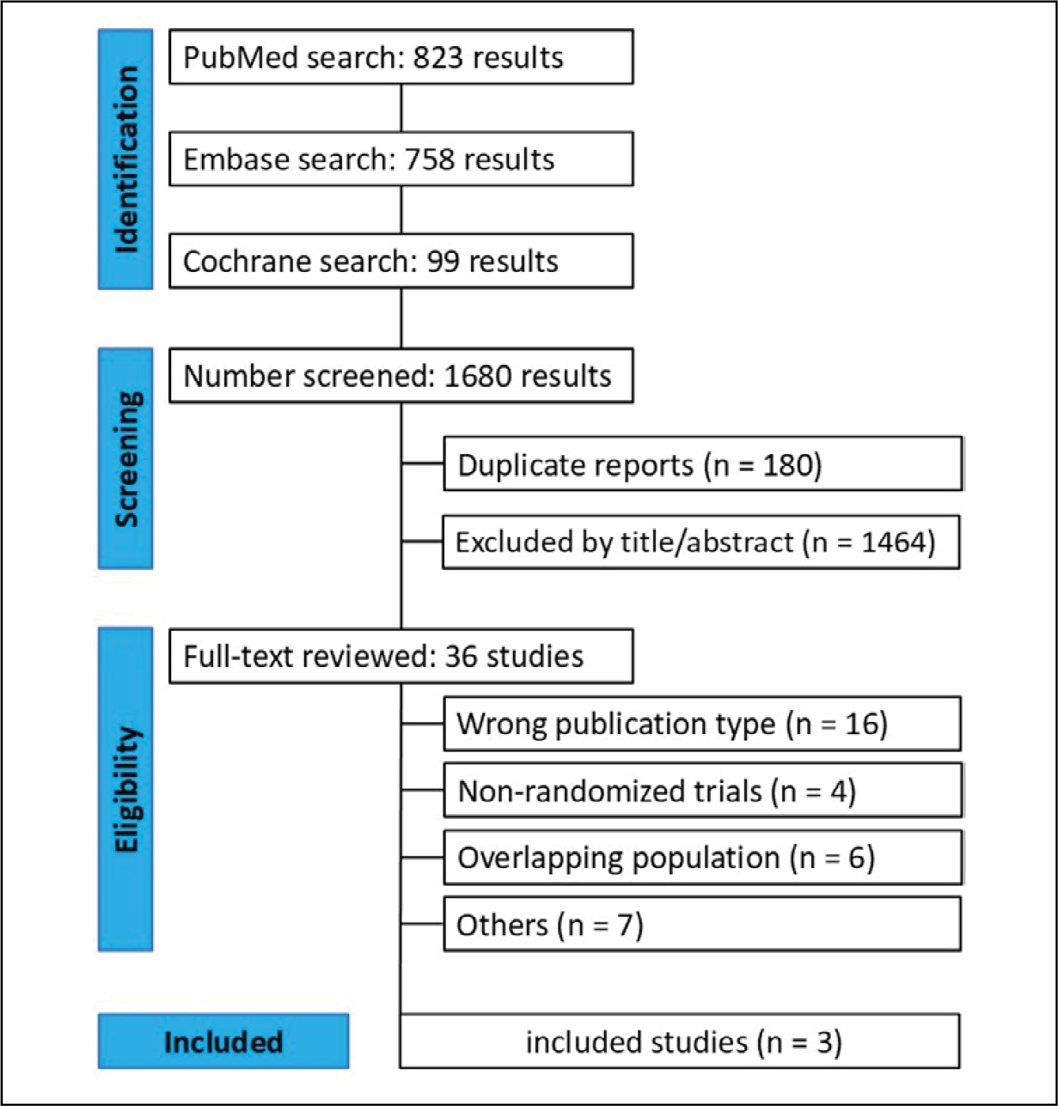
The initial search yielded 1680 results. After removing duplicate records and ineligible studies, 36 remained and were assessed via full-text review based on the inclusion criteria. Three studies10-12 met the inclusion criteria, one of which reported two distinct RCTs12 (Figure 1) In total, 323 patients were randomized with 161 assigned to surgical group and 162 to nonsurgical group with a mean follow-up time of 1.6 years.

PRISMA flow diagram illustrating the study identification, screening, eligibility assessment, and inclusion process. We included 3 studies from 1680 in the initial search.
The mean age of surgical and nonsurgical population was similar (48 vs. 46). Table 1 shows a moderate mean baseline NDI (42.5 vs. 40.9) in the surgical and nonsurgical group. For both groups, there was a high proportion of smokers (24% vs. 29.5%). Baseline arm and neck pain scale were also similar between groups. The mean duration (weeks) of arm pain showed no considerable difference between surgical and nonsurgical groups (42.7 vs. 41) but the mean duration of neck pain was 18.4 weeks longer in the nonsurgical group (52.3 vs. 70.7). The most commonly operated level was C6/C7 (n = 48 patients).
Anterior cervical discectomy and fusion10,12 and posterior cervical transfacet fusion with facetal spacer11 were the interventions used in the surgical group. Nonsurgical therapies consisted of various methods including physiotherapy, cervical traction, consultation with rehabilitation physicians, steroids and non-steroidal anti-inflammatory drugs (NSAID). Two trials 12 treated nonsurgical group patients with three sessions with a physiotherapist and three sessions with a physical medicine and rehabilitation specialist. One study10 prescribed physiotherapy to be performed daily by the patients at home and twice a week at the clinic, continued for a minimum of 3-months. These physiotherapy sessions were divided into: (step 1) neck-specific exercises and procedures for pain relief, (step 2) general exercises and (step 3) pain coping strategies. The only study11 without physiotherapy consisted of steroids and NSAIDs for the first 6 weeks followed by cervical traction therapy twice a week for 5 weeks.
Pooled analysis of all studies
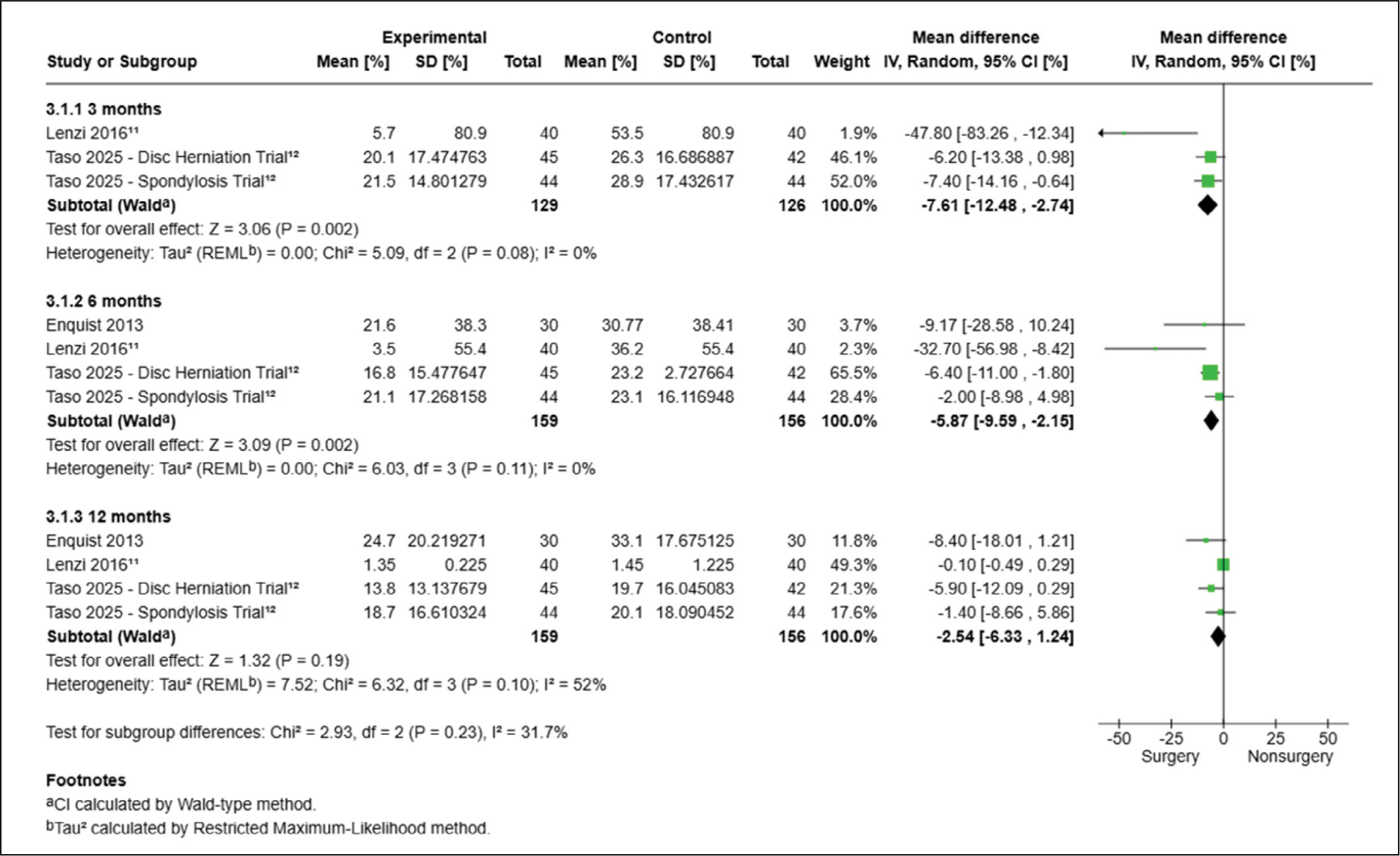
All studies reported NDI as a primary outcome (Figure 2). Based on the analysis performed using a random-effects model with the inverse variance method, the mean difference (MD) in NDI score between the surgical and nonsurgical groups at 12-months of follow-up showed no statistically significant difference (MD: -2.54 95% CI: -6.33 to 1.24; I2=52%; P=0.19). Short-term outcomes were also analyzed, showing a greater efficacy of surgical treatment at the 3-months follow-up (MD: -7.61 95% CI: -12.48 to -2.74; I2=0%; P=0.002) and 6-months follow-up (MD: -5.87 95% CI: -9.59 to -2.15; I2=0%; P=0.002). Sensitivity analysis was conducted by removing studies one by one. For the 12-months follow-up, the sensitivity analysis showed that after removing one study 11, heterogeneity was eliminated and a statistical difference emerged between groups (MD: -4.86 95% CI: -9.08 to -0.63; I2=0%; P=0.02).

Forest plot of 3 months, 6 months and 12 months follow-up of Neck Disability Index. Results show a significant difference in favor to surgical group with 3 months follow-up and reduction of difference with 6 months. The analysis of 12 months follow-up has no statistical difference. Mean difference (MD) analysis performed using a random effects model with the inverse variance method. Squares represent the point estimate (MD) for each study, with the size proportional to the study's weight in the meta-analysis. Horizontal lines indicate the 95% confidence interval (CI). The diamond represents the pooled data with a 95% CI. a = CI calculated by Wald-type method. b = Tau2 calculated by Restricted Maximum-Likelihood method.
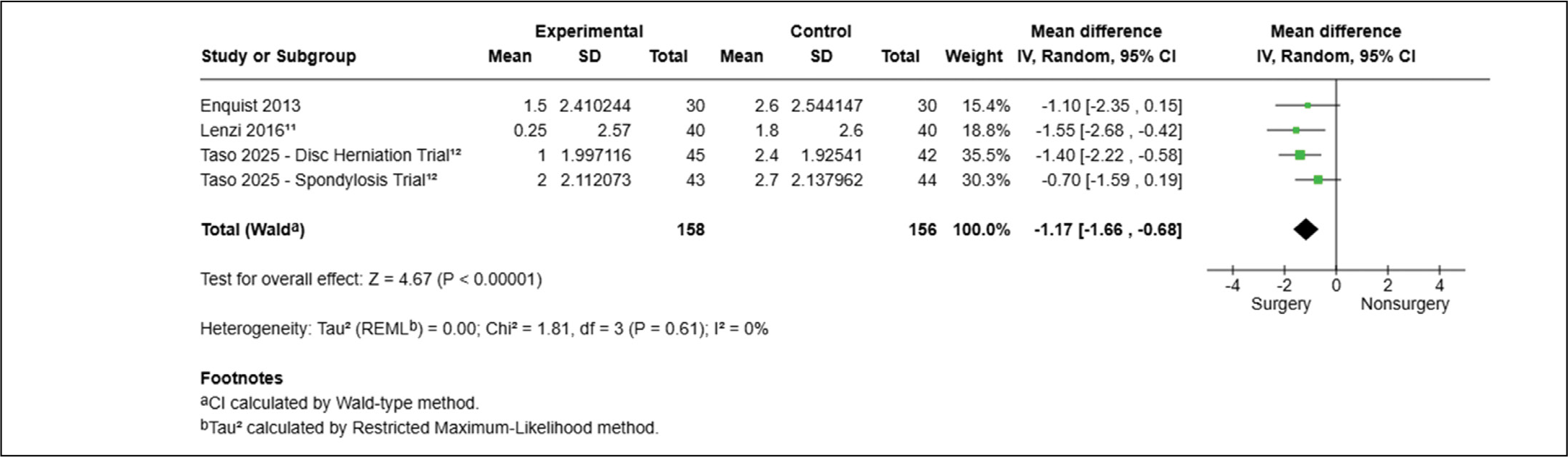
All studies reported pain using the VAS or NRS as a primary outcome. A meta-analysis was performed using a random effects model with the inverse variance method. The surgical group was associated with a statistically significant reduction in arm pain (MD: -1.17; 95% CI: -1.66 to -0.68; I2=0%; P<0.00001) (Figure 3) and neck pain (MD: -0.84; 95% CI: -1.38 to -0.31; I2=23%; P=0.002) (Figure 4) in the comparative analysis of both groups. Outcomes related to the use of analgesics could not be analyzed due to non-comparable data.
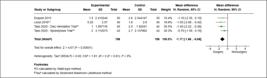
Forest plot of arm pain scale with 12 months follow-up. Results show a significant difference of 11.7% on arm pain in favor to surgical group. Mean difference (MD) analysis performed using a random effects model with the inverse variance method. Squares represent the point estimate (MD) for each study, with the size proportional to the study's weight in the meta-analysis. Horizontal lines indicate the 95% confidence interval (CI). The diamond represents the pooled data with a 95% CI. a = CI calculated by Wald-type method. b = Tau2 calculated by Restricted Maximum-Likelihood method.

Forest plot of neck pain scale with 12 months follow-up. Results show a difference of 8.4% on neck pain scale in favor to surgical group. Mean difference (MD) analysis performed using a random effects model with the inverse variance method. Squares represent the point estimate (MD) for each study, with the size proportional to the study's weight in the meta-analysis. Horizontal lines indicate the 95% confidence interval (CI). The diamond represents the pooled data with a 95% CI. a = CI calculated by Wald-type method. b = Tau2 calculated by Restricted Maximum-Likelihood method.
Quality assessment
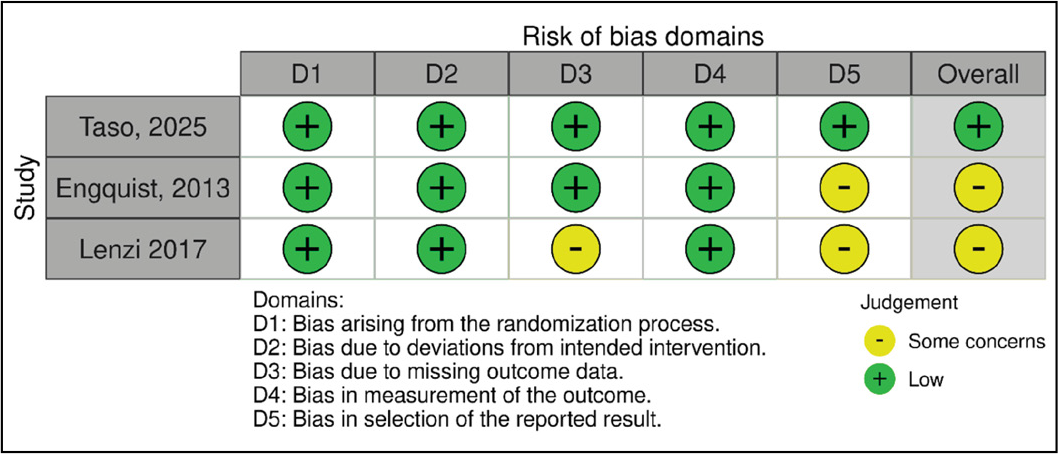
The Risk of Bias 2 (RoB 2) tool was used for quality assessment. Two studies were considered as some concern of bias risk10,11 and one with low bias risk12, as described in Figure 5. Both studies with some concern of bias were judged bias at selection of the reported results (D5). One study was judged with some concern of bias due to missing outcome data (D3). Due to the low number of studies, risk of bias using funnel plot was not possible to be performed.

On risk of bias judgement, Engquist, et al.10 and Lenzi, et al.11 was judged with some concern of bias in selection of the reported result (D5). Lenzi, et al.11 was judged with some concerns of bias due to missing outcome data (D3). The judgement was made with Risk of Bias 2 (RoB 2) tool to evaluate randomized interventional studies.
DISCUSSION
Even though cervical radiculopathy is a common condition affecting the spine, sparse evidence exists about the efficacy of different treatments, their indications and techniques. The present systematic review and meta-analysis which included 4 clinical trials, encompassing 323 randomized patients, provides important insights into therapeutic choice and efficacy metrics between surgical and nonsurgical therapy in cervical radiculopathy. The main findings include: (1) a greater NDI reduction in patients who underwent surgery compared with nonsurgical therapy at short-term follow-up; (2) significant arm and neck pain reduction in patients who underwent surgery; (3) no statistically significant difference on NDI after 12-months comparing surgical and nonsurgical group.
Patients in both surgical and nonsurgical groups reported improvements in outcomes. The NDI score had a mean difference of -7.61 in favor of the surgery group at the 3-months follow-up and the difference decreased at mid-term follow-up. The 12-months NDI outcome showed no statistically significant difference between both groups. Arm and neck pain scales showed a significant reduction of 1.17 and 0.84, respectively, in favor of surgery at the 12-months follow-up. These pain scale results are consistent with previous studies, which conducted meta-analyses with smaller patient samples and fewer studies on the same scope15,16, but they still require cautious interpretation, as small differences may not be clinically significant. Our meta-analysis is the largest study to date comparing surgical and nonsurgical therapy for cervical radiculopathy and to report a robust finding of no statistically significant difference in the 12-months NDI between groups.
The results favoring the surgical group can be attributed to the intervention itself, the natural course of the disease or a placebo effect. In general, patients with cervical radiculopathy have high expectations for surgical treatment.17 Considering that having one’s expectations fulfilled was the most important predictor of good outcomes in lumbar decompression surgery,18 the same effect may influence the perceived efficacy among cervical surgical patients. An intervention vs. placebo analysis should be performed on the next studies to compare the influence of the natural course of the disease and surgical therapy.
Furthermore, only one study reported outcomes with a follow-up greater than 12 months.10,19 The results reported for NDI after 2 years showed that, in the surgical group, patients who underwent surgery continued to improve between 2 to 8 years follow-up. The nonsurgical therapy group did not show similar improvement. However, this result could be attributed to the natural course of the disease and also there was no statistically significant comparison analysis between groups, making this data needed to be carefully interpreted.
Included studies treated patients with two different surgical interventions. Reported for the first time in 1958,20 ACDF was used in two studies10,12 and is a usual surgical option to treat cervical radiculopathy with efficacy well-established in the literature.8 One study used PCTF as surgical treatment.11 PCTF is a more recent surgical option for single and multiple cervical stenosis with comparable and consistent results relative to other established surgical techniques.21,22 Even though a considerable portion of the patients in our meta-analysis were treated with ACDF, the inclusion of different techniques is a source of heterogeneity. Treatment with PCTF may have a different efficacy profile compared to ACDF, possibly explaining why the high heterogeneity (I2 = 52%) was reduced when PCTF trial11 was removed during the sensitivity analysis.
Nonsurgical treatment consisted of different therapeutic protocols, including physiotherapy, rehabilitation medicine, cervical traction, NSAIDs and steroids. This lack of standardization in treatment methods likely impacted the nonsurgical group’s outcomes. All studies specified a minimum number of sessions of each nonsurgical therapy and minimum time of treatment, but did not necessarily continue for the entire follow-up period. Consequently, the long-term efficacy of nonsurgical therapy may be underestimated.
Cervical radiculopathy has different causes. Spondylosis is a degenerative change that generates a slowly progressive onset of symptoms, whereas disc herniation causes a faster acute or subacute start of symptoms.1 Spondylosis represents more than 60% of cervical radiculopathy cases, while disc herniation accounts for 21.9%.2 A different prognosis may be associated with each etiology considering different pathophysiological mechanisms and typical affected age range. Comparing our overall results with Spondylosis Trial12, our findings show a predictable similarity, which is expected given that spondylosis is the most common etiology of the disease.
Limitations
There are several limitations to our study. Firstly, the design of the included studies limits our ability to analyze the natural course of the disease relative to surgical and nonsurgical efficacy. The lack of standardized treatment in nonsurgical group and the inclusion of patients with different etiologies may have interfered with the results, potentially reducing the measured efficacy. Also, significant heterogeneity was detected (I2 = 52%) in the 12-month NDI analysis. This variability can be attributed to differences in the interventions used in both groups. The risk of bias assessment raised “some concerns”, specifically regarding the selection of reported results in two studies.10,11 Therefore, all results must be interpreted with caution.
CONCLUSION
In conclusion, this systematic review and meta-analysis compared surgical and nonsurgical treatment of cervical radiculopathy. The results of this study have significant implications for clinical practice regarding this controversial topic. We found no statistically significant difference in NDI scores between the surgical and nonsurgical groups after 12 months of follow-up. However, pain scale outcomes showed a difference in favor of the surgical group. Surgical therapy resulted in a faster improvement of symptoms, but this large advantage diminishes in the mid and long-term. Considering these results, the treatment choice must be individualized to each patient’s characteristics and preferences, balanced against the cost and risks of surgery.
-
Study conducted by the Universidade Franciscana, School of Medicine, Santa Maria, RS, Brazil.
-
Reviewed by:
Aluizio Arantes
DATA AVAILABILITY DECLARATION
The data underlying the research text are contained within the manuscript.
REFERENCES
-
1 Woods BI, Hilibrand AS. Cervical radiculopathy: Epidemiology, etiology, diagnosis, and treatment. Journal of Spinal Disorders and Techniques. 2015;28(5):E251-9. doi: 10.1097/BSD.0000000000000284.
» https://doi.org/10.1097/BSD.0000000000000284. -
2 Radhakrishnan K, Litchy WJ, Michael O’fallon W, Kurland LT. Epidemiology of cervical radiculopathy. Brain. 1994;117(Pt 2):325-35. doi: 10.1093/brain/117.2.325.
» https://doi.org/10.1093/brain/117.2.325. -
3 Mansfield M, Smith T, Spahr N, Thacker M. Cervical spine radiculopathy epidemiology: A systematic review. Musculoskeletal Care. 2020;18(4):555-67. doi: 10.1002/msc.1498.
» https://doi.org/10.1002/msc.1498. -
4 Fehlings MG, Tetreault LA, Riew KD, Middleton JW, Aarabi B, Arnold PM, et al. A Clinical Practice Guideline for the Management of Patients With Degenerative Cervical Myelopathy: Recommendations for Patients With Mild, Moderate, and Severe Disease and Nonmyelopathic Patients With Evidence of Cord Compression. Global Spine J. 2017;7(3 Suppl):70S-83S. doi: 10.1177/2192568217701914.
» https://doi.org/10.1177/2192568217701914. -
5 Alshami AM, Bamhair DA. Effect of manual therapy with exercise in patients with chronic cervical radiculopathy: a randomized clinical trial. Trials. 2021;22(1):716. doi: 10.1186/s13063-021-05690-y.
» https://doi.org/10.1186/s13063-021-05690-y. -
6 Rafiq S, Zafar H, Gillani SA, Waqas MS, Zia A, Liaqat S, et al. Comparison of neural mobilization and conservative treatment on pain, range of motion, and disability in cervical radiculopathy: A randomized controlled trial. PLoS One. 2022;17(12):e0278177. doi: 10.1371/journal.pone.0278177.
» https://doi.org/10.1371/journal.pone.0278177. -
7 Wainner RS, Gill H. Diagnosis and nonoperative management of cervical radiculopathy. J Orthop Sports Phys Ther. 2000;30(12):728-44. doi: 10.2519/jospt.2000.30.12.728.
» https://doi.org/10.2519/jospt.2000.30.12.728. -
8 Vleggeert-Lankamp CLA, Janssen TMH, van Zwet E, Goedmakers CMW, Bosscher L, Peul W, et al. The NECK trial: Effectiveness of anterior cervical discectomy with or without interbody fusion and arthroplasty in the treatment of cervical disc herniation; a double-blinded randomized controlled trial. Spine J. 2019;19(6):965-75. doi: 10.1016/j.spinee.2018.12.013.
» https://doi.org/10.1016/j.spinee.2018.12.013. -
9 Gao QY, Wei FL, Zhu KL, Zhou CP, Zhang H, Cui WX, et al. Clinical Efficacy and Safety of Surgical Treatments in Patients With Pure Cervical Radiculopathy. Frontiers in Public Health. Front Public Health. 2022;10:892042. doi: 10.3389/fpubh.2022.892042.
» https://doi.org/10.3389/fpubh.2022.892042. -
10 Engquist M, Löfgren H, Öberg B, Holtz A, Peolsson A, Söderlund A, et al. Surgery versus nonsurgical treatment of cervical radiculopathy: A prospective, randomized study comparing surgery plus physiotherapy with physiotherapy alone with a 2-year follow-up. Spine (Phila Pa 1976). 2013;38(20):1715-22. doi: 10.1097/BRS.0b013e31829ff095.
» https://doi.org/10.1097/BRS.0b013e31829ff095. -
11 Lenzi J, Nardone A, Passacantilli E, Caporlingua A, Lapadula G, Caporlingua F. Posterior Cervical Transfacet Fusion with Facetal Spacer for the Treatment of Single-Level Cervical Radiculopathy: A Randomized, Controlled Prospective Study. World Neurosurg. 2017;100:7-14. doi: 10.1016/j.wneu.2016.12.125.
» https://doi.org/10.1016/j.wneu.2016.12.125. -
12 Taso M, Sommernes JH, Sundseth J, Pripp AH, Bjorland S, Engebretsen KB, et al. Surgical versus Nonsurgical Treatment for Cervical Radiculopathy. NEJM Evid. 2025;4(4):EVIDoa2400404. doi: 10.1056/EVIDoa2400404.
» https://doi.org/10.1056/EVIDoa2400404. -
13 Page MJ, McKenzie JE, Bossuyt PM, Boutron I, Hoffmann TC, Mulrow CD, et al. The PRISMA 2020 statement: An updated guideline for reporting systematic reviews. BMJ. 2021;372:n71. doi: 10.1136/bmj.n71.
» https://doi.org/10.1136/bmj.n71. -
14 Sterne JAC, Savović J, Page MJ, Elbers RG, Blencowe NS, Boutron I, et al. RoB 2: A revised tool for assessing risk of bias in randomised trials. The BMJ. 2019;366:l4898. doi: 10.1136/bmj.l4898.
» https://doi.org/10.1136/bmj.l4898. -
15 Gao QY, Wei FL, Zhu KL, Zhou CP, Zhang H, Cui WX, et al. Clinical Efficacy and Safety of Surgical Treatments in Patients With Pure Cervical Radiculopathy. Frontiers in Public Health. Frontiers Media S.A.; 2022. doi: 10.3389/fpubh.2022.892042.
» https://doi.org/10.3389/fpubh.2022.892042. -
16 Luyao H, Xiaoxiao Y, Tianxiao F, Yuandong L, Ping Wang. Management of Cervical Spondylotic Radiculopathy: A Systematic review. Global Spine J. 2022;12(8):1912-24. doi: 10.1177/21925682221075290.
» https://doi.org/10.1177/21925682221075290. -
17 Taso M, Sommernes JH, Bjorland S, Zwart JA, Engebretsen KB, Sundseth J, et al. What is success of treatment? Expected outcome scores in cervical radiculopathy patients were much higher than the previously reported cut-off values for success. Eur Spine J. 2022;31(10):2761-8. doi: 10.1007/s00586-022-07234-7.
» https://doi.org/10.1007/s00586-022-07234-7. -
18 Mannion AF, Junge A, Elfering A, Dvorak J, Porchet F, Grob D. Great Expectations: Really the Novel Predictor of Outcome After Spinal Surgery?. Spine (Phila Pa 1976). 2009;34(15):1590-9. doi: 10.1097/BRS.0b013e31819fcd52.
» https://doi.org/10.1097/BRS.0b013e31819fcd52. -
19 Engquist M, Löfgren H, Öberg B, Holtz A, Peolsson A, Söderlund A, et al. A 5- to 8-year randomized study on the treatment of cervical radiculopathy: Anterior cervical decompression and fusion plus physiotherapy versus physiotherapy alone. J Neurosurg Spine. 2017;26(1):19-27. doi: 10.3171/2016.6.SPINE151427.
» https://doi.org/10.3171/2016.6.SPINE151427. -
20 Cloward RB. The anterior approach for removal of ruptured cervical disks. J Neurosurg. 1958;15(6):602-17. doi: 10.3171/jns.1958.15.6.0602.
» https://doi.org/10.3171/jns.1958.15.6.0602. -
21 Chang JC, Park HK, Choi SK. Posterior cervical inclinatory foraminotomy for spondylotic radiculopathy preliminary. J Korean Neurosurg Soc. 2011;49(5):308-13. doi: 10.3340/jkns.2011.49.5.308.
» https://doi.org/10.3340/jkns.2011.49.5.308. -
22 Goel A, Shah A. Facetal distraction as treatment for singleand multilevel cervical spondylotic radiculopathy and myelopathy: A preliminary report. J Neurosurg Spine. 2011;14(6):689-96. doi: 10.3171/2011.2.SPINE10601.
» https://doi.org/10.3171/2011.2.SPINE10601.
Edited by
-
Reviewed by:
Aluizio Arantes