 Market of Criollo horses in online auctions
Abstract
ABSTRACT: This paper identified and studied the characteristics, preferences and destination of sales of Criollo horses in online auctions. The research was conducted by monitoring and collecting information from websites where the auctions occurred. Data was collected from 54 auctions, bringing information on 2,234 animals of different categories, including stallions, broodmares, foals, fillies, and sport horses. Data were obtained regarding sex, age, amounts paid, length of stay on the track, coat, and destination of the purchased animals. The data were analyzed using the nonparametric analysis. The category with the highest sales was brood mares, followed by sport equines. These two categories presented higher medians for the variables price and length of stay on the track. Only the classification of young animals (up to 5 years) showed significant differences when comparing the animals by sex and age. Young broodmares presented higher sales prices and longer track time than males. Regarding the coat variable, horses with red dun, sorrel, and black with blaze brand presented the highest prices. Concerning time, horses with buckskin coats presented the longest time on track. The largest destination of equines was the Metropolitan region, followed by the Southwest region, with the latter presenting the highest median prices paid at auctions. In terms of time, the northeast and Southwest regions presented the highest values but did not differ. The state that acquired the most equines after Rio Grande do Sul was Santa Catarina, but the state with the highest median of prices paid was Paraná.
Key words:
agribusiness; Criollo breed; gender; horse coats
RESUMO:
Este trabalho tem como objetivo identificar e estudar as características, preferências e destino das vendas de cavalos Crioulos em leilões online. A pesquisa foi realizada por meio do monitoramento e coleta de informações nos sites onde os leilões ocorreram. Para realizar a pesquisa foram coletados dados de 54 leilões, trazendo informações sobre 2.234 animais de diferentes categorias, incluindo reprodutores, reprodutoras, potros, potrancas e cavalos de esporte. Além disso, foram obtidos dados referentes a sexo, idade, valores pagos, tempo de permanência em pista, pelagem e destino dos animais adquiridos. Os dados foram analisados por meio da análise não-paramétrica e as categorias com maior venda foram as de éguas reprodutoras, seguida pelos equinos de esporte. Essas duas categorias apresentaram maiores medias para as variáveis preço e tempo de permanência em pista. Apenas a classificação dos animais jovens (até 5 anos) apresentou diferenças significativas na comparação dos animais por sexo e idade. As fêmeas jovens apresentaram maiores preços de venda e maior tempo de pista que os machos. Em relação à variável pelagem, os cavalos com pelagem colorada, alazão e picaça apresentaram os maiores preços. Já no concerne ao tempo, os cavalos com pelagem baia apresentaram o maior tempo em pista. O maior destino dos equinos foi a região Metropolitana, seguida pela região Sudoeste, sendo que esta última apresentou as maiores medianas de preços pagos em leilões. Em termos de tempo, as regiões Nordeste e Sudoeste apresentaram as maiores cronometragens. O estado que mais adquiriu equinos depois do Rio Grande do Sul foi Santa Catarina, mas o estado com a maiores preços pagos foi o Paraná. Conclui-se que o mercado de equinos Crioulos possui características específicas conforme o mercado consumidor, necessitando a continuidade de estudos nessa linha de pesquisa.
Palavras-chave:
agronegócio; gênero; pelagem de cavalos; raça Crioula
INTRODUCTION
Although, Brazil has the third largest herd of equines worldwide, little is known about this productive chain, particularly its contribution to income generation in trade and the strong relationship with sectors linked to leisure, culture, sports and ecotourism (MATTOS et al., 2010). LIMA & CINTRA (2016) proved the importance of the Brazilian equestrian industry, which moves, on average, R$ 16.15 billion per year, a growth of 113% in ten years, in addition to directly employing 607 thousand people. Thus, over the years, the Criollo horse was created for agricultural work and competitions, presenting many elements linked to breeding, genetics, and achievements that add value to the animal.
Equideo culture is an economic exploitation that makes good use of this technology to reduce logistics costs in the sale and offer convenience to buyers (TELLECHEA, 2015). Convenience can arouse interest from buyers who would not participate in physical auctions.
The equine production chain has several specificities that distinguish it from the other chains of most other agricultural products. Several agricultural products are marketed as “commodities”. However, the equine market does not fall into this type of category since the products of this marketing are subject to differentiation, allowing sellers and consumers to determine the prices, unlike what occurs with “commodities”, for which the market generally determines the prices (VAZ & VAZ, 2019). The auction is a game with incomplete information (ENGELBRECHT-WIGGANS, 1980), in which four rules are most relevant: the players, the object and its characteristics, the payments, and the strategies. In the case of the object, the same author believes there are objectively described characteristics and physical characteristics.
Because no animal is identical to the other, each having its own peculiar characteristics, sellers have significant control of the market, which can be considered monopolistic competition, given the high number of sellers offering a specific product. However, the product of each seller differs from the others. At the same time, these products are considered close substitutes, and each seller has a specific power concerning the price used in the market. However, concomitantly, the presence of many sellers and buyers creates a perfect competition scenario. According to MACHADO FILHO & ZYLBERSZTAJN (1999) there are four ways to conduct the animal trade: the immediate direct sale, the direct sale by contracts, the direct sale by mixed contracts, and the auctions. Auctions emerged in an attempt to facilitate the marketing of animals, simultaneously reduce costs, increase the possibility of choice, and make the transaction of animals faster when compared to direct sales.
Research showed great relevance to highlight that the Criollo horse can be used in different categories, the primary ones being for competitions, leisure, work, and reproduction (SANTOS et al., 2022). Some breeders have consolidated their brand for use in reproduction, supplying animals of high genetic quality with greater reliability in purchase due to the standard of past sales. Animals with great potential and genetic quality present a high-value aggregation during their marketing (LIMA & CINTRA, 2016). Therefore, this paper aimed to identify and study the characteristics, preferences and destination of sales of Criollo horses in online auctions.
MATERIALS AND METHODS
Online auctions of Criollo horses were followed over 16 months, from February 2017 to June 2018, obtaining a total of 54 auctions, chosen unintentionally, all of which had video transmission, obtaining data of 2,234 animals of different categories of the Criollo breed. Data were collected from the catalogs and grouped into five major categories: stallions, broodmares, foals, fillies, and sport horses. The sport horses category included both stallions and gelding horses. Offers of castrated horses for farm work, due to their small number, were not analyzed in this research.
No age ranges were defined for the categories; the data were collected as described in the sales summary. Since some animals were presented in two categories, standards such as age and primary purchase objective of the categories, were established to categorize within only one of the categories established in the research, always the one cited first in the summary.
Data were obtained regarding category, age, sex, amounts paid, time on track, coat, and destinations of the horses purchased. The time on track was measured from the first bid was received until the hammer fell, marking the sale. Therefore, time on track for lot information, animal exchanges, marketing and other communications were not considered as time on track. If within Rio Grande do Sul, the destinations were divided according to the state’s mesoregion established by the Instituto Brasileiro de Geografia e Estatística (IBGE). To adjust prices over the sixteen months of data collection, the data were converted to dollars, avoiding inflationary effects between the first and last auctions. On the date of the statistical analysis, the values were converted back to reais, as presented and discussed in this paper.
The method used in this project was based on the work of CHRISTOFARI et al. (2009) and other data collected. The data were tabulated in the Excel program and later analyzed through correlation analysis and descriptive statistics with median through nonparametric analysis (GIBBONS, 1971) by the Wilcoxon test using statistical software, after Kruskal-Wallis tests (NOETHER, 1976).
RESULTS AND DISCUSSION
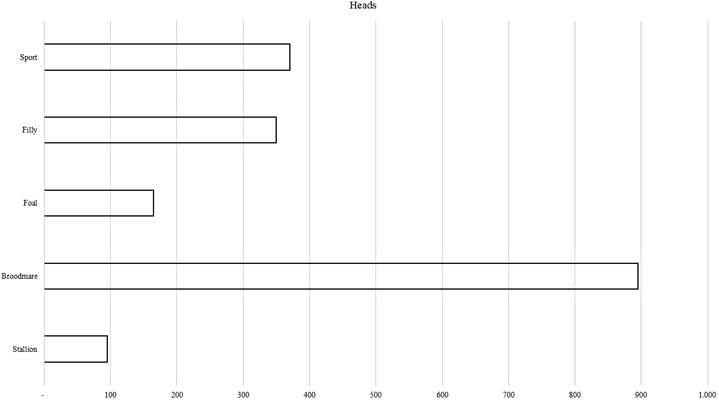
Figure 1 shows that the category with the highest number of animals sold is broodmares, with 900 animals sold in the analysis period, followed by animals from the sports category, with 372 animals. It is essential to emphasize that several animals are allocated in two or more categories but were placed in the category of greatest importance for the buyer at the time of purchase for this study, based on the first word cited in sale summary.
The lowest consumption categories were stallions and foals that are horses under 4 years of age. In most cases, animals of this category are already acquired for the primary purpose of use in sports, and only later can they be used for breeding. In Australia, auctions have been found to value geldings more than stallions and broodmares (CHAPMANN et al., 2022). In this research, some castrated horses were included in the category of sport animals. Another research shows that geldings are preferred for sports, cited by respondents as safe and reliable, while stallions are valued for their power, presence, and good looks.
In this study, the median sales price of Criollo horses was US$ 2,914.44. The highest median sales price, US$ 3,609.63, was obtained for the sports category, followed by broodmares used for reproduction, with a value of US$ 3,475.94, as shown in table 1. A study conducted by the ESALQ/USP showed that horses in the sport category are the most sought-after for purchase due to the substantial expansion of competitions in recent years, especially in the state of Rio Grande do Sul (LIMA & CINTRA, 2016). In the cited study, these animals are mainly used for sports such as jumping and rodeos, while in Rio Grande do Sul they are used for functional breed trials and roping competitions, mainly. These animals generally have a high genetic power, consequently presenting a greatest value in the final pricing, arousing the interest of sports people.
Broodmares in various situations are already marketed with transfer embryos, which generates a considerable increase in value (LIRA et al., 2009). However, this research did not include the specific number of already pregnant broodmares to enable the increase generated by the pregnancy factor. Another important factor to be raised is that animals that are sought to be used for reproduction are of great genetic value, allowing the generation of good offspring with desirable characteristics for the producer/buyer. Therefore, the final price has increased considerably, as previously mentioned. The median prices for the other categories, such as stallions and fillies, were around US$ 2,673.80 to US$ 2,807.49. These animals are well-priced because they can be used for different categories, such as sport and reproduction in the case of some fillies. In recent years, the demand for stallions has fallen due to the development of artificial insemination techniques. These techniques have made the system more efficient, maximizing the use of horses. Thus, the median marketing price of stallions did not present a similar value to that of broodmares. Despite this, some high values were observed in the purchase of stallions in some auctions. These males with high sale values may have good morphological, behavioral, and reproductive characteristics for semen collection.
For the foal category, the media observed showed a significant difference concerning all other categories, with the lowest median observed presenting a value of US$ 2,005.35. These animals do not yet have specific future use objectives, so they present a very heterogeneous category of morphological and physiological characteristics and a wide range of marketing prices. This is because animals with great genetic potential, great physical abilities, and low genetic values that can be used only for future work are within the same category and, consequently, have a reduced price.
A significant variation was observed between the sport and breeding categories for the track time variable. The sport category presented a median time of 159 seconds, 26 seconds more than the broodmare category for reproduction, a significant difference between these categories compared to the others. With the sport and broodmare categories having longer stays on track and higher prices paid for the purchase. This indicates that the permanence of the animals on the track is due to the higher number of bids. There were no significant differences between the categories filly, foal, and stallions.
Table 2 was developed for the amounts paid concerning the sex and age of the animals. When comparing the medians of the amounts paid for males, there is no significant difference between the sale ages. There was a considerable difference for broodmares compared to the categories of fillies under 5 years of age and adults aged 6 to 15 years, with medians of US$ 2,941.18 and US$ 3,609.63, respectively. However, there were no differences for the category of oldest (animals over 15 years old) compared with the other ages.
A difference was observed between young females and adult and oldest females, the broodmares. Between sex, in young age, fillies presenting a price median of US$ 2,941.18, while the foals presented a median of US$ 2,540.11. However, no significant difference was found between stallions and broodmares of the other age categories, adult and oldest. It is important to report that males followed with the price medians lower than broodmares in both the youth and adult categories but presented the highest median in the classification of oldest stallions. The higher average price of breeding-age mares is a market behavior that demonstrates the need for breeders to form herds with good mares, which are more numerous in the herds. Breeders generally have several good-quality mares and few male sires, which can mate several females. The regulation of equine insemination in Brazil may have further reduced the number of sires kept in breeding farms. Researching the American Quarter Horse breed, TAYLOR et al. (2006) observed that, dissatisfied with the track price, sellers often offer prices higher than the last offer and repurchase their own animals, hoping to sell them another time.
Regarding the track time of animals classified into different ages and sexes, only one statistical difference was observed between the medians when comparing foals and broodmares aged 5 years or less, as shown in table 3. Broodmares presented a longer stay on the track for bids, with a median of 128 seconds, while males had a median time of 120 seconds. This occurs because the search for broodmares at this age to be used in reproduction is more significant, and, as previously shown, the price paid is higher than foals, thus generating a greater number of bids and a longer track time for these animals. Collecting track time data is possibly related to a greater interest in that animal.
No significant differences were observed for the other age classifications analyzed. Still, the trend of track time for adult animals followed the same pattern as for young animals, in which broodmares showed greater permanence in the track. This pattern was reversed only for oldest animals. The median time was longer for males, but the median comparison test showed no statistical differences.
The price and time at auction variations of the animals according to their coat (Table 4), which is a morphological characteristic of significant impact on the decision of some buyers, as demonstrated by TELLECHEA (2015), who classified the coat as the sixth attribute with the greatest impact on consumer decision. The coats presenting significant variation were the Red Dun, Sorrel, Black with blaze brand, and Brown coats (in state of Rio Grande do Sul, Brazil called “douradilha”, “colorada”, “picaça” and “zaina”, respectively) compared to Chestnut, Pinto, and Bay Roan coats (in state of Rio Grande do Sul, Brazil called “tostada”, “tobiana” and “rosilha”, respectively). They do not have proven scientific data on the preference of these coats but hypothesize a preference for these coat types, which are considered conjugate and, therefore, rarer coats (COELHO, 2019).
There was a significant difference in time at auction between the Buckskin coat (in state of Rio Grande do Sul, Brazil called “baia”) and the Chestnut (in state of Rio Grande do Sul, Brazil called “tostada”) and Bay Roan coats (in state of Rio Grande do Sul, Brazil called “rosilha”). One of the reasons that explain this time variation may be related to the final price paid by the animals, as already mentioned previously, correlating these two factors. The Overo (in state of Rio Grande do Sul, Brazil called “oveira”)., Seal Brown (in state of Rio Grande do Sul, Brazil called “baia cebruna”) and Flaxen Chestnut (in state of Rio Grande do Sul, Brazil called “alazã”) coats were observed during data collection, but they were removed from the median comparison table because they presented a low sample size. However, the price collected for the Overo coat was the highest among all coats, probably because this coat is considered rare by many. Thus, the price of horses with this coat is higher most of the time. Another factor for the appreciation of this coat is the admiration of connoisseurs during roping and horseback riding, as stated in an interview with the technical inspector of the association of breeders (COELHO, 2019).
Categorized in the mesoregions. the Southeast region presented the highest median was significantly differing from the Metropolitan regions, and the Midwest and Mideast (Table 5). The latter presented the lowest median of marketing prices. Another difference found for the price per region variable was between the Mideast and Northwest regions. There were no significant differences between the medians of the other regions. For the time variable, a significant difference was observed between the Southwest and Northeast regions compared to the other regions, except the Midwest. The region with the highest time in auction seconds was the northeast region, with a median of 150 seconds, while the lowest value was Mideastern.
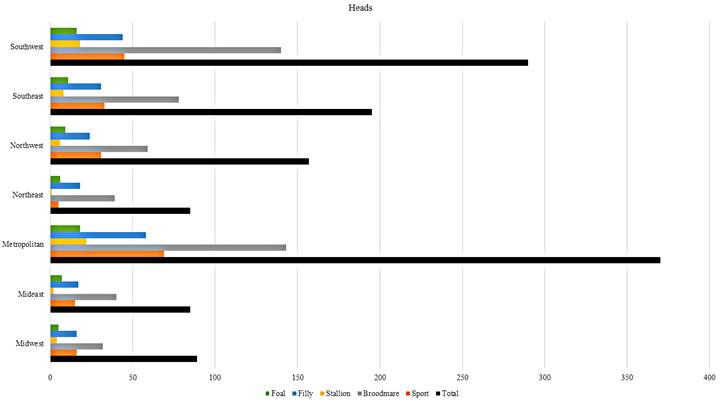
Equine breeding is considered by many to be elitized, in which only people with greater purchasing powers tend to have economic breeding (OLIVEIRA, 2012; PONTES & PEREIRA, 2014). In this sense, table 5 shows that the regions with the highest purchases and prices paid have a higher GDP than the others. According to IBGE (2013), the metropolitan region of Porto Alegre presented the highest GDP in the state. Additionally, the largest number of equines is destined for this same region. OLIVEIRA (2012) cited that Argentine horse breeders are close to Buenos Aires and in Brazil, breeders do not reside in the breeding farms and have other sources of income besides horses. It should be noted that economic equine breeding is often a secondary activity for producers. As shown in figure 2, the macro regions of Rio Grande do Sul with the largest buyers were the Metropolitan region, with 373 animals purchased, the Southwest, 290 animals, and the Southeast, 197 animals. The broodmares for reproduction presented higher sales in all macroregions, with a greater emphasis on the Metropolitan and Southwest, with 140 and 139 broodmares purchased, respectively.
The Northeast and Mideast regions with the lowest animal purchase were 86 animals each, following the same trend of greater purchase of broodmares and animals for sport. The lowest purchase category observed within all mesoregions was stallions and foals, varying between these two categories in each region. The information collected from the auctions was all from within Rio Grande do Sul, but there were several sales outside the state. Therefore, we analyzed which states these animals were destined for, and the same criteria were verified in the previous analyses: median prices and auction time. The state with the largest purchase of equines after Rio Grande do Sul was Paraná, with 180 equines purchased, followed by Santa Catarina with 128 animals. The states of São Paulo, Goiás, and Mato Grosso do Sul presented respective values of 91, 32, and 31 animals purchased.
Larger purchases in the Southern states indicated the greater presence of the breed in this region, as well as the viability of freight, both in terms of cost and wear and tear on the animal to be transported over longer distances.
The higher price paid by buyers in Paraná may be indicative of a higher population density, the growth of functional trials for the breed, and the already significant equine population in these areas. According to the breed association website (ABCCC, 2025), during the last four months of 2025, there will be 22 events for the breed in Paraná, compared to 15 in Santa Catarina.
The other states that purchased animals were categorized as “other states” since few animals were purchased (<30 heads). The sum of these states was 130 animals acquired during the data collection. The state of Paraná presented the highest median for the price median variable, with a value of US$ 4,278.07, significantly differing from all the others (Table 6). The states of Rio Grande do Sul, Santa Catarina, and São Paulo showed no significant differences. The states of Mato Grosso do Sul and Goiás presented the lowest medians, presenting significant differences compared to the other states. The lower sales values for these two states reflect the cost of freight.
The states of Santa Catarina and São Paulo presented the highest times in the auction time factor, with 144 and 139 seconds, differing significantly only from the state of Mato Grosso do Sul, which had the lowest median with 101 seconds of stay for bids. There were no significant differences in the comparisons of the medians regarding the other states analyzed. A correlation analysis of the results showed a significant relationship between the highest sale prices and the longest stay of the animals in the auction. The value obtained was a 16.1% correlation, considered a positive mean correlation. However, CHRISTOFARI et al. (2009) found a negative correlation when analyzing calves sold at auctions. The longer the animals remained on the track, the lower the price paid for them. Therefore, future studies must conduct a more in-depth investigation of this relationship between price and time.
These results show the difference between the commodity trade in the case of calves and a differentiated product in the case of horses for sport or reproduction. Therefore, it can be inferred that more time on track in commodities represents little interest in the lot and the auctioneer’s insistence on promoting the sale. In contrast, longer track time for horses means a lot of buyer interest. Another factor found in the literature that is significant for auction marketing is the disclosure/marketing factor. CHRISTOFARI et al. (2009) demonstrated that marketing affected up to 50% of the sales of cattle at auctions within some periods evaluated. It´s necessary that future research could investigate the marketing impact on the equine’s auctions.
CONCLUSION
The broodmare category was the most marketed category of Criollo horses through digital auctions and the median price of the animals studied was higher for the sport category, followed by broodmares. The metropolitan region is the main destination within the state of Rio Grande do Sul and, among states, the three in the southern region make the most purchases, with Paraná being the state that pays the highest prices. The price paid for animals of different sexes only showed differences in the initial ages, up to 5 years, where broodmares presented higher median price and time on track compared with males of the same age and older broodmares.
ACKNOWLEDGMENTS
RZV is supported by Conselho Nacional de Desenvolvimento Científico e Tecnológico (CNPq), grant 308963/2021-0.
REFERENCES
-
ASSOCIAÇÃO BRASILEIRA DE CRIADORES DE CAVALOS CRIOULOS (ABCCC). Manual do criador, 2025. Available from: <Available from: http://www.racacrioula.com.br/site/content/entidade/cavalo_crioulo.php >. Accessed: Aug. 18, 2025.
» http://www.racacrioula.com.br/site/content/entidade/cavalo_crioulo.php -
CHAPMAN, G. R. et al. Descriptive analysis of horses and ponies attending horse auctions in Victoria from July 2019 to March 2020. Australian Veterinary Journal, v.101, n.1-2, p.1-8, 2022. Available from: <Available from: https://onlinelibrary.wiley.com/doi/full/10.1111/avj.13210 >. Accessed: Aug. 18, 2025. doi: 10.1111/avj.13210.
» https://doi.org/10.1111/avj.13210.» https://onlinelibrary.wiley.com/doi/full/10.1111/avj.13210 -
CHRISTOFARI, L. F. et al. Manejo da comercialização em leilões e seus efeitos no preço de bezerros de corte. Revista Brasileira de Zootecnia, v.38, n.1, p.196-203, 2009. Available from: <Available from: https://www.scielo.br/j/rbz/a/zDgCs9rhctxF3Sqs6vHGvMw/?lang=pt >. Accessed: Aug. 18, 2025. doi: 10.1590/S1516-35982009000100024.
» https://doi.org/10.1590/S1516-35982009000100024.» https://www.scielo.br/j/rbz/a/zDgCs9rhctxF3Sqs6vHGvMw/?lang=pt -
COELHO, H. Cavalo Crioulo: pelagens. (Entrevista disponibilizada em 22 de janeiro de 2019, a Internet). Entrevista concedida a Equipe Mateando. 2019.. Available from: <Available from: https://www.mateando.com.br/blog?single=Cavalo-crioulo-pelagem-da-raca >. Accessed: Nov. 21, 2025.
» https://www.mateando.com.br/blog?single=Cavalo-crioulo-pelagem-da-raca -
ENGELBRECHT-WIGGANS, R. Auctions and biddings models: a survey. Management Science, v.26, n.2, p.119-142, 1980. Available from: <Available from: https://pubsonline.informs.org/ doi/epdf/10.1287/mnsc.26.2.119 >. Accessed: Oct. 22, 2024.
» https://pubsonline.informs.org/ doi/epdf/10.1287/mnsc.26.2.119 - GIBBONS, J. D. Nonparametric statistical inference. New York: McGraw-Hill, 1971, 306 p.
-
INSTITUTO BRASILEIRO DE GEOGRAFIA E ESTATÍSTICA (IBGE). Cidades do Rio Grande do Sul. 2013. Available from: <Available from: http://www.ibge.gov.br/cidades-e-estados/rs.html >. Accessed: Jan. 18, 2025.
» http://www.ibge.gov.br/cidades-e-estados/rs.html -
LIMA, R. A. S.; CINTRA, A. G. Revisão do estudo do complexo do agronegócio do cavalo. Brasília: Ministério da Agricultura Pecuária e Abastecimento, 2016. Available from: <Available from: https://repositorio.usp.br/item/003101965 >. Accessed: Jan. 22, 2025.
» https://repositorio.usp.br/item/003101965 -
LIRA, R. A. et al. Transferência de embrião em equinos: revisão. Acta Veterinaria Brasilica, v.3, n.4, p.132-140, 2009. Available from: <Available from: https://doi.org/10.21708/avb.2009.3.4.1421 >. Accessed: Jul. 31, 2025. doi: 10.21708/avb.2009.3.4.1421.
» https://doi.org/10.21708/avb.2009.3.4.1421.» https://doi.org/10.21708/avb.2009.3.4.1421 - MACHADO FILHO, C. A. P. M.; ZYLBERSZTAJN, D. Os leilões sob a ótica da economia institucional: evidências no mercado bovino. Gestão e Produção, v.6, n.3, p.269-281, 1999.
- MATTOS, P. et al. O perfil empreendedor do criador de cavalo crioulo no estado do Rio Grande do Sul. In: Congresso da Sociedade Brasileira de Economia, Administração e Sociologia Rural, 48., 2010, Campo Grande, RS. Anais... Campo Grande: SOBER, p.238, 481p., 2010.
- NARDINO, T. A. C. Análise da comercialização e fatores de compra de reprodutores bovinos de corte em leilões no Rio Grande do Sul, 135 p., 2015. Dissertation (Master´s in Animal Science) - Postgraduate Course in Animal Science, Federal University of Santa Maria, RS.
- NOETHER, G. E. Introduction to statistics: a nonparametric approach. Boston: Houghton Mifflin, 1976, 292p.
- OLIVEIRA, J. E. G. Assimetrias e semelhanças da criação de equinos no sul do Brasil (RS) e na Argentina: aspectos produtivos, sanitários e comerciais, 82 p., 2012. Tesis (Doctorate in Animal Pathobiology) - Postgraduate Course in Science, Technology and Innovation in Agriculture, Federal Rural University of Rio de Janeiro, RJ.
-
PONTES, V. S.; PEREIRA, E. G. B. Sob rédeas curtas, de cabelos longos: reflexões sobre mulheres no hipismo. Movimento, v.20, n.3, p.1197-1222, 2014. Available from: <Available from: https://dialnet.unirioja.es/servlet/articulo?codigo=4885108 >. Accessed: Jan. 22, 2025.
» https://dialnet.unirioja.es/servlet/articulo?codigo=4885108 -
SANTOS, F. C. C. et al. Body and testicular biometry of Crioulo stallions. Ciência Rural, v.52, n.3, e20210156, 2022. Available from: Available from: https://doi.org/10.1590/0103-8478cr20210156 Accessed: Jan., 22, 2025. doi: 10.1590/0103-8478cr20210156.
» https://doi.org/10.1590/0103-8478cr20210156.» https://doi.org/10.1590/0103-8478cr20210156 -
TAYLOR, M. R. et al. Show quality Quarter Horse auctions: price determinants and buy-back practices. Journal of Agricultural and Resource Economics, v.31, n.3, p.595-615, 2006. Available from: <Available from: https://www.jstor.org/stable/40987338 >. Accessed: Jan. 12, 2025.
» https://www.jstor.org/stable/40987338 - TELLECHEA, T. S. Comportamento do consumidor: pesquisa dos fatores de decisão na compra de cavalos Crioulos. 2015. 52f. Monograph (Graduação em Administração) - Graduate Course, Federal University of Rio Grande do Sul.
- VAZ, F. N.; VAZ, R. Z. Exemplos empresariais e associativos de marcas de qualidade da carne bovina no Brasil. In: TEIXEIRA, A. et al. Marcas de calidad de carne. Lisboa: Cyted, 2019, p.137-149.
-
CR-2025-0255.R2
-
BIOETHICS AND BIOSECURITY COMMITTEE APPROVAL
This work used only observational data. There was no direct contact with people or equines.
-
DATA AVAILABILITY STATEMENT
Research data is only available upon request.
-
DECLARATION OF USE OF ARTIFICIAL INTELLIGENCE
The authors declare that no AI was used to produce this work and its manuscript.
Edited by
-
ASSOCIATE EDITOR:
Rudi Weiblen (0000-0002-1737-9817)
-
SCIENTIFIC EDITOR:
Daniel Arruda Coronel (0000-0003-0264-6502)
Research data is only available upon request.