 Cellulolytic properties of size-exclusion fractionated extracellularenzymes of Bacillus amyloliquefaciens SLBD isolated from horse feces
ABSTRACT:
Cellulases are key enzymes in the enzymatic conversion of lignocellulose into fermentable sugars, with broad applications in bioenergy, feed processing, textiles, and sustainable waste management. This study aimed to characterize the cellulolytic activity of extracellular fractions from Bacillus amyloliquefaciens SLBD, a strain recently isolated from horse feces, while examining the effects of pH, temperature, and selected metal ions on enzyme activity, and to fractionate its extracellular proteins by size-exclusion chromatography (SEC) to identify and evaluate distinct cellulase fractions. Crude extracellular enzymes were produced through submerged fermentation and subsequently fractionated using SEC to obtain molecular-weight-based protein fractions. Cellulolytic activity was evaluated using carboxymethyl cellulose as substrate, and enzyme performance was assessed under various pH values, temperature ranges, and metal ion conditions. The results demonstrated that the extracellular cellulases exhibited optimal activity at moderate temperatures and maintained activity across a broad pH range, indicating favorable stability characteristics. Among the SEC fractions obtained, the smallest molecular-weight fraction displayed remarkably enhanced CMCase activity, exceeding that of the crude extract by more than 270-fold. SDS-PAGE analysis confirmed distinct protein profiles among fractions, supporting the effectiveness of SEC in activity-guided fractionation. Several metal ions, particularly Ca²⁺ and Zn²⁺, significantly stimulated enzymatic activity, while others exhibited inhibitory effects. These findings highlight the presence of low-molecular-weight, highly active extracellular cellulases produced by B. amyloliquefaciens SLBD. Overall, this study provided important insights into the functional diversity of bacterial cellulases and demonstrates the potential of SEC-based fractionation as an effective preliminary approach for identifying high-performance enzyme fractions.
Key words:
Bacillus amyloliquefaciens SLBD; cellulose; size exclusion chromatography; enzyme activity.
RESUMO:
Celulases são enzimas-chave na conversão enzimática de lignocelulose em açúcares fermentáveis, com amplas aplicações em bioenergia, processamento de rações, têxteis e gestão sustentável de resíduos. Este estudo teve como objetivo caracterizar a atividade celulolítica de frações extracelulares de Bacillus amyloliquefaciens SLBD. Para realizar o objetivo uma cepa recentemente isolada de fezes de cavalo, foi examidanada em relação ao seus efeitos do pH, da temperatura e de íons metálicos selecionados na atividade enzimática, e suas proteínas extracelulares foram e fracionadas por cromatografia de exclusão de tamanho (SEC) para identificar e avaliar diferentes frações de celulase. Além disso, o extrato bruto foi fracionado em três pools de proteínas com diferentes atividades. A fração F3, dominada por proteínas com baixa massa molecular aparente (30-60 kDa), apresentou a maior atividade de carboximetilcelulase (CMCase) (1,98 ± 0,17 U mg-¹), representando um aumento superior a 271 vezes em comparação com o extrato bruto. Esse resultado indica que a celulase cataliticamente ativa foi fortemente enriquecida nas frações eluídas mais tardiamente. A caracterização bioquímica mostrou que a CMCase SLBD apresentou atividade ótima a 50 °C, consistente com enzimas mesófilas a moderadamente termotolerantes, mantendo atividade residual significativa a 60-70 °C. A enzima também apresentou ampla tolerância ao pH, com atividade máxima em pH 7,0 e desempenho próximo do ótimo em condições levemente alcalinas, refletindo a estabilidade de seus resíduos catalíticos em ambientes neutros. Notavelmente, a atividade enzimática foi fortemente estimulada por aditivos químicos: Ca²⁺ e Zn²⁺ aumentaram a eficiência hidrolíticapor meio da estabilização do sítio ativo, enquanto surfactantes não iônicos, particularmente Tween 80, produziram um aumento de até quatro vezes na atividade, reduzindo a ligação não produtiva e melhorando a acessibilidade à celulose. Portanto, essas descobertas fornecem o primeiro perfil bioquímico detalhado de celulases de SLBD de B. amyloliquefaciens e ressaltam seu potencial como fonte sustentável de enzimas robustas para conversão de biomassa industrial e aplicações em biorrefinaria.
Palavras-chave:
SLBD de Bacillus amyloliquefaciens; celulase; cromatografia de exclusão por tamanho; atividade enzimática
INTRODUCTION
Cellulose is the most abundant renewable biopolymer on Earth, forming the main structural component of plant cell walls and a major constituent of agricultural residues and livestock feed (SHAGHALEH et al., 2018). The enzymatic conversion of cellulose into fermentable sugars has wide industrial applications notably in biofuel production, animal feed improvement, textiles, and sustainable waste management where cellulases serve as the key catalysts enabling this bioconversion process. These enzymes act synergistically through endo-, exo-, and β-glucosidase activities to convert cellulose into glucose efficiently, thus supporting bio-based industries and the circular bioeconomy (KUHAD et al., 2011).
The increasing demand for environmentally friendly and cost-effective bioprocesses has driven significant attention toward cellulase discovery and optimization. Among various microbial sources, bacteria represent particularly attractive producers due to their rapid growth, extracellular enzyme secretion, and higher tolerance to diverse physicochemical conditions. Unlike fungi, bacterial systems simplify enzyme recovery and scale-up, making them suitable for industrial applications requiring robustness under varying pH, temperature, or ionic strength. In this context, Bacillus species have emerged as prolific producers of extracellular hydrolases, including cellulases, proteases, and lipases, that are valuable for biotechnological and environmental purposes (BORTHAKUR et al., 2024).
Unique microbial habitats, including extreme environments and herbivore digestive tracts, represent rich and largely untapped reservoirs for the discovery of novel cellulolytic enzymes. The global demand for cellulases continues to increase substantially; according to RANJAN et al. (2023), the market was valued at approximately USD 1.68 billion in 2020 and is projected to reach USD 2.45 billion by 2026, corresponding to a compound annual growth rate (CAGR) of 5.5% from 2021 to 2026. In response to this growing demand, extensive exploration of diverse cellulase sources has been undertaken, particularly focusing on microorganisms isolated from unique and extreme environments, which are likely to harbor enzymes with distinct catalytic properties and industrial relevance. Microbial communities in animal faeces are particularly rich in cellulose-degrading bacteria, reflecting adaptation to fiber-rich diets and offering valuable enzyme reservoirs (NDLELA & SCHMIDT, 2016; MORAÍS et al., 2024; KHAERUNNISA et al., 2016). In line with this, a cellulolytic strain identified as Bacillus amyloliquefaciens SLBD was recently isolated from horse faeces in Malang, Indonesia (SHIDDIQ et al., 2025). Preliminary screening showed clear hydrolysis zones on carboxymethyl cellulose agar, confirming its potential cellulase activity. Early analyses indicated extracellular enzyme secretion influenced by growth phase and substrate type, suggesting the presence of diverse active fractions.
However, despite the recognized enzymatic potential of B. amyloliquefaciens, detailed biochemical characterization of the SLBD strain remains limited. In particular, information about its enzyme kinetics, stability under varying pH and temperature, and fractionation profiles is lacking. Addressing these aspects is essential for assessing its industrial relevance and catalytic robustness. Therefore, this study aimed to characterize the extracellular cellulases from B. amyloliquefaciens SLBD through size-exclusion fractionation and to evaluate their activity under different physicochemical conditions. The findings provide a biochemical foundation for exploring SLBD cellulases as promising candidates for sustainable biomass conversion and biorefinery processes.
MATERIALS AND METHODS
Bacterial preparation
The cellulolytic strain Bacillus amyloliquefaciens SLBD, previously isolated from horse faeces (SHIDDIQ et al., 2025), was reactivated in Luria-Bertani (LB) broth consisting of 1% peptone, 0.5% yeast extract, and 0.5% sodium chloride (pH 7.0). The culture was incubated at 37 °C for 36 h with 180 rpm shaking speed in a shaking incubator to reach the late exponential phase. The cell-free supernatant obtained after centrifugation (8000 × g, 15 min) was used as the source of extracellular enzyme (RAZALI et al., 2021a).
Crude enzyme extraction
The supernatant, referred to as the crude enzyme (CE), was filtered through a 0.22 µm membrane to remove remaining cells and debris. Protein concentration was determined using the Lowry method (SATPATHY et al., 2020; FATMARANI et al., 2018; CHAN et al., 2020) following the manufacturer’s protocol (Pierce™ Modified Lowry Protein Assay Kit, Thermo Fisher Scientific).
Size-exclusion fractionation
Extracellular proteins were separated by size-exclusion chromatography (SEC) using a Sephadex S200/16 column (BUDIMAN et al., 2011; CHAN et al., 2022). The column was equilibrated with 20 mM phosphate buffer (pH 8.0) containing 100 mM NaCl. One mL of enzyme sample was loaded and eluted with the same buffer at a constant flow rate. Eluted fractions were monitored at 280 nm, and protein peaks were collected for analysis. Active fractions showing cellulase activity were pooled and concentrated for further assays.
Enzyme activity (CMCase Assay)
Carboxymethyl cellulase (CMCase) activity of the sample (crude enzyme and SEC fractions) were measured by quantifying reducing sugars using the 3,5-dinitrosalicylic acid (DNS) method (WANG et al., 2023; OBENG et al., 2017). A mixture of 500 µL enzyme solution and 500 µL of 1% (w/v) carboxymethyl cellulose (CMC) in 50 mM sodium acetate buffer (pH 5.0) was incubated at 60 °C for 30 min. The reaction was terminated by adding DNS reagent and boiling for 5 min. Absorbance was recorded at 540 nm. One enzyme unit (U) was defined as the amount of enzyme releasing 1 µmol of glucose equivalent per minute under the assay conditions.
Effect of pH and temperature
Enzyme activity was examined at various temperatures (20-90 °C) and pH levels (4.0-10.0). For temperature assays, aliquots were pre-incubated at each temperature for 1 h before the standard CMCase test. For pH assays, 50 mM buffer systems were used: sodium acetate (pH 4-5), sodium phosphate (pH 6-8), and glycine-NaOH (pH 9-10). Relative activity was expressed as a percentage of the maximum value (RAZALI et al., 2021b).
Effect of additives
To assess the effect of chemical additives, the enzyme was incubated with metal ions (NaCl, KCl, CaCl2, ZnSO4, and CuSO4) or surfactants (SDS, Triton X-100, and Tween 80) at 5 mM final concentration following POTPROMMANEE et al. (2017) and OBENG et al. (2017). Reactions were incubated at 37 °C for 1 h, and residual CMCase activity was determined using the standard assay.
RESULTS AND DISCUSSION
Fractionation
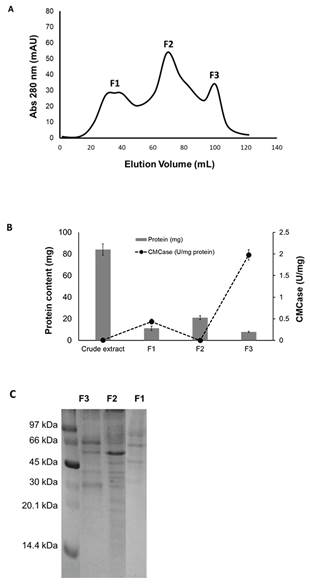
Size-exclusion chromatography (SEC) successfully separated the crude extracellular cellulase extract of Bacillus amyloliquefaciens SLBD into three major protein fractions (F1, F2, and F3) with distinct enzyme activities (Figure 1A). The crude extract contained 84.09 mg of protein with a low CMCase activity (0.0073 U/mg). After fractionation, F1 contained 11.22 mg of protein with 0.43 U/mg activity, F2 contained 21.03 mg of protein with no detectable activity, while F3 representing the smallest molecular size fraction-exhibited the highest CMCase activity at 1.98 U/mg, with 1.98 of protein content (Figure 1B). This corresponds to more than a 271-fold increase compared with the crude extract, indicating that the active cellulase enzyme was concentrated in F3.
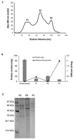
(A). Elution profile of extracellular fraction (crude extract) of SLBD strain from size exclusion chromatography; (B). Protein content and CMCase activity of fractions obtained from size exclusion chromatography with comparison to crude extract; (C) 15% SDS-PAGE analysis of size-exclusion chromatography (SEC) fractions obtained from SLBD strain.
The absence of activity in F2 suggested that this fraction mostly consisted of non-catalytic proteins, while the strong activity in F3 highlights efficient enrichment through SEC, where smaller proteins typically elute later (CHAN et al., 2022). The high catalytic performance of F3 implies that SLBD produces low-molecular-weight cellulases with compact structure and strong hydrolytic capacity, similar to previously reported Bacillus cellulases by ELSABBABTY et al. (2022). Such compact enzymes may diffuse more effectively into lignocellulosic substrates, enhancing substrate accessibility and reaction rates (BANSAL et al., 2009). Therefore, F3 was selected for detailed characterization.
To note, the objective of this study was not to achieve full purification of cellulase, but rather to conduct a preliminary, activity-guided fractionation as a pre-screening step to localize cellulase activity within molecular-weight-based fractions of the crude enzyme extract. SEC was deliberately selected as a single, non-destructive fractionation method because it separates enzymes solely based on molecular size while preserving native conformation and activity, which is particularly suitable for early-stage screening. Other purification approaches, including salt precipitation, ion-exchange, and hydrophobic interaction chromatography, were not employed at this stage to avoid premature over-processing and potential enzyme destabilization, as enzyme purification is inherently a lengthy, multi-step process. Importantly, SEC allowed effective activity mapping across defined molecular-weight ranges, providing essential guidance for designing more refined purification strategies in subsequent studies, where higher purity levels can be systematically achieved (BUDIMAN et al., 2009; RAZALI et al., 2021a). Accordingly, the enzyme fractions obtained in this research should be considered partially purified rather than fully purified.
Visualization of proteins in each SEC fraction was further examined by SDS-PAGE, as shown in figure 1C. In principle, SEC separates proteins based on their hydrodynamic size in solution, whereby larger molecular species elute earlier than smaller ones (BUDIMAN et al., 2011; BUDIMAN et al., 2012). SDS-PAGE analysis revealed that fraction F1 contained protein bands ranging from approximately 20 kDa to more than 97 kDa. In contrast, proteins in fraction F2 ranged mainly from about 30 to 66 kDa, while those in fraction F3 were distributed between approximately 27 and 60 kDa.
Interestingly; although, F1 is expected to be enriched with higher-molecular-weight proteins compared to F2 and F3, several minor bands with apparent molecular masses below 30 kDa were also observed in this fraction. This apparent inconsistency can be explained by the fundamental difference between SEC and SDS-PAGE separation principles. While SDS-PAGE reflects the molecular mass of proteins in their denatured monomeric form, SEC estimates protein size based on their native conformation in solution (WIESNER et al., 2020). For example, a protein appearing as a ~20 kDa band on SDS-PAGE in F1 does not necessarily exist as a 20 kDa species under native conditions. Such proteins may form higher-order oligomeric assemblies, such as pentamers or hexamers, resulting in an effective molecular size exceeding 100 kDa and thus eluting earlier during SEC. This phenomenon was also reported by GOH et al. (2018) for bacterial and non-bacterial proteins. Accordingly, the presence of low-molecular-weight bands in F1 is likely attributable to oligomeric proteins that dissociate into monomers under denaturing SDS-PAGE conditions. A similar explanation may also apply to proteins detected in F2, where smaller apparent molecular masses may originate from dissociated oligomeric forms. However, this hypothesis could not be experimentally confirmed in the present study due to the absence of complementary analyses such as native PAGE.
Notably, fraction F3-which exhibited the highest CMCase activity-was dominated by protein bands below 50 kDa. This profile strongly suggests enrichment of catalytically active endoglucanase(s) within this fraction. This observation is consistent with previous reports by ELSABBABTY et al. (2022) who also reported the apparent size of cellulases from Bacillus licheniformis strain Z9 was about 50 kDa. Indeed, Bacillus cellulases typically possess variable molecular masses, ranging from 24.4 to 185 kDa. Notably, residual high-molecular-weight bands (>60-70 kDa) were still detected in F3 despite its later elution. This phenomenon can be attributed to the non-globular architecture of certain bacterial proteins, which may exhibit smaller hydrodynamic radii in solution than expected from their apparent molecular masses determined by SDS-PAGE. Previous studies have demonstrated that some non-globular bacterial proteins migrate anomalously on SDS-PAGE, appearing larger than their true molecular size (BUDIMAN et al., 2009; SUZUKI et al., 2004; BUDIMAN et al., 2021). In addition, partial dissociation of oligomeric assemblies during SEC or the presence of truncated yet relatively high-mass polypeptides, as proposed by FISETTE et al. (2017), may also contribute to their delayed elution.
Based on the SDS-PAGE profiles, the SLBD cellulase preparation cannot be considered a purified enzyme, as multiple protein bands were still detected, particularly in fraction F3. Consequently, it was not possible to unequivocally assign a specific protein band in F3 as the SLBD cellulase. Nevertheless, the combined SEC-SDS-PAGE analysis effectively narrows down the subset of proteins most likely responsible for cellulolytic activity. The objective of the present study was not to achieve complete enzyme purification. Instead, this approach was deliberately employed to reduce the complexity of the protein mixture and to identify the fraction most enriched in catalytically active cellulase components. In this context, the pronounced CMCase activity observed in F3 delineates a focused group of candidate proteins that can be prioritized for further purification, identification, and detailed structural or functional characterization in subsequent studies (SUZUKI et al., 2004).
Effect of temperature on enzyme activity
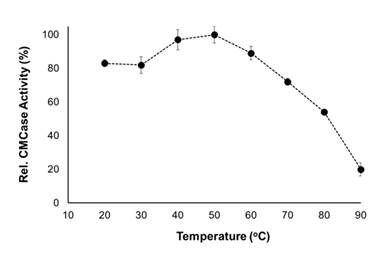
The CMCase activity of fraction F3 was tested at 20-90 °C to determine the temperature optimum (Figure 2). Activity increased gradually with temperature, peaking at 50 °C (100%) and maintaining high levels at 60 °C (89%) and 70 °C (72%). Activity decreased sharply above 80 °C, suggesting thermal denaturation beyond this point. The enzyme’s optimum at 50 °C classifies it as mesophilic to moderately thermotolerant, similar to other Bacillus cellulases (SRIARIYANUN et al., 2016; MALIK & JAVED, 2024).
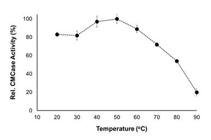
This pattern reflects the balance between catalytic enhancement at moderate temperatures and structural destabilization at excessive heat. At 50 °C, catalytic residues maintain proper conformation, enabling efficient hydrolysis, whereas at higher temperatures unfolding or active-site distortion likely occurs (KABIR & JU, 2023). The moderate thermostability of SLBD CMCase indicates potential for industrial reactions that require stable activity under elevated conditions such as biomass hydrolysis or bioethanol production.
Effect of pH on enzyme activity
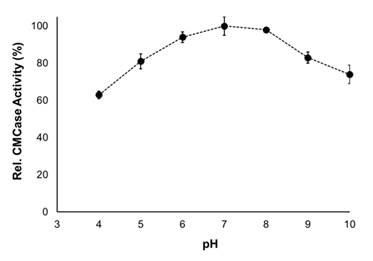
The enzyme exhibited broad pH tolerance, with activity maintained from pH 4.0 to 10.0 and a maximum at pH 7.0 (Figure 3). Relative activities were 94% at pH 6.0, 98% at pH 8.0, 83% at pH 9.0, and 74% at pH 10.0. This broad range suggested that SLBD cellulases remain catalytically stable under both neutral and slightly alkaline conditions, a feature advantageous for diverse industrial media.
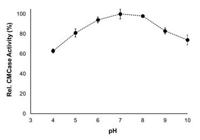
The neutral optimum agrees with other Bacillus cellulases such as those from B. smithii QT03 and B. cereus DU-1 (GAETA et al., 2025; UGRAS et al., 2024). The pH response is primarily governed by the protonation state of catalytic residuesusually aspartate and glutamatewhich act as the proton donor and nucleophile during β-1,4-glycosidic bond cleavage (OBENG et al., 2018). At near-neutral pH, these residues maintain the correct ionization state for efficient catalysis, while extreme acidity or alkalinity disrupts the active-site equilibrium (BHARADWAJ et al., 2020).
Notably, the CMCase activity was assayed across a broad pH range (pH 4-10) using established buffer systems, following previously reported protocols for comprehensive enzymatic characterization. This approach was adopted to systematically evaluate the pH-dependence of enzyme activity rather than to assume a priori that the enzyme favors neutral conditions. Importantly, some cellulases were reported to be optimum at acidic pH and have spectrum activity at broad H, as reported by (TRIPATHI et al., 2023; MURTI et al., 2018; MAURYA et al., 2012). The inclusion of acidic pH conditions allows detection of potential acid-tolerant or acid-active behavior, which is relevant for industrial and bioprocessing applications (e.g., biomass hydrolysis, fermentation-coupled saccharification, and waste valorization systems), where mildly acidic environments are common.
Additive effects
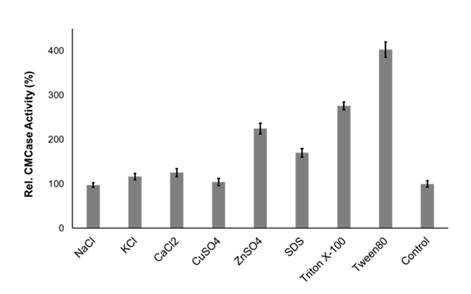
The influence of various metal ions and surfactants on enzyme activity is shown in figure 4. Most additives enhanced CMCase activity to varying degrees. KCl (116%) and CaCl2 (125%) produced moderate activation, whereas ZnSO4 gave the strongest stimulation (225%), suggesting structural or catalytic involvement of zinc ions. In contrast, NaCl had negligible effects, and CuSO4 only slightly improved activity (104%). The addition of surfactants significantly boosted activity: SDS (170%), Triton X-100 (276%), and Tween 80 (403%). Non-ionic surfactants such as Tween 80 improve substrate accessibility by dispersing cellulose fibers and preventing enzyme aggregation or irreversible adsorption (BANSAL et al., 2009). Similarly, metal ions like Ca²⁺ and Zn²⁺ may stabilize catalytic conformation through electrostatic interactions (POLI et al., 2012; AMIN et al., 2021). The strong activation by Tween 80 demonstrates that SLBD cellulases perform well under complex reaction mixtures, aligning with industrial needs in feed processing and bioenergy production.
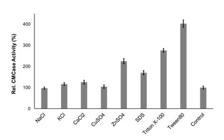
Effects of additive on CMCase activity of the most active fraction (F3). Control is the activity measured without any additives.
CONCLUSION
This study provided the first detailed characterization of extracellular cellulases from Bacillus amyloliquefaciens SLBD isolated from horse faeces. Fractionation showed that the most active enzyme was concentrated in the smaller protein fraction (F3), with >271-fold higher CMCase activity than the crude extract.The enzyme exhibited optimal activity at 50 °C and pH 7.0, retained stability over a broad pH and temperature range, and was strongly stimulated by Zn²⁺, Ca²⁺, and non-ionic surfactants such as Tween 80. These findings highlighted SLBD cellulases as robust and promising candidates for industrial biomass conversion and bioenergy applications.
ACKNOWLEDGMENTS
This work was supported by the Directorate General of Research and Development, Ministry of Higher Education, Science, and Technology, Republic of Indonesia, in accordance with the Research Program Implementation Contract for Fiscal Year 2025, Number: 23266/IT3.D10/PT.01.03/P/B/2025.
REFERENCES
-
AMIN, K. et al. Glycoside hydrolases and glycosyltransferases from hyperthermophilic archaea: insights on their characteristics and applications in biotechnology. Biomolecules, v.11, p.1557, 2021. Available from: <Available from: https://doi.org/10.3390/biom11111557 >. Accessed: Oct. 09, 2025. doi: 10.3390/biom11111557.
» https://doi.org/10.3390/biom11111557.» https://doi.org/10.3390/biom11111557 -
BANSAL, P. et al. Modeling cellulase kinetics on lignocellulosic substrates. Biotechnology Advances, v.27, p.833-848, 2009. Available from: <Available from: https://doi.org/10.1016/j.biotechadv.2009.06.005 >. Accessed: Oct. 09, 2025. doi: 10.1016/j.biotechadv.2009.06.005.
» https://doi.org/10.1016/j.biotechadv.2009.06.005.» https://doi.org/10.1016/j.biotechadv.2009.06.005 -
BHARADWAJ, V. S. et al. The hydrolysis mechanism of a GH45 cellulase and its potential relation to lytic transglycosylase and expansin function. Journal of Biological Chemistry, v.295, p.4477-4487, 2020. Available from: <Available from: https://doi.org/10.1074/jbc.RA119.011406 >. Accessed: Jan. 17, 2026. doi: 10.1074/jbc.RA119.011406.
» https://doi.org/10.1074/jbc.RA119.011406.» https://doi.org/10.1074/jbc.RA119.011406 -
BORTHAKUR, I. et al. Microbial cellulase production: current technologies and future prospects. Journal of Pure and Applied Microbiology, v.18, p.2188-2204, 2024. Available from: <Available from: https://doi.org/10.22207/JPAM.18.4.08 >. Accessed: Oct. 09, 2025. doi: 10.22207/JPAM.18.4.08.
» https://doi.org/10.22207/JPAM.18.4.08.» https://doi.org/10.22207/JPAM.18.4.08 -
BUDIMAN, C. et al. Crystal structure of N-domain of FKBP22 from Shewanella sp. SIB1: dimer dissociation by disruption of Val-Leu knot. Protein Science, v.20, p.1755-1764, 2011. Available from: <Available from: https://doi.org/10.1002/pro.714 >. Accessed: Oct. 09, 2025. doi: 10.1002/pro.714.
» https://doi.org/10.1002/pro.714.» https://doi.org/10.1002/pro.714 -
BUDIMAN, C. et al. Engineering of monomeric FK506-binding protein 22 with peptidyl prolyl cis-trans isomerase: importance of a V-shaped dimeric structure for binding to protein substrate. FEBS Journal, v.276, p.4091-4101, 2009. Available from: <Available from: https://doi.org/10.1111/j.1742-4658.2009.07116.x >. Accessed: Jan. 17, 2026. doi: 10.1111/j.1742-4658.2009.07116.x.
» https://doi.org/10.1111/j.1742-4658.2009.07116.x.» https://doi.org/10.1111/j.1742-4658.2009.07116.x -
BUDIMAN, C. et al. FKBP22 from the psychrophilic bacterium Shewanella sp. SIB1 selectively binds to the reduced state of insulin to prevent its aggregation. Cell Stress and Chaperones, v.26, p.377-386, 2021. Available from: <Available from: https://doi.org/10.1007/s12192-020-01183-0 >. Accessed: Jan. 18, 2026. doi: 10.1007/s12192-020-01183-0.
» https://doi.org/10.1007/s12192-020-01183-0.» https://doi.org/10.1007/s12192-020-01183-0 -
CHAN, P. et al. ACE-Inhibitory and antioxidant activities of hydrolysates from the by-products of hybrid grouper (Epinephelus lanceolatus × Epinephelus fuscoguttatus). Sains Malaysiana, v.49, p.261-270, 2020. Available from: <Available from: https://doi.org/10.17576/jsm-2020-4902-04 >. Accessed: Jan. 18, 2026. doi: 10.17576/jsm-2020-4902-04.
» https://doi.org/10.17576/jsm-2020-4902-04.» https://doi.org/10.17576/jsm-2020-4902-04 -
CHAN, P. et al. Novel peptide sequences with ace-inhibitory and antioxidant activities derived from the heads and bones of hybrid groupers (Epinephelus lanceolatus × Epinephelus fuscoguttatus). Foods, v.11, p.3991-4017, 2022. Available from: <https://doi.org/10.3390/foods11243991>. Accessed: Jan. 18, 2026. doi: 10.3390/foods11243991.
» https://doi.org/Jan. 18, 2026» https://doi.org/10.3390/foods11243991» https://doi.org/10.3390/foods11243991 -
ELSABABTY, Z. E. et al. Purification, biochemical characterization, and molecular cloning of cellulase from Bacillus licheniformis strain Z9 isolated from soil. Journal of Genetic Engineering and Biotechnology, v.20, p.34-44, 2022. Available from: <Available from: https://doi.org/10.1186/s43141-022-00317-4 >. Accessed: Jan. 03, 2026. doi: 10.1186/s43141-022-00317-4.
» https://doi.org/10.1186/s43141-022-00317-4.» https://doi.org/10.1186/s43141-022-00317-4 -
FATMARANI, R. et al. Purification of bacteriocin from Lactobacillus plantarum IIA-1A5 grown in various whey cheese media under freeze dried condition. Tropical Animal Science Journal, v.41, p.53-59, 2018. Available from: Available from: https://doi.org/10.5398/tasj.2018.41.1.53 Accessed: Jan. 17, 2026. doi: 10.5398/tasj.2018.41.1.53.
» https://doi.org/10.5398/tasj.2018.41.1.53.» https://doi.org/10.5398/tasj.2018.41.1.53 -
FISETTE, O. et al. Partial dissociation of truncated peptides influences the structural dynamics of the MHCI binding groove. Frontiers in Immunology, v.8, p.408, 2017. Available from: <Available from: https://doi.org/10.3389/fimmu.2017.00408 >. Accessed: Jan. 17, 2026. doi: 10.3389/fimmu.2017.00408.
» https://doi.org/10.3389/fimmu.2017.00408.» https://doi.org/10.3389/fimmu.2017.00408 -
GAETA, S. et al. Characterization of cellulase enzyme produced by Bacillus smithiiQT03 isolated from compost. Journal of Applied Microbiology, v.135, p.1451-1460, 2025. Available from: <Available from: https://doi.org/10.1093/jambio/lxaf031 >. Accessed: Oct. 09, 2025. doi: 10.1093/jambio/lxaf031.
» https://doi.org/10.1093/jambio/lxaf031.» https://doi.org/10.1093/jambio/lxaf031 -
GOH, C. K. W. et al. Expression and characterization of functional domains of FK506-binding protein 35 from Plasmodium knowlesi Protein Engineering, Design and Selection, v.31, p.489-498, 2018. Available from: <Available from: https://doi.org/10.1093/protein/gzz008 >. Accessed: Jan. 19, 2026. doi: 10.1093/protein/gzz008.
» https://doi.org/10.1093/protein/gzz008.» https://doi.org/10.1093/protein/gzz008 -
KABIR, M. F.; JU, L. K. On optimization of enzymatic processes: temperature effects on activity and long-term deactivation kinetics. Process Biochemistry, v.130, p.734-746, 2023. Available from: <Available from: https://doi.org/10.1016/j.procbio.2023.05.031 >. Accessed: Oct. 09, 2025. doi: 10.1016/j.procbio.2023.05.031.
» https://doi.org/10.1016/j.procbio.2023.05.031.» https://doi.org/10.1016/j.procbio.2023.05.031 -
KHAERUNNISA, I. et al. Polymorphism of the T4842G Myostatin gene is associated with carcass characteristics in Indonesian chickens. International Journal of Poultry Science, v.15, p.316-324, 2016. Available from: <Available from: https://doi.org/10.3923/ijps.2016.316.324 >. Accessed: Jan. 18, 2026. doi: 10.3923/ijps.2016.316.324.
» https://doi.org/10.3923/ijps.2016.316.324.» https://doi.org/10.3923/ijps.2016.316.324 -
KUHAD, R. C. et al. Microbial cellulases and their industrial applications. Enzyme Research, v.2011, p.280696, 2011. Available from: <Available from: https://doi.org/10.4061/2011/280696 >. Accessed: Oct. 09, 2025. doi: 10.4061/2011/280696.
» https://doi.org/10.4061/2011/280696.» https://doi.org/10.4061/2011/280696 -
MALIK, W. A.; JAVED, S. Enhancement of cellulase production by cellulolytic bacteria SB125 in submerged fermentation medium and biochemical characterization of the enzyme. International Journal of Biological Macromolecules, v.263, p.130415, 2024. Available from: <Available from: https://doi.org/10.1016/j.ijbiomac.2024.130415 >. Accessed: Oct. 09, 2025. doi: 10.1016/j.ijbiomac.2024.130415.
» https://doi.org/10.1016/j.ijbiomac.2024.130415.» https://doi.org/10.1016/j.ijbiomac.2024.130415 -
MAURYA, D. P. et al. Optimization of solid state fermentation conditions for the production of cellulase by Trichoderma reesei Journal of Environmental Biology, v.33, p.5-8, 2012. Available from: <Available from: https://pubmed.ncbi.nlm.nih.gov/23033636/ >. Accessed: Jan. 18, 2026. PMID: 23033636.
» https://pubmed.ncbi.nlm.nih.gov/23033636/ -
MORAÍS, S. et al. Cryptic diversity of cellulose-degrading gut bacteria in industrialized humans. Science, v.383, eadj9223, 2024. Available from: <Available from: https://doi.org/10.1126/science.adj9223 >. Accessed: Oct. 9, 2025. doi: 10.1126/science.adj9223.
» https://doi.org/10.1126/science.adj9223.» https://doi.org/10.1126/science.adj9223 -
MURTI, M. W. et al. Isolation of cellulolytic fungi and utilization of its cellulolytic activity for microcrystalline cellulose preparation from water hyacinth (Eichhornia crassipes). Pharmacognosy Journal, v.10, p.1082-1088, 2018. Available from: <Available from: https://doi.org/10.5530/pj.2018.6.183 >. Accessed: Jan. 17, 2026. doi: 10.5530/pj.2018.6.183.
» https://doi.org/10.5530/pj.2018.6.183.» https://doi.org/10.5530/pj.2018.6.183 -
NDLELA, L. L. Evaluation of wild herbivore faeces from South Africa as a potential source of hydrolytically active microorganisms. SpringerPlus, v.5, p.118, 2016. Available from: <Available from: https://doi.org/10.1186/s40064-016-1739-y >. Accessed: Oct. 09, 2025. doi: 10.1186/s40064-016-1739-y.
» https://doi.org/10.1186/s40064-016-1739-y.» https://doi.org/10.1186/s40064-016-1739-y -
OBENG, E. M. et al. Identifying additives for cellulase enhancement-A systematic approach. Biocatalysis and Agricultural Biotechnology, v.11, p.67-74, 2017. Available from: Available from: https://doi.org/10.1016/j.bcab.2017.06.006 Accessed: Jan. 18, 2026. doi: 10.1016/j.bcab.2017.06.006.
» https://doi.org/10.1016/j.bcab.2017.06.006.» https://doi.org/10.1016/j.bcab.2017.06.006 -
OBENG, E. M. et al. The workability of Escherichia coli BL21 (DE3) and Pseudomonas putida KT2440 expression platforms with autodisplayed cellulases: a comparison. Applied Microbiology and Biotechnology, v.102, p.4829-4841, 2018. Available from: <Available from: https://doi.org/10.1007/s00253-018-8987-4 >. Accessed: Jan. 17, 2026. doi: 10.1007/s00253-018-8987-4.
» https://doi.org/10.1007/s00253-018-8987-4.» https://doi.org/10.1007/s00253-018-8987-4 -
POTPROMMANEE, L. et al. Characterization of a thermophilic cellulase from Geobacillus sp. HTA426, an efficient cellulase-producer on alkali pretreated lignocellulosic biomass. PLoS One, v.12, e0175004, 2017. Available from: <Available from: https://doi.org/10.1371/journal.pone.0175004 >. Accessed: Oct. 09, 2025. doi: 10.1371/journal.pone.0175004.
» https://doi.org/10.1371/journal.pone.0175004.» https://doi.org/10.1371/journal.pone.0175004 -
RANJAN, R. et al. Technological road map of cellulase: a comprehensive outlook to structural, computational, and industrial applications. Biochemical Engineering Journal, v.198, p.109020, 2023. Available from: <Available from: https://doi.org/10.1016/j.bej.2023.109020 >. Accessed: Jan. 17, 2026. doi: 10.1016/j.bej.2023.109020.
» https://doi.org/10.1016/j.bej.2023.109020.» https://doi.org/10.1016/j.bej.2023.109020 -
RAZALI, R. et al. Technical data of heterologous expression and purification of sars-cov-2 proteases using escherichia coli system. Data, v.6, p.99-111, 2021a. Available from: <Available from: https://doi.org/10.3390/data6090099 >. Accessed: Jan. 17, 2026. doi: 10.3390/data6090099.
» https://doi.org/10.3390/data6090099.» https://doi.org/10.3390/data6090099 -
RAZALI, R. et al. Soluble expression and catalytic properties of codon-optimized recombinant bromelain from MD2 pineapple in Escherichia coli The Protein Journal, v.40, p.406-418, 2021b. Available from: <Available from: https://doi.org/10.1007/s10930-021-09974-9 >. Accessed: Jan. 17, 2026. doi: 10.1007/s10930-021-09974-9.
» https://doi.org/10.1007/s10930-021-09974-9.» https://doi.org/10.1007/s10930-021-09974-9 -
SATPATHY, L. et al. Quantitation of total protein content in some common edible food sources by Lowry protein assay. Letters in Applied NanoBioScience, v.9, p.1275-1283, 2020. Available from: <Available from: https://doi.org/10.33263/LIANBS93.12751283 >. Accessed: Jan. 18, 2026. doi: 10.33263/LIANBS93. 12751283.
» https://doi.org/10.33263/LIANBS93. 12751283.» https://doi.org/10.33263/LIANBS93.12751283 -
SHAGHALEH, H. et al. Current progress in production of biopolymeric materials based on cellulose, cellulose nanofibers, and cellulose derivatives. RSC Advances, v.8, p.825-842, 2018. Available from: <Available from: https://doi.org/10.1039/C7RA11157F >. Accessed: Oct. 09, 2025. doi: 10.1039/C7RA11157F.
» https://doi.org/10.1039/C7RA11157F.» https://doi.org/10.1039/C7RA11157F -
SHIDDIQ, R. H. A. et al. Morphological and biochemical characterization of a cellulose-degrading bacterium isolated from horse feces (Equus caballus). IOP Conference Series: Earth and Environmental Science, v.1484, p.012036, 2025. Available from: <Available from: https://doi.org/10.1088/1755-1315/1484/1/012036 >. Accessed: Oct. 09, 2025. doi: 10.1088/1755-1315/1484/1/012036.
» https://doi.org/10.1088/1755-1315/1484/1/012036.» https://doi.org/10.1088/1755-1315/1484/1/012036 -
SRIARIYANUN, S. et al. Thermostable cellulases from Bacillus subtilis and their synergistic action on cellulose degradation. Bioresource Technology, v.211, p.75-82, 2016. Available from: https://doi.org/10.1016/j.biortech.2016.03.037. Accessed: Oct. 09, 2025. doi: 10.1016/j.biortech.2016.03.037.
» https://doi.org/https://doi.org/10.1016/j.biortech.2016.03.037» https://doi.org/10.1016/j.biortech.2016.03.037. -
SUZUKI, Y. et al. Possible involvement of an FKBP family member protein from a psychrotrophic bacterium Shewanella sp. SIB1 in cold-adaptation. European Journal of Biochemistry, v.271, p.1372-1381, 2004. Available from: <Available from: https://doi.org/10.1111/j.1432-1033.2004.04049.x >. Accessed: Jan. 18, 2026. doi: 10.1111/j.1432-1033.2004.04049.x.
» https://doi.org/10.1111/j.1432-1033.2004.04049.x.» https://doi.org/10.1111/j.1432-1033.2004.04049.x -
TRIPATHI, M. et al. Production of fermentable glucose from bioconversion of cellulose using efficient microbial cellulases produced from water hyacinth waste. International Journal of Biological Macromolecules, v.252, p.126376, 2023. Available from: <Available from: https://doi.org/10.1016/j.ijbiomac.2023.126376 >. Accessed: Jan. 17, 2026. doi: 10.1016/j.ijbiomac.2023.126376.
» https://doi.org/10.1016/j.ijbiomac.2023.126376.» https://doi.org/10.1016/j.ijbiomac.2023.126376 -
UGRAS, S. et al. Determination of cellulase enzyme produced by Bacillus cereus DU-1 isolated from soil, and its effects on cotton fiber. Brazilian Archives of Biology and Technology, v.67, e24230391, 2024. Available from: <Available from: https://doi.org/10.1590/1678-4324-2024230391 >. Accessed: Oct. 09, 2025. doi: 10.1590/1678-4324-2024230391.
» https://doi.org/10.1590/1678-4324-2024230391.» https://doi.org/10.1590/1678-4324-2024230391 -
WANG, Y. et al. Analysis of the action pattern of sequential α-amylases from Bacillus stearothermophilus and B. amyloliquefaciens on highly concentrated soluble starch. Carbohydrate Polymers, v.320, p.121190, 2023. Available from: <Available from: https://doi.org/10.1016/j.carbpol.2023.121190 >. Accessed: Oct. 09, 2025. doi: 10.1016/j.carbpol.2023.121190.
» https://doi.org/10.1016/j.carbpol.2023.121190.» https://doi.org/10.1016/j.carbpol.2023.121190 -
WIESNER, R. et al. A comparative study of CE-SDS, SDS-PAGE, and Simple Western: influences of sample preparation on molecular weight determination of proteins. Electrophoresis, v.42, p.206-218, 2020. Available from: <Available from: https://doi.org/10.1002/elps.202000199 >. Accessed: Jan. 17, 2026. doi: 10.1002/elps.202000199.
» https://doi.org/10.1002/elps.202000199.» https://doi.org/10.1002/elps.202000199
-
CR-2025-0527.R1
-
AUTHORS’ CONTRIBUTIONS
All authors contributed equally for the conception and writing of the manuscript. All authors critically revised the manuscript and approved of the final version.
-
DATA AVAILABILITY STATEMENT
The authors confirm that the data supporting the findings of this study are available within the article.
-
DECLARATION OF USE OF ARTIFICIAL INTELLIGENCE
Artificial intelligence (AI, ChatGPT, OpenAI).) tools were utilized solely to enhance the clarity, grammar, and overall readability of the manuscript. All edits and revisions were carefully reviewed and approved by the authors to ensure that the scientific meaning and integrity of the work remained unchanged. No AI tools were employed in the ideation, creation, modification, or manipulation of any images or data presented in this manuscript.
Edited by
-
ASSOCIATE EDITOR:
Rudi Weiblen (0000-0002-1737-9817)
-
SCIENTIFIC EDITOR:
Cristiano Menezes (0000-0003-4523-8875)
The authors confirm that the data supporting the findings of this study are available within the article.