 Season-long potato yield prediction from unmanned aerial vehicle multispectral imagery using a hybrid LSTM-XGBoost model under disease stress
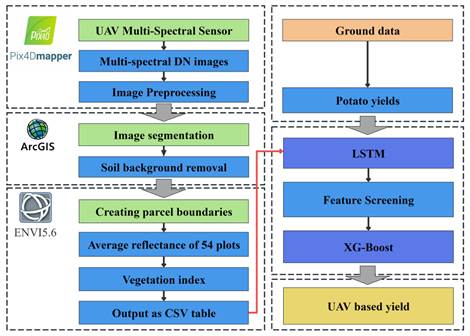
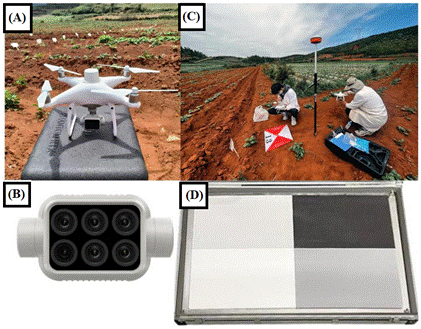
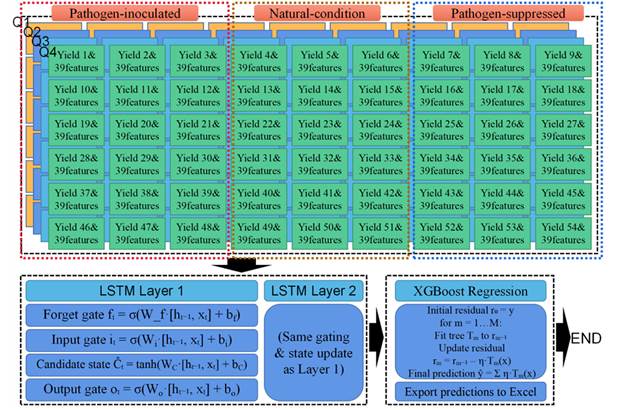
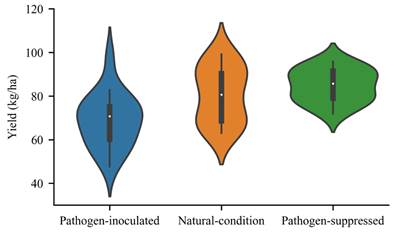
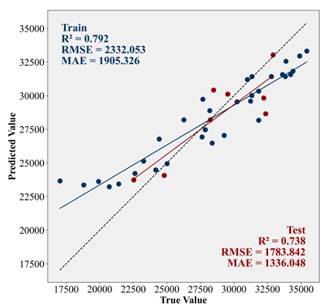
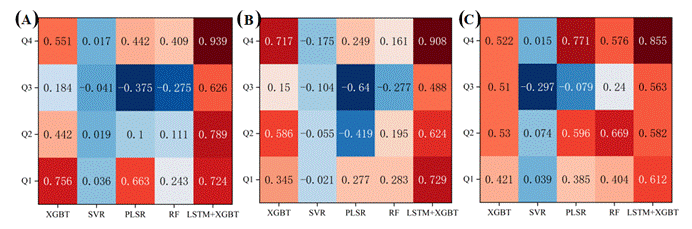
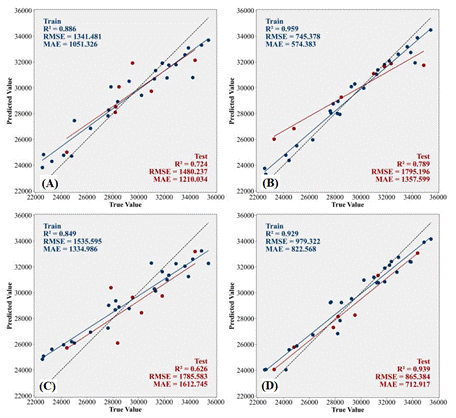
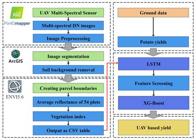
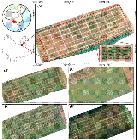
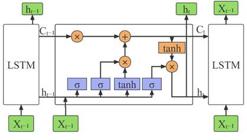
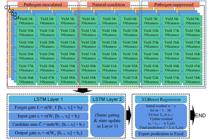
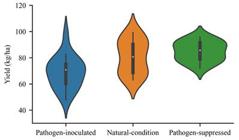
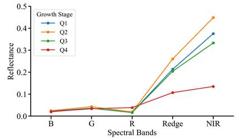
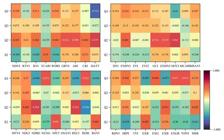
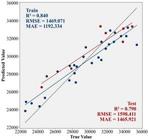
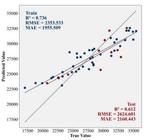
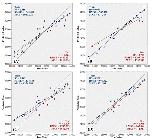
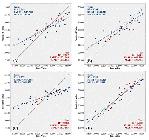
The potato is a key food and cash crop in China, requiring accurate yield forecasting for precision agriculture and timely disease management. This study was conducted on 54 plots (3.5 m × 8 m) in Yunnan Province, with multispectral imagery collected by UAVs at four phenological stages: bud emergence, early flowering, full bloom, and senescence. A hybrid model combining Long Short-Term Memory (LSTM) networks with Extreme Gradient Boosting (XGBoost) was developed to exploit temporal dynamics and regression capacity. In single-stage evaluations, the model performed best at senescence (R² = 0.939, RMSE = 856.4 kg ha-¹, MAE = 712.9 kg ha-¹), indicating strong correlation between vegetation indices and yield. When integrating all stages, the long-sequence model for healthy plots achieved R² = 0.799, RMSE = 1598.4 kg ha-¹, and MAE = 1465.9 kg ha-¹. Incorporating five severely diseased plots slightly reduced performance (R² = 0.738), yet accuracy remained acceptable. To reflect real-world farming conditions, three disease treatments were applied: pathogen-inoculated, pathogen-suppressed with horseradish extract, and natural-disease groups. Across these scenarios, the LSTM-XGBoost consistently outperformed conventional regression models. The results demonstrated that the hybrid approach effectively captures temporal growth dynamics and reduces the influence of disease-induced index anomalies. This study highlighted the potential of integrating deep temporal modeling with ensemble regression for robust potato yield estimation, providing valuable support for precision agriculture and crop management under variable disease pressures.
Key words:
UAV; multispectral; LSTM; XGBoost; potato; yield prediction
 Thumbnail
 Thumbnail
 Thumbnail
 Thumbnail
 Thumbnail
 Thumbnail
 Thumbnail
 Thumbnail
 Thumbnail
 Thumbnail
 Thumbnail
 Thumbnail
 Thumbnail
 Thumbnail
 Thumbnail