
 Brazilian older adults’ vitamin D insufficiency and deficiency: a systematic review and meta-analysis
Abstract
This systematic review and meta-analysis aimed to identify the prevalence of vitamin D insufficiency and deficiency in older Brazilian adults. Design: Systematic review and meta-analysis. The search explored the MEDLINE, EMBASE, and LILACS platforms. Clinical and observational studies published before November 9, 2022, were included. The review was registered in PROSPERO No. 74,732 and evaluated using the adapted Loney scale. The search strategy identified 1,169 articles, of which 26 met the inclusion criteria, totaling 9,606 older adults. The vitamin D deficiency prevalence was 34.2% (95%CI: 25.0-44.6), and the insufficiency prevalence was 35.2% (95%CI: 31.0-39.5). The highest prevalence found was in the southern region (86.3% deficiency) and the southeast (51.4% insufficiency). Cross-sectional studies have shown a similar prevalence of vitamin D deficiency and insufficiency to the overall prevalence (34.2% and 33.7%). A statistically significant difference was found in the studies’ risk of bias assessment (insufficiency subgroup). The results show a high prevalence of vitamin D insufficiency and deficiency in older Brazilian adults, pronounced even in places with higher incidences of sunlight.
Key words:
Vitamin D; Aged; Systematic Review; Prevalence
Resumo
Esta revisão sistemática e metanálise teve como objetivo identificar a prevalência de insuficiência e deficiência de vitamina D em idosos brasileiros. Desenho: Revisão sistemática e meta-análise. A busca explorou as plataformas MEDLINE, EMBASE e LILACS. Estudos clínicos e observacionais publicados antes de 9 de novembro de 2022 foram incluídos. A revisão foi registrada no PROSPERO nº 74.732 e avaliada por meio da escala de Loney adaptada. A estratégia de busca identificou 1.169 artigos, dos quais 26 atenderam aos critérios de inclusão, totalizando 9.606 idosos. A prevalência de deficiência de vitamina D foi de 34,2% (IC95%: 25,0-44,6) e a prevalência de insuficiência foi de 35,2% (IC95%: 31,0-39,5). A maior prevalência encontrada foi na região Sul (86,3% de deficiência) e Sudeste (51,4% de insuficiência). Estudos transversais mostraram uma prevalência de deficiência e insuficiência de vitamina D semelhante à prevalência geral (34,2% e 33,7%). Foi encontrada uma diferença estatisticamente significativa na avaliação do risco de viés dos estudos (subgrupo insuficiência). Os resultados evidenciam uma alta prevalência de insuficiência e deficiência de vitamina D em idosos brasileiros, pronunciada mesmo em locais com maior incidência de luz solar.
Palavras-chave:
Vitamina D; Idosos; Revisão sistemática; Prevalência
Resumen
Esta revisión sistemática y metaanálisis tuvo como objetivo identificar la prevalencia de la insuficiencia y deficiencia de vitamina D en ancianos brasileños. Diseño: Revisión sistemática y metaanálisis. La búsqueda exploró las plataformas MEDLINE, EMBASE y LILACS. Se incluyeron estudios clínicos y observacionales publicados antes del 9 de noviembre de 2022. La revisión fue registrada en PROSPERO nº 74.732 y evaluada mediante la escala de Loney adaptada. La estrategia de búsqueda identificó 1.169 artículos, de los cuales 26 cumplieron los criterios de inclusión, totalizando 9.606 personas mayores. La prevalencia de deficiencia de vitamina D fue de 34,2% (IC95%: 25,0-44,6) y la prevalencia de insuficiencia fue de 35,2% (IC95%: 31,0-39,5). Las prevalencias más altas encontradas fueron en las regiones Sur (86,3% de deficiencia) y Sureste (51,4% de insuficiencia). Estudios transversales han mostrado una prevalencia de deficiencia e insuficiencia de vitamina D similar a la prevalencia general (34,2% y 33,7%). Se encontró una diferencia estadísticamente significativa en la evaluación del riesgo de sesgo de los estudios (subgrupo insuficiencia). Los resultados muestran una alta prevalencia de insuficiencia y deficiencia de vitamina D en ancianos brasileños, acentuada incluso en lugares con mayor incidencia de luz solar.
Palabras clave:
Vitamina D; Adultos mayores; Revisión sistemática; Prevalencia
Introduction
There is a growing increase in life expectancy and aging in the global population1. In Brazil, according to the Brazilian Institute of Geography and Statistics (IBGE), of the total of 212.7 million Brazilians, 31.2 million were older adults in 2021. The number corresponds to 14.7% of the country’s population2. Projections indicate that by 2060, about 25.5% of the Brazilian population will be older adults. There will be 58.2 million older persons in Brazil3. Among older people, hypovitaminosis D (HYPOD) is one of the most common nutritional deficiencies4,5 and has been reported for some time in various parts of the world6-10.
Vitamin D (VD) comprises a group of fat-soluble secosteroids10, and the primary method for VD synthesis is exogenous, from exposure to ultraviolet B (UVB) rays4. However, it can also be obtained through diet and vitamin supplementation4,10. Although food is relatively poor in VD and diet is a much less important source of this nutrient10, the primary sources are fatty fish, liver, egg yolk, and fortified products10. VD status decreases with age due to low sun exposure, daily and necessary sunscreen use, reduced outdoor activity, reduced skin synthesis, and decreased dietary intake5,6,11. Moreover, some older adults have additional risk factors, such as decreased gastrointestinal absorption, and medications may interfere with VD absorption and metabolism8,10.
The VD is measured in the blood through 25 hydroxyvitamin D (25[OH]D), and its serum concentration may vary according to the season9,12,13 and geographic region/latitude14. VD skin production depends on the length of sun exposure and skin pigmentation15. In Brazil, a country with a tropical/subtropical geographic region, differences in serum concentrations of 25(OH)D can be observed when comparing the regions nearest or furthest from the Equator, as well as the differential climates across the country. Nevertheless, there is a high prevalence of VD deficiency even in regions with higher solar incidence due to the population staying indoors during the day/work and low sun exposure16.
We must still consider laboratory analysis and diagnosis of HYPOD. The laboratory tests show up to ~21% variations in their analyses17,18. In Brazil, guidelines published in 2017 and revised in 2020 recommend 30 to 60 ng/ml values for individuals in the risk group, including older adults. However, they still recommend using methods that do not employ direct immunological detection10,19.
Some researchers have already evaluated the prevalence of VD deficiency in Brazil20-23. Unlike previously published studies, this meta-analysis verified the prevalence of vitamin D deficiency and insufficiency in a specific population: Brazilian older people (>60 years old). We evaluated the characteristics of the original research in Brazil, and the population studied, considering variables such as the region and the laboratory technique used. This systematic review study went through a detailed and careful construction process, following pre-established methodological standards aimed at the quality of evidence. According to the macro-region, this study proposed to identify the prevalence of VD insufficiency and deficiency in older adults in Brazil and identify study characteristics through a systematic review and meta-analysis.
Methods
This study was conducted following the Brazilian Ministry of Health’s guidelines24,25 and Meta-Analysis of observational studies in epidemiology MOOSE26. The review was registered in the International Prospective Register of Systematic Reviews - PROSPERO (registration number CRD42017074732). Two independent reviewers performed all steps, and a third reviewer when necessary.
The PICo acronym formulated the research question: population, intervention, comparison group, outcome, and study design and was used to guide the determination of inclusion and exclusion criteria for this review24,25.
Data sources and search strategy
The search was comprehensive, without filters, regardless of language, type of study, and year of publication. The database search was performed in November 2022, covering the bibliographic databases: MEDLINE, EMBASE, and Latin American and Caribbean Health Sciences Literature (LILACS). The descriptors used also followed the PICo word strategy. Secondary searches (gray literature) were performed24 in the Catalog of Theses and Dissertations - CAPES (Coordination for the Improvement of Higher Level Personnel), most frequently cited journals, Web of Science Main Collection, and manual searches in the bibliographic references. In PubMed, the search strategy was performed using the terms in all search fields (Scielo Data: https://doi.org/10.48331/scielodata.R8SS5C). Appropriate modifications were made for searches in the other databases.
Study Selection
After the search, the studies were screened, and duplicates and ineligible files were removed. Initially, study eligibility was verified by reading the title and abstract, following the protocol standardized by the authors. Subsequently, a complete reading was performed. Studies were kept if they contained original data (reviews and experimental studies using animals were excluded), were conducted in Brazil, were published before November 09/2022, and were written in any language. Studies of clinical or observational design carried out in Brazil evaluating older adult participants (≥60 years old) of any gender were included. Those studies with older adults who presented skin pathologies, gastrointestinal tract, liver, and advanced kidney disease were excluded. The studies should evaluate VD deficiency <20 ng/ml, insufficiency 21-29 ng/ml, and sufficiency >30 ng/ml, determined by serum 25(OH)D concentration27. For sample representativeness, studies evaluating >100 individuals were included. The most recent publication was considered for the studies presenting more than one publication from the same sample; however, substantial data were extracted from all publications.
Data extraction
The authors developed a data extraction protocol. Contact was made with the study authors to obtain unavailable data when necessary. The included studies were grouped by similarities, and their results were interpreted, aiming to answer the research question. In this sense, criteria for identification and description of results were established: Most of the authors answered the questions; however, the remaining unavailable data was described as not identified (NI) or not analyzed (NA). Studies that did not present VD deficiency and insufficiency prevalence data were excluded. Data from the adult age group were extracted from studies that evaluated different age groups. An institutionalized older adult was defined as someone residing in a long-term institution (LTI), and a non-institutionalized older adult was not a resident in the LTI. The classification in seasons was carried out according to the data collection: summer (December to March), autumn (April to June), winter (July to September), and spring (October to November). The seasons were grouped into autumn/winter (cold) and spring/summer (warm). The serum concentration of 25(OH)D was used to indicate (deficient, insufficient, or sufficient). Studies using the cutoff point included deficiency <20ng/ml, insufficiency 21-29 ng/ml, and sufficiency>30 ng/ml27.
Risk of bias assessment
The adapted scale of Loney et al.28 was used. The authors created a manual to adjust the tool to the objectives of this systematic review and standardize operations. The scale valued: methods (study design, sampling meth, sampling frame, sample size, the response rate adequate, outcome measured in an unbiased fashion, objective suitable, standard criteria and appropriate for the research question) and results (described in detail and estimates of prevalence/incidence given with confidence intervals in fact by subgroup). A consensus was established to classify studies according to their score: studies from 1 to 2 points (risk of high bias), 3 to 5 points (risk of moderate bias), and more than 5 (risk of low bias).
Statistical analysis
R software version 4.1.2 with meta version 5.2-0 package was used for all analyses29. Meta-analysis of single proportions was calculated with logit transformation (metaprop function) to pool the VD deficiency and insufficiency prevalence across the studies. The variance between studies was estimated by the maximum likelihood method. Heterogeneity across studies was assessed by Cochran Q test and I2 statistic. Also, confidence intervals were estimated to provide a range of expected VD deficiency and insufficiency prevalence.
Subgroup analysis and meta-regression (metareg function) were conducted to explore possible sources of heterogeneity in the prevalence across studies. The following variables were included in the analyses: region (South, Southeast, Midwest, and Northeast); study design (cross-sectional, case-control, cohort, and clinical); study quality (risk of high, moderate, and low) and 25(OH)D laboratory technique (chemiluminescence - CLIA, high-performance liquid chromatography - HPLC, radioimmunoassay, electrochemiluminescence, immunoradiometric, chemiluminescence microparticle immunoassay and liquid chromatography with mass spectrometry - LCMS/MS). In addition, we presented forest plots for the overall prevalence of VD deficiency and insufficiency according to Brazilian regions. Publication bias was assessed using the Doi plot and Luis Furuya-Kanamori asymmetry index (LFK index). In the presence of symmetry, one can conclude that there is no publication bias, but in the absence of symmetry, one can expect publication bias. This publication bias was measured by the asymmetry index (LFK index). An LFK index within ±1, out of ±1 but within ±2, and >±2 means no asymmetry, minor asymmetry, and major asymmetry, respectively30.
Results
Study selection and study characteristics within studies
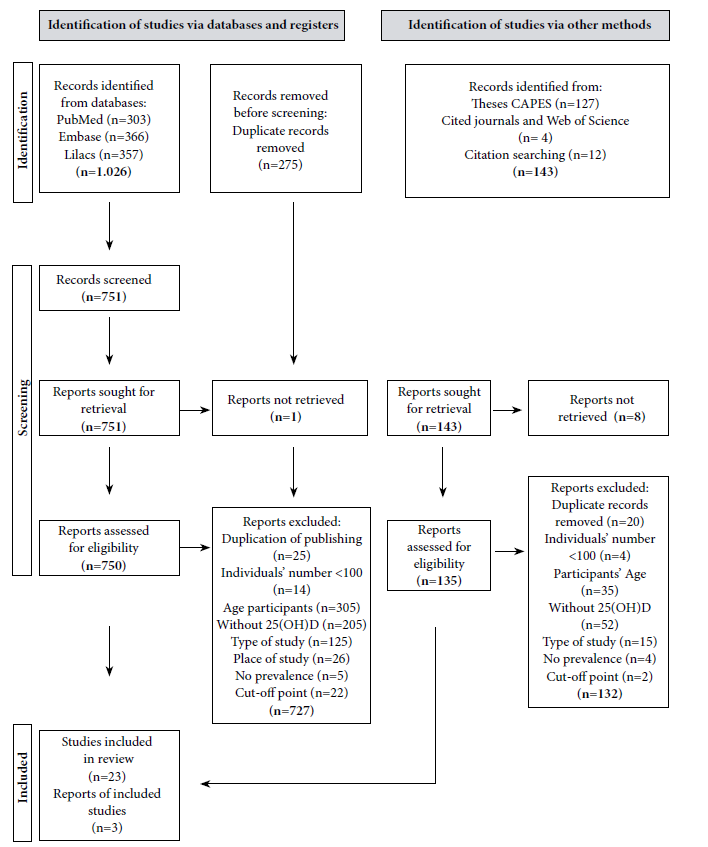
The search strategy identified 1,169 articles, of which 26 met the inclusion criteria for the systematic review and meta-analyses. The study selection process is described in the flowchart (Figure 1).
Regarding the study’s characteristics, 9,606 older adults were included in the analyses. The sample size of studies ranged from 109 to 2,263, and only 3.8% of studies (n=1) included individuals who lived in long-stay institutions. Sixty-one percent of the studies (n=16) were published in the last five years, and the age of the older adults varied from 60.4 to 85.5 years (data not shown). Sixty-nine percent of the studies (n=18) were conducted with older adults of white skin color (data not shown). The studies were mainly carried out in the southeast region (n=12; 46%), compared to the south (n=6; 23%) and northeast (n=6; 23%). Fifteen (57.6%) studies collected data in the year’s four seasons, and 73% (n=19) of studies had convenience sampling. Most studies were cross-sectional (n=20; 76.9%). The VD deficiency prevalence ranged from 0.8%31 to 86.29%32, and insufficiency prevalence ranged from 11.29%32 to 51.36%33 (Table 1).
Risk of bias assessment
Most studies were classified as having a moderate risk of bias (n=16, 61.5%). Six studies (23%) had a low risk of bias, and four (15%) had a high risk (Table 2). Studies obtained lower scores in domains 1 and 4, referring to study design (census or random) and measurement of 25(OH)D (gold standard laboratory analysis). The domains that obtained the highest scores were 5 and 6, referring to the laboratory test/25(OH)D classification (blood analysis and adequate cut-off points for classification) and the loss of participants during the study (less than 30%).
A publication bias was detected for insufficiency outcome (LFK index =-3.14), whereas no publication bias was detected for deficiency outcome (LFK index =-0.47).
Prevalence of vitamin D deficiency and insufficiency
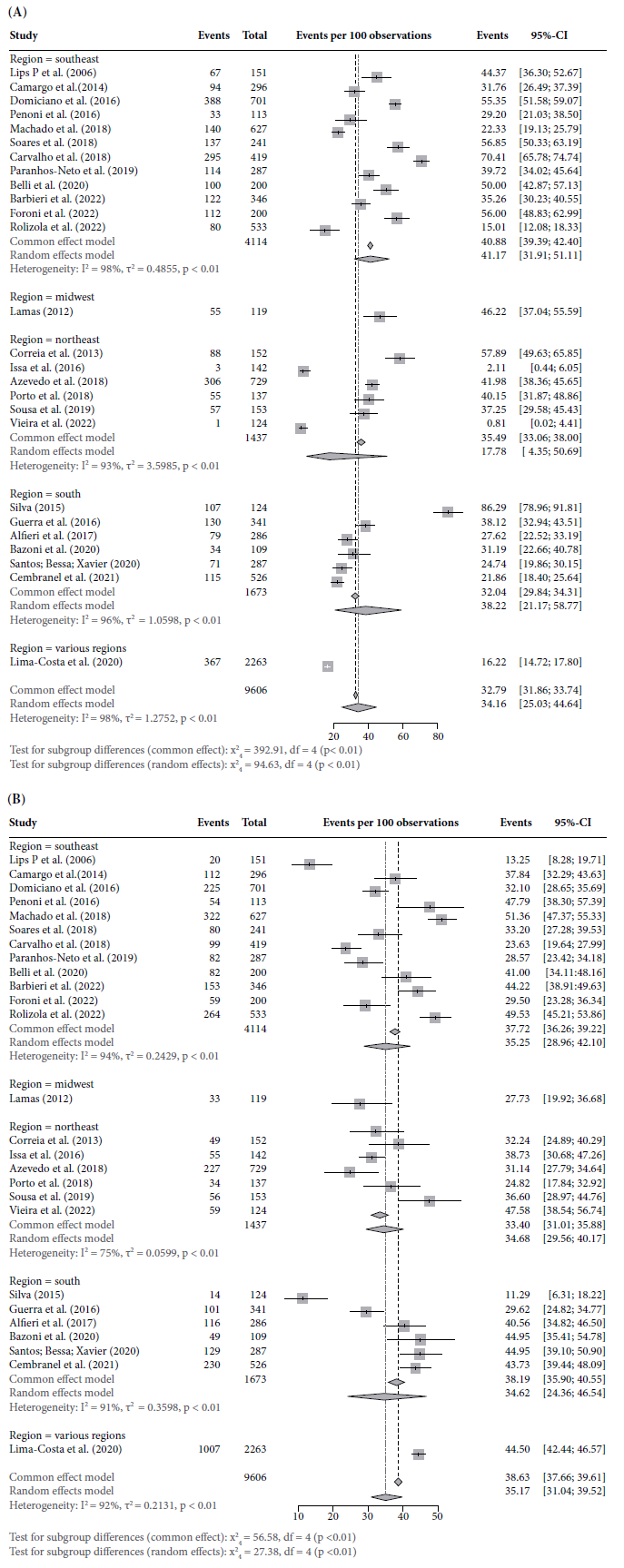
The studies have shown an overall VD deficiency prevalence of 34.2% (95%CI: 25.0-44.6) and an insufficiency prevalence of 35.2% (95%CI: 31.0-39.5). The highest overall VD deficiency prevalence was found in the study from the south region at 86.29% (95%CI: 78.96-91.81), and the lowest prevalence was found in the study from the northeast at 0.81% (95%CI: 0.02-4.41). The highest overall VD insufficiency prevalence was found in a study from the southeast at 51.36% (95%CI: 47.37-55.33), and the lowest prevalence was found in the study from the south at 11.29% (95%CI: 6.31-18.22) (Figure 2).
Meta-analysis of the proportion of Vitamin D deficiency (A) and insufficiency (B) prevalence in older adults in Brazil.
Subgroup and Meta-regression Analyses
Cross-sectional studies have shown a similar prevalence of VD insufficiency and deficiency (33.7% 95%CI: 28.8-39.0 and 34.2% 95%CI: 22.8-47.7) to the overall prevalence found (35.2 and 34.2%, respectively). No statistically significant difference was found between the types of study (deficiency p=0.90 and insufficiency p=0.50).
The results found in the risk of bias assessment42 demonstrated that studies with a moderate rating showed a prevalence of VD deficiency (34.6% 95%CI: 25.1-45.4), similar to the overall prevalence (34.2%). On the other hand, studies with low scores showed a VD deficiency prevalence (33.7% 95%CI: 23.5-45.8), similar to the overall prevalence (35.2%). Regarding the prevalence of VD insufficiency, there was a statistically significant difference between these groups (p=0.05). However, no statistically significant difference was observed between these groups regarding the prevalence of VD deficiency (p=0.49).
The most used laboratory technique was CLIA (n=14; 53.8%). There was no statistically significant difference between the laboratory techniques used to assess VD deficiency and insufficiency (p=0.67 and p=0.84). Studies using CMIA and ECL have shown a higher prevalence of VD insufficiency (41.7% 95%CI: 34.3-49.6 and 38.1% 95%CI: 27.4-50.1) and studies that used HCPL (gold standard) showed a lower prevalence of VD deficiency (14.8% 95%CI: 0.9-77.2) (Table 3).
Discussion
This systematic review identified that the VD deficiency prevalence in older adults in Brazil was highest in the South and Southeast regions, and insufficiency prevalence was highest in the Southeast studies. HYPOD was considered high for the country (70.4%). The gold standard laboratory technique (HCPL) had a lower rating of VD deficiency. A statistically significant difference was found in the risk of bias assessment of the studies (insufficiency subgroup).
Analyzing the VD deficiency and insufficiency prevalence among the regions, the evidence is directly linked to the latitude and solar radiation of the country, where the Northeast, Midwest, Southeast, and South Regions deviate from the Equator line. The closer to the equator, the lower the latitude, and the greater the solar incidence interfered with the UVB radiation received by the region and, consequently, affected the cutaneous synthesis of VD15,55-57.
Brazil has a predominantly hot climate and high sunlight incidence55. Studies have identified a high prevalence of VD insufficiency and deficiency even with these climatic characteristics.
Another review found a high prevalence of HYPOD in Brazil (73.42%, different age groups)21. The HYPOD prevalence varies significantly in regions of the world and the characteristics of each population. A systematic review examined 25(OH)D standards worldwide58, and the results showed that 37.3% of the studies had mean values below 20 ng/mL. Exploratory analysis suggested that newborns and institutionalized older adults had lower 25(OH)D values in various regions worldwide. The study with the Portuguese adult population found a 96.4% prevalence of VD deficiency59. In China, VD inadequacy was found in 63.2% of adults and 46.8% of children and adolescents60. In Korean adults, 71.4% present VD deficiency61. These studies indicated a significant association between deficiency and advancing age.
Other studies that evaluated the VD deficiency prevalence found the following results: Africa (59.5%)62, China (70.3%)63, and the United States (17.4%)63. The study of 30 Asian countries revealed a VD deficiency prevalence in 54% of the population64. In Europe, the prevalence of VD deficiency was about 40%65; however, in the southern European countries, including some Eastern Mediterranean countries, the average estimate of VD deficiency in older adults was 16%. Variability is related to differences in study populations and characteristics, such as the time of blood collection and the method of assessing circulating 25(OH)D9.
Two other studies found results of VD deficiency prevalence at 86.3% and 70.4%, respectively34,45. The collection of these studies was carried out predominantly in the colder seasons. The sun’s zenith angle results in a greater incidence of UVB through the ozone layer when increased. For this reason, lower serum concentrations of 25(OH)D are produced in winter66. In addition, people reduce exposure to the sun and tend to wear more clothes in cold seasons67-69. Avoiding heat was a determinant for values below 25(OH)D in older adults70,71. The degree of urbanization also significantly impacts the increase in the HYPOD prevalence since residents of urban areas generally work and spend most of the day indoors. The lowest rates of VD deficiency and insufficiency occur in populations living in rural areas16,72. Air pollution in urban areas also acts as a barrier to UVB light, limiting endogenous VD synthesis17,73.
The literature points out that the aging process causes a decrease in 7-dehydrocholesterol production, reducing up to 70% in VD production66,74,75. A population-based study demonstrated a VD insufficiency prevalence [serum 25(OH)D<50 nmol/L] of 36.7% in centenarians compared to 22.5% in octogenarians (p<0.02)76. In addition, older adults gradually lose their ability to adapt to the environment: their decreased cognitive functions, autonomy, and independence cause greater vulnerability and incidence of pathological processes77,78. The result is reduced social life and isolation in their homes or long-term institutions79,80.
HYPOD can be treated or prevented by creating new programs and strategies to encourage daily sun exposure. Guidelines should include the benefits of sun exposure and exemplify the times, timing, and correct form. About 80-95% of the VD used by the body is obtained through sun exposure81. Therefore, exposure of~20% of the body surface to direct sunlight is required. The consensus on adequate VD production refers to sun exposure with an average of 5-15 minutes, between 10 and 15h, three times a week10,19,27,57.
Most studies included in this systematic review used the observational study design. Cross-sectional studies aim to evaluate the population in a single moment, identifying characteristics, profiles, and distribution patterns82. However, the literature reports that these studies may present biases83. To evaluate these biases, scales that classify studies qualitatively are used25. The validity of studies prevalence is determined as a function of sampling, measurement, and results, which are the criteria used in the tool proposed by Loney et al.28. We scored studies that had a census sample, that performed sample calculation, using the measurement of 25(OH)D by the gold standard of analysis, the loss of participants less than 30%, that reported the prevalence with confidence intervals, and used criteria of adequate exclusion (subjects did not use VD supplementation and medications that may interfere with the formation and degradation of VD). Most of the included studies had a moderate risk of bias. There was a statistically significant difference between the bias classification groups, specifically in the prevalence of VD insufficiency. The Doi Plot, a publication bias was detected for insufficiency outcome (data not shown). Therefore, the quality of the study may interfere with the classification of the VD insufficiency prevalence, overestimating or underestimating it30.
The cutoff point for classifying VD values still needs to be well established. Most researchers list values lower than 10 ng/mL as severe deficiency, <20 ng/mL as moderate deficiency, and values >30 ng/mL as adequate. However, some authors describe values between 32-40 ng/mL as ideal84,85. In Brazil, a new positioning was published in 2017 and revised in 2020; this guideline is commonly used in clinical practice. The consensus classifies VD deficiency values below 20 ng/mL (50 nmol/L) for the healthy population. Values of 30 to 60 ng/ml are recommended for individuals in the risk group (such as older people)10,27. The Brazilian Association of Nutrology, 201927 suggested a diagnostic criterion where vitamin D insufficiency is assessed (deficiency <20 ng/ml, insufficiency 21-29 ng/ml, and sufficiency >30 ng/ml), and this classification can be recommended for research practice.
Currently, several laboratory techniques are used to evaluate the 25(OH)D serum concentration. LCMS/MS or HPLC are accepted as the standard gold measurement because they produce greater sensitivity, precision, and correction of the samples18. However, they are challenging to execute and are expensive19,62,63,86,87. The most used laboratory techniques are antibody assays and non-radioactive markers, but sensitivity may vary from 12.5 to 40.3%88. Considering this sensitivity range, the chosen laboratory technique interferes with the result, the diagnosis, and, consequently, the prevalence. Although there was no statistically significant difference between the groups, the prevalence of VD deficiency was lower in the studies (n=2) that used the HPLC technique.
The heterogeneity of the included studies was considered high. A high statistical inconsistency is often expected in prevalence estimates meta-analyses since the studies were conducted differently, in different regions, and showed populations with other characteristics associated with VD insufficiency and deficiency prevalence89. Nonetheless, subgroup and meta-regression analyses were performed to assess and explain heterogeneity reasons.
This systematic review has limitations. The studies had a limited sample and moderate bias. Due to the absence of data on specific variables, it was impossible to meta-analyze them. The risk of bias of the studies showed a statistically significant difference in the prevalence of VD insufficiency. Few studies have been conducted in the Midwest.
In contrast, this review strictly followed the current recommendations for conducting systematic reviews. The broad search identified all studies that performed 25(OH)D serum measurements among Brazilian older adults. The authors used standardized protocols. The random-effects meta-analysis model evaluated the subgroups and explored heterogeneity between studies.
Conclusion
The results revealed a high HYPOD prevalence in Brazilian older adults. The prevalence of VD deficiency was higher in the South and Southeast regions, and insufficiency prevalence was highest in the Southeast studies. Further research is needed on the associated factors for evaluation using proper laboratory techniques. Considering the global aging of the population, it is essential to investigate the serum levels of 25(OH)D in older adults. Identifying the prevalence of vitamin D deficiency and insufficiency in older Brazilian adults produces a portrait of the community’s situation to support as a basis for discussions, assessment, and appropriate treatment and to support public policies for the older Brazilian adult population.
References
-
1 United Nations Ageing. Trends in population Ageing. World Population Prospects: the 2019 Highlights [Internet]. 2019 [cited 2023 jun 10]. Available from: https://population.un.org/wpp/publications/files/wpp2019_highlights.pdf
» https://population.un.org/wpp/publications/files/wpp2019_highlights.pdf -
2 Instituto Brasileiro de Geografia e Estatística (IBGE). Pesquisa Nacional por Amostra de Domicílios [Internet]. 2020 [acessado 2023 jun 10]. Disponível em: https://www.ibge.gov.br/estatisticas/sociais/trabalho/9171-pesquisa-nacional-por-amostra-de-domicilios-continua-mensal.html
» https://www.ibge.gov.br/estatisticas/sociais/trabalho/9171-pesquisa-nacional-por-amostra-de-domicilios-continua-mensal.html -
3 Instituto Brasileiro de Geografia e Estatística (IBGE). Projeção da população do Brasil por sexo e idade para o período 2000/2060 [Internet]. [acessado 2023 jun 10] Disponível em: https://ftp.ibge.gov.br/Projecao_da_Populacao/Projecao_da_Populacao_2013/nota_metodologica_2013.pdf
» https://ftp.ibge.gov.br/Projecao_da_Populacao/Projecao_da_Populacao_2013/nota_metodologica_2013.pdf - 4 Huang C, Huang Y, Lai Y, Sun C. Prevalence and predictors of hypovitaminosis D among the elderly in subtropical region. PloS One 2017; 12(7):e0181063.
- 5 Bischoff-Ferrari HA. Vitamin D in geriatric patients. Der Internist 2020; 61(6):535-540.
- 6 Holick MF. The vitamin D deficiency pandemic: Approaches for diagnosis, treatment and prevention. Rev Endocr Metab Disord 2017; 18(2):153-165.
- 7 Kweder H, Eidi H. Vitamin D deficiency in elderly: Risk factors and drugs impact on vitamin D status. Avicenna J Med 2018; 8(4):139-146.
- 8 Bischofova S, Dofkova M, Blahova J, Kavrik R, Nevrla J, Rehurkova I, Ruprich J. Dietary Intake of Vitamin D in the Czech Population: A Comparison with Dietary Reference Values, Main Food Sources Identified by a Total Diet Study. Nutrients 2018; 10(10):1452.
- 9 Manios Y, Moschonis G, Lambrinou C, Tsoutsoulopoulou K, Binou P, Karachaliou A, Breidenassel C, Gonzalez-Gross M, Kiely M, Cashman K. A systematic review of vitamin D status in southern European countries. Eur J Nutr 2018; 57(6):2001-2036.
- 10 Moreira C, Ferreira C, Madeira M, Silva B, Maeda S, Batista M, Bandeira F, Borba V, Lazaretti-Castro M. Reference values of 25-hydroxyvitamin D revisited: a position statement from the Brazilian Society of Endocrinology and Metabolism (SBEM) and the Brazilian Society of Clinical Pathology/Laboratory Medicine (SBPC). Arch Endocrinol Metabol 2020; 64(4):462-478.
- 11 Gupta R, Behera C, Paudwal G, Rawat N, Baldi A, Gupta P. Recent Advances in Formulation Strategies for Efficient Delivery of Vitamin D. AAPS PharmSciTech 2018; 20(1):11.
- 12 Lara Alvarez S, Bell K, Ward N, Cooke C, Inder W. Seasonality of hip fracture and vitamin D deficiency persists in a sub-tropical climate. Intern Med J 2019; 49(8):1029-1032.
- 13 Sousa S, Sales M, Araújo J, Sena-Evangelista K, Lima K, Pedrosa L. High Prevalence of Hypovitaminosis D in Institutionalized Elderly Individuals is Associated with Summer in a Region with High Ultraviolet Radiation Levels. Nutrients 2019; 11(7):1516.
- 14 Griffin T, Wall D, Blake L, Griffin D, Robinson S, Bell M, Mulkerrin E, O'Shea P. Higher risk of vitamin D insufficiency/deficiency for rural than urban dwellers. J Steroid Biochem Mol Biol 2020; 197:105547.
- 15 Holick MF, Chen TC, Lu Z, Sauter E. Vitamin D and skin physiology: a D-lightful story. J Bone Miner Res 2007; 22(Supl. 2):V28-V33.
- 16 Lee M, Hsu H, Wu I, Sun C, Ting M, Lee C. Vitamin D deficiency in northern Taiwan: a community-based cohort study. BMC Public Health 2019; 19(1):337.
- 17 Feizabad E, Hossein-Nezhad A, Maghbooli Z, Ramezani M, Hashemian R, Moattari S. Impact of air pollution on vitamin D deficiency and bone health in adolescents. Arch Osteoporos 2017; 12(1):34.
- 18 Mácová L, Bicíková M. Vitamin D: Current Challenges between the Laboratory and Clinical Practice. Nutrients 2021; 13(6):1758.
- 19 Ferreira C, Maeda S, Batista M, Lazaretti-Castro M, Vasconcellos L, Madeira M, Soares L, Borba V, Moreira C. Consensus - reference ranges of vitamin D [25(OH)D] from the Brazilian medical societies. Brazilian Society of Clinical Pathology/Laboratory Medicine (SBPC/ML) and Brazilian Society of Endocrinology and Metabolism (SBEM). J Bras Patol Med Lab 2017; 53:377-381.
- 20 Lopes J, Fernandes G, Takayama L, Figueiredo C, Pereira R. A predictive model of vitamin D insufficiency in older community people: from the Sao Paulo Aging & Health Study (SPAH). Maturitas 2014; 78(4):335-340.
- 21 Pereira-Santos M, Santos J, Carvalho G, Santos D, Oliveira A. Epidemiology of vitamin D insufficiency and deficiency in a population in a sunny country: Geospatial meta-analysis in Brazil. Crit Rev Food Sci Nutr 2019; 59(13):2102-2109.
- 22 Eloi M, Horvath D, Szejnfeld V, Ortega J, Rocha D, Szejnfeld J, Castro C. Vitamin D deficiency and seasonal variation over the years in Sao Paulo, Brazil. Osteoporos Int 2016; 27(12):3449-3456.
- 23 Lima-Costa M, Mambrini J, Souza-Junior P, Andrade F, Peixoto S, Vidigal C, Oliveira C, Vidigal P. Nationwide vitamin D status in older Brazilian adults and its determinants: The Brazilian Longitudinal Study of Aging (ELSI). Sci Rep 2020; 10(1):13521.
- 24 Brasil Ministério da Saúde (MS). Diretrizes Metodologicas: Elaboração de revisão sistemática e metanálise de estudos observacionais comparativos sobre fatores de risco e prognóstico. Brasília: MS; 2014.
- 25 Brasil Ministério da Saúde (MS). Diretrizes metodológicas: elaboração de revisão sistemática e metanálise de ensaios clínicos randomizados. Brasília: MS; 2012.
- 26 Stroup D, Berlin J, Morton S, Olkin I, Williamson G, Rennie D, Moher D, Becker B, Sipe T, Thacker S. Meta-analysis of observational studies in epidemiology: a proposal for reporting. Meta-analysis Of Observational Studies in Epidemiology (MOOSE) group. JAMA 2000; 283(15):2008-2012.
- 27 Ribas Filho D, Almeida C, Oliveira Filho A. Posicionamento atual sobre vitamina D na prática clínica: Posicionamento da Associação Brasileira de Nutrologia (Abran). Int J Nutrol 2019; 12:82-96.
- 28 Loney P, Chambers L, Bennett K, Roberts J, Stratford P. Critical appraisal of the health research literature: prevalence or incidence of a health problem. Chronic Dis Can 1998; 19(4):170-176.
- 29 G. Meta-Analysis in R. In: Egger M, Higgins JPT, Smith GD, editors. Systematic Reviews in Health Research: Meta-Analysis in Context. Wiley; 2022. p. 510-534.
- 30 Furuya-Kanamori L, Barendregt JJ, Doi SAR. A new improved graphical and quantitative method for detecting bias in meta-analysis. JBI Evid Implement 2018; 16(4):195-203.
- 31 Vieira N, Nascimento C, Silva Nascimento J, Vasconcelos S, Barros-Neto J, Santos A. 25-hydroxyvitamin D insufficiency and inflammation increase cardiovascular risk in older people. Exp Gerontol 2022; 165:111864.
- 32 Silva G. Avaliação dos níveis de vitamina D em idosos hospitalizados [dissertação]. Passo Fundo: Universidade de Passo Fundo; 2015.
- 33 Machado M, Sousa Almeida-Filho B, Luca Vespoli H, Schmitt E, Nahas-Neto J, Nahas E. Low pretreatment serum concentration of vitamin D at breast cancer diagnosis in postmenopausal women. Menopause 2019; 26(3):293-299.
- 34 Lips P, Hosking D, Lippuner K, Norquist J, Wehren L, Maalouf G, Ragi-Eis S, Chandler J. The prevalence of vitamin D inadequacy amongst women with osteoporosis: an international epidemiological investigation. J Internal Med 2006; 260(3):245-254.
- 35 Lamas T. Associação entre densidade mineral óssea e status da vitamina D em mulheres idosas [dissertação]. Brasília: Universidade Católica de Brasília; 2012.
- 36 Correia L, Sodré F, Garcia G, Sabino M, Brito M, Kalil F, Barreto B, Lima J, Noya-Rabelo M. Relation of severe deficiency of vitamin D to cardiovascular mortality during acute coronary syndromes. Am J Cardiol 2013; 111(3):324-327.
- 37 Camargo M, Kunii L, Hayashi LF, Muszkat P, Anelli C, Marin-Mio R, Martini L, França N, Lazaretti-Castro M. Modifiable factors of vitamin D status among a Brazilian osteoporotic population attended a public outpatient clinic. Arq Bras Endocrinol Metabol 2014; 58(5):572-582.
- 38 Domiciano D, Machado L, Lopes J, Figueiredo C, Caparbo V, Oliveira R, Scazufca M, McClung M, Pereira R. Bone Mineral Density and Parathyroid Hormone as Independent Risk Factors for Mortality in Community-Dwelling Older Adults: A Population-Based Prospective Cohort Study in Brazil. The São Paulo Ageing & Health (SPAH) Study. J Bone Miner Res 2016; 31(6):1146-1157.
- 39 Guerra M, Feron E, Viana R, Maboni J, Pastore S, Castro C. Elderly with proximal hip fracture present significantly lower levels of 25-hydroxyvitamin D. Rev Bras Ortop 2016; 51:583-588.
- 40 Issa C, Silva A, Toscano L, Medeiros M, Persuhn D, Silva Diniz A, Costa M, Gonçalves M. Relationship between cardiometabolic profile, vitamin D status and BsmI polymorphism of the VDR gene in non-institutionalized elderly subjects: Cardiometabolic profile, vitamin D status and BsmI polymorphism of the VDR gene in non-institutionalized elderly subjects. Exp Gerontol 2016; 81:56-64.
- 41 Penoni D, Torres S, Farias M, Fernandes T, Luiz R, Leão A. Association of osteoporosis and bone medication with the periodontal condition in elderly women. Osteoporos Int 2016; 27(5):1887-1896.
- 42 Alfieri D, Lehmann M, Oliveira S, Flauzino T, Delongui F, Araújo M, Dichi I, Delfino V, Mezzaroba L, Simão A, Reiche E. Vitamin D deficiency is associated with acute ischemic stroke, C-reactive protein, and short-term outcome. Metabol Brain Dis 2017; 32(2):493-502.
- 43 Azevedo M, Bandeira L, Luza C, Lemos A, Bandeira F. Vitamin D Deficiency, Skin Phototype, Sun Index, and Metabolic Risk Among Patients with High Rates of Sun Exposure Living in the Tropics. J Clin Aesthet Dermatol 2018; 11(8):15-18.
- 44 Soares A, Szejnfeld V, Enokihara M, Michalany N, Castro C. High serum 25-hydroxyvitamin D concentration in patients with a recent diagnosis of non-melanoma skin cancer: a case-control study. Eur J Dermatol 2018; 28(5):649-653.
- 45 Carvalho V, Moreira PP, Nascimento NP, Bertolini A, Aragao L, Cendoroglo M. The influence of 25-hydroxyvitamin D and High-Density Lipoprotein Cholesterol on BIA Resistance results and aging on BIA Reactance results in elderly people. Clin Nutr ESPEN 2018; 27:92-95.
- 46 Porto C, Silva V, Luz J, Markman Filho B, Silveira V. Association between vitamin D deficiency and heart failure risk in the elderly. ESC Heart Fail 2018; 5(1):63-74.
- 47 Paranhos Neto F, Vieira Neto L, Madeira M, Moraes A, Mendonça L, Lima I, Chagas C, Lira D, Spitz J, Guimarães J, Duarte M, Farias M. Vitamin D deficiency is associated with cortical bone loss and fractures in the elderly. Eur J Endocrinol 2019; 181(5):509-517.
- 48 Bazoni J, Ciquinato D, Marquez A, Costa V, Marchiori G, Marchiori L. Hypovitaminosis D, Low Bone Mineral Density, and Diabetes Mellitus as Probable Risk Factors for Benign Paroxysmal Positional Vertigo in the Elderly. Int Arch Otorhinolaryngol 2020; 24:272-277.
- 49 Santos C, Bessa T, Xavier A. Fatores associados à demência em idosos. Cien Saude Colet 2020; 25(2):603-611.
- 50 Belli M, Martin R, Brescia M, Nascimento Junior C, Massoni Neto L, Arap S, Ferraz-de-Souza B, Moyses R, Peacock M, Montenegro F. Acute and long-term kidney function after parathyroidectomy for primary hyperparathyroidism. PloS One 2020; 15(12):e0244162.
- 51 Cembranel F, Boing A, Boing A, Xavier A, d'Orsi E. Association between deficient and insufficient 25(OH)D serum concentrations and cardiometabolic risk factors: Findings of a population-based study with older adults of southern Brazil. Prev Med Rep 2021; 24:101587.
- 52 Barbieri L, Silva M, Orlandi F, Santos-Orlandi A Pavarini SI, Gramani-Say K, Gomes G, Zazzetta M, Pott-Junior H. 25-hydroxyvitamin D in older adults: Which factors really matter? Geriatr Nurs 2022; 44:84-89.
- 53 Foroni M, Cendoroglo M, Sakane E, Marin-Mio R, Moreira P, Maeda S, Lazaretti-Castro M. Serum 25 hydroxyvitamin D concentrations in individuals over 80 years old and their correlations with musculoskeletal and health parameters. Endocrine 2023; 79(3):559-570.
- 54 Rolizola P, Freiria C, Silva G, Brito T, Borim F, Corona L. Vitamin D insufficiency and factors associated: a study with older adults people from primary health care network. Cien Saude Colet 2022; 27(2):653-663.
- 55 Carvalho E, Araújo P. Leituras cartográficas e interpretações estatísticas I. 2ª ed. Natal: EDUFRN; 2011.
- 56 Carvalho D. Mobilidade urbana e cidadania no Distrito Federal: um estudo do Programa Brasília Integrada. Soc Estado 2008; 23:497-498.
- 57 Wacker M, Holick M. Sunlight and Vitamin D: A global perspective for health. Dermatoendocrinol 2013; 5(1):51-108.
- 58 Hilger J, Friedel A, Herr R, Rausch T, Roos F, Wahl D, Pierroz D, Weber P, Hoffmann K. A systematic review of vitamin D status in populations worldwide. Br J Nutr 2014; 111(1):23-45.
- 59 Duarte C, Carvalheiro H, Rodrigues A, Dias S, Marques A, Santiago T, Canhão H, Branco J, Silva J. Prevalence of vitamin D deficiency and its predictors in the Portuguese population: a nationwide population-based study. Arch Osteoporos 2020; 15(1):36.
- 60 Liu W, Hu J, Fang Y, Wang P, Lu Y, Shen N. Vitamin D status in Mainland of China: A systematic review and meta-analysis. EClinicalMedicine 2021; 38:101017.
- 61 Park H, Lim Y, Park J, Rhie J, Lee S. Environmental and Occupation Factors Associated with Vitamin D Deficiency in Korean Adults: The Korea National Health and Nutrition Examination Survey (KNHANES) 2010-2014. Int J Environ Res Public Health 2020; 17(24):9166.
- 62 Mogire R, Mutua A, Kimita W, Kamau A, Bejon P, Pettifor J, Adeyemo A, Williams T, Atkinson S. Prevalence of vitamin D deficiency in Africa: a systematic review and meta-analysis. Lancet Glob Health 2020; 8(1):e134-e142.
- 63 Wei J, Zhu A, Ji JS. A Comparison Study of Vitamin D Deficiency among Older Adults in China and the United States. Sci Rep 2019; 9(1):19713.
- 64 Jiang Z, Pu R, Li N, Chen C, Li J, Dai W, Wang Y, Hu J, Zhu D, Yu Q, Shi Y, Yang G. High prevalence of vitamin D deficiency in Asia: A systematic review and meta-analysis. Crit Rev Food Sci Nut 2023; 63(19):3602-3611.
- 65 Cashman K, Dowling K, Škrabáková Z, Gonzalez-Gross M, Valtueña J, Henauw S, Moreno L, Damsgaard C, Michaelsen K, Molgaard C, Jorde R, Grimnes G, Moschonis G, Mavrogianni C, Manios Y, Thamm M, Mensink G, Rabenberg M, Busch M, Cox L, Meadows S, Goldberg G, Prentice A, Dekker J, Nijpels G, Pilz S, Swart K, Schoor N, Lips P, Eiriksdottir G, Gudnason V, Cotch M, Kostinen S, Lamberg-Allardt C, Durazo-Arvizu R, Sempos C, Kiely M. Vitamin D deficiency in Europe: pandemic? Am J Clin Nutr 2016; 103(4):1033-1044.
- 66 Holick M, Chen T. Vitamin D deficiency: a worldwide problem with health consequences. Am J Clin Nutr 2008; 87(4):1080s-1086s.
- 67 Kift R, Berry J, Vail A, Durkin M, Rhodes L, Webb A. Lifestyle factors including less cutaneous sun exposure contribute to starkly lower vitamin D levels in U.K. South Asians compared with the white population. Br J Dermatol 2013; 169(6):1272-1278.
- 68 Kift R, Rhodes L, Farrar M, Webb A. Is Sunlight Exposure Enough to Avoid Wintertime Vitamin D Deficiency in United Kingdom Population Groups? Int J Environ Res Public Health 2018; 15(8):1624.
- 69 Smith S, Gardner KK, Locke J, Zwart S. Vitamin D supplementation during Antarctic winter. Am J Clin Nutr 2009; 89(4):1092-1098.
- 70 Haq A, Wimalawansa S, Pludowski P, Anouti F. Clinical practice guidelines for vitamin D in the United Arab Emirates. J Steroid Biochem Mol Biol 2018; 175:4-11.
- 71 Van der Wielen R, Löwik M, Van der Berg H, Groot L, Haller J, Moreiras O, Van Staveren W. Serum vitamin D concentrations among elderly people in Europe. Lancet 1995; 346(8969):207-210.
- 72 Martelli M, Salvio G, Santarelli L, Bracci M. Shift Work and Serum Vitamin D Levels: A Systematic Review and Meta-Analysis. Int J Environ Res Public Health 2022; 19(15):8919.
- 73 Manicourt D, Devogelaer J. Urban tropospheric ozone increases the prevalence of vitamin D deficiency among Belgian postmenopausal women with outdoor activities during summer. J Clin Endocrinol Metabol 2008; 93(10):3893-3899.
- 74 Jongh R, van Schoor N, Lips P. Changes in vitamin D endocrinology during aging in adults. Mol Cell Endocrinol 2017; 453:144-150.
- 75 Dominguez L, Farruggia M, Veronese N, Barbagallo M. Vitamin D Sources, Metabolism, and Deficiency: Available Compounds and Guidelines for Its Treatment. Metabolites 2021; 11(4):255.
- 76 Johnson M, Davey A, Park S, Hausman D, Poon L. Age, race and season predict vitamin D status in African American and white octogenarians and centenarians. J Nutr Health Aging 2008; 12(10):690-695.
- 77 Marcos-Pérez D, Sánchez-Flores M, Proietti S, Bonassi S, Costa S, Teixeira J, Fernández-Tajes J, Pásaro E, Valdiglesias V, Laffon B. Low Vitamin D Levels and Frailty Status in Older Adults: A Systematic Review and Meta-Analysis. Nutrients 2020; 12(8):2286.
- 78 Caristia S, Filigheddu N, Barone-Adesi F, Sarro A, Testa T, Magnani C, Aimaretti G, Faggiano F, Marzullo P. Vitamin D as a Biomarker of Ill Health among the Over-50s: A Systematic Review of Cohort Studies. Nutrients 2019; 11(10):2384.
- 79 Jacob Filho W, Gorzoni M. Geriatria e Gerontologia: o que todos devem saber. São Paulo: ROCA; 2008.
- 80 Carvalho F, Papaléo Neto M. Geriatria: fundamentos, clínica e terapêutica. São Paulo: Atheneu; 2006.
- 81 Engelsen O. The relationship between ultraviolet radiation exposure and vitamin D status. Nutrients 2010; 2(5):482-495.
- 82 Lima-Costa M, Barreto S. Tipos de estudos epidemiológicos: conceitos básicos e aplicações na área do envelhecimento. Epidemiol Serv Saude 2003; 12:189-201.
- 83 Szklo M, Nieto J. Epidemiology. Beyond the Basics. 4ª ed. Burlington USA: Jones & Bartlett Learning; 2018.
- 84 Bouillon R, Carmeliet G. Vitamin D insufficiency: Definition, diagnosis and management. Best Pract Res Clin Endocrinol Metab 2018; 32(5):669-684.
- 85 Holick MF. Vitamin D: extraskeletal health. Endocrinol Metab Clin North Am 2010; 39(2):381-400.
- 86 Maeda S, Borba V, Rodrigues Camargo M, Weber Silva D, Cunha Borges J, Bandeira F, Lazaretti-Castro M. Recommendations of the Brazilian Society of Endocrinology and Metabology (SBEM) for the diagnosis and treatment of hypovitaminosis D. Arq Bras Endocrinol Metab 2014; 58(5):411-433.
- 87 Binkley N, Krueger D, Lensmeyer G. 25-hydroxyvitamin D measurement, 2009: a review for clinicians. J Clin Densitom 2009; 12(4):417-427.
- 88 Viljoen A, Singh D, Farrington K, Twomey P. Analytical quality goals for 25-vitamin D based on biological variation. J Clin Lab Anal 2011; 25(2):130-133.
- 89 Santos E, Cunha M. Interpretação Crítica dos Resultados Estatísticos de uma Meta-análise: Estratégias Metodológicas. Millenium 2013; 44(85-98):85.

 Source: Authors.
 Source: Authors.