
 Experiences of Latin American adolescents and young people on abortion: an integrative review
Abstract
This study aimed to identify the experiences of Latin American adolescents and young people abortion in the literature. This integrative review aimed to elucidate the following question: “What information is available about the experiences of young people and adolescents regarding abortion in Latin America?”. The data sources used were PubMed, Scopus, LILACS, BDENF, Embase, and Web of Science. The textual corpus was assembled from data extracted from the included articles. Data analysis was performed using the Iramuteq software. The sample consisted of 12 articles. Six classes were developed: family and social interactions in the decision to terminate a pregnancy; the means and fears of clandestine abortion; paradigms and stigmas in health care before and after abortion; distress for the lack of autonomy and lack of support; horror stories about abortion; and pain, fear of dying, and relief. Therefore, a complex dynamic of interactions when deciding to terminate a pregnancy was evidenced. This illustrates the urgency of discussing health care and more inclusive policies for all young women and adolescents regarding abortion.
Key words:
Abortion; Induced abortion; Adolescent; Young adult; Latin America
Resumo
Este estudo objetivou identificar na literatura as experiências de adolescentes e jovens da América Latina sobre aborto. Trata-se de uma revisão integrativa que visou elucidar a seguinte questão: “Quais são as informações disponíveis sobre as experiências de jovens e adolescentes sobre o aborto na América Latina?” As fontes de dados utilizadas foram PubMed, SCOPUS, LILACS, BDENF, Embase e Web of Science. O corpus textual foi montado a partir de dados extraídos dos artigos incluídos. A análise dos dados foi realizada por meio do software Iramuteq. A amostra foi composta por 12 artigos. Foram elaboradas seis classes: interações familiares e sociais na decisão de interromper a gravidez; os meios e medos do aborto clandestino; paradigmas e estigmas nos cuidados de saúde antes e depois do aborto; o sofrimento da falta de autonomia e da falta de apoio; contos de terror sobre o aborto; e as dores, o medo de morrer e o alívio. Portanto, evidenciou-se uma complexa dinâmica de interações ao se decidir interromper uma gravidez. Assim, ilustra-se a urgência de discutir acerca de cuidados de saúde e políticas mais inclusivas para todas as jovens e adolescentes frente ao aborto.
Palavras-chave:
Aborto; Aborto induzido; Adolescente; Adulto jovem; América latina
Resumen
Este estudio tuvo como objetivo identificar en la literatura las experiencias de adolescentes y jóvenes en América Latina respecto al aborto. Se trata de una revisión integradora que tuvo como objetivo dilucidar la siguiente pregunta: “¿Qué información está disponible sobre las experiencias de jóvenes y adolescentes respecto al aborto en América Latina?” Las fuentes de datos utilizadas fueron PubMed, SCOPUS, LILACS, BDENF, Embase y Web of Science. El corpus textual se armó a partir de datos extraídos de los artículos incluidos. El análisis de datos se realizó utilizando el software Iramuteq. La muestra estuvo compuesta por 12 artículos. Se desarrollaron seis clases: interacciones familiares y sociales en la decisión de interrumpir el embarazo; los medios y los temores del aborto clandestino; paradigmas y estigmas en la atención sanitaria pre y post aborto; el sufrimiento de la falta de autonomía y la falta de apoyo; historias de terror sobre el aborto; y el dolor, el miedo a morir y el alivio. Por lo tanto, se evidenció una dinámica compleja de interacciones a la hora de decidir interrumpir un embarazo. Esto ilustra la urgencia de discutir la atención sanitaria y políticas más inclusivas para todas las mujeres jóvenes y adolescentes cuando se enfrentan al aborto.
Palabras clave:
Aborto; Aborto inducido; Adolescente; Adulto joven; América Latina
Introduction
Abortion involves social, economic, and cultural aspects, and is an experience lived by people worldwide, regardless of the country’s income level, region, or legal status1. However, unsafe abortions can result in sequelae and death among women of reproductive age, especially in Latin American countries with more restrictive legislation2,3.
Some Latin American countries, including Peru, Paraguay, Venezuela, El Salvador, Nicaragua, Honduras, and the Dominican Republic, criminalize abortion, except in extreme cases where the woman’s life is at risk. The others allow legal termination of pregnancy in specific cases, such as rape, life-threatening conditions, and fetal anencephaly4. Furthermore, this region is marked by socioeconomic and cultural inequalities. Access to sexual and reproductive education and health services varies considerably between countries, directly influencing legislation regarding the gestational age at which legal abortions are permitted.¹
The lack of sex education in schools, combined with cultural and religious taboos, contributes to a significant educational gap among adolescents and young people regarding contraceptive methods and reproductive rights5. This lack of knowledge can result in unplanned pregnancy and directly affects health6. However, contraceptive effectiveness depends not only on access to information about proper method management, but also on gender, family, and socioeconomic relationships, among other factors.
To deal with unplanned pregnancies, adolescents and young women may resort to unsafe methods to terminate the pregnancy. These methods often put the lives and health of young women at risk, leading to severe complications. Furthermore, fear of social judgment and potential legal repercussions can prevent them from seeking medical help, substantially increasing the risks7.
The recognition of stigma, unequal access to health services, and the influence of cultural norms highlights the need for this study, which addresses the experiences of Latin American adolescents and young people regarding abortion. These gaps in understanding the complex interactions between health, reproductive rights, socioeconomic, and cultural factors in this region underscore the importance of this study. Understanding these experiences is essential for formulating public policies and interventions that are effective and responsive to the needs of this age group. Therefore, we aimed to identify the experiences of adolescents and young people in Latin America regarding abortion in the literature.
Methods
This integrative review adopted the following steps: identifying the topic and selecting the research question; establishing inclusion and exclusion criteria; identifying pre-selected and selected studies; categorizing selected studies; analyzing and interpreting results; presenting the review and synthesis of knowledge8. Regarding the research question, the eligibility criteria were based on the PICo method, with population (adolescents and young adults), event of interest (abortion), and context (Latin America). Thus, we sought to elucidate the following question: What information is available on the experiences of young adults and adolescents regarding abortion in Latin America?
Induced abortion (also known as artificial termination of pregnancy) was defined as the complete expulsion or extraction of an embryo, or fetus from a woman, regardless of the duration of pregnancy, after a deliberate interruption of the pregnancy by medical or surgical means, without resulting in live birth9.
Miscarriages, stillbirths, molar pregnancies, or ectopic pregnancies were not considered. The WHO’s definition of adolescence (10-19 years old) was also adopted, and youth was considered to extend from 15 to 24 years old. These concepts have implications, identifying adolescents (15-19 years old) and young adults (20-24 years old). In studies with different age groups, those whose measure of central tendency indicated that most participants were within the recommended age group were included, excluding statements from individuals in other age groups from the analysis. Notably, only women’s perceptions were used for the analysis in studies that included both genders.
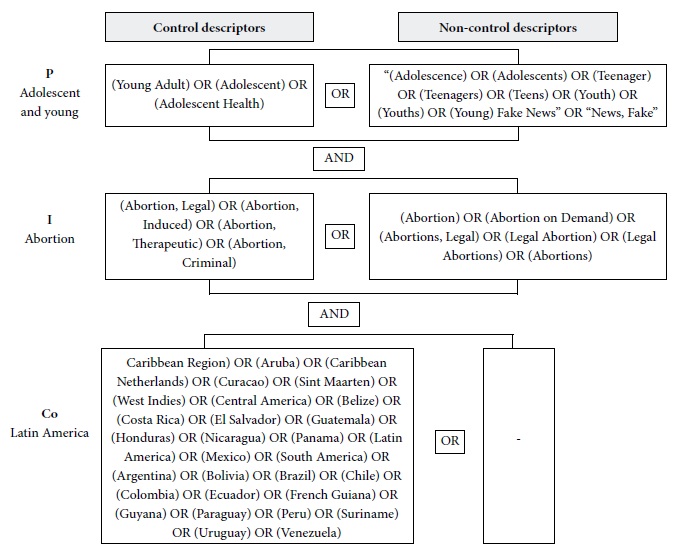
Original studies were included, with no restrictions regarding language or date of publication. Studies with exclusively quantitative results, literature reviews, and those that did not address the guiding question were excluded. The following data sources were used: Web of Science, National Library of Medicine (MEDLINE/PubMed), SCOPUS, Latin American and Caribbean Center on Health Sciences and Information (LILACS), Embase, and the Nursing Database (BDENF). The PICo strategy was adopted to search for descriptors, based on the terms found in the Medical Subject Headings (MeSH) and Health Sciences Descriptors (DeCS), as well as Emtree Terms, under the requirements used in the PRESS Guideline10, as shown in Figure 1.
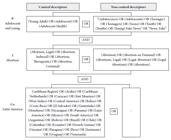
Descriptors used in the search strategy for population, event of interest, and context. Fortaleza, Ceará, Brazil, 2024.
The studies were organized in a library using Rayyan reference management software, developed by the Qatar Computing Research Institute (QCRI), and duplicates were removed. Study selection occurred in two stages: first, reading the title and abstract, followed by reading the full text. Two independent reviewers performed this process, and a third reviewer resolved any discrepancies to confirm the eligibility of the publications.
The reviewers were previously instructed to ensure alignment during data extraction. Each included study was assigned an identifier with the author’s name and year of publication. They used a spreadsheet containing all the variables to be completed, as established in the evaluation guide developed by the authors. The variables related to the articles included: author, year of publication, location, methodological design, number of subjects, participant ages, and transcripts of the participants’ statements. The data extracted from the articles were presented descriptively.
A textual corpus was built from the interview statements in the included primary studies. Data were analyzed using IRAMUTEQ software, version 0.7 alpha 2. Word cloud analysis and Descending Hierarchical Classification (DHC) were applied, which organizes the textual corpus into classes of text segments that present similar vocabulary but differ from other classes. DHC was performed on the text segments (simple on ST), based on the Reinert method, recommended for long texts11.
Results
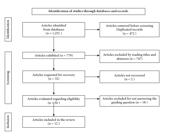
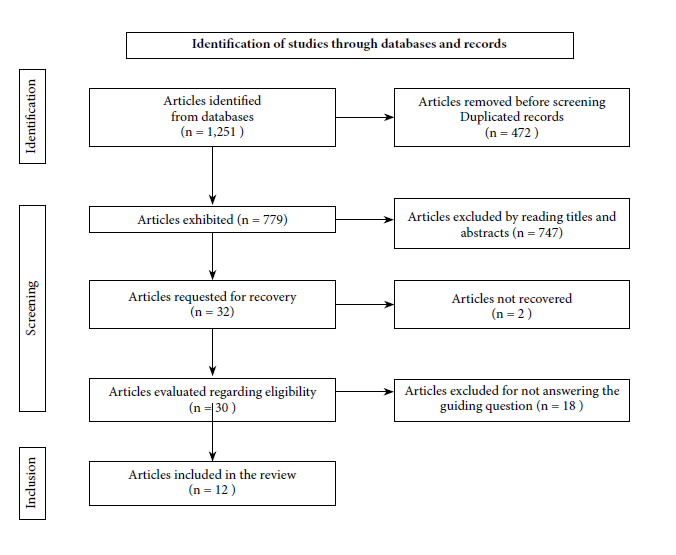
A total of 1,251 articles were identified in the searches performed in the databases selected for the review. Four hundred and seventy-two duplicate publications were removed, and after reading titles, abstracts, and descriptors, 30 articles were analyzed in full. Eighteen works were excluded because they did not address the guiding question. The sample consisted of 12 articles. Figure 2 presents the article selection flow.
The research locations include states belonging to different regions of the country, such as Rio de Janeiro, Minas Gerais, and Piauí. Furthermore, the research extended to other Latin American countries, including Mexico, Colombia, Ecuador, Peru, Chile, and Uruguay. The studies encompass a variety of methodological procedures. The characteristics of the articles and the study population are shown in Chart 1.
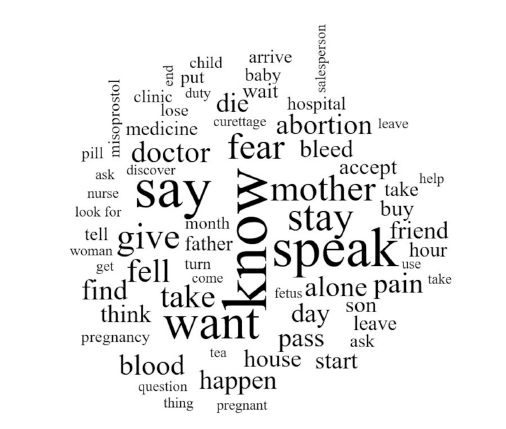
A word cloud was generated from the participants’ statements in the primary articles (Figure 3). The most frequently mentioned words were: “know”, “speak”, “say”, “want”, “stay”, “mother”, “give”, “fear”, “feel”, “take”, “day”, “doctor”, “alone”, “abortion”, and “die”. All words are relevant to the research context related to abortion.
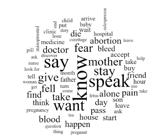
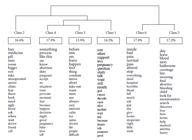
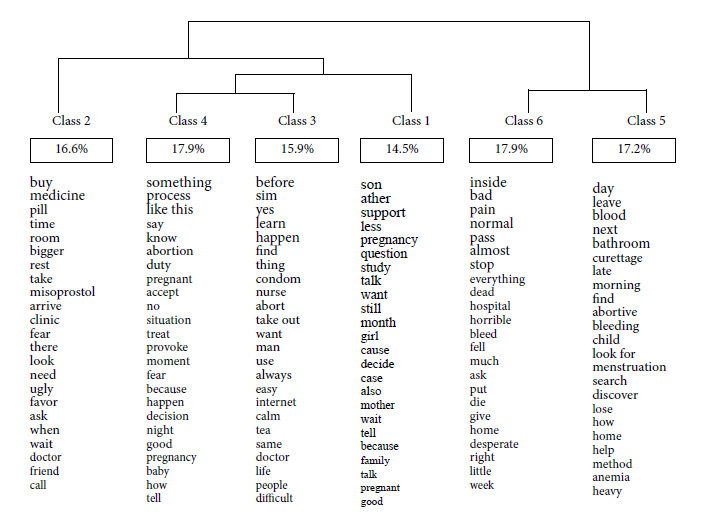
The words evoked by women who have had abortions reflect emotions, concerns, and needs during and after the procedure. They reveal a search for information (know, talk, say), express desires and intentions (want, stay), concerns about the consequences (mother, fear, feel, die), and terms directly related to the procedure (give, take, day, doctor, abortion). In the descending hierarchical classification, the corpus underwent a series of sequential divisions until classes were formed. In the first division, the corpus was divided into two blocks: one included classes 1, 2, 3, and 4, and the other consisted of classes 5 and 6. Subsequently, these two blocks were subdivided, resulting in the distinct classes 1, 2, 3, 4, 5, and 6. Figure 4 illustrates the sequence of divisions the corpus underwent until the six proposed classes were generated.
Class 1 - Family and social interactions in the decision to terminate a pregnancy
Abortion is a stigmatized experience with familial and social implications. The following narratives summarize women’s experiences deciding to terminate a pregnancy, revealing their interactions and motivations.
The pregnant women’s mothers exert a strong influence on the decision to abort. One study reports attempts to hide the pregnancy from the mother, knowing she would not accept it14. In contrast, another report describes how, after the attempted abortion, an ultrasound revealed that the fetus was alive. Although the woman did not want to continue the pregnancy, she was convinced by health professionals and her mother to be hospitalized to try to keep the pregnancy18. Another participant explains that her mother is a “single mother” and she did not want to repeat the same story13. She was determined to complete her studies and provide the best for her child13.
Regarding other family members, some reports mention that the pregnant woman concealed the pregnancy from her father.16 As for the partners’ parents, some reports indicate contentment. The mother-in-law even interpreted the pregnancy as a sign from God, indicating that the pregnant woman was the right woman for her son.17 However, the decision about what to do with the pregnancy still depended on a conversation between the parents of both young people17. Friendships were the main support for adolescents seeking abortion.14,17 She said friends, from whom she least expected support, were the ones who supported her the most, while family was less understanding.17 However, within the family, sisters appear as a bridge of support and friendship for later disclosure to the family21.
Regarding the partner, one woman stated that she would not need him for anything during the pregnancy, preferring not to tell anyone about the abortion16. In contrast, another woman reported that her partner was happy upon discovering the pregnancy17. Also, some reports mention that both women prepared themselves psychologically for the possibility that medical abortion would not work, considering the option of an instrumental abortion13. The decision to terminate the pregnancy is influenced by age, economic situation, and lack of psychological preparation. The pregnant woman and her partner were just studying, without the means to support a child, and the relationship was still recent21. Furthermore, she wanted to continue studying and did not yet know what she wanted for her life, much less for a baby21.
Class 2 - Clandestine abortion means and fears
This category describes young women’s experiences with clandestine abortions, the use of medications such as misoprostol, the search for illegal clinics, and the fear of the legal consequences of this procedure. Misoprostol was the most commonly cited method by young women in the studies12,15,16,20,23, as it is an easily accessible and low-cost drug14,16. One young woman reports that her mother took her for a pregnancy test and, when the test came back positive, immediately took her to buy abortion medication14. The contexts of vulnerability are also highlighted by reporting restrictions on the sale of the product in urban outskirts, following the occurrence of an abortion involving individuals linked to organized crime16.
Regarding fears, doubts about the effectiveness of the pills are reported20,23, as well as concerns about the need to seek abortion clinics after medication failure, concerns about fertility, and the fear of being discovered for bleeding12,20. Intense fear of being discovered when purchasing abortion pills is described20,21. Furthermore, fears of needing health care due to complications are reported23, due to the possibility that the pills could be found and result in a complaint or arrest15,21,23. The health professional’s decision not to report the incident to avoid legal problems is noteworthy15.
As for the stakeholders involved in this process, friends play a fundamental role by recommending places to have an abortion12 and contributing financially to the procedure16. Also, one young woman obtained the money from her father, without him knowing the purpose16. The mother appears in this context after an unsuccessful abortion attempt and the need to go to a clinic12. Furthermore, other feelings are revealed, such as the isolation and loneliness that accompany her decision20. Despite having people by their side, many young women felt alone in their decision20.
Class 3 - Paradigms and stigmas in pre- and post-abortion health care
The central theme of this set of reports revolves around limited access to sexual and reproductive health information and the importance of sex education on contraceptive practices. Furthermore, there is an emphasis on the social and religious stigma associated with abortion by health professionals. A difficulty in attending reproductive planning appointments due to conflicting schedules with her work is reported12. Even when she was able to attend, she was advised only to use condoms, without receiving information about other contraceptive methods12. This statement reveals the fragile health education provided, as it is contradicted when another woman highlights the complexity of the problem: the difficulty of resisting the insistence of older partners not to use condoms19.
Given this gap, there is talk of learning about contraceptive methods online, even before learning about them in school19. After an abortion, women report incorporating new learning and maturing. Women began to view men differently and insisted on using condoms, a feeling of gaining a new perspective on their relationships and responsibilities19.
Health care resurfaces when the woman talks about her desire to be heard, have her questions clarified, and receive pain relief during the abortion procedure, but she received no such support. She feels that the professionals’ goal in providing post-abortion care was to punish her, with one professional commenting that if she did not want to feel pain, she should have thought about it beforehand15,20. One professional emphasized that priority care is given to women who are going to have babies, while those who choose to abort must learn to wait15.
Several experiences of mistreatment and blaming by healthcare professionals during the abortion process are shared, intertwined with religious precepts. One healthcare professional told her that she should repent for her sin and pray15, which adds to the mother’s Catholic beliefs, and that she would also not accept the decision to abort16. This exposes a passive and accepting stance on the part of the woman regarding the several types of abuse she endures, which is reinforced by the report that, after the abortion, despite the cruelty, healthcare professionals always want the best for the patient15.
Class 4 - Distress due to the lack of autonomy and support
This class addresses the traumatic experiences of women who have experienced abortion, including feelings of uncertainty and health and safety risks. A woman describes the uncertainty and fear during an illegal abortion, where she was unsure whether her body’s reactions were normal or if something was wrong. She sought information about the procedure to ensure its effectiveness and safety, fearing for her own life at one point20. Clearly, the fact that it was illegal made the process desperate, as there was no other option, and the fear of death or arrest did not stop her from going through with the procedure23.
A woman describes her experience with curettage after an induced abortion, mentioning that it was performed without anesthesia, which caused her great distress12. Another woman reports that the doctor performed a vaginal exam without prior explanation during the procedure, leaving her uncomfortable and unsure of what to expect. A second doctor repeated the procedure without providing clear explanations, while she cried. The woman was blamed for the abortion and was advised to calm down15. One woman received psychological support from friends who had already had abortions, but chose not to tell her partner and save the money for the procedure16.
Class 5 - Horror stories about abortion
Reports from this group highlight unsafe and illegal abortion locations. Reports suggest that unsafe abortions are performed in the adolescent’s home12,20, with tension and fear, right next to their parents’ bedroom, thinking she would be found bleeding the next day, not knowing what would happen.20 We observed reports of difficulties inducing abortion with medication, requiring multiple doses. This situation resulted in complications, and the most common was hemorrhage12,23. They said that the baby did not come out after the first dose, and that, around two to three months into the pregnancy, she needed another dose to expel the fetus, accompanied by heavy bleeding12. She reports despair after the method failed and the search for clinics or people who would perform abortions, but without success. After a week, the boyfriend obtained more pills23. Another account reveals that the process was marked by feelings of guilt due to her religious upbringing12.
The excerpts from the articles highlight the imagery associated with the location where abortion procedures occur. They describe a scary and unhealthy environment, likened to a “horror movie”, with blood-stained sheets and substandard facilities reminiscent of a place unsuitable for rest, evoking fear and despair19. The description of illegal and filthy clinics suggests an environment of extreme risk, where women feel vulnerable and fear for their lives20. References to Mexican films exacerbate the sense of suspense and danger, illustrating the anguish when seeking an abortion in clandestine conditions20.
Class 6 - Pain, fear of dying, and relief
This class describes the traumatic experiences of abortion. Initially, the intense physical pain experienced during the procedure is reported14. Several reports describe intense fears for one’s own life12-14,16. One woman nearly died due to severe blood loss or another complication. She was taken away by ambulance while still bleeding12,14,22. Another initially felt intense discomfort and deep regret14, seeking comfort through prayer at church13. Despite attempts at home remedies, another person ended up seriously ill in the hospital14. After the procedure, others described intense discomfort, heavy bleeding, and a fear of not surviving15. There were also reports of paranoia, fear of being discovered or arrested16, and of receiving poor care at the hospital23.
One person described an experience with the curettage procedure after initial complications12. Another mentioned having to endure intense pain to remove uterine residue, facing difficulties in obtaining immediate medical care due to the high demand for deliveries15. A third reported having undergone a “rough extraction” procedure12. This situation contrasts with one young woman’s knowledge of the lack of money to pursue aspirations13. Finally, after the abortion procedure, some people report feeling calm and relieved that the procedure was successful, although they experienced a week of heavy bleeding that required medical care12. Another person reported bleeding lightly overnight after the procedure, feeling relieved to see that everything had been removed16.
Discussion
Family and social interactions play a crucial role in adolescents’ decisions to terminate a pregnancy. Studies often focus on early pregnancy and its repercussions on the family and social context. However, they do not sufficiently investigate the dynamics between mother and daughter regarding the decision to abort. It is essential to include the family, especially mothers, in adolescent pregnancy prevention efforts and in situations where pregnancy has already occurred, when considering the possibility of abortion, by creating spaces for dialogue between the healthcare professional, adolescent, and family14. A literature review provided insight into the demographic and ideological variables underlying attitudes toward abortion. Variables such as age, religiosity, and conservatism correlate negatively with support for abortion, while openness to experience correlates positively. These findings reveal that attitudes toward abortion are substantially influenced by personal and cultural factors, indicating the need to consider these dimensions when discussing abortion-related policies and interventions24.
Furthermore, the decision to terminate a pregnancy affects women in vulnerable situations, such as immigrants, those with low socioeconomic status, or those without children, a problem exacerbated by the economic and social inequalities characteristic of Latin America. These factors can pose a significant risk for the development of mental health problems. However, factors such as the quality of marital adjustment and satisfaction with health care prove to be important protective factors25.
The experiences of young Latin American women with their abortion pathways reveal that their race and social class shape these pathways. Young, middle-class, white women generally have linear and short itineraries, supported by support networks. In contrast, young Black women from working-class backgrounds face complex and prolonged itineraries, with fragile support networks, and often experience loneliness during the decision-making process. Importantly, these differences highlight how race, social class, and privilege profoundly influence young women’s individual paths toward abortion26.
Therefore, a combination of factors leads women to resort to misoprostol informally: incomplete knowledge of abortion laws in countries where abortion is decriminalized, fear of legal consequences where abortion is a crime, fear of social stigma, and the desire for a faster and more private process. Informally obtained medications allow pregnant women to have abortions in their homes, especially when the formal health system is unavailable, complicated to access, or fraught with social and legal risks27.
The lack of legal access to abortion in Latin America reinforces a dynamic where prohibition does not prevent abortion, but instead results in women’s vulnerability and lack of assistance. Even under a system of strict biopolitical control, forms of resistance emerge through unofficial institutions that meet the needs of a stigmatized and judged population28. In the meantime, implementing policies that promote access to quality and timely reproductive health knowledge can help ensure that women in all contexts have the information they need to make decisions within legal limits, without compromising their health. However, notably, abortion education interventions must align not only with legal stipulations but also with the realities experienced by women in the region29.
The continued criminalization of abortion is not due solely to hypocrisy or “moralism”. It is deeply rooted in the preservation of a social order that depends on the control of women’s sexuality and reproductive capacity, especially the most vulnerable. Thus, the defense of abortion as a crime is more related to keeping this control than to protecting the lives of the “unborn”. The rhetoric of “defending life” adopted by neoconservatives masks the violation of women’s rights. Therefore, it is crucial to unmask this strategy and promote a vision of reproductive justice that links reproductive health and rights to social justice and human rights26.
In this study, the internalization of guilt by women themselves and the culture of blame are evident in healthcare. The biopolitical discourses uttered by professionals reproduce guilt and distress, hindering post-procedure coping. In contrast, feminism empowers women in their decisions because the discourses that naturalize and romanticize motherhood are internalized, treating it as something intrinsic to women, necessary to maintain the maternal and fraternal role that has historically identified them in society and still subjectify them today28.
The distress caused by a lack of autonomy and support during the abortion process was evidenced by reports of physical, psychological, and verbal abuse, resulting in actions that make women objects of professional intervention due to their inferior position. In this context, it is necessary to invest in initiatives such as curricular review in the training of healthcare professionals, including discussions on women’s sexual and reproductive rights, continuing education for professionals in service, focusing on humanization policies during childbirth, and monitoring of hospital practices30.
Regardless of moral values, each country’s legal framework on the matter must be considered, as a lack of knowledge about the laws regulating abortion represents a serious problem in the health field. Ill-informed professionals can commit a crime by performing an illegal abortion, or they can deny a woman access to a service considered legal and accessible in public health services31.
Notably, being accompanied by a partner proved to be a protective factor against embarrassment and shame. Black and Latina women described experiencing or fearing judgment based on historically ingrained stereotypes in their communities related to sexuality and motherhood. These stereotypes perpetuate the idea of hypersexualization and maternal irresponsibility, which can exacerbate feelings of guilt and anxiety. Social and cultural pressure to meet unrealistic expectations contributes to isolation and stigmatization, thus complicating access to adequate mental health care and emotional support32.
Given these findings, we should emphasize that gender, ethnicity/skin color, and social class intersect to unequally impact the health of people with uteruses33, including adolescents, who face specific vulnerabilities. Notably, social interventions can reproduce inequalities and promote autonomy and the right to make decisions about reproduction33. Thus, oppressions must be identified and addressed to achieve more just and inclusive policies aligned with human rights and social justice.
One limitation of this study is its exclusive focus on abortion experiences among Latin American female adolescents and young adults. This choice may restrict the applicability of the results to other demographic groups or geographic contexts outside the specified scope, which should be considered when interpreting and applying the study’s findings. Furthermore, the studies address the topic of abortion for people under 18, consequently limiting their understanding of the clandestine abortion process for this age group. Other limitations include the lack of temporal representation in older and more recent studies across diverse cultural contexts in Latin America, where policies and attitudes toward abortion can differ significantly between countries, some of which have legalized abortion while others have not.
Final considerations
When exploring studies on abortion among Latin American adolescents and young people, a complex dynamic of family and social interactions surrounding the decision to terminate a pregnancy emerged. The experiences addressed the means of access and fears of clandestine abortion, as well as the legal repercussions. The article also discusses stigma in pre- and post-abortion healthcare, highlighting the lack of adequate support and blaming by professionals. It also reveals the traumatic experiences women face in accessing safe healthcare and emotional support. The article also discusses unsafe and illegal conditions in which some procedures are performed, as well as painful experiences, including fear of dying during the procedure and relief after a successful abortion.
It is crucial to consider the legal advances in Latin American countries such as Uruguay, Argentina, Colombia, and Mexico, which have legalized abortion in various circumstances as a Public Health and human rights measure. These achievements were driven by feminist movements advocating for social justice, gender equality, and child protection. This illustrates the urgency of discussing more inclusive health care and policies for all young women and adolescents when faced with the issue of abortion.
References
- 1 Bearak J, Popinchalk A, Ganatra B, Moller AB, Tunçalp Ö, Beavin C, Kwok L, Mothe A, Alkema L. Unintended pregnancy and abortion by income, region, and the legal status of abortion: estimates from a comprehensive model for 1990-2019. Lancet Glob Health 2020; 8(9):e1152-e1161.
-
2 World Health Organization (WHO). Diretriz sobre cuidados no aborto: resumo [Internet]. 2022 [acessado 2025 out 19]. Disponível em: https://www.who.int/pt/publications/i/item/9789240045163
» https://www.who.int/pt/publications/i/item/9789240045163 - 3 Bonan C, Reis APD, Rodrigues AP, Menezes GMS, McCallum CA, Duarte NIG, Macedo U, Santana MDS, Oliveira DCC, Domingues RMSM, Leal MC. Health care itineraries for women in situations of abortion: methodological aspects of a qualitative study for Birth in Brazil II survey. Cad Saude Publica 2024; 40(4):e00006223.
- 4 Galli B. Challenges and opportunities for access to legal and safe abortion in Latin America based on the scenarios in Brazil, Argentina, and Uruguay. Cad Saude Publica 2020; 36(Supl. 1):e00168419.
- 5 Chandra-Mouli V, Akwara E, Engel D, Plessons M, Asnake M, Mehra S, Lemeris J, Lane C. Progress in adolescent sexual and reproductive health and rights globally between 1990 and 2016: what progress has been made, what contributed to this, and what are the implications for the future? Sex Reprod Health Matters. 2020; 28(1):1741495.
- 6 Assis TSC, Martinelli KG, Gama SGN, Santos Neto ET. Pregnancy in adolescence in Brazil: associated factors with maternal age. Rev Bras Saude Materno Infant 2022; 21(4):1055-1064.
- 7 Nunes MDS, Madeiro A, Diniz D. Maternal deaths due to abortion among adolescents in Piauí, Brazil. Saude Debate 2020; 43(123):1132-1144.
- 8 Botelho LLR, Cunha CCA, Macedo M. The integrative review method in organizational studies. Gest Soc 2011; 5(11):121-136.
-
9 Organização Mundial da Saúde (OMS). CID-11 para Estatísticas de Mortalidade e de Morbidade [Internet]. [acessado 2024 jun 24]. Disponível em: https://icd.who.int/browse/2024-01/mms/pt
» https://icd.who.int/browse/2024-01/mms/pt - 10 McGowan J, Sampson M, Salzwedel DM, Cogo E, Foerster V, Lefebvre C. PRESS Peer Review of Electronic Search Strategies: 2015 Guideline Statement. J Clin Epidemiol 2016; 75:40-46.
- 11 Camargo BV, Justo AM. IRAMUTEQ: a free software for analysis of textual data. Temas Psicol 2013; 21(2):513-518.
- 12 Carvalho SM, Paes GO. Young women's experiences in clandestine abortion - a sociological approach. Saude Soc 2014; 23(2):548-557.
- 13 Lafaurie MM, Grossman D, Troncoso E, Billings DL, Chávez S. Women's perspectives on medical abortion in Mexico, Colombia, Ecuador and Peru: a qualitative study. Reprod Health Matters 2005; 13(26):75-83.
- 14 Domingos SRF, Merighi MAB, Jesus MCP, Oliveira DM. The experience of women with abortion during adolescence as demanded by their mothers. Rev Lat Am Enferm 2013; 21(4):899-905.
- 15 Madeiro AP, Rufino AC. Maus-tratos e discriminação na assistência ao aborto provocado: a percepção das mulheres em Teresina, Piauí, Brasil. Cien Saude Colet 2017; 22(8):2771-2780.
- 16 Ferrari W, Peres S. Itineraries of solitude: clandestine abortion among adolescents in a favela in Rio de Janeiro's South Zone, Brazil. Cad Saude Publica 2020; 36(Supl. 1):e00198318.
- 17 Rangel-Flores Y, Jimenez-Arroyo V. Imaginary about abortion in a group of marginalized pregnant adolescents in Mexico. Saude Soc 2021; 30(3):e200175.
- 18 Nunes MD, Madeiro A, Diniz D. Histories of induced abortion among adolescents from Teresina in the State of Piauí, Brazil. Cien Saude Colet 2013; 18(8):2311-2318.
- 19 Ferrari W, Peres S, Nascimento M. Experiment and learning in the affective and sexual life of young women from a favela in Rio de Janeiro, Brazil, with experience of clandestine abortion. Cien Saude Colet 2018; 23(10):2937-2950.
- 20 Manríquez IP, Standen CM, Carimoney AÁ, Richards A. Experience of clandestine use of medical abortion among university students in Chile: a qualitative study. Contraception 2018; 97(2):100-107.
- 21 Ituarte ML, López-Gómez A. Adolescents faced with the decision to terminate a pregnancy in a context of legal abortion. Cad Saude Publica 2021; 37(2):e00235219.
- 22 Heilborn ML, Cabral CS, Brandão ER, Faro L, Cordeiro F, Azize RL. Abortion itineraries in a clandestine context in the city of Rio de Janeiro - Brazil. Cien Saude Colet 2012; 17(7):1699-1708.
- 23 Duarte NIG, Moraes LL, Andrade CB. Abortion experience in the media: analysis of abortive paths shared in an online community. Cien Saude Colet 2018; 23(11):3337-3346.
- 24 Osborne D, Huang Y, Overall NC, Sutton RM, Petterson A, Douglas KM, Sibley CG. Abortion attitudes: an overview of demographic and ideological differences. Polit Psychol 2022; 43(S1):29-76.
- 25 deMontigny F, Verdon C, Meunier S, Gervais C, Coté I. Protective and risk factors for women's mental health after a spontaneous abortion. Rev Lat Am Enferm 2020; 28:e3350.
- 26 Lima NDF, Cordeiro RLM. "My life can not stop": abortive itineraries for young women. Rev Estud Fem 2020; 28:e58290.
- 27 Ortiz J, Blades N, Prada E. Motivations for using misoprostol for abortion outside the formal healthcare system in Colombia: a qualitative study of women seeking postabortion care in Bogotá and the Coffee Axis. Reprod Health 2024; 21(1):76.
- 28 Velleda KL, Oliveira SG, Casarin ST. Induced abortion and its stigmas: a Foucauldian problematization in nursing. Cad Pagu 2022; 60:e226418.
- 29 Hinson L, Bhatti AM, Sebany M, Bell SO, Steinhaus M, Twose C, Wilkins K, Ouedraogo L, Ouedraogo R, Ouedraogo M. How, when and where? A systematic review on abortion decision making in legally restricted settings in sub-Saharan Africa, Latin America, and the Caribbean. BMC Womens Health 2022; 22(1):415.
- 30 Trajano AR, Barreto EA. Obstetric violence from the perspective of health professionals: gender as a defining factor in childbirth care. Interface (Botucatu) 2021; 25:e200689.
- 31 Sedgh G, Bearak J, Singh S, Bankole A, Popinchalk A, Ganatra B, Rossier C, Gerdts C, Tunçalp Ö, Johnson BR, Johnston HB, Alkema L. Abortion incidence between 1990 and 2014: global, regional, and subregional levels and trends. Lancet 2016; 388(10041):258-267.
- 32 Altshuler AL, Ojanen-Goldsmith A, Blumenthal PD, Freedman LR. "Going through it together": being accompanied by loved ones during birth and abortion. Soc Sci Med 2021; 284:114234.
- 33 Bourguignon AM. Interseccionalidade, direitos humanos e justiça reprodutiva: avaliação crítica em saúde sexual e reprodutiva. Saude Debate 2024;48(142):e9113.
The data sources adopted in the research are indicated in the article’s body.

 Source: Authors.
 Source: Authors (2024).
 Source: Authors (2024).
 Source: Authors (2024).