
 The food retail environment around schools in a low-income Brazilian city: a street audit evaluation
Abstract
This cross-sectional study evaluated the retail food environment (FE) around early childhood education centers (ECEC) in Rio Largo/AL, Brazil. Food retail outlets (FRO) were identified through a city street survey and audited using the Brazilian version of the Nutrition Environment Measurement Survey for Stores (NEMS-S). The Department of Education provided the ECEC’s addresses, which were validated and geocoded (n=21). Schools’ surroundings were defined by 400- and 800-meter buffers. The FE was analyzed using the healthy food availability index (HFAI), average distance between FRO and ECEC, and distribution and density of FRO according to the predominant type of food marketed (healthy, mixed, and unhealthy). Respectively, 332 (57.7%) and 505 (87.8%) FRO were identified in the 400- and 800-meter buffers. On average, 23 (400 m) and 54 (800 m) FRO were around schools, where ~60% were unhealthy (clustered throughout the city). The HFAI was very low for both buffers (400m: -1 points [IQR -6; 10]; 800m: -2 points [IQR -6; 10]). In conclusion, the city does not offer a supportive community food environment for children to develop and maintain healthy eating patterns.
Key words:
Built environment; Food environment; Health promotion; Schools; Child
Resumo
Este estudo transversal avaliou o ambiente alimentar (AA) de varejo no entorno de centros de educação infantil (CEI) de Rio Largo/AL. Os pontos de venda de alimentos (PVA) mapeados em inquérito conduzido nas ruas da cidade foram auditados usando a versão brasileira do Nutrition Environment Measurement Survey for Stores. Os endereços dos CEI disponibilizados pela Secretaria de Educação foram validados e geocodificados (n=21) e os entornos definidos por buffers de 400 e 800 metros. O AA foi analisado por meio do índice de disponibilidade de alimentos saudáveis (IDAS), a distância entre PVA e CEI e a distribuição e densidade de PVA segundo os tipos de alimentos predominantemente comercializados (saudável, misto e não saudável). Foram identificados 332 (57,7%) e 505 (87,8%) PVA nos buffers de 400 e 800 metros, respectivamente. Em média, observou-se 23 (400 m) e 54 (800 m) PVA ao redor dos CEI, sendo que ~60% eram não saudáveis (com adensamentos por toda a cidade). Em ambos os buffers o IDAS foi muito baixo (400m: -1 ponto [IIQ -6; 10]; 800m: -2 pontos [IIQ -6; 10]). Em conclusão, a cidade não oferece um AA comunitário favorável para que crianças desenvolvam e mantenham padrões alimentares saudáveis.
Palavras-chave:
Ambiente construído; Ambiente alimentar; Promoção de saúde; Escolas; Crianças
Resumen
Este estudio transversal evaluó el ambiente alimentario (AA) comunitario en los alrededores de los centros de educación infantil (CEI) en Rio Largo/AL. Los puntos de venta de alimentos (PVA) identificados en un mapeo realizado en las calles de la ciudad fueron auditados con la versión brasileña del Nutrition Environment Measurement Survey for Stores. Se validaron y geocodificaron las direcciones de los CEI proporcionadas por la Secretaría de Educación (n=21), definiendo buffers de 400 y 800 metros. El AA se analizó utilizando el índice de disponibilidad de alimentos saludables (IDAS), la distancia entre PVA y CEI, y la distribución/densidad de PVA según los tipos de alimentos más comercializados (saludable, mixto y no saludable). Se identificaron 332 (57,7%) y 505 (87,8%) PVA en los buffers de 400 y 800 metros, respectivamente. En promedio, había 23 (400 m) y 54 (800 m) PVA alrededor de los CEI, de los cuales ~60% eran no saludables, con adensamientos en toda la ciudad. El IDAS fue muy bajo en ambos buffers (400 m: -1 punto [IQR -6; 10]; 800 m: -2 puntos [IQR -6; 10]). En conclusión, la ciudad no ofrece un AA comunitario favorable para que los niños desarrollen y mantengan patrones de alimentación saludables.
Palabras clave:
Entorno construido; Entorno alimentario; Promoción de la salud; Escuelas; Niños
Introduction
The food environment can be defined as any physical place (e.g., households, schools, workplaces, streets) where individuals interact with the food system for the acquisition, preparation, and consumption of food1. Food environments are shaped by the same economic, political, and sociocultural factors that exert pressure on the industrialization and urbanization of societies. These forces influence food availability, accessibility, nutritional and health quality, marketing, convenience, and sustainability in various population groups2,3.
The surroundings of places such as schools, health care facilities, and community centers are environments of commercial interest for the installation of food retail outlets (FRO) because of the constant flow of people. Given the absence of regulations on the marketing of ultra-processed foods (UPF), studies have shown that these venues are subject to high availability and accessibility of these products, contributing to the establishment of obesogenic environments4.
Obesogenic environments threaten health promotion initiatives for preschool children by limiting or preventing their guardians from making healthy food choices and encouraging the consumption of unhealthy foods through food marketing strategies (e.g., communication and product positioning)5.
In Brazil, while public school meals are subject to rigorous regulation concerning their food and nutritional composition6, children are confronted with an unregulated community environment upon exiting school. In light of the frequency with which children attend these areas, the built food environments around schools are likely to exert a conditioning effect on dietary patterns and behaviors7.
Considering the increasing prevalence of childhood obesity8 and its multiple impacts in the short-, medium-, and long-term9, food and nutrition policies should address not only the institutional but also the community food environment. Thus, to promote healthy and friendly cities for children and to guarantee the human right to adequate food, it is critical for urban planning to understand the diversity and complexity of the nutrition landscapes around places accessed by children, such as schools10,11.
Although studies evaluating food environments are more frequent in high-income countries, over the last decade, there has been an increase in research conducted in middle- and low-income countries11. Despite this growth, studies in Brazil have mainly focused on urban areas with higher economic and social development levels. Nevertheless, the food environment characteristics in these locations may differ from those in impoverished territories, leaving an important gap in the food environment literature12.
Therefore, this study aimed to evaluate the retail food environment surrounding early childhood education centers (ECECs) in a low-income urban city in Brazil, exploring whether these areas promote and support healthy eating patterns for under five years old children.
Methods
Study design
This was a cross-sectional study conducted in Rio Largo, Alagoas, in the Northeast region of Brazil. The municipality is located in the metropolitan area of Maceió (the state’s capital) and has 93,927 inhabitants, the 3rd most populous in the state 13. Rio Largo was chosen because of the historical similarity between its HDI (0.643) and that of the state. The social, economic, and demographic characteristics are presented in Table 1.
The food environment audit is part of a cohort study entitled “Saúde, Alimentação, Nutrição e Desenvolvimento Infantil - Projeto SAND”, whose objective was to study aspects related to child growth and development, as well as to understand the infant feeding practices adopted by mothers during the first year of their lives.
Early childhood education centers
Early childhood education centers (ECEC) are schools for children up to five years of age. The Rio Largo Department of Education provided the addresses of the 22 ECEC in the municipality. Seven ECEC were not identified due to inconsistencies in the addresses provided; thus, the team contacted the schools’ directors to obtain the correct address and to perform the georeferencing in loco. Since two of these schools were merged into one, 21 ECEC were included in the analysis. The coordinate units were extracted using the Universal Transverse Mercator (UTM).
Identification of food retail outlets and data collection
To identify the FROs, we conducted a comprehensive audit of all streets in the municipality, covering both formal and non-formal establishments. The field team comprised four trained evaluators, a field supervisor, and a university driver acquainted with the city. The routes were closely monitored by marking their locations on a city map, and the field team recorded additional information about each establishment in a field log, including details about their activities.
Given that the study was conducted in a low-income city with high violence areas, we communicated the study on local TV and radio and to community health workers (CHW) before commencing field activities. These two measures were taken to ensure the safety of our research team and establish trust with the local community.
Data were collected on weekdays (Mondays through Fridays) between September 2017 and October 2018. In total, 617 FROs were identified; however, 36 owners did not allow the research team to remain in the establishment.
The geographic coordinates of the FROs were obtained through the Google Maps app (Google, USA) installed on smartphones with Android operating systems and connected to the internet. To optimize georeferencing, offline versions of the maps were downloaded to smartphones. Longitude and latitude data were recorded in decimal degrees.
Following the identification and georeferencing of the FROs, we promptly audited these establishments using printed, structured, and pre-coded forms. Data entry was performed by two independent researchers and then validated. Finally, we critically analyzed the georeferenced data and excluded six outlets that were located outside city limits (conurbation). Thus, 575 FROs had their data validated.
Assessment of the food environment
Food retail outlets were assessed by using the Nutrition Environment Measurement Survey for Stores - NEMS-S adapted by Martins et al.14 This tool characterizes FROs according to 1) the public that most frequents them (children with/without guardians, teenagers with/without guardians, adults, and the elderly); 2) physical structure (closed/open air); 3) presence or absence of a set of eating points (clustering of two/more food outlets, one next to the other, regardless of the type); 4) fixed or mobile point; and 5) store classification (butcher shops, poultry and fish stores, retail and/or wholesale candy stores, street market stalls and fruit stands, pasta stores, grocery stores and emporiums, bakeries, greengroceries, markets and supermarkets, convenience stores, and others, if any).
The quality of the food environment in each RFO was assessed by calculating the healthy food availability index (HFAI), which is based on the availability, price, and quality of foods according to the degree of processing. The HFAI ranges from -30 to 100 points; the higher the score, the healthier the FRO. Unprocessed, minimally processed, and processed foods received positive scores, while ultra-processed foods scored negatively. Also, FROs are granted an additional two points when the price of skinned dairy food (i.e., milk, yogurt, and cheese), brown rice, or whole wheat bread, pasta, or wheat flour is equal to or less than the high-fat dairy or white rice, bread, pasta, or flour (except if the “healthier” product is classified as ultra-processed). Details of the instrument and HFAI can be found in Martins et al.14 Since the NEMS-S has no classification system, we stratified the FROs into four groups for the spatial analyses: HFAI ≤ 0 points, HFAI between 1 and 15 points, HFAI between 16 and 30 points, and HFAI > 30 points. Considering the HFAI’s variability (-16 to 36 points), thresholds were intuitively defined to express the improvement of FROs’ healthiness.
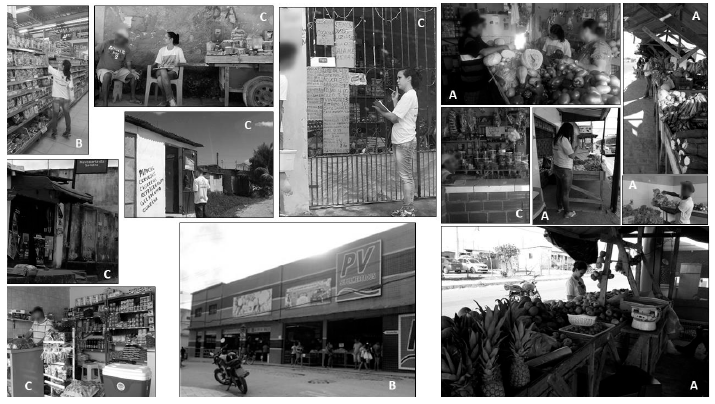
FROs were also classified from a technical study titled “Mapping Food Deserts in Brazil,” conducted by the Interministerial Chamber of Food and Nutrition Security (CAISAN) 15. According to this methodology, the FROs are classified as follows (Figure 1).
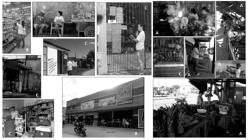
Healthy, where unprocessed/minimally processed foods are more available, consists of butcher shops, poultry and fish shops, street market stalls and fruit stands, grocery stores, and greengrocers.
Unhealthy, where the availability of processed/ultra-processed foods is greater, observed in retail and/or wholesale candy stores, (fresh) pasta stores, grocery stores, emporiums, bakeries, and convenience stores.
Mixed, when both unprocessed/minimally processed food and processed/ultra-processed food are widely available, consisting of markets and supermarkets.
Spatial analysis
To evaluate the food environment around the ECEC, buffers were defined with a radius of 400 m (Euclidean distance), disregarding the regional topography. This dimension was selected because it represents a walking distance of approximately five minutes, compatible with the commute between home and school16. Additionally, buffers with a radius of 800 m were constructed to check whether there was a difference in the spreading FROs profile according to the influence areas.
We performed geoprocessing of the food environment information in QGIS 2.18.2 software (Open-source Geospatial Foundation). The layers containing the geographical boundaries of the municipality, census tracts, and road network were built from shapefiles provided by the Brazilian Institute of Geography and Statistics (IBGE)13, the federal agency responsible for managing geographical and statistical information in Brazil.
All geographic coordinate data were standardized using the UTM projection system. DATUM SIRGAS 2000 (zone 25 S) was used to construct the maps.
The spatial distribution of FROs, proximity to ECEC, and density within the buffers were analyzed according to the HFAI and CAISAN classifications. In addition, FROs clustering was analyzed using kernel density maps. Finally, the HFAI estimates, number of FROs in the buffers, and distance between ECEC and FROs are presented as median and interquartile ranges, except when explained to be different.
Research ethics
As this research did not involve human beings, this work was exempted from analysis by the Federal University of Alagoas’ Research Ethics Committee. The secondary bases used to compose the geographic information system are of public access and are available on the IBGE website (https://www.ibge.gov.br/geociencias/organizacao-do-territorio/malhas-territoriais.html)
Results
Of the 575 FROs identified in Rio Largo, 332 (57.7%) were within the 400-meter zone of influence of the ECEC. Widening the buffer radius to 800 m resulted in 173 new FROs (n = 505) (Table 2). On average, we found five healthy, two mixed, and 11 unhealthy FROs within the 400m zone around each school. Extending the buffer to 800m resulted in a proportional increase (healthy RFO = 7, mixed RFO = 3, unhealthy RFO = 17). An average of 23 (400 m) and 54 (800 m) FROs were identified around ECEC.
Unhealthy FROs were the most frequent in the school’s surroundings, accounting for approximately 60% of the establishments. Healthy FROs had the lowest median distance between schools and FROs within buffers (197 m [IQR 34.6 - 261]) (Table 3); however, this result was influenced by the high concentration of healthy FROs in the central region of the city and their scarcity/absence in the other areas (Figure 3B). The spatial distribution profile did not change after increasing the buffer radius (Table 3). The FROs located within a 400-meter radius of the schools were predominantly fixed points (94.9%), with a closed environment (83.1%), and operating on weekdays (93.1%). The most frequent establishments were grocery stores (31.6%) and candy retailers/wholesalers (18.1%). In addition, ¼ of FROs’ owners or managers perceived children (accompanied or not by adults) as their main consumers (Table 3).
The classification of FROs according to food availability is consistent with the HFAI score (Table 4). Consequently, given the high frequency of unhealthy FROs around the schools, the HFAI within the 400 (-1.0 points [IQR -6.0; 10]) and 800 meters (-2.0 points [IQR -6.0; 10]) radius showed considerably low scores.
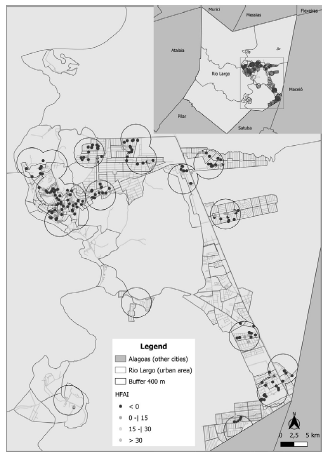
Figure 2 presents the spatial distribution of the FROs within the 400-meter radius around ECEC according to HFAI stratification. Greater availability of FROs with low HFAI scores (< 0 points; n = 168) was observed in the surroundings of almost all schools.
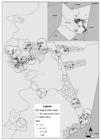
Spatial distribution of food retail outlets within 400 meters of early child education centers in Rio Largo, Alagoas.
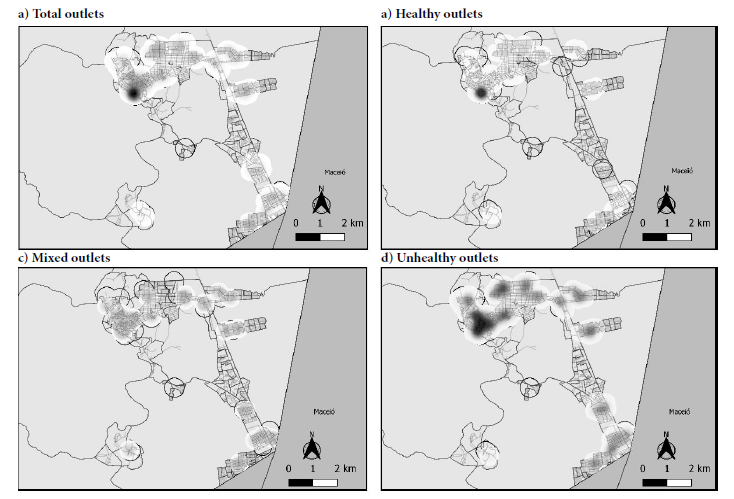
Figure 3 shows the municipality’s spatial concentrations of healthy, mixed, and unhealthy FROs. Healthy FROs were concentrated in the central region of the city. On the other hand, FROs, characterized by the high availability of UPF, were present in higher concentrations in various parts of the city.
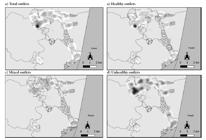
Density of total (a), healthy (b), mixed (c), and unhealthy (d) food outlets around early child education centers in Rio Largo, Alagoas.
Discussion
This study aimed to evaluate the built food environment around ECEC in a low-income city located in a state that has sustained one of the worst HDIs in the country since 1990. A high concentration of unhealthy FROs was observed near the ECEC in Rio Largo, indicating that the surroundings of these institutions are compatible with obesogenic food environments.
Childhood is characterized by intense growth and development, including eating behavior. Initially, infant feeding and its influence on weight gain were closely linked to parental practices adopted in the home environment17. As children develop and gain autonomy, they are influenced by multiple agents and factors related to the community and organizational environments. Hospitals, healthcare facilities, and schools are the first organizational food environments to which children are exposed. The exposure to UPF - alongside marketing campaigns carried out in these spaces - during childhood can lead to early disruption of homeostatic control (hunger-satiety mechanisms) in favor of a hedonistic eating system (physiological and behavioral rewards), promoting overconsumption of high-energy-dense and unhealthy foods18. In addition to short-term effects, the sum of these experiences in the early stages of the life cycle may affect health in adulthood19,20.
Brazil has a robust legal framework that regulates several dimensions of the human right to adequate food and nutrition during childhood and adolescence21-23. The two main legal instruments that express concern about infant feeding are the 1988 Federal Constitution and the Statute of the Child and Adolescent, which reflect the ratification of the Convention on the Rights of the Child21,22. Moreover, in compliance with the International Code of Marketing of Breast-milk Substitutes, in 2006, the Brazilian government instituted specific legislation to regulate the marketing of food for infants, young children, and childcare-related products entitled The Brazilian Code of Marketing of Infant and Toddlers Food, Teats, Bottles, Pacifiers, and Nipple Shields (in Portuguese, Norma Brasileira de Comercialização de Alimentos para Lactentes e Crianças de Primeira Infância, Bicos, Mamadeiras, Chupetas e Protetores de Mamilos - NBCAL)23.
Regarding the school environment, in addition to local regulatory initiatives and recommendations of the Ministry of Health for the construction of healthy school canteens24, the National School Feeding Program (PNAE) stands out. The PNAE is the world’s most extensive school feeding program. It aims to promote healthy eating habits within public schools by providing nutritious meals during school hours, conducting food and nutrition education activities, and introducing healthy eating as a cross-cutting theme in school curricula. More recently, to prevent the consumption of UPF within schools, a resolution has prohibited using federal resources to purchase UPF for school meals14,25,26. All ECEC used as a reference for buffers were assisted by the PNAE27.
However, the scope of these regulatory acts does not affect the sale of ultra-processed products around schools, potentially compromising the positive effects of these measures28. In the present study, the poor quality of the food environment was constant in the schools’ surroundings, even when the influence zone was extended from 400 to 800 m. Similar results using different buffer sizes and in different socioeconomic contexts have been reported in national29-32 and international studies16,33,34.
Few studies explored the association between the retail environment and health outcomes in children, and the results are controversial due to the heterogeneity of studies regarding the definition of healthy and unhealthy RFO and the metrics used4,12. Despite this, in a recent meta-analysis, most studies investigating the relationship between school food environment and childhood obesity found direct associations between unhealthy FROs and children’s nutritional status. Therefore, building healthy eating environments is critical to enabling individuals to increase control over their behaviors and encouraging them to make healthy food choices35.
However, obesogenic environments have been established in several countries29,36. In our study, we observed that only schools located in the central part of the city had healthy FROs in their surroundings. On the other hand, although the highest density of mixed and unhealthy establishments also occurred in the city center, the heat maps indicated a constant UPF availability around schools in the municipality.
Many unhealthy FROs in the surroundings or on routes children travel to or from schools create food environments that may disfavor or discourage healthy eating behaviors35,37. In addition, these environments increase the opportunities for the inclusion of products rich in sugars, sodium, saturated and trans fats, and chemical additives in children’s diets, increasing the risk of the onset of obesity and other chronic non-communicable diseases, mainly when associated with physical inactivity resulting from the limited opportunities provided by built environments29,36.
Regarding proximity, we identified that healthy FROs were, on average, closer to the schools because of the higher concentration of these outlets in the central part of the city and their absence in other city areas. However, when considering the spatial spread profile of FROs with low HFAI (< 0 points), these differences may not represent an access barrier for purchasing unhealthy products or some level of competition that would favor the purchase of healthy foods, mainly because it is observed that even retailers that sell predominantly healthy foods also make UPF available38. In addition, the massive presence of marketing communication associated with ultra-processed products strengthens barriers to healthy food choices39.
Many food retailers choose to sell UPF due to its extended shelf life, widespread acceptance by consumers, and higher profit margins. These aspects are critical to understanding food retailers from low-income settings. As shown inFigure 1, many individuals or families rely on food vending as an income source. For instance, Figure 1C (top-center) depicts a FRO located in a garage, where a vendor arranged a gondola to display affordable and convenient UPF items; the garage door is kept closed at all times, and customers must ask the vendor to get any products. The image on its left side depicts an individual who pushes a food cart throughout the city during the day but strategically parks it near a school during entrance and exit times.
This study employed gold-standard methods40 to evaluate the food environment, which included the extensive search for formal and non-formal establishments in all streets of the municipality and the auditing of FROs using an adapted and validated instrument for Brazil. Moreover, the analysis using 400- and 800-meter buffers around the schools brought more robustness to the paper’s findings since children accompanied by their parents may travel longer distances depending on their residences. Furthermore, the results endorse the agreement between the HFAI calculation and CAISAN’s FRO classification for evaluating food environments in Brazil.
When interpreting the results, it should be noted that they refer exclusively to the characterization of the built food environment. Therefore, it is impossible to make inferences about the parental perception of the food environment, acquisition behavior within the food environment, and the consumption pattern by children inside or outside schools. As an implication for future studies, we recommend addressing the effect of food acquisition during the home-school-home route on children’s consumption and acceptability of school meals.
Regarding the characterization of the food environment, since the NEMS-S is limited to assessing FROs that do not sell food for local consumption, our study did not include establishments such as restaurants and snack bars. Hence, the analysis leaves a gap in how these establishments influence the food environment of the municipality and other low-income Brazilian regions.
Another limitation is that we did not draw buffers around private schools. However, considering the stores’ spatial distribution in the city (healthy FRO concentrated downtown and unhealthy FRO spread throughout the city), we believe that we would not have relevant changes in our results and conclusions, as the inclusion of new schools would result in the inclusion of new food outlets. Alternatively, since children who study in private schools are, on average, wealthier, it is reasonable to hypothesize that the density of FRO could be higher in the surroundings of these places. In this regard, the results of national studies are conflicting41-43.
Finally, classifying a FRO as healthy or unhealthy does not guarantee that it sells only healthy or unhealthy products, especially in the former, as also found by Freitas, Menezes, and Lopes38. Nevertheless, our results endorse using CAISAN’s RFO classification for evaluating food environments in Brazil due to its coherence with the HFAI score.
Conclusion
The retail food environment around ECECs in Rio Largo presents characteristics consistent with food swamps - geographic areas where the density of unhealthy FROs (and the access to UPF) outweighs the healthy ones44 - indicating that the city does not offer a supportive community food environment for children to develop and maintain healthy eating patterns and behaviors.
This study endorses the urgency to implement intersectoral measures to create healthy eating environments around schools. Such a process can be carried out locally through regulatory actions and educational campaigns, complemented by tax incentives for vending fresh or minimally processed foods or healthy culinary preparations. Strategies to transform food environments in low-income areas must prioritize equity, taking into account the role and scale of each stakeholder and empowering families and individuals involved in the food market accordingly.
References
- 1 High Level Panel of Experts on Food Security and Nutrition of the Committee on World Food Security (HLPE). Food security and nutrition: building a global narrative towards 2030. Rome: HLPE; 2020.
- 2 Glanz K, Sallis JF, Saelens BE, Frank LD. Healthy nutrition environments: concepts and measures. Am J Health Promot 2005; 19(5):330-333.
- 3 Downs SM, Ahmed S, Fanzo J, Herforth A. Food environment typology: advancing an expanded definition, framework, and methodological approach for improved characterization of wild, cultivated, and built food environments toward sustainable diets. Foods 2020; 9(4):532.
- 4 Robson SM, Vadiveloo M, Green S, Couch SC, Sallis JF, Glanz K, Saelens BE. Examining the consumer restaurant environment and dietary intake in children. Prev Med Rep 2020; 20:101274.
- 5 World Health Organization (WHO). Health promotion glossary of terms. Geneva: WHO; 2021.
-
6 Brasil. Ministério da Educação (MEC). Normativas do PNAE [Internet]. 2022. [acessado 2022 jun 20]. Disponível em: https://files.cercomp.ufg.br/weby/up/128/o/Apostila_Normativas_PNAE_2018.pdf
» https://files.cercomp.ufg.br/weby/up/128/o/Apostila_Normativas_PNAE_2018.pdf - 7 Rossi A, Moreira EA, Rauen MS. Determinantes do comportamento alimentar: uma revisão com enfoque na família. Rev Nutr 2008; 21(6):739-748.
- 8 Food and Agriculture Organization of the United Nations (FAO), International Fund for Agricultural Development (IFAD), the United Nations Children's Fund (UNICEF), World Food Programme (WFP), World Health Organization (WHO). The state of food security and nutrition in the world 2020: transforming food systems for affordable healthy diets. Geneva: FAO; 2020.
- 9 WHO. Taking action on childhood obesity. Rome: WHO. 2018.
- 10 Lake AA. Neighbourhood food environments: food choice, foodscapes and planning for health. Proc Nutr Soc 2018; 77(3):239-246.
- 11 Carducci B, Oh C, Roth DE, Neufeld LM, Frongillo EA, L'Abbe MR, Fanzo J, Herforth A, Sellen DW, Bhutta ZA. Gaps and priorities in assessment of food environments for children and adolescents in low-and middle-income countries. Nat Food 2021; 2(6):396-403.
- 12 Pérez-Ferrer C, Auchincloss AH, de Menezes MC, Kroker-Lobos MF, Cardoso LO, Barrientos-Gutierrez T. The food environment in Latin America: a systematic review with a focus on environments relevant to obesity and related chronic diseases. Public Health Nutr 2019; 22(18):3447-3464.
-
13 Instituto Brasileiro de Geografia e Estatística (IBGE). Brasil em Síntese - Alagoas - Maceió - Panorama [Internet]. 2022. [acessado 2023 out 13]. Disponível em: https://cidades.ibge.gov.br/brasil/al/maceio/panorama
» https://cidades.ibge.gov.br/brasil/al/maceio/panorama - 14 Martins PA, Cremm EC, Leite FH, Maron LR, Scagliusi FB, Oliveira MA. Validation of an adapted version of the nutrition environment measurement tool for stores (NEMS-S) in an urban area of Brazil. J Nutr Educ Behav 2013; 45(6):785-792.
- 15 Câmara Interministerial de Segurança Alimentar e Nutricional (CAISAN). Estudo técnico: mapeando desertos alimentares no Brasil. Brasília: CAISAN; 2018.
- 16 Austin SB, Melly SJ, Sanchez BN, Patel A, Buka S, Gortmaker SL. Clustering of fast-food restaurants around schools: a novel application of spatial statistics to the study of food environments. Am J Public Health 2005; 95(9):1575-1581.
- 17 Dourado BLLFS, De Melo JMM, Longo-Silva G, de Menezes RCE, da Silveira JAC. Early-life determinants of excessive weight gain among low-income children: examining the adherence of theoretical frameworks to empirical data using structural equation modelling. Pediatr Obes 2022; 17(8):e12912.
- 18 Calcaterra V, Cena H, Rossi V, Santero S, Bianchi A, Zuccotti G. Ultra-Processed Food, Reward System and Childhood Obesity. Children 2023; 10(5):804.
- 19 Linhares FM, Sousa KD, Martins ED, Barreto CCM. Obesidade infantil: influência dos pais sobre a alimentação e estilo de vida dos filhos. Temas Saude 2016; 16(2):460-481.
-
20 World Health Organization (WHO). United Nations. The double burden of malnutrition: policy brief [Internet]. 2017. [cited 2023 jun11]. Available from: http://apps.who.int/iris/bitstream/10665/255413/1/WHO-NMH-NHD-17.3- eng.pdf?ua=1
» http://apps.who.int/iris/bitstream/10665/255413/1/WHO-NMH-NHD-17.3- eng.pdf?ua=1 - 21 Brasil. Senado Federal. Constituição da República Federativa do Brasil. Brasília: Senado; 1988.
- 22 Brasil. Presidência da República. Lei nº 8.069, de 13 de julho de 1990. Dispõe sobre o Estatuto da Criança e do Adolescente e dá outras providências. Diário Oficial da União 1990; 16 jul.
- 23 Brasil. Presidência da República. Lei n° 11.265, de 3 de janeiro de 2006. Regulamenta "A comercialização de alimentos para lactentes e crianças de primeira infância e também a de produtos de puericultura correlatos". Diário Oficial da União 2006; 4 jan.
- 24 Brasil. Ministério da Saúde (MS). Secretaria de Atenção à Saúde. DAB. Manual das cantinas escolares saudáveis: promovendo a alimentação saudável. Brasília: MS; 2010.
- 25 Brasil. Presidência da República. Lei nº 13.666, de 16 de maio de 2018. Altera a Lei nº 9.394, de 20 de dezembro de 1996 (Lei de Diretrizes e Bases da Educação Nacional), para incluir o tema transversal da educação alimentar e nutricional no currículo escolar. Diário Oficial da União 2018; 17 maio.
- 26 Brasil. Ministério da Educação (MEC). Resolução nº 6, de 8 de maio de 2020. Dispõe sobre o atendimento da alimentação escolar aos alunos da educação básica no âmbito do Programa Nacional de Alimentação Escolar - PNAE. Diário Oficial da União 2020; 9 maio.
-
27 Brasil. Governo Federal. Fundação Nacional de Desenvolvimento da Educação (FNDE). Programa Nacional de Alimentação Escolar - PNAE. Conjunto de dados referente ao programa [internet]. [acessado 2023 jun 11]. Disponível em: https://dados.gov.br/dados/conjuntos-dados/programa-nacional-de-alimentacao-escolar-pnae
» https://dados.gov.br/dados/conjuntos-dados/programa-nacional-de-alimentacao-escolar-pnae - 28 Davis B, Carpenter C. Proximity of fast-food restaurants to schools and adolescent obesity. Am J Public Health 2009; 99(3):505-510.
- 29 Leite FH, Oliveira MA, Cremm ED, Abreu DS, Maron LR, Martins PA. Availability of processed foods in the perimeter of public schools in urban areas. J Pediatr (Rio J) 2012; 88(4):328-334.
- 30 Novaes TG, Mendes LL, Almeida LFF, Ribeiro AQ, Costa BVL, Claro RM, Pessoa MC. Availability of food stores around Brazilian schools. Cien Saude Colet 2022; 27(6):2373-2383.
- 31 Leite MA, Barata MF, Levy RB. Food environment near schools in the largest Brazilian metropolis: analyses and contributions based on census data. Cad Saude Publica 2023; 39(9):e00030223.
- 32 Clark SGF, Mendes LL, Honório OS, Oliveira JS, Canuto R. Social inequities in the food retail patterns around schools in Recife, Brazil. Cien Saude Colet 2023; 28(9):2665-2675.
- 33 He M, Tucker P, Gilliland J, Irwin JD, Larsen K, Hess P. The influence of local food environments on adolescents' food purchasing behaviors. Int J Environ Res Public Health 2012; 9(4):1458-1471.
- 34 Pinheiro AC, Quintiliano-Scarpelli D, Flores JA, Álvarez C, Suárez-Reyes M, Palacios JL, Quevedo TP, Oliveira MRM. Food availability in different food environments surrounding schools in a vulnerable urban area of Santiago, Chile: exploring socioeconomic determinants. Foods 2022; 11(7):901.
- 35 Harrison F, Jones AP, Van Sluijs EM, Cassidy A, Bentham G, Griffin SJ. Environmental correlates of adiposity in 9-10 year old children: considering home and school neighbourhoods and routes to school. Soc Sci Med 2011; 72(9):1411-1419.
- 36 Barrera LH, Rothenberg SJ, Barquera S, Cifuentes E. The toxic food environment around elementary schools and childhood obesity in Mexican cities. Am J Prev Med 2016; 51(2):264-270.
- 37 Vedovato GM, Trude AC, Kharmats AY, Martins PA. Degree of food processing of household acquisition patterns in a Brazilian urban area is related to food buying preferences and perceived food environment. Appetite 2015; 87:296-302.
- 38 Freitas PP, Menezes MC, Lopes AC. Consumer food environment and overweight. Nutr 2019; 66:108-114.
- 39 Organização Pan-Americana da Saúde (OPAS). Alimentos e bebidas ultraprocessados na América Latina: tendências, efeito na obesidade e implicações para políticas públicas. Brasília: OPAS; 2018.
- 40 Wilkins EL, Morris MA, Radley D, Griffiths C. Using Geographic Information Systems to measure retail food environments: discussion of methodological considerations and a proposed reporting checklist (Geo-FERN). Health Place 2017; 44:110-117.
- 41 Carmo ASD, Assis MM, Cunha CF, Oliveira TRPR, Mendes LL. The food environment of Brazilian public and private schools. Cad Saude Publica 2018; 34(12):e00014918.
- 42 Henriques P, Alvarenga CRTD, Ferreira DM, Dias PC, Soares DDSB, Barbosa RMS, Burlandy L. Ambiente alimentar do entorno de escolas públicas e privadas: oportunidade ou desafio para alimentação saudável? Cien Saude Colet 2021; 26(8):3135-3145.
- 43 Peres CMDC, Costa BVL, Pessoa MC, Honório OS, Carmo ASD, Silva TPRD, Gardone DS, Meireles AL, Mendes LL. O ambiente alimentar comunitário e a presença de pântanos alimentares no entorno das escolas de uma metrópole brasileira. Cad Saude Publica 2021; 37(5):e00205120.
- 44 Cooksey-Stowers K, Schwartz MB, Brownell KD. Food swamps predict obesity rates better than food deserts in the United States. Int J Environ Res Public Health 2017; 14(11):1366.

 Source: Authors.
 HFAI: Healthy Food Availability Index - HFAI ≤ 0 points: n=163; HFAI between 1 and 15 points: n = 110; HFAI between 16 and 30 points: n = 43; HFAI > 30 points: n = 11.Source: Authors.
 Source: Authors.