person Celia Regina Santos Cavalcanti
study design · data analysis · manuscript writing · review and editing · manuscript adaptation
schoolDepartamento de Farmacologia, Escola Paulista de Medicina, Universidade Federal de São Paulo (UNIFESP). R. Botucatu 740, Vila Clementino. 04023-062 São Paulo SP Brasil. celia.cavalcanti@unifesp.brUniversidade Federal de São Paulo (UNIFESP)BrasilSão Paulo, SP, BrasilDepartamento de Farmacologia, Escola Paulista de Medicina, Universidade Federal de São Paulo (UNIFESP). R. Botucatu 740, Vila Clementino. 04023-062 São Paulo SP Brasil. celia.cavalcanti@unifesp.br
person Soraya Soubhi Smaili
study conception and design · critical review of the manuscript · project supervision · language review · guidance and mentoring
schoolCentro de Estudos Sociedade, Universidade e Ciência (SoU_Ciência), Unifesp. São Paulo SP Brasil.UnifespBrasilSão Paulo, SP, BrasilCentro de Estudos Sociedade, Universidade e Ciência (SoU_Ciência), Unifesp. São Paulo SP Brasil.
person Matheus Henrique Citibaldi
data analysis · manuscript writing
schoolDepartamento de Farmacologia, Escola Paulista de Medicina, Universidade Federal de São Paulo (UNIFESP). R. Botucatu 740, Vila Clementino. 04023-062 São Paulo SP Brasil. celia.cavalcanti@unifesp.brUniversidade Federal de São Paulo (UNIFESP)BrasilSão Paulo, SP, BrasilDepartamento de Farmacologia, Escola Paulista de Medicina, Universidade Federal de São Paulo (UNIFESP). R. Botucatu 740, Vila Clementino. 04023-062 São Paulo SP Brasil. celia.cavalcanti@unifesp.br
person Caio Vinicius Luis
data analysis · figures revision
schoolDepartamento de Farmacologia, Escola Paulista de Medicina, Universidade Federal de São Paulo (UNIFESP). R. Botucatu 740, Vila Clementino. 04023-062 São Paulo SP Brasil. celia.cavalcanti@unifesp.brUniversidade Federal de São Paulo (UNIFESP)BrasilSão Paulo, SP, BrasilDepartamento de Farmacologia, Escola Paulista de Medicina, Universidade Federal de São Paulo (UNIFESP). R. Botucatu 740, Vila Clementino. 04023-062 São Paulo SP Brasil. celia.cavalcanti@unifesp.br
person Pedro Fiori Arantes
study conception and design · data analisis · critical review of the manuscript · data analysis · figures revision
schoolCentro de Estudos Sociedade, Universidade e Ciência (SoU_Ciência), Unifesp. São Paulo SP Brasil.UnifespBrasilSão Paulo, SP, BrasilCentro de Estudos Sociedade, Universidade e Ciência (SoU_Ciência), Unifesp. São Paulo SP Brasil.
person Vanessa Moreira Sígolo
data analisis · critical review · figures preparedness
schoolCentro de Estudos Sociedade, Universidade e Ciência (SoU_Ciência), Unifesp. São Paulo SP Brasil.UnifespBrasilSão Paulo, SP, BrasilCentro de Estudos Sociedade, Universidade e Ciência (SoU_Ciência), Unifesp. São Paulo SP Brasil.
person Mauricio Moura
methodology for data acquisition · data analyses
schoolGraduate School of Political Management, The George Washington University. Washington D.C. USA.The George Washington UniversityUSAWashington, D.C, USAGraduate School of Political Management, The George Washington University. Washington D.C. USA.
person Debora Foguel
data organization · critical review of the manuscript · support
schoolInstituto de Bioquímica Médica Leopoldo de Meis, Universidade Federal do Rio de Janeiro. Rio de Janeiro RJ Brasil.Universidade Federal do Rio de JaneiroBrasilRio de Janeiro, RJ, BrasilInstituto de Bioquímica Médica Leopoldo de Meis, Universidade Federal do Rio de Janeiro. Rio de Janeiro RJ Brasil.
person Arthur Chioro
critical writing · review of the manuscript · support
schoolDepartamento de Medicina Preventiva, Laboratório de Saúde Coletiva, Escola Paulista de Medicina, Unifesp. São Paulo SP Brasil.UnifespBrasilSão Paulo, SP, BrasilDepartamento de Medicina Preventiva, Laboratório de Saúde Coletiva, Escola Paulista de Medicina, Unifesp. São Paulo SP Brasil.
person Pilar T. Vera Florentino
methodology for data acquisition · critical review of the manuscript · support
schoolInstituto Gonçalo Moniz, Fundação Oswaldo Cruz (Fiocruz-BA). Salvador BA Brasil.Fundação Oswaldo Cruz (Fiocruz-BA)BrasilSalvador, BA, BrasilInstituto Gonçalo Moniz, Fundação Oswaldo Cruz (Fiocruz-BA). Salvador BA Brasil.
Chief editors:
Maria Cecília de Souza Minayo, Romeu Gomes, Antônio Augusto Moura da Silva

 Public perception of the persistence of COVID-19 symptoms and potential strategies to address Long COVID
 Thumbnail
 Thumbnail
 Thumbnail
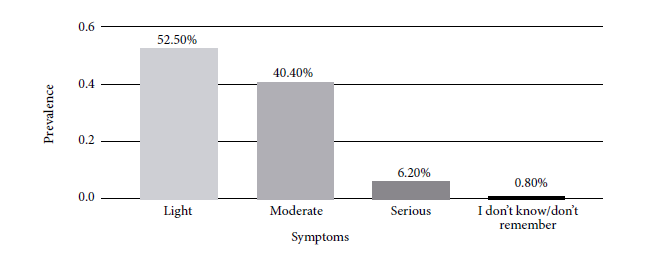 Source: Authors.
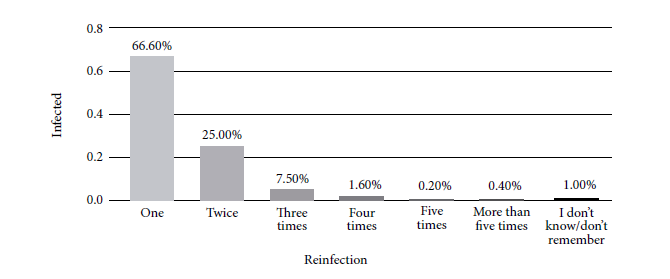 Source: Authors.
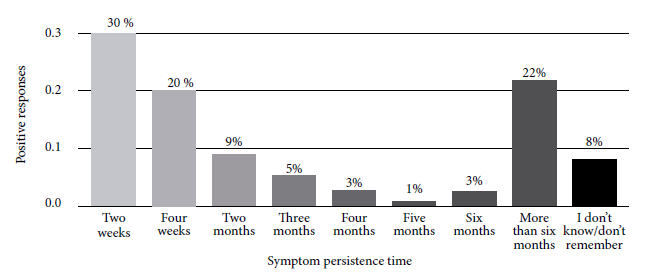 Source: Authors.