
 Impact of the national strategy against obesity and diabetes on the incidence of diabetes in Mexico, 2005-2023
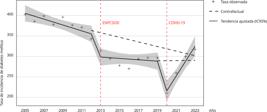
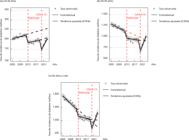
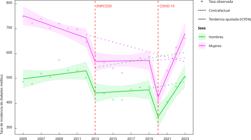
The aim was to evaluate the changes in the temporal trends of the incidence of type 2 diabetes mellitus in the adult population of Mexico before and after the introduction of the National Strategy Against Obesity and Diabetes (ENPCSOD), using interrupted time series analyses. Longitudinal ecological study of interrupted time series with generalized least squares model incorporating ARMA(0.1) structure. The annual cases reported in the Morbidity Yearbooks of the Ministry of Health (2005-2023) and age-adjusted rates (population ≥ 20 years) were used. Analyses were performed stratified by sex and age groups (20-44, 45-59, ≥ 60 years). After the ENPCSOD, an immediate decrease of 55.20 cases per 100,000 adults was observed (95%CI: -86.24; -24.15; p = 0.004), with no evidence of a sustained downward trend in the post-strategy period (post-ENPCSOD slope, β = 5.52; p = 0.180). The COVID-19 pandemic was associated with a sharp drop in the level (β = -109.04; p < 0,001). The effects were heterogeneous: in women there was a major change in level (β = -94.77; p = 0.007) and in the ≥ 60-year-old group the post-ENPCSOD slope showed a significant increase (β = 42.54; p = 0.047). The findings indicate a temporal association between the introduction of ENPCSOD and changes in incidence trend, both of which should be interpreted with caution given the ecological nature of the design.
Keywords:
Diabetes Mellitus; National Health Strategies; Incidence Rate
 Thumbnail
 Thumbnail
 Thumbnail
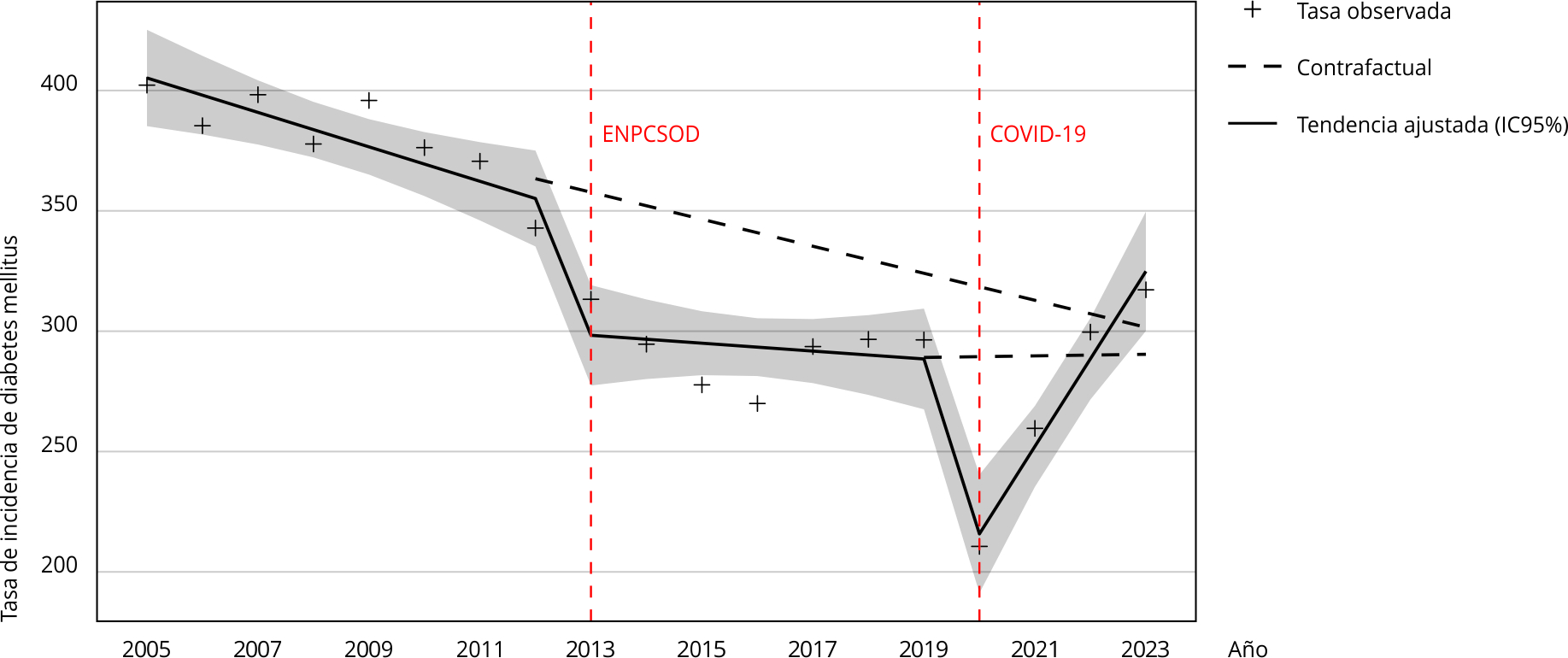 ENPCSOD: Estrategia Nacional para la Prevención y el Control del Sobrepeso, la Obesidad y la Diabetes; IC95%: intervalo del 95% de confianza.
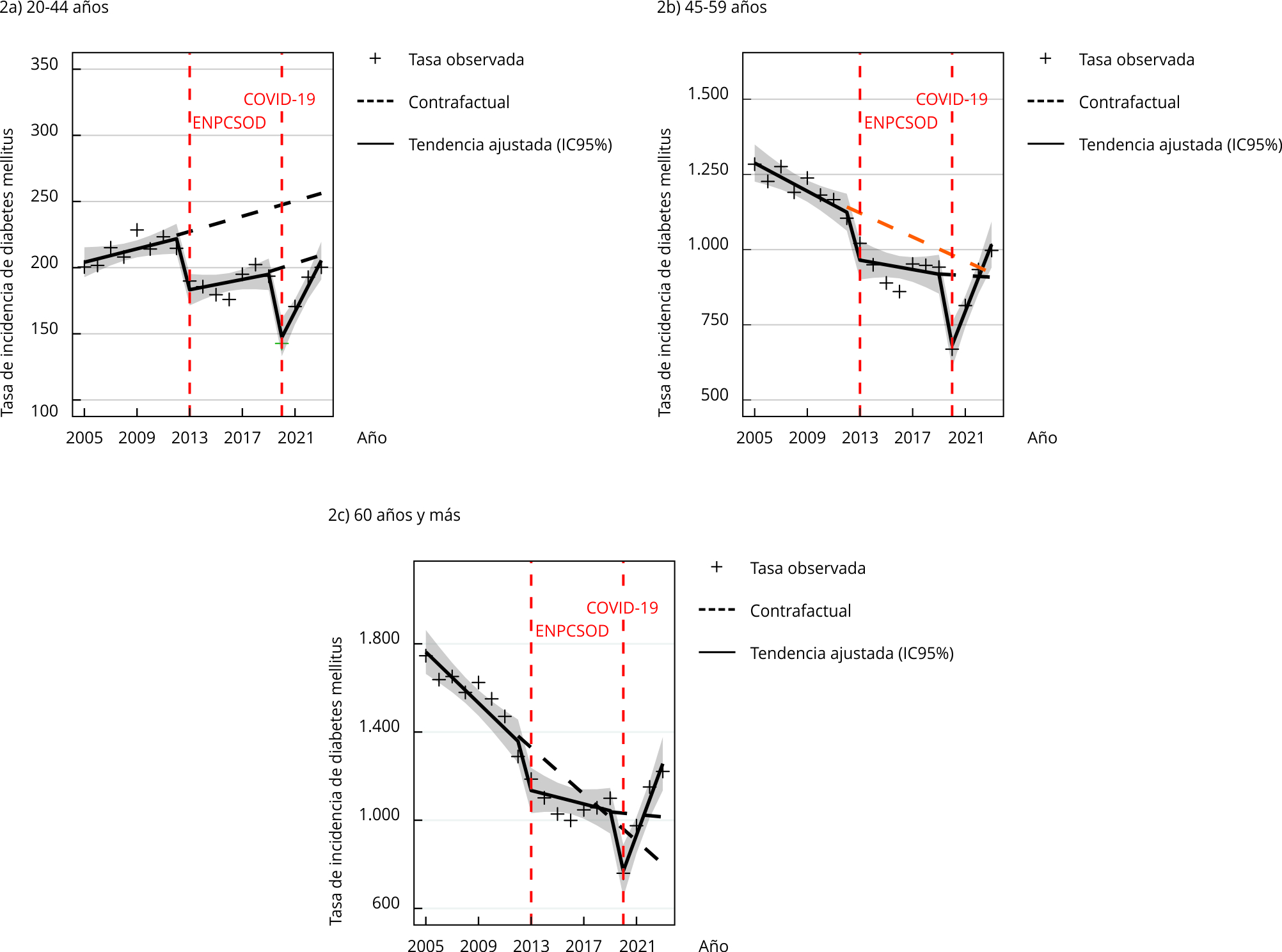 ENPCSOD: Estrategia Nacional para la Prevención y el Control del Sobrepeso, la Obesidad y la Diabetes; IC95%: intervalo del 95% de confianza.
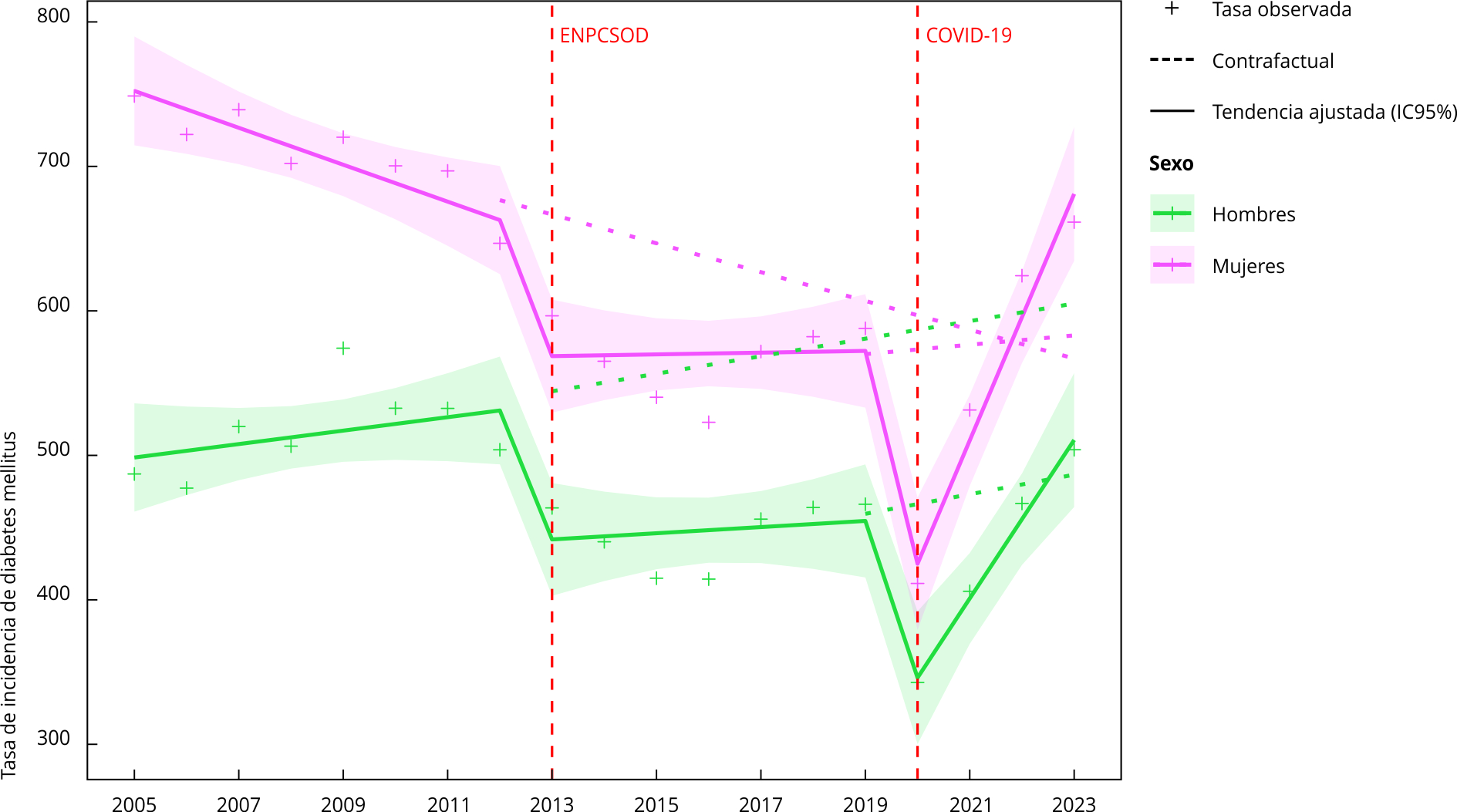 ENPCSOD: Estrategia Nacional para la Prevención y el Control del Sobrepeso, la Obesidad y la Diabetes; IC95%: intervalo del 95% de confianza.