
 Floods in Rio Grande do Sul State, Brazil, in 2024 and their effects on the epidemiology of leptospirosis
Abstract
Extreme climate events favor the spread of waterborne diseases. This study analyzes the impact of the historic floods occurred in Rio Grande do Sul State, Brazil, in 2024 on leptospirosis incidence. This is a descriptive cross-sectional study based on secondary data from official health information systems, comparing confirmed cases, hospitalizations, and deaths between April and July 2023 and the same period in 2024. Monthly trends, sociodemographic characteristics, and spatial distribution of cases were examined. From April to July, the number of cases increased from 117 in 2023 to 1,007 in 2024, a 7.6-fold rise, with a peak in May 2024 (516 cases). Hospitalizations increased from 89 to 228, with June showing a marked rise (76 in 2024 and 15 in 2023), and deaths rose from seven to 35, with the sharpest increase in May (one in 2023 and 20 in 2024). Despite the absolute increase, mortality rates declined from 6% in 2023 to 3.5% in 2024. In 2024, the most affected groups remained young white men, consistent with the 2023 profile. Over 200 municipalities reported cases in 2024, particularly Porto Alegre, Alvorada, Canoas, and São Leopoldo (all located in the Porto Alegre Metropolitan Area), which together accounted for nearly half of cases. The findings suggest that floods contributed to intensified transmission, increased hospital burden, and higher leptospirosis-related mortality. These results underscore the need for integrated epidemiological surveillance, resilient urban infrastructure, and preventive strategies to reduce population vulnerability to future climate-related disasters.
Keywords:
Leptospirosis; Floods; Waterborne Diseases
 Thumbnail
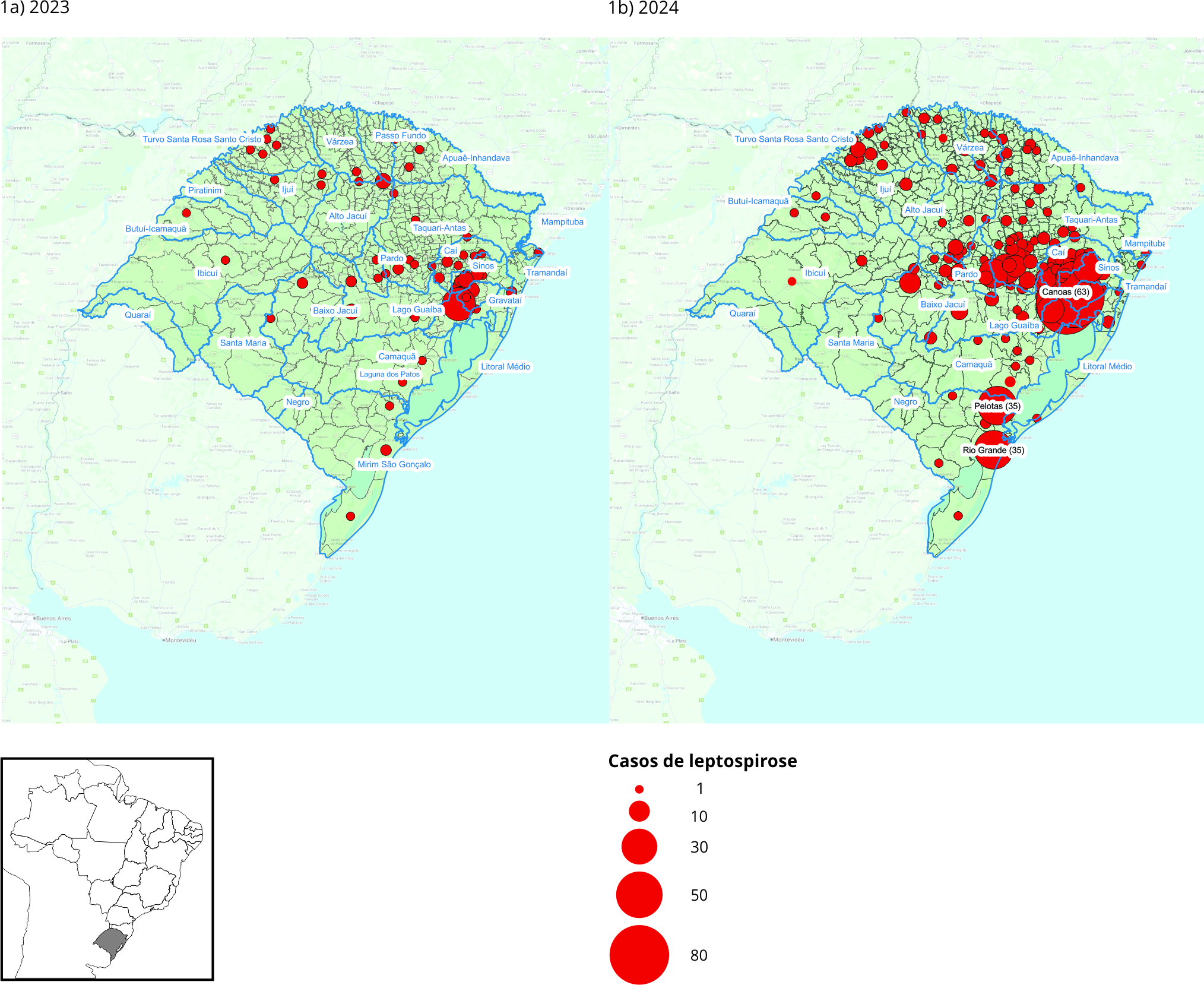 Fonte: elaborada utilizando o software QGIS, versão 3.34. Os dados de casos confirmados de leptospirose (abril a julho de 2023 e de 2024) foram obtidos no Sistema de Informações de Agravos de Notificação (SINAN), acessados via Departamento de Informação e Informática do SUS (DATASUS) em 22 de setembro de 2025