
 Is it possible to make municipal basic income programs universal in Brazil? An estimate with municipal finance data
Abstract
This study investigates the fiscal feasibility of universalizing municipal basic income programs in Brazil by taking the Basic Citizenship Income program in Maricá and Araribóia Social Currency program in Niterói as models. Using data from the Unified Registry and the finances of 5,570 Brazilian municipalities, we estimated the cost of these programs as a proportion of total and social expenditures. The results show that, for most municipalities, the implementation of programs along the lines of the studied models would be significantly more costly than for the reference municipalities. This study observed a marked regional inequality in implementation capacity, with the Brazilian North and Northeast facing an excessive fiscal burden, whereas its South and Southeast showed greater viability, especially for the Niterói model. Simulating scenarios with fiscal efforts resembling those in Maricá and Niterói found a trade-off between coverage and benefit and very large regional inequalities in transfer value. The universalization of basic income programs in Brazil based exclusively on municipal resources is unlikely due to deep regional disparities and high fiscal cost. This study suggests the need for a financing model that goes beyond the municipal sphere, enjoying substantial federal support and a link to a broader debate on fiscal justice and income redistribution to ensure equal benefit distribution and the population’s well-being.
Keywords:
Social Policy; Income; Social Programs
 Thumbnail
 Thumbnail
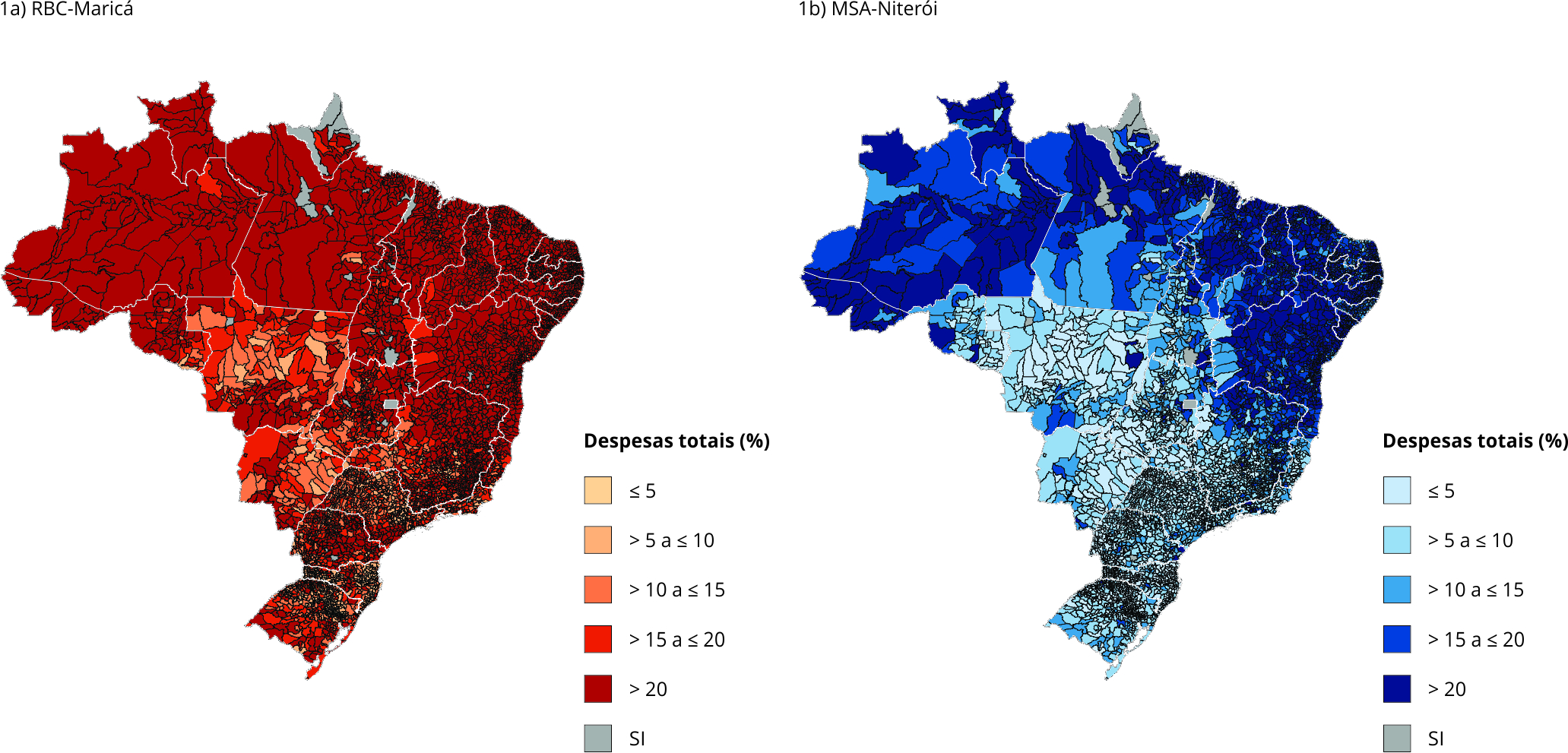 MSA-Niterói: Moeda Social Araribóia de Niterói; RBC-Maricá: Renda Básica de Cidadania de Maricá; SI: sem informação. Nota: os mapas mostram o percentual da despesa total empenhada dos municípios que demandariam implantar programas similares ao RBC-Maricá (à esquerda) e ao MSA-Niterói (à direita).
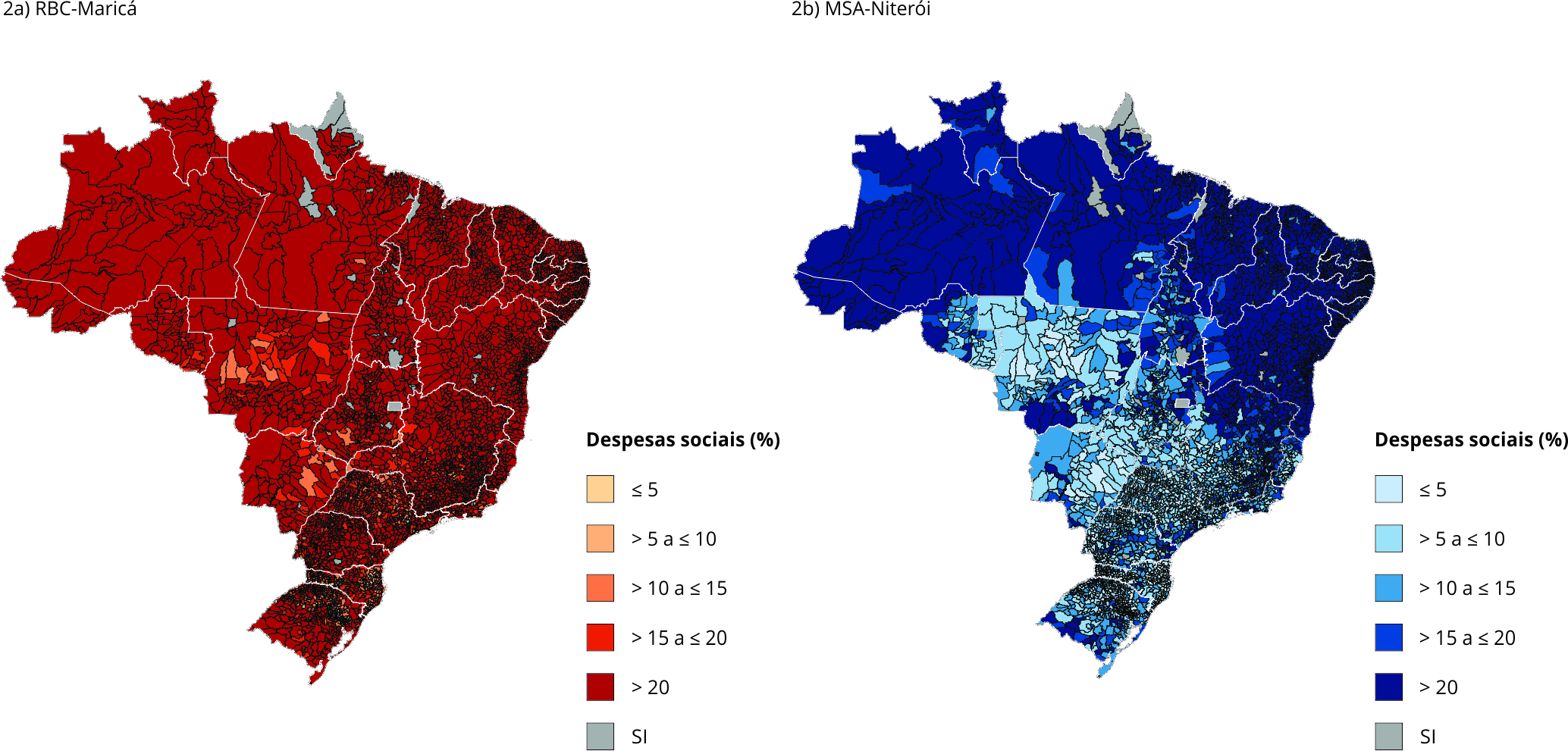 MSA-Niterói: Moeda Social Araribóia de Niterói; RBC-Maricá: Renda Básica de Cidadania de Maricá; SI: sem informação. Nota: os mapas mostram o percentual da despesa social empenhada dos municípios que demandariam implantar programas similares ao RBC-Maricá (à esquerda) e ao MSA-Niterói (à direita). Foram consideradas como despesa social todas as despesas dos municípios com saúde, educação, assistência social e previdência.