
 The Bells test: assessment of visual-attention disorders in school children (case study from Marrakech, Morocco)
Various learning disorders affect children without any sensory (vision, hearing), psychiatric, or neurological impairments, even when they have adequate intelligence and a suitable social environment. These children have difficulties in learning to read, write, spell, calculate, express themselves, or concentrate.
Objective: To demonstrate the importance of the Bells test in young students without visuospatial complaints and to evaluate the test in different levels of schooling, age groups, and genders.
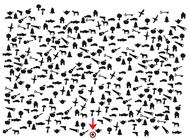
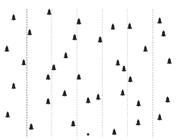
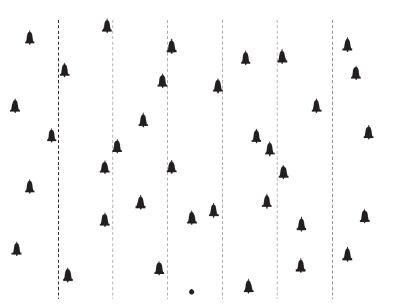
Methods: Among the one hundred (100) middle school students enrolled in the second year of middle school, sixty (60) students were selected to be tested using the Bells test. This test consists of a sheet containing 315 small drawings, including 35 bells. The participants are required to circle as many bells as possible (the test time is limited to three minutes).
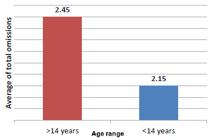
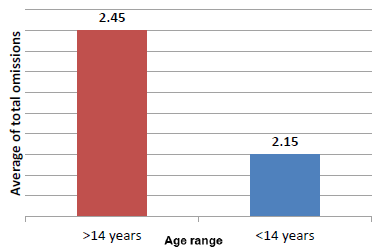
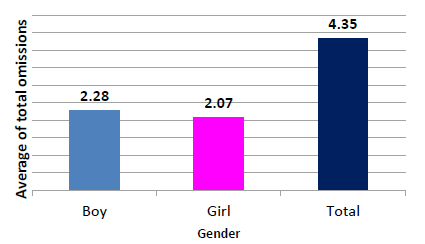
Results: The percentage of students suspected of having hemineglect is 8.33% or 5/60. Students who forgot their left bells exhibited right hemineglect, while those who forgot their right bells exhibited left hemineglect. Furthermore, 16/60 students surveyed obtained a negative score on the left-right hemineglect calculation, representing 26.66%. Omissions were slightly more frequent on the right side. A statistical analysis revealed a non-significant correlation between the two sexes.
Conclusion: Identifying neuro-visual disorders in school-aged children, regardless of their age, would allow us to prevent these disorders from impacting learning, treat them in a specific manner, and determine the neurological origin of the disorder in a child experiencing difficulties.
Keywords:
Students; Visual Attention; Bells Test; Marrakech; Morocco
 Thumbnail
 Thumbnail
 Thumbnail
 Thumbnail
 Source: Adapted from Gauthier et al.
 Source: Adapted from Gauthier et al.
 Source: The authors.
 Source: The authors.