 Intervening factors in breastfeeding adherence during injectable vaccine administration: a qualitative study
ABSTRACT
Objective to describe the factors involved in adherence to breastfeeding during injectable vaccine administration to newborns and infants from nursing professionals’ perspective.
Method qualitative research, conducted online between October and November 2023, through a data collection form, involving 42 nursing professionals. Data were processed in the Interface de R pour les Analyses Multidimensionnelles de Textes et de Questionnaires and interpreted according to thematic content analysis.
Results breastfeeding during vaccination is not yet fully consolidated and depends heavily on maternal adherence. Facilitating factors were identified, such as environmental preparation, professional training, trust in team, positive effects of baby breastfeeding and acceptance. Fear of bronchoaspiration and lack of professional training were considered obstacles to adherence.
Final considerations and implications for practice multidimensional factors influence adherence to breastfeeding during injectable vaccine administration, from individual to institutional aspects. Healthcare professionals should encourage this practice, guiding families and offering ongoing support.
Keywords:
Breast Feeding; Infant; Pain Management; Infant, Newborn; Vaccination
RESUMO
Objetivo descrever os fatores intervenientes na adesão à amamentação durante a administração de vacinas injetáveis em recém-nascidos e lactentes sob a ótica dos profissionais de enfermagem.
Método pesquisa qualitativa, conduzida online entre outubro e novembro de 2023, por meio de um formulário para coleta de dados, envolvendo 42 profissionais de enfermagem. Dados foram processados no Interface de R pour les Analyses Multidimensionnelles de Textes et de Questionnaires e interpretados segundo análise de conteúdo temática.
Resultados a prática de amamentar durante a vacinação ainda não está plenamente consolidada, e depende fortemente da adesão materna. Identificaram-se fatores facilitadores, como preparo do ambiente, capacitação profissional, confiança na equipe, efeitos positivos da amamentação e aceitação do bebê. O medo de broncoaspiração e a falta de capacitação profissional foram considerados obstáculos à adesão.
Considerações finais e implicações para a prática fatores multidimensionais influenciam a adesão à amamentação durante a administração de vacinas injetáveis, desde aspectos individuais até institucionais. Profissionais de saúde devem incentivar essa prática, orientando as famílias e oferecendo suporte contínuo.
Palavras-chave:
Aleitamento Materno; Lactente; Manejo da Dor; Recém-Nascido; Vacinação
RESUMEN
Objetivo describir los factores involucrados en la adherencia a la lactancia materna durante la administración de vacunas inyectables a recién nacidos y lactantes desde la perspectiva de los profesionales de enfermería.
Método investigación cualitativa, realizada en línea entre octubre y noviembre de 2023, a través de un formulario para la recolección de datos, que involucró a 42 profesionales de enfermería. Datos fueron procesados en la Interface de R pour les Analyses Multidimensionnelles de Textes et de Questionnaires e interpretados según análisis de contenido temático.
Resultados la práctica de la lactancia materna durante la vacunación aún no está plenamente consolidada y depende en gran medida de la adherencia materna. Se identificaron factores facilitadores, como preparación ambiental, formación profesional, confianza en el equipo, efectos positivos de la lactancia materna y aceptación del bebé. El miedo a la broncoaspiración y la falta de formación profesional se consideraron obstáculos para la adherencia.
Consideraciones finales e implicaciones para la práctica factores multidimensionales influyen en la adherencia a la lactancia materna durante la administración de vacunas inyectables, desde aspectos individuales hasta institucionales. Los profesionales de la salud deben fomentar esta práctica, orientando a las familias y ofreciendo apoyo continuo.
Palabras-clave:
Lactancia Materna; Lactante; Manejo del Dolor; Recién Nacido; Vacunación
INTRODUCTION
Breastfeeding is widely recognized for its numerous health benefits, both for newborns and infants as well as for mothers. It provides optimal nutrition, with direct benefits for strengthening the baby’s immune system and the emotional bond between mother and child.1 Breastfeeding has been considered the main protective factor in babies’ lives, as breast milk protects against various diseases and immunological disorders, playing a crucial role in supporting optimal growth during childhood.2
The first breast milk, known as colostrum, is considered the baby’s first vaccine, due to its high antibody content.3 However, breast milk does not provide complete and lasting immunity against all childhood diseases, requiring immunization with vaccines such as BCG, hepatitis B, pentavalent, polio, rotavirus, pneumococcal 10, meningococcal C, yellow fever, triple viral, chickenpox, hepatitis A and COVID-19, all included in the Brazilian National Vaccination Calendar.4
Thus, within the Brazilian Healthcare system, newborns and infants are periodically exposed to several vaccines, most of which are injectable, until the age of 2. These procedures, which are often painful, can cause stress and discomfort. Pain and fear related to injections are common reactions in children undergoing vaccination, and they even influence vaccine acceptance.5
Repeated pain can have detrimental effects on a child’s growth and development, with short-term impacts such as increased heart rate, oxidative stress, elevated cortisol levels, and decreased vagal activity. In the long term, it can result in decreased cortical thickness, delayed visual-perceptual development, decreased IQ, and behavioral problems.6 In addition to pain, procedures involving needles can generate negative memories, such as fear, anxiety and distress. Furthermore, previous painful experiences make children more vulnerable to pain.7
Breastfeeding significantly contributes to reducing pain in newborns and infants, due to the substances present in breast milk, such as tryptophan, an essential amino acid for producing melatonin that regulates the circadian cycle, sleep and the immune system. Furthermore, breast milk is linked to several metabolic functions, including serotonin synthesis, which plays an important role in the sensation of pleasure, in reducing anxiety and in regulating sleep. Skin-to-skin contact, smell, touch and sound during breastfeeding also contribute to pain modulation, reducing the increase in heart rate and minimizing crying, anxiety, discomfort and stress.8,9
Given the numerous benefits, breastfeeding during injectable vaccine administration has been recommended by the World Health Organization since 2015 as an effective strategy to reduce pain. The guidelines include breastfeeding before and/or during injections, in order to reduce crying responses and pain scores during and after vaccination.10 A study from Nepal found no risks associated with this practice, highlighting it as an ideal method for pain relief when administering injections to babies.11
In Brazil, the Ministry of Health published Technical Note 39/2021, recommending breastfeeding as a non-pharmacological measure to reduce pain during injectable vaccine administration in children, also aiming to facilitate vaccination adherence.12 It is crucial, therefore, that healthcare professionals support and guide mothers, aiming to maintain their confidence and self-efficacy in breastfeeding.13 Thus, nursing must adopt strategies to ensure qualified care through evidence-based interventions, as alleviating pain associated with vaccination is essential to prevent vaccine hesitancy, and access to pain control is a fundamental human right.14
Although the benefits of breastfeeding for pain relief are well documented, the practical application of this strategy in Brazilian vaccination rooms remains limited and varies considerably between different settings. Often, professionals rely on personal beliefs rather than scientific knowledge, failing to promote this practice.7 Therefore, it is essential to conduct new studies that investigate the factors that influence adherence to breastfeeding during vaccination, a field that is still little explored in the scientific literature. Thus, the following guiding question emerged: what are the factors that influence adherence to breastfeeding during injectable vaccine administration in newborns and infants?
Knowledge of these factors can contribute to developing and adopting management, care and educational strategies that aim to reduce pain and discomfort during vaccinations, including improving adherence to immunization practices. Thus, study aimed to describe the factors that affect adherence to breastfeeding during injectable vaccine administration in newborns and infants from nursing professionals’ perspective.
METHOD
This is descriptive and exploratory research, with a qualitative approach,15 conducted in a virtual environment, following the COnsolidated criteria for REporting Qualitative research (COREQ).16 Data collection took place online from October to November 2023.
The population consisted of nursing professionals who perform activities related to vaccine administration. Nurses and nursing technicians who worked directly in the care of newborns and infants in vaccination rooms in Brazil were included. Professionals dedicated exclusively to administrative activities were excluded from the study.
Forty-two healthcare professionals participated in the study over a two-month period, during which the online form was active for collecting responses. Data collection interruption was determined by the combination of two criteria: data theoretical saturation17 and use of text corpus in the software Interface de R pour les Analyses Multidimensionnelles de Textes et de Questionnaires (IRAMUTEQ).18 The number of participants reached was adequate, considering the data theoretical saturation, which ensured the scope and recurrence of information without the need for new additional data.17 Furthermore, the utilization rate in the analytical software was higher than 75%, as recommended in the literature,18 meeting the qualitative validity standards of exhaustiveness, representativeness, homogeneity and relevance of the data obtained.15
Participants were selected for convenience by sending invitations with a link to access the study form via messages on social media (Instagram® and WhatsApp®). Initially, invitations were sent to professionals who were part of the researchers’ reference network, who have expertise in conducting qualitative research in a virtual environment. From these initial professionals, others were indicated and invited to participate in the study until the final sample was reached. It is worth noting that the professionals initially contacted accessed the study link through posts on Instagram® stories or were reached directly by messages sent via WhatsApp®. However, none of the invited professionals had a working relationship with the researchers, which helped to minimize possible biases in sample selection.
Inclusion criteria were verified on the first page of the online form, where participants were asked about their professional category, geographic location and role in providing care to newborns and infants in the vaccination room. Those who did not meet the eligibility criteria were automatically excluded from the study.
When accessing the study link, which was included in the invitations, the prospective participant was directed to a Google Forms® form, created for this study, with the Informed Consent Form available for reading and downloading. After reading, the prospective participant who checked the option “I have read and agree to participate in the study” was directed to another section of the form that contained questions. The individual who did not agree to participate in the study was directed to a thank you page and to close the form. During the process, four people were excluded due to incomplete forms being submitted, and there were no cases of withdrawal and withdrawal of consent.
The form was divided into two parts: the first with questions to characterize participants and the second with questions directed to the study topic. The first part of the form included ten questions covering age, sex, state of residence, professional category, length of professional experience and in the immunization area, job tenure in institutions, type of work institution, participation in training programs and courses on pain management during vaccination. The second part contained six open-ended questions focused on the study topic, exploring knowledge about pain management during vaccination of newborns and infants, the use of breastfeeding during vaccination, practices adopted in pain management during vaccination, and the facilities and difficulties in implementing these practices.
The study form was reviewed by an independent researcher prior to the start of data collection. No pilot testing was conducted, as prior review was considered sufficient to ensure question clarity and appropriateness. Furthermore, the research team had prior experience with similar forms, which contributed to confidence in the data collection instrument appropriateness. To complete the survey, participants were required to complete the entire form and submit it, with the option of having a copy of their responses emailed to them. Response time was estimated at ten to 15 minutes.
After data collection, responses were analyzed using Microsoft Office Excel®, for quantitative characterization data, and IRAMUTEQ, for qualitative data from discursive responses. Qualitative analysis was conducted in three stages: 1) text corpus preparation and coding; 2) textual data processing; and 3) interpretation of the findings by researchers. In data processing for lexicographic analysis, after text corpus preparation and coding, according to software requirements, different methods were used, such as classical textual statistics, similarity analysis and Descending Hierarchical Classification (DHC).18
Classical textual statistics were used for an initial analysis of the text corpus, revealing the relationship between the frequency and the number of lexical units in the text. Similarity analysis helped to identify occurrences of words and their connections, contributing to understanding the structure of lexical content. To this end, words that appeared at least five times in the text corpus were included, including the most recurrent ones. DHC selected the active forms that presented χ2 equal to or greater than 3.84 (p<0.05), which indicates a strong association between the words in the classes generated, highlighting those with p<0.0001, which reveals a high association. In this analysis, all words are included. In all analyses, the active forms were nouns, verbs, adjectives and unrecognized forms, and the process of lemmatization was used, i.e., the reduction of words to their roots.18
After textual processing, which highlighted the information obtained, the interpretative process was carried out according to the precepts of thematic content analysis.15 Through detailed reading of the text segments, data inferences and interpretation were made, identifying the core meanings present in the responses. This process allowed for a deep and comprehensive understanding of the object of study, through a refined analysis of processed information and a better interpretation of the results obtained.
The study was approved by the Universidade Federal Fluminense Research Ethics Committee (CAAE 74123023.10000.5243; Opinion 6.425.840). Participants were informed and agreed to the Informed Consent Form before participating in the research, with due guarantee of anonymity through the use of an alphanumeric code.
RESULTS
A total of 42 individuals (100.0%) participated in the study, of which 25 were nurses (58.1%) and 17 were nursing technicians (41.9%), 40 (95.2%) were female and two (4.8%) were male. The sample included individuals aged 23 to 71 years. The most representative age was 31 years, with five participants (21.5%), and the mean age was 29.2 years. All (100.0%) professionals lived in Brazil. However, those who lived in Rio de Janeiro totaled 28 (66.7%) participants. The others lived in other states of Brazil, namely: eight (19%) in São Paulo; two (4.8%) in Rio Grande do Sul; and one (2.4%) in each of the following states: Minas Gerais, Piauí, Pernambuco and Goiás.
Regarding the length of professional experience, it is worth noting that 17 participants (40.5%) had been working for one to three years, followed by 15 (35.7%) with more than ten years, six (14.3%) with three to six years, three (7.1%) with six to nine years, and one (2.4%) with less than one year. Concerning the length of experience in the immunization area, 24 (55.8%) professionals had been working between one and five years, followed by nine (21.4%) with between six and ten years, four (9.3%) with between 11 and 15 years, three (7.0%) with less than one year, and two (4.6%) had been working for more than 16 years. Of the participants, 16 (38.1%) worked in more than one institution, whereas 26 (61.9%) worked in only one.
As for the type of institution in which they worked, 39 (92.9%) professionals worked in the public network, whereas three (7.1%) worked in the private network. Among the participants, 34 (80.9%) stated that the institution in which they worked carried out vaccination training programs, whereas eight (19.1%) reported that it did not. Among them, 11 (26.2%) stated that, in recent years, they had taken a training course on pain management when administering vaccines to newborns and infants, but 31 (73.8%) responded that they had not taken such a course.
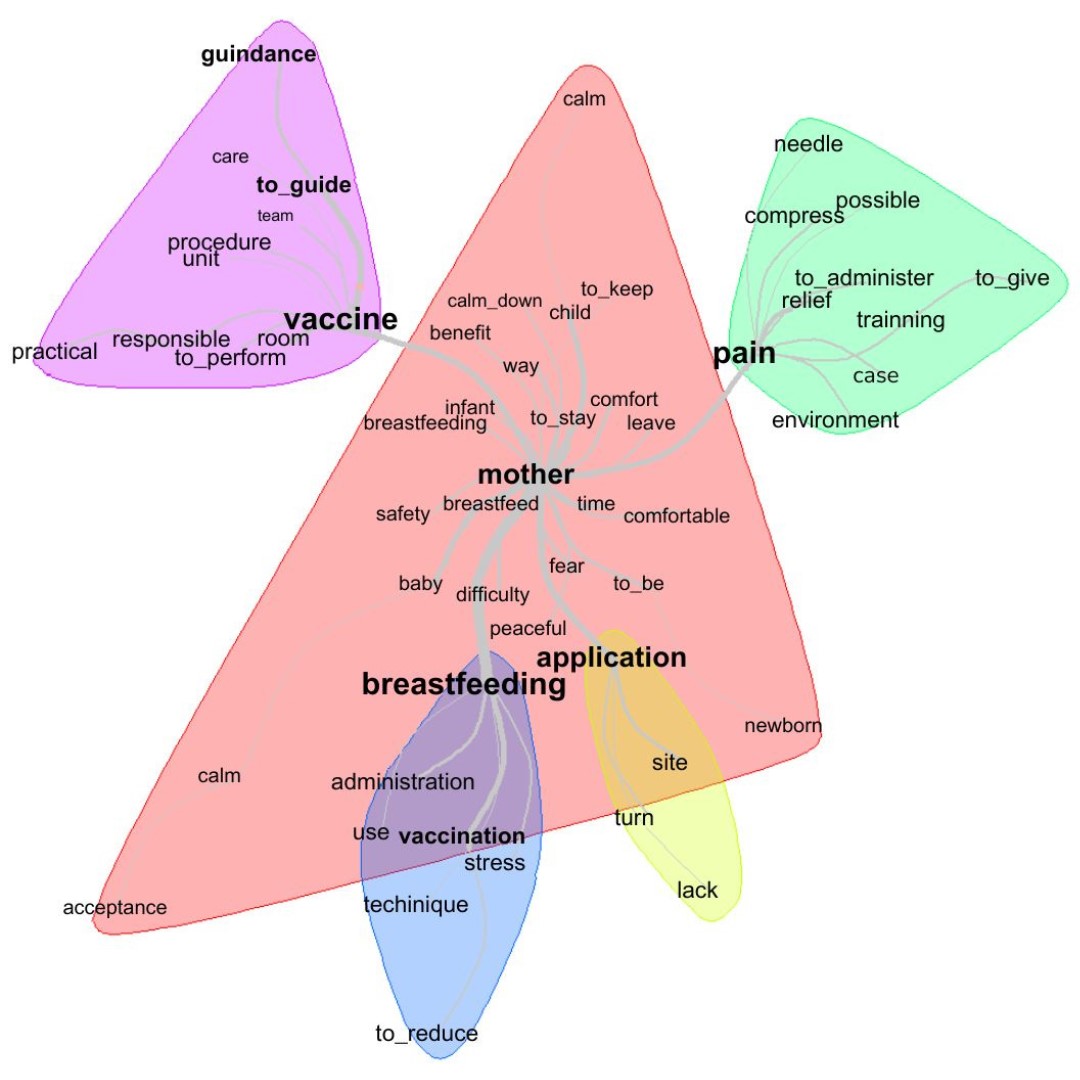
Classical textual statistics were performed on a corpus composed of 42 texts, totaling 2,579 word occurrences. Among these, 597 distinct words were identified, of which 342 (13.3%) appeared only once, characterizing themselves as hapaxes. The mean number of occurrences per text was 61.4 words. In order of ranking, the ten most frequent forms that appear most central and most prominent in the word cloud (Figure 1) were: mother (f=52); vaccine (f=40); breastfeeding (f=36); application (f=28); pain (f=26); vaccination (f=22); guidance (f=20); child (f=17); to_guide (f=17); and baby (f=15).

In the data interpretation process, among the most recurrent active forms, the word with the greatest evidence was “mother”, indicating that adherence to breastfeeding during injectable vaccine administration strongly depends on maternal adherence in this process. However, the synthesis of the findings revealed a variety of perspectives and practices regarding breastfeeding during vaccination. From participants’ perspective, some mothers and some professionals support this practice, considering it safe and beneficial, while others see it as risky for infants. Thus, it was possible to verify that breastfeeding during vaccination is not yet fully consolidated in vaccination rooms, varying between institutions, with some adhering to breastfeeding during vaccination, while others do not.
Similarity analysis (Figure 1) revealed the distribution of the text corpus into five distinct halos, with the five most frequently occurring words connecting to each other. These connections were represented by a thicker central line, indicating a strong correlation between the word “mother”, again in a central position, and the most representative adjacent words in each halo: “breastfeeding” in blue, “pain” in green, “vaccine” in purple and “application” in yellow. From these relevant terms, the formation of several branches with other words that were also connected within the halos was observed, which reinforces the close relationship between them, helping to understand the lexical content structure.
In the red halo, centered on the word “mother”, a significant connection was observed with the terms “child”, “breastfeed”, “calm”, “benefit”, “breastfeeding”, “comfort”, “peaceful”, “safety”, “baby” and “fear”. This network of words suggests again that the presence of a mother can contribute positively to adherence to breastfeeding during injectable vaccine administration. However, some professionals transfer the responsibility for decision-making exclusively to them, without proper guidance.
Professionals’ reports revealed how maternal presence and breastfeeding provide tangible benefits for newborns and infants, including calm, comfort and safety. Therefore, it was found, from professionals’ perspective, that this practice not only benefits the mother and baby, but also facilitates healthcare professionals’ work, promoting a calmer and more welcoming environment during the procedure. However, fear of bronchoaspiration was widely mentioned, reflecting a common fear associated with breastfeeding during vaccination, which ends up limiting adherence to this practice.
In the blue halo, which intersects with the red halo, the term “breastfeeding” is highlighted, followed by “vaccination”, “stress”, “technique” and “reduce”, indicating an association between breastfeeding and the reduction of stress and discomfort associated with the vaccination technique, which may directly favor adherence to this practice. Some reports highlighted that breastfeeding provides physical comfort, suction, distraction and ingestion of substances that have analgesic effects, promoting pain relief.
In the green halo, the term “pain” is interconnected with other terms, such as “relief,” “environment,” “training,” “administer,” and “needle”. This connection suggests an understanding of the factors that influence pain perception during vaccine administration, including what intensifies and what minimizes discomfort. Thus, elements that contribute positively to adherence to breastfeeding in this context are identified, such as the appropriate environment in which vaccination occurs and the presence of trained professionals to offer support to the mother and family in comfort and pain relief during vaccine administration.
In the lilac halo, the term “vaccine” occupies a central position in the graphic structure, connecting with other terms such as “guidance”, “to_guide”, “care”, “team”, “procedure”, “unit”, “practical”, “responsible”, “to_perform” and “room”. Participants’ responses highlighted the importance of adequate guidance and support in the vaccination process, both for the mother and the baby. Professionals emphasized the need to guide mothers on the procedure, the ideal position for breastfeeding and the importance of breastfeeding before or during vaccine administration to ensure the baby’s comfort and tranquility.
In the yellow halo, the central word is “application”, followed by “site”, “time” and “lack”. This configuration suggests a reflection on the care related to vaccine administration, both at the time of application and in subsequent care, such as observation of possible reactions at the site of the procedure. However, the inclusion of the word “lack” in the yellow halo indicated the absence of certain elements, such as healthcare professionals’ scientific knowledge, and the lack of guidance and safety perceived by some participants.
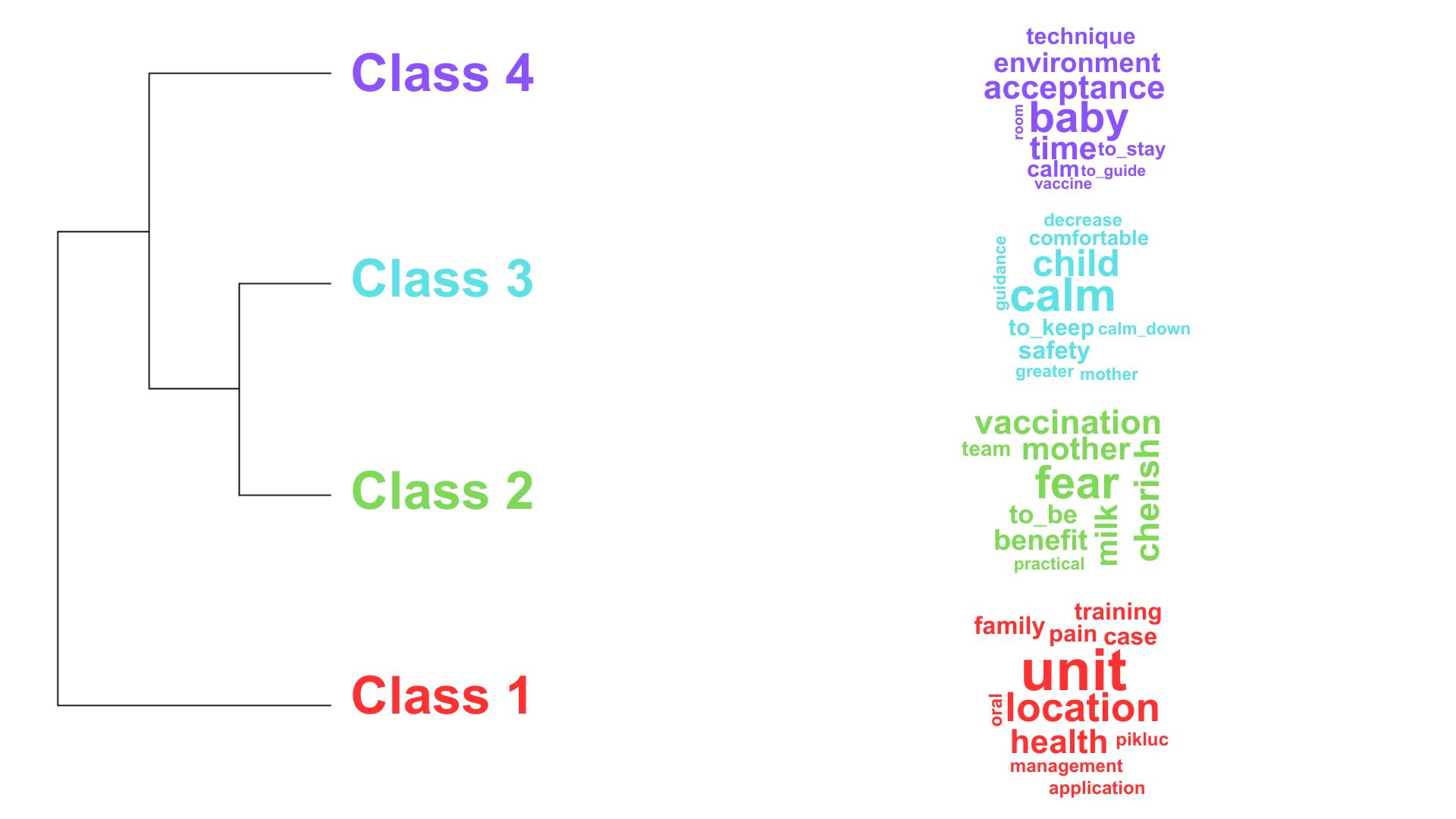
In the DHC, a dendrogram was generated (Figure 2), identifying 80 text segments, of which 65 were classified, representing a utilization rate of 81.3%, which were grouped into four textual classes: class 2 (green), with 30.8% of text segments; class 4 (purple), with 27.7%; class 1 (red), with 21.5%; and class 3 (blue), with 20.0%.
The text corpus was divided into two independent chunks (subcorpus). The first was composed of class 1, which was the most isolated, with a distance in its semantic content from the others, as it was the only one that referred to support factors and other measures for comfort and pain relief. The second gave rise to class 4, with a second subdivision for classes 3 and 2, demonstrating greater proximity and homogeneity between the latter two. They present semantic content that is closer, but with some differentiation, regarding the factors involved in adherence to breastfeeding during injectable vaccine administration in newborns and infants. After analyzing the associated terms and text segments of the classes, their naming became viable, based on the core meanings of responses. Chart 1 presents the classes and associated words.
Class 1- Environmental preparation and professional training
In this class, professionals highlighted the importance of integrated pain management, considering environment preparation to promote the comfort and safety of children and their families. For them, a calm, peaceful and well-lit environment contributes to the proper management of vaccination, becoming a facilitator for breastfeeding.
Calm, peaceful, well-lit place (P8).
Keep the environment calm and peaceful (P38).
The issue of professional training is of significant relevance in this class, due to the importance of updates and technical-scientific knowledge about the benefits of breastfeeding during vaccination. Well-informed mothers and family members facilitate the vaccination process, according to participants. Professionals highlighted the importance of adequate guidance, correct position, calm and confidence of vaccinators, in addition to the correct technique.
First, I guide the mother on the procedure, the ideal position so that, while I am preparing the vaccines, she is already breastfeeding (P42).
Guidance, position, calm and confidence of the vaccinating professional, correct technique (P34).
Vaccine training. We advise mothers to breastfeed before or during vaccine application so that the baby does not become agitated at the time of application (P22).
However, unqualified professionals represent an obstacle to adherence to breastfeeding, as they are unable to dispel myths and fears that permeate society. Thus, not all professionals support breastfeeding during vaccination, and the lack of specific management for pain control is highlighted. The need for guidance, training and updating courses, including courses provided by the institution itself, is highlighted as an important strategy to deal with these challenges and ensure safe practice.
Breastfeeding during vaccination is not a method adopted by all professionals (P5).
During the application of immunobiological agents, there is no specific management for pain control (P23).
Due to lack of guidance on how to implement it. Lack of training (P23).
Guidance, support and training. Properly trained professionals (P29).
Vaccination schedule training and update course provided by the institution itself (P28).
Class 2 – Fear of aspiration and trust in team
In class 2, fear emerged as an intervening factor that limits adherence to this practice in vaccination rooms. When there is no clarification about the procedure, this feeling is reinforced among those involved, mothers and professionals. It was found that emotions related to the unknown hinder adherence to breastfeeding during vaccination.
At the time of application, I ask the mother to stop breastfeeding. I am afraid of bronchoaspiration if the newborn has milk in its mouth (P28).
Taboo, insecure professionals, technicians afraid of the baby choking. Lack of guidance and safety (P34).
Mothers are afraid that the child will choke (P13).
Many mothers and even professionals still believe that breastfeeding during vaccination is a risk for the infant (P5).
Many mothers prefer not to breastfeed, even when advised of the benefits (P21).
Breastfeeding can be done during and after application; it is up to the mother to breastfeed the child (P3).
During the interpretative process, it was learned that breastfeeding has beneficial effects for relieving pain in newborns and infants during vaccination, according to study participants. Professionals who adopt this practice recognize its benefits in administering the vaccine, providing safety, comfort and tranquility for babies, family members and professionals. Breastfeeding was recognized as an important practice for reducing the effects that pain can cause in the baby, highlighting the importance of knowledge about its benefits.
Furthermore, the mother’s trust in nursing team was recognized as fundamental in facilitating breastfeeding during the vaccination procedure. This is because the mother feels comfortable and safe enough to breastfeed her baby during vaccination, taking advantage of the ease of access to offer her milk. However, one difficulty reported that limits this practice is the high demand in the vaccination room.
Breastfeeding is a quick way to relieve pain in infants, precisely because it is already available. The greatest difficulty is the rush of everyday life due to the high demand in the vaccination room (P21).
As the mother trusts the team, already breastfeeds her baby and has easy access to offer her milk, this practice makes it much easier (P14).
Class 3 - Positive effects of breastfeeding during vaccination
In class 3, participants’ reports emphasize the importance of breastfeeding for safer and more comfortable vaccination for newborns and infants, also benefiting their families and the professionals involved. Breastfeeding during vaccination encourages the bond between mother and child, reducing stress through physical comfort, according to professionals’ responses.
More comfortable for me in terms of the position to vaccinate, and the children feel more at ease (comfortable, calm) this way (P18).
Calm down the child (P7).
Breastfeeding encourages bonding with the mother and reduces stress through physical comfort. Family bonding, greater comfort and security for child and mother (P19).
More comfortable mother and baby and reduces trauma to the baby (P11).
There is a positive perception of breastfeeding during vaccination as an effective strategy to calm and comfort the baby. For them, breastfeeding is capable of reducing stress through the physical comfort provided by sucking, distraction and ingestion of substances that have a soothing effect. The predominant feelings in this class were calm, security and comfort. Moreover, guidance on the benefits of breastfeeding during immunization procedures was highlighted as crucial to promote adherence to this practice, ensuring the safety and well-being of both the child and the mother.
Breastfeeding can reduce stress through physical comfort, sucking, distraction, and the ingestion of substances that can, individually and together, have a relieving effect (P4).
The facilities are the comfort of the mother and the infant, who are calmer at the time of administration, facilitating the performance of the technique (P5).
-
Breastfeeding reduces pain and provides comfort for the infant, making the mother feel more comfortable and respected (P10).
Class 4 – Baby acceptance
The semantic content of this class highlights the importance of breastfeeding for the baby at the time of vaccination as a form of humanized care. This results in babies who are less agitated, who cry less and who accept the vaccine better, which shows that some healthcare professionals perceive the value of breastfeeding in the context of vaccination.
Breastfeeding brings mother and baby closer together, giving the baby a sense of security and relief at times of pain. Babies and nursing mothers are less agitated, cry less and accept the vaccine well (P22).
I consider it more humanized and the baby is calmer (P36).
Participants acknowledge that breastfeeding humanizes the process, making the baby calmer and providing relief from the pain caused by the needle puncture. In addition, they emphasize that breastfeeding strengthens the bond between mother and baby, providing a sense of security and relief during the painful moment of vaccination. It was also observed that babies and infants show good acceptance of the procedure when breastfed, crying less and showing less agitation, which facilitates adherence.
Breastfeeding is a quick way to relieve pain in infants, precisely because it is already available (P21).
Good acceptance (P27).
It is an important ally in relieving the pain of needle puncture. A less painful administration for the baby (P38).
DISCUSSION
Analysis of the results of this study revealed that breastfeeding during vaccination is not yet fully consolidated in vaccination rooms and depends heavily on maternal adherence. Facilitating factors, such as environment preparation, professional training, trust in team, positive effects of breastfeeding and baby acceptance, were identified from study participants. On the other hand, fear of bronchoaspiration and lack of professional training were considered obstacles to adherence.
Several multidimensional factors influence adherence to breastfeeding during injectable vaccine administration, according to the findings. However, although vaccination is the most common painful procedure in healthy children and there are techniques to prevent and manage pain, few professionals have integrated these methods into clinical practice, as also indicated in another study.19 This scenario highlights the need for changes in the training and qualification of healthcare professionals so that evidence-based practices are effectively incorporated into the routine of care in vaccination rooms.
Initially, some professionals recognized the benefits of breastfeeding as an effective strategy to alleviate pain associated with injectable vaccine administration. The perception of the positive effects of breastfeeding on babies’ comfort and well-being during the procedure emerged as a facilitating factor for the adoption of this non-pharmacological approach to pain management in babies, which supports a study carried out in the United States of America.10 However, despite the topic having been addressed for longer in other countries, in Brazil, the Ministry of Health implemented the Technical Note on the subject only in 2021.12 For this reason, professionals’ adherence to this practice is still in the process of consolidation, which reinforces the importance of this study.
Another factor highlighted in the findings was the central role of mothers during vaccination in terms of breastfeeding adherence, providing comfort and safety to newborns, according to research participants. Thus, the mother’s direct influence reflects her decision-making autonomy, as she is the one who ultimately decides on whether to breastfeed during the procedure. Professionals emphasize that the final decision is up to the mother. However, it is essential that she be properly informed about the benefits generated for the baby so that she can make a free and informed decision. This approach tends to help mitigate caregivers’ concern regarding pain associated with the vaccine.20 Therefore, the importance of sharing technical and scientific information in a way that is understandable to the population is highlighted, in order to ensure adequate guidance.
The results showed the influence of physical environment preparation as an intervening factor in adherence to breastfeeding during vaccination. Professionals reported that welcoming and safe environments promote a more positive experience for babies and their families, facilitating breastfeeding during the immunization procedure. These findings support the literature that indicates the importance of adopting additional techniques for effective pain management. Therefore, it is necessary to implement protocols in clinical practice, since vaccine administration techniques vary from professional to professional, with some adhering to this practice and others not, as also indicated by the literature.10
Data analysis also revealed gaps in knowledge. In fact, most professionals indicated that they had not participated in training on the subject. Therefore, the need to update professionals’ knowledge based on the best scientific evidence is highlighted. An American study introduced breastfeeding as a strategy to alleviate pain during vaccination, demonstrating that the implementation of a clinical protocol favors changes in behavior, environment, and practice. The research also suggests that the adoption of institutional protocols facilitates adherence to this practice, as well-prepared professionals tend to offer precise guidance and effective support to mothers. Thus, the importance of continuing education is reinforced so that nursing professionals remain up-to-date, ensuring safe and quality care.10
Breastfeeding support strategies varied among health institutions, influenced by professionals’ technical knowledge and mothers’ choices, highlighting the need for personalized approaches and adequate support.8 Thus, institutional organization also emerged as a crucial factor in adherence to breastfeeding during vaccination, highlighting the importance of quality training, continuing qualification and training of the professionals involved.19
The results highlighted that professionals’ and mothers’ fear exerts a negative influence on adherence to breastfeeding during vaccination, especially due to concern about the possibility of bronchoaspiration by the baby. This fear can lead both professionals and mothers to avoid breastfeeding during vaccination. There are no studies indicating that breastfeeding during vaccination poses a risk of bronchoaspiration. However, fear associated with this event was frequently reported due to the baby crying when there is milk in the mouth. Physiologically, when the baby swallows breast milk, the airways are closed, preventing the passage of food to the respiratory tract. Therefore, this sucking-swallowing-breathing dynamic reduces the risk of bronchoaspiration among newborns and infants.21
Therefore, it is essential to conduct further studies to clarify the safety of breastfeeding during vaccination and to dispel fears associated with bronchoaspiration in this context. New research can provide solid data that will help reassure both healthcare professionals and mothers, thus promoting greater adherence to breastfeeding during vaccine administration. However, it is important to emphasize that it is widely documented in the literature that breastfeeding is an effective method of pain relief, including reducing crying.11
Crying is minimized through the components present in breast milk and in the act of breastfeeding, resulting in pain relief and, consequently, a reduction in the baby’s crying.22 Furthermore, there are other non-pharmacological approaches to pain reduction, such as non-nutritive sucking, glucose, the mother’s lap and distraction, which are still little applied in clinical practice related to vaccination.14,19,20
The feelings expressed by professionals towards caregivers, such as fear and calm, played a crucial role in the analysis, influencing adherence to breastfeeding during vaccination. While calmness favors this practice, fear can hinder it. These feelings highlight the importance of effective communication and clarification to promote acceptance of this practice. Providing clear information and emotional support are key strategies for a positive experience during vaccination and breastfeeding. Nursing professionals play a central role in this process, influencing caregivers’ feelings. Their training is essential to provide scientifically based guidance, since communication and professional attitude directly affect the perception of the family’s feelings.19
The findings of this study reveal that adherence to breastfeeding during vaccination is influenced by an intersection of complex intervening factors, ranging from healthcare professionals’ individual practice to the institutional and emotional context. To promote greater acceptance of this practice, comprehensive interventions that address these different aspects in an integrated manner are needed. Thus, the results highlight the importance of clarification based on scientific evidence, professional training and individualized approaches to encourage breastfeeding during vaccine administration in newborns and infants, aiming to provide effective and humanized care.
FINAL CONSIDERATIONS AND IMPLICATIONS FOR PRACTICE
The findings of this study highlighted that multidimensional factors influence breastfeeding during vaccination, from individual to institutional aspects. Breastfeeding during vaccination is not yet fully consolidated and is strongly linked to maternal decision. Facilitating factors were identified, such as environment preparation, professional training, trust in team, the positive effects of breastfeeding and baby acceptance. However, fear of bronchoaspiration and lack of professional training represent significant obstacles to adherence to this practice.
Therefore, the findings highlight the need for integrated approaches that promote safety and adequate support to encourage breastfeeding during vaccination, aiming to improve the quality of care offered, providing the inclusion of humanized practices in vaccination rooms, thus meeting the Ministry of Health recommendation. Healthcare professionals should encourage the practice, informing mothers about the benefits and offering ongoing support. Therefore, it is also important to train professionals to adequately deal with the challenges and facilitate adherence to this practice.
Limitations of this study include conducting the research virtually, in which data collection was performed through an online form, without the presence of a researcher to delve deeper into the relevant aspects of the perceptions raised by study participants. This method, although practical and accessible, may generate more succinct responses, due to the nature of digital interaction. As a result, responses may not fully capture the richness and depth of participants’ experiences and opinions. The influence of time spent in vaccination rooms on professionals’ perceptions of breastfeeding adherence was not analyzed, which also represents a limitation. Furthermore, participants in this study were exclusively nursing professionals. These gaps suggest the need for further research that explores this topic in a more comprehensive and inclusive manner, to include, for instance, mothers’ and caregivers’ perspective to complement and enrich the understanding of breastfeeding assistance during vaccination.
References
-
1 Muro-Valdez JC, Meza-Rios A, Aguilar-Uscanga BR, Lopez-Roa RI, Medina-Díaz E, Franco-Torres EM et al. Breastfeeding-related health benefits in children and mothers: vital organs perspective. Medicina (Kaunas). 2023;59(9):1535. http://doi.org/10.3390/medicina59091535 PMid:37763654.
» http://doi.org/10.3390/medicina59091535 -
2 Alotiby AA. The role of breastfeeding as a protective factor against the development of the immune-mediated diseases: a systematic review. Front Pediatr. 2023;11:1086999. http://doi.org/10.3389/fped.2023.1086999 PMid:36873649.
» http://doi.org/10.3389/fped.2023.1086999 -
3 Yi DY, Kim SY. Human breast milk composition and function in human health: from nutritional components to microbiome and microRNAs. Nutrients. 2021;13(9):3094. http://doi.org/10.3390/nu13093094 PMid:34578971.
» http://doi.org/10.3390/nu13093094 -
4 Ministério da Saúde (BR). Programa Nacional de Imunizações: Calendário Nacional de Vacinação/2023/PNI/MS [Internet]. Brasília (DF): Ministério da Saúde; 2023 [citado 2024 jul 25]. Disponível em: https://www.gov.br/saude/pt-br/vacinacao/calendario
» https://www.gov.br/saude/pt-br/vacinacao/calendario -
5 Taddio A, McMurtry CM, Logeman C, Gudzak V, de Boer A, Constantin K et al. Prevalence of pain and fear as barriers to vaccination in children - systematic review and meta-analysis. Vaccine. 2022;40(52):7526-37. http://doi.org/10.1016/j.vaccine.2022.10.026 PMid:36283899.
» http://doi.org/10.1016/j.vaccine.2022.10.026 -
6 Field T. Preterm newborn pain research review. Infant Behav Dev. 2017;49:141-50. http://doi.org/10.1016/j.infbeh.2017.09.002 PMid:28898671.
» http://doi.org/10.1016/j.infbeh.2017.09.002 -
7 Mendes BV, Furlan MS, Sanches MB. Non-pharmacological interventions in painful needle procedures in children: integrative review. BrJP. 2022;5(1):61-7. http://doi.org/10.5935/2595-0118.20220004
» http://doi.org/10.5935/2595-0118.20220004 -
8 Rosa IT, Rossato LM, Guedes DMB, Fogaça VD, Domingues F, Silva L. Beliefs, knowledge, actions of nursing techniques in breastfeeding in pain management in immunization. Rev Bras Enferm. 2022;75(6):e20210546. http://doi.org/10.1590/0034-7167-2021-0546 PMid:35858027.
» http://doi.org/10.1590/0034-7167-2021-0546 -
9 Shah PS, Torgalkar R, Shah VS. Breastfeeding or breast milk for procedural pain in neonates. Cochrane Database Syst Rev. 2023;8(8):CD004950. http://doi.org/10.1002/14651858.CD004950.pub4 PMid:37643989.
» http://doi.org/10.1002/14651858.CD004950.pub4 -
10 Komaroff A, Forest S. Implementing a clinical protocol using breastfeeding to mitigate vaccination pain in infants. J Pediatr Nurs. 2020;54:50-7. http://doi.org/10.1016/j.pedn.2020.05.017 PMid:32534408.
» http://doi.org/10.1016/j.pedn.2020.05.017 -
11 Bhurtel R, Yadav U, Chaudhary R, Xá S, Poudel RP, Pokhrel S et al. Effect of breastfeeding on relieving pain during immunization in infant. Kathmandu Univ Med J (KUMJ). 2020;18(72):376-80. http://doi.org/10.3126/kumj.v18i4.49249 PMid:34165095.
» http://doi.org/10.3126/kumj.v18i4.49249 -
12 Ministério da Saúde (BR). Secretaria de Atenção Primária à Saúde. Departamento de Ações Programáticas e Estratégicas. Nota Técnica Nº 39/2021-COCAM/CGCIVI/DAPES/SAPS/MS [Internet]. Brasília (DF): Ministério da Saúde; 2021 [citado 2024 jul 25]. Disponível em: https://portaldeboaspraticas.iff.fiocruz.br/biblioteca/nota-tecnica-no-39-2021-cocam-cgcivi-dapes-saps-ms/
» https://portaldeboaspraticas.iff.fiocruz.br/biblioteca/nota-tecnica-no-39-2021-cocam-cgcivi-dapes-saps-ms/ -
13 Siqueira LS, Santos FS, Santos RMMS, Santos LFS, Santos LH, Pascoal LM et al. Factors associated with breastfeeding self-efficacy in the immediate puerperium in a public maternity hospital. Cogitare Enferm. 2023;28:e84086. http://doi.org/10.1590/ce.v28i0.88970
» http://doi.org/10.1590/ce.v28i0.88970 -
14 Wu Y, Zhao Y, Wu L, Zhang P, Yu G. Non-pharmacological management for vaccine-related pain in children in the healthcare setting: a scoping review. J Pain Res. 2022;15:2773-82. http://doi.org/10.2147/JPR.S371797 PMid:36106315.
» http://doi.org/10.2147/JPR.S371797 - 15 Minayo MCS. O desafio do conhecimento: pesquisa qualitativa em saúde. 14. ed. São Paulo: Hucitec; Rio de Janeiro: Abrasco; 2014.
-
16 Souza VRS, Marziale MHP, Silva GTR, Nascimento PL. Translation and validation into Brazilian Portuguese and assessment of the COREQ checklist. Acta Paul Enferm. 2021;34:eAPE02631. http://doi.org/10.37689/acta-ape/2021AO02631
» http://doi.org/10.37689/acta-ape/2021AO02631 -
17 Saunders B, Sim J, Kingstone T, Baker S, Waterfield J, Bartlam B et al. Saturation in qualitative research: exploring its conceptualization and operationalization. Qual Quant. 2018;52(4):1893-907. http://doi.org/10.1007/s11135-017-0574-8 PMid:29937585.
» http://doi.org/10.1007/s11135-017-0574-8 -
18 Góes FGB, Santos AST, Campos BL, Silva ACSS, Silva LF, França LCM. Use of IRAMUTEQ software in qualitative research: an experience report. Rev Enferm UFSM. 2021;11:e63. http://doi.org/10.5902/2179769264425
» http://doi.org/10.5902/2179769264425 -
19 Gorrotxategi PG, Rueda AZ, Pascual AU, Galdeano PA, Irureta SJ, Tamayo LE. Nonpharmacological pain management in vaccination: perception of paediatricians, patients and guardians. An Pediatr (Engl Ed). 2022;97(3):199-205. http://doi.org/10.1016/j.anpede.2022.07.002 PMid:35906154.
» http://doi.org/10.1016/j.anpede.2022.07.002 -
20 Abukhaled M, Cortez S. Nonpharmacological methods for reducing parental concern for infant vaccine-associated pain. J Pediatr Health Care. 2021;35(2):180-7. http://doi.org/10.1016/j.pedhc.2020.09.006 PMid:33191034.
» http://doi.org/10.1016/j.pedhc.2020.09.006 -
21 Sakalidis VS, Geddes DT. Suck-swallow-breathe dynamics in breastfed infants. J Hum Lact. 2016;32(2):201-11, quiz 393-5. http://doi.org/10.1177/0890334415601093 PMid:26319112.
» http://doi.org/10.1177/0890334415601093 -
22 Viggiano C, Occhinegro A, Siano MA, Mandato C, Adinolfi M, Nardacci A et al. Analgesic effects of breast- and formula feeding during routine childhood immunizations up to 1 year of age. Pediatr Res. 2021;89(5):1179-84. http://doi.org/10.1038/s41390-020-0939-x PMid:32392576.
» http://doi.org/10.1038/s41390-020-0939-x
Edited by
-
ASSOCIATED EDITOR
Aline Okido https://orcid.org/0000-0003-4309-5612
-
SCIENTIFIC EDITOR:
Marcelle Miranda da Silva https://orcid.org/0000-0003-4872-7252

 Source: survey data, 2024.
 Source: survey data, 2024.