
 Digital accessibility of the Lattes Platform: limits and impacts for researchers with disabilities
Objective: To investigate the barriers faced by researchers with disabilities when using Brazil’s main academic résumé platform, analyzing the accessibility aspects related to the organization of information on the Lattes Platform in light of the Brazilian Law for the Inclusion of Persons with Disabilities (LBI) and international digital accessibility guidelines.
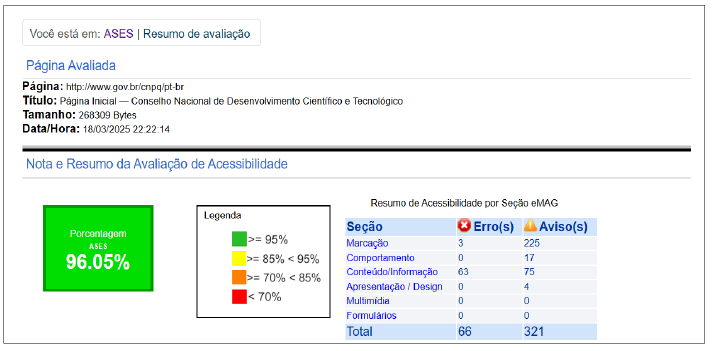
Methods: This is an exploratory and applied study. The procedures included an analysis of the Lattes Platform and the CNPq website to identify available accessibility features, as well as the application of the Accessibility Evaluator and Simulator for Websites (ASES).
Results: The findings indicate that the Lattes Platform presents several accessibility shortcomings, such as the lack of full compatibility with screen readers, absence of alternative text for images, and limitations in keyboard navigation, thereby compromising equitable access to scientific information. A comparison with the CNPq website, which achieved a higher accessibility score, it highlights a lack of standardization, as well as possible gaps in institutional policies and in the implementation of accessibility guidelines.
Conclusions: The study underscores the need for actions that go beyond formal compliance with legislation, highlighting the importance of public and informational policies oriented toward promoting informational justice. Recommendations include the implementation of VLibras, the inclusion of an accessibility symbol, and improvements to the platform’s structure to ensure a more inclusive experience for researchers with disabilities.
KEYWORDS:
Digital accessibility; Lattes Platform; Researchers with disabilities; Informational policies; Informational justice
 Thumbnail
 Thumbnail
 Thumbnail
 Thumbnail
 Thumbnail
 Thumbnail
 Thumbnail
 Fonte: Plataforma Lattes (2025).
 Fonte: Brasil, 2023.
 Fonte: Plataforma Lattes (2025).
 Fonte: Brasil, 2023.
 Fonte: CNPq (2025).
 Fonte: Brasil, 2023.
 Fonte: elaborado pela autora.


