Grid-Forming Control in HVDC-based Offshore Wind Farms: A Review of Recent Worldwide Breakthroughs and Challenges for the Brazilian Scenario
ABSTRACT
Offshore wind power generation has become established as a technically attractive alternative for coastal regions. In this scenario, the migration from grid-following control strategies to grid-forming approaches emerges as a demand of the power system to encapsulate grid support functionalities within the wind energy conversion systems (WECS), consolidating grid-forming as one of the main research frontiers. This work provides a review on recent control strategies for high-voltage direct current (HVDC) transmission-based offshore wind farms, exploring the innovative breakthroughs and explaining how these approaches enable voltage and frequency regulation, black start capability, and improved dynamic performance. The interplay between grid-formation capability, system inertia emulation, and fault ride-through capability is also examined. By bridging the gap between academic advancements and real-world offshore deployment, this study outlines future pathways toward inverter-dominated offshore WECS. Additionally, this work also offers insights into the challenges associated with integrating grid-forming inverters into offshore WECS, with particular consideration given to the Brazilian context.
KEYWORDS
Ancillary services; Black start; Frequency regulation; Virtual inertia; Voltage regulation
I. INTRODUCTION
The rapid expansion of wind energy is set to play a pivotal role in the global transition toward decarbonized power systems [1]. In 2024, global cumulative capacity in operation (onshore and offshore) achieved 1.1 TW, with around 117 GW of new wind power capacity [2]. Specifically speaking about offshore wind-based power generation, the three countries with the largest installed offshore wind capacities were China, the United Kingdom, and Germany with 41.8 GW, 15.9 GW, and 9.1 GW, respectively [3]. Special attention is given to offshore wind-based power generation because wind conditions at offshore sites are generally stronger and more stable than those encountered onshore [4].
Although Brazil is still in the early stages of developing its offshore wind sector, its potential is formidable — estimated to exceed 1,200 GW, including 480 GW of fixed foundation potential (at water depths less than 70 m) and 748 GW of floating foundation potential (at water depths from 70 m to 1,000 m) [5]. Figure 1 illustrates the estimated capacity of Brazilian wind. As can be seen, the accumulated generated power from the three top countries in 2025 is only 5.5% of the total estimated Brazilian wind power. This vast renewable resource, strategically located near major demand centers, positions offshore wind as a key component in Brazil’s future energy landscape. As these large-scale installations become integral components of modern electricity grids, they are expected to drive profound transformations in grid operation, control, and planning. However, currently there are concerns about system reliability, dynamic stability, power quality, and long-term resilience, which given impulse for new research in this emerging topic.

Illustration of power generated from offshore wind farms by three top countries in 2025 (China, United Kingdom, and Germany) compared to the estimated capacity of Brazil.
In this context, grid-forming (GFM) inverters have gained increasing attention as a promising solution to address the operational challenges posed by the growing penetration of inverter-based resources. Unlike conventional grid-following inverters, which rely on an external voltage reference, GFM inverters are capable of establishing and regulating grid voltage and frequency autonomously, effectively emulating the inertial and damping characteristics of synchronous generators [6]. This capability enables them to support system stability, enhance fault ride-through performance, and facilitate the reliable integration of large-scale offshore wind energy into future power systems.
Building upon this, it is important to recognize that offshore wind energy conversion systems (WECS) can be implemented under several structural and electrical configurations, depending on project scale, distance from shore, and grid connection requirements. These systems typically employ one of two primary transmission modes: high-voltage alternating current (HVAC) or high-voltage direct current (HVDC). While HVAC connections are often preferred for shorter distances and moderate power levels, HVDC transmission becomes more advantageous for large-scale and long-distance offshore applications [4]. Some advantages of HVDC transmission systems include reduced power losses, economical feasibility for transmitting power at long distances, and the possibility of interconnection of asynchronous systems [7]. Therefore, this work discusses only the grid-forming strategies for offshore wind farms that use HVDC transmission systems.
In the literature, there are several reviews discussing controllers for GFM inverters. However, there is a gap in recent literature discussing exclusively the control algorithms for offshore WECS integrated via HVDC transmission systems. This work fills this research gap. Furthermore, the study highlights the specific challenges and opportunities associated with implementing these technologies in the Brazilian context.
The remainder of this work is organized as follows: Section II shows a typical configuration of offshore WECS with an HVDC transmission system. Section III presents the most recent breakthroughs in GFM controllers. Next, Section IV discusses the key challenges, trends, and opportunities in this emerging field, with particular emphasis on the Brazilian scenario. Finally, Section V offers the concluding remarks of this review.
II. TYPICAL CONFIGURATION OF OFFSHORE WECS WITH HVDC TRANSMISSION SYSTEM
Figure 2 illustrates a typical configuration of an offshore wind farm employing an HVDC transmission system. The overall system primarily comprises wind turbines, back-to-back diode rectifier units (DRU), back-to-back modular multilevel converters (MMC), HVDC cables, and connection transformers [8].
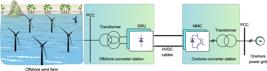
This configuration employs a medium-frequency collection system combined with DC transmission. Typically, the voltage of an HVDC transmission system is 320 kV, enabling a transmission capacity of around 1 GW [9]. Such characteristics contribute to reduced overall cost and enhanced reliability, making this topology an attractive option for offshore applications. However, the inclusion of a DRU introduces significant harmonic distortions during operation, which can adversely affect power quality and compromise overall system stability [10]. Conversely, MMC is fully controllable, which enables it to regulate DC voltage, active/reactive power, AC voltage/frequency, and provide ancillary services [11]. On the other hand, DRUs are uncontrolled diode bridges [12]. Therefore, grid-forming must be done by wind-turbine converters or auxiliary MMCs. Despite the control limitations of DRUs, they have high efficiency. Therefore, modern wind farms have installed hybrid systems using both DRU and MMC due to their distinct benefits.
In a grid-forming wind turbine, the machine-side converter regulates the DC-link capacitor voltage, ensuring its stability. Simultaneously, the grid-side converter maintains the AC voltage amplitude and frequency at their reference values, effectively establishing and supporting the grid voltage. Generally, the control system of the grid-side converter is structured into three hierarchical layers [8]. The control framework can be divided into primary (fast local voltage/power), secondary (voltage/frequency/angle restoration and coordination), and tertiary (system-level power flow). However, this nomenclature varies from literature as well as the control functions in the threshold of layers (mainly, the first and second layers).
III. RECENTE GFM CONTROLLERS
This section discusses recent GFM controllers for offshore wind farms with HVDC transmission cables. Although GFM control is a highly relevant contemporary topic, the literature on offshore wind turbines is reduced compared to GFM inverter control, which disregards primary energy conversion dynamics. Moreover, there is no prior work in the literature reviewing specifically HVDC-based offshore grid-forming wind turbine controllers. Therefore, this work fills this gap. The search process in the literature was done by selecting articles published only in journals from IEEE, IET, and Elsevier, whose article title contains the words "wind turbine" or "wind farm", and "grid forming" or "GFM". The exclusion criteria were: 1) the publication year, keeping for review only those whose publications occurred during 2024 and 2025; 2) Context, eliminating those that did not discuss explicitly offshore wind turbines and HVDC-based transmission systems. The search returned 34 articles. After the application of exclusion criteria, 12 articles were maintained for the review. This methodology ensures a discussion grounded only on updated and high-quality works tailored for offshore wind turbines.
A comparison of the fault handling capability of three well-established GFM control strategies - virtual synchronous machine (VSM), P/f droop, and Q/f droop - was done in [13]. The study considered a three-phase symmetrical fault at the point of common coupling of an offshore wind farm. The result demonstrated the reduced sensitivity of the Q/f droop controller to variations in system and fault parameters and greater voltage support during faults using P/f droop controller. The three strategies are plug-and-play, do not require any communication, and they have low implementation complexity. The main comparison results of these control strategies indicated relevant trade-offs: Q/f droop controller presented superior current limit capacity, but reduced reactive power control. P/f droop controller demonstrated the opposite behavior, reinforcing the trade-off between current limiting characteristic and reactive power control. Additionally, the VSM controller and P/f droop controller demonstrated excellent frequency stability in exchange for a moderate performance in active power control. Comparing all through simulations, Q/f droop controller provided the most balanced GFM performance, but no weak grid conditions were evaluated. Although more focused on technical discussion (not presenting novel techniques), this work is a starting point for researchers in their first steps in this area.
An improved coordinated GFM control strategy based on hybrid energy was presented in [14]. In this strategy, an additional capacitor was employed to enhance the virtual inertia control performance and to decouple the DC voltage and DC capacitor energy in a VSC-HVDC system, extensible to MMC-based HVDC systems. Once this relationship is firmed, a matching control is utilized for grid forming and inertia provision. The three-stage coordinated control strategy consists of evaluating the energy of wind turbines and switching the action between 1) wind turbine and supercapacitor inertia support, 2) primary frequency regulation and supercapacitor inertia support, and 3) maximum power point tracking with supercapacitor secondary frequency drop suppression. Although this control strategy relies solely on local measurements, its implementation complexity is at a moderate level due to its three-stage approach, but justified by inertia support performance. Other ancillary services were not evaluated.
A universal dual-port GFM control with a proportional DC voltage regulation was presented in [15]. This strategy provided inertia support and primary frequency control. The main benefit of this approach is the capacity to support the full range of operations, from MPPT to grid-support functions, altering the wind turbine curtailment without any control switching. The wind power curtailment is achieved by adjusting rotor speed and pitch angle as needed. The developed strategy was embedded into a conventional droop controller, enhancing its performance. The controller allows the operation in grid-connected and islanded modes, but it has no fault ride-through capability. In summary, this control approach demonstrated superior performance in comparison to other GFM controllers from the literature through simulations, but without considering faults, black start condition, or re-synchronization event, which are potential limitations of its application.
Focusing on grid-forming pitch control and accounting for all possible operating points, a controller that does not require wind speed estimation was presented in [16]. In this approach, the generator torque reference was derived from the optimal power characteristic as a function of rotor speed, while the pitch controller employed a gain-scheduling mechanism dependent on the operating point and on the sensitivities of generated power with respect to pitch angle and rotational speed. This control strategy successfully enables black-start capability in offshore wind turbines. Its main positive feature is enabling speed control without requiring wind speed estimation, while its implementation challenge is grounded on the highly precise minimum grid side converter active power bandwidth selection to avoid excitation of mechanical resonant modes.
Aligned with the previous control approach, an improved pitch controller designed to reduce the risk of wind turbine overspeed was presented in [17]. This control algorithm uses a look-up table to prevent exceeding the speed limits and frequent pitch angle regulations under turbulent wind conditions. The synchronization strategy for the DRU-based HVDC system was implemented using communication-less P/V and Q/f droop control, both using conventional PI controllers. These loops are modified during the start process to use the kinetic energy of wind turbines, disregarding the need for battery energy storage systems. The controller uses a simple strategy, which is beneficial for fast implementation. However, their ancillary services are limited to black start and islanded operation, lacking other contributions to grid stability such as inertia support or FRT capability.
A droop control is applied in the Q − f control loop, whereas a proportional-integral (PI) controller was employed in the P − V control loop for the DRU-based HVDC system [18]. Besides, voltage and current loops are also implemented using PI controllers. This controller was evaluated in a scenario with GFM and grid-following (GFL) converters operating in parallel, where it presented stable voltage and frequency, while also having the capability of load sharing with the GFL converter. The work also contributed with a stability analysis. The reactive power self-synchronizing frequency-control scheme is tailored for a DRU-based GFM converters, which is not universal for other GFM systems.
An adaptive reactive power allocation-based GFM controller for wind turbines with DRU-based HVDC systems was introduced in [19]. The reactive power is dynamically allocated in function to the active power, avoiding converter overloading. This feature is achieved using a dual-loop PI controller: one designed for P−V , which is responsible for voltage forming and overcurrent protection (1.3 p.u.) during system faults using a limiter, and another designed for Q−f reactive power controller. The second control algorithm uses a logic comparator to activate a droop control with inertial terms according to the converter capacity limit criterion. The trade-off of this approach is providing virtual inertia and FRT capability, but limited to applications that do not need black start operation.
A different approach for using the classical P/f-based GFM control without relying on remote power control and communication links was demonstrated in [20]. This approach consists of using the firing angle of a line commuted converter (LCC) integrated with the DRU as a control variable, enabling independent grid-forming features for the wind turbines. In this configuration, the LCC-assisted DRU acts as a virtual governor. The adopted scheme was the classical virtual synchronous generator (VSG). The adopted scheme reduced the total harmonic content in PCC voltage and currents of the rectifier and filter, as well as strong power decoupling when compared to Q/f-based controller. On the other hand, compared to the same controller, it presented a higher reactive power requirement. Besides, the ancillary services of this GFM control strategy are limited to virtual inertia and FRT capability.
In a similar way, a series auxiliary MMC connected to the DRU was proposed to increase the P/f and Q/V droop-based grid-forming control in [21], whose control loops were implemented using PI controllers. By using MMC units at a proportion of 10% of the rated power, this strategy allows controlling the active power of hybrid MMC-DRU-based HVDC systems without requiring communication links, AC passive harmonic filtering, or capacitor banks. The advantage of the proposed framework relies on an active power control scheme coordinated with the DC voltage regulation of series aux-MMC. However, it requires 5% additional switching devices and submodule capacitor in comparison to concurrent literature.
An optimal Q−f controller based on the proportion of offshore GFL and GFM wind turbines was presented in [22]. The developed solution was evaluated in an offshore wind farm, where the inverter-based resources had a DRU-based HVDC system configuration. Both voltage and current regulators were implemented using PI controllers, where the latter loop has a limiter. The P −V control loop also used a PI controller, while the Q−f control loop adopted a proportional controller, whose gain is optimized based on this new optimization scheme, which can be implemented in two ways: (I) reducing the reactive power capacity of the AC filter, and compensating part of the DRU reactive demand through the AC cable, or (II) assigning the GFL units compensate for the reactive power associated with the AC cables. This work focused on grid-forming dynamics, not discussing other ancillary services.
A dual-port GFM control for actuating over GFM inverters in grids with interconnection of multiple HVAC and HVDC subgrids was proposed in [23]. The control system is composed of P˘f droop regulator for voltage phase angle, which has a PI controller for the AC voltage loop and a PI controller with decoupling terms for the inner current loop. The dual port controller regulates the internal energy W at the inverter terminals. To achieve it, this approach uses a proportional–derivative W˘ω and W˘Vdc droop algorithm, where the proportional energy droop governs the internal energy, whereas the derivative energy droop ensures active damping. The controller was evaluated on hybrid AC/DC systems with GFL and GFM inverters under weak grid conditions and severe contingencies. Experimental results demonstrated the feasibility of the dual-port GFM controller, presenting reliable grid-forming features on weak grids and islanded operation, but its performance was evaluated in absence of faults and black start operation.
Table 1 summarizes the main characteristics of the recent grid-forming controllers for offshore wind farms. In this table, FRT is the fault ride-through, Isl. indicates the capacity of maintaining islanded operation, Re-sync. refers to the re-synchronization capacity, and VFF means voltage and frequency forming.
Comparison of main conceptual features of recent grid-forming controllers for offshore wind farms.
From this comparison, some relevant conclusions about the recent controllers can be inferred. Firstly, the most basic control strategies were proposed in [22] and [23], which have the capacity for grid-forming, but no extra services are provided. Among the others, only three are able to ensure black start capacity for the system ( [16], [17], [21]). This is an important feature for the future power grid, as well as the capacity for re-synchronization, which was provided only for techniques presented at [13], [18]. Another significant ancillary service is the possibility of maintaining the system in islanded operation. This characteristic was explored with the techniques discussed at [15]–[17]. Additionally, inertia and FRT capabilities turn the control strategy more resilient. Inertia support was demonstrated using the techniques presented at [13]–[15], [19], [20], while FRT capability was provided using the controllers proposed at [13], [19]–[21]. As can be observed, there is no universal control algorithm between recent developments that is able to support all ancillary services and advance capacities desired for the future power grid. However, the controller presented in [13] has more supporting capacities than other control algorithms, being promising controllers which could be improved by implementing the other desired capacities for a high performance GFM controller for offshore wind turbines with HVDC transmission cables.
Complementing the previous evaluation, Table 2 gives practical insights about the discussed controllers. In this sense, controller complexity (Compl.), robustness under weak grid conditions (Rob.), communication requirements, and whether the work had experimental validation (Exp.) are summarized.
Comparison of main practical features of recent grid-forming controllers for offshore wind farms.
As can be seen, almost all controllers do not require any additional communication system, using only local sensor data (distributed operation). It was assumed that if no communication was mentioned in the work, the controller is a communication-less strategy, as fundamentally it should be a GFM controller. Besides, the plug-and-play feature is preferred, since it is beneficial for system security, reducing potential cybersecurity attacks, while reducing costs associated with the infrastructure and system complexity. Additionally, GFM controllers are designed to operate in weak grid conditions. However, verifying its performance by varying the load installed in the system is important, since inverter-dominated grids are susceptible to instability due to the low inertia of these modern systems. Therefore, this table also informed if the robustness under weaker grids by altering the load was verified. Only [14]–[16], [21]–[23] reported results evaluating explicitly this feature.
About controller complexity, most of them have a simple structure, which is a strong contribution to industrial popularization. Moreover, most work discussed only simulation results, encompassing a variety of scenarios with faults, black start, inertia support, islanded operation, and re-synchronization. However, just one work provided experimental validation. In this sense, it can be affirmed that the advancement of control strategies for GFM necessitates a rigorous and systematic integration of experimental validation, or at least hardware-in-the-loop (HIL), alongside theoretical development. While analytical formulations and high-fidelity simulations are indispensable for initial design and performance assessment, they inevitably rely on simplifying assumptions that may not fully capture the intricacies of real-world implementations. Phenomena such as unmodeled dynamics, parameter uncertainties, switching effects, and hardware limitations can significantly influence system behavior and are often insufficiently represented in purely computational studies. Experimental or HIL validation plays a key role in substantiating theoretical claims by enabling the direct observation of stability characteristics, transient dynamics, and disturbance rejection capabilities under realistic operating conditions. Furthermore, it facilitates the identification of implementation challenges and performance deviations that may compromise reliability or scalability. In this context, experimental verification is not merely complementary but essential, ensuring that developed GFM controllers achieve the level of robustness, resilience, and operational readiness required for deployment in modern power systems with high penetration of inverter-based resources.
GFM controllers are powerful solutions for the modern power grid issues. However, a single controller cannot provide all ancillary services simultaneously at full performance due to electrical, energy, and dynamic constraints of physical devices, which forces trade-offs between services. Among them, when a controller is equipped with current limiters to ensure the integrity of physical components under overcurrent events, its actuation conflicts with fault-ride through capacity and, in some cases, also with the grid-forming ability. Similarly, providing adjustable inertia and voltage support competes by prioritization of fast active or reactive power regulation. Besides, the frequency support also faces practical constraints due to the thermal limits of power semiconductors installed in the inverters and DC-link energy limitations. Therefore, the local control framework commonly has a priority scheme. However, multiple ancillary service capabilities can be achieved at the system level, aggregating specific tasks for each inverter, achieving a robust and resilient operation with their operation in parallel.
IV. DISCUSSION
Offshore wind energy emerged as a key pathway toward carbon neutrality in the energy sector. Although feasible, these power generation systems have several challenges for maintaining their operation. In this context, grid-forming wind turbine controllers are at the core of this future power grid. Next, the trends and identified opportunities to contribute to the success of these emerging solutions worldwide are discussed, and the challenges related to the Brazilian context are evidenced.
A. Trends and Opportunities
The inner control loop can adopt a single or multi-loop strategy [24]. In general, multi-loop control architectures offer enhanced harmonic rejection, improved resonance damping, enhanced fault ride-through performance, and more robust mode transition capabilities compared to single-loop designs [25]. Naturally, it implies a more complex control design due to the nested loops. However, this complexity is typically justified by the resulting performance gain. Moreover, the outer voltage control loop must operate at a significantly lower bandwidth than the inner current control loop to ensure effective decoupling between control loops. Additionally, the inner control loop must not interact with the outer control loop to avoid affecting the synchronization stability of GFM inverters [26]. However, this hierarchical structure imposes bandwidth constraints that ultimately limit the system’s overall dynamic response [27]. Although all GFM controllers can provide voltage and frequency regulation, enabling the inverter to operate in the absence of SGs, each one has a different level of contribution to the system stability and provision of ancillary services. Therefore, it is natural that the control framework tends to incorporate different control strategies, where each one provides different ancillary services. This emerging approach can be implemented in two ways, both mitigate the deficiencies of current control systems. The first method is aggregating specific tasks for each inverter, achieving a robust and resilient operation with their operation in parallel. However, it may depend on physical communication, which is desired to eliminate, aiming to avoid possible cybersecurity attacks. A second method is implementing multiple controllers in all inverters along with a switch strategy and a robust framework to define when and what ancillary service is needed. The main advantage of this approach is the operation at the local level, but it can bring challenges from the computation burden requirements.
Low-pass filters are commonly employed in droop-based control strategies to attenuate high-frequency harmonics in power measurements [28]. However, the inclusion of these filtering structures can adversely impact dynamic performance by introducing delays into the control loop. In particular, during sudden load increases — when the system must supply additional active power — an improperly configured filter may amplify transient frequency deviations due to its sluggish response. In this context, eliminating the reliance on low-pass filters in GFM controllers is beneficial for improving transient behavior. Nevertheless, if their use is unavoidable, optimization of the filter parameters becomes essential. Recent advances in the optimization area, such as nature-inspired metaheuristic algorithms, offer effective solutions for engineering problems. Therefore, advancing optimization methods for GFM controller design presents a promising research frontier. The inherent trade-offs between stability margins, dynamic performance, and inverter efficiency demand sophisticated optimization frameworks capable of handling multi-objective and nonlinear characteristics. By leveraging modern optimization techniques, researchers can systematically refine control parameters, improve robustness under grid disturbances, and enhance the overall performance of inverter-dominated systems.
Despite the growing adoption of modular multilevel converter (MMC)-HVDC transmission, their application in offshore wind farm integration faces notable challenges. A primary concern is the increasing mass of offshore MMC stations, which escalate with water depth and transmission capacity, creating significant economic and engineering constraints for platform construction [4]. A straightforward approach is to reduce the size of submodules capacitance, but it can lead to larger voltage ripples, compromising MMC reliability and operational safety. To address this, exploring advanced and optimized control strategies offers a promising pathway to minimize these capacitance without sacrificing performance. However, this kind of optimization of structure and controller is not trivial, mainly considering the GFM controllers in the loop. In this sense, the use of emerging artificial intelligence techniques, such as hybrid deep learning with evolutionary algorithms, model-based reinforcement learning, physics-informed neural networks, and explainable neural networks with attention mechanisms, can effectively support this task.
A recent alternative to MMC-based HVDC transmission systems is the DRU-based HVDC transmission systems, which provide a cost-effective solution with improved operational reliability compared to the conventional MMC topology [29]. However, traditional GFM control strategies are unsuitable for DRU-based HVDC transmission systems due to their uncontrollable power characteristics [18]. Addressing this operational limitation requires development of more robust and resilient GFM controllers, such as power self-synchronizing control strategies, which are essential for the successful deployment of this emerging technology.
Decentralized energy storage combined with grid-forming control can endow offshore wind farms with black start capability, maintaining continuous power generation during faults. However, current technological limitations present significant challenges, particularly in reducing storage volume and mitigating associated safety risks. In this sense, battery energy storage systems (BESS) are an emergent market. However, the success of these specific devices depends on the life cycle and maintenance. A practical way to preserve the integrity of these devices while expanding their life cycle is by incorporating highly precise control algorithms to optimize energy usage, avoiding wasting and unnecessary recharges. Both meta-heuristic optimizers and artificial intelligence techniques can contribute to the improvement of BESS integration.
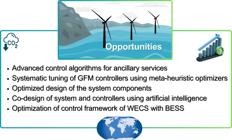
Figure 3 summarizes the identified opportunities based on the previous discussion, paving the way for worldwide researchers leading these emerging technologies and contributing to energy matrix transition, achieving sustainable power generation. Naturally, the improvement of the system controllers enhances the system performance by reducing power losses, while also contributing positively to the carbon neutrality goal, since the power penetration from renewable energy into the electrical grid increases. Aligned with benefits, the cost associated with power generation from offshore wind energy reduces, once the power level increases, driving the energy market to a prosperous level.
B. Challenges for the Brazilian scenario
Brazil has a privileged geographical position, with an immense richness of natural resources. The abundance of offshore wind resources, if properly exploited, could make the country a global leader in the renewable energy market, given that it already has a large part of its electricity matrix from renewable sources. Currently, there are no offshore WECS in operation in Brazil. However, there are more than 100 offshore wind projects being analyzed by the Brazilian Institute of Environment and Renewable Natural Resources [30]. In these project proposals, transmission distances and configurations vary largely depending on whether they are nearshore fixed-foundation farms or deep-sea floating WECS.
Brazilian research groups have already demonstrated a high level of expertise in advanced control theory and power electronics, providing a solid foundation for progress in grid-forming inverter technologies. Nevertheless, further investment is essential to direct this existing knowledge toward the development and experimental validation of grid-forming control strategies specifically tailored to offshore wind integration. Strengthening national research groups in this area would not only accelerate innovation but also enhance Brazil’s ability to design, validate, optimize, and deploy robust control architectures capable of ensuring system stability, adaptability, and resilience in inverter-dominated grids. Furthermore, partnerships between private companies and academia are fundamental to leveraging research with practical results and direct application by industry, as well as government support for this research, strengthening policies to encourage the private sector to invest in research and development (R&D).
At an academic level, translating the global developments to the Brazilian context requires strengthening collaboration across research communities in computer science, electrical, electronic, automation, and control engineering, which can significantly accelerate the development of innovative and feasible solutions. Knowledge sharing and interdisciplinary teamwork are therefore pivotal to advancing the national offshore wind energy sector and ensuring the success of emerging technologies. Studies involving optimization, prediction based on data, and advanced control oriented for the Brazilian context can consolidate national research groups at the forefront of next-generation GFM control development, while positioning Brazil as a technological leader with cutting-edge solutions for real problems of the energy industry.
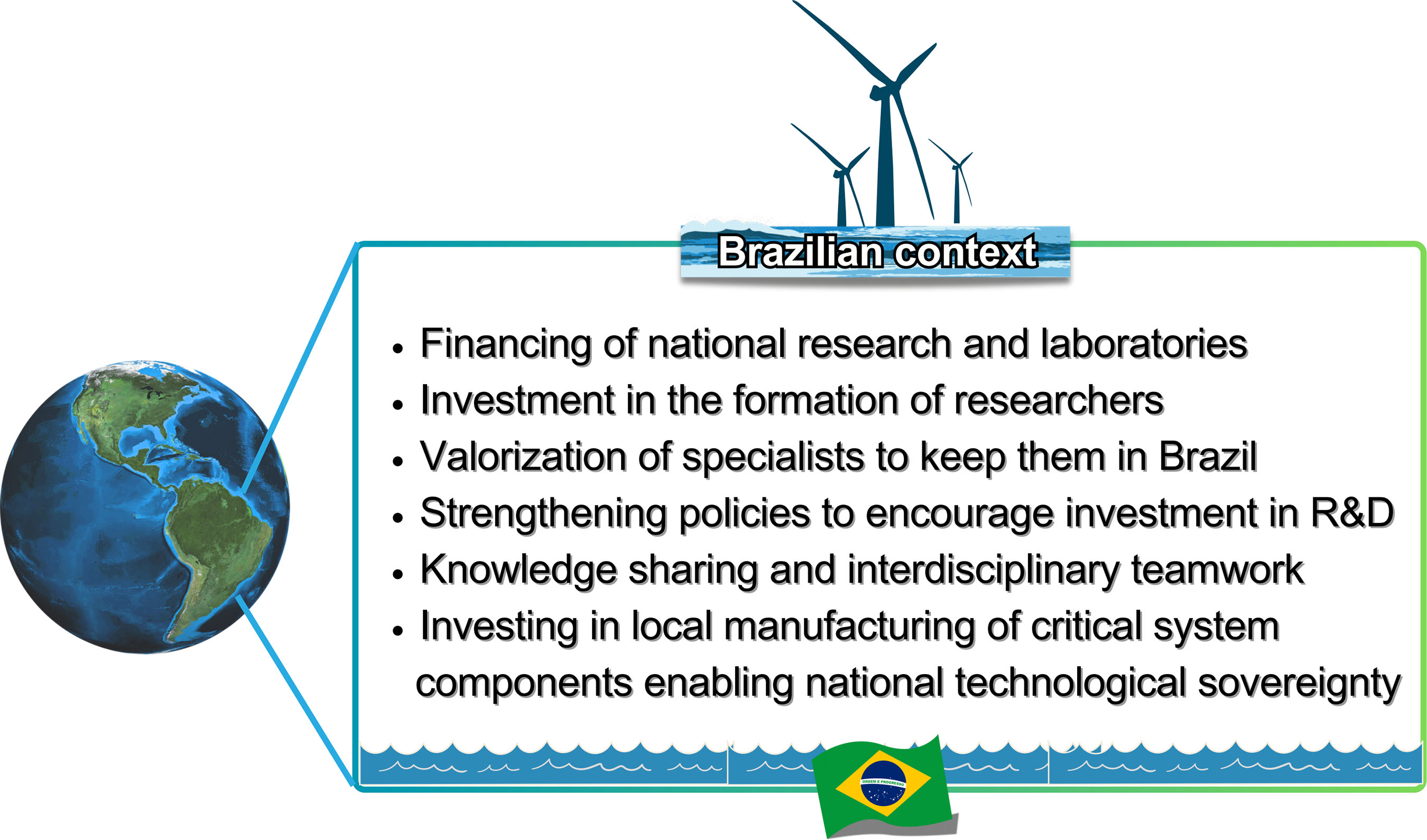
A last challenge in the Brazilian context is the lack of domestic manufacturing capabilities for critical system components, which creates a strong dependency on foreign suppliers. Therefore, investing in local production is essential to strengthen national technological sovereignty and promote sustainable progress in offshore wind–based power generation. Figure 4 emphasizes the current challenges of the Brazilian scenario and opportunities to make Brazil a leader in the future energy sector.

V. CONCLUSION
The rapid expansion of offshore wind energy and the widespread adoption of HVDC transmission architectures have redefined the control requirements of modern power systems. Within this evolving landscape, GFM converters stand out as a pivotal technology, capable of providing voltage and frequency regulation, inertia emulation, and enhanced fault recovery in grids dominated by inverter-based resources. Although significant progress has been achieved globally in developing GFM control strategies, further research is required to ensure robust, scalable, and economically viable solutions tailored to offshore wind energy conversion systems. This work discussed the recent worldwide breakthroughs in GFM control strategies for HVDC-based offshore wind farms. The conceptual and practical features of these control approaches were deeply discussed, aiming to support engineers to choose an adequate controller in accordance with their system requirements. Additionally, the tendencies and opportunities to contribute to the progress of GFM controllers were identified, paving the way for novel control solutions in inverter-dominated power generation systems. Furthermore, the challenges for positioning Brazil as a leader in the new energy era were discussed, presenting strategic workstreams to thrust national technological sovereignty. The future research directions for boosting cutting-edge and disruptive GFM solutions include use of AI for parameter system design and controller tuning with hardware-in-the-loop validation, development of advanced control algorithms for multiple ancillary services, stability analysis of hybrid MMC-DRU systems, and co-design of system and controllers using AI and optimization strategies.
ACKNOWLEDGEMENT
This work was financed by the National Council for Scientific and Technological Development (CNPq) under grant 407826/2022-0.
-
PLAGIARISM POLICY
This article was submitted to the similarity system provided by Crossref and powered by iThenticate – Similarity Check.
DATA AVAILABILITY
The data used in this research is available in the body of the document.
REFERENCES
-
D. Wu, G.-S. Seo, L. Xu, C. Su, L. Kocewiak, Y. Sun, Z. Qin, “Grid integration of offshore wind power: Standards, control, power quality and transmission”, IEEE Open Journal of Power Electronics, vol. 5, pp. 583–604, Apr. 2024, doi: 10.1109/OJPEL.2024.3390417.
» https://doi.org/10.1109/OJPEL.2024.3390417 -
GWEC, “Global Wind Report 2025”, Accessed: 2025-10-28, 2025, URL: https://www.gwec.net/reports/globalwindreport
» https://www.gwec.net/reports/globalwindreport -
J. L. Sawin, “Renewables 2025 Global Status Report Collection”, Accessed: 2025-10-28, 2025, URL: https://www.ren21.net/gsr-2025/downloads/pdf/go/GSR_2025_GO_2025_Full_Report.pdf
» https://www.ren21.net/gsr-2025/downloads/pdf/go/GSR_2025_GO_2025_Full_Report.pdf -
D. Kumar, W. Shireen, N. Ram, “Grid Integration of Offshore Wind Energy: A Review on Fault Ride Through Techniques for MMC-HVDC Systems”, Energies, vol. 17, no. 21, p. 5308, Oct. 2024, doi:10.3390/en17215308.
» https://doi.org/10.3390/en17215308 -
World Bank, “Scenarios for Offshore Wind Development in Brazil”, Accessed: 2025-10-28, 2025, URL: http://hdl.handle. net/10986/41911
» http://hdl.handle. net/10986/41911 -
Q. Salem, B. B. Fawaz, R. Aljarrah, M. Karimi, “Grid Forming Converters for Low Inertia Systems - Capabilities and Limitations: A Critical Review”, IEEE Open Journal of the Industrial Electronics Society, vol. 6, pp. 775–801, May 2025, doi:10.1109/OJIES.2025.3566213.
» https://doi.org/10.1109/OJIES.2025.3566213 -
J. B. Soomro, D. Kumar, F. A. Chachar, S. Isik, M. Alharbi, “An enhanced AC fault ride through scheme for offshore wind-based MMC-HVDC system”, Sustainability, vol. 15, no. 11, p. 8922, Jun. 2023, doi:10.3390/su15118922.
» https://doi.org/10.3390/su15118922 -
Z. Xu, Y. Jin, Z. Zhang, Y. Huang, “Eight typical schemes of offshore wind power transmission and their key technical problems”, Energies, vol. 16, no. 2, p. 658, Jan. 2023, doi:10.3390/en16020658.
» https://doi.org/10.3390/en16020658 -
Z. He, J. Yang, G. Tang, Y. Yang, Z. Du, S. Zhang, “Key technologies and development trends of VSC-HVDC transmission for offshore wind power”, Renewable Energy System and Equipment, vol. 1, no. 1, pp. 35–49, Mar. 2025, doi:10.1016/j.rese.2024.09.001.
» https://doi.org/10.1016/j.rese.2024.09.001 -
P. Liang, X. Pei, Y. Zhou, H. Wu, Y. Xu, Z. Zhang, Z. Xu, F. Qiu, “Harmonic Analysis and Elimination of Transmission Scheme Based on DRU for Medium-Frequency Offshore Wind Farms”, Electronics, vol. 14, no. 18, p. 3669, Sep. 2025, doi:10.3390/electronics14183669.
» https://doi.org/10.3390/electronics14183669 -
R. H. Chandio, F. A. Chachar, J. B. Soomro, J. A. Ansari, H. M. Munir, H. M. Zawbaa, S. Kamel, “Control and protection of MMC-based HVDC systems: A review”, Energy Reports, vol. 9, pp. 1571–1588, Dec. 2023, doi:10.1016/j.egyr.2022.12.056.
» https://doi.org/10.1016/j.egyr.2022.12.056 -
L. Yu, Z. Fu, R. Li, J. Zhu, “DRU-HVDC for offshore wind power transmission: A review”, IET Renewable Power Generation, vol. 18, no. 13, pp. 2080–2101, Jul. 2024, doi:10.1049/rpg2.13045.
» https://doi.org/10.1049/rpg2.13045 -
M. W. Raza, M. Raza, J. G. Badia, E. Prieto-Araujo, O. Gomis-Bellmunt, “Fault handling capabilities of grid-forming wind turbines in offshore wind farms connected with MMC HVDC system”, IEEE access, vol. 12, pp. 36404–36414, Mar. 2024, doi:10.1109/ACCESS.2024.3373478.
» https://doi.org/10.1109/ACCESS.2024.3373478 -
Y. Zhu, Z. Wang, B. Li, “Coordinated Grid-Forming Control Strategy for VSC-HVDC Integrating Offshore Wind Farms Based on Hybrid Energy”, IEEE Journal of Emerging and Selected Topics in Industrial Electronics, vol. 5, no. 4, pp. 1350–1361, Apr. 2024, doi:10.1109/JESTIE.2024.3394478.
» https://doi.org/10.1109/JESTIE.2024.3394478 -
X. Lyu, D. Groß, “Grid Forming Fast Frequency Response for PMSG-Based Wind Turbines”, IEEE Transactions on Sustainable Energy, vol. 15, no. 1, pp. 23–38, Jan. 2024, doi:10.1109/TSTE.2023.3263858.
» https://doi.org/10.1109/TSTE.2023.3263858 -
G. Navarro-Martínez, J. Martínez-Turégano, R. Blasco-Gimenez, “Control of a 15 MW off-shore wind turbine for black-start operation”, Mathematics and Computers in Simulation, vol. 229, pp. 15–31, Mar. 2025, doi:10.1016/j.matcom.2024.09.013.
» https://doi.org/10.1016/j.matcom.2024.09.013 -
Z. Zhang, X. Zhao, “Startup Control of Grid-Forming Offshore Wind Turbines Connected to the Diode-Rectifier-Based HVDC Link”, IEEE Transactions on Sustainable Energy, vol. 16, no. 1, pp. 407–418, Jan. 2025, doi:10.1109/TSTE.2024.3454797.
» https://doi.org/10.1109/TSTE.2024.3454797 -
W. Wu, M. Wang, L. Tu, H. Cai, G. Yan, X. Qu, H. Gu, W. Chen, “Control, Modeling and Stability Analysis of DRU-based Grid-forming Converter”, Chinese Journal of Electrical Engineering, vol. 11, no. 1, pp. 83–92, Mar. 2025, doi:10.23919/CJEE.2025.000100.
» https://doi.org/10.23919/CJEE.2025.000100 -
G. Zhang, W. Xiang, X. Chen, R. Tu, X. Qiao, J. Wen, “Grid-Forming Control Based on Adaptive Reactive Power Allocation for Offshore Wind Farms Connected to Diode-rectifier-based HVDC System”, Journal of Modern Power Systems and Clean Energy, vol. 13, no. 1, pp. 154–166, Jan. 2025, doi:10.35833/MPCE.2024.00743.
» https://doi.org/10.35833/MPCE.2024.00743 -
K. Wang, Z. Yuan, Q. Song, Q. Xin, B. Huang, W. Liu, J. Feng, “Grid-Forming Offshore Wind Farm Integration Through LCC-Assisted Diode Rectifier”, IEEE Transactions on Power Delivery, vol. 40, no. 1, pp. 178–190, Oct. 2025, doi:10.1109/TPWRD.2024.3486783.
» https://doi.org/10.1109/TPWRD.2024.3486783 -
H. Kang, B. Wu, Y. Huang, K. Wang, Y. Shen, W. Hao, Q. Song, Y. Lei, “Series-MMC hybrid for enhancing grid-forming control of offshore wind turbines connected to Diode based HVDC transmission”, IEEE Access, vol. 13, pp. 181005–181015, Oct. 2025, doi: 10.1109/ACCESS.2025.3621618.
» https://doi.org/10.1109/ACCESS.2025.3621618 -
Y. Jin, Z. Zhang, Z. Xu, “Proportion of grid-forming wind turbines in hybrid GFM-GFL offshore wind farms integrated with diode rectifier unit based HVDC system”, Journal of Modern Power Systems and Clean Energy, vol. 13, no. 1, pp. 87–101, Jan. 2025, doi: 10.35833/MPCE.2024.000432.
» https://doi.org/10.35833/MPCE.2024.000432 -
J. Arévalo-Soler, M. Nahalparvari, D. Grob, E. Prieto-Araujo, S. Norrga, O. Gomis-Bellmunt, “Small-Signal Stability and Hardware Validation of Dual-Port Grid-Forming Interconnecting Power Converters in Hybrid AC/DC Grids”, IEEE Journal of Emerging and Selected Topics in Power Electronics, vol. 13, no. 1, pp. 809–826, Feb. 2025, doi: 10.1109/JESTPE.2024.3454992.
» https://doi.org/10.1109/JESTPE.2024.3454992 -
L. Benedetti, A. Paspatis, P. N. Papadopoulos, A. Egea-Àlvarez, N. Hatziargyriou, “Investigation of grid-forming and grid-following converter multi-machine interactions under different control architectures”, Electric Power Systems Research, vol. 234, p. 110813, Sep. 2024, doi: 10.1016/j.epsr.2024.110813.
» https://doi.org/10.1016/j.epsr.2024.110813 -
X. Li, C. Chen, Y. Sun, H. Cheng, “Low/middle-frequency positive external-damping design under self-stability constraint for inner control loop of grid-forming converters”, IEEE Transactions on Industrial Electronics, vol. 71, no. 5, pp. 4762–4772, Jun. 2024, doi: 10.1109/TIE.2023.3281702.
» https://doi.org/10.1109/TIE.2023.3281702 -
R. Rosso, X. Wang, M. Liserre, X. Lu, S. Engelken, “Grid-forming converters: Control approaches, grid-synchronization, and future trends — A review”, IEEE Open Journal of Industry Applications, vol. 2, pp. 93–109, Apr. 2021, doi:10.1109/OJIA.2021.3074028.
» https://doi.org/10.1109/OJIA.2021.3074028 -
H. A. Young, V. A. Marin, C. Pesce, J. Rodriguez, “Simple finite-control-set model predictive control of grid-forming inverters with LCL filters”, IEEE Access, vol. 8, pp. 81246–81256, Apr. 2020, doi:10.1109/ACCESS.2020.2991396.
» https://doi.org/10.1109/ACCESS.2020.2991396 -
M. Tozak, S. Taskin, I. Sengor, B. P. Hayes, “Modelling and Control of Grid Forming Converters: A Systematic Review”, IEEE Access, vol. 12, pp. 107818–107843, Aug. 2024, doi:10.1109/ACCESS.2024.3437236.
» https://doi.org/10.1109/ACCESS.2024.3437236 -
Z. Zhang, Y. Jin, Z. Xu, “Grid-forming control of wind turbines for diode rectifier unit based offshore wind farm integration”, IEEE Transactions on Power Delivery, vol. 38, no. 2, pp. 1341–1352, Oct. 2022, doi:10.1109/TPWRD.2022.3213665.
» https://doi.org/10.1109/TPWRD.2022.3213665 -
Ministry of Mines and Energy, “Legal Framework for Offshore Wind Power”, Accessed: 2026-02-17, 2025, URL: https://www.gov.br/mme/pt-br/brazil-world-leader-inenergy-transition/energy-transition/legal-framework-foroffshore-wind-power
» https://www.gov.br/mme/pt-br/brazil-world-leader-inenergy-transition/energy-transition/legal-framework-foroffshore-wind-power
Edited by
-
Associate Editor
Wilmar P. Castiblanco https://orcid.org/0000-0003-2113-9055 and Editor-in-Chief Allan F. Cupertino https://orcid.org/0000-0001-8418-1985
History
-
Received
17 Nov 2025 -
Reviewed
20 Feb 2026 -
Reviewed
16 Apr 2026 -
Accepted
12 May 2026 -
Published
19 May 2026