
 Hydromechanical parameters of municipal solid waste disposed of in sanitary landfills: a literature review
ABSTRACT
Sanitary landfills are environmental facilities designed for the final disposal of municipal solid waste and represent the most widely used method for waste management in many countries. Knowledge of the geotechnical properties of these materials is essential for understanding processes occurring within landfills, such as leachate generation, gas production, settlement development, and slope stability. Municipal solid waste has a highly heterogeneous composition, including organic matter, plastics, metals, and paper, which leads to significant variability in its hydromechanical behavior. Parameters such as hydraulic conductivity, shear strength, and compressibility differ considerably from those typically observed in soils and are strongly influenced by waste composition, compaction conditions, and degradation processes over time. This paper presents a literature review of the main hydromechanical parameters of municipal solid waste disposed of in sanitary landfills. The study discusses the influence of waste composition, unit weight, effective stress, and biodegradation on hydraulic conductivity, shear strength, and compressibility. In addition, typical ranges of values reported in the literature are presented and critically analyzed, with emphasis on studies conducted in Brazilian landfills. The results highlight the significant variability of municipal solid waste properties and reinforce the importance of site-specific investigations for landfill design and stability analysis.
Keywords:
municipal solid waste; hydraulic conductivity; resistance; compressibility
RESUMO
Os aterros sanitários são obras ambientais projetadas para a disposição final de Resíduos Sólidos Urbanos (RSU) e representam o método mais amplamente utilizado para o gerenciamento de resíduos em muitos países. O conhecimento das propriedades geotécnicas desses materiais é essencial para a compreensão dos processos que ocorrem no interior dos aterros, tais como geração de lixiviado, produção de gases, desenvolvimento de recalques e estabilidade de taludes. Os RSU apresentam uma composição altamente heterogênea, incluindo matéria orgânica, plásticos, metais e papel, o que resulta em grande variabilidade em seu comportamento hidromecânico. Parâmetros como condutividade hidráulica, resistência ao cisalhamento e compressibilidade diferem consideravelmente daqueles normalmente observados em solos e são fortemente influenciados pela composição dos resíduos, pelas condições de compactação e pelos processos de degradação ao longo do tempo. Este trabalho apresenta uma revisão da literatura sobre os principais parâmetros hidromecânicos dos RSU dispostos em aterros sanitários. O estudo discute a influência da composição dos resíduos, do peso específico, da tensão efetiva e da biodegradação sobre a condutividade hidráulica, a resistência ao cisalhamento e a compressibilidade. Além disso, são apresentados e analisados criticamente intervalos típicos de valores reportados na literatura, com ênfase em estudos realizados em aterros brasileiros. Os resultados evidenciam a significativa variabilidade das propriedades dos RSU e reforçam a importância de investigações específicas de campo para o projeto e a análise de estabilidade de aterros sanitários.
Palavras-chave:
resíduos sólidos urbanos; condutividade hidráulica; resistência; compressibilidade
INTRODUCTION
In sanitary landfill engineering, waste confinement systems are designed to isolate residues from the surrounding environment and minimize potential impacts on soil and groundwater. The design and implementation of sanitary landfills require detailed technical studies that consider the physical, chemical, and mechanical characteristics of the waste mass, as they significantly influence waste hydromechanical behavior.
According to the Brazilian Association for the Environment and Waste (Associação Brasileira de Resíduos e Meio Ambiente, 2025), Brazil generated approximately 81.6 million tons of municipal solid waste (MSW) in 2024, corresponding to an average generation of about 384 kg per inhabitant per year. Of this total, about 76.4 million tons (93.7%) were collected, and 41.4 million tons (59.7%) were properly disposed of in sanitary landfills, while a significant fraction still received inadequate disposal, highlighting the continuing challenges for solid waste management and the importance of improving landfill engineering practices.
In Brazil, the average gravimetric composition of MSW is predominantly organic waste, accounting for 45.3% of the gravimetric composition of waste generated nationwide (Associação Brasileira de Empresas de Limpeza Pública e Resíduos Especiais, 2020), as shown in Figure 1.
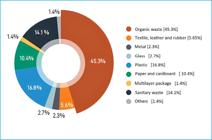
Figure 1 shows that for landfills constructed in Brazil, given the composition of MSW, the hydromechanical behavior of waste will be significantly influenced by the behavior of the material originating from organic waste. Organic waste can be a problem when ensuring adequate design, as it degrades, generating leachate, gases, and particulates. These alter the landfill's hydraulic conductivity, strength, and compressibility over time.
According to Sowers (1968), the knowledge of hydromechanical behavior of MSW disposed of in sanitary landfills is a relevant topic, as it allows evaluating settlements developed in the landfill, shear resistance of the waste mass, which impacts slope stability, and waste hydraulic conductivity, which is related to the generation of gas and leachate.
This work presents a literature review of different physical parameters of MSW observed in MSW landfills, with research data from other authors. Obtaining hydraulic conductivity, resistance, and compressibility parameters is crucial for the execution and design of landfills, ensuring their structural and environmental safety. Slope stability, leachate flow rates, and settlements are examples of problems associated with these hydromechanical parameters.
METHOD
Literature Review Methodology
This study is based on a narrative literature review of the hydromechanical properties of MSW disposed of in sanitary landfills. Scientific articles, theses, and technical reports published in international journals and conference proceedings were consulted.
The selection of references prioritized studies that investigated hydraulic conductivity, shear strength, and compressibility of MSW, particularly those with experimental or field data from sanitary landfills. Databases such as Scopus, Web of Science, and Google Scholar were consulted using keywords such as "municipal solid waste", "hydraulic conductivity", "shear strength", "compressibility", and "landfill settlement".
The selected studies were analyzed with emphasis on identifying key factors influencing hydromechanical behavior and on the range of values reported in the literature. Whenever possible, the results were compared to identify trends and differences observed in distinct landfill conditions.
Hydraulic Conductivity of Municipal Solid Waste
In sanitary landfills, the hydraulic conductivity of MSW layers varies significantly due to their heterogeneous behavior and local climate conditions. Indeed, regional rainfall patterns play a key role in the hydrological behavior of landfills, as precipitation contributes to leachate generation and influences the flow of liquids and gases through the waste mass. Increased infiltration can raise moisture content and pore pressure, altering both hydraulic conductivity and gas transport within the landfill. Therefore, understanding the behavior of MSW and its hydraulic conductivity, both in relation to water and leachate, is crucial for assessing liquid flow within landfills.
Hydraulic conductivity of MSW is also related to MSW management and deposition time, which affects the nature of the material and, consequently, its intrinsic hydraulic conductivity (Shi et al., 2018; Xu et al., 2020; Yang et al., 2016; Zhang et al., 2018).
The moisture content of MSW varies in a landfill. For example, in dry seasons, the surface layers in landfills may have lower moisture content due to evaporation. Intermediate layers have moisture content close to field capacity, and lower layers are located in saturated zones (Shi et al., 2018). Deeper MSW layers, with longer deposition times, tend to have lower hydraulic conductivity, as compression and degradation of MSW alter pore structure and, consequently, its hydraulic properties (Breitmeyer; Benson; Edil, 2019; Reddy et al., 2009; Xu et al., 2020; Zeng et al., 2017). These layers are more compressed and are more advanced in the material decomposition process.
The hydraulic conductivity coefficient is the main parameter that influences the movement of liquids within the MSW mass. When the hydraulic conductivity coefficient is too low, leachate may not be collected efficiently, resulting in elevated piezometric levels within the MSW layer of the landfill. This can lead to the emergence of pore pressures in the MSW mass, potentially generating instability in the landfill (Zeng et al., 2017; Zhang et al., 2018).
MSW hydraulic conductivity assessment can be performed in the laboratory and/or in the field. MSW hydraulic conductivity coefficient values observed in the literature vary widely, from 10-4 to 10-10 m⋅s-1 (Boscov, 2018; Zhang et al., 2018). This is due to the heterogeneity of the material and the composition of the leached liquids, as well as the use of different assessment methods.
Several authors have analyzed the relationship between the hydraulic conductivity coefficient and the unit weight of MSW. Regardless of deposition time, MSW with the highest unit weight had the lowest hydraulic conductivity, while those with the lowest unit weight had the highest hydraulic conductivity. Table 1 below presents some results from the literature in this context.
Research by Araújo Neto (2021), Wang et al. (2021), and Feng et al. (2017) suggests an inverse relationship between unit weight and hydraulic conductivity for recent waste. Zhang et al. (2018) also concluded, based on laboratory permeability tests, that the hydraulic conductivity coefficient decreases as effective stress and dry unit weight increase. In their study, effective stresses ranging from 0 to 300 kPa were applied, leading to an increase in dry unit weight from approximately 3 to 6.7 kN⋅m-3. Over this range, the permeability coefficient decreased by roughly two orders of magnitude, from values on the order of 10-4 m⋅s-1 at low density to about 10-7 m⋅s-1 at higher densities. Figure 2 below shows the equipment that Zhang et al. (2018) adopted in their work, combining a compression and permeability waste test apparatus.

Breitmeyer, Benson and Edil (2019) analyzed the hydraulic conductivity coefficient of fresh and degraded MSW under saturated conditions, both at laboratory and field scales, with varying unit weights and void ratios. Their results reveal that the saturated hydraulic conductivity of MSW is highly sensitive to increases in dry unit weight and to the stage of decomposition. In the initial state, increasing compaction from 5.2 to 8.8 kN⋅m-3 resulted in a drastic reduction of three orders of magnitude in k-values, decreasing from 7.7⋅10-3 to 6.8⋅10-6 m⋅s-1.
However, when comparing samples with the same density, waste at the final stage of decomposition exhibited consistently higher k-values. For unit weight of 8.8 kN⋅m-3, for example, the final conductivity (3.1⋅10-4 m⋅s-1) was approximately 45 times higher than the initial value. This behavior can be explained by a significant increase in the void ratio, which rose from 0.49 to 1.06 under the same load. These results indicate that degradation of the organic fraction modifies the internal porosity and preserves preferential flow channels even under conditions of high density.
Miguel et al. (2018) studied the water hydraulic conductivity coefficient of MSW under anaerobic conditions in two large permeameters with different initial unit weights. In permeameters with denser MSW, the hydraulic conductivity coefficient increased over time, reaching a steady state in the third month of the experiment. In permeameters with looser MSW, which has a lower unit weight and a greater number of interconnecting pores, the hydraulic conductivity coefficient decreased over time. The authors tested samples with dry unit weights ranging from 4.9 to 7.2 kN⋅m-3. The measured hydraulic conductivity values varied significantly, with maximum and minimum k-values of 2.0⋅10−2 m⋅s-1 and 7.4⋅10−6 m⋅s-1, respectively, indicating a substantial reduction in permeability as waste density increased.
Regarding effective stress, time also influences the relationship with hydraulic conductivity. The longer the deposition time, the more MSW is exposed to stresses from its own weight and the weight of the soil layers deposited above, and the lower the hydraulic conductivity coefficient.
Zeng et al. (2017) evaluated waste degradation based on the reduction of organic matter and gas generation rates over time. They observed that increased stress and MSW degradation reduced its hydraulic conductivity. The data indicate that, under stresses ranging from 0 to 400 kPa, the permeability of fresh waste decreased from approximately 10-10 m2 to 10-13 m2, while porosity declined from 0.61 to 0.26.
Zeng et al. (2017) reported that biological degradation weakens the solid matrix of MSW, promoting structural collapse under stress and reducing intrinsic permeability by up to three orders of magnitude, a process accelerated by the conversion of macropores into micropores during decomposition. Analyzing their results, it is possible to observe that the greater the MSW degradation, the greater the compression impact on the degraded MSW. This contributes to the reduced hydraulic conductivity of the material.
Similarly, Wang et al. (2021) observed that hydraulic conductivity may vary from 10-5 m⋅s-1 for fresh waste to 10-8 m⋅s-1 for highly degraded waste under compression. They proposed empirical relationships relating hydraulic conductivity to degradation stage, indicating that progressive decomposition may alter pore structure and hydraulic conductivity.
A relationship between increased material degradation and decreased MSW hydraulic conductivity was also observed by Xu et al. (2020), Wang et al. (2021), and Ke et al. (2017). Xu et al. (2020) analyzed the intrinsic hydraulic conductivity of Chinese MSW to leachate. They concluded that deeper layers have lower hydraulic conductivity because the material is more degraded and, consequently, has finer particles and a smaller pore volume.
The increase in fine particles, due to biodegradation and reduction in void size, also correlated with the decrease in the permeability coefficient found by Miguel et al. (2018) and Breitmeyer, Benson and Edil (2019).
As biodegradation progresses, the proportion of fine particles in the waste mass tends to increase due to the breakdown of larger organic components. This process may reduce pore space and consequently decrease hydraulic conductivity, particularly in older landfill deposits.
Since MSW particle size directly influences its hydraulic conductivity, changes in this variable also affect its liquid hydraulic conductivity (Araújo Neto, 2021). Furthermore, it is worth highlighting the mechanical stresses to which MSW is subjected. As degradation progresses, the remaining non-biodegradable material is compressed, resulting in a reduction in voids as larger particles are broken down into smaller ones (Zeng et al., 2017).
Resistance of Municipal Solid Waste
MSW exhibits resistance parameters (cohesion and friction angle) that differ from those of soils, and also shows a wide range of variation. Vilar and Carvalho (2004) emphasize the complexity of MSW mechanical behavior, as well as its understanding, showing the presence of a wide variety of materials – varying from paper to metals and organic matter – that can promote different resistance behaviors depending on the MSW's gravimetric composition, which is highly variable and related to the cultural and economic factors of each country or region where the waste is generated.
Also, the mechanical behavior of MSW depends not only on the properties of its individual components but also on the structural arrangement of the waste mass. Factors such as particle packing, interlocking between components, and spatial distribution of materials significantly influence resistance, compressibility, and hydraulic conductivity.
The percentage of each type of material can promote greater resistance through friction, cohesion, or even traction. In some instances, MSW may exhibit resistance-increasing behavior similar to that of fibers in the soil. This occurs because soil can be viewed as a composite structure, resulting from the association of two components of essentially distinct natures and complementary functions (Lamare Neto, 2004).
Although the general behavioral trends observed in different studies are similar, the reported parameter values vary considerably due to differences in waste composition, testing conditions, and experimental procedures at each landfill. Fucale and Jucá (2002) point out other factors that hinder both the understanding of the parameters and their application in stability analysis projects, as follows: (a) Heterogeneity and variation of MSW in different locations; (b) Difficulty in obtaining samples representative of field conditions; (c) General lack of standard sampling and waste testing procedures; (d) Changes in waste properties over time.
However, several approaches and methodologies have been developed to estimate the shear strength parameters of MSW. The reliable design of landfill facilities depends on accurate determination of the hydromechanical properties that control the behavior of MSW. Therefore, a comprehensive understanding of the available models and methods used to estimate these strength parameters is essential.
Resistance Behavior
In MSW resistance studies, classical concepts and procedures from soil mechanics are often adopted to understand and analyze landfills (Martins, 2006). This knowledge does not apply to this type of material, as the differences between materials, such as high void ratios and variations in properties over time, require studies and stability models specific to the materials used in the construction of sanitary landfills.
Kockel (1995) proposed a model for understanding the particle size composition of MSW, which defines MSW as a matrix composed of a basic structure and a reinforcing structure, differentiated by particle size. The first structure is primarily represented by soil and other fine and granular particles, which provide frictional resistance. At the same time, the reinforcement consists of more fibrous materials (textiles, plastics, metals, leather, etc.) that provide tensile strength. Figure 3 illustrates the model.

This model exhibits behaviors that resemble, in certain aspects, those observed in fiber-reinforced soil, where a specific pseudo-cohesion effect arising from fiber reinforcement is evident. This justifies the existence of steep subvertical slopes in some sanitary landfills (Lamare Neto, 2004).
Regarding the mechanical characteristic of shear strength, Kölsch (1993) proposed a model of strength behavior, explaining that the fibrous materials of the composite matrix can develop tension forces, which depend on the bond between the fundamental and reinforcing matrices and are, therefore, a function of the acting normal stress. Thus, shear strength is determined by the interaction of the friction forces acting in the shear plane and the tension forces arising from the fibers in its composition. Figures 4 and 5 illustrate the impact of the reinforcing matrix on soil strength behavior, with Figure 4 presenting an analysis of stress and deformation issues and Figure 5 showing the relationships between normal and shear stress.


Model proposed by Kölsch presenting the direct shear stress behavior of municipal solid waste.
As seen above, resistance behavior is characterized by four distinct phases, as shown below:
-
Phase I – Mobilization of resistance by friction alone;
-
Phase II – Beginning of mobilization of resistance by traction, together with friction, from a particular strain up to the maximum shear stress;
-
Phase III – Decrease in the contribution by traction after reaching the maximum stress;
-
Phase IV – Resistance by friction alone, with failure of the internal fibers;
Kölsch (1993) found that friction increases linearly with normal stress, while traction only begins to contribute to strength above a particular normal stress, tending to reach a peak and subsequently ceasing with reinforcement system failure. Therefore, the contribution of the friction and traction components to the shear strength of MSW is variable and proportional to the acting normal stress. Thus, for minor strains, friction is the only contributor; for intermediate strains, there is both friction and traction, while for larger strains, again, only frictional resistance is present.
Field observations and experimental studies reported in the literature generally support the trends predicted by Kölsch's model (1993). For instance, the experimental and field investigations presented by Machado, Vilar and Carvalho (2008) highlighted the strong influence of waste compressibility and degradation on landfill settlement behavior, while the hydraulic and mechanical characterization conducted by Reddy et al. (2009) also demonstrated the time-dependent nature of waste deformation. Earlier studies, such as those by Oweis et al. (1990), further reported significant long-term deformation and changes in the hydraulic and mechanical properties of landfilled waste.
Regarding stress-strain behavior, strength tests performed on MSW samples indicated different behavior compared to soils. Strains increase without reaching a peak or stabilization value, making it necessary to assign an acceptable strain level to obtain strength parameters, considering tests for different confining stresses. Therefore, it is estimated that the percentage of fibrous materials and their potential degradation can significantly impact stress-strain behavior, making it difficult to predict their behavior without conducting the necessary tests.
Obtaining Resistance Parameters
Boscov (2018) presents data on MSW strength parameters obtained from different studies. Data show a wide range of friction angle and cohesive intercept variations, from 20° to 50° and 0 to 60 kPa, respectively. This variation, especially when evaluating the friction angle, is quite unusual when compared to variations between soils. It denotes high material heterogeneity, reinforcing the need for further studies to properly understand material behavior.
Unlike soils, MSW can exhibit high values of strain without reaching a state of failure, with resistance increasing as strain increases (Boscov, 2018). Therefore, the cohesion and friction angle of MSW must always be specified for an acceptable strain level in the sanitary landfill. Table 2 below outlines some results obtained by various authors.
The results above show that the strength parameters were obtained using different methods. Wong (2009) reports that a systematic investigation is necessary to evaluate MSW shear strength, given significant variation and, sometimes, impossibility of comparison.
However, it is worth noting that standard procedures and tests adopted for soil studies and analyses are not commonly used. For MSW, laboratory tests are performed on large-scale equipment or according to tests for fiber-reinforced soils.
Regarding the methods for obtaining resistance, the options include laboratory tests, such as triaxial and direct shear tests, both of which involve large dimensions; correlations with field tests, including standard penetration test (SPT), cone penetration test (CPT), and load tests; and obtaining parameters through a retro-analysis of landfill slope failures.
As for the methods listed, one of the most widely adopted is the large-scale direct shear test, which differs from the usual method used for soils due to its size and the need to design a reaction frame to withstand the high stresses applied. For that, reconstituted samples for normal scale tests have also been used. Dixon and Jones (2005) recommend that the ideal dimensions for MSW testing equipment should be at least 1 m × 1 m × 1 m, with widely varying dimensions commonly reported in the literature. For example, Kölsch (1995) used equipment measuring 2 m × 1 m and measuring 1.5 m in height in his research. Figure 6 shows a schematic of the large-scale direct shear test used by Kölsch (1995).

In some cases, more robust structural and support systems are required for the testing apparatus. Cardim (2008) conducted experiments using equipment built according to the dimensions recommended by Dixon and Jones (2005), weighing 4,850 kg and featuring a structural framework composed of a support base and load-bearing steel portal frames. Figure 7 depicts the equipment adopted by Cardim (2008).

After obtaining the test results, they must be treated according to resistance models widely used in the scientific community, such as those of Machado, Vilar and Carvalho (2008) and Kölsch (1993). Their models consider the effects of biodegradation and changes in fiber properties. Remédio (2014) notes that the interpretation of results from such analyses is subject to numerous uncertainties, as it is challenging to determine the most suitable failure model for each type of MSW.
Each model proposes different conditions, requiring a thorough understanding of the study's purpose and the field situation to ensure more specific and appropriate situational modeling. This demonstrates that research studies are not standardized and that every study must be meticulous and exact, making it complex and time-consuming.
Among the most commonly adopted approaches are adaptations of classical soil mechanics models, such as the Mohr–Coulomb criterion, as well as empirical models specifically developed to represent the composite nature of waste materials, due to the heterogeneous composition and complex structure of waste masses. These models attempt to account for the contribution of fibrous materials, the progressive degradation of organic components, and the influence of confining stress on shear resistance.
In addition to structural heterogeneity, the mechanical behavior of MSW evolves due to biodegradation processes occurring within the waste mass. As organic components decompose, changes in pore structure and particle size distribution may alter shear strength parameters and stiffness, influencing both stability and settlement behavior in landfills. For this reason, some models incorporate time-dependent mechanisms associated with degradation and long-term creep deformation. Nevertheless, predicting the mechanical response of MSW remains challenging due to the significant variability in waste composition, operational practices, and environmental conditions among landfill sites.
Compressibility of Municipal Solid Waste
The compressibility of MSW directly influences the performance, stability, and efficiency of landfills. The compressive behavior of waste is influenced by various factors and mechanisms, including heterogeneous waste composition, relative density, presence of liquids (leachate), and biological activity, resulting in settlements that vary over time. Studying compressibility is essential for predicting landfill behavior and optimizing its operations.
Settlements in landfills are determined by the displacements resulting from instantaneous compressive behavior, primary compression, and secondary compression. According to Sowers (1973), four mechanisms cause settlements in MSW: consolidation with a reduction in the void ratio, biochemical decomposition, physical-chemical decomposition, and soil particle breakage, which results in the creation of larger voids. Wong et al. (2013) describe the evolution of settlements in relation to the occurrence of the various mechanisms mentioned. Figure 8 presents a conceptual model addressing the evolution of settlements over time:
-
Stage I (initial): instant mechanical compression induced by compression of highly deformable waste components;
-
Stage II (primary): mechanical settlement due to continuous slippage or reorientation of waste;
-
Stage III (secondary): mechanical deformation due to the creep of waste and the initial decomposition of organic material;
-
Stage IV (decomposition): decomposition of organic material;
-
Stage V (residual): residual deformation of mechanical settlement and organic decomposition.

Several studies have documented significant long-term creep behavior in MSW, indicating that time-dependent deformation may persist for extended periods after the initial phase of mechanical compression. Early observations by Sowers (1973) already reported that landfill settlements may continue for decades due to secondary compression processes. Subsequent experimental and field studies (Babu et al., 2010; Edil; Ranguette; Wueellneer, 1990; Gao; Kavazanjian, 2022) confirmed that mechanical creep represents an important component of landfill settlement. Long-term monitoring studies of operating landfills also show that time-dependent settlements may persist for many years after closure due to the combined effects of creep and biodegradation processes.
The disposal of new waste layers can accelerate primary compression settlements, with particle rearrangement, compression of voids, and expulsion of air and liquids resulting from the additional weight of the new layer added to the landfill. With the continued disposal of waste in new layers, secondary compression occurs, which is also associated with leachate generation and movement. As a result, more than half of the total settlement can be attributed to this secondary compression mechanism (McDougall, 2007).
A key factor that differentiates the compressibility of MSW from that of soils is the biological decomposition of organic materials. This process, which involves both aerobic and anaerobic degradation, results in the production of gases (methane and carbon dioxide) and liquids, ultimately contributing to long-term waste compression.
To predict settlement in landfills, several models have been developed and expanded over the past few decades, considering the specific characteristics of MSW. Among these models, some are based on classical concepts of conventional soil mechanics; others aim to assess settlement using empirical equations; others develop rheological models; and others determine the influence of degradation over time. Table 3 presents a set of models developed in the literature, categorized by type and accompanied by brief comments when available.
Among the rheological models, the one proposed by Gibson and Lo (1961) was initially developed for soils but later adapted by Edil, Ranguette and Wueellneer (1990) for MSW. This model, as shown in Figure 9a, consists of a rheological system composed of a viscous element (λ/b – secondary compression ratio) and two springs (a – primary compressibility and b – secondary compressibility), representing the secondary creep behavior of the waste. In contrast, Figure 9b demonstrates that load increase can come from the waste itself or from a load applied to it.

Secondary compression is represented by a continuous process of stress redistribution, allowing the estimation of deformation over time. Later studies, such as the rheological model proposed by Sharma and Lewis (1994), expanded previous approaches by incorporating additional mechanisms related to biological degradation and long-term settlement, such as different loading and decomposition conditions, considering the interactions between waste components and the influence of organic degradation.
Yen and Scanlon's (1975) model was one of the first to specifically consider the compressibility of MSW, introducing an empirical relationship to predict settlement based on field observations. This model relates settlement over time and to the applied load, providing a practical formula for use in landfills. Although a simplified model, it laid the foundation for the development of more complex methods that consider the multiple mechanisms acting on waste.
Meruelo's model, named after the landfill studied for its development (Palma González, 1995), considers the influence of biological decomposition. This model assumes that total waste settlement is a function of initial compression, followed by a secondary compression phase that depends on the decomposition rate of organic materials. It integrates adjustable parameters that reflect waste heterogeneity and the variability of landfill conditions.
The hyperbolic model proposed by Ling et al. (1998) is based on field observations of settlement and time data, providing a method to represent the nonlinear relationship between settlement and time. This model predicts that initial settlement occurs rapidly and then decreases nonlinearly with time, a typical characteristic of landfills.
Marques, Filz and Vilar (2003) developed a composite compressibility model that considers three fundamental mechanisms: immediate compression in response to applied load, secondary mechanical creep, and biological decomposition. This model was tested at the Bandeirantes Landfill in São Paulo, Brazil, and its results proved effective in predicting settlement behavior over time. This model incorporates the effects of biodegradation on settlement, similar to approaches previously discussed in the literature, such as the model proposed by Palma González (1995).
Simões and Catapreta (2013) present a model that improves landfill settlement prediction by considering compressibility as a process dependent on instantaneous compression, creep, and biological decomposition. This model was developed based on data from a landfill in Belo Horizonte, Brazil. They incorporated experimental data from laboratory tests and field monitoring, proposing an approach that relates waste deformability to its physical properties and the progression of degradation. The model highlights the importance of monitoring environmental conditions and specific waste characteristics for more accurate settlement prediction.
When comparing the different models with experimental data, the models by Marques, Filz and Vilar (2003) and Simões and Catapreta (2013) showed good correlation with field results, especially in landfills in advanced stages of operation. Their ability to integrate multiple compression mechanisms, including biological decomposition, provides a more accurate prediction of settlement in sanitary landfills.
Although the models proposed by Marques, Filz and Vilar (2003) and Simões and Catapreta (2013) consider similar settlement mechanisms, they differ in their formulation and level of detail. The model by Marques, Filz and Vilar (2003) adopts a relatively simplified approach, using empirical parameters calibrated with field monitoring data to represent the combined effects of mechanical compression and biodegradation. This facilitates its application in practical engineering analyses. In contrast, the model proposed by Simões and Catapreta (2013) incorporates a more explicit representation of biodegradation processes and their influence on the evolution of settlement over time. This allows a more detailed description of long-term deformation in MSW deposits, particularly in landfills where degradation processes play a significant role.
The rheological models by Gibson and Lo (1961) and Sharma and Lewis (1994) are primarily focused on representing time-dependent deformation, particularly secondary compression and creep, often requiring extensive monitoring data for parameter calibration. Both models have been applied to represent secondary compression and long-term creep in waste deposits. While Gibson and Lo (1961) proposed their model to describe one-dimensional consolidation of saturated soils under large strains, the model developed by Sharma and Lewis (1994) was specifically formulated for MSW, incorporating additional mechanisms such as primary compression, secondary compression (creep), and biodegradation effects, making it more suitable for representing long-term settlements in landfills.
Other approaches, such as the hyperbolic model proposed by Ling et al. (1998), are more suitable for representing the initial compression phase and the progressive reduction of settlement rates over time. It has demonstrated good agreement by reproducing settlement data from three landfill sites in their work. The model by Yen and Scalon (1975), although pioneering, has limitations due to its simplicity and no incorporation of biological mechanisms. Meruelo's model (Palma González, 1995) offers a more flexible and less complicated approach to understanding, but it still relies on adjustable parameters that can vary widely from one landfill to another.
In this context, it is also relevant to compare these models with the formulation proposed by Palma González (1995), which does not explicitly incorporate mechanical creep as a settlement mechanism. While Palma's model provides a simpler and more flexible framework for settlement estimation, its formulation may limit its ability to represent long-term time-dependent deformation observed in many landfill monitoring studies. Comparative analyses between models that incorporate creep and those that neglect this mechanism could provide useful insight into the relative importance of creep in long-term landfill settlement prediction, particularly in landfills with high organic content where biodegradation and time-dependent deformation processes tend to play a significant role.
CONCLUSIONS
This article presents a literature review on the hydromechanical behavior of MSW disposed of in sanitary landfills. The main physical parameters of waste (hydraulic conductivity coefficient, friction angle, strain levels, etc.) vary significantly, depending on waste composition, disposal time (associated with biodegradation), and overload caused by the weight of waste. Specific studies on these parameters are essential for developing appropriate designs for each landfill, ensuring proper operation and structural and environmental safety.
MSW hydraulic conductivity varies widely but shows a decreasing trend with increasing landfill depth, which is linked to deposition time and degree of organic waste degradation. Flow analyses of an MSW landfill should account for this variation in hydraulic conductivity, as it enables the estimation of leachate volume generation.
Regarding strength, it was found that the gravimetric composition can drastically change parameters, with the presence of fibrous materials in the MSW composition being somewhat positive. The models allow evaluating specific conditions for each field case. However, difficulty in accurately estimating strength behavior due to high landfill heterogeneity creates significant uncertainties and variables in strength studies. Some of these uncertainties cannot be controlled or estimated accurately, such as parameter changes resulting from the degradation of organic components in MSW. Obtaining strength parameters is crucial for assessing the stability of landfill slopes and has a significant impact on the structural safety of the landfill. Stress-strain analysis obtained through triaxial testing with adapted dimensions enables estimation of strength parameters by defining an acceptable level of deformation. For sanitary landfill projects, variation in resistance parameters according to landfill depth must be considered, as waste degrades over time, modifying particle size and other properties, such as hydraulic conductivity, resistance, and compressibility.
Settlement in landfills is significantly higher compared to soils, making this estimate particularly relevant for predicting landfill lifespan. Various models have been proposed over time, considering the effects of primary and secondary compressions, as well as biodegradation. Additionally, models that use curve fitting based on time and settlement data measured in the field have been developed. Recent models that consider all mechanisms occurring in MSW stand out, with good prediction and agreement with measured settlement data, making them more suitable for application.
DATA AVAILABILITY STATEMENT
No new data were generated or analyzed in this study.
REFERENCES
- ARAÚJO NETO, Cláudio Luis de. Modelagem da resistência ao cisalhamento de resíduos sólidos urbanos para análises da estabilidade de taludes de aterros sanitários Tese (Doutorado em Engenharia Civil e Ambiental) – Programa de Pós-Graduação em Engenharia Civil e Ambiental, Centro de Tecnologia e Recursos Naturais, Universidade Federal de Campina Grande, Paraíba, 2021. 295 p.
- ASSOCIAÇÃO BRASILEIRA DE EMPRESAS DE LIMPEZA PÚBLICA E RESÍDUOS ESPECIAIS. Panorama dos resíduos sólidos no Brasil 2020 São Paulo: ABRELPE, 2020.
- ASSOCIAÇÃO BRASILEIRA DE RESÍDUOS E MEIO AMBIENTE. Panorama dos Resíduos Sólidos no Brasil 2025 São Paulo: ABREMA, 2025.
-
BABU, G. L. Sivakumar; REDDY, Krishna R.; CHOUSKEY, Sandeep K.; KULKARNI, Hanumanth. S. Prediction of long-term municipal solid waste landfill settlement using constitutive model. Practice Periodical of Hazardous, Toxic, And Radioactive Waste Management, v. 14, n. 2, p. 139-150, 2010. https://doi.org/10.1061/(ASCE)HZ.1944-8376.0000024
» https://doi.org/10.1061/(ASCE)HZ.1944-8376.0000024 - BOSCOV, Maria Eugenia Gimenez. Geotecnia Ambiental São Paulo: Oficina de Textos, 2018. 242 p.
-
BREITMEYER, Ronald J.; BENSON, Craig H.; EDIL, Tuncer B. Effects of Compression and Decomposition on Saturated Hydraulic Conductivity of Municipal Solid Waste in Bioreactor Landfills. Journal of Geotechnical and Geoenvironmental Engineering, v. 145, n. 4, 2019. https://doi.org/10.1061/(ASCE)GT.1943-5606.0002026
» https://doi.org/10.1061/(ASCE)GT.1943-5606.0002026 - CARDIM, Roberto Dias. Estudo da resistência de resíduos sólidos urbanos por meio de ensaios de cisalhamento direto de grandes dimensões Dissertação (Mestrado) – Departamento de Engenharia Civil e Ambiental, Universidade de Brasília, Brasília, 2008. 91 p.
- CATAPRETA, Cicero Antonio Antunes. Comportamento de um aterro sanitário experimental: avaliação da influência do projeto, construção e operação. Tese (Doutorado) – Programa de Pós-Graduação em Saneamento, Meio Ambiente e Recursos Hídricos. Universidade Federal de Minas Gerais, Belo Horizonte, 2008. 337 p.
-
DIXON, Neil; JONES, D. Russell V. Engineering Properties of Municipal Solid Waste. Geotextiles and Geomembranes, v. 23, n. 3, p. 205-233, 2005. https://doi.org/10.1016/j.geotexmem.2004.11.002
» https://doi.org/10.1016/j.geotexmem.2004.11.002 -
EDIL, Tuncer B.; RANGUETTE, Valeri J.; WUELLNER, William W. Settlement of municipal refuse. In: LANDVA, A.; KNOWLES, G.D. (Eds.) Geotechnics of Waste Fills - Theory and Practice ASTM International, 1990, p. 225-239. https://doi.org/10.1520/STP25309S
» https://doi.org/10.1520/STP25309S -
EL-FADEL, Mutasem; KHOURY, Raed. Modeling Settlement in MSW Landfills: A Critical Review. Critical Reviews in Environmental Science and Technology, v. 30, n. 3, p. 327-361, 2000. https://doi.org/10.1080/10643380091184200
» https://doi.org/10.1080/10643380091184200 -
FENG, Shi-Jin; GAO, Ke-Wei; CHEN, Yi-Xin; LI, Yao; ZHANG, L. M.; CHEN, H. X. Geotechnical properties of municipal solid waste at Laogang Landfill, China. Waste Management, v. 63, p. 354-365, 2017. https://doi.org/10.1016/j.wasman.2016.09.016
» https://doi.org/10.1016/j.wasman.2016.09.016 - FUCALE, Stela Paulino; JUCÁ, José Fernando Thomé. Estudo da resistência à penetração dinâmica (SPT) em aterros de resíduos sólidos urbanos. In: Proceedings of the XXVIII Congresso Interamericano de Engenharia Sanitária e Ambiental. Anais… Cancún: AIDIS, 2002.
-
GAO, Wu; KAVAZANJIAN, Edward. A constitutive model for municipal solid waste considering mechanical creep and biodegradation-induced compression. Acta Geotechnica, v. 17, p. 37-63, 2022. https://doi.org/10.1007/s11440-021-01202-z
» https://doi.org/10.1007/s11440-021-01202-z - GIBSON, Robert Edward; LO, Kwan Yee Lo. A theory of consolidation for soils exhibiting secondary compression. Acta polytechnica Scandinavica, n. 296 (Reprinted by Norges Tekniske Vitenskapsakad), 1961, 15p.
- IZZO, Ronaldo Luis dos Santos. Comportamento de resíduos sólidos inertizados em barreira capilar Tese (Doutorado em Geotecnia Ambiental) – Universidade Federal do Rio de Janeiro (COOPE/UFRJ), Rio de Janeiro, 2008. 203 p.
-
KE, Han; HU, Jie; XU, Xiao Bing; WANG, Wen Fang; CHEN, Yun Min; ZHAN, Liang Tong. Evolution of saturated hydraulic conductivity with compression and degradation for municipal solid waste. Waste Management, v. 65, p. 63-74, 2017. https://doi.org/10.1016/j.wasman.2017.04.015
» https://doi.org/10.1016/j.wasman.2017.04.015 - KOCKEL, Ralph. Scherfestigkeit von Mischabfallen im Hinblick auf die Standsicherheit von Deponien—Schriftenreihe des Instituts für Grünbau, Ruhr-Universität Bochum, Heft 24, 1995.
- KÖLSCH, F. Material Values for some Mechanical Properties of Domestic Waste. In: Proceedings of the 5th International Landfill Symposium. Anais… Cagliari: CISA, 1995. p. 711-729.
- KÖLSCH, Florian. The Bearing Behavior of Domestic Waste and Related Consequences for Stability. In: Proceedings of the 4th International Landfill Symposium. Anais… Cagliari: CISA, 1993. p.1393-1410.
- LAMARE NETO, Ademaro de. Resistência ao cisalhamento de resíduos sólidos urbanos e de materiais granulares com fibras Tese (Doutorado) – Universidade Federal do Rio de Janeiro, Rio de Janeiro, 2004. 214 p.
-
LING, Hoe I.; LESHCHINSKY, Dov; MOHRI, Yoshiyuki; KAWABATA, Toshinori. Estimation of Municipal Solid Waste Landfill Settlement. Journal of Geotechnical and Geoenvironmental Engineering, v. 124, n. 1, p. 21-28. 1998. https://doi.org/10.1061/(ASCE)1090-0241(1998)124:1(21)
» https://doi.org/10.1061/(ASCE)1090-0241(1998)124:1(21) - LIU, Chia-Nan; CHEN, Rong-Her; CHEN, Kuo-Sheng. Unsaturated consolidation theory for the prediction of long-term municipal solid waste landfill settlement. Waste Management & Research, v. 24, n. 1, p. 80-91, 2006.
-
MACHADO, Sandro Lemos; VILAR, Orencio Monje; CARVALHO, Míriam de Fátima. Constitutive model for long-term municipal solid waste mechanical behavior. Computers and Geotechnics, v. 35, n. 5, p. 775-790, 2008. https://doi.org/10.1016/j.compgeo.2007.11.008
» https://doi.org/10.1016/j.compgeo.2007.11.008 -
MARQUES, Afonso Celso Moruzzi; FILZ, George M.; VILAR, Orencio Monje. Composite compressibility model for municipal solid waste. Journal of Geotechnical and Geoenvironmental Engineering, v. 129, n. 4, p. 372-378, 2003. https://doi.org/10.1061/(ASCE)1090-0241(2003)129:4(372)
» https://doi.org/10.1061/(ASCE)1090-0241(2003)129:4(372) - MARTINS, Henrique Lembi. Avaliação da Resistência de Resíduos Sólidos Urbanos por meio de Ensaios de Cisalhamento Direto em Equipamento de Grandes Dimensões Dissertação (Mestrado) – Programa de Pós-graduação em Saneamento, Meio Ambiente e Recursos Hídricos da UFMG, Universidade Federal de Minas Gerais, Belo Horizonte, 2006. 131 p.
-
MCDOUGALL, John R. A hydro-bio-mechanical model for settlement and other behaviour in landfilled waste. Computers and Geotechnics v. 34, n. 4, p. 229-246, 2007. https://doi.org/10.1016/j.compgeo.2007.02.004
» https://doi.org/10.1016/j.compgeo.2007.02.004 -
MIGUEL, Miriam Gonçalves; MORTATTI, Bruno Cesar; DA PAIXÃO FILHO, Jorge Luiz; PEREIRA, Sueli Yoshinaga. Saturated Hydraulic Conductivity of Municipal Solid Waste Considering the Influence of Biodegradation. Journal of Environmental Engineering, v. 144, n. 9, 2018. https://doi.org/10.1061/(ASCE)EE.1943-7870.0001432
» https://doi.org/10.1061/(ASCE)EE.1943-7870.0001432 -
OWEIS, Issa S.; SMITH, Donald A.; ELLWOOD, R. Brian; GREEN, Daniel S. Hydraulic Characteristics of Municipal Refuse. Journal of Geotechnical Engineering, ASCE, v. 166, n. 4, 15 p., 1990. http://dx.doi.org/10.1061/(ASCE)0733-9410(1990)116:4(539)
» http://dx.doi.org/10.1061/(ASCE)0733-9410(1990)116:4(539) - PALMA GONZÁLEZ, Juan Humberto. Comportamiento geotécnico de vertedoros controlados de resíduos sólidos urbanos Tese (Doutorado) – Universidade de Cantabria, Santander, Espanha, 1995. 294 p.
-
REDDY, Krishna R.; HEITTIARACHCHI, Hiroshan; PARAKALLA, Naveen; GANGATHULASI, Janardhanan; BOGNER, Jean; LAGIER, Thomas. Hydraulic Conductivity of MSW in Landfills. Journal of Environmental Engineering, ASCE, v. 135, n. 8, 7 p., 2009. https://doi.org/10.1061/(ASCE)EE.1943-7870.0000031
» https://doi.org/10.1061/(ASCE)EE.1943-7870.0000031 - REMÉDIO, Flávio Henrique. Análise de estabilidade de taludes de aterro de resíduos sólidos urbanos utilizando parâmetros geotécnicos de propostas bibliográficas e correlações com o NSPT Dissertação (Mestrado em Geociências) – Instituto de Geociências e Ciências Exatas, Universidade Estadual Paulista, Rio Claro, 2014.
- SHARMA, Hari D.; LEWIS, Sangeeta P. Waste Containment Systems, Waste Stabilization and Landfills – Design and Evaluation. New York: John Willey and Sons, 1994. 608 p.
-
SHI, Jianyong; WU, Xun; AI, Y.; ZHANG, Zhen. Laboratory test investigations on soil water characteristic curve and air permeability of municipal solid waste. Waste Management & Research: The Journal for a Sustainable Circular Economy, v. 36, n. 5, p. 463-470, 2018. https://doi.org/10.1177/0734242X18766223
» https://doi.org/10.1177/0734242X18766223 - SILVA, Bruno Viegas da. Estabilidade de tuludes de aterros não controlados de resíduos Dissertação (Mestrado em Engenharia Geológica-Geotecnia) – Faculdade de Ciências e Tecnologia, Universidade Nova de Lisboa, Lisboa, Portugal, 2014.
-
SIMÕES, Gustavo Ferreira; CATAPRETA, Cícero Antônio Antunes. Monitoring and modeling of long term settlements of an experimental landfill in Brazil. Waste Management, v. 33, n. 2, p. 420-430, 2013. https://doi.org/10.1016/j.wasman.2012.10.001
» https://doi.org/10.1016/j.wasman.2012.10.001 -
SOWERS, George F. Foundation problems in sanitary landfills. Journal of the Sanitary Engineering Division, v. 94, n. 1, p. 103-115. 1968. https://doi.org/10.1061/JSEDAI.0000792
» https://doi.org/10.1061/JSEDAI.0000792 - SOWERS, George F. Settlement of waste disposal fills. Proceedings of the 8th International Conference on Soil Mechanics and Foundation Engineering, Moscow, v. 2, n. 2, p. 207-210, 1973.
-
VILAR, Orencio Monje; CARVALHO, Míriam de Fátima. Mechanical Properties of Municipal Solid Waste. Journal of Testing and Evaluation, v. 32, n. 6, p. 438-449, 2004. https://doi.org/10.1520/JTE11945
» https://doi.org/10.1520/JTE11945 -
WANG, Yingfeng; ZHANG, Zhenying; XU, Hui; WU, Dazhi; HE, Xinyu; FANG, Yuehua; ZHANG, Yuxiang. Testing the hydraulic conductivity of degraded municipal solid waste in China. Environmental Geotechnics, v. 8, n. 6, p. 408-415, 2021. https://doi.org/10.1680/jenge.18.00205
» https://doi.org/10.1680/jenge.18.00205 -
WONG, C. T.; LEUNG, M. K; WONG, M. K.; TANG, W. C. Afteruse development of former landfill sites in Hong Kong. Journal of Rock Mechanics and Geotechnical Engineering, v. 5, n. 6, p. 443-451, 2013. https://doi.org/10.1016/j.jrmge.2013.10.001
» https://doi.org/10.1016/j.jrmge.2013.10.001 - WONG, Wilson W. Y. Investigation of the geotechnical properties of municipal solid waste as a function of placement properties Thesis (Master of Science in Civil and Environmental Engineering) – Faculty of California Polytechnic State University, San Luis, Obispo, USA, 2009.
-
XU, Xiao Bing; POWRIE, William; ZHANG, Wen Jie; HOLMES, David Stuart; XU, Hui; BEAVEN, Richard. Experimental study of the intrinsic permeability of municipal solid waste. Waste Management, v. 102, p. 304-311, 2020. https://doi.org/10.1016/j.wasman.2019.10.039
» https://doi.org/10.1016/j.wasman.2019.10.039 -
YANG, Rong; XU, Zennngguang; CHAI, Junrui; QIN, Yuan; LI, Yanlong. Permeability test and slope stability analysis of municipal solid waste in Jiangcungou Landfill, Shaanxi, China. Journal of the Air & Waste Management Association, v. 66, n. 7, p. 655-662, 2016. https://doi.org/10.1080/10962247.2015.1093038
» https://doi.org/10.1080/10962247.2015.1093038 -
YEN, Bing C.; SCANLON, Brian. Sanitary landfill settlement rates. Journal of Geotechnical Division, v. 101, n. 5, p. 475-487, 1975. https://doi.org/10.1061/AJGEB6.0000167
» https://doi.org/10.1061/AJGEB6.0000167 -
ZENG, Gang; LIU, Lei; XUE, Qiang; WAN, Yong; MA, Jun; ZHAO, Ying. Experimental study of the porosity and permeability of municipal solid waste. Environmental Progress & Sustainable Energy, v. 36, n. 6, p. 1694-1699, 2017. https://doi.org/10.1002/ep.12632
» https://doi.org/10.1002/ep.12632 -
ZHANG, Zhenying; WANG, Yingfeng; XU, Hui; FANG, Yuehua; WU, Dazhi. Influence of effective stress and dry density on the permeability of municipal solid waste. Waste Management & Research: The Journal for a Sustainable Circular Economy, v. 36, n. 5, p. 471-480, 2018. https://doi.org/10.1177/0734242X18763520
» https://doi.org/10.1177/0734242X18763520
Edited by
-
Editor:
Lisete Celina Lange: https://orcid.org/0000-0002-5768-8729

 Source:
  Source:
  Source:
  Source:
  Source: Adapted for
  Source: Adapted from
  Source: Adapted from
  Source: