
 A review of greenhouse gas emissions and their removal by green areas in Brazilian higher education institutions
ABSTRACT
Higher education institutions (HEIs) play a crucial role in society by acting as drivers of sustainability in their education, research, and outreach activities. While promoting sustainable practices, their activities also generate environmental impacts, including greenhouse gas (GHG) emissions. An exploratory literature review was conducted to evaluate inventories of GHG emissions and removals at Brazilian HEIs. Data from 12 HEIs that reported emissions using the GHG Protocol methodology between 2010 and 2024 were analyzed. The results showed that the number of HEIs in Brazil that quantified their GHG emissions and removals is very limited. A considerable variation in the scopes and total volumes of emissions was observed, with scope 3 being the main emissions group for many HEIs, primarily due to emissions from commuting to campus. The capacity of HEIs to compensate for their emissions in green areas was limited and showed significant variation. The management of GHG emissions by HEIs can be improved by increasing the inventoried sources, standardizing methodologies, and developing specific reduction strategies for each scope. The adoption of these practices by HEIs may serve as a model for other institutions, amplifying the impact of GHG emission reduction actions across the country.
Keywords:
carbon footprint; urban green spaces; universities; urban forests; carbon compensation
RESUMO
As instituições de ensino superior (HEIs) têm papel crucial na sociedade ao atuarem como impulsionadoras da sustentabilidade em suas atividades de educação, pesquisa e extensão. Ao mesmo tempo que promovem práticas sustentáveis, suas atividades geram impactos ambientais, incluindo emissões de gases de efeito estufa (GEE). Uma revisão de literatura exploratória foi realizada para avaliar inventários de emissões e remoções de GEE em HEIs brasileiras. Dados de 12 HEIs que reportaram emissões pela metodologia GHG Protocol entre 2010 e 2024 foram analisados. Os resultados mostraram que o número de HEIs brasileiras que quantificaram suas emissões e remoções de GEE é muito reduzido. Uma considerável variação nos escopos e volumes totais de emissões foi verificada, sendo o escopo 3 o principal grupo de emissões para muitas HEIs, principalmente em função das emissões resultantes dos deslocamentos residência-campus. A capacidade das HEIs em compensar suas emissões em áreas verdes foi limitada e apresentou grande variação. A gestão das emissões das HEIs pode ser aprimorada com o aumento das fontes inventariadas, padronização de metodologias e elaboração de estratégias de redução específicas para cada escopo. A adoção dessas práticas pode incentivar outras instituições, ampliando o impacto das ações de redução de emissões de GEE no país.
Palavras-chave:
pegada de carbono; espaços verdes urbanos; universidades; florestas urbanas; compensação de carbono
INTRODUCTION
Anthropogenic greenhouse gas (GHG) emissions, primarily resulting from the burning of fossil fuels, deforestation, intensive agriculture, and industrial processes, are the main causes of climate change. The environmental, economic, and social consequences of excess GHGs in the atmosphere are already being felt around the world, resulting in a mobilization of efforts to reduce emissions and mitigate the impacts of climate change (IPCC, 2023). This context has increased the demand for public and private organizations and institutions to adopt effective measures to promote sustainability and reduce their carbon footprint (DIAMOND; KUAN, 2024).
The measurement of GHG emissions is essential for identifying and mitigating the contributions of organizations and institutions to climate change. This practice aligns with national strategies and global commitments, such as the Paris Agreement, adopted in 2015. Brazil, as a signatory to the Paris Agreement, committed to reducing its emissions in alignment with the global goal of limiting the increase in average temperature to well below 2°C, with efforts to restrict it to 1.5°C (IPCC, 2023). Recently, in its revised Nationally Determined Contribution (NDC), Brazil set a target to reduce its net emissions by 59%–67% by 2035, based on 2005 levels (BRASIL, 2024a). As a means of monitoring, the country periodically reports its GHG emissions through the Brazilian National Inventory of GHG Emissions, which contains data from different sectors (BRASIL, 2022).
Educational institutions, particularly higher education institutions (HEIs), play a fundamental role in promoting sustainable practices in their education, research, and outreach activities (VALLS-VAL; BOVEA, 2021). While HEIs work to raise environmental consciousness, their processes and services generate significant environmental impacts, including GHG emissions (ROOS et al., 2020). These emissions result from activities involving, for example, energy consumption, transportation, and the generation of waste and effluents. Thus, initiatives to inventory GHG emissions on Brazilian HEI campuses have been implemented in recent years, primarily using the GHG Protocol methodology (CARVALHO; VAN ELK; ROMANEL, 2017; MILAGRE et al., 2023; ROCHA et al., 2023). By quantifying emissions, institutions can monitor their activities and develop strategies to reduce their environmental impact (RIDHOSARI; RAHMAN, 2020).
As contributors to GHG emissions, HEIs need to implement environmental management strategies and promote sustainable practices that contribute to the reduction and mitigation of their emissions. Similar to other institutions, the GHG emissions quantified in the inventory of HEIs can be mitigated through the adoption of renewable energy sources, integrated waste management, promotion of sustainable transportation systems, optimization of water resource use, educational strategies for sustainability, and carbon removal by planting trees and other plants (JUNG; HA; BAE, 2016; BARROS et al., 2018; VALLS-VAL; BOVEA, 2021; XIANG; LIU, 2024).
Brazilian HEI campuses generally have large areas with trees, including urban tree plantings, remnants of native forests, and reforestation projects (MARTINS, 2015; MILAGRE et al., 2023; ROCHA et al., 2023). In addition to carbon removal through photosynthesis, the trees on campuses contribute to other benefits such as climate moderation, air quality improvement, protection of water resources, and increasing human well-being (OLIVEIRA et al., 2023; PINHEIRO; MOURA; MARCELINO, 2023; MILAGRE; MENDES; MORAIS JÚNIOR, 2024; TAVARES; GUARALDO; LIMA, 2024). Different methodologies can be used to quantify the carbon stored in tree biomass and other components of campus vegetation. Resource availability and data accuracy are factors to consider when choosing the most appropriate method (AREVALO; ALEGRE; VILCAHUAMAN, 2002).
Studies with analyses of GHG emissions and removals inventories in HEIs have predominantly been published for developed countries (HELMERS; CHANG; DAUWELS, 2021; VALLS-VAL; BOVEA, 2021). In Brazil, there is no national overview that presents and compares the quantification initiatives already implemented in HEIs, highlighting a gap in understanding the educational sector's impact on climate change. Therefore, given the environmental impacts and the importance of HEIs in implementing mitigation and adaptation strategies for climate change, this study aimed to conduct a literature review on GHG emissions and removals inventories in Brazilian HEIs in order to analyze implemented initiatives and identify opportunities for reducing and/or compensating emissions.
METHOD
Survey and selection of publications
An exploratory literature review was conducted with the aim of identifying and analyzing publications that reported the results of GHG emissions and removals inventories in Brazilian HEIs. The literature search was carried out for the period from January 2000 to August 2024 using Google web search and the scientific platforms Google Scholar, ResearchGate, and Web of Science. Google web search was also used because some inventories were published only as technical reports and conference proceedings, not available on scientific platforms. The following keywords and their combinations in Portuguese and English were used in the search: "greenhouse gas inventory," "GHG inventory," "GHG removals inventory," "carbon removal inventory," "corporate inventory of anthropogenic emissions and removals," "higher education institutions," "universities," "carbon footprint," and "Brazil."
The literature search generated an initial list of 29 publications on GHG emissions and removals inventories in Brazilian HEIs, including scientific articles, doctoral theses, master's theses, undergraduate theses, technical reports, and conference papers. From this list, 12 publications were selected for this study based on the following criteria:
-
The educational institution conducted GHG emissions and removals inventories, or at least the GHG emissions inventory;
-
The institution's GHG emissions inventory was conducted in accordance with the GHG Protocol methodology (FUNDAÇÃO GETÚLIO VARGAS, 2023);
-
The institution's GHG emissions inventory covered at least scopes 1 and 2;
-
The base year of the GHG inventory was not during the COVID-19 pandemic due to atypical variations in emissions during that period;
-
For institutions with more than one inventory for the same organizational boundary, only the publication with the most recent inventory, excluding the COVID-19 pandemic period, was considered;
-
Publications in which it was not possible to clearly identify the nature of the emissions and their classification in the assessed scopes were excluded.
According to the GHG Protocol methodology, the allocation of GHG emissions across the three scopes is carried out as follows. Scope 1 emissions include direct emissions from sources that are owned or controlled by the institution, scope 2 emissions consist of indirect emissions from the generation of purchased electricity, and scope 3 emissions are indirect emissions resulting from the institution's activities, produced by sources not owned or controlled by it (FUNDAÇÃO GETÚLIO VARGAS, 2023).
The GHG inventories from the selected publications used the GHG Protocol methodology and were conducted at the following institutions: Universidade Federal de Viçosa – Campus Viçosa (UFV), Instituto Federal de Educação, Ciência e Tecnologia do Espírito Santo – Campus Nova Venécia (Ifes), Universidade Federal de Santa Catarina (UFSC), Universidade Estadual de Campinas – Campus Zeferino Vaz (Unicamp C), Universidade Federal Fluminense – Campus Praia Vermelha (UFF), Universidade Federal de Sergipe (UFS), Universidade do Vale do Rio dos Sinos – Campus São Leopoldo (Unisinos), Universidade Estadual de Campinas – Campus Limeira (Unicamp L), Universidade Federal Rural do Rio de Janeiro – Campus Seropédica (UFRRJ), Pontifícia Universidade Católica do Rio de Janeiro – Campus Gávea (PUC-Rio), Universidade Tecnológica Federal do Paraná – Campus Curitiba (UTFPR), Universidade Federal do Tocantins – Campus Palmas (UFT) (SANTOS et al., 2010; CRUZ; D’AVILA, 2013; MARTINS, 2015; GONÇALVES; POZZA, 2016; CARVALHO; VAN ELK; ROMANEL, 2017; PREUSS, 2017; CRUZ, 2020; UFSC, 2020; PASSARELO, 2021; ROCHA et al., 2023; MILAGRE et al., 2023; ALT, 2024).
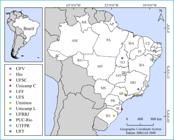
Among the 12 selected publications, 10 were developed at public educational institutions (UFV, Ifes, UFSC, Unicamp C, UFF, UFS, Unicamp L, UFRRJ, UTFPR, and UFT) and 2 at private institutions (Unisinos and PUC-Rio). Ifes is the only institution that is not a university but also offers undergraduate and graduate courses. The spatial location of the HEIs from the selected publications is presented in Figure 1. For institutions where the GHG inventory was conducted at all campuses, the location of the city where the main campus is situated was considered.
Organization and presentation of data
The most relevant information obtained from the selected publications was organized in Microsoft Excel® spreadsheets. This information included type of publication, publication reference, name of the educational institution, city where the institution is located, base year of the GHG inventory, organizational boundary of the GHG inventory, number of people considered for calculation purposes in the GHG inventory, GHG emission sources, emissions in metric tons of CO2 equivalent (tCO2e) by emission source and scope, carbon removal sources, methodology used to calculate carbon removal, total carbon removal in tCO2e, and carbon removal per year in tCO2e year-1.
Based on the above information, tables and graphs were generated for better organization and analysis of the data. The calculation of per capita emissions was performed by dividing the total emissions of the institution (in tCO2e) by the number of people considered for calculation purposes in the GHG inventory. Per capita emissions were not calculated for UFV, UFSC, Unicamp C, Unisinos, UFRRJ, and UFT due to the lack of information in the publications on the number of people considered in the GHG inventory. The percentage contributions of scopes 1, 2, and 3 were presented individually and in a consolidated form for two sets of institutions (institutions that assessed scopes 1 and 2 and institutions that assessed scopes 1, 2, and 3).
RESULTS AND DISCUSSION
Emissions
The analysis of the GHG inventories of the HEIs indicated that different scopes and emission sources were assessed (Table 1). UFF, UFRRJ, and UFT inventoried emissions only in scopes 1 and 2, while the other institutions assessed all the three scopes. In scope 1, stationary combustion and mobile combustion were assessed in almost all inventories. On the other hand, emissions resulting from transportation and agricultural activities were the least accounted for. In scope 2, as expected, emissions resulting from electricity consumption were inventoried. In scope 3, solid waste stood out among the most assessed sources, and services purchased or acquired, consumer and capital goods, and leased assets were assessed only at UFS.
Organizational boundary and emission sources evaluated in the GHG inventories of Brazilian higher education institutions.
The amount of GHG emitted varied widely among the evaluated HEIs (Table 2). This variation was observed both among different scopes and in the total volumes emitted by the HEIs. The variation in the emission profile of the evaluated HEIs results from specific differences in processes, material use, considered emission sources, and the number of people contributing to GHG emissions, which makes it difficult to objectively compare the institutions. This high variation among institutions is also observed globally, even among institutions with a similar number of students (HELMERS; CHANG; DAUWELS, 2021). The use of different emission factors, including updates over the years, can also contribute to variations in values reported for the same sources among the evaluated HEIs. The interval between the base years of the HEI inventories can span up to a decade, ranging from 2009 at UFT to 2019 at UFV, Ifes, UFSC, Unicamp C, and UFF.
Emissions in metric tons of CO2 equivalent (tCO2e) from the GHG inventories of Brazilian higher education institutions.
Scope 1 emissions ranged from 0.08 tCO2e (Unicamp L) to 9,922.66 tCO2e (UFRRJ), and scope 2 emissions ranged from 7.05 tCO2e (Unicamp C) to 1,861.81 tCO2e (UFSC) (Table 2). In scope 3, the variation was from 313.98 tCO2e (UFV) to 30,211.16 tCO2e (UFS). The highest total volumes per institution were observed at UFS, UTFPR, and UFRRJ, while the lowest were at UFF and UFT. Over a 1-year period, the 12 evaluated HEIs together emitted 89,213.13 tCO2e. The sum of emissions from UFS and UTFPR represented about 61% of this total, with scope 3 being the primary contributor to emissions in both institutions. In contrast, UFF and UFT, which did not assess scope 3, emitted together less than 0.5%.
Per capita emission is an important indicator because it allows for understanding the individual contributions of the academic community. Therefore, it is crucial for HEIs to report the number of people considered for calculation purposes and the per capita emissions for the assessed year in their inventories. Among the HEIs with calculated per capita emissions, UTFPR had a per capita emission of 2.00 tCO2e person-1, while at UFF, an individual emitted an average of 0.03 tCO2e (Table 2). The average value for the six institutions was 0.82 tCO2e person-1. It is recommended that per capita emission comparisons be made among institutions that assessed the same scopes and emission sources (PAREDES-CANENCIO et al., 2024). In this regard, it is noteworthy that the per capita emissions of Ifes and PUC-Rio were quite similar, as both institutions assessed similar sources and considered the same groups of people (students, professors, staff, and visitors) for quantifying emissions from commuting to campus.
A study conducted with HEIs from different countries showed that carbon footprints per capita using the GHG Protocol methodology varied from 0.356 (Escuela Superior Politécnica del Litoral, Ecuador) to 7.50 tCO2e person-1 (University of Illinois, EUA), with an average value of 2.24 tCO2e person-1 (VALLS-VAL; BOVEA, 2021). In general, emissions from HEIs in developed countries are higher due to factors such as greater energy demand for heating and operating facilities, the energy mix of the country (often with a lower proportion of renewable energy), higher consumption standards, and greater national and international mobility of students and faculty (CANO et al., 2023).
Scope 3 presented the highest percentage contribution among the evaluated scopes, with five institutions (Ifes, UFS, Unicamp L, PUC-Rio, and UTFPR) attributing more than 92% of their emissions to it (Figure 2A). The percentage contributions of scopes 1 and 2 were predominant only in institutions where scope 3 was not assessed or where emissions from commuting to campus were not inventoried in scope 3. Emissions from commuting (scope 3) tend to be high due to the large number of people who commute daily to these locations using vehicles that emit GHGs.

Contribution of the GHG inventory scopes in Brazilian higher education institutions. (A) Contribution of the scopes by institution; (B) Overall contribution of the scopes for institutions that assessed scopes 1 and 2; (C) Overall contribution of the scopes for institutions that assessed scopes 1, 2, and 3.
The results of the consolidated percentage contribution showed that scope 1 represented nearly 91% of the total GHG emissions in the group of HEIs that assessed scopes 1 and 2 (Figure 2B). This is directly related to the nature and number of sources assessed in scope 1 at UFF, UFRRJ, and UFT (three sources per institution) and the relatively low contribution of scope 2 to the consolidated value. Due to the high contribution of emissions from commuting, the group of institutions that assessed all the three scopes showed approximately 85% of their emissions in scope 3 and similar small quantities in scopes 1 and 2 (Figure 2C). This Brazilian scenario is different from that found in a set of HEIs from other countries, where energy consumption (scope 2) had the largest contribution to total emissions, followed by commuting (scope 3) (HELMERS; CHANG; DAUWELS, 2021; VALLS-VAL; BOVEA, 2021).
The sources and scopes of GHG inventories vary in complexity for quantification, with some being more challenging primarily due to difficulties in data collection. In general, scope 2, represented by electricity in the evaluated institutions, is considered the easiest to quantify, as electricity consumption is accurately measured by the standardized systems of utility companies. This ease helps explain why electricity appears in all the inventories of the evaluated HEIs (Table 1). On the other hand, scope 3 is the most challenging because it involves external sources, such as commuting from home to institution by the academic community and the supply chain. At the same time, when the commuting source is considered, scope 3 tends to be responsible for the largest share of emissions in the inventory (CRUZ; D’AVILA, 2013; GONÇALVES; POZZA, 2016; CARVALHO; VAN ELK; ROMANEL, 2017; CRUZ, 2020; MILAGRE et al., 2023). In the specific case of commuting, studies often conduct surveys with the academic community to obtain detailed information on the modes of transportation used, types of fuel consumed, frequency of campus visits, and distances traveled, which further complicates the analysis (CARVALHO; VAN ELK; ROMANEL, 2017; MILAGRE et al., 2023).
GHG inventory emission factors are typically based on widely recognized sources, such as international guidelines, national publications, and specialized databases. Institutions like the Intergovernmental Panel on Climate Change (IPCC) provide global parameters, while national agencies develop specific factors that account for local particularities (FUNDAÇÃO GETÚLIO VARGAS, 2023). Although the methodology employed in the inventories of the HEIs studied (GHG Protocol) contributes to the standardization of calculations, the emission factors used can vary widely, which may lead to differences in the calculation results (ALVES et al., 2020). In addition, calculation tools, such as the one used for Ifes (MILAGRE et al., 2023), allow users to edit emission factor values to make them more specific. Rocha et al. (2023), when generating emission indices from UFV data (emission index per total area and emission index per constructed area), highlighted the need for caution when using indices from the literature to ensure accuracy in calculations. In this regard, the Brazilian GHG Protocol Program emphasizes the importance of prioritizing locally specific emission factors, when available, and regularly monitoring their updates. Furthermore, it is important that the use of specific emission factors is clearly reported in the inventory (FUNDAÇÃO GETÚLIO VARGAS, 2023).
Removals
Among the evaluated HEIs, five (41.7%) reported GHG removals (Table 3). At the campuses, the removal inventories were carried out in urban afforestation, native forests, forest plantations, and pastures. All the five HEIs conducted their carbon removal quantifications in areas with tree vegetation. In the case of UFRRJ, in addition to areas with tree vegetation, removals in pastures were also considered in the inventory.
Removals in metric tons of CO2 equivalent (tCO2e) from the GHG inventories of Brazilian higher education institutions.
There was a significant variation in the carbon removal results found in the studies, with values ranging from 0.18 to 8,547.76 tCO2e year-1. Unlike other HEIs, the carbon removal sources at UFV were able to fully compensate the institution's emissions in 2019, with removal being 2.45 times greater than the emissions. This occurred at UFV due to two main factors: the first being the non-quantification of emissions from commuting to campus, which are generally high. UFV also has one of the largest green areas among Brazilian universities, with a forest area of 1,027.2 ha in the inventoried campus (Campus Viçosa) (ROCHA et al., 2023). On the other hand, institutions with smaller areas of tree vegetation and that inventoried emissions from commuting tend to have lower compensation values, as was the case with Ifes (approximately 3.3 ha of green area) (MILAGRE et al., 2023).
Different methodologies were used to calculate carbon removal by campus vegetation (Table 4). Ifes and UFRRJ conducted forest inventories by measuring the diameter at breast height (DBH) and height of trees, followed by the estimation of carbon stored in aboveground biomass using mathematical models from the literature. On the other hand, UFV and Unisinos used a more simplified approach, estimated based on forest area and carbon removal factors available in the literature. Although not explained in detail, the methodology at Unicamp C also employed carbon removal factors from the literature.
Methodologies used in the carbon removal inventory of Brazilian higher education institutions.
Emissions and removals management
HEIs around the world have become more committed to reducing their carbon footprints as a way to become more sustainable (SILVA; DUTRA; GUERRA, 2023). HEIs that integrate sustainability into their curricula and operations not only positively impact the environmental behavior of their students and staff but can also reduce costs and strengthen their institutional image (AKBAR et al., 2024; FUNDAÇÃO GETÚLIO VARGAS, 2023). However, this study revealed that the number of HEIs in Brazil that have quantified their GHG emissions and removals is very limited. Only 12 HEIs met the inclusion criteria for the study, and of these, only five conducted a carbon removal inventory. To put this in context, the country had a total of 2,595 HEIs in 2022, including 120 federal, 133 state, 59 municipal, and 2,283 private institutions (BRASIL, 2024b).
Monitoring GHG emissions enables the development of reduction actions across the different inventory scopes. Although most publications in this study reported emission results for only a single base year, conducting annual inventories at HEIs allows for tracking the progress and effectiveness of already-adopted mitigation measures and developing strategies to reduce future emissions (MILAGRE et al., 2023). Unlike the Brazilian scenario, it is more common for HEIs in developed countries to track emissions over time through annual inventories, as exemplified by the study of Gómez, Cadarso and Monsalve (2016). Additionally, these inventories typically include a greater number of emission sources than those of Brazilian HEIs (KLEIN-BANAI; THEIS, 2013; BAILEY; LAPOINT, 2016; CLABEAUX et al., 2020; PAREDES-CANENCIO et al., 2024).
In general, inventories at Brazilian HEIs are conducted in just one or a few units within the institution. One exception in the present study is UFS, which inventoried a wide variety of sources across all its campuses (CRUZ, 2020). Another important aspect is that, while in many universities abroad inventories result from institutional initiatives, in Brazil, they are often carried out by a small group of professors and students. This affects the engagement of the academic community and complicates emissions management. Although the 12 Brazilian HEIs evaluated propose actions for reducing and mitigating identified emissions, they lack an integrated emissions management system. Brazilian HEIs typically lack cataloged data in a centralized database. Therefore, allocating human and financial resources is essential for the creation and maintenance of an integrated system that facilitates data collection and storage.
Since scope 1 emissions are direct emissions (sources that are owned or directly controlled by the institution), they can be managed more directly and immediately by HEIs. To reduce these emissions, measures such as replacing fossil fuels with biofuels in owned vehicles and equipment, reducing water consumption, and improving the monitoring and maintenance of equipment that uses GHGs in its operation (e.g., air conditioners, refrigerators, drinking fountains, and fire extinguishers) to prevent gas leaks can be adopted. For scope 2 (indirect emissions), initiatives should focus on minimizing electricity consumption and waste.
In scope 3 (indirect emissions), actions to reduce emissions from commuting should focus on encouraging the use of non-GHG-emitting vehicles, utilizing public transportation, creating carpool programs, and increasing the use of ethanol as fuel in cars and motorcycles. Additionally, other actions for scope 3 include reducing solid waste production, implementing or improving recycling programs, prioritizing local suppliers, and encouraging the use of videoconferencing to reduce the need for air and land travel. Given the nature of the actions to reduce emissions in scope 3, as well as scopes 1 and 2, environmental education strategies are crucial in managing the reported emissions.
Although carbon compensation by the vegetation on the campuses was relatively small in most of the evaluated HEIs, it is of paramount importance for reducing the carbon footprint and promoting environmental sustainability of the institutions (OLIVEIRA et al., 2023). In the case of Ifes, for example, carbon removal was able to compensate for 1.74% of the total volume of emissions, but this represents more than 50% of the institution's scope 1 and 2 emissions in 2019. Additionally, tree planting can bring other benefits, such as improving the energy efficiency of buildings by reducing the need for electricity for climate control (GE et al., 2023).
Institutions with large green areas should ensure their conservation, while those with few green areas but potential for expansion should invest in creating new green spaces. The implementation of new green areas should be planned on the campuses, taking into account integration with existing infrastructure, the well-being of the academic community, and the preservation of local biodiversity. It is recommended that planting be carried out with native species adapted to the region's climate and soil to ensure ecological resilience and minimize maintenance needs (ALMAS; CONWAY, 2016).
CONCLUSIONS
Although the GHG emissions inventory is the first step toward reducing the carbon footprint, this study revealed that the number of Brazilian HEIs that quantify and publish their GHG inventories is very small. This scarcity is even more pronounced for removal inventories, despite universities and other HEIs having significant carbon sequestration potential in their green areas, particularly in areas with tree species (urban afforestation, remnants of native forests, and forest plantations).
The evaluation of different emission sources and scopes in inventories, as well as the use of different methodologies, undermines the quality of reports and makes accurate comparisons among institutions more difficult. This highlights the need for specific approaches to emissions management and the standardization of methodologies used. It is also important for HEIs to assess as many sources as possible to avoid underestimating the amount of GHGs released into the atmosphere.
Scope 3 was the primary group of emissions for many institutions, representing a significant portion of total emissions, primarily due to emissions related to the commuting of the academic community. Thus, institutional initiatives should encourage the use of public transportation and vehicles that do not emit GHGs (such as bicycles), as well as the use of ethanol as fuel in motor vehicles.
This study fills a knowledge gap by exploring Brazilian initiatives for quantifying GHG emissions and removals in HEIs. The HEIs evaluated here have taken an important step in disclosing their environmental impacts. These initiatives should be supported by institutional incentive policies and disseminated across other HEIs in Brazil. The adoption of these practices in the higher education sector can also serve as a model for other institutions and organizations, expanding the reach and effectiveness of actions aimed at reducing GHG emissions in the country.
REFERENCES
-
AKBAR, Yunata Kandhias; MARATIS, Jerry; NAWANGSARI, Lenny Christina; PUTRI, Ratna Komala; SK, Purwanto. The effects of green human resource management practices on sustainable university through green psychological climate of academic and non-academic staff. Cogent Business and Management, v. 11, n. 1, 2375404, 2024. https://doi.org/10.1080/23311975.2024.2375404
» https://doi.org/10.1080/23311975.2024.2375404 -
ALMAS, Andrew D.; CONWAY, Tenley M. The role of native species in urban forest planning and practice: A case study of Carolinian Canada. Urban Forestry & Urban Greening, v. 17, p. 54-62, 2016. https://doi.org/10.1016/j.ufug.2016.01.015
» https://doi.org/10.1016/j.ufug.2016.01.015 - ALT, Ana Nogueira. Inventário de GEE e medidas compensatórias: um estudo propositivo para a Escola de Engenharia da Universidade Federal Fluminense, em Niterói, RJ Trabalho de Conclusão de Curso (Bacharelado em Engenharia de Recursos Hídricos e do Meio Ambiente) – Universidade Federal Fluminense, Niterói, 2024.
-
ALVES, Eliane Boaventura Bernardes Moura; JACOVINE, Laércio Antônio Gonçalves; SILVA, Lauana Blenda; MORAIS JUNIOR, Vicente Toledo Machado; ROCHA, Samuel José Silva Soares da; VILLANOVA, Paulo Henrique; SCHETTINI, Bruno Leão Said; LIMA, Gumercindo Souza. Brazilian carbon footprint calculators: comparative approaches and implications of using these tools. Carbon Management, v. 11, n. 5, p. 499-510, 2020. https://doi.org/10.1080/17583004.2020.1809293
» https://doi.org/10.1080/17583004.2020.1809293 - AREVALO, Luis Alberto; ALEGRE, Julio Cesar; VILCAHUAMAN, Luciano Javier Montoya. Metodologia para estimar o estoque de carbono em diferentes sistemas de uso da terra Colombo: Embrapa Florestas, 2002.
-
BAILEY, Gwendolyn; LAPOINT, Thomas. Comparing greenhouse gas emissions across Texas Universities. Sustainability, v. 8, n. 1, p. 80, 2016. https://doi.org/10.3390/su8010080
» https://doi.org/10.3390/su8010080 -
BARROS, Murillo Vetroni; SILVA, Bárbara Pavão Apolinário da; PIEKARSKI, Cassiano Moro; LUZ, Leila Mendes da; YOSHINO, Rui Tadashi; TESSER, Daniel Poletto. Carbon footprint of transportation habits in a Brazilian university. Environmental Quality Management, v. 28, n. 1, p. 139-148, 2018. https://doi.org/10.1002/tqem.21578
» https://doi.org/10.1002/tqem.21578 -
BRASIL. Resultados do inventário nacional de emissões de gases de efeito estufa por unidade federativa Brasil, 2022. Available at: https://www.gov.br/mcti/pt-br/acompanhe-o-mcti/sirene/publicacoes/LO_GIZ_RESULTADOINVENTARIO_00_PAGINASINDIVIDUAIScompactado.pdf Accessed on: Jan. 19, 2025.
» https://www.gov.br/mcti/pt-br/acompanhe-o-mcti/sirene/publicacoes/LO_GIZ_RESULTADOINVENTARIO_00_PAGINASINDIVIDUAIScompactado.pdf -
BRASIL. BRAZIL’S NDC National determination to contribute and transform Brasília, 2024a. Available at: https://www.gov.br/mma/pt-br/assuntos/noticias/brasil-entrega-a-onu-nova-ndc-alinhada-ao-acordo-de-paris/brazils-ndc.pdf/>. Accessed on: Jan. 20, 2025.
» https://www.gov.br/mma/pt-br/assuntos/noticias/brasil-entrega-a-onu-nova-ndc-alinhada-ao-acordo-de-paris/brazils-ndc.pdf/> -
BRASIL. Resumo técnico do Censo da Educação Superior 2022 Brasília: Inep, 2024b. Available at: https://download.inep.gov.br/publicacoes/institucionais/estatisticas_e_indicadores/resumo_tecnico_censo_educacao_superior_2022.pdf Accessed on: Sep. 9, 2024.
» https://download.inep.gov.br/publicacoes/institucionais/estatisticas_e_indicadores/resumo_tecnico_censo_educacao_superior_2022.pdf -
CANO, Natalia; BERRIO, Linda; CARVAJAL, Elizabeth; ARANGO, Santiago. Assessing the carbon footprint of a Colombian University Campus using the UNE-ISO 14064–1 and WRI/WBCSD GHG Protocol Corporate Standard. Environmental Science and Pollution Research, v. 30, n. 2, p. 3980-3996, 2023. https://doi.org/10.1007/s11356-022-22119-4
» https://doi.org/10.1007/s11356-022-22119-4 -
CARVALHO, João Paulo Andrade F. de; VAN ELK, Ana Ghislane H. Pereira; ROMANEL, Celso. Inventário de Emissões de Gases de Efeito Estufa no Campus Gávea da PUC-Rio. Engenharia Sanitária e Ambiental, v. 22, n. 3, p. 591-595, 2017. https://doi.org/10.1590/S1413-41522017155865
» https://doi.org/10.1590/S1413-41522017155865 -
CLABEAUX, Raenne; CARBAJALES-DALE, Michael; LADNER, David; WALKER, Terry. Assessing the carbon footprint of a university campus using a life cycle assessment approach. Journal of Cleaner Production, v. 273, 122600, 2020. https://doi.org/10.1016/j.jclepro.2020.122600
» https://doi.org/10.1016/j.jclepro.2020.122600 - CRUZ, Flávia Alves da; D’AVILA, Sarita Lopes. Inventário de emissões de gases de efeito estufa da Universidade Tecnológica Federal do Paraná - campus Curitiba – sede Central e Ecoville Trabalho de Conclusão de Curso (Bacharelado em Engenharia Ambiental) – Universidade Tecnológica Federal do Paraná, Curitiba, 2013.
- CRUZ, Ulysses de Brito. Inventário de emissão de gases de efeito estufa estratégias de mitigação em instituições de ensino superior: o caso da Universidade Federal de Sergipe Tese (Doutorado em Administração) – Universidade Federal da Bahia, Salvador, 2020.
-
DIAMOND, Stephen F.; KUAN, Jennifer W. The market for carbon offsets: insights from US stock exchanges. Review of World Economics, 2024. https://doi.org/10.1007/s10290-024-00535-7
» https://doi.org/10.1007/s10290-024-00535-7 -
FUNDAÇÃO GETÚLIO VARGAS. Programa Brasileiro GHG Protocol Fundação Getúlio Vargas. Available at: https://eaesp.fgv.br/sites/eaesp.fgv.br/files/u1087/biblioteca_ghg_.pdf Accessed on: Sep. 12, 2024.
» https://eaesp.fgv.br/sites/eaesp.fgv.br/files/u1087/biblioteca_ghg_.pdf -
GE, Juejun; WANG, Yupeng; AKBARI, Hashem; ZHOU, Dian; GU, Zhaolin; MENG, Xiangzhao. Cooling energy saving by vegetation planting in high-density districts: Evaluation using the coupled simulation. Building and Environment, v. 232, 110054, 2023. https://doi.org/10.1016/j.buildenv.2023.110054
» https://doi.org/10.1016/j.buildenv.2023.110054 -
GÓMEZ, Nuria; CADARSO, María-Ángeles; MONSALVE, Fabio. Carbon footprint of a university in a multiregional model: the case of the University of Castilla-La Mancha. Journal of Cleaner Production, v. 138, part 1, p. 119-130, 2016. https://doi.org/10.1016/j.jclepro.2016.06.009
» https://doi.org/10.1016/j.jclepro.2016.06.009 -
GONÇALVES, P.B.; POZZA, S.A. Inventário de Gases de Efeito Estufa no Campus 1 da Unicamp em Limeira, SP. In: ENEEAMB, 14., FÓRUM LATINO, 2., E SBEA – CENTRO-OESTE, 1. Anais… Brasília: Universidade de Brasília, 2016. Available at: https://conferencias.unb.br/index.php/ENEEAmb/ENEEAmb2016/paper/viewFile/4819/1165 Accessed on: Aug. 20, 2024.
» https://conferencias.unb.br/index.php/ENEEAmb/ENEEAmb2016/paper/viewFile/4819/1165 -
HELMERS, Eckard; CHANG, Chia Chien; DAUWELS, Justin. Carbon footprinting of universities worldwide: Part I—objective comparison by standardized metrics. Environmental Sciences Europe, v. 33, n. 1, p. 30, 2021. https://doi.org/10.1186/s12302-021-00454-6
» https://doi.org/10.1186/s12302-021-00454-6 -
INTERGOVERNMENTAL PANEL ON CLIMATE CHANGE (IPCC). AR6 Synthesis Report: Climate Change 2023. IPCC, 2023. Available at: https://www.ipcc.ch/report/ar6/syr/ Accessed on: Aug. 30, 2024.
» https://www.ipcc.ch/report/ar6/syr/ -
JUNG, Juchul; HA, Gyoungjun; BAE, Kyungwan. Analysis of the factors affecting carbon emissions and absorption on a university campus – focusing on Pusan National University in Korea. Carbon Management, v. 7, n. 1-2, p. 55-65, 2016. https://doi.org/10.1080/17583004.2016.1166426
» https://doi.org/10.1080/17583004.2016.1166426 -
KLEIN-BANAI, Cynthia; THEIS, Thomas L. Quantitative analysis of factors affecting greenhouse gas emissions at institutions of higher education. Journal of Cleaner Production, v. 48, p. 29-38, 2013. https://doi.org/10.1016/j.jclepro.2011.06.004
» https://doi.org/10.1016/j.jclepro.2011.06.004 - MARTINS, Fernanda Raquel Rodrigues. Balanço de gases de efeito estufa da Universidade Federal Rural do Rio de Janeiro, no campus Seropédica Trabalho de Conclusão de Curso (Bacharelado em Engenharia Florestal) – Instituto de Florestas, Universidade Federal Rural do Rio de Janeiro, 2015.
-
MILAGRE, Jocimar Caiafa; MENDES, Lucas José; MORAIS JÚNIOR, Vicente Toledo Machado de. Native forest cover dynamics in the Guandu River hydrographic basin, Espírito Santo state, Brazil. Revista de Gestão Ambiental e Sustentabilidade, v. 13, n. 1, e24448, 2024. https://doi.org/10.5585/2024.24448
» https://doi.org/10.5585/2024.24448 -
MILAGRE, Jocimar Caiafa; MENDES, Lucas José; TORRES, Carlos Moreira Miquelino Eleto; PEREIRA, Manuela Corrêa; DICK, Grasiele; SCHUMACHER, Mauro Valdir; MORAIS JÚNIOR, Vicente Toledo Machado de. GHG emissions and removals of a federal institute campus from Brazil. Scientia Forestalis, v. 51, e3935, 2023. https://doi.org/10.18671/scifor.v51.09
» https://doi.org/10.18671/scifor.v51.09 -
OLIVEIRA, Klisman; JACOVINE, Laércio Antônio Gonçalves; TORRES, Carlos Moreira Miquelino Eleto; MORAIS JÚNIOR, Vicente Toledo Machado de; ROCHA, Samuel José Silva Soares da; FAUSTINO, Isabella Salgado; ALBUQUERQUE, Thaynara Pereira. Survival and carbon stock of forest species in mixed plantation at 8 years of age. Scientia Forestalis, v. 51, e3863, 2023. https://doi.org/10.18671/scifor.v50.50
» https://doi.org/10.18671/scifor.v50.50 -
PAREDES-CANENCIO, Kevin Nabor; LASSO, Ana; CASTRILLON, Rosaura; VIDAL-MEDINA, Juan R.; QUISPE, Enrique C. Carbon footprint of higher education institutions. Environment, Development and Sustainability, v. 26, p. 30239-30272, 2024. https://doi.org/10.1007/s10668-024-04596-4
» https://doi.org/10.1007/s10668-024-04596-4 - PASSARELO, Bruno. Inventário corporativo de emissões e remoções antrópicas de gases de efeito estufa, UNICAMP Universidade Estadual de Campinas – ano 2019 e 2020 Santos: Via Green Institute, 2021.
-
PINHEIRO, Renato Torres; MOURA, Dieyson Rodrigues de; MARCELINO, Dianes Gomes. Densidade arbórea e sombreamento nas áreas verdes das quadras residenciais de Palmas, Tocantins. Ciência Florestal, v. 33, n. 2, e71225, 2023. https://doi.org/10.5902/1980509871225
» https://doi.org/10.5902/1980509871225 - PREUSS, Maicon Junior. Inventário de gases de efeito estufa e emissões evitadas com o gerenciamento de resíduos e cobertura vegetal na Universidade do Vale do Rio dos Sinos Dissertação (Mestrado em Engenharia Civil) – Universidade do Vale do Rio dos Sinos, São Leopoldo, 2017.
-
RIDHOSARI, Betanti; RAHMAN, Ari. Carbon footprint assessment at Universitas Pertamina from the scope of electricity, transportation, and waste generation: Toward a green campus and promotion of environmental sustainability. Journal of Cleaner Production, v. 246, 119172, 2020. https://doi.org/10.1016/j.jclepro.2019.119172
» https://doi.org/10.1016/j.jclepro.2019.119172 -
ROCHA, Thaís de Almeida; SILVA, Lauana Blenda; ALVES, Eliane Boaventura Bernardes Moura; JACOVINE, Laércio Antônio Gonçalves. Carbon footprint in an educational institution and compensation potential in urban forests. Environmental Development, v. 46, 100860, 2023. https://doi.org/10.1016/j.envdev.2023.100860
» https://doi.org/10.1016/j.envdev.2023.100860 -
ROOS, Nicolas; HEINICKE, Xaver; GUENTHER, Edeltraud; GUENTHER, Thomas W. The Role of Environmental Management Performance in Higher Education Institutions. Sustainability, v. 12, n. 2, p. 655, 2020. https://doi.org/10.3390/su12020655
» https://doi.org/10.3390/su12020655 - SANTOS, Diego Robson Rocha dos; PICANÇO, Aurelio Pessoa; MACIEL, Girlene Figueiredo; SERRA, Juan Carlos Valdes. Estudo de Neutralização dos gases de efeito estufa da Universidade Federal do Tocantins-Reitoria e Campus Universitário de Palmas: uma forma de mitigação ambiental. Revista Geográfica Acadêmica, v. 4, n. 2, p. 29-40, 2010.
-
SILVA, Liziane Araújo da; DUTRA, Ana Regina de Aguiar; GUERRA, José Baltazar Salgueirinho Osório de Andrade. Decarbonization in Higher Education Institutions as a Way to Achieve a Green Campus: A Literature Review. Sustainability, v. 15, n. 5, p. 4043, 2023. https://doi.org/10.3390/su15054043
» https://doi.org/10.3390/su15054043 -
TAVARES, Fabiane Sampaio Bertucci; GUARALDO, Eliane; LIMA, Ivan Bergier Tavares de. Reconhecimento dos serviços ecossistêmicos de espaços verdes urbanos para a adaptação a eventos climáticos extremos. Revista de Gestão Ambiental e Sustentabilidade, v. 13, n. 1, e23959, 2024. https://doi.org/10.5585/2024.23959
» https://doi.org/10.5585/2024.23959 -
UNIVERSIDADE FEDERAL DE SANTA CATARINA (UFSC). Inventário de emissões de gases de efeito estufa - ano 2019 UFSC. Available at: https://galeria.ufsc.br/ufsc_sustentavel/Relato__rio+Inventa__rio+de+Emisso__es+UFSC+2019-v3.pdf.html Accessed on: Aug. 12, 2024.
» https://galeria.ufsc.br/ufsc_sustentavel/Relato__rio+Inventa__rio+de+Emisso__es+UFSC+2019-v3.pdf.html -
VALLS-VAL, Karen; BOVEA, María D. Carbon footprint in Higher Education Institutions: a literature review and prospects for future research. Clean Technologies and Environmental Policy, v. 23, n. 9, p. 2523-2542, 2021. https://doi.org/10.1007/s10098-021-02180-2
» https://doi.org/10.1007/s10098-021-02180-2 -
XIANG, Chenyu; LIU, Ning. Factors and paths influencing students’ low-carbon behavior. Carbon Management, v. 15, n. 1, 2024. https://doi.org/10.1080/17583004.2024.2349173
» https://doi.org/10.1080/17583004.2024.2349173


