
 Reuse and impacts of water treatment sludge: A scientometric review
ABSTRACT
Water treatment sludge is a widely generated but underutilized byproduct with potential applications in coagulant recovery, adsorptive properties, and wastewater treatment. This study aims to analyze the historical and temporal evolution of research on water treatment sludge. A Scientometric Review was conducted using the Methodi Ordinatio 2.0 methodology, analyzing 544 articles from Scopus, Web of Science, and ScienceDirect. After filtering, 198 articles were selected. VOSviewer and Microsoft Excel were used to map and generate graphical analyses. The results showed a sharp increase in publications after 2015, led by China, India, Australia, and Brazil. The most frequent keywords were "water treatment," "adsorption," "sludge," and "water treatment sludge." Yaqian Zhao was the most prolific author, while the Journal of Environmental Management and the Journal of Cleaner Production led in publications. Trends reflect a growing focus on sustainability and the circular economy, but reveal gaps, such as toxicity and hormone degradation. The findings support decision-making in waste management. Future research should explore practical applications, especially regarding toxicity and removal of emerging contaminants.
Keywords:
science mapping; adsorption; use of sludge; toxicity; circular economy; coagulant recovery; water treatment sludge
RESUMO
O lodo de tratamento de água (LETA) é um subproduto amplamente gerado, porém subutilizado, com potenciais aplicações na recuperação de coagulantes, em propriedades adsorventes e no tratamento de águas residuárias. Este estudo tem como objetivo analisar a evolução histórica e temporal das pesquisas sobre o LETA. Foi realizada uma Revisão Cienciométrica utilizando a metodologia Methodi Ordinatio 2.0, analisando 544 artigos provenientes das bases de dados Scopus, Web of Science e ScienceDirect. Após a filtragem, foram selecionados 198 artigos. Os softwares VOSviewer e Microsoft Excel foram utilizados para o mapeamento e a geração das análises gráficas. Os resultados mostraram um aumento acentuado nas publicações após 2015, lideradas por China, Índia, Austrália e Brasil. As palavras-chave mais frequentes foram "water treatment", "adsorption", "sludge" e "water treatment sludge". Yaqian Zhao foi o autor mais presente no portfólio, enquanto os periódicos Journal of Environmental Management e Journal of Cleaner Production se destacaram em número de publicações. As tendências indicam um foco crescente em sustentabilidade e economia circular, mas revelam lacunas, como a avaliação da toxicidade e a degradação de hormônios. Os achados fornecem subsídios para a tomada de decisão na gestão de resíduos. Pesquisas futuras devem explorar aplicações práticas, especialmente quanto à toxicidade e à remoção de contaminantes emergentes.
Palavras-chave:
mapeamento científico; adsorção; uso de lodo; toxicidade; economia circular; recuperação de coagulante; lodo de tratamento de água
INTRODUCTION
The byproducts of drinking water treatment represent a highly relevant environmental issue, as conventional water treatment plants produce thousands of tons of sludge annually (Zainol et al., 2022). Reis et al. (2024) highlighted that this practice is environmentally and economically unfeasible. Proper sludge management is a global concern driven by population growth and the increasing demand for potable water (Ahmad et al., 2017). Previous studies emphasize the importance of using drinking water treatment sludge (WTS) to promote a circular economy, mainly due to its multiple adsorptive properties (Bougrine et al., 2024; Yildiz and Sevinç, 2018).
The scientific literature presents several relevant studies on WTS, encompassing multiple research areas. Mousavi and Nayeri (2022) focused on coagulant recovery and reuse, while He et al. (2024) emphasized sludge recycling. Ahmad, Ahamad and Alam (2016) addressed the sustainable management of this waste, and Souza et al. (2024), together with Bernegossi et al. (2022), analyzed its ecotoxicological impacts and environmental implications. Furthermore, Ren et al. (2018) explored the activation and modification of sludge to produce adsorbents and remove pollutants.
Studies such as those by De Carvalho Gomes et al. (2019) and Sheng et al. (2021) investigated the use of sludge in the manufacture of construction materials. The reuse of sludge from a circular economy perspective was addressed by Nguyen et al. (2022), while Sharma and Ahammed (2023) examined its application in water and wastewater treatment following modifications. Yuan and Zhu (2023) focused on enhancing sludge properties, including its moisture removal capacity.
Despite the growing number of studies, a scientometric review synthesizing the current knowledge on WTS is still lacking. This gap underscores the importance of a scientometric analysis in understanding the scientific output and guiding new research. Understanding the landscape of scientific production through scientometrics enables government agencies, industries, and sanitation companies to make more informed decisions regarding research funding and strategic planning. This approach provides a foundation for updating environmental legislation, ensuring it is grounded in scientific evidence.
This article addresses fundamental questions for understanding the scientific landscape of drinking WTS, examining which countries lead scientific production in this field, the most influential co-authorship networks, and the high-impact journals publishing studies on the topic. The study investigates publication patterns and trends through a detailed analysis, identifying the most productive and influential authors, journals, and countries, and assessing temporal growth in the number of publications. Therefore, using a scientometric approach, this work mapped the historical and temporal evolution of the subject while uncovering how knowledge about drinking WTS has been constructed over the years.
Thus, it provides an overview of current trends and key research drivers, aiming to support future studies in the field and reflect the ongoing and sustained advancements in research on drinking WTS.
Based on a comprehensive analysis of 198 recent scientific publications, this article investigates, in research studies, trends and impacts of WTS reuse. Utilizing impact metrics, such as the InOrdinatio index, and data visualization tools, the study identified keywords related to drinking WTS in wastewater treatment plants, characteristics of WTS, its uses and toxicity, coagulant recovery, adsorptive properties, and hormone degradation.
Although several studies have addressed WTS through narrative, systematic, or bibliometric approaches, most reviews focus on specific applications or provide descriptive mappings of the literature. In contrast, the present study advances the field by combining a global scientometric analysis with a multicriteria ranking method (Methodi Ordinatio 2.0), allowing not only the identification of publication trends, influential authors, and journals, but also the structured prioritization of the most relevant studies. Moreover, this review adopts an integrated thematic scope that simultaneously explores reuse pathways and environmental impacts, highlighting underexplored topics such as toxicity assessment and hormone degradation. By doing so, this study offers a differentiated analytical perspective and supports a more critical examination of research gaps and future directions in WTS reuse.
METHOD
To achieve the objective of this research, a Scientometric Literature Review was conducted using the Methodi Ordinatio 2.0 methodology developed by Pagani et al. (2022). This methodology is a multicriteria decision-making method that uses three variables and three weighting factors to rank a portfolio of articles based on their scientific relevance. The variables and their respective weightings correspond to the terms presented in the InOrdinatio 2.0 equation described subsequently as Equation 1.
Where:
"PubYear" is the year of publication of the article;
"Ci" is the number of citations obtained from Google Scholar;
"IF" is the journal impact factor;
"ResearchYear" corresponds to the year in which the research was conducted;
"CitedHalfLife" represents the median cited half-life of journals (7.6); and λ, Ω, and Δ are weighting parameters ranging from 0 to 10, reflecting the relative importance of publication year, citations, and journal impact factor, respectively.
The nine steps of the methodology were conducted as described below: Steps 1 and 2 aimed to define the research intent and perform exploratory searches in the databases to identify keyword combinations that best aligned with the research topic and determine which databases yielded the highest number of articles. Based on the results of the previous steps, in steps 3 and 4, the most suitable keyword combinations and databases were selected, and the final searches were performed. The selection of databases was based on the number of articles retrieved during the exploratory searches, and the following configurations were established for searching articles in the databases:
-
Document type: Articles and reviews only;
-
Search by: Title, abstract, and keywords;
-
No time restrictions;
-
Dates: Searches were conducted on August 25, 2024;
-
Language: Only articles published in English were considered;
-
Reviewers: Study screening was performed by a single reviewer.
Thus, the final search was conducted, as shown in Table 1. In Scopus and Web of Science, the search strategies were applied to the title, abstract, and keyword fields (TITLE-ABS-KEY and TOPIC, respectively), whereas in ScienceDirect, the search was performed across the full text. Conference papers, editorials, and book chapters were excluded. Articles unrelated to WTS reuse, toxicity, adsorption, or hormone degradation were removed based on title and abstract screening.
The databases Scopus, Web of Science, and ScienceDirect were consulted. ScienceDirect was included to broaden thematic coverage, particularly for full-text screening of relevant studies. Potential duplication bias was mitigated through systematic deduplication using the reference manager JabRef before the application of the Methodi Ordinatio 2.0 methodology. The complete search strings applied in each database are fully reported in Table 1, ensuring the reproducibility of the search strategy.
In Step 5, filtering procedures were applied. This step aims to eliminate duplicate articles using the reference manager JabRef. Conference papers and articles outside the research theme were excluded through the review of article titles and abstracts. The results obtained are presented in Table 2.
Step 6 involved collecting variables for ranking the articles. The updated Methodi Ordinatio methodology includes an Excel spreadsheet called RankIn 2.0, which automatically retrieves the year of publication and the impact factor of each article, and provides a link to Google Scholar, where the citation number for the article can be found.
For this research, the values for λ, Ω, and Δ were set at 10, as the study focused on identifying the most recent and most cited research studies. The methodology does not define a fixed value for these parameters; thus, the selection was based on the publication year of the most recent article. Preliminary analyses regarding changes in the weighting parameters indicated that increasing the threshold reduced the portfolio size without altering the dominant trends identified. Therefore, the highest permissible values were applied to these parameters, yielding a highly specialized search and a robust and suitable portfolio.
The portfolio ranking began in Step 7. After populating the RankIn 2.0 spreadsheet with the variables, the InOrdinatio 2.0 Equation 1 was applied, resulting in a portfolio of articles ranked by scientific relevance, as shown in the Supplementary material. Following the ranking, due to the large number of articles, only those with an InOrdinatio score greater than or equal to zero were considered for reading. This threshold represents the highest InOrdinatio score achieved by articles published in 2024, ensuring recency of publications. Preliminary checks indicated that increasing the threshold would reduce the portfolio size but would not alter the dominant trends identified.
The portfolio articles were located and stored in the final two steps, 8 and 9, and systematic analyses began. Thus, the data collection and analysis procedures were initiated following portfolio construction.
The application of Methodi Ordinatio 2.0 enables a balanced evaluation that integrates scientific impact, temporal relevance, and citation dynamics, thereby enabling a more robust selection of essential literature. Unlike traditional bibliometric reviews, which are mainly based on counting publications and citations, Methodi Ordinatio 2.0 provides a more robust evaluation.
RESULTS AND DISCUSSION
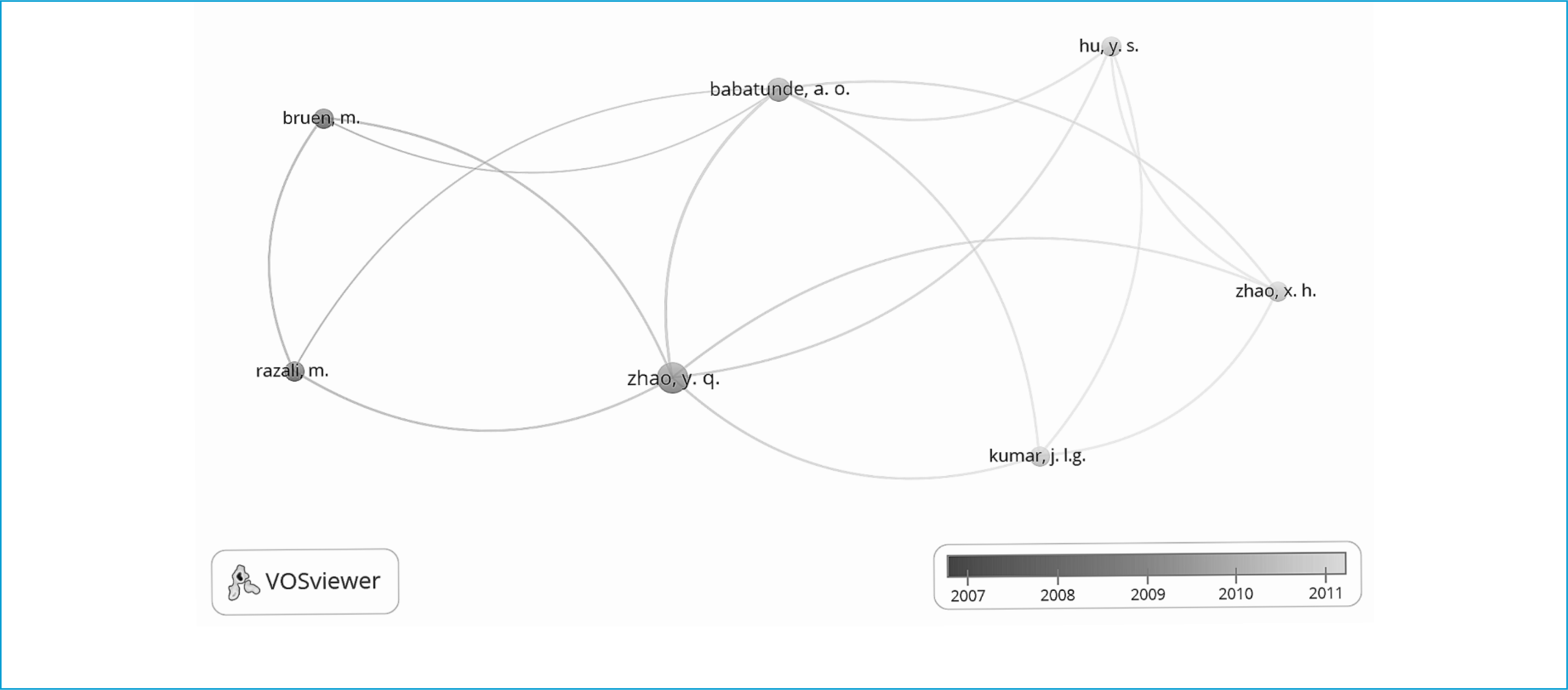
Scientometric analyses were conducted to contextualize the portfolio of articles obtained. The first analysis used the author density functionality of the VOSviewer software (version 1.6.20) to identify the leading researchers in the field of study and the keywords, as shown in Figures 1 and 2.

Additionally, Figures 3 to 6 were created using Microsoft Excel, providing a detailed view of the extracted data and assisting in the interpretation of the trends identified.

Geographical distribution of publications on water treatment sludge. The number of publications was described for countries with five or more publications in the portfolio.

Keyword and Author Analyses
Based on the data provided by the software, the author's analysis, illustrated in Figure 1, reveals that the research portfolio on WTS comprises a researcher network with varying levels of contribution and connectivity. Yaqian Zhao is the leading contributor, with five publications consistently advancing the field. Notably, the article "Effectiveness of a Drinking Water Treatment Sludge in Removing Different Phosphorus Species from Aqueous Solution," published in 2007 in the journal Separation and Purification Technology, has received 265 citations, indicating significant influence. An analysis of the portfolio's main keywords was also conducted, as illustrated in Figure 2.
The analyzed portfolio contains 590 distinct keywords, with "water treatment" appearing in 66 instances. Keyword analysis (Figure 2) highlights the prominence of terms such as "water treatment," "adsorption," "coagulation," "sludge," "sewage," "water treatment sludge," "reuse," and "recovery," pointing to the growing application of circular economy principles. These principles promote the reuse of sludge and the recovery of valuable components such as aluminum and phosphorus, as evidenced by the relevance of terms like "phosphorus removal." These keywords focus on purification solutions, waste treatment, and adsorption-based strategies.
The high frequency of "adsorption" and "sludge" underscores the increasing interest in adsorption techniques for repurposing WTS, aligning with current trends in sustainability and efficient waste management. The literature supports this focus, emphasizing adsorption as an effective solution for contaminant removal and maximizing waste utilization (Hua et al., 2018). These findings reinforce the strategic role of WTS in sustainable water resource management and the advancement of innovative practices for waste valorization.
In the analysis presented in the VOSviewer-generated graph, the clusters represent groups of terms or keywords that frequently co-occur in scientific articles on "water treatment sludge." These clusters help identify thematic areas or subtopics within the research field. For example, one cluster is predominantly associated with terms such as "adsorption," "heavy metals," and "dyes," which are commonly linked to the reuse of sludge as an adsorbent material in water and wastewater treatment processes. Another cluster groups keywords related to "coagulation," "aluminum recovery," and "phosphorus removal," indicating research focused on coagulant recovery and nutrient removal strategies.
In addition, clusters containing terms such as "cement," "construction materials," and "reuse" reflect studies exploring the incorporation of WTS into building materials to reduce waste disposal and promote material valorization. This diversity of themes highlights the strategic role of sludge in the context of the circular economy and the development of advanced water and wastewater treatment technologies. The organization of the clusters also reveals a temporal evolution in the field, suggesting an intensification of recent studies in areas such as recycling and environmental impact, as indicated by the color gradient.
The predominance of clusters related to adsorption processes and coagulant recovery indicates that research on WTS has reached a consolidation phase focused on material reuse and process optimization. This thematic concentration reflects the maturation of technical solutions that maximize resource recovery and support circular economy principles. Conversely, the limited thematic expansion in environmental risk assessment suggests that the field's evolution has been predominantly driven by engineering performance, while broader environmental implications remain secondary.
Countries and Productive Institutions
Figure 3 highlights the geographical distribution of research, emphasizing Asia, Oceania, and South America as the most productive regions. The leadership of China and India reflects significant investments in environmental treatment technologies driven by water and environmental challenges resulting from rapid urbanization and industrialization.
With 23 publications, Australia demonstrates the highest number of studies, indicating a strong commitment to sustainability and efficient water resource management. Brazil also stands out with 17 publications, showcasing interest in treatment technologies for sustainable waste reuse, aligned with national and international environmental goals.
This geographical analysis further reveals opportunities in regions where scientific output remains low despite facing equally critical water treatment and waste management challenges. This low scientific output signals the need for greater attention and investment in research in these areas.
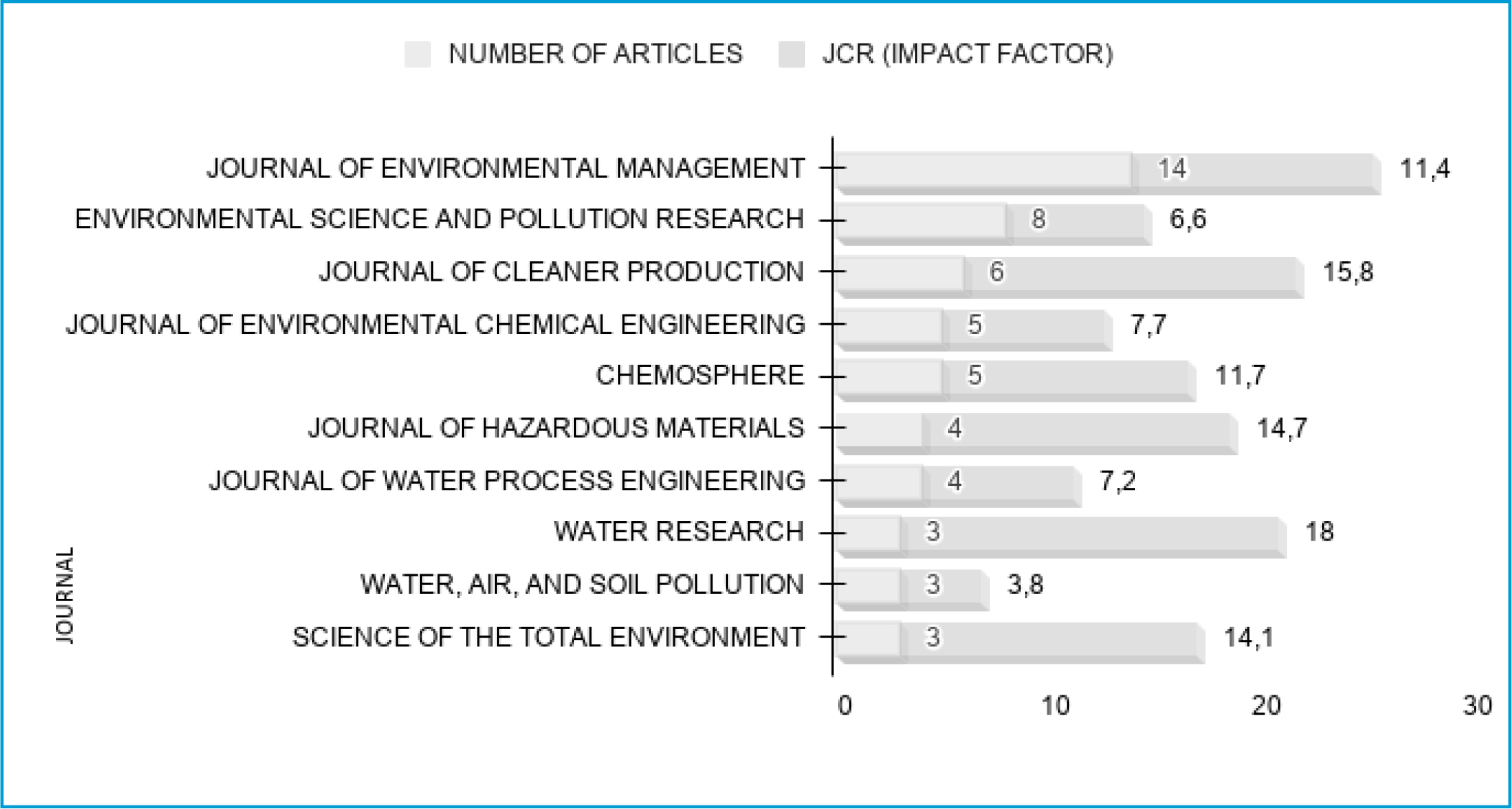
The analysis of article distribution across journals (Figure 4) reveals a significant concentration of publications in renowned journals such as the Journal of Environmental Management (14 articles, IF 11.4) and Environmental Science and Pollution Research (8 articles, IF 6.6). However, it also highlights that the number of published articles alone does not necessarily reflect academic relevance. Journals with fewer articles, such as Water Research (three articles, IF 18.0), may exert considerable scientific influence, while intermediate-level journals in terms of output, such as the Journal of Cleaner Production (six articles, IF 15.8) and the Journal of Hazardous Materials (four articles, IF 14.7), combine quantity with high quality. The impact factors (IF) reported were obtained from the Journal Citation Reports (JCR 2020).

Thus, evaluating a journal's importance should consider the volume of publications and the impact reflected in metrics such as the JCR. Furthermore, the presence of journals with diverse editorial profiles, including those focusing on sustainability, pollution control, process engineering, and resource management, underscores the complexity and interdisciplinary nature of the research field on WTS.
Scientific Production Over Time
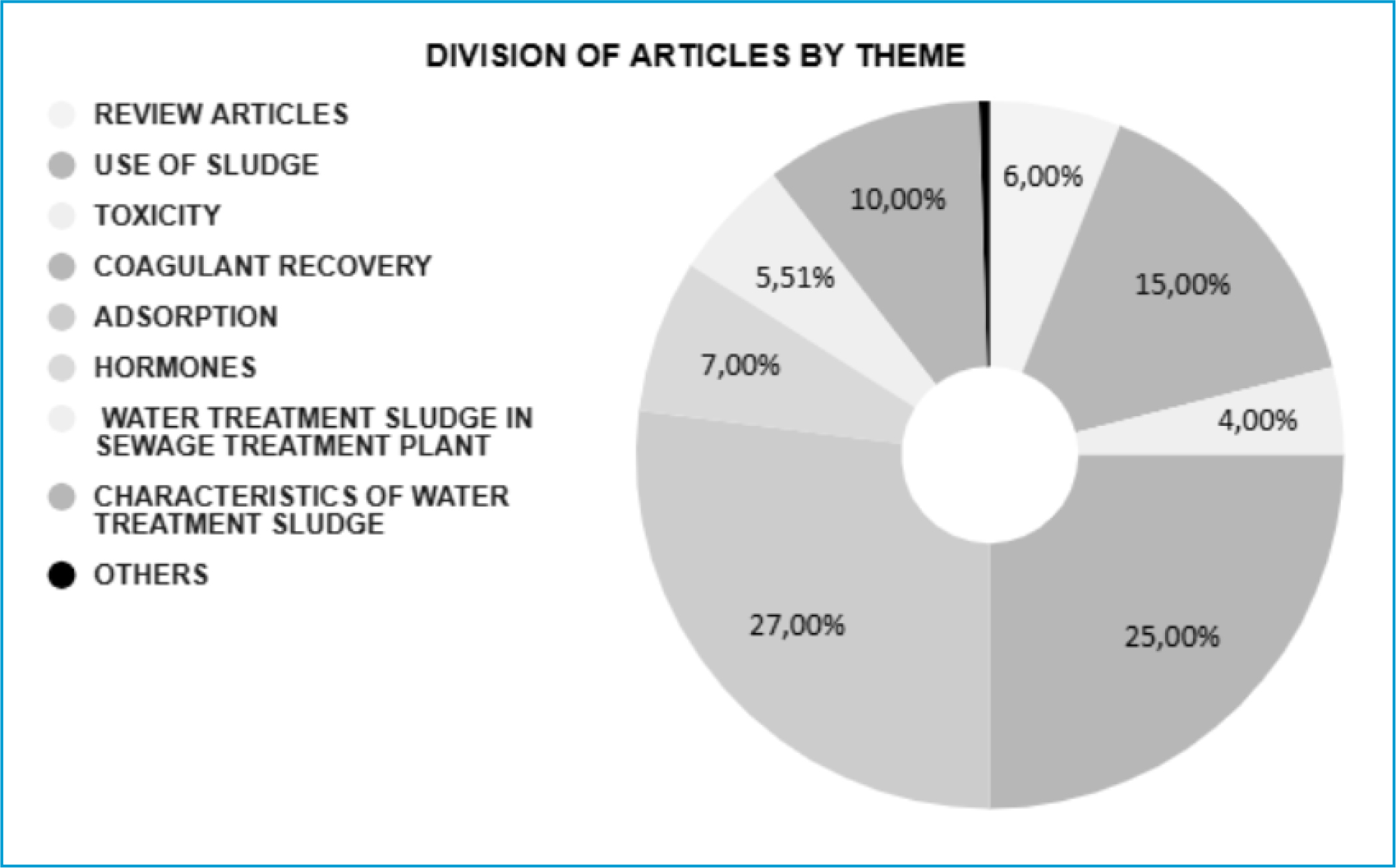
Figure 5 identifies well-explored and underexplored areas, facilitating the visualization of trends and gaps to be addressed in future research. Based on the analysis, "Adsorption" and "Coagulant Recovery" showed the highest percentages of publications, corresponding to 27 and 25%, respectively, highlighting their relevance in current scientific research.

Additionally, areas such as "Sludge Utilization" (15%) and "Characteristics of Water Treatment Sludge" (10%) demonstrated significant representativeness, highlighting a growing focus on the characterization and practical application of sludge in various contexts. In contrast, topics such as "Toxicity" (4%) and "Hormone Degradation" (7%) were less addressed, accounting for a smaller proportion of published studies.
The less-represented areas reveal significant gaps in the scientific literature, particularly regarding sludge toxicity and the impacts of emerging contaminants, such as hormones. Analyzing results reported in the limited studies available on toxicity can provide insights into its relevance in the environmental context and its implications for risk mitigation. This scenario underscores the need for integrated and multidisciplinary studies that can deepen the understanding of the adverse effects of these compounds and contribute to the development of innovative and sustainable approaches to sludge management.
Figure 6 shows a significant increase in articles related to the study's objective starting in the 2000s, with even more substantial growth after 2015. This pattern coincides with the strengthening of global environmental policies and the promotion of sustainability agendas, especially following the launch of the United Nations Sustainable Development Goals (SDGs) in 2015, notably SDG 6 (Clean Water and Sanitation) and SDG 14 (Life Below Water). The peaks observed in 2019, 2021, and 2022 suggest renewed interest, possibly driven by environmental crises and the search for waste management solutions.
This continuous growth reflects the recognition of WTS as an underutilized resource with significant potential, aligning with global trends in reuse and the circular economy, as Kada et al. (2024) noted. Although the subject of WTS reuse has advanced considerably, critical areas remain underexplored, such as the toxicity of sludge-derived materials in environmental and treatment systems. Studies by Souza et al. (2024) indicate that residual compounds in sludge may contain trace contaminants, including heavy metals, whose release can pose risks to aquatic biota and human health. Developing standardized protocols to evaluate toxicity is vital to ensure safe reuse in industrial and agricultural applications.
Handling hormones, such as 17β-estradiol, present in wastewater systems remains a significant technical challenge. Mousavi and Nayeri (2022) highlight that WTS possesses adsorptive properties that could be leveraged for removing these compounds. However, there is a lack of studies demonstrating the efficiency of this process on a large scale. The absence of investigations into the impact of these emerging contaminants hinders the implementation of sludge reuse technologies with greater environmental safety.
Table 3 highlights the most relevant studies on sustainable management and sludge reuse. The studies are classified according to the total number of citations and average annual citations. The most prominent study is the one by Ahmad et al. (2016), with 427 citations and an annual average of 53.37, underscoring its significance. This work addresses sustainable management according to the 3R concept (Reduce, Reuse, Recycle), a central theme for advancing sustainability. The study discusses the environmental, economic, and operational challenges associated with the generation and disposal of this waste, proposing strategies to minimize its production at the source, such as improvements in coagulation and flocculation processes (Reduce). Furthermore, it analyzes the potential for direct sludge reuse in pollutant removal or agricultural and industrial activities (Reuse). It explores ways to recycle it, transforming it into useful materials, such as inputs for cement, bricks, and other construction products (Recycle).
Other noteworthy studies, such as those by Chiang et al. (2009), Zhou and Haynes (2010), and Yu, Roh and Chu (2007), explore the use of sludge in brick manufacturing, heavy metal adsorption, or phosphorus removal.
These works investigate ways to reduce the environmental impact of sludge and add value to this waste with practical, innovative applications aimed at sustainability and sludge reuse, highlighting its versatility. The studies examine its application in construction materials, wastewater treatment, or environmental remediation, demonstrating its usefulness in circular economy processes. In addition, they underscore the integration of sludge with other residual materials, the use of bacteria isolated from sludge to degrade hormonal compounds, and the creation of integrated systems to improve effluent treatment.
These studies exhibit significant scientific and practical relevance, supporting the development of public policies, environmental regulations, and technological innovations in the sanitation sector. By integrating theoretical and practical knowledge, they foster advances in sustainable management strategies, contributing to efficient solutions aligned with contemporary challenges. Applying these findings can influence the formulation of more effective practices, promoting responsible use of resources and strengthening the sector's capacity to respond to environmental and social demands.
This review was limited to publications available in indexed databases, which may have excluded relevant studies not accessible on these platforms. Such a limitation can affect the scope of the results presented. Furthermore, the analysis did not assess the individual methodological quality of each study included, which may limit a detailed interpretation of the findings. Future reviews may consider broader and more integrative approaches. The identification of gaps in the areas of toxicity and hormone degradation is directly supported by the scientometric results, as these topics appear with low frequency among keywords and do not form dedicated thematic clusters. This absence suggests that, despite growing interest in reuse strategies, the potential environmental and health risks associated with WTS remain insufficiently addressed in the core literature. Therefore, the scientometric evidence indicates an imbalance between technological development and environmental risk assessment, underscoring the need for future studies that integrate reuse efficiency with analyses of toxicity and contaminant degradation.
CONCLUSIONS
This work presents a comprehensive scientometric analysis of WTS on a global scale, highlighting the growing relevance of the topic in the scientific field. The results reveal a consistent increase in publications over time, reflecting sustained interest in exploring innovative and sustainable solutions for managing this type of waste.
The analysis revealed a significant rise in research on the subject, particularly emphasizing contributions from Asia, Oceania, and South America. Co-authorship networks identified Yaqian Zhao as a central researcher. The Journal of Environmental Management and the Journal of Cleaner Production stood out as the most influential journals in the area. Scientific output grew sharply after 2015, reflecting heightened academic attention to waste reuse.
Finally, our study identified important gaps that underscore the need to expand investigations into the potential toxicity of WTS when used as a coagulant and its capacity to remove hormones in wastewater treatment systems, considering its specific properties.
DATA AVAILABILITY STATEMENT
The datasets generated and/or analyzed during the current study are available from the corresponding author upon reasonable request.
REFERENCES
-
AHMAD, Tarique; AHMAD, Kafeel; ALAM, Mehtab. Sustainable management of water treatment sludge through 3’R’ concept. Journal of Cleaner Production, v. 124, p. 1-13, 2016. https://doi.org/10.1016/j.jclepro.2016.02.073
» https://doi.org/10.1016/j.jclepro.2016.02.073 -
AHMAD, Tarique; AHMAD, Kafeel; ALAM, Mehtab. Sludge quantification at water treatment plant and its management scenario. Environmental Monitoring and Assessment, v. 189, n. 9, 453, 2017. https://doi.org/10.1007/s10661-017-6166-1
» https://doi.org/10.1007/s10661-017-6166-1 -
BERNEGOSSI, Ana Cristina; FREITAS, Bárbara Luísa Souza; CASTRO, Gleyson; MARQUES, Jéssica Pelinsom; TRINDADE, Liliane Folli; LIMA E SILVA, Mara Rúbia; FELIPE, Mayara; OGURA, Allan Pretti. A systematic review of the toxicity of water treatment sludge for terrestrial and aquatic biota: state of the art and management challenges. Journal of Environmental Science and Health, v. 57, n. 4, p. 282-297, 2022. https://doi.org/10.1080/10934529.2022.2060021
» https://doi.org/10.1080/10934529.2022.2060021 -
BOUGRINE, Omar; EL FELLAH, Imad; KADA, Ismail; RABIE, Fath Allah; AMMARI, Mohammed; FAKIH LANJRI, Asmaa; BEN ALLAL, Laila. Advancing circular economy: A study of drinking water sludge for potential uses. Results in Engineering, v. 23, 102426, 2024. https://doi.org/10.1016/j.rineng.2024.102426
» https://doi.org/10.1016/j.rineng.2024.102426 -
CHIANG, Kung-Yuh; CHOU, Ping-Huai; HUA, Ching-Rou; CHIEN, Kuang-Li; CHEESEMAN, Chris. Lightweight bricks manufactured from water treatment sludge and rice husks. Journal of Hazardous Materials, v. 171, n. 1-3, p. 76-82, 2009. https://doi.org/10.1016/j.jhazmat.2009.05.144
» https://doi.org/10.1016/j.jhazmat.2009.05.144 -
DE CARVALHO GOMES, Samuel; ZHOU, John; LONG, Guangcheng; LI, Wengui. Progress in manufacture and properties of construction materials incorporating water treatment sludge: A review. Resources, Conservation and Recycling, v. 145, p. 148-159, 2019. https://doi.org/10.1016/j.resconrec.2019.02.032
» https://doi.org/10.1016/j.resconrec.2019.02.032 -
ELLIOTT, Herschel; DEMPSEY, Brian; MAILLE, Peter. Content and fractionation of heavy metals in water treatment sludge. Journal of Environmental Quality, v. 19, n. 2, p. 330-334, 1990. https://doi.org/10.2134/jeq1990.00472425001900020020x
» https://doi.org/10.2134/jeq1990.00472425001900020020x -
HE, Zhi-Hai; WANG, Bin; SHI, Jin-Yan; RONG, Hui; TAO, Hong-Yu; JAMAL, Ahmed Salah; HAN, Xu-dong. Recycling drinking water treatment sludge in construction and building materials: A review. Science of the Total Environment, v. 926, 171513, 2024. https://doi.org/10.1016/j.scitotenv.2024.171513
» https://doi.org/10.1016/j.scitotenv.2024.171513 -
HUA, Tao; HAYNES, Richard; ZHOU, Ya-Feng. Competitive adsorption and desorption of arsenate, vanadate, and molybdate onto the low-cost adsorbent materials alum water treatment sludge and bauxite. Environmental Science and Pollution Research, v. 25, p. 34053-34062, 2018. https://doi.org/10.1007/s11356-018-3301-7
» https://doi.org/10.1007/s11356-018-3301-7 -
KADA, Ismail; EL FELLAH, Imad; RABIE, Fath Allah; AMMARI, Mohammed; BOUGRINE, Omar; LANJRI, Asmaa Fakih; ALLAL, Laila Ben. Advancing circular economy: A study of drinking water sludge for potential uses. Results in Engineering, v. 23, 102426, 2024. https://doi.org/10.1016/j.rineng.2024.102426
» https://doi.org/10.1016/j.rineng.2024.102426 -
MENG, Xiaoguang; KORFIATIS, George; JING, Chuanyong; CHRISTODOULATOS, Christos. Redox transformations of arsenic and iron in water treatment sludge during aging and TCLP extraction. Environmental Science & Technology, v. 35, n. 17, p. 3476-3481, 2001. https://doi.org/10.1021/es010645e
» https://doi.org/10.1021/es010645e -
MOUSAVI, Seyyed Alireza; NAYERI, Danial. A comprehensive review on recovery and reuse of coagulants from drinking water treatment sludge. Journal of Environmental Management, v. 319, 115649, 2022. https://doi.org/10.1016/j.jenvman.2022.115649
» https://doi.org/10.1016/j.jenvman.2022.115649 -
NAIR, Abhilash T.; AHAMMED, M. Mansoor. The reuse of water treatment sludge as a coagulant for post-treatment of UASB reactor treating urban wastewater. Journal of Cleaner Production, v. 96, p. 272-281, 2015. https://doi.org/10.1016/j.jclepro.2013.12.037
» https://doi.org/10.1016/j.jclepro.2013.12.037 -
NGUYEN, Mihn Duc; THOMAS, Michael; SURAPANENI, Aravind; MOON, Ellen; MILNE, Nicholas. Beneficial reuse of water treatment sludge in the context of Environmental Technology & Innovation: Circular Economy. Environmental Technology & Innovation, v. 28, 102651, 2022. https://doi.org/10.1016/j.eti.2022.102651
» https://doi.org/10.1016/j.eti.2022.102651 -
PAGANI, Regina Negri; PEDROSO, Bruno; SANTOS, Celso Bilynkievycz dos; PICININ, Claudia Tania; KOVALESKI, João Luiz. Methodi Ordinatio 2.0: revisited under statistical estimation, and presenting Finder and Rankin. Quality & Quantity, v. 57, n. 5, p. 4563-4602, 2022. https://doi.org/10.1007/s11135-022-01562-y
» https://doi.org/10.1007/s11135-022-01562-y -
RAZALI, Melanie; ZHAO, Yaqian; BRUEN, Michael. Effectiveness of a drinking-water treatment sludge in removing different phosphorus species from aqueous solution. Separation and Purification Technology, v. 55, n. 3, p. 300-306, 2007. https://doi.org/10.1016/j.seppur.2006.12.004
» https://doi.org/10.1016/j.seppur.2006.12.004 -
REIS, Joice Batista; LEVANDOSKI, William Mateus Kubiaki; KROGEL, Mariana; FERRAZZO, Suéllen Tonatto; PASQUALI, Gean Delise; KORF, Eduardo Pavan. Technological characterization and environmentally friendly possibilities for the reuse of water treatment sludge in construction materials. Journal of Environmental Science and Health, Part A, v. 59, n. 5, p. 241-250, 2024. https://doi.org/10.1080/10934529.2024.2367353
» https://doi.org/10.1080/10934529.2024.2367353 -
REN, Bozhi; YUAN, Qian; ZHU, Guocheng; ZHANG, Peng; HURSTHOUSE, Andrew; BIAN, Yongning. Recycling of residual sludges: Preparation and application of sludge-based activated carbon. International Journal of Polymer Science, v. 2018, n. 1, 8320609, 2018. https://doi.org/10.1155/2018/8320609
» https://doi.org/10.1155/2018/8320609 -
SHARMA, Shubhani; AHAMMED, M. Mansoor. Application of modified water treatment residues in water and wastewater treatment: A review. Heliyon, v. 9, n. 5, e15796, 2023. https://doi.org/10.1016/j.heliyon.2023.e15796
» https://doi.org/10.1016/j.heliyon.2023.e15796 -
SHENG, Lianxi; YUNQING, Liu; XU, Jianling; WANG, Hanxi. Preparation of ceramsite from municipal sludge and its application in water treatment: A review. Journal of Environmental Management, v. 287, 112374, 2021. https://doi.org/10.1016/j.jenvman.2021.112374
» https://doi.org/10.1016/j.jenvman.2021.112374 -
SOUZA, Ana Cristina Zullo de; SANTOS, Jossana Endyara dos; MARIN-MORALES, Maria Aparecida; MAZZEO, Dânia Elisa Christofoletti. Ecotoxicological aspects and environmental implications of the use of water and sewage treatment sludge. International Journal of Environmental Science and Technology, v. 21, n. 7, p. 3527-3552, 2024. https://doi.org/10.1007/s13762-023-05338-1
» https://doi.org/10.1007/s13762-023-05338-1 -
YILDIZ, Sayiter; SEVINÇ, Selahattin. Heavy Metal Adsorption by Dewatered Iron-Containing Waste Sludge. Ecological Chemistry and Engineering S, v. 25, n. 3, p. 431-456, 2018. https://doi.org/10.1515/eces-2018-0030
» https://doi.org/10.1515/eces-2018-0030 -
YU, Chang-Ping; ROH, Hyungkeun; CHU, Kung-Hui. 17β-estradiol-degrading bacteria isolated from activated sludge. Environmental Science and Technology, v. 41, n. 2, p. 486-492, 2007. https://doi.org/10.1021/es060923f
» https://doi.org/10.1021/es060923f -
YUAN, Haiping; ZHU, Nanwen. Progress in enhancing dewaterability of waste activated sludge: Influencing factors, conditioning technologies, implications and perspectives. Science of the Total Environment, v. 912, 168605, 2023. https://doi.org/10.1016/j.scitotenv.2023.168605
» https://doi.org/10.1016/j.scitotenv.2023.168605 -
ZAINOL, Noor Ainee; RASHID, Najihah Abdul; MAKHTAR, Salwa Mohd Zaini; KHALILULLAH, Putri Al Balqis; GHANI, Azlinda Abdul. Turbidity removal from synthetic kaolin wastewater using water treatment sludge as a coagulant. International Journal of Integrated Engineering, v. 14, n. 9, p. 222-231, 2022. https://doi.org/10.30880/ijie.2022.14.09.028
» https://doi.org/10.30880/ijie.2022.14.09.028 -
ZHAO, Yaqian; BABATUNDE, Adekola Olumide; HU, Yuh-Shan; KUMAR, Jitendra Lal Gupta; ZHAO, Xiaohong. Pilot field-scale demonstration of a novel alum sludge-based constructed wetland system for enhanced wastewater treatment. Process Biochemistry, v. 46, n. 1, p. 278-283, 2011. https://doi.org/10.1016/j.procbio.2010.08.023
» https://doi.org/10.1016/j.procbio.2010.08.023 -
ZHOU, Ya-Feng; HAYNES, Richard. Sorption of Heavy Metals by Inorganic and Organic Components of Solid Wastes: Significance to Use of Wastes as Low-Cost Adsorbents and Immobilizing Agents. Critical Reviews in Environmental Science and Technology, v. 40, n. 11, p. 909-977, 2010. https://doi.org/10.1080/10643380802586857
» https://doi.org/10.1080/10643380802586857
Edited by
-
Editor:
Maurício Alves da Motta Sobrinho, Universidade Federal de Pernambuco, Recife, Pernambuco/PE, Brasil. https://orcid.org/0000-0003-2638-9096

 Source: Generated by the authors using VOSviewer (v. 1.6.20) based on portfolio data.
 Source: Generated by the authors using VOSviewer (v. 1.6.20) based on portfolio data.
 Source: Generated by the authors using VOSviewer (v. 1.6.20) based on portfolio data.
 Source: From authors (2025).
 Source: From authors (2025).
 Source: From authors (2025).