 Self-guided interventions for Social Anxiety Disorder: a systematic review
Abstract
Objective Despite the availability of effective treatments for social anxiety disorder, help-seeking is restricted. Internet-based treatments reduce access barriers. The main purpose of this literature review is to identify and describe self- and minimally guided online interventions for the treatment of Social Anxiety Disorder.
Method A search with the descriptors "social phobia"; "social anxiety"; "treatment"; "intervention"; "self-help"; "therapy"; "internet"; "online"; "web"; and "e-health" in the Dialnet, PsycINFO, Redalyc, SciELO, and Web of Science databases was carried out, without time delimitation.
Results A total of 1.359 articles were found and 30 were analyzed. Ten online interventions were identified and described. The publications were predominantly from 2009 onwards.
Conclusion Overall, the studies point to a significant improvement in social anxiety disorder symptomatology and maintenance of gains in follow-up studies. No study was found in the Brazilian context.
Keywords:
Cognitive behavioral therapy; Internet-based intervention; Social phobia
Resumo
Objetivo Apesar de existirem tratamentos eficazes para o transtorno de ansiedade social, a busca por ajuda é restrita. Tratamentos pela internet diminuem as barreiras de acesso. A presente revisão da literatura tem como objetivo principal identificar e descrever as intervenções online auto e minimamente guiadas para o tratamento do Transtorno de Ansiedade Social.
Método Realizou-se uma busca com os descritores “social phobia”; “social anxiety”; “treatment”; “intervention”; “self-help”; “therapy”; “internet”; “online”; “web”; e “e-health” nas bases de dados Dialnet, PsycINFO, Redalyc, SciELO e Web of Science, sem delimitação de tempo.
Resultados Foram encontrados 1359 artigos e 30 deles foram analisados. Dez intervenções online foram identificadas e descritas. As publicações foram predominantemente a partir do ano de 2009.
Conclusão No geral, os estudos apontam para uma melhora significativa na sintomatologia do Transtorno de Ansiedade Social e manutenção dos ganhos em estudos de follow-up. Nenhum estudo foi encontrado no contexto brasileiro.
Palavras-chave:
Terapia cognitivo-comportamental; Intervenção baseada em internet; Fobia social
Social Anxiety Disorder (SAD) is defined by an excessive fear of social or performance situations in which the individual may be scrutinized, judged, embarrassed, or humiliated by others (Bieling et al., 2008). Clark and Beck (2012) state that individuals with SAD have one of the lowest levels for seeking treatment when compared among those diagnosed with different anxiety disorders. Such a statement can be explained through the characteristics of SAD itself, as social anxious people fear judgment and avoid social interaction (Dryman et al., 2017). Few individuals receive adequate care for SAD. In this case, the absence of therapeutic actions is due to the deficiency of knowledge among health professionals, lack of qualified therapists, and the resistance of patients in sharing personal information. Access barriers to the last two items can be relatively solved with the application of online interventions as a form of treatment (Stott et al., 2013). The introduction of internet-based interventions makes it possible to offer more psychological treatments, eliminating the geographical distance and possible financial costs of other types of interventions (Gershkovich et al., 2016).
The present work investigates the use of self- and minimally guided web-based programs, which typically consist of modules followed independently by individuals. Information is presented through websites and is based on psychoeducational materials, videos, behavioral activities, questionnaires, monitoring tasks, and diaries (Yuen et al., 2012).
Andersson et al. (2006) were the first to test the effectiveness of online interventions for SAD. Boettcher et al. (2013), in a review, found the existence of four online interventions designed for social anxiety: one developed in Sweden ("SOFIE"; Andersson et al., 2006); one in Australia ("Shyness"; Titov et al., 2008 a ); one in Spain ("Talk to Me"; Botella et al., 2010), and finally, an untitled intervention in Switzerland (Berger et al., 2009). The primary aim of the present literature review was to identify and describe self- and minimally guided online interventions. Secondary objectives were to present some evidence of effectiveness for the interventions and to provide information regarding bibliometric indicators such as year and country of publication and employed methodological designs.
Method
The study utilized a systematic literature review as the search method. For the selection of articles, five databases were used: Web of Science, Redalyc, PsycINFO, Dialnet, and SciELO. For the search, the Boolean operators AND and OR were used in the following combination: ("social phobia" OR "social anxiety") AND ("treatment" OR "intervention" OR "self-help" OR "therapy") AND ("internet" OR "online" OR "web" OR "e-health"). The search was also conducted in Portuguese and Spanish. The English descriptors were used in all the selected databases, while the Portuguese and Spanish terms were restricted to SciELO, Dialnet, and Redalyc. The terms "internet", "online", "web", and "e-health" did not change when employing different languages. There were no restrictions as to the location of the descriptors within the article, and no time limitations were applied. The search was done during the month of July 2020.
The inclusion criteria for selecting the studies were: a) scientific articles derived from empirical studies; b) studies aimed at online and self-guided interventions that were exclusive to SAD; c) articles aimed at assessing the effectiveness of the intervention through Cognitive Behavioral Therapy (CBT); d) studies available in full in English, Portuguese, or Spanish; e) articles in which the sample was composed of individuals aged 18 years or older; f) articles that did not restrict the intervention among participants who had performance or social interaction anxiety. As exclusion criteria: a) papers that did not cover the topic under study; b) any publication that was not categorized as a scientific article; c) publications aimed at comparing self-guided online interventions with other modalities of care; and d) research protocols. The search was conducted by three researchers, who read all the titles and, when necessary, the abstracts.
Results
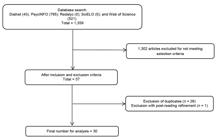
A total of 1359 references were found among the databases: Dialnet (43), PsycINFO (795); Redalyc (0); SciELO (0); and Web of Science (521). After reading the titles and/or abstracts, 1302 articles were excluded for not fitting the selection criteria. Of the 57 remaining articles, 26 were excluded as duplicates between PsycINFO and Web of Science, resulting in 31 articles. The full papers were read, and one was excluded as it restricted the sample to social anxious people with performance anxiety. Finally, 30 articles were selected. Each researcher was responsible for evaluating 10 articles. It is worth mentioning that the selected articles were evaluated by all researchers, who had to reach consensus on their inclusion. Then, the data were tabulated in Excel spreadsheets according to criteria determined as primary and secondary study objectives. The selection methodology can be seen in Figure 1.
With respect to the number of articles, it is possible to observe that the year 2009 was the period with the largest number of publications. In analysis, it is possible to see the following indexation by year: 2006 (1), 2007 (1), 2008 (3), 2009 (5), 2010 (1), 2011 (2), 2012 (1), 2014 (1), 2015 (3), 2016 (2), 2017 (2), 2018 (4), 2019 (2), 2020 (2).
For categorizing the countries, it was considered the institutional location of the first author of each study. When analyzing the frequency of production by countries, Australia had the largest number of published articles, with eight productions. This is followed by Sweden (5); Switzerland and Germany (4); United States (3); Canada and England (2); and China, Norway, and Romania (1).
Regarding the research modality, they were categorized as clinical trials, with 24 randomized and six non-randomized studies. Despite the 30 articles selected, only ten intervention protocols were described among them. In the next section, each one will be detailed with respective references.
Self- or Minimally-Guided Online Interventions for Social Anxiety Disorder
Ten online interventions were found, as presented in Table 1. For each of them, some of the studies that demonstrated their effects are presented in a non-systematic way.
The first online intervention is E-couch. The program is free and is divided into six modules, which contain the following techniques: psychoeducation about SAD symptoms; information about available and effective treatments for SAD; exposure to feared situations; cognitive restructuring; attention training; social skills training; and relaxation. In a clinical trial, Powell et al. (2020) evaluated the effectiveness of intervention for reducing social anxiety symptoms in the general population. The study consists of a randomized clinical trial, with the sample divided between a treatment group and a control group. During treatment, the authors noted a reduction in SAD symptoms compared to the control group. The effect size presented was small, assuming a value of d = 0.2.
The second intervention, iSOFIE, has nine treatment modules. Module 1 describes how the program works and provides psychoeducation on SAD. Module 2 highlights the treatment of automatic thoughts and Clark and Wells' (1995) cognitive model. In module 3, thoughts are questioned through examination of evidence and the participant learns about cognitive distortions. In module 4, behavioral experiments are presented to confront the negative thoughts. In module 5, the participant learns about exposure and is instructed to create a hierarchy of feared situations. In module 6, strategies for reducing self-focused attention are learned, and the participant is instructed on the role of safety behaviors in SAD. In Module 7, the participant is encouraged to resolve possible difficulties during exposure. In module 8, techniques in social skills are taught. Finally, module 9, is devoted to relapse prevention and the maintenance of the gains achieved. Tulbure et al. (2015) conducted a randomized clinical trial, divided between the experimental group and the wait-list control group. After the intervention, a significant and favorable difference was found towards the experimental group. The measures for effect size were large for both assessments in social anxiety, being d = 1.19 for the Liebowitz scale and d = 1.27 for the Social Phobia Inventory (SPIN).
The third intervention is Joyable. The program consists of five modules, namely: 1) "learning" - psychoeducation tasks, development of fear hierarchies, and identification of treatment goals; 2) "basic skills" - tasks regarding the identification of automatic thinking and cognitive distortions, cognitive restructuring practices, and introduction to exposure; 3) and 4) "practice" and "goals" are two modules with exposure to feared situations and psychoeducation about the core belief concept; and 5) "maintenance of gains" - teachings on how to maintain the gains after completing the program. Dryman et al. (2017) evaluated the use, adherence, and effectiveness of the Joyable online intervention. The SPIN was used for measuring primary outcome and results were significant for participants who engaged in treatment. Effect sizes were medium, for measures occurring at the beginning of treatment up to the cognitive restructuring module (d = 0.63-0.76), and large between the initial measures and the exposure module (d = 1.40-1.83).
The fourth intervention is named Overcome Social Anxiety. The program consists of seven modules. Before starting the treatment, the participant is presented with a pre-intervention questionnaire. In this questionnaire it is possible to assess the symptomatology of each participant and to direct the treatment according to individual needs. In module 1, the participant is introduced to his or her therapist. In this stage, he or she becomes familiar with the system, learns about cognitive distortions and the relationship between thinking, feeling, and behaving. In module 2, the user is challenged to write down alternative thoughts to the distorted thoughts. Module 3 is aimed at creating your own cognitive model. In module 4, behavioral experiments based on avoidance and safety behaviors are created. Module 5 focuses on anger management. In module 6, the participant is taught how to reduce self-centered attention and modify distorted images. In module 7, the participant is introduced to all the skills already developed in the program. A psychoeducation on depression is also presented, as it is a frequent comorbidity with SAD. McCall et al. (2018) evaluated the effectiveness of the Overcome Social Anxiety intervention for reducing symptoms in SAD in college students. Participants were randomly divided between a treatment group and a wait-list control group. The treatment group achieved a significant reduction for SAD symptoms, with an effect size of d = 0.72 for the intervention group and d=0.26 for the control group on the Social Interaction Anxiety Scale (SIAS).
The fifth online intervention was constructed by Gershkovich et al. (2016). The program contains eight audio-narrated modules, lasting approximately 30 minutes each. Also included were reading materials, exercises, videos, and homework assignments. The treatment consists of tasks based on Acceptance and Commitment Therapy and behavioral exercises, with exposure to feared situations and social skills training. Gershkovich et al. (2017) conducted a randomized clinical trial using the online intervention described above. The study was divided between a group that received the intervention, plus therapist support, and a group that performed the intervention without support. Both groups achieved a significant reduction in symptoms for SAD, with no significant differences between them. Effect sizes were large for measures taken between pre- and post-test on assessments for SAD. The group receiving therapist support showed effect sizes of d = 1.18 for the Social Phobia and Anxiety Inventory scale, d = 0.86 for the Liebowitz scale, and d = 1.06 for the SIAS. The unsupported group presented the following effect sizes for the same instruments, following the above predetermined order: d = 0.96, d = 0.67, and d = 0.99. It is concluded that the reduction of symptomatology for SAD occurred in both groups, with no significant difference between them.
The sixth online intervention is a self-guided program consisting of eight DVDs with video sessions (Mall et al., 2011). The studies were based on Clark and Wells (1995), but it was not specified whether the program relies on the same principles as the clinical protocol for social anxiety by Stangier et al. (2003). Mall et al. (2011) conducted a study on the effectiveness of the study. The intervention was divided between the intervention group and the wait-list control group. During analysis, large effect sizes were found for the intervention group (d = 1.05). Participants in the intervention group showed improvement as verified on the scales, different from what was observed in the control group.
The seventh online intervention, presented by Butler et al. (2015), based on Mobini et al. (2014), is divided into three sessions, which are based on: psychoeducation about CBT and SAD, the cognitive model of SAD, thoughts and beliefs that maintain SAD, and cognitive and behavioral strategies. Butler et al. (2015) conducted a randomized clinical trial of the online intervention described above. The study was divided into an intervention group (positive cognitive bias modification + computerized cognitive behavioral therapy) and a control group (neutral cognitive bias modification + computerized cognitive behavioral therapy). Both study conditions accounted for improvement in symptoms for SAD; however, effect sizes were large in the intervention group, being d = 1.14 for the SPIN with measures taken between pre-test and two-week follow-up.
The eighth intervention was designed for online application by Berger et al. (2009) and has eight modules. It is based on Clark and Wells' (1995) cognitive model and can be identified in the literature as Stangier et al.'s (2003) clinical protocol. In the first module, participants are encouraged to reflect on the reasons that compel them to initiate change, their treatment goals, and records of anxiety-triggering situations. In the second module, the participant is introduced to the concept of SAD and the disorder's maintenance process. In this same module, an individualized model is advised, which explains about the cognitive functioning of SAD. The third module consists of thought records. The fourth module consists of techniques that aim to reduce self-centered attention. The fifth module is based on planning and applying exposures to situations that the individual fears. The sixth module provides a synthesis of the themes already discussed and warns about the importance of repeating the techniques already taught. The seventh module addresses the importance of healthy practices, such as physical exercise and nutrition, and instructs on the problem-solving technique. The eighth module summarizes the strategies necessary for maintaining the gains made from treatment and for preventing possible relapse. Stolz et al. (2018) evaluated the effectiveness of the online intervention developed by Berger et al. (2009) through a randomized clinical trial. The study had three groups, two intervention and one Control Group (CG). The aim was to evaluate whether the effectiveness of an intervention, delivered via a Personal Computer (PC), was maintained when delivered via a mobile device application (App). Both groups showed promising results in reducing symptoms for SAD compared to the wait-list group, with medium to large effect sizes on assessment measures for social anxiety (PC vs. CG: d = 0.74; App vs. CG: d = 0.89). Gains were maintained at a three-month follow-up.
The ninth intervention was presented by Andersson et al. (2006). In a systematic review, Boettcher et al. (2013) named the same intervention as "SOFIE". In the present review, we chose to describe the intervention in a new category since there was a lack of clarity about the equity between the two treatment protocols. The program consists of 186 pages, which were divided into nine modules. In the first module, the participant receives information about SAD. The second module expounds on Clark and Wells' (1995) model, as well as the relationship between thinking, feeling, and behavior. The third module presents a psychoeducation about cognitive distortions, recording automatic thoughts, and suggestions on how to cope with them. The fourth module presents the exposure technique as well as a list of goals to be achieved with the intervention. The fifth module describes concepts regarding exposure and reality testing, while the sixth presents information about self-focused attention, attention training, and safety behaviors. Module number seven follows up on the exposure module. The eighth module revolves around social skills training. The last module covers topics such as perfectionism, procrastination, self-confidence, and relapse prevention. Andersson et al. (2006) applied this nine-week online intervention plus two group exposure sessions. A total of 64 participants were randomized to either the treatment group or the control group. By comparing the pre- and post-test it was found that participants allocated to the treatment group showed significant improvements in most measures assessed, such as social anxiety, general anxiety levels, depression, and quality of life. The effect size between groups was d = 0.70 and the gains were maintained after one year of follow-up.
The tenth intervention is named Shyness. It consists of six lessons, summaries, tasks, additional materials, automatic emails and text messages every two weeks, and comments from prior participants. Lessons one and two provide psychoeducation about the symptoms and treatment of SAD. Lesson 3 teaches about prioritizing fears and coping with feared situations. Lessons 4 and 5 maintain teachings on exposure and include tasks regarding cognitive restructuring. Task 6 deals with relapse prevention. Titov et al. (2010) evaluated the Shyness online intervention. A total of 113 participants were randomly allocated to two study conditions, namely: self-guided online intervention based on CBT or the same intervention plus motivational strategies. Effect sizes were large for the measures in social anxiety, based on the SIAS and Social Phobia Scale (SPS). The effect sizes in the self-guided intervention group were d = 1.16 for the SIAS and d = 1.04 for the SPS. The self-guided intervention plus motivational strategies, on the other hand, had effect sizes of d = 1.15 for the SIAS and d = 0.97 for the SPS.
Discussion and Final Considerations
The present review identified an increase in studies regarding self-guided online interventions for SAD compared to the review by Boettcher et al. (2013). An increasing number of individuals have been benefiting from this approach, which expands access to evidence-based interventions for those who suffer from social anxiety. The results indicate a predominance of publications from the year 2009 onwards, with Australia being the country with the highest number of publications.
As for the outcome of the studies, a variation in effects is perceived when considering only symptomatology in SAD. The effect sizes ranged from d = 0.2 (small) to d = 1.87 (large). Although the selection of studies for efficacy analysis was not done systematically, overall, the results indicated a symptomatic reduction in the measures for social anxiety. This result can even be observed in studies that assessed the combination of the online intervention with other strategies such as attention training technique (Boettcher et al., 2014; Butler et al., 2015) and motivational enhancement therapy (Titov et al., 2010). Improvement in symptomatology was also achieved regardless of contact with the therapist (e.g., Berger et al., 2011; Gershkovich, et al., 2017; Titov et al., 2009b). The significant results, as well as the maintenance of gains on follow-up measures, suggest that online interventions are a good treatment alternative for patients with SAD.
Despite conducting a broad and open-ended systematic search, it is necessary to analyze the results considering the scope of the review. The list of interventions presented herein should not be regarded as exhaustive. Specifically, references within the bibliography were not examined, nor were experts in the field consulted for additional studies that could have been included in the sample. Importantly, the review was limited to self-guided interventions based on scientific evidence. Future reviews could further explore the subject by considering the treatment for children and adolescents; including participants who experience exclusively performance or social interaction anxiety; focusing on cross-diagnostic studies; and by comparing different treatment modalities with the self-guided online intervention.
Although the content and techniques remained similar throughout the online interventions (based on CBT models), they varied in their methods of delivery (e.g., DVDs, mobile apps, and PC programs). The lack of standardization and naming of the protocols makes it difficult to directly compare the results. As an example, one can compare two protocols identified in the present review, one being the clinical protocol cited by Andersson et al. (2006) and iSOFIE. It is likely that the two are the same protocol, but it was decided to separate them into two categories as there is no evidence for such a statement. A future line of research to address this issue and improve program effectiveness could explore how much each treatment component (e.g., psychoeducation, cognitive restructuring, attention training, exposure) and each intervention format (therapist guide, initial interview, number of sessions) contributes to study outcome. One research method that has been used for this purpose is that of the factorial clinical trial (Collins et al. 2014). This method has been applied to other behavioral problems (e.g., for smoking, Schlam et al. 2016; and depression, Watkins et al., 2016) and a study is currently underway for SAD (Lopes et al. 2021). Web-based self-guided programs are especially well suited for this methodological design, as it makes it possible to control which strategies and components are offered to each participant.
The absence of national studies is in line with the observation of Pieta and Gomes (2014), who state that research on psychological interventions via the Internet is at an early stage in Brazil. This review presents the scientific community with a gap in empirical research on the online treatment of patients with SAD symptoms in Brazil, and warrants researchers to develop or culturally adapt self-guided online programs for the treatment of social anxiety in the Brazilian reality.
References
-
Andersson, G., Carlbring, P., & Furmark, T. (2012). Therapist experience and knowledge acquisition in internet-delivered CBT for social anxiety disorder: a randomized controlled trial. PLos One, 7(5). https://doi.org/10.1371/journal.pone.0037411
» https://doi.org/10.1371/journal.pone.0037411 -
Andersson, G., Carlbring, P., Holmström, A., Sparthan, E., Furmark, T., Nilsson-Ihrfelt, E., Buhrman, M., & Ekselius, L. (2006). Internet-Based Self-Help with Therapist Feedback and In Vivo Group Exposure for Social Phobia: A Randomized Controlled Trial. Journal of Consulting and Clinical Psychology, 74(4), 677-686. https://doi.org/10.1037/0022-006X.74.4.677
» https://doi.org/10.1037/0022-006X.74.4.677 -
Aydos, L., Titov, N., & Andrews, G. (2009). Shyness 5: the clinical effectiveness of Internet-based clinician-assisted treatment of social phobia. Australasian Psychiatry, 17(6), 488-492. https://doi.org/10.1080/10398560903284943
» https://doi.org/10.1080/10398560903284943 -
Berger, T., Caspar, F., Richardson, R., Kneubühler, B., Sutter, D., & Andersson, G. (2011). Internet-based treatment of social phobia: a randomized controlled trial comparing unguided with two types of guided self-help. Behaviour Research and Therapy, 49(3), 158-169. https://doi.org/10.1016/j.brat.2010.12.007
» https://doi.org/10.1016/j.brat.2010.12.007 -
Berger, T., Hohl, E., & Caspar, F. (2009). Internet-based treatment for social phobia: a randomized controlled trial. Journal of Clinical Psychology, 65(10), 1021-1035. https://doi.org/10.1002/jclp.20603
» https://doi.org/10.1002/jclp.20603 - Bieling, P. J., McCabe, R. E., Antony, M. M., & cols. (2008). Terapia Cognitivo-Comportamental em Grupos (I. H., Oliveira, Trad.). Artmed. (Obra original publicada em 2006).
-
Boettcher, J., Carlbring, P., Renneberg, B., & Berger, T. (2013). Internet-Based Interventions for Social Anxiety Disorder - an Overview. Verhaltenstherapie, 23, 160-168. https://doi.org/10.1159/000354747
» https://doi.org/10.1159/000354747 -
Boettcher, J., Hasselrot, J., Sund, E., Andersson, G., & Carlbring, P. (2014). Combining Attention Training with Internet-Based Cognitive-Behavioural Self-Help for Social Anxiety: A Randomised Controlled Trial. Cognitive Behaviour Therapy, 43(1), 34-48. https://doi.org/10.1080/16506073.2013.809141
» https://doi.org/10.1080/16506073.2013.809141 -
Boettcher, J., Magnusson, K., Marklund, A., Berglund, E., Blomdahl, R., Braun, U., Delin, L., Lundén, C., Sjöblom, K., Sommer, D., Weber, K., Andersson, G., & Carlbring, P. (2018). Adding a smartphone app to internet-based self-help for social anxiety: A randomized controlled trial. Computers in Human Behavior, 87, 98-108. https://doi.org/10.1016 / j.chb.2018.04.052
» https://doi.org/10.1016 / j.chb.2018.04.052 -
Botella, C., Gallego, M. J., Garcia-Palacios, A., Guillen, V., Banos, R. M., Quero, S., Alcaniz, M. (2010). An internet-based self-help treatment for fear of public speaking: a controlled trial. Cyberpsychology, Behavior, and Social Networking, 13(4), 407-421. https://doi.org/10.1089/cyber.2009.0224
» https://doi.org/10.1089/cyber.2009.0224 -
Butler, E., Mobini, S., Rapee, R. M., Mackintosh, B., & Reynolds, S. A. (2015). Enhanced effects of combined cognitive bias modification and computerised cognitive behaviour therapy on social anxiety. Cogent Psychology, 2(1), 1-13. https://doi.org/10.1080/23311908.2015.1011905
» https://doi.org/10.1080/23311908.2015.1011905 -
Carlbring, P., Gunnarsdóttir, M., Hedensjö, L., & Andersson, G. (2007). Treatment of social phobia: randomised trial of internet-delivered cognitive-behavioural therapy with telephone support. British Journal of Psychiatry, 190(2), 123-128. https://doi.org/10.1192/bjp.bp.105.020107
» https://doi.org/10.1192/bjp.bp.105.020107 - Clark, D. A., & Beck, A. T. (2012). Terapia cognitiva para os transtornos de ansiedade (M.C. Monteiro, Trad.). Artmed.
- Clark, D. M., & Wells, A. (1995). A cognitive model of social phobia. In R. G., Heimberg, M. R., Liebowitz, D., Hope, & F., Schneider (Eds.), Social Phobia: Diagnosis, Assessment, and Treatment (pp. 69-93). Guilford Press.
-
Collins, L. M., Dziak, J. J., Kugler, K. C., & Trail, J. B. (2014). Factorial experiments: Efficient tools for evaluation of intervention components. American Journal of Preventive Medicine, 47(4), 498-504. https://doi.org/10.1016/j.amepre.2014.06.021
» https://doi.org/10.1016/j.amepre.2014.06.021 -
Dryman, M. T., McTeague, L. M., Olino, T. M., & Heimberg, R. G. (2017). Evaluation of an Open-Access CBT-Based Internet Program for Social Anxiety: Patterns of Use, Retention, and Outcomes. Journal of Consulting and Clinical Psychology , 85(10), 988-999. https://doi.org/10.1037/ccp0000232
» https://doi.org/10.1037/ccp0000232 -
El Alaoui, S., Hedman, E., Kaldo, V., Hesser, H., Kraepelien, M., Andersson, E., Rück, C., Andersson, G., Ljótsson, B., & Lindefors, N. (2015). Effectiveness of Internet-based cognitive-behavior therapy for social anxiety disorder in clinical psychiatry.Journal of Consulting and Clinical Psychology ,83(5), 902-914. https://doi.org/10.1037/a0039198
» https://doi.org/10.1037/a0039198 -
Furmark, T., Carlbring, P., Hedman, E., Sonnenstein, A., Clevberger, P., Bohman, B., Eriksson, A., Hållén, A., Frykman, M., Holmström, A., Sparthan, E., Tillfors, M., Ihrfelt, E. N., Spak, M., Eriksson, A., Ekselius, L., Eriksson, A., & Andersson, G. (2009). Guided and unguided self-help for social anxiety disorder: randomised controlled trial. The British Journal of Psychiatry, 195(5), 440-447. https://doi.org/10.1192/bjp.bp.108.060996
» https://doi.org/10.1192/bjp.bp.108.060996 -
Gershkovich, M., Herbert, J. D., Forman, E. M., & Glassman, L. (2016). Guided Internet-Based Self-Help Intervention for Social Anxiety Disorder with Videoconferenced Therapist Support. Cognitive and Behavioral Practice, 23(2), 239-255. https://doi.org/10.1016/j.cbpra.2015.08.005
» https://doi.org/10.1016/j.cbpra.2015.08.005 -
Gershkovich, M., Herbert, J. D., Forman, E. M., Schumacher, L. M., & Fischer, L. E. (2017). Internet-Delivered Acceptance-Based Cognitive-Behavioral Intervention for Social Anxiety Disorder with and Without Therapist Support: A Randomized Trial. Behavior Modification, 41(5), 583-608. https://doi.org/10.1177 / 0145445517694457
» https://doi.org/10.1177 / 0145445517694457 -
Kählke, F., Berger, T., Schulz, A., Baumeister, H., Berking, M., Auerbach, R. P., Bruffaerts, R., Cuijpers, P., Kessler, R. C., & Ebert, D. D. (2019). Efficacy of an unguided internet-based self-help intervention for social anxiety disorder in university students: A randomized controlled trial. International Journal of Methods in Psychiatric Research, 28(2), e1766. https://doi.org/10.1002 / mpr.1766
» https://doi.org/10.1002 / mpr.1766 -
Lin, L.-Y., Wang, K., Kishimoto, T., Rodriguez, M., Qian, M., Yang, Y., Zhao, Q., Berger, T., & Tian, C. (2020). An Internet-Based Intervention for Individuals With Social Anxiety and Different Levels of Taijin Kyofusho in China.Journal of Cross-Cultural Psychology,51(5), 387-402. https://doi.org/10.1177/0022022120920720
» https://doi.org/10.1177/0022022120920720 -
Lopes, R. C. T., Šipka, D., Krieger, T., Klein, J. P., & Berger, T. (2021). Optimizing cognitive-behavioral therapy for social anxiety disorder and understanding the mechanisms of change: Study protocol for a randomized factorial trial. Internet Interventions, 26, 100480. https://doi.org/10.1016/j.invent.2021.100480
» https://doi.org/10.1016/j.invent.2021.100480 -
Mall, A. K., Mehl, A., Kiko, S., Kleindienst, N., Salize, H. J., Hermann, C., Hoffmann, T., Bohus, M., & Steil, R. (2011). Evaluation of a DVD-based self-help program in highly socially anxious individuals - pilot study.Behavior therapy,42(3), 439-448. https://doi.org/10.1016/j.beth.2010.11.007
» https://doi.org/10.1016/j.beth.2010.11.007 -
McCall, H. C., Helgadottir, F. D., Menzies, R. G., Hadjistavropoulos, H. D., & Chen, F. S. (2019). Evaluating a Web-Based Social Anxiety Intervention Among Community Users: Analysis of Real-World Data. Journal of Medical Internet Research, 21(1), e11566. https://doi.org/10.2196/11566
» https://doi.org/10.2196/11566 -
McCall, H. C., Richardson, C. G., Helgadottir, F. D., & Chen, F. S. (2018). Evaluating a Web-Based Social Anxiety Intervention Among University Students: Randomized Controlled Trial.Journal of Medical Internet Research ,20(3), e91. https://doi.org/10.2196/jmir.8630
» https://doi.org/10.2196/jmir.8630 -
Mobini, S., Mackintosh, B., Illingwirth, J., Gega, L., Langdon, P., & Hoppitt, L. (2014). Effects of standard and explicit cognitive bias modification and computer-aided cognitive behaviour therapy on cognitive biases and social anxiety. Journal of Behavior Therapy & Experimental Psychiatry, 45(2), 272-279. https://doi.org/10.1016/j.jbtep.2013.12.002
» https://doi.org/10.1016/j.jbtep.2013.12.002 -
Nordgreen, T., Gjestad, R., Andersson, G., Carlbring, P., & Havik, O. E. (2018). The effectiveness of guided internet-based cognitive behavioral therapy for social anxiety disorder in a routine care setting. Internet Interventions, 13, 24-29. https://doi.org/ 10.1016/j.invent.2018.05.003
» https://doi.org/ 10.1016/j.invent.2018.05.003 -
Pieta, M. A. M., & Gomes, W. B. (2014). Psicoterapia Pela Internet: Viável ou Inviável?. Psicologia: Ciência E Profissão, 34(1), 18-31. http://doi.org/10.1590/S1414-98932014000100003
» http://doi.org/10.1590/S1414-98932014000100003 -
Powell, J., Williams, V., Atherton, H., Bennett, K., Yang, Y., Davoudianfar, M., Hellsing, A., Martin, A., Mollison, J., Shanyinde, M., Yu, L., & Griffiths, K. M. (2020). Effectiveness and Cost-Effectiveness of a Self-Guided Internet Intervention for Social Anxiety Symptoms in a General Population Sample: Randomized Controlled Trial. Journal of Medical Internet Research , 22(1), e16804. https://doi.org/10.2196/16804
» https://doi.org/10.2196/16804 -
Schlam, T. R., Fiore, M. C., Smith, S. S., Fraser, D., Bolt, D. M., Collins, L. M., Mermelstein, R., Piper, M. E., Cook, J. W., Jorenby, D. E., Loh, W.-Y., & Baker, T. B. (2016). Comparative Effectiveness of Intervention Components for Producing Long-Term Abstinence from Smoking: A Factorial Screening Experiment. Addiction (Abingdon, England), 111(1), 142-155. https://doi.org/10.1111/add.13153
» https://doi.org/10.1111/add.13153 -
Schulz, A., Stolz, T., Vicent, A., Krieger, T., Andersson, G., & Berger, T. (2016). A sorrow shared is a sorrow halved? A three-arm randomized controlled trial comparing internet-based clinician-guided individual versus group treatment for social anxiety disorder. Behaviour Research and Therapy , 84, 14-26. https://doi.org/10.1016/j.brat.2016.07.001
» https://doi.org/10.1016/j.brat.2016.07.001 - Stangier, U., Heidenreich, T., & Peitz, M. (2003). Soziale Phobien. Ein kognitiv-ver-haltenstherapeutisches Behandlungsmanual Beltz.
-
Stolz, T., Schulz, A., Krieger, T., Vincent, A., Urech, A., Moser, C., Westermann, S., & Berger, T. (2018). A mobile app for social anxiety disorder: A three-arm randomized controlled trial comparing mobile and PC-based guided self-help interventions.Journal of Consulting and Clinical Psychology ,86(6), 493-504. https://doi.org/10.1037/ccp0000301
» https://doi.org/10.1037/ccp0000301 -
Stott, R., Wild, J., Grey, N., Liness, S., Warnock-Parkes, E., Commins, S., Readings, J., Bremner, G., Woodward, E., Ehlers, A., & Clark, D.M. (2013). Internet-Delivered Cognitive Therapy for Social Anxiety Disorder: A Development Pilot Series. Behavioural and Cognitive Psychotherapy, 41 (4), 383-397. https://doi.org/10.1017/S1352465813000404
» https://doi.org/10.1017/S1352465813000404 -
Titov, N., Andrews, G., & Schwencke, G. (2008b). Shyness 2: treating social phobia online: replication and extension.Australian and New Zealand Journal of Psychiatry,42(7), 595-605. https://doi.org/10.1080/00048670802119820
» https://doi.org/10.1080/00048670802119820 -
Titov, N., Andrews, G., Choi, I., Schwencke, G., & Johnston, L. (2009a). Randomized controlled trial of web-based treatment of social phobia without clinician guidance.Australian and New Zealand Journal of Psychiatry,43(10), 913-919. https://doi.org/10.1080/00048670903179160
» https://doi.org/10.1080/00048670903179160 -
Titov, N., Andrews, G., Choi, I., Schwencke, G., & Mahoney, A. (2008c). Shyness 3: randomized controlled trial of guided versus unguided Internet-based CBT for social phobia.Australian and New Zealand Journal of Psychiatry ,42(12), 1030-1040. https://doi.org/10.1080/00048670802512107
» https://doi.org/10.1080/00048670802512107 -
Titov, N., Andrews, G., Schwencke, G., Drobny, J., & Einstein, D. (2008a). Shyness 1: distance treatment of social phobia over the internet. Australian & New Zealand Journal of Psychiatry, 42(7), 585-594. https://doi.org/10.1080/00048670802119762
» https://doi.org/10.1080/00048670802119762 -
Titov, N., Andrews, G., Schwencke, G., Robinson, E., Peters, L., & Spence, J. (2010). Randomized Controlled Trial of Internet Cognitive Behavioural Treatment for Social Phobia with and Without Motivational Enhancement Strategies. Australian & New Zealand Journal of Psychiatry, 44(10), 938-945. https://doi.org/ 10.3109/00048674.2010.493859
» https://doi.org/ 10.3109/00048674.2010.493859 -
Titov, N., Andrews, G., Schwencke, G., Solley, K., Johnston, L., & Robinson, E. (2009b). An RCT Comparing Effect of Two Types of Support on Severity of Symptoms for People Completing Internet-Based Cognitive Behaviour Therapy for Social Phobia . Australian & New Zealand Journal of Psychiatry, 43(10), 920-926. https://doi.org/10.1080/00048670903179228
» https://doi.org/10.1080/00048670903179228 -
Tulbure, B. T., Szentagotai, A., David, O., Stefan., S., Månsson, K. N. T., David, D., & Andersson, G. (2015). Internet-Delivered Cognitive-Behavioral Therapy for Social Anxiety Disorder in Romania: A Randomized Controlled Trial. PLos One , 10(5), https://doi.org/10.1371/journal.pone.0123997
» https://doi.org/10.1371/journal.pone.0123997 -
Watkins, E., Newbold, A., Tester-Jones, M., Javaid, M., Cadman, J., Collins, L. M., Graham, J., & Mostazir, M. (2016). Implementing multifactorial psychotherapy research in online virtual environments (IMPROVE-2): Study protocol for a phase III trial of the MOST randomized component selection method for internet cognitive-behavioural therapy for depression. BMC Psychiatry, 16(1). https://doi.org/10.1186/s12888-016-1054-8
» https://doi.org/10.1186/s12888-016-1054-8 -
Yuen, E. K., Goetter, E. M., Herbert, J. D., & Forman, E. M. (2012). Challenges and opportunities in Internet-mediated telemental health. Professional Psychology: Research and Practice, 43, 1-8. https://doi.org/10.1037/a0025524
» https://doi.org/10.1037/a0025524