 Quality of life of mothers providing early stimulation to preterm infants
Abstract
Introduction: Early stimulation program given for preterm infants aims to improve neurodevelopmental outcomes by enabling them to achieve typical developmental mile stones. The mother serves as the cornerstone of the early stimulation program, dedicating significant time and effort to her child's development, which often leads to physical and mental stress.
Objective: To assess the quality of life (QoL) of mothers who provide an early stimulation program to preterm infants.
Methods: This crosssectional study included 30 mothers of preterm infants and 33 mothers of full-term infants. Educational levels, working status, parity and socioeconomic class were obtained from mothers. RAND-36 questionnaire was administered to mothers after sufficient instructions and responses were scored by principal investigator.
Results: Unpaired t-test was used to determine differences between the RAND-36 domain scores of mothers of preterm and fullterm infants. Mothers of preterm infants demonstrated significantly lower scores than mothers of fullterm infants in physical functioning (68.83 ± 21.32 vs 80.6 ± 15.7), role limitation due to physical health (42.63 ± 38.78 vs 65.15 ± 33.03), energy/fatigue (50.66 ± 21.88 v s 61.81 ± 14.02), and emotional well-being (56.53 ± 19.19 vs 66.78 ± 15.18) at p < 0.05 and Cohen's d ≈ 0.60–0.63.
Conclusion: QoL of mothers of premature infants was lower in selected domains of physical and mental health, compared to mothers of infants born at term. These findings suggest the importance of monitoring maternal well-being and developing support strategies for this population.
Keywords:
Early stimulation; Preterm infants; Quality of life
Resumo
Introdução: O programa de estimulação precoce para bebês prematuros visa melhorar o desenvolvimento neurológico, permitindo que alcancem os marcos típicos do desenvolvimento. A mãe é a peça fundamental do programa, dedicando tempo e esforço significativos ao desenvolvimento do filho, o que frequentemente acarreta estresse físico e mental.
Objetivo: Avaliar a qualidade de vida (QV) de mães que oferecem um programa de estimulação precoce a bebês prematuros.
Métodos: Este estudo transversal incluiu 30 mães de bebês prematuros e 33 mães de bebês a termo. Foram coletadas informações sobre escolaridade, situação profissional, paridade e classe socioeconômica das mães. O questionário RAND-36 foi aplicado às mães após instruções suficientes, e as respostas foram pontuadas pela pesquisadora principal.
Resultados: O teste t de Student para amostras independentes foi utilizado para determinar as diferenças entre os escores dos domínios do RAND-36 entre as mães de bebês prematuros e as mães de bebês a termo. As mães de bebês prematuros apresentaram escores significativamente menores do que as mães de bebês nascidos a termo em relação ao funcionamento físico (68,83 ± 21,32 vs. 80,6 ± 15,7), à limitação de papéis devido à saúde física (42,63 ± 38,78 vs. 65,15 ± 33,03), à energia/fadiga (50,66 ± 21,88 vs. 61,81 ± 14,02) e ao bemestar emocional (56,53 ± 19,19 vs. 66,78 ± 15,18), com p < 0,05 e d de Cohen ≈ 0,60–0,63.
Conclusão: A QV das mães de bebês prematuros foi menor em domínios selecionados da saúde física e mental, em comparação com as mães de bebês nascidos a termo. Esses resultados sugerem a importância do monitoramento do bemestar materno e do desenvolvimento de estratégias de apoio para essa população.
Palavras-chave:
Estimulação precoce; Prematuros; Qualidade de vida
Introduction
Motherhood is a responsible and exhilarating stage of life that can be a delightful experience, but it comes with a unique set of challenges in caring for a newborn. A mother's quality of life (QoL) undergoes substantial changes during the transition to motherhood and is influenced by various factors, including physical fatigue, sleep disturbances, and emotional fluctuations, which together contribute to both physiological and psychological changes.
Mothers experience changes across all facets of life that affect their QoL. The constant demands of feeding the baby, maintaining thermoregulation, and attending to the newborn's bodily needs can be physically and mentally exhausting, often leading to diminished QoL.1 Physical, psychological, relational, and social well-being are factors that impact the multifaceted concept of QoL. Many mothers tend to neglect self-care while prioritizing their infant's needs, which may further reduce their overall well-being.2,3 These challenges become even more pronounced in the case of premature birth, where unforeseen complications place an additional burden on mothers, negatively impacting their QoL.
According to the World Health Organization (WHO), babies born before 37 weeks of pregnancy are considered preterm births.4 They face a higher risk of developing disabilities, which include global developmental delay, cerebral palsy, sensory impairments and learning disabilities.5 Evidence suggests that early stimulation programs can improve neurodevelopmental outcomes by enhancing brain development and thereby support infants in achieving age-appropriate developmental milestones.6
Early stimulation program is a standardized approach which helps in stimulating the baby through basic five senses: sight, hearing, smell, taste and touch.7-9 It involves playful, sensorybased learning activities throughvarious senses where babies are able to maximize their cerebral potentials while enjoying and assimilating new concepts. Early stimulation boosts learning habits by creating curiosity and creativity and has shown to improve mental capability, enhancing psychomotor skills such as movement, balance and coordination.10,11
Mothers are the foundation of early stimulation program who are counselled about the need and are trained to implement strategies that foster the child's development. Early child development, which influences subsequent life trajectories in health and growth is most important during the first two years of life.12 The necessity for early stimulation activities to promote young children's optimal development is becoming more widespread, and it is important to comprehend the factors that influence maternal participation in these activities, especially their overall health and global development.11
Parental stress, depressive symptoms, and low levels of family functioning are found to be increased in mothers of preterm infants compared to full-term infants. While early stimulation is beneficial for infants, it may also increase the workload of mothers, further reducing leisure time and opportunities for self-care. This, in turn, may increase mental and physical stress, which may ultimately lower the QoL for mothers. Mothers frequently struggle to meet their own needs as they devote a large portion of their daily routine to foster their child's growth, which perpetuates the cycle of stress and decreased QoL.
Although several studies have investigated the effects of stress on the QoL of mothers whose babies were born prematurely, most of the studies primarily focused on the overall postpartum situations, lacking insights into the specific circumstances of mothers who are actively engaged in early stimulation programs. However, while early stimulation programs are beneficial for infant development, their potential impact on maternal QoL remains underexplored, irrespective of the duration provided which could vary with infants.
Understanding this relationship is essential to ensure that maternal well-being is not compromised while promoting child development. Therefore, this study aims to compare the QoL of mothers of preterm and full-term infants to gain insight into maternal QoL in this context. This would be crucial for developing family-centred and integrated healthcare services and policies addressing prematurity, which can provide long-term benefits not only for children but also for parents and their families.
Methods
This crosssectional study was approved by the Ethics Committee of Sri Ramachandra Institute of Higher Education and Research (CSP/23/OCT/138/892). Sample size was determined based on the findings of Rodovanski et al.13 Considering a pvalue less than 0.05, a statistical power of 80%, and expecting similar effects, the total sample size was calculated as 60 participants (30 in preterm and 30 in full-term).
Based on convenient sampling, mothers of preterm infants (28-36 weeks of gestation) who provided early stimulation were recruited from the Karthikeyan Child Development Unit of Sri Ramachandra Hospital when they returned for a neurodevelopmental assessment at one year of corrected age. Mothers of full-term infants were recruited during routine immunization visits at one year of chronological age. Mothers of infants with musculoskeletal and neurological impairments, congenital abnormalities, hearing and visual impairments were excluded from the study.
Early stimulation program is a structured sensorybased activities including visual, auditory, tactile, proprioceptive and kinaesthetic stimulation along with appropriate positioning and play-based interactions. Mothers are instructed to carry out for 20-30 minutes twice a day but it is spread across the entire day during handling the baby. It aims at enhancing developmental outcomes as educated by trained healthcare professionals at the child development unit.
Study procedure
After screening for inclusion criteria and obtaining informed consent, educational levels, working status, parity and socioeconomic class along with basic information were obtained from mothers.
The RAND 36-Item Health Survey (RAND-36) questionnaire was administered, and participants completed it on the same day following standardized instructions. The average time taken to complete the questionnaire was approximately 20 minutes, and then it was scored by the principal investigator. RAND-36 is a validated and widely used instrument to assess QoL. It measures QoL in eight domains: physical functioning, role limitations due to physical health; role limitations due to emotional problems; energy/fatigue; emotional well-being; social functioning; bodily pain; and general health perception. All questions are scored on a scale from 0 to 100, with 100 representing the highest level of functioning possible.
Socioeconomic status was assessed with modified Kuppuswamy Socioeconomic Status Scale which takes into account education, occupation, and monthly family income. Participants were scored into: Class 1 (upper) = scores 26-29; Class II (upper middle) = scores 16-25; Class III (lower middle) = scores 11-15; Class IV (upper lower) = scores 5-10; or Class V (lower) = scores < 5. Both groups were distributed in upper and upper middle class evenly.
Statistical analysis
Data were analysed using SPSS version 21.0. Normality of data was assessed using the Shapiro-Wilk test. An unpaired ttest was used to compare the QoL domains between mothers of preterm and full-term infants. Scores for different domains were converted and pooled using a scoring key, mean and standard deviationwere calculated from each domain and p-values were derived by comparing both groups for a total score, which indicated a range of low to high QoL. Effect size was calculated using Cohen's d to determine the magnitude of differences, and a p-value of <0.05 was considered statistically significant.
Results
A total of 63 mothers participated in the study, including 30 mothers of preterm infants and 33 mothers of full-term infants (Tables 1 and 2). Normality of the data was found to be normally distributed (p > 0.05), supporting the use of parametric tests.
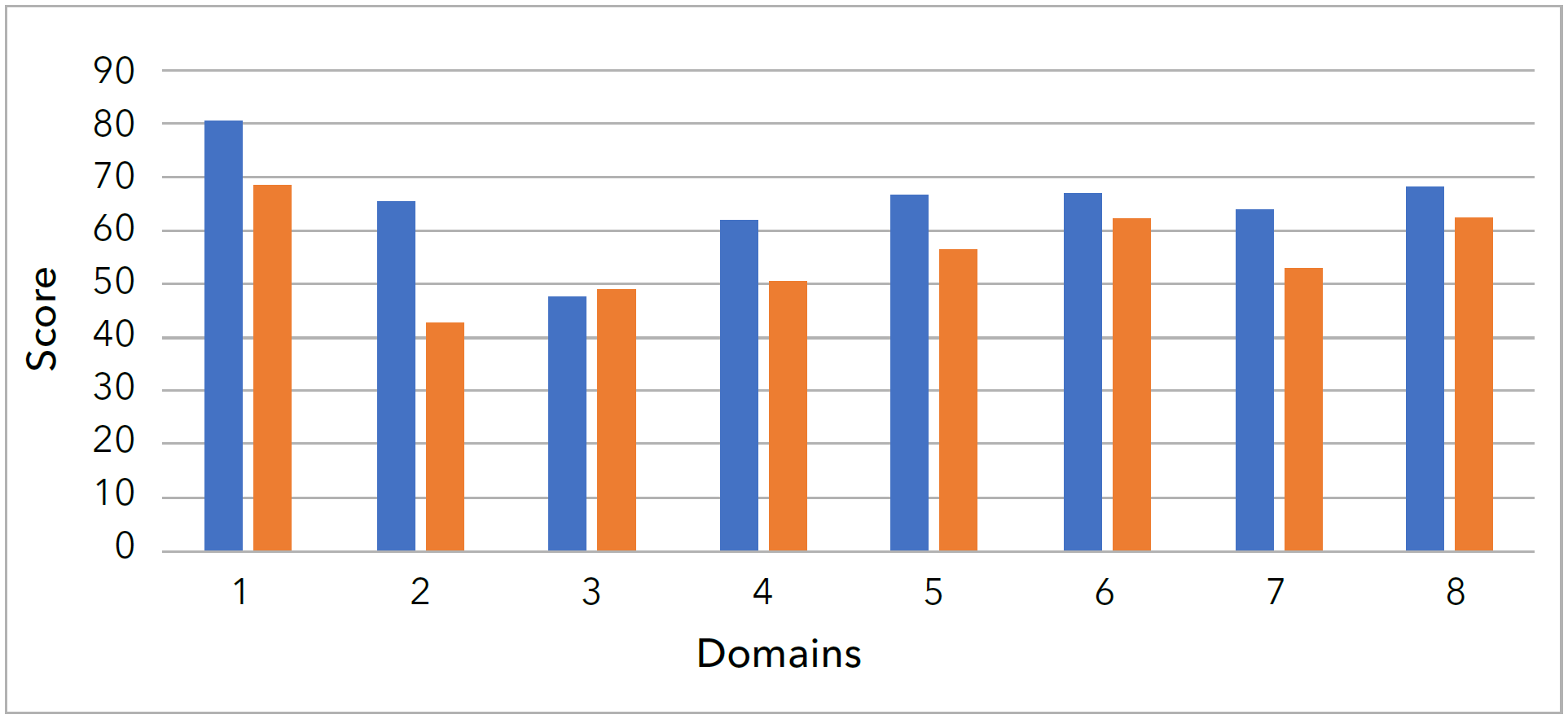
There was a statistically significant difference between mothers of preterm and full-term infants in the domains of physical functioning (68.83 ± 21.32 vs 80.6 ± 15.7; p = 0.01), role limitation due to physical health (42.63 ± 38.78 vs 65.15 ± 33.03; p = 0.01), energy/fatigue (50.66 ± 21.88 vs 61.81 ± 14.02; p = 0.01), and emotional well-being (56.53 ± 19.19 vs 66.78 ± 15.18; p = 0.02), as presented in Table 3.
Comparison of quality of life domains (QoLd) of mothers of full-term (n = 33) and preterm (n = 30) infants
Effect size analysis using Cohen's d indicated moderate effect sizes for physical functioning (d = 0.63), role limitation due to physical health (d = 0.62), energy/fatigue (d = 0.60), and emotional well-being (d = 0.60), suggesting clinically meaningful differences between the groups (Table 3).
Comparisons of the RAND-36 domains showed a statistically significant difference in physical functioning, role limitation due to physical health, energy/fatigue and emotional well-being between mothers of preterm and full-term infants (Figure 1).

Comparison of domains of RAND 36-Item Health Survey of mothers of preterm infants and full-term infants.
Discussion
The development of preterm infants is closely linked to the QoL of their mothers, as mothers play a primary role in caregiving and early stimulation throughout the day. This study analysed the QoL of mothers of preterm infants providing early stimulation and mothers of full-term infants. The mean age of mothers of full-term infants was 28.60 years whereas the mean age of mothers of preterm infants was 30.23 years. Majority of mothers of preterm infants are of relatively advanced maternal agewith a history of assisted modes of conception like ovulation induction, intrauterine insemination, in vitro fertilization or intracytoplasmic sperm injection. This factor hasbeen associated with prematurity, as supported by the study conducted by Wang et al.14
In both groups, primigravida mothers outnumbered multigravida mothers. Multigravida mothers are better prepared for the next child's development and growth as they have previous experience, whereas primigravid mothers require more counselling regarding the child's development, handling techniques, and early stimulation to build confidence in caregiving.15 Educational status showed that the majority of mothers in both groups were graduates, which enabled them to better understand their situation and act appropriately to optimize their child's neurodevelopment. Most mothers of preterm infants were homemakers, which allowed them to dedicate more time to monitoring and providing consistent early stimulation.
The level of prematurity determines the quantity of care and was an important factor influencing maternal stress in this study.9 Infants were extremely premature, and seven infants were very moderately premature, requiring additional care with thermoregulation, positioning, and handling techniques. This intensive care demand may contribute to increased stress levels and may negatively influence maternal psychological well-being. The majority of mothers in both categories belonged to the upper and upper-middle classes in socioeconomic status, which made it easier to access healthcare resources throughout the first year of life. Family type also played a role, as both groups included equal numbers of mothers from nuclear and joint families. Joint family systems provided greater support, thereby reducing the psychological burden on mothers and giving them time to care for themselves.
QoL assessed by RAND-36 showed a statistically significant difference in domains of physical functioning, rolelimitation due to physical health, energy/fatigue and emotional well-being domains between mothers of preterm and full-term infants. This finding was in concordance with a study done by Treyvaud,16 who had established that mothers of preterm infants have poor quality of life withregards to emotional and physical aspects. The postpartum period involves numerous physical and physiological changes, which may influence maternal health and contribute to variations in QoL. Mothers of preterm infants have additional stress in handling preterm infants and providing early stimulation, which could increase their physical stress. These findings suggest that mothers of preterm infants may experience increased physicaldemands associated with caregiving and continuous monitoring, which may be reflected in reduced physical functioning and increased fatigue. This in turn increases caregiving burden, which was associated with maternal fatigue and reduced physical functioning.17 Brown and Lumley18 highlighted that mothers of preterm infants often have insufficient rest periods, and increased physical workload leads to reduced energy and thereby physical health, impacting routine activities.
Postpartum depression is a common health problem affecting all mothers, as shown by Papamarkou et al.,19 who demonstrated that postpartum depression symptoms are associated with the maternal QoL and therefore constitute a powerful predictor of well-being. Mothers of preterm infants, being more apprehensive about their child's growth and development, may experience greater depression and lower emotional well-being, whichaligns with the statistically significant differences observed in this study. Lavand'homme20 also reported that postpartum chronic pain affects 6.1 – 11.5% of women and hinders recovery. Although no significant difference was found between groups in this study, some mothers reported chronic pelvic and back pain, which could negatively impact health and QoL.
Interestingly, despite significant differences in emotional well-being and energy/fatigue, there was no variation in role limitations due to emotional problems, suggesting that mothers continue to fulfil their caregiving roles despite emotional difficulties. General health and social functioning also showed no significant difference between the groups. This comprehensive understanding highlights the importance of increasing awareness and support for mothers, reducing stigma surrounding post-partum mood disorders, and encouraging them to seek assistance without hesitation.
These findings may not be generalizable to a wider population due to the relatively small sample size, as well as some uncontrollable factors may have influenced the outcomes. External validity may be limited, as participantswere recruited from a single hospital setting. Data collection in the hospital environment may have influenced participant's responses through their immediate emotional context, introducing the possibility of response bias.
Conclusion
The study concludes that mothers of preterm infants had lower QoL in selected domains of physical and mental health compared with mothers of full-term infants at one year postpartum. These findings suggest the importance of monitoring maternal well-being of mothers of preterm infants and developing support strategies for this population.
Data availability statement
The data that support the findings of this study are available upon reasonable request.
References
-
1 Sharma M, Sohi I. Quality of life of mothers of preterm and term babies. J Neonatology. 2007;21(4):281-4. https://doi.org/10.1177/097321790702100418
» https://doi.org/10.1177/097321790702100418 -
2 Brekke M, Småstuen MC, Glavin K, Amro A, Solberg B, Øygarden AMU, et al. The impact of new families home visiting program on first-time mothers’ quality of life and its association with social support: a non-randomized controlled study. BMC Public Health. 2023;23(1):2457. https://doi.org/10.1186/s12889-023-17285-0
» https://doi.org/10.1186/s12889-023-17285-0 -
3 Jeong YJ, Nho JH, Kim HY, Kim JY. Factors influencing quality of life in early postpartum women. Int J Environ Res Public Health. 2021;18(6):2988. https://doi.org/10.3390/ijerph18062988
» https://doi.org/10.3390/ijerph18062988 -
4 World Health Organization. Preterm birth. WHO; 2023 [cited 2026 Jan 29]. Available from: https://tinyurl.com/4x9whfh2
» https://tinyurl.com/4x9whfh2 -
5 Reddy KM, Ravula SR, Palakollu S, Betha K. Prevalence of preterm birth and perinatal outcome: A rural tertiary teaching hospital-based study. J Family Med Prim Care. 2022;11(7):3909-14. https://doi.org/10.4103/jfmpc.jfmpc_1440_21
» https://doi.org/10.4103/jfmpc.jfmpc_1440_21 -
6 Bonnier C. Evaluation of early stimulation programs for enhancing brain development. Acta Paediatr. 2008;97(7):853-8. https://doi.org/10.1111/j.1651-2227.2008.00834.x
» https://doi.org/10.1111/j.1651-2227.2008.00834.x -
7 Greene Z, O’Donnell CP, Walshe M. Oral stimulation for promoting oral feeding in preterm infants. Cochrane Database Syst Rev. 2023;6(6):CD009720. https://doi.org/10.1002/14651858.cd009720.pub3
» https://doi.org/10.1002/14651858.cd009720.pub3 -
8 Partanen E, Mårtensson G, Hugoson P, Huotilainen M, Fellman V, Ådén U. Auditory processing of the brain is enhanced by parental singing for preterm infants. Front Neurosci. 2022;16: 772008. https://doi.org/10.3389/fnins.2022.772008
» https://doi.org/10.3389/fnins.2022.772008 -
9 Zheng W, Chotipanvithayakul R, Ingviya T, Xia X, Xie L, Gao J. Sensory stimulation program improves developments of preterm infants in Southwest China: A randomized controlled trial. Front Psychol. 2022;13:867529. https://doi.org/10.3389/fpsyg.2022.867529
» https://doi.org/10.3389/fpsyg.2022.867529 -
10 Ramachandran S, Dutta S. Early developmental care interventions of preterm very low birth weight infants. Indian Pediatr. 2013;50(8):765-70. https://doi.org/10.1007/s13312-013-0221-y
» https://doi.org/10.1007/s13312-013-0221-y -
11 Kim ET, Lillie M, Gallis J, Hembling J, McEwan E, Opiyo T, et al. Correlates of early stimulation activities among mothers of children under age two in Siaya County, Kenya: Maternal mental health and other maternal, child, and household factors. Soc Sci Med. 2021;287:114369. https://doi.org/10.1016/j.socscimed.2021.114369
» https://doi.org/10.1016/j.socscimed.2021.114369 -
12 Jeong J, Franchett EE, Oliveira CVR, Rehmani K, Yousafzai AK. Parenting interventions to promote early child development in the first three years of life: A global systematic review and meta-analysis. PLoS Med. 2021;18(5):e1003602. https://doi.org/10.1371/journal.pmed.1003602
» https://doi.org/10.1371/journal.pmed.1003602 -
13 Rodovanski GP, Reus BAB, Damiani AVC, Mattos KF, Moreira RS, Santos AN. Home-based early stimulation program targeting visual and motor functions for preterm infants with delayed tracking: Feasibility of a Randomized Clinical Trial. Res Dev Disabil. 2021;116:104037. https://doi.org/10.1016/j.ridd.2021.104037
» https://doi.org/10.1016/j.ridd.2021.104037 -
14 Wang YP, Ray JG, Pudwell J, Gaudet L, Peng Y, Velez MP. Mode of conception and risk of spontaneous vs. provider-initiated preterm birth: population-based cohort study. Fertil Steril. 2022;118(5):926-35. https://doi.org/10.1016/j.fertnstert.2022.07.028
» https://doi.org/10.1016/j.fertnstert.2022.07.028 -
15 Sahoo R, D’Souza SA, Rege S, Lewis LE, Purkyastha J. Understanding primigravida mothers’ experiences of caring for their preterm infant: an exploratory study. Indian J Occup Ther. 2023;55(2):61-76. https://journals.lww.com/iopt/fulltext/2023/55020/oticon_2023_abstracts.4.aspx
» https://journals.lww.com/iopt/fulltext/2023/55020/oticon_2023_abstracts.4.aspx -
16 Treyvaud K. Parent and family outcomes following very preterm or very low birth weight birth: a review. Semin Fetal Neonatal Med. 2014;19(2):131-5. https://doi.org/10.1016/j.siny.2013.10.008
» https://doi.org/10.1016/j.siny.2013.10.008 -
17 Ionio C, Colombo C, Brazzoduro V, Mascheroni E, Confalonieri E, Castoldi F, et al. Mothers and fathers in NICU: the impact of preterm birth on parental distress. Eur J Psychol. 2016;12(4):604-21. https://doi.org/10.5964/ejop.v12i4.1093
» https://doi.org/10.5964/ejop.v12i4.1093 -
18 Brown S, Lumley J. Physical health problems after childbirth and maternal depression at six to seven months postpartum. BJOG. 2000;107(10):1194-201. https://doi.org/10.1111/j.1471-0528.2000.tb11607.x
» https://doi.org/10.1111/j.1471-0528.2000.tb11607.x -
19 Papamarkou M, Sarafis P, Kaite CP, Malliarou M, Tsounis A, Niakas D. Investigation of the association between quality of life and depressive symptoms during postpartum period: a correlational study. BMC Womens Health. 2017;17(1):115. https://doi.org/10.1186/s12905-017-0473-0
» https://doi.org/10.1186/s12905-017-0473-0 -
20 Lavand'homme P. Postpartum chronic pain. Minerva Anestesiol. 2019;85(3):320-4. https://doi.org/10.23736/s0375-9393.18.13060-4
» https://doi.org/10.23736/s0375-9393.18.13060-4
Edited by
-
Associate editor:
Ana Paula Cunha Loureiro