 Non-invasive ventilation on the exercise tolerance of patients with heart failure
Abstract
Introduction: Heart failure (HF) is a clinical syndrome in which the heart has a decrease in blood pumping capacity, progressing to hemodynamic, metabolic and cardiovascular changes. According to the progression of HF, individuals present a decline in functional capacity (FC). FC being one of the objectives of rehabilitation. Non-invasive ventilation (NIV) has been reported as an effective strategy for increasing FC.
Objective: To review the use of NIV on the FC of patients with HF.
Methods: This is a systematic review using the PICO strategy, with a search performed in the PubMed, Central, PeDro, SciELO and LILACS databases, with the descriptors heart failure, non-invasive ventilation and exercise tolerance added by the Boolean operators " AND" and "OR".
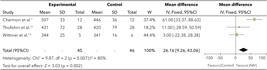
Results: Seventeen articles were found after reading the title and abstract, seven of which were chosen according to the inclusion criteria, based on the evaluation of 151 patients aged between 50 and 77 years, who showed that NIV can be an effective approach to increase the FC. NIV was effective in improving the distance covered in the 6-minute walk test by 26.16 meters (95% CI 9.26 to 43.06).
Conclusion: NIV was effective in improving the FC of individuals with HF.
Keywords:
Exercise tolerance; Heart failure; Non-invasive ventilation
Resumo
Introdução: A insuficiência cardíaca (IC) é uma síndrome clínica, na qual o coração apresenta diminuição na capacidade de bombeamento sanguíneo evoluindo para alterações hemodinâmicas, metabólicas e cardiovasculares. De acordo com a progressão da IC, os indivíduos apresentam declínio da capacidade funcional (CF), sendo a CF um dos objetivos da reabilitação. A ventilação não invasiva (VNI) tem sido relatada como uma estratégia eficaz para o aumento da CF.
Objetivo: Revisar o uso da VNI sobre a CF de pacientes com IC.
Métodos: Trata-se de uma revisão sistemática, utilizando a estratégia PICO, com busca realizada nas bases de dados PubMed, Central, PeDro, SciELO e LILACS, com os descritores insuficiência cardíaca, ventilação não invasiva e tolerância ao exercício, adicionados pelos operadores booleanos "AND" e "OR".
Resultados: Foram encontrados dezessete artigos após leitura de título e resumo, sendo sete escolhidos conforme os critérios de inclusão, baseado na avaliação de 151 pacientes com idade entre 50 e 77 anos, que mostraram que a VNI pode ser uma abordagem eficaz para o aumento da CF. A VNI mostrou-se eficaz em melhorar a distância percorrida no teste de caminhada de seis minutos por 26,16 metros (IC 95% 9,26 a 43,06).
Conclusão: A VNI foi eficaz para melhora da CF de indivíduos com IC.
Palavras-chave:
Tolerância ao exercício; Insuficiência cardíaca; Ventilação não invasiva
Introduction
Heart failure (HF) is a complex and progressive clinical syndrome characterized by the heart's inability to pump blood effectively to meet the body's metabolic demands.1 This condition significantly affects the quality of life and survival of patients, representing a substantial burden on health systems globally.1,2
In terms of epidemiology, HF is one of the main causes of hospitalization and mortality worldwide, affecting approximately 1-2% of the adult population in developed countries and increasing with age.2,3 With the ageing of the population and the increase in rates of comorbidities such as hypertension, diabetes mellitus and coronary artery disease, an increase in the prevalence and incidence of HF is expected in the coming decades.4,5
Cardiac changes in HF include systolic and/or diastolic dysfunction of the left ventricle, resulting in reduced myocardial contractility and compliance.6 In addition, HF triggers a series of complex systemic changes, such as exacerbated neurohormonal activation, chronic inflammation, endothelial dysfunction and impairment of peripheral muscles.1,6
Cardiopulmonary rehabilitation has emerged as a crucial strategy in the integrated management of HF, aimed at improving functional capacity, reducing symptoms, optimizing the management of comorbidities and improving patients' quality of life.7,8 This multidisciplinary program involves supervised physical exercise, health education, behavior modification and psychosocial support.9,10
Non-invasive ventilation (NIV) has been investigated as a promising adjuvant intervention in the cardiopulmonary rehabilitation of patients with HF. NIV can improve oxygenation, reduce dyspnea and fatigue during exercise, facilitating physical training and potentially improving long-term results.10-13
The justification for carrying out a systematic review on this topic is based on the need to consolidate robust evidence of the benefits of NIV in cardiopulmonary rehabilitation for patients with HF. Although individual studies suggest potential advantages, a systematic synthesis can offer clear insights into the efficacy, safety and clinical applicability of this approach.12,14 Therefore, the aim of this study is to carry out a systematic review and meta-analysis of the studies available to evaluate the impact of NIV as an adjuvant in cardiopulmonary rehabilitation for patients with HF, analyzing its effects on functional capacity, clinical symptoms and quality of life.
Methods
This systematic review was completed in accordance with the Preferred Reporting Items for Systematic Reviews and Meta-Analyses (PRISMA) guidelines.15 The article is registered in PROSPERO with the number CRD 42023416768.
Eligibility criteria
For this systematic review, the PICOS16 strategy was used, where the population studied was patients with heart failure, and the intervention was non-invasive ventilation with positive airway pressure compared to patients who did not perform non-invasive ventilation. The endpoint was related to exercise tolerance. Randomized clinical trials were used, without language and year restrictions.
Information sources and search
We conducted a computer search, consulting LILACS, PubMed, PEDro (Physiotherapy Evidence Database), the Cochrane Central Register of Systematic Review (CENTRAL) and SciELO. We also searched the reference list of previous systematic reviews and the eligible clinical trials for this review. The search for articles was completed in October 2022.
The search was based on the previously described PICOS16 strategy and the Boolean operators AND and OR. We used as descriptors for the population heart failure, cardiac dysfunction, ventricular dysfunction, and decompensation of the heart. Non-invasive ventilation, two-level positive airway pressure and continuous positive airway pressure were used for the intervention. For the outcomes was functional capacity, and as descriptors for the study design we used randomized clinical trials, clinical trials and controlled trials.
Study selection
Randomized clinical trials involving HF patients were included in this systematic review. To be eligible, the clinical trial had to have assigned HF patients to an intervention group for the use of non-invasive ventilation alone. Studies with adults (18 years or older), regardless of gender, were also included. Non-invasive ventilation is a method used in ventilatory support to reduce respiratory muscle work and increase functional capacity by applying positive airway pressures. Exclusion criteria were studies with patients who had pulmonary and musculoskeletal diseases, surgical processes, and with the purpose of drug treatment, by duplication, pilot study type, and associated with physical training.
Data collection process
For the extraction of the selected articles, titles (first step), abstracts (second step) and complete reading (third step) were checked. Then, an exploratory reading of the selected studies was performed, followed by a selective and analytical reading. The data extracted from the articles were summarized in authors, journal, year, title, and conclusions, to obtain important information for the research.
The methodological quality of the studies was evaluated by two independent reviewers. When there was disagreement between them, the article was read in its entirety for reevaluation. If the disagreement persisted, a third reviewer evaluated and made the final decision.
Data items
Three authors independently (GS, JC and LC) extracted the data from the published reports using standard data extraction considering: (1) aspects of the study population, such as mean age, sex, number of patients, diagnosis; (2) aspects of the intervention performed (sample size, type of non-invasive ventilation, presence of supervision, intensity, frequency, duration, and length of each session); (3) follow-up; (4) loss to follow-up; (5) outcome measures; and (6) results presented.
Quality of each study
The methodological quality was evaluated according to the PEDro17 scale criteria, which scores 11 items, as follows: 1 - eligibility criteria; 2 - random allocation; 3 - hidden allocation; 4 - baseline comparison; 5 – blinded; 6 - blinded therapists; 7 - blinded assessors; 8 - adequate follow-up; 9 - intention to treat analysis; 10 - inter-group comparisons; 11 - point estimates and variability. Items are scored as present (1) or absent (0), yielding a maximum sum of 10 points, not counting the first item.
Where possible, PEDro scores were extracted from the PEDro database itself. When articles were not found in the PEDro database, two trained independent reviewers evaluated the article with the PEDro scale. Studies were considered to be of high quality if they scored 6 or more. Studies with a score of less than 6 were considered to be of low quality.
Statistical analysis of meta-analysis
For meta-analysis, data extraction was performed from the data presented by the included articles, being represented as mean and standard deviation extracted in the text, through tables or by contacting the authors.
Sensitivity analyzes were performed to identify studies with a high level of statistical heterogeneity and to determine whether the methodological quality of eligible articles and the number of sessions performed influenced the size of the observed effects. Studies with larger samples have a greater weight in the meta-analysis results. The I² was calculated using RevMan 5.0 software for statistical analysis of heterogeneity, which describes the percentage of variability in the effect estimates due to heterogeneity, rather than sampling error.
A value greater than 50% can be considered as substantial heterogeneity. When the values were statistically homogeneous, the mean effects (difference between weighted means) were calculated using a random-effect model (I² < 50%). When the values were statiscally heterogeneous, the estimates of the mean effects (difference between the weighted means) were obtained using a random-effect model (I² > 50%). The difference between the standardized means with a 95% confidendence interval was used. Forest Plots and meta-analysis were also calculated using the RevMan 5.0 program.
Results
According to the data presented in the flowchart of article selection (Figure 1), the search in the databases yielded a total of 218 articles, 153 of which were initially excluded from the title; then, of those evaluated from the reading of the abstracts, 48 were considered not directly related to the theme of this study. Thus, 17 articles were selected for full reading, of which seven were excluded for duplication, one presented a pilot study type, one was associated with physical training, and one for methodological implications. Therefore, this systematic review included seven articles, which met the eligibility criteria for inclusion.

Methodological quality results
According to the PEDro scale, one study18 had high methodological quality, three7,19,20 had moderate quality, and three had low quality.5,21,22 The criteria evaluated by the PEDro scale and the scores obtained by each of the studies are presented in detail in Table 1.
Participants
A total of 151 patients received the intervention in the studies included in this review. The age ranged from 51 to 77 years and the prevalence was male, with 98 (63%) participants. The other data are expressed in Table 2.
Intervention
Chermont et al.7 adjusted the CPAP pressure starting at 3 cmH2O for 5 minutes, followed by increments of 1 cmH2O, maintaining each one for an additional 5 minutes until reaching 6 cmH2O.
Wittmer et al.19 applied CPAP through a nasal mask with a pressure of 8 cmH2O, with the mouth closed for a period of 30 minutes every morning, while awake and sitting.
Thofehrn et al.21 used a pressure of 8 cmH2O on the EPAP mask, and each patient underwent a five-minute adaptation to the mask and pressure level before the 6-minute walk test (6MWT).
In the study by Moraes et al.,22 the Bi-level mode was used with an inspiratory pressure sufficient to maintain a tidal volume between 6-8 ml/kg and an expiratory pressure of 10 cmH2O.
Carvalho et al.18 administered two levels of pressure support for 30 minutes. The ventilatory support was delivered with a two-level ventilator connected to the individual's face through a facial mask. An inspiratory pressure of 15 cmH2O and an expiratory pressure of 5 cmH2O were applied. Pressure variations of 10 cmH2O were used, and all individuals achieved a tidal volume of 6-8 ml/kg.
In the study by Gomes Neto et al.,20 spontaneous mode was used with an inspiratory positive airway pressure of 12 cmH2O and an expiratory positive airway pressure of 6 cmH2O for 30 minutes.
Three studies compared the NIV with other interventions for the outcome of functional capacity. For the meta-analysis of this comparison, a random model was used (I2 = 80%, df = 2, p = 0.007), in which there was a statistically significant difference between the NIV and control groups (CI 95% 9.26 to 43.06) (Figure 2).
Discussion
According to the results found in our review, the studies show an improvement in functional capacity in individuals with HF after the NIV intervention, compared to the control group.
Individuals with HF have reduced functional capacity, and the mechanisms responsible for this functional limitation are proposed based on the symptoms by two groups of patients, the first group being characterized by abnormalities in the peripheral muscles and fatigue, and the second group by limitations of ventilatory origin and dyspnea.23
Carvalho et al.18 found an increase in the duration of maximal exercise test and an increase in VO2 peak of 12.3% and a decrease in oxygen consumption time of 15.7%. However, in the study by Thofehrn et al.,21 participants performed the 6MWT est three times and showed an increase in perceived exertion and ventilatory work, but there was no significance in the distance walked from the control group to the intervention group. Thus, the recovery time in patients with HF is usually longer due to their decreased functional capacity.
The reduction in functional capacity in patients with heart failure can be attributed to various pathophysiological factors.23
Decreased contractility of the heart muscle, diastolic dysfunction, and reduced ability to deliver oxygen to tissues are among the primary causes.24 These issues result in a diminished capacity of the heart to efficiently pump blood throughout the body, leading to early fatigue and limitations in daily physical activities.23,24
Thus, the addition of PS in patients with HF improves lower limb perfusion resulting in improved nutrient supply to the exercising muscle, greater CO2 elimination and clearance of residual metabolites with improved acid-base state.5,25 In neurophysiology, improving the ionic and acid-base status of active muscle may be related to afferent sensory input26 or decreasing neural activation requirements and the sensation of contractile muscle effort.27
The time required to recover oxygen consumption in individuals with HF is correlated with changes in cardiac output and the consequent difficulty in eliminating lactate. Furthermore, changes in cardiac output lead to prolonged oxygen consumption in the muscle and its replacement by pulmonary gas exchange.28 Changes in oxygen consumption time have been observed as a worse prognostic for the disease; values above 200 seconds correspond to an unfavorable outcome in these individuals.29
The relationship between improved functional capacity and reduced mortality in patients with HF has been consistently observed in clinical studies.30,31 Enhanced functional capacity, often measured by increased exercise tolerance and decreased symptoms of fatigue, is associated with better prognosis and lower mortality rates. This improvement can be attributed to the heart's enhanced ability to maintain adequate blood flow and reduce stress on the cardiovascular system, contributing to more effective disease management and better long-term outcomes for patients.31
The resources that NIV brings with it enable a significant improvement in the quality of life of patients, with a possible physiological rehabilitation in functional performance.7,20,22 Individuals with HF are very likely to have reduced lung activity, in the development of ADLs and in functional capacity.
Wittmer et al.19 showed that CPAP therapy progressively increased FVC and FEV1 in patients with HF when compared to the control group. This improvement may have been evident according to the increase in functional residual capacity and opening of atelectatic alveoli.5,7,18-22 Individuals who used NIV increased their functional capacity when a PEEP higher than 4 cm H2O was listed. The studies that used a lower PEEP or placebo form had ineffective results compared to high level PEEP.5,7
Positive pressure therapy has shown potential benefits in improving functional capacity in HF patients.32 By improving oxygenation, this therapy can alleviate cardiac workload and enhance overall cardiovascular function. This improvement in respiratory efficiency and oxygen delivery contributes to better exercise tolerance, reduces symptoms of fatigue, and potentially improves outcomes in HF management.33
In the cardiac cavity a volume overload is generated due to the increase in the cardiac area. These volume overloads tend to decrease with the use of NIV, thus increasing the cardiac contraction that occurs with the advent of decreased transmural pressure.12,13 Therefore, NIV results in a pressure condition, favoring improvement in gas exchange, stabilizing units and alveolar recruitment.14
During the application of NIV, it is necessary to monitor the patient. The reduced cardiac output and hypoperfusion are deleterious effects that challenge the use of this technique. However, the positive intrathoracic pressure offered by NIV contributes to the patient's hemodynamics, with the reduction of the transmural pressure and a decrease in cardiac preload and afterload.14
However, it is important to recognize the limitations of the studies reviewed. The limited sample size in some studies may restrict the applicability of the results to a wider population of patients with congestive heart failure (CHF). In addition, variation in intervention protocols and patient characteristics may influence the interpretation of results and the generalizability of findings to different patient groups. In terms of clinical implications, the results suggest that CPAP and NIV have the potential to improve functional capacity and quality of life in patients with CHF. This could have a significant impact on the clinical management of these patients, offering an additional therapeutic option to improve respiratory symptoms and exercise tolerance. For future studies, it is recommended to further investigate not only the efficacy of these therapies, but also their long-term effects, safety and impact on clinical outcomes, helping to establish more robust guidelines for the management of CHF in clinical practice. This approach will help optimize the use of CPAP and NIV, offering better results for patients with CHF in terms of quality of life and prognosis.
Conclusion
This systematic review showed that NIV is an effective method in the therapy for individuals with HF improving their functional capacity. However, the uniformities in the literature regarding the parameters used in these patients need to be further explored, which are the most appropriate and which promote excellent results in the development of functional capacity.
References
- 1 Braunwald E. Heart disease: a textbook of cardiovascular medicine. 10th ed. Philadelphia: Saunders Elsevier; 2013.
-
2 Ponikowski P, Voors AA, Anker SD, Bueno H, Cleland JGF, Coats AJS, et al. 2016 ESC Guidelines for the diagnosis and treatment of acute and chronic heart failure. Eur Heart J. 2016; 37(27):2129-200. https://doi.org/10.1093/eurheartj/ehw128
» https://doi.org/10.1093/eurheartj/ehw128 -
3 Virani SS, Alonso A, Benjamin EJ, Bittencourt MS, Callaway CW, Carson AP, et al. Heart Disease and Stroke Statistics - 2020 Update: a report from the American Heart Association. Circulation. 2020;141(9):e139-596. https://doi.org/10.1161/cir.0000000000000757
» https://doi.org/10.1161/cir.0000000000000757 -
4 Bleumink GS, Knetsch AM, Sturkenboom MC, Straus SM, Hofman A, Deckers JW, et al. Quantifying the heart failure epidemic: prevalence, incidence rate, lifetime risk and prognosis of heart failure The Rotterdam Study. Eur Heart J. 2004; 25(18):1614-9. https://doi.org/10.1016/j.ehj.2004.06.038
» https://doi.org/10.1016/j.ehj.2004.06.038 -
5 O'Donnell DE, Revill SM, Webb KA. Dynamic hyperinflation and exercise intolerance in chronic obstructive pulmonary disease. Am J Respir Crit Care Med. 2001;164(5):770-7. https://doi.org/10.1164/ajrccm.164.5.2012122
» https://doi.org/10.1164/ajrccm.164.5.2012122 -
6 Yancy CW, Jessup M, Bozkurt B, Butler J, Casey DE Jr, Drazner MH, et al. 2013 ACCF/AHA guideline for the management of heart failure: a report of the American College of Cardiology Foundation/American Heart Association Task Force on practice guidelines. Circulation. 2013;128(16):e240-327. https://doi.org/10.1161/cir.0b013e31829e8776
» https://doi.org/10.1161/cir.0b013e31829e8776 -
7 Chermont S, Quintão MMP, Mesquita ET, Rocha NN, Nóbrega ACL. Noninvasive ventilation with continuous positive airway pressure acutely improves 6-minute walk distance in chronic heart failure. J Cardiopulm Rehabil Prev. 2009;29(1):44-8. https://doi.org/10.1097/hcr.0b013e3181927858
» https://doi.org/10.1097/hcr.0b013e3181927858 -
8 Piepoli MF, Conraads V, Corrà U, Dickstein K, Francis DP, Jaarsma T, et al. Exercise training in heart failure: from theory to practice. A consensus document of the Heart Failure Association and the European Association for Cardiovascular Prevention and Rehabilitation. Eur J Heart Fail. 2011;13(4):347-57. https://doi.org/10.1093/eurjhf/hfr017
» https://doi.org/10.1093/eurjhf/hfr017 -
9 Borghi-Silva A, Goulart CDL, Carrascosa CR, Oliveira CC, Berton DC, Almeida DR, et al. Proportional assist ventilation improves leg muscle reoxygenation after exercise in heart failure with reduced ejection fraction. Front Physiol. 2021;12:685274. https://doi.org/10.3389/fphys.2021.685274
» https://doi.org/10.3389/fphys.2021.685274 -
10 Mancini DM, Henson D, La Manca J, Donchez L, Levine S. Benefit of selective respiratory muscle training on exercise capacity in patients with chronic congestive heart failure. Circulation. 1995;91(2):320-9. https://doi.org/10.1161/01.cir.91.2.320
» https://doi.org/10.1161/01.cir.91.2.320 -
11 Alviar CL, Miller PE, McAreavey D, Katz JN, Lee B, Moriyama B, et al. Positive pressure ventilation in the cardiac intensive care unit. J Am Coll Cardiol. 2018;72(13):1532-53. https://doi.org/10.1016/j.jacc.2018.06.074
» https://doi.org/10.1016/j.jacc.2018.06.074 -
12 Piepoli MF, Corrà U, Agostoni PG, Belardinelli R, Cohen-Solal A, Hambrecht R, et al. Statement on cardiopulmonary exercise testing in chronic heart failure due to left ventricular dysfunction: recommendations for performance and interpretation Part II: How to perform cardiopulmonary exercise testing in chronic heart failure. Eur J Cardiovasc Prev Rehabil. 2006;13(3):300-11. https://doi.org/10.1097/00149831-200606000-00003
» https://doi.org/10.1097/00149831-200606000-00003 -
13 Swank AM, Horton J, Fleg JL, Fonarow GC, Keteyian S, Goldberg L, et al. Modest increase in peak VO2 is related to better clinical outcomes in chronic heart failure patients: results from heart failure and a controlled trial to investigate out-comes of exercise training. Circ Heart Fail. 2012;5(5):579-85. https://doi.org/10.1161/circheartfailure.111.965186
» https://doi.org/10.1161/circheartfailure.111.965186 -
14 Iliou MC, Vergès-Patois B, Pavy B, Charles-Nelson A, Monpère C, Richard R, et al. Effects of combined exercise training and electromyostimulation treatments in chronic heart failure: a prospective multicentre study. Eur J Prev Cardiol. 2017;24(12):1274-82. https://doi.org/10.1177/2047487317712601
» https://doi.org/10.1177/2047487317712601 -
15 Page MJ, McKenzie JE, Bossuyt PM, Boutron I, Hoffmann TC, Mulrow CD, et al. The PRISMA 2020 statement: An updated guideline for reporting systematic reviews. PLoS Med. 2021;18(3):e1003583. https://doi.org/10.1371/journal.pmed.1003583
» https://doi.org/10.1371/journal.pmed.1003583 -
16 Santos CMC, Pimenta CAM, Nobre MRC. The PICO strategy for the research question construction and evidence search. Rev Lat Am Enfermagem. 2007;15(3):508-11. https://doi.org/10.1590/s0104-11692007000300023
» https://doi.org/10.1590/s0104-11692007000300023 -
17 Maher CG, Sherrington C, Herbert RD, Moseley AM, Elkins M. Reliability of the PEDro scale for rating quality of randomized controlled trials. Phys Ther. 2003;83(8):713-21. https://doi.org/10.1093/ptj/83.8.713
» https://doi.org/10.1093/ptj/83.8.713 -
18 Carvalho LA, Brandão DC, Campos SL, Vidal TMS, Remígio MI, Martins SM, et al. Noninvasive ventilation before maximum exercise test increases exercise tolerance in subjects with heart failure: a crossover study. Arch Phys Med Rehabil. 2017;98(5):849-55. https://doi.org/10.1016/j.apmr.2016.09.129
» https://doi.org/10.1016/j.apmr.2016.09.129 -
19 Wittmer VL, Simoes GM, Sogame LC, Vasquez EC. Effects of continuous positive airway pressure on pulmonary function and exercise tolerance in patients with congestive heart failure. Chest. 2006;130(1):157-63. https://doi.org/10.1378/chest.130.1.157
» https://doi.org/10.1378/chest.130.1.157 -
20 Gomes Neto M, Duarte LFG, Rodrigues Jr ES, Bittencourt HS, Santos NG, David BC, et al. Effects of noninvasive ventilation with bilevel positive airway pressure on exercise tolerance and dyspnea in heart failure patients. Hellenic J Cardiol. 2018;59(6):317-20. https://doi.org/10.1016/j.hjc.2017.11.005
» https://doi.org/10.1016/j.hjc.2017.11.005 -
21 Thofehrn C, Coutinho MSSA, Daros CB, Assis AV, Lima RM, Bonin CDB, et al. Effects of the use of EPAP (expiratory positive airway pressure) on exercise tolerance in patients with heart failure. Rev Bras Med Esporte. 2013;19(2):87-90. https://doi.org/10.1590/S1517-86922013000200002
» https://doi.org/10.1590/S1517-86922013000200002 -
22 Moraes IG, Kimoto KM, Fernandes MB, Grams ST, Ya-maguti WP. Adjunctive use of noninvasive ventilation during exercise in patients with decompensated heart failure. Am J Cardiol. 2017;119(3):423-7. https://doi.org/10.1016/j.amjcard.2016.10.025
» https://doi.org/10.1016/j.amjcard.2016.10.025 -
23 Omote K, Verbrugge FH, Borlaug BA. Heart failure with preserved ejection fraction: mechanisms and treatment strategies. Annu Rev Med. 2022;73:321-37. https://doi.org/10.1146/annurev-med-042220-022745
» https://doi.org/10.1146/annurev-med-042220-022745 -
24 Kurogi EM, Butcher RCGS, Salvetti MG. Relationship between functional capacity, performance and symptoms in hospitalized patients with heart failure. Rev Bras Enferm. 2020;73(4):e20190123. https://doi.org/10.1590/0034-7167-2019-0123
» https://doi.org/10.1590/0034-7167-2019-0123 -
25 McMurray JJ, Adamopoulos S, Anker SD, Auricchio A, Böhm M, Dickstein K, et al. ESC guidelines for the diagnosis and treatment of acute and chronic heart disease. The Task Force for the Diagnosis and Treatment of Acute and Chronic Heart Failure Diseases 2012 of the European Society of Cardiology. Developed in collaboration with the Heart Failure Association (HFA) of the ESC. Eur Heart J. 2012;33(14):1787-847. https://doi.org/10.1093/eurheartj/ehs104
» https://doi.org/10.1093/eurheartj/ehs104 -
26 Sinoway LI, Smith MB, Enders B, Leuenberger U, Dzwonczyk T, Gray K, et al. Role of diprotonated phosphate in evoking muscle reflex responses in cats and humans. Am J Physiol. 1994;267(2 Pt 2):H770-8. https://doi.org/10.1152/ajpheart.1994.267.2.h770
» https://doi.org/10.1152/ajpheart.1994.267.2.h770 -
27 Gandevia SC. Neural mechanisms underlying the sensation of breathlessness: kinesthetic parallels between respiratory and limb muscles. Aust N Z J Med. 1988;18(1):83-91. https://doi.org/10.1111/j.1445-5994.1988.tb02252.x
» https://doi.org/10.1111/j.1445-5994.1988.tb02252.x -
28 Sietsema KE, Ben-Dov I, Zhang YY, Sullivan C, Wasserman K. Oxygen consumption dynamics for submaximal exercise and recovery in patients with chronic heart disease failure. Chest. 1994;105(6):1693-700. https://doi.org/10.1378/chest.105.6.1693
» https://doi.org/10.1378/chest.105.6.1693 -
29 Zavin A, Arena R, Joseph J, Allsup K, Daniels K, Schulze PC, et al. Forman DE. Dynamic assessment of ventilatory efficiency during peak exercise recovery to enhance cardiopulmonary stress testing. Eur J Prev Cardiol. 2013;20(5):779-85. https://doi.org/10.1177/2047487312446563
» https://doi.org/10.1177/2047487312446563 -
30 Fuentes-Abolafio IJ, Stubbs B, Pérez-Belmonte LM, Bernal-López MR, Gómez-Huelgas R, Cuesta-Vargas AI. Physical functional performance and prognosis in patients with heart failure: a systematic review and meta-analysis. BMC Cardiovasc Disord. 2020;20(1):512. https://doi.org/10.1186/s12872-020-01725-5
» https://doi.org/10.1186/s12872-020-01725-5 -
31 Tepper D. Frontiers in congestive heart failure: anemia is associated with worse symptoms, greater impairment in functional capacity, and a significant increase in mortality in patients with advanced heart failure. Congest Heart Fail. 2002; 8(4):235-6. https://pubmed.ncbi.nlm.nih.gov/12147949/
» https://pubmed.ncbi.nlm.nih.gov/12147949/ -
32 Bussoni MF, Guirado GN, Matsubara LS, Roscani MG, Polegato BF, Minamoto ST, et al. Diastolic function and functional capacity after a single session of continuous positive airway pressure in patients with compensated heart failure. Clinics (Sao Paulo). 2014;69(5):354-9. https://doi.org/10.6061/clinics/2014(05)010
» https://doi.org/10.6061/clinics/2014(05)010 -
33 Bittencourt HS, Reis HFC, Lima MS, Gomes Neto M. Non-invasive ventilation in patients with heart failure: a systematic review and meta-analysis. Arq Bras Cardiol. 2017;108(2):161-8. https://doi.org/10.5935/abc.20170001
» https://doi.org/10.5935/abc.20170001