
 Telerehabilitation exercise program in pediatric kidney transplant patients: clinical trial protocol
Abstract
Introduction Pediatric kidney transplantation is an im-portant therapeutic option to improve life expectancy and quality of life in this population. However, several aspects related to the functionality of children with chronic kidney disease are not fully recovered after the procedure. Telerehabilitation exercise programs can be an alternative to help in this regard.
Objective Outlines the protocol of a clinical trial that aims to evaluate the effect of a telerehabilitation exercise program on the physical conditioning of children and adolescents with kidney transplants.
Methods This is a protocol of a randomized clinical trial. Post-kidney transplant patients aged 6-18 years, randomized into intervention group (IG) and control group (CG), will undergo follow-up via telerehabilitation for six weeks. The IG will perform guided exercises through a previously scheduled video call. The CG will also receive a video call and perform simple ventilation exercises. The primary outcome is exercise capacity. The secondary outcomes are quality of life, peripheral muscle strength, and inflammatory and biochemical profile.
Discussion Given the physical deconditioning found in this population, an exercise program may help in the rehabilitation process after the procedure. In addition, we will be able to verify if a telerehabilitation tool is a valid strategy for this approach.
Adolescent; Child; Exercise; Telerehabilitation; Transplanted kidney
Resumo
Introdução O transplante renal pediátrico é uma importante opção terapêutica para melhorar a expectativa e a qualidade de vida dessa população. Entretanto, vários aspectos relacionados à funcionalidade de crianças com doença renal crônica não são totalmente recuperados após o procedimento. Programas de exercício físico via telerreabilitação podem ser uma alternativa para auxiliar nesse sentido.
Objetivo Apre-sentar o protocolo de um ensaio clínico randomizado que visa avaliar o efeito de um programa de exercício físico realizado através de telerreabilitação de crianças e adolescentes transplantados renais.
Métodos Trata-se do protocolo de um ensaio clínico randomizado. Pacientes pós-transplante renal com idade entre 6 e 18 anos, randomizados em grupos intervenção (GI) e grupo controle (GC), serão acompanhados via telerreabilitação por seis semanas. O GI realizará exercícios guiados por meio de videochamada previamente agendada. O GC também receberá videocha-mada e realizará exercícios ventilatórios. O desfecho primário é a capacidade de exercício. Os desfechos secundários são qualidade de vida, força muscular periférica e perfil inflamatório e bioquímico.
Discussão Dado o descondicionamento físico encontrado nesta população, um programa de exercício físico pode auxiliar no processo de reabilitação após o procedimento. Além disso, será possível verificar se a ferramenta de telerreabilitação é uma estratégia válida para esta abordagem.
Adolescente; Criança; Exercício; Telerreabi-litação; Rim transplantado
Introduction
Globally, chronic kidney disease (CKD) is becoming a critical disease due to its exponential increase in re-cent decades and represents the irreversible stages of renal failure, where patients require dialysis or a kidney transplant.1,2 Kidney transplantation is considered an important therapeutic option for individuals with CKD, however, despite excellent results in renal function, several aspects related to the functionality of children with CKD are not fully recovered after the procedure.3,4 In these children, the risk of physical deconditioning is high, and few studies on physical activity have been found.5-8
Bonzel et al.9 found a significant reduction in maximal oxygen consumption (VO2 max) and maximal physical performance (Wmax) in transplanted children when compared to healthy individuals. They also found that the VO2 max of transplanted patients was significantly higher than patients on hemodialysis, however, without reaching normal values. These results showed that even after kidney transplantation, these children still have impaired exercise ability. Corroborating these findings, Painter et al.10 tested 25 pediatric kidney transplant recipients and 15 pediatric dialysis patients (nine children in the dialysis group received kidney transplants and were retested). No improvement in any measures was observed from pre- to post-transplant except for a significant increase in percent fat, which negatively affected the change in muscle strength and maximum oxygen uptake (VO2peak). All subjects were physically inactive, with less than 10% of the non-school time being physical activity participation. The authors concluded that pediatric patients with CKD have low exercise capacity, are physically inactive and gain significant fat weight following the transplant.
Akber et al.8 measured the level of physical activity in children and young adults with CKD. They evaluated 44 patients 7 – 20 years of age. Physical activity was measured for seven days using pedometers; physical performance was measured by the 6-minute walk distance (6MWD); and physical functioning de-termined by the Pediatric Quality of Life Inventory (PedsQL). Participants walked 6,218 (interquartile ran-ge, 3,637; 9,829) steps per day, considerably less than recommended, and the authors concluded that in most participants with CKD physical activity was con-siderably below recommended levels.
Few studies using exercise programs or physical activities were found for this population. Lubrano et al.11 evaluated the amount of weekly physical exercise that could affect cardiorespiratory fitness and left ventricular mass in children after successful kidney transplantation. The study was conducted in 16 children after kidney transplantation and 36 corresponding healthy controls. Four groups were formed according to the weekly amount of physical exercise; all children underwent an echocardiogram and a treadmill exercise test according to Bruce´s protocol. The au-thors concluded that, in children with successful kid-ney transplantation, physical exercise of 3 to 5 hours per week improved significantly the cardiorespiratory fitness and left ventricular mass. Another study recen-tly carried out by Abd-Elmonem et al.12 investigated, through a randomized clinical trial, the effects of pro-gressive resistance exercises on quality of life and functional capacity in pediatric patients with CKD. Thirty-two children with chronic kidney disease from both genders, ages ranging from 8 to 12 years, were allo-cated randomly into two groups: standard medical care and exercise groups. After protocol, the authors concluded that progressive resistance exercises con-tributed to improving quality of life and functional capacity in pediatric patients with chronic kidney disease.
Recently, Janaudis-Ferreira et al.13 published a lite-rature review where they emphasize the importance of exercise training for the population, including pe-diatrics, pre- and post-transplantation of solid organs. They reinforce that exercise training should include a combination of aerobic, resistance, and flexibility ac-tivities, with individualized supervision based on the underlying pathology, age, and particularities of each child. They concluded that it is necessary to optimize adherence to exercise programs, thus increasing the body of evidence in the population of children and adolescents. Furthermore, in these children, the risk of physical deconditioning is high, as parents and the patients themselves may have the false impression that they cannot engage in physical activities due to the conditions associated with transplantation and its therapy. Both children with chronic kidney disease and those who have undergone kidney transplantation seem to constantly suffer from various physical and psychological consequences related to the therapies used, reducing the patient´s quality of life.14,15
Additionally, the COVID-19 pandemic triggered a global health crisis where sedentary behavior, stress, overweight, and obesity are expected to worsen, fur-ther deteriorating the physical deconditioning of this population. As an alternative to assist patients during the isolation period, the Federal Council of Physiotherapy authorized telemonitoring services.16 Telere-habilitation is a technological tool that is helping to improve the health of children worldwide, providing the possibility of in-patient and outpatient care, edu-cating professionals/patients and conducting research, as-sisting in emergencies and disasters, and providing access to pediatric care for remote and underserved populations.17 Studies using this approach have de-monstrated success in areas such as neonatology,18 intensive care medicine,19 ophthalmology screening for retinopathy in prematurity,20 monitoring of chronic diseases such as asthma21 and diabetes,22 outpatient care,23 and education,24 among others. This type of follow-up can be an ally in maintaining the physical capacity of these patients. However, information about exercise/physical activity programs after kidney trans-plantation in the pediatric population is limited, and when it comes to telerehabilitation in this population, the information is null. Given this, the present study outlines the protocol of a clinical trial that aims to evaluate the effect of a telerehabilitation exercise program on the physical conditioning of children and adolescents with kidney transplants. Research question: Could a telerehabilitation exercise program improve the physical conditioning of children and adolescents after kidney transplantation?
Methods
Study design, participants, and sampling
The study design is a randomized clinical trial fol-lowing the Consolidated Standards of Reporting Trials (CONSORT) recommendations.25 Children and adoles-cents aged 6 to 18 years post-kidney transplantation who are being followed in an ambulatory setting at a reference hospital for pediatric kidney transplantation will be potentially eligible to participate in the study. All children followed in the ambulatory setting, with a medical indication for inclusion in the physical activity program, will be invited to participate in the study. Re-cruitment will occur between August 2022 and August 2024. The study is in the data analysis phase.
Ethical procedures
The study and the informed consent form obtained ethical approval from the Research Ethics Committees of the Santa Casa de Misericórdia de Porto Alegre and the Universidade Federal de Ciências da Saúde de Porto Alegre (CAAE: 54458521.0.0000.5335) under opinion number 5.222.251. The study was registered in the Brazilian Registry of Randomized Clinical Trials (ReBEC) under the registration number RBR-5gm65y8. All participants will be asked to sign the informed consent form prior to participation in the study.
Inclusion criteria
Children and adolescents post-renal transplantation (1 month to 1-year post-transplant), aged between 6 and 18, of both genders, capable of performing the proposed tests and procedures, and with access to a digital device that enables teleconference contact will be considered.
Exclusion criteria
Children and adolescents with associated diseases such as heart diseases, myopathies, and neurological or orthopedic diseases, which limit exercise will be excluded. Also, recipients of multiple organ transplants and patients with significant immunosuppression that contraindicates physical exercise are ineligible. Pa-tients with cognitive difficulties in understanding and performing tests and those who refuse to participate will also be excluded.
Sample size calculation
A total sample was required to detect an effect size of f = 0.25, power of 80%, and significance of 5% with two groups and two evaluations, resulting in 17 patients in each group. Adding 15% for possible losses to follow-up, 19 patients were required in each group. The sample was calculated using the G*Power 3.1.9.7 software.
Randomization
After defining eligible participants, participants will be randomized to either the intervention group (IG) or control group (CG). Participants will be randomly assigned through a list generated by validated soft-ware (random allocator), in random blocks of four. Randomization will be conducted by the responsible re-searcher (JLL), without contact with the evaluation and recruitment of patients.
Masking/blinding
Due to the nature of the intervention, the participants cannot be blinded. The researcher who will per-form the initial and final evaluations, as well as the one who will analyze the obtained data, will be blinded to the groups to which the participants are assigned.
Variables and instruments
Variables and instruments for the study include a collection of identification data; anthropometric mea-sures; assessment of peripheral muscle strength (man-ual dynamometry) and functional capacity (Incremental Shuttle Walk Test - ISWT); and PedsQL. In addition, re-sults from routine laboratory tests will be collected through the electronic medical record.
Study logistics
The program will be developed twice a week for 6 weeks, totaling 12 sessions, lasting 20 to 30 minutes each. At the end of the 12 sessions, patients in both groups will be re-evaluated according to baseline tests. The platform used for the counseling sessions will be the WhatsApp application, which is widely disseminated in the population and free of charge. Figure 1 is a flow chart for the selection, interventions, and follow-up.
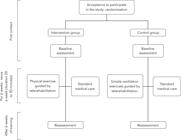
In the baseline evaluation, participants and their guardians will be informed that they will receive a text message from a researcher via WhatsApp to inform them which group they have been allocated to, and the first session will be scheduled during this contact. The researcher responsible for the initial contact will keep track of the patient during the 12 exercise sessions. In case of unexpected events, participants may reschedule the session once more, provided it is in the same week, for better control. Standard ambulatory medical care will be maintained, with no differences between groups.
The exercise prescription will be based on the sa-me principles for healthy children and adults, including the duration and type of physical activity, as well as the frequency and intensity of the exercises, according to the guidelines of the American College of Sports Medicine.26 The exercises will be performed twice a week with a minimum interval of 48h between sessions. For strength training (anaerobic), the exercises will be performed freely, against gravity, or using elastic bands (mini bands) provided by the researchers. Depending on the child´s tolerance to exercise, each series will be performed with 8 to 10 repetitions, gradually increasing. After the initial evaluation, the exercises will be perfor-med at home and supervised through telerehabilitation by professionals previously instructed by the research team to ensure the uniformity of the training program.
Each session will consist of progressive resistance exercises. Resistance will be gradually increased in three phases. During phase one (first week), the intensity of the elastic band used will be light. In phase two (second week), the subsequent intensity elastic band will be used. During the third phase (last two weeks), the band intensity will increase to the next stage. If the child is unable to perform the activity, they will return to the previous elastic band. For aerobic training, the limit between 40% (moderate activity) and 60-80% (intense activity) of the maximum heart rate, measured through a pulse oximeter, will be respected. The par-ents or guardians of the research participant will also be instructed on how to measure heart rate during the activities for greater control. The aerobic activities will consist of stationary running and jumping during the warm-up phase. The physical activity program regimen is described in Table 1.
During the baseline and final tests, as well as during the counseling sessions, the routine medications used by each patient will be maintained. These will be re-corded on the evaluation form, and any adverse events will be reported to the Institutional Review Board.
After 12 sessions, a reassessment of both groups will be conducted, scheduled via text message, and taking care to ensure the date coincides with the ambulatory medical appointment of that period, thus avoiding additional travel costs to the ambulatory clinic.
Intervention group
All patients in the IG will receive a home-training program based on activity plans standardized and individualized to each child’s age. In addition, each child will be evaluated at the baseline of the study and the end of the training.
IG will perform guided exercises through a previ-ously scheduled video call twice a week conducted by a trained researcher. IG´s protocol will consist of a warm-up through aerobic activity (jumping, stationary mar-ching), peripheral muscle training/flexibility exercises, and final stretches for the lower and upper limbs. The anaerobic training for the lower limbs and upper limbs will be performed, with or without weights, through elastic bands that will be provided by the researchers and returned at the end of the study. At the end of the session, stretches for the neck, lower limbs, and upper limbs will be performed and held for 20 to 30 seconds.
Control group
CG will also receive a video call conducted by a trained researcher, twice a week, in which they will only be instructed about the importance of physical activity and will perform simple ventilation exercises (short sets of six to eight repetitions). As well as in IG, each child will be evaluated at the baseline of the study and the end of the training.
Assessment of outcomes and control of adherence
The primary outcome is exercise capacity. The se-condary outcomes are quality of life, peripheral muscle strength, and inflammatory and biochemical profile.
The baseline evaluations will be repeated at the end of the training program. Anthropometric measurements will be performed with a previously calibrated scale and stadiometer. Exercise capacity will be measured through the distance covered in the ISWT, and peripheral muscle strength through manual dynamometry using the handgrip dynamometer (Jamar®). Quality of life will be evaluated through the validated PedsQL for the Portuguese language. The inflammatory and bio-chemical profile will be shown by comparing the patient´s routine laboratory exams before and after the physical activity program, accessed through the elec-tronic medical record. Adherence will be verified by the number of sessions held. The researcher who applies the protocol is responsible for recording adherence. In addition, patients are given a diary to record training days.
Plans to promote participant retention and complete follow-up
Prior to providing consent, participants will be informed that they have the option to withdraw from the study at any point without needing to provide a reason. Should they decide to withdraw, there will be no further communication from the study team, including any follow-up questionnaires. All data that has already been collected will be used in the analysis, and objective screening data will continue to be gathered as it does not require direct contact with the participant. Participants who choose to withdraw also have the right to request the removal of all their previously provided data, unless their data has already under-gone processing and analysis. In such cases, any un-processed data that has not been used in an analysis at the time of withdrawal will be securely deleted, and their data will be excluded from the final analysis.
Data management and statistics
The data will be collected, managed, and stored in a Microsoft Excel spreadsheet software database, accessible only to authorized and trained researchers. All paper-based data will be directly entered into Excel and securely stored in a locked file. Access to all data will be limited to researchers listed in the ethical approvals.
Descriptive statistics (mean ± standard deviation or median [q1, q3] as appropriate) will be used to describe study participants. Groups will be compared at each time point (chi-square test - categorical or Student’s test - continuous variables) to examine differences in outcome changes. Group (intervention/control) and time (baseline, after program training) are within-repeated measure factors, with age and sex as covariates. Con-founding will be controlled with logistic regression and multiple linear regression models.
Oversight and monitoring
The coordinating center will be responsible for the day-to-day operation of the trial (JLL, RPC, and CDG). The study coordinator (JLL) and the principal inves-tigator (RPC) will oversee the study´s execution and administrative responsibilities (e.g., ethical approvals and protocol maintenance), identification and address-ing of general practices, participant recruitment, data collection, verification and management, randomization, intervention delivery, and study budget mainte-nance. Additionally, the coordinating center will organize meetings, draft study reports, and prepare manuscripts.
A trial steering committee (AAL, ACSS, KLR, RPC, and JLL) has been established to provide expert ad-vice and oversight, ensuring the study is conducted in accordance with standard requirements. The steering committee is responsible for overseeing the final pro-tocol adherence and reviewing the study´s progress throughout.
This study is conducted on patients with CKD after kidney transplantation, and the intervention itself carries relatively low risk. We do not anticipate significant adverse effects arising from the study itself. Therefore, we have decided not to have a separate data monitor-ing committee. Study supervision will be managed by the trial steering committee.
All protocol deviations will be reported to the study coordinator and principal investigator (RPC and JLL), who will assess their severity. Deviations considered to significantly affect the rights of a study participant or the reliability and robustness of data generated in the clinical trial will be reported. When non-compliance significantly impacts participant protection or result reliability, a root cause analysis will be conducted, and a corrective and preventive action plan will be prepared. Protocol deviations or serious violations that identify protocol-related issues will prompt a review and, if necessary, modification of the protocol.
The researchers at the coordinating center will meet with the principal investigator at least once a week to discuss and review the study´s progress. The principal investigator may be contacted for immediate adver-se event notification. Progress will be reported to the ethics committees every six months. This study will be conducted according to the current version of the protocol. Any changes to the protocol document or informed consent form that impact scientific intent, study design, participant safety, or the willingness of a participant to continue in the study will be considered, written and filed as an amendment to this protocol and/or informed consent form. All such amendments will be submitted to the research ethics committees for approval before implementation.
The results of this research will be presented at conferences and published in peer-reviewed journals. The principal investigators of the study are primarily responsible for publishing the study´s results.
Acknowledgments
We would like to acknowledge the nephrology outpatient team at Hospital da Criança Santo Antônio for their invaluable support and willingness, and Cristiane Bündchen for performing the statistical analysis.
References
-
1 Salgado Filho N, Brito DJA. Chronic kidney disease: the great epidemic of this millennium. J Bras Nefrol. 2006;28(3): 1-5. https://bjnephrology.org/wp-content/uploads/2019/11/jbn_v28n3s2a02.pdf
» https://bjnephrology.org/wp-content/uploads/2019/11/jbn_v28n3s2a02.pdf -
2 Cheema BS, Singh MA. Exercise training in patients re- ceiving maintenance hemodialysis: a systematic review of clinical trials. Am J Nephrol. 2005;25(4):352-64. https://doi.org/10.1159/000087184
» https://doi.org/10.1159/000087184 -
3 Cury JL, Brunetto AF, Aydos RD. Efeitos negativos da insu-ficiência renal crônica sobre a função pulmonar e a capacidade funcional. Rev Bras Fisioter. 2010;14(2):91-8. https://doi.org/10.1590/S1413-35552010005000008
» https://doi.org/10.1590/S1413-35552010005000008 -
4 Goldstein SL. Physical fitness in children with end-stage renal disease. Adv Chronic Kidney Dis. 2009;16(6):430-6. https://doi.org/10.1053/j.ackd.2009.08.011
» https://doi.org/10.1053/j.ackd.2009.08.011 -
5 Krasnoff JB, Mathias R, Rosenthal P, Painter PL. The com-prehensive assessment of physical fitness in children following kidney and liver transplantation. Transplantation. 2006; 82(2):211-7. https://doi.org/10.1097/01.tp.0000226160.40527.5f
» https://doi.org/10.1097/01.tp.0000226160.40527.5f -
6 Krull F, Schulze-Neick I, Hatopp A, Offner G, Brodehl J. Exercise capacity and blood pressure response in children and adolescents after renal transplantation. Acta Paediatr. 1994;83 (12):1296-302. https://doi.org/10.1111/j.1651-2227.1994.tb13020.x
» https://doi.org/10.1111/j.1651-2227.1994.tb13020.x -
7 Carbonera RP, Barbosa APO, Normann TC, Dal Lago P, Garcia CD, Lukrafka JL. Home-based inspiratory muscle training in pediatric patients after kidney transplantation: a ran-domized clinical trial. Pediatr Nephrol. 2020;35(8):1507-16. https://doi.org/10.1007/s00467-020-04539-x
» https://doi.org/10.1007/s00467-020-04539-x -
8 Akber A, Portale AA, Johansen KL. Pedometer-assessed physical activity in children and young adults with CKD. Clin J Am Soc Nephrol. 2012;7(5):720-6. https://doi.org/10.2215/cjn.06330611
» https://doi.org/10.2215/cjn.06330611 -
9 Bonzel KE, Wildi B, Weiss M, Schärer K. Spiroergometric performance of children and adolescents with chronic renal failure. Pediatr Nephrol. 1991;5(1):22-8. https://doi.org/10.1007/bf00852834
» https://doi.org/10.1007/bf00852834 -
10 Painter P, Krasnoff J, Mathias R. Exercise capacity and physical fitness in pediatric dialysis and kidney transplant patients. Pediatr Nephrol. 2007;22(7):1030-9. https://doi.org/10.1007/s00467-007-0458-6
» https://doi.org/10.1007/s00467-007-0458-6 -
11 Lubrano R, Tancredi G, Bellelli E, Gentile I, Scateni S, Masciangelo R, et al. Influence of physical activity on cardio-respiratory fitness in children after renal transplantation. Nephrol Dial Transplant. 2012;27(4):1677-81. https://doi.org/10.1093/ndt/gfr434
» https://doi.org/10.1093/ndt/gfr434 -
12 Abd-Elmonem AM, Al-Tohamy AM, Galal RE, Abd-Elhalim FA. Effects of progressive resistance exercises on quality of life and functional capacity in pediatric patients with chronic kidney disease: a randomized trail. J Musculoskelet Neuronal Interact. 2019;19(2):187-95. https://www.ismni.org/jmni/pdf/76/jmni_19_187.pdf
» https://www.ismni.org/jmni/pdf/76/jmni_19_187.pdf -
13 Janaudis-Ferreira T, Mathur S, Deliva R, Howes N, Patterson C, Räkel A, et al. Exercise for solid organ transplant candidates and recipients: a joint position statement of the Canadian Society of Transplantation and CAN-RESTORE. Transplantation. 2019;103(9):e220-38. https://doi.org/10.1097/tp.0000000000002806
» https://doi.org/10.1097/tp.0000000000002806 -
14 Diseth TH, Tangeraas T, Reinfjell T, Bjerre A. Kidney transplantation in childhood: mental health and quality of life of children and caregivers. Pediatr Nephrol. 2011;26(10):1881-92. https://doi.org/10.1007/s00467-011-1887-9
» https://doi.org/10.1007/s00467-011-1887-9 -
15 Hamiwka LA, Cantell M, Crawford S, Clark CG. Physical activity and health related quality of life in children following kidney transplantation. Pediatr Transplant. 2009;13(7):861-7. https://doi.org/10.1111/j.1399-3046.2009.01195.x
» https://doi.org/10.1111/j.1399-3046.2009.01195.x -
16 Brasil. Resolução nº 516, de 20 de março de 2020. Tele-consulta, telemonitoramento e teleconsultoria. Brasília: Diário Oficial da União; 2020 Mar 23. https://www.coffito.gov.br/nsite/?p=15825
» https://www.coffito.gov.br/nsite/?p=15825 -
17 Burke Jr BL, Hall RW. Telemedicine: Pediatric applications. Pediatrics. 2015;136(1):e293-308. https://doi.org/10.1542/peds.2015-1517
» https://doi.org/10.1542/peds.2015-1517 -
18 Hall-Barrow J, Hall RW, Burke BL Jr. Telemedicine and neonatal regionalization of care - ensuring that the right baby gets to the right nursery. Pediatr Ann. 2009;38(10):557-61. https://doi.org/10.3928/00904481-20090918-02
» https://doi.org/10.3928/00904481-20090918-02 -
19 Marcin JP, Nesbitt TS, Kallas HJ, Struve SN, Traugott CA, Dimand RJ. Use of telemedicine to provide pediatric critical care inpatient consultations to underserved rural Northern California. J Pediatr. 2004;144(3):375-80. https://doi.org/10.1016/j.jpeds.2003.12.017
» https://doi.org/10.1016/j.jpeds.2003.12.017 -
20 Jackson KM, Scott KE, Graff Zivin J, Bateman DA, Flynn JT, Keenan JD, et al. Cost-utility analysis of telemedicine and ophthalmoscopy for retinopathy of prematurity management. Arch Ophthalmol. 2008;126(4):493-9. https://doi.org/10.1001/archopht.126.4.493
» https://doi.org/10.1001/archopht.126.4.493 -
21 Romano MJ, Hernandez J, Gaylor A, Howard S, Knox R. Improvement in asthma symptoms and quality of life in pedi-atric patients through specialty care delivered via telemedicine. Telemed J E Health. 2001;7(4):281-6. https://doi.org/10.1089/15305620152814683
» https://doi.org/10.1089/15305620152814683 -
22 Izquierdo R, Morin PC, Bratt K, Moreau Z, Meyer S, Ploutz-Snyder R, et al. School-centered telemedicine for children with type 1 diabetes mellitus. J Pediatr. 2009;155(3): 374-9. https://doi.org/10.1016/j.jpeds.2009.03.014
» https://doi.org/10.1016/j.jpeds.2009.03.014 -
23 McConnochie KM, Tan J, Wood NE, Herendeen NE, Kitzman HJ, Roy J, et al. Acute illness utilization patterns before and after telemedicine in childcare for inner-city children: a cohort study. Telemed J E Health. 2007;13(4):381-90. https://doi.org/10.1089/tmj.2006.0070
» https://doi.org/10.1089/tmj.2006.0070 -
24 González-Espada WJ, Hall-Barrow J, Hall RW, Burke BL, Smith CE. Achieving success connecting academic and practicing clinicians through telemedicine. Pediatrics. 2009;123(3): e476-83. https://doi.org/10.1542/peds.2008-2193
» https://doi.org/10.1542/peds.2008-2193 -
25 Schulz KF, Altman DG, Moher D. CONSORT 2010 Statement: updated guidelines for reporting parallel group ran-domized trials. Open Med. 2010;4(1):e60-8. https://pmc.ncbi.nlm.nih.gov/articles/PMC3116666/
» https://pmc.ncbi.nlm.nih.gov/articles/PMC3116666/ - 26 Pescatello L. ACSM´s Guidelines for exercise testing and prescription. 9th ed. Philadelphia: Wolters Kluwer/Lippincott Williams & Wilkins Health; 2014.
Edited by
-
Associate editor:
Ana Paula Cunha Loureiro

