
 Knowledge of physical therapists about developmental coordination disorder in Fortaleza, Brazil
ABSTRACT
The study sought to analyze whether undergraduate students and physical therapy professionals have the necessary knowledge to intervene with children with developmental coordination disorder (DCD) and whether they can identify their terms, concepts and motor and psychosocial characteristics. The sample was divided into two groups: professionals (n=45) and physical therapy students (n=16), who responded to a questionnaire based on previous studies on the topic, presented via an online form. Data collection occurred over 12 weeks, and the data were descriptively analyzed, presenting absolute and relative response frequencies. All 61 participants indicated a lack of knowledge about DCD. Although the term was considered more familiar among students (56.2%) compared to professionals (48.8%), all participants, overall, demonstrated limited knowledge about aspects related to the definition, prevalence, and identification of DCD. Participants highlighted the need for additional training on the subject. It was evident that due to the lack of knowledge about DCD, strategies to disseminate information about the topic are essential. This is crucial for incorporating DCD into common diagnostic possibilities for the pediatric population, particularly in regional contexts.
Keywords
Developmental Coordination Disorder; Knowledge; Motor Disorders; Physiotherapy
RESUMO
O estudo buscou analisar se estudantes de graduação e profissionais de fisioterapia possuem o conhecimento necessário para intervir junto a crianças com transtorno do desenvolvimento da coordenação (TDC) e se são capazes identificar seus termos, conceitos e características motoras e psicossociais. A amostra do estudo foi dividida em dois grupos: profissionais (n=45) e estudantes de fisioterapia (n=16), que responderam a um questionário baseado em estudos anteriores sobre o tema, apresentado por meio de um formulário on-line. A coleta de dados ocorreu por aproximadamente 12 semanas e os dados foram analisados descritivamente, apresentando frequências absolutas e relativas das respostas. Todos os 61 participantes indicaram falta de conhecimento sobre o TDC. Embora o termo tenha sido considerado mais familiar entre os estudantes (56,2%) em comparação aos profissionais (48,8%), todos os participantes, em geral, demonstraram conhecimento limitado sobre aspectos relacionados à definição, prevalência e identificação do TDC, além de que expressaram a necessidade de formação adicional sobre o assunto. Foi possível observar que devido ao desconhecimento sobre o TDC, estratégias de divulgação de informações sobre o tema são essenciais para incorporá-lo em considerações diagnósticas comuns para a população pediátrica, particularmente em contextos regionais.
Descritores
Transtorno do Desenvolvimento da Coordenação; Conhecimento; Distúrbios Motores; Fisioterapia
RESUMEN
Este estudio tuvo por objetivo analizar si los estudiantes de grado y los profesionales de la Fisioterapia tienen los conocimientos necesarios para intervenir con niños con trastorno del desarrollo de la coordinación (TDC) y si son capaces de identificar sus términos, conceptos y características motoras y psicosociales. La muestra del estudio se dividió en dos grupos: profesionales (n=45) y estudiantes de Fisioterapia (n=16); ambos grupos respondieron a un cuestionario basado en estudios previos sobre el tema en forma de formulario en línea. La recolección de datos se llevó a cabo durante aproximadamente 12 semanas, y los datos se analizaron de manera descriptiva, y presentaron frecuencias de respuestas absolutas y relativas. Los 61 participantes tenían poco conocimiento sobre el TDC. Aunque el término se consideró más familiar entre los estudiantes (56,2%) en comparación con los profesionales (48,8%), todos los participantes, en general, demostraron un conocimiento limitado sobre aspectos relacionados con la definición, prevalencia e identificación del TDC, además de expresar la necesidad de capacitación adicional sobre el tema. Se pudo observar que debido a la falta de conocimiento sobre el TDC, las estrategias de difusión de información sobre el tema son esenciales para su incorporación a las consideraciones diagnósticas comunes para la población pediátrica, particularmente en contextos regionales.
Palabras clave
Trastorno de Coordinación del Desarrollo; Conocimiento; Trastornos Motores; Fisioterapia
INTRODUCTION
Tasks that require motor skills are essential in everyday life and can represent challenges for individuals with developmental coordination disorder (DCD). This disorder is characterized by difficulties in performing basic daily tasks, such as holding utensils or buttoning a shirt. While it cannot be attributed to neurological or intellectual conditions, it can coexist with other disorders, such as attention deficit hyperactivity disorder (ADHD), autism spectrum disorder (ASD), dyslexia, among others1,2. These obstacles arise early in the child’s development, affecting their performance in both the home and school environments, making it difficult for the child to interact with the environment in which they are placed and with the tasks proposed to them, which consequently affects the refinement of their motor performance3.
While the criteria for diagnosing DCD have already been established in the literature, its identification remains a challenge. This fact can be attributed to its complexity, as each child presents variations in the signs that point to DCD. However, the lack of knowledge about these indicators can be considered a crucial factor in limiting their identification4, which makes it a disorder that is often unrecognized and, consequently, undiagnosed5,6.
Guidelines from the European Academy of Childhood-onset Disability (EACD) emphasize the importance of providing parents and teachers with adequate information so that they are aware of DCD and its impact1. Studies also suggest that healthcare professionals recognize the features of DCD7, as they can intervene by applying motor tests or observing health conditions. Likewise, for family members, teachers, and caregivers to report the impact of motor difficulties on children’s daily lives6,8.
Some studies have been conducted to investigate the population’s knowledge about DCD in different locations. One study interviewed parents, teachers, family physicians, and pediatricians (residents of countries such as Canada, the United States, and the United Kingdom) about their familiarity with DCD and found that only 20% of the sample was aware of the disorder, with the majority being healthcare professionals. Even so, among these, approximately 11-59% demonstrated awareness of the implications that DCD brings in the physical and socio-emotional spheres, while less than 30% were aware of the secondary consequences6.
A group of English psychiatrists specializing in children and adolescents with ADHD was also asked about DCD. Few were familiar with the term “developmental coordination disorder” and considered their knowledge of their patients’ motor coordination difficulties to be poor9. It is essential to emphasize that the familiarity of professionals working directly with this population can influence their conduct and intervention10.
Physical therapists are an example of professionals considered capable and qualified to intervene in the motor performance of children with DCD. Motor interventions proposed by these professionals can benefit aspects directly affected by the disorder11. However, it is necessary for professionals to demonstrate satisfactory knowledge of the aspects affected by DCD, which encompass motor, cognitive, and psychosocial domains12.
In Brazil, studies13,14 have shown that children aged between seven and ten years old, living in the Northeast region of the country, specifically in the state of Ceará, have motor difficulties. In contrast, even younger children are at risk of developmental delay. Even so, studies demonstrate the lack of knowledge about DCD, especially among healthcare professionals, which reflects the difficulty found in diagnosing and consequently intervening appropriately in this population6,8.
Thus, the objective of this study was to analyze, in a regional context, the knowledge of physical therapy students and professionals about DCD, as well as to identify whether the participants are familiar with the terms, concepts and motor and psychosocial features of children with this disorder, to compare the knowledge of professionals with that of students, and to evaluate the training (undergraduate) of the participants concerning aspects related to developmental disorders.
METHODOLOGY
This is an observational, cross-sectional study with a quantitative approach. The sample consisted of physical therapists working in the care of children in various settings (Professionals Group) and students in the final year of physical therapy (Students Group), representing both sexes and all ages, who worked or studied in Fortaleza, Ceará, Brazil. Participants who did not provide complete data for the study were excluded from the analysis. Recruitment was conducted through personal contact, telephone, and/or social media networks. The sample was assembled for convenience, and to achieve a specific sample size, the snowball sampling technique was also used, encouraging participants to invite colleagues from their reference networks.
To calculate the sample size, a survey was conducted to determine the number of physical therapy professionals registered in the city of Fortaleza, Ceará, through e-mail contact with the Regional Council of Physical Therapy and Occupational Therapy (CREFITO-6). In response to the contact, CREFITO-6 indicated in November 2022 that there are 8,400 physical therapy professionals in Fortaleza and its metropolitan region. Thus, the sample calculation was performed with the following parameters: a population of 8,400, a 90% confidence level, and a 10% sampling error, yielding a result of 44.
A questionnaire (21 questions) was developed based on previous studies that also assessed participants’ knowledge about DCD, although in different countries6,8. The questionnaire sought to collect sociodemographic data and ask about participants’ familiarity with developmental disorders in general and specifically with aspects related to DCD. This was made available online through the Google Forms tool.
An informed consent form regarding the use of data collected in this study was presented before the questionnaire, per the ethical and legal principles of research involving human subjects, as outlined in Resolution No. 466/2012 of the National Health Council/Ministry of Health. Information about the study was provided, and participants were asked to comply with the consent form, along with the assurance that they could contact the investigators if they had any questions during questionnaire completion or if they withdrew from the study at any stage. Responses were only considered if the questionnaire was completed successfully.
A descriptive quantitative analysis was performed, presenting the absolute frequency (n) and the relative frequency (%) of the responses provided by the participants for each item of the questionnaire. Additionally, the responses were compared across the participating groups (Professionals and Students).
Content analysis15 was used to assess question 21 of the questionnaire: “What are the main factors that influenced your responses to the questions above? (As a healthcare professional, do you agree or disagree with the following statements related to DCD?)”. This analysis was performed in three stages: pre-analysis, which involved organizing participants’ responses, notes, and initial impressions; exploration of the material, in which recording units were identified; and processing of the results, inference, and interpretation, in which the recording units were grouped into analysis categories.
RESULTS
A total of 61 participants (Table 1) agreed to participate in this study. Overall, participants had an average age of 28.4 years, the majority of whom were female (78.7%, n=48), physical therapists (73.8%, n=45), graduated from a private educational institution (93.4%, n=57), who worked in childcare in a public service environment (66.6%, n=30), with an average of 3 years of experience.
Regarding familiarity with terms associated with developmental disorders, 50.8% of all participants considered DCD familiar. In comparison, the terms ASD and ADHD were considered familiar by 100% and 95%, respectively. The term considered least familiar was clumsy child syndrome (18%). Familiarity data for each disorder are presented in Figure 1. Notably, 8.8% of the participants in the Professional Group and 18.7% in the Student Group had never he ard of DCD.
Among the groups , DCD was considered more familiar among students, who considered it familiar by 56.2% (6.2% “very familiar” and 50% “somewhat familiar”), while among physical therapists, 48.8% considered it so (15.5% “very familiar” and 33.3% “somewhat familiar”).

Isolated aspects of familiarity with DCD were also assessed across groups (Table 2). Overall, only 19.6% of the sample read a book, and 32.8% read a scientific article on DCD. Professionals read more books (22.2%), while students explored more scientific articles (31.1%). Despite this, 98.4% of the total sample stated that they would benefit from additional training on the matter. However, 85% reported having taken at least one subject that addressed aspects of motor behavior during their undergraduate studies. Among the subjects that addressed these aspects during the participants’ undergraduate studies, “Pediatric Physical Therapy” (25%) was the most cited. Professionals also stated that among the patients seen in the last two years, approximately 1 to 2 children (14.6%) were diagnosed with DCD, but suggested that approximately 3 to 5 children (21.4%) could have received (but did not receive) such a diagnosis.
Familiarity of physical therapy professionals and students with developmental coordination disorder
Specifically concerning DCD, the features considered most common in general, among the responses of all participants, were “Gross motor and fine motor skills delay” (70%), “Motor learning difficulties” (63.9%) and “Difficulty writing and drawing” (60%); while part of the sample considered that “higher than average levels of suicide” (21.6%) would not be a common feature of DCD. Furthermore, 30% thought their knowledge about the relationship between overweight and obesity in this population was uncertain.
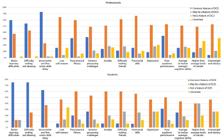
Knowledge of physical therapy professionals and students about developmental coordination disorder
By groups, physical therapists considered “Gross motor and fine motor skills delay” as the most common feature. In contrast, physical therapy students considered “Motor learning difficulties” (75.0%) and “Difficulty writing and drawing” (75.0%) as the most common. On the other hand, “higher than average levels of suicide” were considered uncommon in children with DCD, according to students (40.0%), and uncertain, according to professionals (26.6%).
A substantial proportion of participants agreed with the need for more research (98.3%), additional training on DCD (100%), and believed that early diagnosis brings significant benefits to children with this condition (100%). However, the majority were surprised by the prevalence of DCD (74.5%), were unaware that the Diagnostic and Statistical Manual of Mental Disorders – 5th edition (DSM-5) contains information on the diagnostic criteria for DCD (55.1%), and disagreed with the relative ease of identifying this disorder (38.9%).
The results of the analysis of the responses to question 21 revealed four categories: (1) Professional development – Seeking to learn more about DCD (50.8%); (2) Clinical practice and experience with other disorders – Improving care for children with DCD (21.3%); (3) Research – Expanding studies on DCD (11.5%); and (4) Academic training – Disseminating knowledge about DCD in undergraduate courses (8.2%). Furthermore, approximately 8.2% of the participants did not identify factors that influenced their responses to the questionnaire.
In question 21, most participants indicated that factors related to lack of professional knowledge influenced their responses to the questionnaire, such as: “I had no knowledge about DCD, it would be interesting for ME to learn more.” (Participant 5); “The term is rarely used by healthcare professionals, mainly due to lack of knowledge on the matter. This causes underdiagnosis.” (Participant 23). The recording units grouped in the second category (Clinical practice and experience with other disorders) indicated that the factors that influenced the participants’ responses were related to their experiences in caring for these and other children, such as: “My professional experience in child neurodevelopment.” (Participant 38); and “History with similar disorders.” (Participant 26). The recording units grouped in the third category (Research) showed that the factors that influenced the participants’ responses were related to the increase in studies and research on DCD, such as: “More research will be needed.” (Participant 31); and “Current, relevant and little studied topic. It needs more studies and, probably, if it were more diagnosed, the prevalence would be higher.” (Participant 8). The last category identified grouped units of records related to academic training, such as: “Little knowledge about the topic and need for training and better approaches in undergraduate studies.” (Participant 18); and “There is a lack of more knowledge about DCD, at the academic level, there is only superficial information about matters that needed to be addressed more for better treatment.” (Participant 17).
DISCUSSION
To the best of our knowledge, this was the only study to analyze the knowledge of physical therapists and physical therapy students regarding DCD in the state of Ceará, Brazil. It was possible to identify the lack of familiarity with the term among professionals and students, as only approximately half of the sample considered this disorder to be familial. Physical therapists’ knowledge about DCD is rarely studied specifically, and is sometimes considered in studies that evaluate the knowledge of several professionals, such as physicians, occupational therapists, or teachers. These studies6,8,16 also reveal the lack of knowledge of these professionals about DCD, and even those that included professionals who specifically treated children with this disorder found that physical therapists’ knowledge was still evaluated as intermediate17.
The present study demonstrated that physical therapy students were more familiar with the term “developmental coordination disorder” compared with professionals, who showed greater familiarity with the term “dyspraxia” (60%) compared with DCD (48.8%). This could be explained by the fact that the terms DCD and dyspraxia are similar and easily confused, as their aspects are similar and both are included in the category “Specific developmental disorder of motor function” of the International Classification of Diseases – ICD-1018,19. While Hunt et al.8 also obtained this result, the authors emphasized the need to differentiate these terms accurately, because, despite the similarities, the term dyspraxia does not encompass the entire complexity of the characteristics presented by DCD. Other terms, such as ASD and ADHD, were considered “very familiar,” as in the study by Wilson et al.6, which also investigated the knowledge of healthcare professionals about developmental disorders.
Although it presents movement implications unrelated to neurological conditions2, some professionals may find it challenging to identify DCD because they believe it resembles other health conditions, contributing to inaccurate diagnoses. Other studies8 also suggest, through a more qualitative approach, that evaluation by a multidisciplinary team may be more likely to diagnose DCD accurately. Furthermore, participants emphasize that factors such as experience in clinical practice in neurodevelopmental care and other disorders similar to DCD influence its recognition (21.3%).
Another justification for the lack of familiarity with DCD is the lack of knowledge about sources of information on the subject. A large part of the sample in this study had never read any book or scientific article that addressed DCD, and, possibly for this reason, they consider it uncertain whether the DSM-5 contains necessary information about DCD. The lack of information about the DSM-5 was also noted in the study by Hunt et al.8.
The participants’ knowledge about the common features of DCD was also questioned. All alternatives were related to the disorder, but the most common ones considered by the participants were those related to delays and difficulties in motor skills in general, similar to other studies6,8. This fact can be justified by the name of the disorder itself, as the way it is presented suggests the possibility that such individuals may have implications in the development of motor coordination. However, although characteristics related to motor performance are actually more related to DCD2, this disorder also has consequences in nutritional and psychosocial contexts20,21.
All participants reported that they would benefit from additional training on DCD, as most of them are unfamiliar with the term, its consequences, prevalence, and diagnostic criteria. Half of the participants (50.8%) recognized that the deficit in identifying DCD and its aspects results from their own professional updating and the search for knowledge on the topic. Studies22 have shown that additional training on DCD can answer common questions for physical therapists who work with children and is effective in providing more confidence in the application of evidence-based assessment and intervention methods, improving the management of children with DCD.
The lack of knowledge about the term among physical therapists is a concern, as a lack of familiarity can lead to delayed diagnosis. The lack of early identification of children with DCD contributes to the stigma of interventions focused only on remedying already established complications, which in turn may not prevent the emergence of long-term complications17. While it is possible that these complications can be avoided, professionals need to be trained to explore identification and intervention strategies that go beyond the child, also encompassing the needs of families and teachers. This approach aims to transform everyday environments, such as homes and schools, into environments that stimulate and foster learning fundamental skills23,24.
Considering the regional context of this study, the lack of knowledge about DCD becomes even more worrying. Correia et al.13 reported that approximately 24% of their sample, comprising 3,566 children from Ceará, exhibited signs of developmental delay, with a higher prevalence among children aged 3 to 6 years. Even older children, aged seven to ten, from the same region, also experienced motor difficulties in common activities14. The identification of the first common motor difficulties in DCD can occur at these ages2. However, physical therapists in this region are not ideally familiar with the term or its aspects, which makes its identification difficult and, consequently, may contribute even more to developmental deficits in this population.
Knowledge about the disorders that affect human development becomes a determining factor for identifying DCD, which could lead to an increase in its prevalence, as it would be more easily identified. However, the lack of approaches to the subject during the academic training of students and professionals may increase the knowledge gap about DCD and other disorders. To this end, it is necessary to integrate DCD more robustly into subjects related to motor behavior during the academic training of physical therapists. While a large proportion of the participants in this study took subjects that addressed aspects of motor behavior, the difficulty in identifying important features of DCD indicates the need for a more specific and detailed focus on this area of knowledge. Improving access to and familiarity with essential resources, such as the DSM-5 and other specialized literature on DCD, in addition to additional training dedicated to DCD throughout professional training, are essential and should cover everything from basic concepts to advanced diagnostic and intervention strategies, preparing them more fully to deal with this condition in clinical practice. Consequently, strategies can be implemented promptly to meet personal, family, and social demands, thereby avoiding secondary consequences.
This study highlights the knowledge gap between professionals and students in an area crucial to the quality of life for children with DCD. By revealing this gap, these data drive the need for training and dissemination of information about DCD both within universities and in clinical practice. This awareness is crucial for improving early diagnosis and providing effective treatment.
It is crucial to conduct a comprehensive survey of the existing level of knowledge about this condition to effectively implement strategies to disseminate information about DCD among physical therapists nationwide. This survey will help identify knowledge gaps and specific areas of need among professionals, enabling the development of targeted educational initiatives and appropriate resources. Additionally, a detailed understanding of physical therapists’ current knowledge about DCD is crucial for tailoring continuing education strategies and promoting evidence-based practices in the management of this complex and often underdiagnosed condition.
When promoting familiarity with this population, methods for identifying these individuals should also be explored, as well as possibilities for validating the diagnosis. By doing so, it will be possible to incorporate DCD into common diagnostic considerations for the pediatric population. It is worth noting that, in addition to early identification, it is essential to emphasize the need to promote various aspects of functionality in this population. This includes stimulating aspects related to movement, encouraging social participation practices, and promoting children’s involvement in everyday environments, thereby reducing the primary and secondary impacts established by DCD25.
CONCLUSION
Physical therapy professionals and students are not ideally familiar with developmental coordination disorder. While their knowledge primarily associates DCD with difficulties in motor performance, it rarely links it to nutritional or psychosocial issues. These professionals and students do not commonly access sources of information about DCD, and their academic training lacks comprehensive coverage of the matter. This indicates a general lack of information about the disorder and the challenge in identifying children with this condition in clinical practice.
In light of these findings, it is essential to explore methods for disseminating information about DCD, both during and after the academic period, with a specific focus on its definitional aspects and identification criteria. However, although this represents the initial step in the quest to improve children’s quality of life, it is important to emphasize that interventions must encompass several dimensions beyond those involving movement. These interventions must address environmental, family, and social participation aspects to prevent both short- and long-term consequences.
REFERENCES
-
1. Blank R, Smits-Engelsman B, Polatajko H, Wilson P. European Academy for Childhood Disability (EACD): recommendations on the definition, diagnosis and intervention of developmental coordination disorder (long version). Develop Med Child Neurol. 2012;54(1):54-93. doi: 10.1111/j.1469-8749.2011.04171.x
» https://doi.org/10.1111/j.1469-8749.2011.04171.x - 2. American Psychiatric Association. Diagnostic and statistical manual of mental disorders: DSM-5. Arlington: American Psychiatric Association; 2013.
- 3. Gallahue DL, Ozmun JC, Goodway JD. Compreendendo o desenvolvimento motor: bebês, crianças, adolescentes e adultos (7a ed.). Porto Alegre: AMGH; 2013.
-
4. Zwicker JG, Missiuna C, Harris SR, Boyd LA. Developmental coordination disorder: a review and update. Eur J Paediatr Neurol. 2012;16(6):573-81. doi: 10.1016/j.ejpn.2012.05.005
» https://doi.org/10.1016/j.ejpn.2012.05.005 -
5. Missiuna C, Gaines R, Soucie H, McLean J. Parental questions about developmental coordination disorder: A synopsis of current evidence. Pediatr Child Health. 2006;11(8):507-12. doi: 10.1093/pch/11.8.507
» https://doi.org/10.1093/pch/11.8.507 -
6. Wilson BN, Neil K, Kamps PH, Babcock S. Awareness and knowledge of developmental coordination disorder among physicians, teachers and parents. Child Care Health Dev. 2012;39(2):296-300. doi: 10.1111/j.1365-2214.2012.01403.x
» https://doi.org/10.1111/j.1365-2214.2012.01403.x -
7. Camden C, Wilson B, Kirby A, Sugden D, Missiuna C. Best practice principles for management of children with developmental coordination disorder (DCD): results of a scoping review. Child Care Health Dev. 2015;41(1):147-59. doi: 10.1111/cch.12128
» https://doi.org/10.1111/cch.12128 -
8. Hunt J, Zwicker JG, Godecke E, Raynor A. Awareness and knowledge of developmental coordination disorder: a survey of caregivers, teachers, allied health professionals and medical professionals in Australia. Child Care Health Dev. 2021;47(2):174-83. doi: 10.1111/cch.12824
» https://doi.org/10.1111/cch.12824 -
9. Kirby A, Salmon G, Edwards L. Attention-deficit hyperactivity and developmental coordination disorders: knowledge and practice among child and adolescent psychiatrists and pediatricians. Psychiatrc Bull. 2007;31(9):336-8. doi: 10.1192/pb.bp.107.015305
» https://doi.org/10.1192/pb.bp.107.015305 -
10. Kirby A, Sugden DA. Children with developmental coordination disorders. J R Soc Med. 2007;100(4):182-6. doi: 10.1177/014107680710011414
» https://doi.org/10.1177/014107680710011414 -
11. Smits-Engelsman BCM, Blank R, Van Der Kaay AC, Mosterd-Van der Meijs R, Vlugt-Van den Brand E, et al. Efficacy of interventions to improve motor performance in children with developmental coordination disorder: a combined systematic review and meta-analysis. Dev Med Child Neurol. 2013;55(3):229-37. doi: 10.1111/dmcn.12008
» https://doi.org/10.1111/dmcn.12008 -
12. Zwicker JG, Harris SR, Klassen AF. Quality of life domains affected in children with developmental coordination disorder: a systematic review. Child Care Health Dev. 2013;39(4):562-80. doi: 10.1111/j.1365-2214.2012.01379.x
» https://doi.org/10.1111/j.1365-2214.2012.01379.x -
13. Correia LL, Rocha HAL, Sudfeld CR, Rocha SGMO, Leite ÁJM, et al. Prevalence and socioeconomic determinants of development delay among children in Ceará, Brazil: a population-based study. PloS One. 2019;14(11):e0215343. doi: 10.1371/journal.pone.0215343
» https://doi.org/10.1371/journal.pone.0215343 -
14. Santos LRV, Ferracioli MC. Prevalence of children identified with motor difficulties. Cad Bras Ter Ocup. 2020;28:525-38. doi: 10.4322/2526-8910.ctoAO1847
» https://doi.org/10.4322/2526-8910.ctoAO1847 - 15. Bardin L. Análise de conteúdo. São Paulo: Edições 70; 2016.
-
16. Baudinette K, Sparks J, Kirby A. Survey of paediatric occupational therapists’ understanding of developmental coordination disorder, joint hypermobility syndrome and attention deficit hyperactivity disorder. Br J Occup Ther. 2010;73(8):366-72. doi: 10.4276/030802210X12813483277143
» https://doi.org/10.4276/030802210X12813483277143 -
17. Rivard L, Camden C, Pollock N, Missiuna C. Knowledge to practice in developmental coordination disorder: utility of an evidence-based online module for physical therapists. Phys Occup Ther Pediatr. 2015;35(2):178-94. doi: 10.3109/01942638.2014.985414
» https://doi.org/10.3109/01942638.2014.985414 -
18. Gibbs J, Appleton J, Appleton R. Dyspraxia or developmental coordination disorder? Unravelling the enigma. Arch Dis Child. 2007;92(6):534-9. doi: 10.1136/adc.2005.088054
» https://doi.org/10.1136/adc.2005.088054 - 19. World Health Organization. International statistical classification of diseases and health-related problems - ICD 10 (10th ed.). Genebra: World Health Organization; 2019.
-
20. Ussher MH, Owen CG, Cook DG, Whincup PH. The relationship between physical activity, sedentary behaviour and psychological wellbeing among adolescents. Soc Psychiatr Epidemiol. 2007;42(10):851-6. doi: 10.1007/s00127-007-0232-x
» https://doi.org/10.1007/s00127-007-0232-x -
21. Cairney J, Veldhuizen S. Is developmental coordination disorder a fundamental cause of inactivity and poor health-related fitness in children? Dev Med Child Neurol. 2013;55(Suppl 4):55-8. doi: 10.1111/dmcn.12308
» https://doi.org/10.1111/dmcn.12308 -
22. Camden C, Rivard L, Pollock N, Missiuna C. Knowledge to practice in developmental coordination disorder: impact of an evidence-based online module on physical therapists’ self-reported knowledge, skills, and practice. Phys Occup Ther Pediatr. 2015;35(2):195-210. doi: 10.3109/01942638.2015.1012318
» https://doi.org/10.3109/01942638.2015.1012318 -
23. Missiuna C, Rivard L, Bartlett D. Early identification and risk management of children with developmental coordination disorder. Pediatr Phys Ther. 2003;15(1):32-8. doi: 10.1097/01.PEP.0000051695.47004.BF
» https://doi.org/10.1097/01.PEP.0000051695.47004.BF -
24. O’Dea Á, Stanley M, Coote S, Robinson K. Children and young people’s experiences of living with developmental coordination disorder/dyspraxia: a systematic review and meta-ethnography. Plos One. 2021;16(3):e0245738. doi: 10.1371/journal.pone.0245738
» https://doi.org/10.1371/journal.pone.0245738 -
25. Blank R, Barnett AL, Cairney J, Green D, Kirby A, et al. International clinical practice recommendations on the definition, diagnosis, assessment, intervention, and psychosocial aspects of developmental coordination disorder. Dev Med Child Neurol. 2019;61(3):242-85. doi: 10.1111/dmcn.14132
» https://doi.org/10.1111/dmcn.14132
-
Financing source:
nothing to declare
-
Approved by the Ethics Committee of the Universidade Federal do Ceará (UFC) [Protocol No. 5,737,624 (CAAE: 59086422.6.0000.5054)].
Edited by
-
Responsible editor:
Sônia LP Pacheco de Toledo

 OCD: Obsessive Compulsive Disorder; ADHD: Attention Deficit Hyperactivity Disorder; DCD: Developmental Coordination Disorder; ASD: Autism Spectrum Disorder.
