 Prevention of musculoskeletal injuries in volleyball athletes: a systematic review of randomized controlled trials
ABSTRACT
This systematic review aimed to investigate the effectiveness of preventive interventions for musculoskeletal injuries in volleyball. Searches of eight databases identified six randomized controlled trials that met the inclusion criteria. Outcomes included injury incidence, time off work, and adherence/acceptability. Estimates were presented as relative risk (RR) and 95% confidence intervals (CI) based on the results of meta-analyses or individual trials. Certainty of evidence was assessed using the GRADE system. Disagreements between reviewers were resolved by discussion and consultation with a third reviewer. The meta-analysis showed no positive effects of interventions on injury prevention, except for one study that reported a positive effect of semi-customized exercises on low back pain in the short term (RR: 0.26 [95% CI: 0.08-0. 86]). No other intervention demonstrated benefit in reducing musculoskeletal injuries. Limited evidence suggests a short-term benefit of semi-customized exercises on low back pain. Preventive interventions in volleyball are supported by low-quality evidence, highlighting the urgent need for more high-quality trials with larger samples.
Keywords:
Volleyball; Athletic Injuries; Prevention; Randomized Controlled Trials
RESUMO
O objetivo desta revisão sistemática é investigar a eficácia de intervenções preventivas para lesões musculoesqueléticas no voleibol. Buscas em oito bases de dados identificaram seis ensaios clínicos randomizados que atendiam aos critérios de inclusão. Os desfechos incluíram incidência de lesões, tempo de afastamento e adesão/aceitabilidade. As estimativas foram apresentadas em risco relativo (RR) e intervalos de confiança (IC) de 95% sobre os resultados de metanálises, quando possível, ou de ensaios individuais. Avaliamos a certeza das evidências utilizando o sistema GRADE. As divergências entre os revisores foram resolvidas por discussão e inclusão de um terceiro revisor. A metanálise não mostrou efeitos positivos das intervenções na prevenção de lesões, exceto por um estudo que destacou o efeito positivo dos exercícios semi-personalizados na dor lombar a curto prazo (RR: 0,26 [IC 95%: 0,08 - 0,86]). Nenhuma outra intervenção demonstrou benefícios na redução de lesões musculoesqueléticas. Evidências escassas sugerem benefício de exercícios semipersonalizados na dor lombar a curto prazo. Intervenções preventivas no voleibol são apoiadas por evidências de baixa qualidade, destacando a necessidade urgente de mais ensaios de alta qualidade com amostras maiores.
Descritores:
Voleibol; Lesões Atléticas; Prevenção; Ensaios Clínicos Randomizados
RESUMEN
El objetivo de esta revisión sistemática es evaluar la efectividad de las intervenciones preventivas de las lesiones musculoesqueléticas del voleibol. Las búsquedas en ocho bases de datos identificaron seis ensayos controlados aleatorizados que cumplían con los criterios de inclusión. Los resultados incluyeron la incidencia de lesiones, el tiempo de ausencia y la adherencia/aceptabilidad. Las estimaciones se presentaron con riesgo relativo (RR) e intervalos de confianza (IC) del 95% sobre los resultados de los metaanálisis, cuando fue posible, o ensayos individuales. Evaluamos la certeza de la evidencia utilizando el sistema GRADE. Los desacuerdos entre los revisores se resolvieron mediante la discusión y la inclusión de un tercer revisor. El metaanálisis no mostró efectos positivos de las intervenciones en la prevención de lesiones, a excepción de un estudio que destacó el efecto positivo de los ejercicios semipersonalizados en el dolor lumbar a corto plazo (RR: 0,26 [IC 95%: 0,08 - 0,86]). Ninguna otra intervención demostró beneficios en la reducción de lesiones musculoesqueléticas. Las escasas evidencias sugieren el beneficio de los ejercicios semipersonalizados en el dolor lumbar a corto plazo. Las intervenciones preventivas del voleibol están respaldadas por evidencias de baja calidad, lo cual destaca la necesidad urgente de más ensayos de alta calidad con muestras más grandes.
Palabras clave:
Voleibol; Lesiones Atléticas; Prevención; Ensayos Clínicos Aleatorizados
INTRODUCTION
Volleyball is an Olympic sport with great popularity worldwide and is practiced by both professionals and amateurs, including in recreational settings1. The technical demands of the sport (i.e., high volume of reactive actions, high-velocity movements along the vertical, horizontal, and rotational axes)2 result in a high burden of musculoskeletal injuries3. Studies show that the knee (22%), ankle (19%), shoulder (11%), and core (hips and pelvis, 12%) are the most common injury sites among volleyball players3,4.
Musculoskeletal injuries in volleyball are classified as overuse (67%) or acute trauma (33%)4-6. These injuries have a significant negative impact on athlete performance, reducing training availability, competition participation, and career longevity. Additionally, musculoskeletal injuries have been estimated to account for approximately 4% of the sports budget, representing a significant economic burden7-9.
Musculoskeletal injuries in volleyball can have significant consequences, highlighting the need for effective preventive strategies4,10. However, current evidence on such approaches remains unclear. A previous systematic review3 on the topic had limitations because it included athletes who were injured at baseline. Furthermore, the authors combined active and inert comparators to investigate the potential effect of the intervention relative to the natural course of the condition, which is not appropriate3. Instead, comparisons with placebo, sham, waiting list, or no intervention should be the primary option to investigate intervention effectiveness11. This is especially important when dealing with acute health conditions or recurrent episodes11.
Given this context, this systematic review aims to update the evidence and estimate the efficacy of approaches to prevent musculoskeletal injuries among volleyball athletes.
METHODOLOGY
This systematic review followed the Preferred Reporting Items for Systematic Reviews and Meta-Analyses (PRISMA) guidelines12. The protocol was prospectively registered in PROSPERO (CRD 42022336795).
The search strategy was conducted without restrictions on publication date or language on the following databases: MEDLINE, Embase, AMED, PEDro, CINAHL, Cochrane Library, PsycINFO, and SPORTDiscus, up to April 14th, 2023. Search terms were related to “randomized controlled trials,” “prevention,” and “volleyball.” The complete survey is available in the Supplementary Materials. Moreover, the reference lists of relevant systematic reviews were manually screened to identify additional studies in the field.
This review included peer-reviewed randomized controlled trials that investigated strategies to prevent musculoskeletal injuries. Control groups included no intervention, wait list, placebo, or sham interventions. Athletes of all genders and levels of competition (e.g., elite, recreational, and interscholastic) were considered. Trials that did not meet these criteria were excluded. Outcomes of interest were incidence of musculoskeletal injuries, time loss from on-court practice or competition, and short- (up to 12 months) and long-term (>12 months) program adherence/acceptability. The 12-month cutoff was based on season length and previous studies13. Injury incidence was calculated as the number of participants who sustained injuries relative to the total number of participants in each group. Time loss was measured in days away from practice. Adherence/acceptability was assessed based on the number of dropouts relative to the initial number of participants.
For study selection, the retrieved references were exported to EndNote, and duplicates were removed. Two independent reviewers (F.G.C. and R.C.C.F.) screened the titles and abstracts and subsequently assessed the full texts of potentially eligible studies. At all stages, discrepancies between reviewers were resolved by consensus or by consultation with a third reviewer (V.C.O)14.
Risk of bias was assessed by two independent reviewers (F.G.C. and R.C.C.F.) using the 0-10 Physiotherapy Evidence Database (PEDro) scale (http://www.pedro.org.au/), in which higher scores indicate lower risk of bias. When available, scores reported in the PEDro database15 were used.
Two reviewers (F.G.C. and R.C.C.F.) independently extracted data on the following: author and year of publication; sample characteristics (number of participants, gender, and age); type and dosage of the intervention and control; results; and time points. For the outcomes of interest, raw data (number of cases of musculoskeletal injuries) were extracted from each group (intervention and control), and effect estimates were calculated according to Cochrane guidelines14 to evaluate short-term effects (up to 12 months after randomization) and long-term effects (more than 12 months after randomization). Authors of the included trials were contacted for clarification and additional information when necessary. In cases of no response, imputations were made according to Cochrane recommendations14.
Estimates were presented as relative risks (RR) and 95% confidence intervals (CI) for each specific intervention in the forest plots. Two independent reviewers (F.G.C. and R.C.C.F.) used the Grading of Recommendations Assessment, Development and Evaluation (GRADE) system to assess the certainty of evidence16. According to the GRADE approach, evidence can range from high to very low quality, with lower levels indicating that future high-quality trials are likely to alter the estimated effects16. In this study, the evidence started as high quality and was downgraded by one level for each of the following: imprecision (<400 samples)17, risk of bias (>25% of participants at high risk of bias)18, and inconsistency (I2>50% or when pooling was not possible)14. Publication bias could not be assessed due to the limited number of trials19. An investigation of the impact of methodological quality and different clinical characteristics on the estimated effects was initially planned via sensitivity analyses; however, due to the limited number of trials, this was not feasible. Analyses were performed using Comprehensive Meta-analysis software, version 2.2.04 (Biostat, Englewood, NJ).
RESULTS
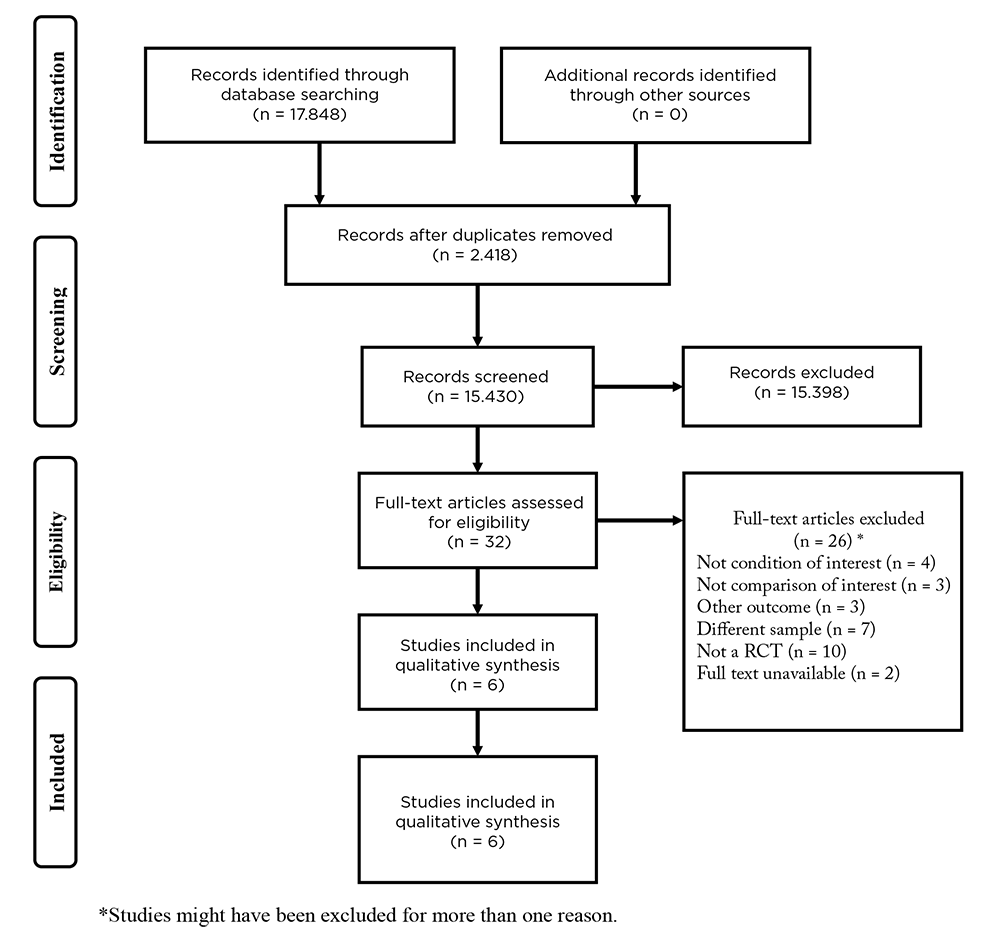
The search strategy identified 17,848 references for title and abstract screening, which was reduced to 15,430 after removing duplicates (Figure 1). Thirty-two articles were selected for full-text review and eligibility assessment. Six randomized controlled trials, including 3,134 participants, met the eligibility criteria and were included.
The included trials evaluated six preventive strategies: strength and plyometric exercises; neuromuscular control training; exercise-based warm-up programs; semi-customized exercises; proprioceptive balance board training program; and prophylactic ankle bracing20-25. Samples varied in competitive level (elite, recreational, school athletes) and ranged in size from 70 to 1,127 participants. Most participants were female (59.82%). Heterogeneity in participant age prevented data pooling. The strategies with the highest adherence/acceptability were semi-customized exercises (100%) and an exercise-based warm-up program (81.70%). Five trials compared the preventive strategy with no intervention, and one used a sham intervention in the control group. Only short-term effects (≤12 months) were investigated. The trials were published between 2004 and 2022. Table 1 details the characteristics of each trial (Supplementary Materials)
All included trials scored <6 points on the 0-10 PEDro scale, ranging from 3-5, indicating a high risk of bias. The main reasons for increased risk of bias were lack of concealed allocation, absence of blinding of participants and therapists, lack of assessor blinding, and dropouts greater than 15% (Supplementary Materials).
Overall effects
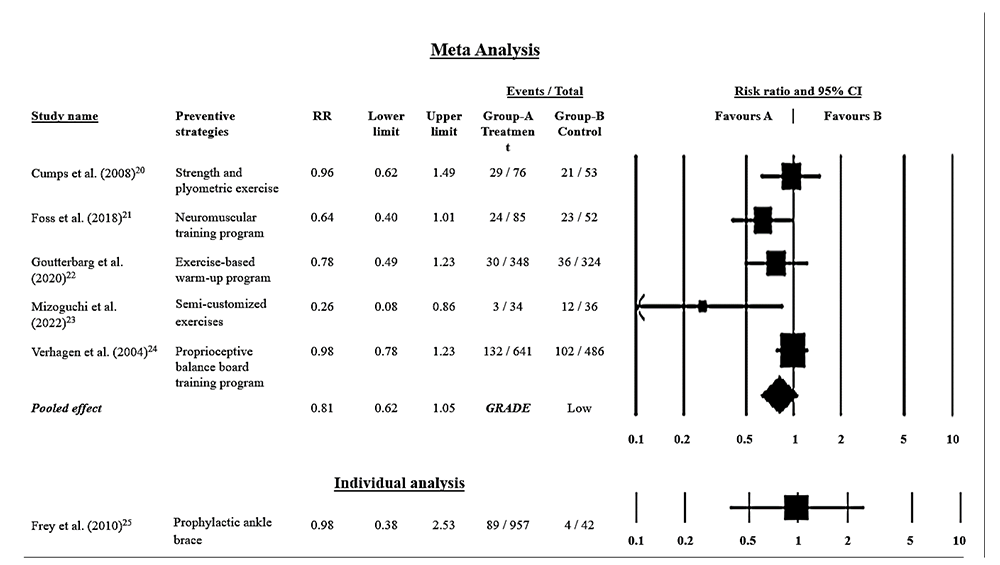
In a meta-analysis conducted to estimate the effectiveness of exercise-based strategies, comprising five studies20-24 and reporting data from 2,135 participants, results based on low-quality evidence indicated no protective effect (RR: 0.81 [95% CI: 0.62-1.05]) of these strategies in preventing musculoskeletal injuries (Figure 2).
In the only study that evaluated a non-exercise-based preventive strategy, U.S. interscholastic volleyball players (n=999) were followed to assess the efficacy of prophylactic ankle bracing25. Throughout the season, the results indicated no difference in the incidence of ankle injuries compared to no intervention (RR: 0.98 [95% CI: 0.38-2.53]) (Figure 2). Time loss and adherence/acceptability were not investigated.
Summary of individual evidence
Dutch volleyball players (n=129) participated in a trial evaluating the efficacy of strength and plyometric exercises over four months on the incidence of anterior knee pain20. The results indicated no effect on the incidence of anterior knee pain compared to no intervention (RR: 0.96 [95% CI: 0.62-1.49]) (Figure 2). Time loss could not be assessed due to lack of data. Adherence/acceptability was 55.60%.
North American interscholastic volleyball players were recruited for a program consisting of exercises targeting the trunk and lower limbs (n=137)21. The results showed that the intervention was not more effective than sham in reducing injuries (RR: 0.64 [95% CI: 0.40-1.01]) (Figure 2). Time loss and adherence/acceptability were not evaluated due to limited trial data.
Dutch recreational volleyball players aged 18 years and older were recruited to evaluate the efficacy of an exercise-based warm-up program (n=672)22. The analyses showed no difference compared to no intervention in the incidence of acute or overuse injuries during a season (RR: 0.78 [95% CI: 0.49-1.23]) (Figure 2). Adherence/acceptability to the intervention was 81.70%. The mean time loss was 3.2 days in the intervention group and 2.9 days in the control group.
Japanese high school volleyball players (n=70) aged 15 to 17 years were recruited to evaluate the efficacy of a semi-customized exercise program for preventing low back pain23. The results indicated a protective effect for low back pain compared to no intervention (RR: 0.26 [95% CI: 0.08-0.86]) (Figure 2). Adherence/acceptability to the intervention was 100%. Time loss was not investigated.
Dutch players were recruited to participate in a program consisting of 14 basic exercises performed on and off a balance board, including variations (n=1,127)24. The analysis showed that the intervention did not reduce the risk of ankle sprains during a season compared to no intervention (RR: 0.98 [95% CI: 0.78-1.23]) (Figure 2).
Efficacy of preventive interventions among volleyball athletes. The results of each active exercise modality are presented, followed by the pooled effect estimate. Individual data for the passive intervention are also presented. Estimates are reported as relative risks (RR) with 95% confidence intervals (CI), along with the total sample size and number of injuries occurring in each group
DISCUSSION
This systematic review evaluated preventive strategies for musculoskeletal injuries in volleyball, including five studies that focused on exercise-based interventions20-24 and one that investigated ankle bracing25. The meta-analysis indicated no significant reduction in injuries, with low-certainty evidence according to the GRADE assessment. A single study reported a protective effect for low back pain with a semi-customized program23; however, the wide confidence interval reduces certainty of the evidence.
A previous review by Kilic et al.3 highlighted the need for further research on injury prevention in volleyball, but only two trials overlapped with this study. Specific eligibility criteria, such as the exclusion of trials with two active interventions and those including participants with pre-existing lesions-a fundamental criterion for evaluating intervention efficacy-impacted the inclusion of trials. Furthermore, non-randomized trials, studies with incomplete full texts, and those lacking sufficient data were not considered in the RR estimation. These eligibility criteria substantially influenced the number of trials included in the review, as most identified studies did not meet these criteria.
Systematic reviews26-27 demonstrate the potential importance of properly implemented preventive programs, although these studies were not specific to volleyball. The findings of this volleyball-specific systematic review did not align with the positive results reported for preventive interventions in those studies. This discrepancy may be explained by methodological limitations that could have biased the results in the systematic review conducted by Vatovec et al.26 (which included non-randomized controlled clinical trials) and by differences in the sports population in the systematic review performed by Gomes et al.27 (soccer athletes).
Therefore, future trials should address these issues to provide more conclusive evidence on effective preventive measures for musculoskeletal injuries in volleyball.
CONCLUSION
The study followed a rigorous methodology for robust questioning. Current evidence indicates a potential benefit of semi-customized exercises for lower back pain, although relevant limitations remain. Preventive interventions in volleyball are currently supported by low-quality evidence, emphasizing the need for high-quality trials with larger sample sizes, especially for assessing long-term effects.
ACKNOWLEDGMENTS
We thank the Universidade Federal dos Vales do Jequitinhonha e Mucuri (UFVJM) for institutional support and the CNPq, CAPES (Finance Code 001), and FAPEMIG for support and scholarships.
DATA AVAILABILITY
The data underlying this study are available in the published article.
REFERENCES
-
1 Eerkes K. Volleyball injuries. Curr Sports Med Rep. 2012;11(5):251-6. doi: 10.1249/JSR.0b013e3182699037
» https://doi.org/10.1249/JSR.0b013e3182699037 -
2 Bere T, Kruczynski J, Veintimilla N, Hamu Y, Bahr R. Injury risk is low among world-class volleyball players: 4-year data from the FIVB Injury Surveillance System. Br J Sports Med. 2015;49(17):1132-7. doi: 10.1136/bjsports-2015-094959
» https://doi.org/10.1136/bjsports-2015-094959 -
3 Kilic O, Maas M, Verhagen E, Zwerver J, Gouttebarge V. Incidence, aetiology and prevention of musculoskeletal injuries in volleyball: A systematic review of the literature. Eur J Sport Sci. 2017;17(6):765-93. doi: 10.1080/17461391.2017.1306114
» https://doi.org/10.1080/17461391.2017.1306114 -
4 Amaral NCP, Lages MM, Franco FM, Souza FSM, Santos MC, et al. Volleyball Injuries: Brazilian men's national squad sports medicine experience. Arch Sports Med. 2020;4(1):178-183. doi: 10.36959/987/248
» https://doi.org/10.36959/987/248 - 5 Clarsen B. Overuse injuries in sport - Development, validation and application of a new surveillance method. 2014. [dissertation]. [Oslo]: The Norwegian School of Sport Sciences, 2014. 141 p.
-
6 Bahr R. No injuries, but plenty of pain? On the methodology for recording overuse symptoms in sports. Br J Sports Med. 2009;43(13):966-72. doi: 10.1136/bjsm.2009.066936
» https://doi.org/10.1136/bjsm.2009.066936 -
7 Nilstad A, Andersen TE, Bahr R, Holme I, Steffen K. Risk factors for lower extremity injuries in elite female soccer players. Am J Sports Med. 2014;42(4):940-8. doi: 10.1177/0363546513518741
» https://doi.org/10.1177/0363546513518741 -
8 Soligard T, Steffen K, Palmer D, Alonso JM, Bahr R, et al. Sports injury and illness incidence in the Rio de Janeiro 2016 Olympic Summer Games: A prospective study of 11274 athletes from 207 countries. Br J Sports Med. 2017;51(17):1265-71. doi: 10.1136/bjsports-2017-097956
» https://doi.org/10.1136/bjsports-2017-097956 - 9 Leite MMAG, Bittencourt NFN, Verhagen E, Mendonça LD. Financial costs analysis of musculoskeletal injuries in elite female volleyball players. In: Voight M, Esculier JF. Int J Sports Phys Ther. 3rd World Congress of Sports Physical Therapy; 2019; Vancouver, BC, Canada. 14(6):S11-12.
-
10 Emery CA, Roy TO, Whittaker JL, Nettel-Aguirre A, van Mechelen W. Neuromuscular training injury prevention strategies in youth sport: a systematic review and meta-analysis. Br J Sports Med. 2015;49(13):865-70. doi: 10.1136/bjsports-2015-094639
» https://doi.org/10.1136/bjsports-2015-094639 -
11 Kamper SJ. Control groups: linking evidence to practice. J Orthop Sports Phys Ther. 2018;48(11):905-6. doi: 10.2519/jospt.2018.0706
» https://doi.org/10.2519/jospt.2018.0706 -
12 Page MJ, Moher D, Bossuyt PM, Boutron I, Hoffmann TC, et al. PRISMA 2020 explanation and elaboration: updated guidance and exemplars for reporting systematic reviews. BMJ. 2021;372:n160. doi: 10.1136/bmj.n160
» https://doi.org/10.1136/bmj.n160 -
13 Steffens D, Maher CG, Pereira LS, Stevens ML, Oliveira VC, et al. Prevention of low back pain: a systematic review and meta-analysis. JAMA Intern Med. 2016;176(2):199-208. doi: 10.1001/jamainternmed.2015.7431
» https://doi.org/10.1001/jamainternmed.2015.7431 -
14 Higgins JPT, Thomas J, Chandler J, Cumpston M, Li T, et al. Cochrane handbook for systematic reviews of interventions version 6.3 [Internet]. London: Cochrane; 2019 [cited 2026 March 2]. Available from: https://www.training.cochrane.org/handbook
» https://www.training.cochrane.org/handbook - 15 Maher CG, Sherrington C, Herbert RD, Moseley AM, Elkins M. Reliability of the PEDro scale for rating quality of randomized controlled trials. Phys Ther. 2003;83(8):713-21. PMID:12882612
-
16 Schünemann H, Brozek J, Guyatt G, Oxman A, editors. GRADE Handbook. Handbook for grading the quality of evidence and the strength of recommendations using the GRADE approach. 2013 [cited 2026 March 2]. Available from: https://gdt.gradepro.org/app/handbook/handbook.html
» https://gdt.gradepro.org/app/handbook/handbook.html -
17 Mueller PS, Montori VM, Bassler D, Koenig BA, Guyatt GH. Ethical issues in stopping randomized trials early because of apparent benefit. Ann Intern Med. 2007;146(12):878-81. doi: 10.7326/0003-4819-146-12-200706190-00009
» https://doi.org/10.7326/0003-4819-146-12-200706190-00009 - 18 Foley NC, Teasell RW, Bhogal SK, Speechley MR. Stroke rehabilitation evidence-based review: methodology. Top Stroke Rehabil. 2003;10(1):1-7. PMID:12970828
-
19 Ioannidis JP, Trikalinos TA. The appropriateness of asymmetry tests for publication bias in meta-analyses: a large survey. CMAJ. 2007;176(8):1091-6. doi: 10.1503/cmaj.060410
» https://doi.org/10.1503/cmaj.060410 -
20 Cumps E, Verhagen EA, Duerinck S, Devillé A, Duchene L, et al. Effect of a preventive intervention programme on the prevalence of anterior knee pain in volleyball players. J Sports Sci. 2008;8(4):183-92. doi: 10.1080/17461390802067711
» https://doi.org/10.1080/17461390802067711 -
21 Foss KDB, Thomas S, Khoury JC, Myer GD, Hewett TE. A school-based neuromuscular training program and sport-related injury incidence: a prospective randomized controlled clinical trial. J Athl Train. 2018;53(1):20-8. doi: 10.4085/1062-6050-173-16
» https://doi.org/10.4085/1062-6050-173-16 -
22 Gouttebarge V, Barboza SD, Zwerver J, Verhagen E. Preventing injuries among recreational adult volleyball players: Results of a prospective randomised controlled trial. J Sports Sci. 2020;38(6):612-8. doi: 10.1080/02640414.2020.1721255
» https://doi.org/10.1080/02640414.2020.1721255 -
23 Mizoguchi Y, Akasaka K, Otsudo T, Shimada N, Naka H. Efficacy of semi-customized exercises in preventing low back pain in high school volleyball players: a randomized controlled trial. Medicine (Baltimore). 2022;101(36):30358. doi: 10.1097/MD.0000000000030358
» https://doi.org/10.1097/MD.0000000000030358 -
24 Verhagen E, van der Beek A, Twisk J, Bouter L, Bahr R, et al. The effect of a proprioceptive balance board training program for the prevention of ankle sprains: a prospective controlled trial. Am J Sports Med. 2004;32(6):1385-93. doi: 10.1177/0363546503262177
» https://doi.org/10.1177/0363546503262177 -
25 Frey C, Feder KS, Sleight J. Prophylactic ankle brace use in high school volleyball players: a prospective study. Foot Ankle Int. 2010;31(4):296-300. doi: 10.3113/FAI.2010.0296
» https://doi.org/10.3113/FAI.2010.0296 -
26 Vatovec R, Kozinc Ž, Šarabon N. Exercise interventions to prevent hamstring injuries in athletes: a systematic review and meta-analysis. Eur J Sport Sci. 2020;20(7):992-1004. doi: 10.1080/17461391.2019.1689300
» https://doi.org/10.1080/17461391.2019.1689300 -
27 Gomes Neto M, Conceição CS, Lima Brasileiro AJA, Sousa CS, Carvalho VO, et al. Effects of the FIFA 11 training program on injury prevention and performance in football players: a systematic review and meta-analysis. Clin Rehabil. 2017;31(5):651-9. doi: 10.1177/0269215516675906
» https://doi.org/10.1177/0269215516675906
APPENDIX 1. SEARCH STRATEGY CONDUCTED UP TO APRIL 14TH, 2023.
OVID (AMED - Allied and Complementary Medicine, Cochrane Central Register of Controlled Trials, Cochrane Database of Systematic Reviews, Embase, Medline, PsycInfo)-
randomised controlled trial*.mp. [mp=ab, hw, ti, ot, sh, kw, tx, ct, tn, dm, mf, dv, kf, fx, dq, nm, ox, px, rx, ui, sy, tc, id, tm]
-
Randomized Controlled Trial.mp. [mp=ab, hw, ti, ot, sh, kw, tx, ct, tn, dm, mf, dv, kf, fx, dq, nm, ox, px, rx, ui, sy, tc, id, tm]
-
random allocation.mp. [mp=ab, hw, ti, ot, sh, kw, tx, ct, tn, dm, mf, dv, kf, fx, dq, nm, ox, px, rx, ui, sy, tc, id, tm]
-
Comparative Stud*.mp. [mp=ab, hw, ti, ot, sh, kw, tx, ct, tn, dm, mf, dv, kf, fx, dq, nm, ox, px, rx, ui, sy, tc, id, tm]
-
Controlled Clinical Trial*.mp. [mp=ab, hw, ti, ot, sh, kw, tx, ct, tn, dm, mf, dv, kf, fx, dq, nm, ox, px, rx, ui, sy, tc, id, tm]
-
double-blind method*.mp. [mp=ab, hw, ti, ot, sh, kw, tx, ct, tn, dm, mf, dv, kf, fx, dq, nm, ox, px, rx, ui, sy, tc, id, tm]
-
single-blind method*.mp. [mp=ab, hw, ti, ot, sh, kw, tx, ct, tn, dm, mf, dv, kf, fx, dq, nm, ox, px, rx, ui, sy, tc, id, tm]
-
Clinical Trial*.mp. [mp=ab, hw, ti, ot, sh, kw, tx, ct, tn, dm, mf, dv, kf, fx, dq, nm, ox, px, rx, ui, sy, tc, id, tm]
-
crossover stud*.mp. [mp=ab, hw, ti, ot, sh, kw, tx, ct, tn, dm, mf, dv, kf, fx, dq, nm, ox, px, rx, ui, sy, tc, id, tm]
-
1 or 2 or 3 or 4 or 5 or 6 or 7 or 8 or 9
-
Volleyball.mp. [mp=ab, hw, kw, ti, ot, sh, tx, ct, tn, dm, mf, dv, kf, fx, dq, nm, ox, px, rx, an, ui, sy, tc, id, tm]
-
Volley*.mp. [mp=ab, hw, kw, ti, ot, sh, tx, ct, tn, dm, mf, dv, kf, fx, dq, nm, ox, px, rx, an, ui, sy, tc, id, tm]
-
Volleyball player.mp. [mp=ab, hw, kw, ti, ot, sh, tx, ct, tn, dm, mf, dv, kf, fx, dq, nm, ox, px, rx, an, ui, sy, tc, id, tm]
-
Sports.mp. [mp=ab, hw, kw, ti, ot, sh, tx, ct, tn, dm, mf, dv, kf, fx, dq, nm, ox, px, rx, an, ui, sy, tc, id, tm]
-
athlete*.mp. [mp=ab, hw, kw, ti, ot, sh, tx, ct, tn, dm, mf, dv, kf, fx, dq, nm, ox, px, rx, an, ui, sy, tc, id, tm]
-
athletic injur*.mp. [mp=ab, hw, kw, ti, ot, sh, tx, ct, tn, dm, mf, dv, kf, fx, dq, nm, ox, px, rx, an, ui, sy, tc, id, tm]
-
sportsperson.mp. [mp=ab, hw, kw, ti, ot, sh, tx, ct, tn, dm, mf, dv, kf, fx, dq, nm, ox, px, rx, an, ui, sy, tc, id, tm]
-
sports medicine.mp. [mp=ab, hw, kw, ti, ot, sh, tx, ct, tn, dm, mf, dv, kf, fx, dq, nm, ox, px, rx, an, ui, sy, tc, id, tm]
-
sportsman.mp. [mp=ab, hw, kw, ti, ot, sh, tx, ct, tn, dm, mf, dv, kf, fx, dq, nm, ox, px, rx, an, ui, sy, tc, id, tm]
-
sportswoman.mp. [mp=ab, hw, kw, ti, ot, sh, tx, ct, tn, dm, mf, dv, kf, fx, dq, nm, ox, px, rx, an, ui, sy, tc, id, tm]
-
sport*.mp. [mp=ab, hw, kw, ti, ot, sh, tx, ct, tn, dm, mf, dv, kf, fx, dq, nm, ox, px, rx, an, ui, sy, tc, id, tm]
-
11 or 12 or 13 or 14 or 15 or 16 or 17 or 18 or 19 or 20 or 21
-
prevent*.mp. [mp=ab, hw, kw, ti, ot, sh, tx, ct, tn, dm, mf, dv, kf, fx, dq, nm, ox, px, rx, an, ui, sy, tc, id, tm]
-
prevention.mp. [mp=ab, hw, kw, ti, ot, sh, tx, ct, tn, dm, mf, dv, kf, fx, dq, nm, ox, px, rx, an, ui, sy, tc, id, tm]
-
prophylactic.mp. [mp=ab, hw, kw, ti, ot, sh, tx, ct, tn, dm, mf, dv, kf, fx, dq, nm, ox, px, rx, an, ui, sy, tc, id, tm]
-
prophylactic*.mp. [mp=ab, hw, kw, ti, ot, sh, tx, ct, tn, dm, mf, dv, kf, fx, dq, nm, ox, px, rx, an, ui, sy, tc, id, tm]
-
recurrence.mp. [mp=ab, hw, kw, ti, ot, sh, tx, ct, tn, dm, mf, dv, kf, fx, dq, nm, ox, px, rx, an, ui, sy, tc, id, tm]
-
relapse.mp. [mp=ab, hw, kw, ti, ot, sh, tx, ct, tn, dm, mf, dv, kf, fx, dq, nm, ox, px, rx, an, ui, sy, tc, id, tm]
-
reappearance.mp. [mp=ab, hw, kw, ti, ot, sh, tx, ct, tn, dm, mf, dv, kf, fx, dq, nm, ox, px, rx, an, ui, sy, tc, id, tm]
-
reoccurrence.mp. [mp=ab, hw, kw, ti, ot, sh, tx, ct, tn, dm, mf, dv, kf, fx, dq, nm, ox, px, rx, an, ui, sy, tc, id, tm]
-
return.mp. [mp=ab, hw, kw, ti, ot, sh, tx, ct, tn, dm, mf, dv, kf, fx, dq, nm, ox, px, rx, an, ui, sy, tc, id, tm]
-
recur*.mp. [mp=ab, hw, kw, ti, ot, sh, tx, ct, tn, dm, mf, dv, kf, fx, dq, nm, ox, px, rx, an, ui, sy, tc, id, tm]
-
reocurrence*.mp. [mp=ab, hw, kw, ti, ot, sh, tx, ct, tn, dm, mf, dv, kf, fx, dq, nm, ox, px, rx, an, ui, sy, tc, id, tm]
-
23 or 24 or 25 or 26 or 27 or 28 or 29 or 30 or 31 or 32 or 33
-
10 and 22 and 34
Abstract & Title: prevent*
Therapy: not applicable
Problem: pain
Body Part: not applicable
Subdiscipline: not applicable
Topic: not applicable
Method: clinical trial
Author/Association: not applicable
Title Only: not applicable
Source: not applicable
Published Since: not applicable
New records added since: not applicable
Score of at least: not applicable
EBSCO (SPORTDISCUSS and CINAHL)S1. ( (((Volley*) OR (sport*) OR (athlete*) OR (athletic injur*)) ) AND ( ((randomized controlled trial*) OR (randomised controlled trial*) OR (clinical trial*) OR (random allocation) OR (comparative stud*) OR (crossover stud*))) ) AND prevent*)