 Effectiveness of muscle strengthening in early postoperative total knee arthroplasty: systematic review with meta-analysis
ABSTRACT
Total Knee Arthroplasty (TKA) is a surgical intervention, in which the affected joint is replaced by a prosthesis. Physical therapy is essential in rehabilitation after TKA, which can decrease the length of hospital stay, reduce symptoms and improve knee function. This study aimed to analyze the effects of muscle strengthening on the functioning of individuals with TKA in the early postoperative period. Studies were retrieved from the Pubmed, PEDro, LILACS, EMBASE, CINAHL and Cochrane Library databases, using following terms and keywords: Arthroplasties, Knee Replacement, Physiotherapy, Exercise, Rehabilitation and Postoperative. All included studies were assessed for methodological quality, using the PEDro Scale. Only randomized controlled trials involving unicompartmental knee replacement in the early postoperative period were included in this review. All meta-analyses were conducted using the Review Manager - RevMane software described as standardized mean difference (SMD) with 95% confidence intervals (CI). Nine studies were chosen to review the full text. The main findings demonstrated that muscle strengthening, after comparison with other variables, was effective only for the variable muscle strength (two studies, n=155; MD=−1.39, 95% CI [−2.58, −0.19]; p=0,02; I²=96%) improving overall functioning. For the other analyses, however, no significant differences were observed. This study outcomes suggest muscle strengthening-when initiated in the early postoperative period-is better than the comparison conditions in knee functioning.
Keywords
Knee Arthroplasty; Exercise; Physical therapy; Postoperative; Rehabilitation
RESUMO
A artroplastia total do joelho (ATJ) trata-se de uma intervenção cirúrgica, na qual ocorre a substituição da articulação afetada por uma prótese. A fisioterapia é fundamental na reabilitação após ATJ, podendo reduzir os sintomas e possibilitar a melhora da função do joelho. O objetivo foi analisar os efeitos do fortalecimento muscular na força, funcionalidade e dor de indivíduos com ATJ no período pós-operatório precoce. Os estudos foram selecionados por meio de seis bases de dados (PubmMed, PEDro, LILACS, Embase, CINAHL e Cochrane Library), utilizando os termos e descritores: Arthroplasties, Knee Replacement, Physiotherapy, Exercise, Rehabilitation e Postoperative. Todos os estudos incluídos foram avaliados quanto à qualidade metodológica, utilizando a escala PEDro. Somente ensaios clínicos randomizados que envolveram ATJ unilateral primária no pós-operatório precoce foram incluídos. Todas as metanálises foram conduzidas por meio do software Review Manager (RevMan) e descritos por diferenças médias padronizadas (standardized mean difference - SMD) com intervalos de confiança de 95% (IC). Escolheu-se nove estudos para revisão do texto completo. Os principais achados mostraram que o fortalecimento muscular, quando confrontado com as condições de comparação, foi eficaz apenas para a variável força muscular, demonstrando melhora na função geral (dois estudos, n=155; MD=-1,39, 95% IC [-2,58, -0,19]; p=0,02; I²=96%). Já para as demais análises não foram observadas diferenças significativas. Os achados do presente estudo demonstram que o fortalecimento muscular, quando iniciado principalmente no pós-operatório precoce de ATJ, é melhor que as condições de comparação na força muscular do joelho.
Descritores
Artroplastia Total do Joelho; Exercício; Fisioterapia; Pós-operatório; Reabilitação
RESUMEN
La artroplastia total de rodilla (ATR) es una intervención quirúrgica que reemplaza la articulación afectada por una prótesis. La fisioterapia es esencial en la rehabilitación después de la ATR, pues se puede reducir los síntomas y mejorar la función de la rodilla. El objetivo de este estudio fue evaluar los efectos del fortalecimiento muscular sobre la fuerza, la funcionalidad y el dolor de los individuos con ATR en el posoperatorio temprano. Los estudios fueron seleccionados de seis bases de datos (PubMed, PEDro, LILACS, Embase, CINAHL y Cochrane Library), utilizando los términos y palabras clave: Arthroplasties, Knee Replacement, Physiotherapy, Exercise, Rehabilitation y Postoperative. Todos los estudios incluidos se evaluaron para determinar la calidad metodológica mediante el uso de la escala PEDro. Solo se incluyeron ensayos clínicos aleatorizados que incluyeron ATR unilateral primaria en el posoperatorio temprano. Todos los metaanálisis se realizaron en el software Review Manager (RevMan) y se describieron mediante la diferencia de media estandarizada (standardized mean difference -SMD) con intervalos de confianza (IC) del 95%. Se eligieron nueve estudios para análisis del texto completo. Los principales hallazgos revelaron que el fortalecimiento muscular, en comparación con las condiciones evaluadas, fue efectivo solo para la variable de fuerza muscular, lo cual ocasionó mejora en la función general (dos estudios, n=155; MD=-1,39, IC 95% [-2,58, -0,19]; p=0,02; I²=96%). Para los otros análisis, no se observaron diferencias significativas. Los hallazgos de este estudio revelaron que el fortalecimiento muscular, cuando se inicia principalmente en el período posoperatorio temprano de ATR, presenta una mejor respuesta que las condiciones evaluadas en la fuerza muscular de la rodilla.
Palabras clave
Artroplastia Total de Rodilla; Ejercicio; Fisioterapia; Posoperatorio; Rehabilitación
INTRODUCTION
Osteoarthritis (OA) is a chronic joint disease characterized by the degeneration of the articular cartilage, associated with pain, stiffness, and functional disability1. It is the most common joint disease2, and is therefore considered a significant public health problem3. While OA can affect all joints, the knee is one of the most affected2. In advanced stages of the disease, total knee arthroplasty (TKA) is frequently performed4. TKA is a surgical intervention in which the affected joint is replaced with a prosthesis5. It is a reference in relieving pain and improving functionality and quality of life since it presents very satisfactory results in the postoperative (PO) period6.
Physical therapy is essential in rehabilitation after TKA7, and can reduce hospitalization time, alleviate symptoms, and improve knee functioning8. Rehabilitation involves exercises generally implemented from the preoperative phase, continue throughout the hospitalization period, and are maintained for an additional one to two months after discharge. Thus, rehabilitation, whether during hospitalization or within the first two months after surgery, is referred to as early rehabilitation9.
In the early postoperative of knee replacement, one of the main objectives of hospital physical therapy is to prepare patients for discharge, focusing on early mobilization, aiming to improve range of motion (ROM) and muscle strength10. Moreover, treatment modalities to alleviate symptoms of pain and edema around the knee should always be present in the protocol, due to their relationship with dysfunctions observed in the early or late PO7.
The initial phase of rehabilitation is extremely important, as approximately 60% of quadriceps muscle strength and 88% of functional performance are lost within the first month after surgery11. Thus, exercises aimed at restoring muscle strength help reduce the risk of postoperative-related complications, such as pain, stiffness, and reduced functioning12.
Therefore, physical therapy in the postoperative of TKA may involve exercises aimed at reducing pain, swelling, improving muscle strength, especially of the quadriceps muscle, and knee range of motion, in an attempt to improve individuals’ functioning13, in addition to exercises aimed at gait, balance and activities of daily living10.
Achieving functional independence as early as possible is an important factor in the management of patients after TKA. However, despite the numerous rehabilitation programs available, there are few studies aimed at demonstrate their effectiveness or guide rehabilitation in the PO of TKA, thereby achieving functional improvement in patients. Therefore, this systematic review aims to analyze the effects of physical therapy exercise on the functioning individuals with TKA in the early postoperative period.
METHODOLOGY
Search strategy
To identify relevant studies An electronic search was conducted on December 14, 2022 in the following databases: PubMed, PEDro, LILACS, Embase, CINAHL, and Cochrane Library. The searches were conducted using the Health Sciences Descriptors (DeCS) in English, with the following keywords: Arthroplasties, Knee Replacement (and synonyms Arthroplasties, Replacement, Knee; Arthroplasty, Knee; Arthroplasty, Knee Replacement; Arthroplasty, Total Knee; Knee Arthroplasty; Knee Arthroplasty, Total; Knee Replacement Arthroplasties; Knee Replacement Arthroplasty; Knee Replacement, Total; Replacement Arthroplasties, Knee; Replacement Arthroplasty, Knee; Replacement, Total Knee; Total Knee Arthroplasty, and Total Knee Replacement), Physiotherapy (and synonyms Physical therapy specialty and Physical therapy modalities), Exercise, Rehabilitation, and Postoperative. These terms were used independently and then combined with Boolean operators (AND/OR) to increase the sensitivity and specificity of the search. Evidence-based information was used: randomized, controlled, or quasi-experimental clinical trials.
Study selection
The selected studies involved TKA in the early postoperative period (up to two months after surgery) in human participants, in which the effects of resistance exercise on the general functioning of the individuals were evaluated. Articles describing the outcomes, comparing postoperative strengthening exercises with usual care, or comparing different types of postoperative physical therapy exercises were included in this review. Other eligibility criteria were also used:
-
Articles available in full text;
-
Articles in English;
-
Randomized, controlled, or quasi-experimental clinical trials;
-
Exercise intervention proposed by physical therapists;
-
The intervention may begin in the early postoperative period, before discharge, in the hospital setting, or after discharge, in the outpatient clinic or at home;
-
Participants of both sexes, adults (age ≥18 years), with unicompartmental knee replacement in the postoperative period.
Articles published in a language other than English, whose full text was not available, that discussed arthroplasty in a joint other than the knee or that addressed partial rather than total arthroplasty, that did not evaluate functioning as an outcome, and pilot studies were excluded. Interventions, including electrical stimulation, acupuncture, cryotherapy, hydrotherapy, Pilates, or electrical modalities such as continuous passive movement, were excluded because they are considered complementary to interventions based on exercises conducted by the physical therapist14. Studies related to telerehabilitation, animal studies, and articles not directly related to the subject were also excluded from this review.
Based on the inclusion criteria, an initial screening of titles was conducted, followed by an analysis of abstracts to identify potentially relevant articles. The full-text articles extracted for final review were then screened. These steps were performed independently by two authors. If there were differences in the final selection, a third evaluator would decide whether to include or exclude discrepant articles.
Data extraction
Outcome data, including final values of means, standard deviations, and sample size, were extracted by two reviewers. The data extraction process was performed using a standardized form. The extracted data included the type of study, country and year of publication, sample size, participant characteristics (age and sex), characteristics of the physical therapy intervention (type, setting, supervision, duration, frequency, intensity, onset, and follow-up time), characteristics of the control intervention (frequency and intensity) and main findings in each outcome category (joint and muscle function, functional performance, and self-reported outcomes). Disagreements between authors were resolved by a third, more experienced author, who decided the definitive outcome.
Assessment of the methodological quality of the studies
All included studies were assessed for methodological quality using the Physical Therapy Evidence Database (PEDro) scale14),(15. Two independent reviewers also performed this process, and, again, the consensus method was adopted. Each study was assessed for random allocation, allocation concealment, baseline comparability, blinding of participants, therapists, and assessors, adequate follow-up, intention-to-treat analysis, intergroup comparison, point estimates, and variability. A score greater than or equal to seven was considered “high quality,” a score of five or six was considered “moderate quality,” and a score less than or equal to four was considered “poor quality.” Studies previously assessed and listed in the PEDro database had these scores adopted. Methodological quality was not an inclusion criterion.
Data synthesis and analysis
A grouping was performed, considering all studies, for the variables of body function and/or activity of the participants. For this purpose, parameters such as pain, strength, ROM, quality of life (QoL), balance, and gait speed were used to observe the effects of physical therapy exercise, regardless of the comparison with other exercises or with the control condition.
All meta-analyses were conducted using the Review Manager (RevMan) software (version 5.3, Copenhagen: The Nordic Cochrane Centre, The Cochrane Collaboration, 2014). The pooled estimates were calculated using a random effect model, due to the heterogeneity of the studies (represented by I²). The data were pooled in meta-analyses and described as standardized mean differences (SMD) with 95% confidence intervals (CI). The effect size was interpreted as: 0.2 representing a small effect size, 0.5 as moderate, and 0.8 as a large effect size16.
RESULTS
Eligible studies
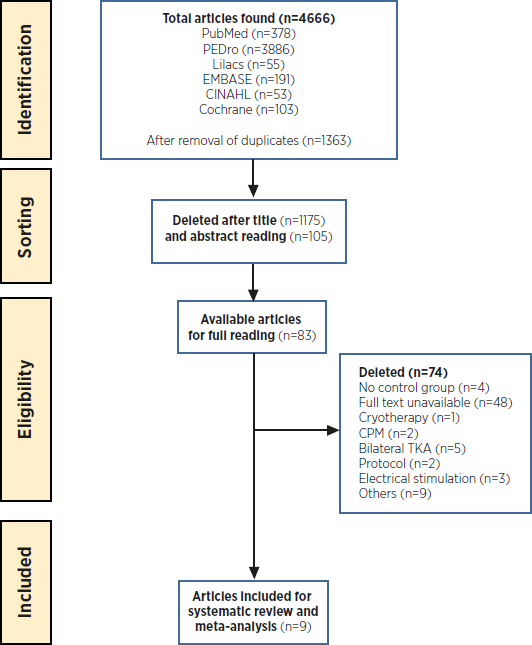
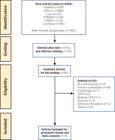
Initially, a total of 4,666 records were identified from the search in the six databases. The initial search in the PubMed database generated 378 results; the original query in the PEDro database resulted in 3,886 entries; in the LILACS database, 55 results were found; in the Embase database, 191 entries; the query in the CINAHL database obtained 53 results; and, finally, the Cochrane Library admitted 103 results.
After assessing relevance and removing duplicates, the remaining 1,363 articles were screened by title, resulting in 1,175 ineligible articles. The remaining 188 articles were selected based on their abstracts, and of these, 83 articles had their full texts evaluated. Of these studies, 74 were excluded: 4 did not have a control group, 48 did not have full text available, one used cryotherapy, two used continuous passive motion, 5 included bilateral TKA, 2 were protocols, 3 used electrical stimulation, and nine were excluded due to other criteria. Finally, nine articles16)-(24 were considered eligible and included in this review.
Figure 1 shows the schematic process of study selection based on a PRISMA flowchart.
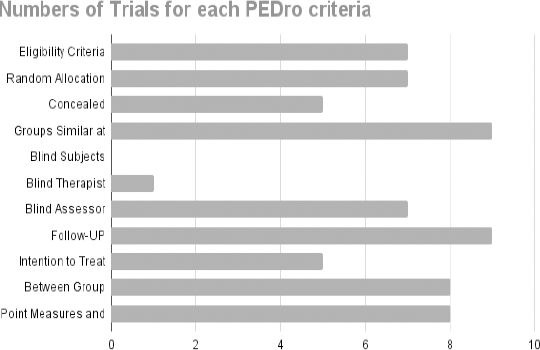
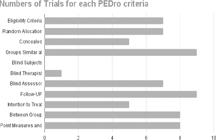
The PEDro scale, used to assess the methodological quality of the included studies, presented an average of 7.1 points. Seven of the studies were considered to be of moderate to high quality17)-(19),(21)-(23. Figure 2 shows the number of clinical trials that met each criterion.
The nine eligible studies were published from 200624 to 202123. These studies involved a total of 1,174 participants of both sexes. The profile and age of the participants varied between adults18),(19),(24 and older adults16),(17),(20)-(24, with an age range of 5018) to 82 years20. All individuals had unicompartmental knee replacement and were in the postoperative period.
The studies were published in Japan16),(22, Spain17, Pakistan18, Australia19, China20, the United States21, the Netherlands23, and the United Kingdom24. Of the nine studies included, one was a non-randomized clinical trial20),(22, and the other eight studies were randomized clinical trials16)-(19),(21),(23),(24.
The protocols consisted of a standard rehabilitation program plus seated side tapping (SST) training16, rehabilitation training and training with a dynamometric platform17, functional home training1, inpatient rehabilitation combined with a home-based program and home-based program alone19, educational program and cycle ergometer training20, in-clinic and community-based exercises21, rehabilitation four hours after surgery or two days after surgery22, twice-daily exercises23, and outpatient or home-based training24. All studies had a comparison group. Table 1 summarizes the characteristics of the included studies.
Meta-analysis
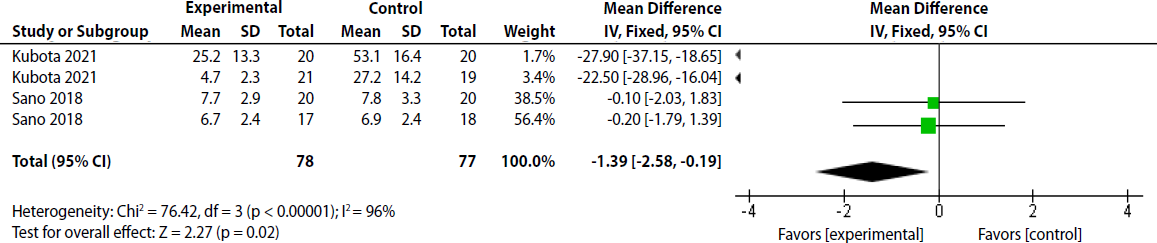
Analyses comparing strengthening exercises with control conditions were performed using the mean difference measure for overall knee strength (Figure 3). The results of the pooled data demonstrated that the interventions in the experimental group were effective compared with the control group conditions, with a small effect size (two studies, n=155; MD=-1.39, 95% CI [-2.58, -0.19]; p=0.02; I²=96%).
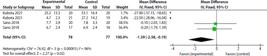
Forest plot illustrating the effects of strengthening exercise compared with control conditions for overall strength (n=155)
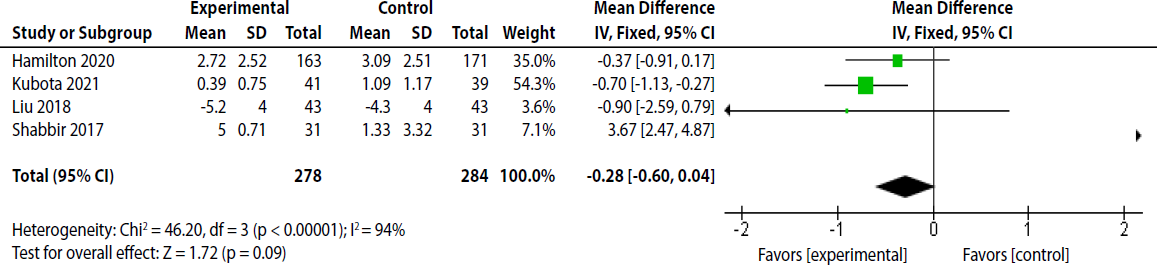
An analysis was performed to compare the effects of strengthening exercise with the control condition for VAS. The experimental condition showed a small favorable effect compared with the control condition for the VAS variable, presenting a small effect size (four studies, n=562; MD=-0.28, 95% CI [-0.60, 4.87]; p=0.09; I²=94%). Kubota et al. (22 analyzed four timepoints after the intervention: three days, three weeks, six months, and 12 months. While Shabbir et al. (18 evaluated the intervention after four weeks post-operatively, Hamilton et al. (24 analyzed the data at six, eight, and 14 weeks post-operatively, and Liu et al. (20 analyzed the data after 12 weeks of intervention. Thus, it was decided to use only the results of the third22, fourth18, sixth24, and 12th20 weeks in the studies16),(22) for this analysis.

Forest plot illustrating the effects of strengthening exercises compared with control conditions for pain (n=562)
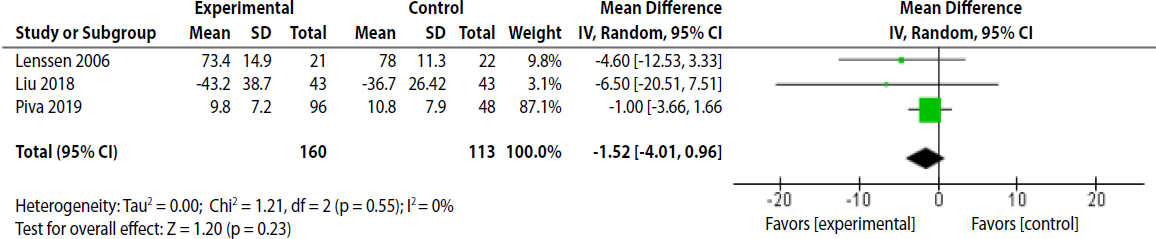
Figure 5 presents the results of the analyses of studies that compared the effects of strengthening exercises with control conditions for the WOMAC questionnaire. The variable analyzed did not demonstrate a significant effect compared with the control condition (three studies, n=273; MD=-1.52, 95% CI [-4.01, 0.96]; p=0.23; I²=23%).
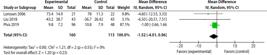
Forest plot illustrating the effects of physical therapy exercise compared with control conditions for ROM (n=419) and WOMAC questionnaire (n=273)
DISCUSSION
The present study aimed to analyze the effects of muscle strengthening in individuals with total TKA and compare them with the intervention and early postoperative periods on strength, pain, and functionality outcomes. The main findings of this study demonstrated that strengthening, when compared with other conditions, was effective only in increasing knee muscle strength with functionality outcome. However, when compared with the control condition, strength exercise did not show superiority in variables such as VAS and the WOMAC questionnaire.
A total of two studies16),(22) (n=155 participants) compared muscle strengthening associated with SST training16 and early rehabilitation22, to analyze knee functionality with the variable muscle strength, demonstrating that muscle strengthening, when related to a trunk mobility program and started early, is more effective than the other interventions performed in the comparison groups. Three studies25)-(27 evaluated whether trunk strength and mobility were associated with the performance and functionality of elderly patients. According to Kim et al. (26, isometric and dynamic trunk exercises increase gait speed, and exercises that incorporate strength and coordination27 may be beneficial for improving function. These results support the present study, demonstrating that trunk exercises and early rehabilitation associated with muscle strengthening improve patient functionality.
Regarding the findings about the VAS, favorable results of strengthening were observed in the experimental condition in the exploratory analysis18),(20),(22),(24, but with a small effect. According to Winter et al. (28, there was no increase in pain after performing muscle strength training in patients with TKA in the postoperative period. It was also found that the reduction in muscle strength in the PO period is due to decreased muscle activation29, resulting in swelling, inflammation, and joint damage30. Therefore, early rehabilitation should be initiated with a focus on strength training and neuromuscular activation to increase neuromuscular activation and mitigate the consequences that can lead to pain31),(32. Therefore, performing early muscle strengthening in conjunction with neuromuscular activation can reduce postoperative pain, leading to more satisfactory results.
For the outcome of functionality, using the WOMAC-PF questionnaire as a variable, the exploratory analysis of this meta-analysis also showed no significant effects for strengthening exercises compared with the control group20),(21),(23. Kim et al. (31) investigated the functional results after the application of a critical pathway for hospital rehabilitation of TKA. The exercise program included an early rehabilitation protocol, followed by intensive rehabilitation, which consisted of progressive gait training using a positive pressure treadmill for the lower limbs, aerobic exercises on a stationary ergometer, and progressive resistance exercises. The evaluations were performed preoperatively, one month, and three months PO. In this study, the WOMAC-PF pain and function scores demonstrated significant improvement at one month post-TKA. In contrast, the WOMAC-PF stiffness score showed gradual yet substantial improvements over the subsequent three months. These results contrast with the findings of the present study, which may be explained by the fact that an intensive rehabilitation program promotes short- and medium-term improvement in functional capacity after TKA in severe OA32.
Therefore, physical therapy interventions, including muscle strengthening, are beneficial for the recovery of short-term postoperative physical function after TKA33. These results may be explained by the fact that muscle strengthening restores neuromuscular control, in addition to reducing pain and improving the patient’s function and quality of life29),(30. Therefore, performing physical therapy exercises after TKA brings clear benefits.
One of the limitations of the study was the lack of randomized clinical trials in the literature that investigated the topic addressed to be included in this systematic review. Furthermore, they did not determine the validity and reliability of the integrity of the types of exercises administered, the instruments used, or the adequacy of the statistical analysis employed in the studies. There were difficulties or a shortage of studies to stratify the exploratory subanalyses due to the heterogeneity of the studies in terms of age, sex, type of physical therapy exercise, variables analyzed, intervention time, and comparison with another activity. Despite this, the methodological quality of the included studies should be taken into consideration.
It is worth noting that the results of the present study allow trained professionals to use strengthening exercises as an intervention measure in the early and late PO of TKA, especially if the objective is to improve knee function. It is also worth noting that this systematic review grouped the results in a well-founded manner, generating only meta-analyses with the largest number of studies possible.
Further studies are required to evaluate these results, allowing for a more precise conclusion to be drawn about the best types of exercises, intervention times, and assessment methods for TKA, and for obtaining an improved clinical practice.
CONCLUSION
This review demonstrates that studies are available on rehabilitation with strengthening exercises following TKA surgery in the immediate postoperative period. The findings of the present study demonstrate that strength exercise, when initiated mainly in the early PO of TKA, is better than the comparison conditions in muscle strength for knee functionality.
REFERENCES
-
1 Thomas AC, Hubbard-Turner T, Wikstrom EA, Palmieri-Smith RM. Epidemiology of Posttraumatic Osteoarthritis. J Athl Train. 2017;52(6):491-6. doi: 10.4085/1062-6050-51.5.08
» https://doi.org/10.4085/1062-6050-51.5.08 -
2 Mendy A, Park J, Vieira ER. Osteoarthritis and risk of mortality in the USA: a population-based cohort study. Int J Epidemiol. 2018;47(6):1821-9. doi: 10.1093/ije/dyy187
» https://doi.org/10.1093/ije/dyy187 -
3 Sun X, Zhen X, Hu X, Li Y, Gu S, et al. Osteoarthritis in the middle-aged and elderly in China: prevalence and influencing factors. Int J Environ Res Public Health. 2019;16(23):4701. doi: 10.3390/ijerph16234701
» https://doi.org/10.3390/ijerph16234701 -
4 Umehara T, Tanaka R. Effective exercise intervention period for improving body function or activity in patients with knee osteoarthritis undergoing total knee arthroplasty: a systematic review and meta-analysis. Braz J Phys Ther. 2018;22(4):265-75. doi: 10.1016/j.bjpt.2017.10.005
» https://doi.org/10.1016/j.bjpt.2017.10.005 -
5 Lei PF, Hu RY, Hu YH. Bone defects in revision total knee arthroplasty and management. Orthop Surg. 2019;11(1):15-24. doi: 10.1111/os.12425
» https://doi.org/10.1111/os.12425 -
6 Oktas B, Vergili O. The effect of intensive exercise program and kinesiotaping following total knee arthroplasty on functional recovery of patients. J Orthop Surg Res. 2018;13(1):233. doi: 10.1186/s13018-018-0924-9
» https://doi.org/10.1186/s13018-018-0924-9 -
7 Mat Eil Ismail MS, Sharifudin MA, Shokri AA, AbRahman S. Preoperative physiotherapy and short-term functional outcomes of primary total knee arthroplasty. Singapore Med J. 2016;57(3):138-43. doi: 10.11622/smedj.2016055
» https://doi.org/10.11622/smedj.2016055 -
8 Fransen M, Nairn L, Bridgett L, Crosbie J, March L, et al. Post-acute rehabilitation after total knee replacement: a multicenter randomized clinical trial comparing long-term outcomes. Arthritis Care Res (Hoboken). 2017;69(2):192-200. doi: 10.1002/acr.23117
» https://doi.org/10.1002/acr.23117 -
9 Prusinowska A, Komorowski A, Syrówka P. The use of surface electromyography in rehabilitating rheumatic patients after knee arthroplasty (pilot study). Reumatologia. 2019;57(4):199-206. doi: 10.5114/reum.2019.87613
» https://doi.org/10.5114/reum.2019.87613 -
10 Christensen JC, Paxton RJ, Baym C, Forster JE, Dayton MR, et al. Benefits of direct patient discharge to outpatient physical therapy after total knee arthroplasty. Disabil Rehabil. 2020;42(5):660-6. doi: 10.1080/09638288.2018.1505968
» https://doi.org/10.1080/09638288.2018.1505968 -
11 Høvik LH, Winther SB, Foss OA, Gjeilo KH. Preoperative pain catastrophizing and postoperative pain after total knee arthroplasty: a prospective cohort study with one year follow-up. BMC Musculoskelet Disord. 2016;17:214. doi: 10.1186/s12891-016-1073-0
» https://doi.org/10.1186/s12891-016-1073-0 -
12 Masaracchio M, Hanney WJ, Liu X, Kolber M, Kirker K. Timing of rehabilitation on length of stay and cost in patients with hip or knee joint arthroplasty: a systematic review with meta-analysis. PloS One. 2017;12(6):e0178295. doi: 10.1371/journal.pone.0178295
» https://doi.org/10.1371/journal.pone.0178295 - 13 Maher CG, Sherrington C, Herbert RD, Moseley AM, Elkins M. Reliability of the PEDro scale for rating quality of randomized controlled trials. Phys Ther. 2003;83(8):713-21. PMID: 12882612.
-
14 Macedo LG, Elkins MR, Maher CG, Moseley AM, Herbert RD, et al. There was evidence of convergent and construct validity of Physiotherapy Evidence Database quality scale for physiotherapy trials. J Clin Epidemiol. 2010;63(8):920-5. doi: 10.1016/j.jclinepi.2009.10.005
» https://doi.org/10.1016/j.jclinepi.2009.10.005 - 15 Cohen J. Statistical power analysis in the behavioral sciences (2nd ed.). Hillsdale: Lawrence Erlbaum Associates; 1988.
-
16 Sano Y, Iwata A, Wanaka H, Matsui M, Yamamoto S, et al. An easy and safe training method for trunk function improves mobility in total knee arthroplasty patients: a quasi-randomized controlled trial. PLoS One. 2018;13(10):e0204884. doi: 10.1371/journal.pone.0204884
» https://doi.org/10.1371/journal.pone.0204884 -
17 Roig-Casasús S, Blasco JM, López-Bueno L, Blasco-Igual MC. Balance training with a dynamometric platform following total knee replacement: a randomized controlled trial. J Geriatr Phys Ther. 2018;41(4):204-9. doi: 10.1519/JPT.0000000000000121C
» https://doi.org/10.1519/JPT.0000000000000121C -
18 Shabbir M, Umar B, Ehsan S, Munir S, Bunin U, et al. Comparison of functional training and strength training in improving knee extension lag after first four weeks of total knee replacement. Biomed Res India. 2017 [cited 2025 Jun 24]; 28(12):5623-7. Available from: https://www.researchgate.net/publication/318835886_Comparison_of_functional_training_and_strength_training_in_improving_knee_extension_lag_after_first_four_weeks_of_total_knee_replacement
» https://www.researchgate.net/publication/318835886_Comparison_of_functional_training_and_strength_training_in_improving_knee_extension_lag_after_first_four_weeks_of_total_knee_replacement -
19 Buhagiar MA, Naylor JM, Harris IA, Xuan W, Kohler F, et al. Effect of inpatient rehabilitation vs a monitored home-based program on mobility in patients with total knee arthroplasty: the HIHO randomized clinical trial. JAMA. 2017;317(10):1037-46. doi: 10.1001/jama.2017.1224
» https://doi.org/10.1001/jama.2017.1224 -
20 Liu SC, Hou ZL, Tang QX, Qiao XF, Yang JH, et al. Effect of knee joint function training on joint functional rehabilitation after knee replacement. Medicine (Baltimore). 2018;97(28):e11270. doi: 10.1097/MD.0000000000011270
» https://doi.org/10.1097/MD.0000000000011270 -
21 Piva SR, Schneider MJ, Moore CG, Catelani MB, Gil AB, et al. Effectiveness of later-stage exercise programs vs usual medical care on physical function and activity after total knee replacement: a randomized clinical trial. JAMA Netw Open. 2019;2(2):e190018. doi: 10.1001/jamanetworkopen.2019.0018
» https://doi.org/10.1001/jamanetworkopen.2019.0018 -
22 Kubota M, Kokubo Y, Miyazaki T, Matsuo H, Naruse H, et al. Effects of knee extension exercise starting within 4 h after total knee arthroplasty. Eur J Orthop Surg Traumatol. 2022;32(5):803-9. doi: 10.1007/s00590-021-03042-9
» https://doi.org/10.1007/s00590-021-03042-9 -
23 Lenssen AF, Crijns YH, Waltjé EM, Van Steyn MJ, Geesink RJ, et al. Efficiency of immediate postoperative inpatient physical therapy following total knee arthroplasty: an RCT. BMC Musculoskelet Disord. 2006;31(7):71. doi: 10.1186/1471-2474-7-71
» https://doi.org/10.1186/1471-2474-7-71 -
24 Hamilton DF, Beard DJ, Barker KL, Macfarlane GI, Tuck CE, et al. Targeting rehabilitation to improve outcomes after total knee arthroplasty in patients at risk of poor outcomes: randomized controlled trial. BMJ. 2020;371:m5576. doi: 10.1136/bmj.m3576
» https://doi.org/10.1136/bmj.m3576 -
25 Suri P, Kiely DK, Leveille SG, Frontera WR, Bean JF. Trunk muscle attributes are associated with balance and mobility in older adults: a pilot study. PM R. 2009;1(10):916-24. doi: 10.1016/j.pmrj.2009.09.009
» https://doi.org/10.1016/j.pmrj.2009.09.009 -
26 Kim NJ, Kim JS, Wang JS, Park JH, Choi JH. The effects of isometric trunk exercises and dynamic trunk exercises on gait in elderly people. J Phys Ther Sci. 2015;27(6):1685-9. doi: 10.1589/jpts.27.1685
» https://doi.org/10.1589/jpts.27.1685 -
27 Saeys W, Vereeck L, Truijen S, Lafosse C, Wuyts FP, et al. Randomized controlled trial of truncal exercises early after stroke to improve balance and mobility. Neurorehabil Neural Repair. 2012;26(3):231-8. doi: 10.1177/1545968311416822
» https://doi.org/10.1177/1545968311416822 -
28 Winther SB, Foss OA, Klaksvik J, Husby VS. Pain and load progression following an early maximal strength training program in total hip- and knee arthroplasty patients. J Orthop Surg (Hong Kong). 2020;28(2):2309499020916392. doi: 10.1177/2309499020916392
» https://doi.org/10.1177/2309499020916392 - 29 Saleh KJ, Lee LW, Gandhi R, Ingersoll CD, Mahomed NN, et al. Quadriceps strength in relation to total knee arthroplasty outcomes. Instr Course Lect. 2010;59:119-30. PMID: 20415375
-
30 Rice DA, McNair PJ. Quadriceps arthrogenic muscle inhibition: neural mechanisms and treatment perspectives. Semin Arthritis Rheum. 2010;40(3):250-66. doi: 10.1016/j.semarthrit.2009.10.001
» https://doi.org/10.1016/j.semarthrit.2009.10.001 -
31 Kim JH, Kim BR, Kim SR, Han EY, Nam KW, et al. Functional outcomes after critical pathway for inpatient rehabilitation of total knee arthroplasty. Ann Rehabil Med. 2019;43(6):650-61. doi: 10.5535/arm.2019.43.6.650
» https://doi.org/10.5535/arm.2019.43.6.650 -
32 Oliveira TVC, Carvalho RRJC, Cândido EAF, Lima PAL, Santana LS. Avaliação da efetividade da cirurgia de artroplastia total de joelho associada à fisioterapia sob ponto de vista da funcionalidade. Scire Salutis. 2013;3(2):61-72. doi: 10.6008/ESS2236-9600.2013.002.0006
» https://doi.org/10.6008/ESS2236-9600.2013.002.0006 -
33 Artz N, Elvers KT, Lowe CM, Sackley C, Jepson P, et al. Effectiveness of physiotherapy exercise following total knee replacement: systematic review and meta-analysis. BMC Musculoskelet Disord. 2015;16:15. doi: 10.1186/s12891-015-0469-6
» https://doi.org/10.1186/s12891-015-0469-6