 Vascular epiphytes of Duas Bocas Biological Reserve, a protected area in the Espírito Santo State, Southeastern Brazil
ABSTRACT
Vascular epiphytes comprise a characteristic habit of tropical forest, representing an important part of the plant richness and ecological functions of these forests. In Brazil, studies regarding the vascular epiphytes in the Atlantic Forest (AF) has increased in the last years, however, some areas still have gaps of knowledge, like the Duas Bocas Biological Reserve (DBBR) in Espírito Santo State (ES) State, in Southeastern Brazil. In the eastern slopes of the mountainous region of the ES, there is the DBBR, a protected area comprising the main forest remnants of about 2,910 hectares, where we carried out a floristic checklist of the vascular epiphytes. We recorded 215 species, 92 genera, and 18 families, indicating the DBBR as one of the richest areas of the AF. The main families (Orchidaceae, Bromeliaceae, Polypodiaceae, and Araceae) and genera recorded (Aechmea, Peperomia, and Pabstiella) agree with the patterns founded in the AF. Ten species are threatened at national level and 38 at state level; also 13 species recorded are classified as Data Deficient for the ES.
Keywords:
Araceae; Atlantic Forest; Bromeliaceae; floristic; mountain; new records; Orchidaceae
RESUMO
As epífitas vasculares constituem um hábito característico das florestas tropicais, representando uma parte importante da riqueza florística e das funções ecológicas dessas florestas. No Brasil, os estudos sobre epífitas vasculares na Mata Atlântica (MA) têm aumentado nos últimos anos, porém, algumas áreas ainda apresentam lacunas de conhecimento, como a Reserva Biológica de Duas Bocas (RBDB) no Estado do Espírito Santo (ES), no Sudeste do Brasil. Nas encostas orientais da região serrana do ES, encontra-se a RBDB, uma área protegida que compreende os principais remanescentes florestais de cerca de 2.910 hectares, onde realizamos um levantamento florístico das epífitas vasculares. Registramos 215 espécies, 92 gêneros e 18 famílias, indicando a RBDB como uma das áreas mais ricas da MA. As principais famílias (Orchidaceae, Bromeliaceae, Polypodiaceae e Araceae) e gêneros registrados (Aechmea, Peperomia e Pabstiella) corroboram os padrões encontrados na MA. Dez espécies estão ameaçadas de extinção em nível nacional e 38 em nível estadual; além disso, 13 espécies registradas são classificadas como dados insuficientes para o Espírito Santo.
Palavras-chave:
Araceae; Mata Atlântica; Bromeliaceae; florística; serra; novos registros; Orchidaceae
Introduction
The forest which once covered the maritime mountain range of Espírito Santo state attracted the attention of the naturalists since the XIX century (e.g. Wied-Neuwied 1820, Saint-Hilaire 1833). Today this vegetation is dramatically reduced and fragmented. In Espírito Santo state about 7% to 10.5% of the natural vegetation remains, with only 4% inserted in protected areas (IPEMA 2005, Rosa et al. 2019, SOS Mata Atlântica 2019). This situation is the same in the entire Atlantic Forest (AF), which retains only about 12% of the original vegetation (Ribeiro et al., 2009). However, it holds one of the largest biodiversity richness and endemism of the world, fitting it as a hotspot of biodiversity (Myers et al. 2000, Barthlott et al. 2005). Regarding the botanical knowledge, several forest remnants are understudied in the AF (e.g. Lima et al. 2015), mainly in the Espírito Santo State, which holds one of the richest flora among the states of Brazil, despite its small geographical area (Werneck et al. 2011, Menini Neto et al. 2016, Rolim et al. 2016a, Dutra et al. 2015).
The vascular epiphytes are plants that live on other plants using it just like supports (Benzing 1990, Zotz 2016). They account globally for about 10% of the vascular plants, mainly in the Neotropical Region (Gentry & Dodson 1987, Kersten 2010, Zotz 2013, 2016). In the Atlantic Forest, there are about 2,200 species of vascular epiphytes, the great majority endemics (78%) (Freitas et al. 2016). In Brazil, there is a biased effort regarding the knowledge about the vascular epiphytes in the South and Southeast Regions (Kersten 2010), however, there are several gaps even in these Regions, like the Espírito Santo State in Southeast, with few floristic studies published so far (e.g. Freitas & Assis 2013, Couto et al. 2016a, 2016b, Rolim et al. 2016b, Marcusso et al. 2022a, 2022b).
In the eastern slopes of the Espírito Santo State, one of the biggest forest remnants is comprised by the Duas Bocas Biological Reserve (DBBR hereafter) (presently the official name is Paulo Fraga Rodrigues Biological Reserve), a State protected area (Boni et al. 2009, Rosa et al. 2019). The conservation of the vegetation in this area goes back to the beginnings of the XX century, when the municipality of Vitória used its streams as a water source for the population, which later, in 1954, resulted in a larger river dam that was constructed to improve the water provision in the city, and is used until today to supply water for more than 50,000 people (Boni et al. 2009, Novelli 2010, Rosa et al. 2019). In this way, the protection of the headwaters and its vegetation allowed that its important remnant of the vegetation, which once covered a great part of the slopes at lowland and submontane ranges, remained conserved. Despite its importance in the region, the flora of DBBR is very poorly known, with few and recently botanical collections registered in the area (e.g. Almeida & Mamede 2014, Giaretta et al. 2015, Marcusso et al. 2022c). The only floristic study carried out in the DBBR concern a floristic checklist of Arecaceae (Lima & Soares 2003), and a compilation of the floristic data is now available the Catálogo de Plantas das Unidades de Conservação do Brasil (Marcusso et al. 2022c). Besides, some new species were described based on collections carried out in DBBR and have restrict occurrence to the protected area or nearby (e.g., Kollmann & Peixoto 2012, Fiaschi & Pirani 2005, Camargo & Goldenberg 2011, Fraga & Saavedra 2014, Giaretta & Fraga 2014, Carvalho-Silva et al. 2015, Bacci et al. 2016), one of them discovered during the fieldwork of the present study (Lombardi, 2021).
The gaps in knowledge of biodiversity are one of the biggest problems for conservation (Kessler 2001, Colli-Silva et al. 2016). Plant checklists provide an attractive data source based on rigorously determined plants using vouchers specimens gathered fertile and incorporated in herbaria (Clarke & Funk 2005). In this way, floristic surveys in areas that are still poorly known are of great relevance for understanding the distribution patterns and processes to which biodiversity is subject (e.g. Werneck et al. 2011, Santos et al. 2014).
Here, we aimed to present the first checklist of the vascular epiphytes of Duas Bocas Biological Reserve, the greatest forest fragment of the eastern slopes of the Espírito Santo mountains, in Southeastern Brazil. We presented a list of species, ecological categories, and threatened status of the species, and compared the richness and floristic composition with others Atlantic Forest sites. Furthermore, we presented color photographs of 105 species.
Material and methods
Study area - The Duas Bocas Biological Reserve (DBBR) (situated between 20°18'05"S and 20°19'08"S / 40°28'06"W and 40°32'28"W) covers about 2910 hectares in the eastern slopes of the mountainous coast region of the Espírito Santo State (ES), Southeastern Brazil, in the Cariacica municipality (figure 1). It is in the Capixaba's Mountains (Montanhas Capixabas) or Castelo Mountains (Serra do Castelo) (Chiron & Bolsanello 2015). The altitude in the DBBR ranges from 200 to 800 m, the climate varies along the elevation, ranging, by the Köppen classification, in the plains from Aw to Am, and in the slopes and mountains from Cfa to Cfb (Alvares et al. 2013). The precipitation range, respectively, from the low to the higher altitudes, from 1,200 to 1,400 mm and temperature from 24 to 20 °C (INCAPER 2020). The dry season is from May to September, with rainfall below 100 mm per month (Alvares et al. 2013, INCAPER 2020). Geologically, the DBBR is situated in the slopes which comprises the mountainous region of the ES (IPEMA 2005). The DBBR is inserted in the Atlantic Forest phytogeographical domain (Fiaschi & Pirani 2009, Thomaz 2010). The vegetation of the DBBR is usually designated as pluvial forest (Ombrophilous Dense Forest) (Magnago et al. 2007, Garbin et al. 2017, Rosa et al. 2019), which is characterized by the absence of dry season (IBGE 2012). However, the climate in the DBBR is seasonal, with a pronounced dry season (Alvares et al. 2013, INCAPER 2020), which fits it in a seasonal forest concept (IBGE 2012). Furthermore, due to the geographical location at windward slopes, with an altitudinal range of 600 m, the vegetation appears to be subject to a transition between a driest forest at lowlands to a moist forest in the upper belts, where orographic rains may occur (Marcusso, pers. obs.; Nascimento & Vale 2019). Furthermore, due to the history of the region, the vegetation at lower altitudes of the DBBR is composed by secondary forest with intense invasion of jackfruit trees (Artocarpus heterophyllus Lam.), and nowadays occupy which occupies the land where in the past was grown coffee (Coffea arabica L.), banana (Musa spp.), and grass pastures (Boni et al. 2009).

Geographical location of Duas Bocas Biological Reserve (DBBR), municipality of Cariacica, Espírito Santo State, Southeastern Brazil. a Espírito Santo state, highlighting the location of DBBR. b delimitation of DBBR. c-f. Vegetation in DBBR according to the locations represented by the letters in b. (a: prepared by Henrique Lauand Ribeiro. b adapted from Google Earth Pro. c-f. photos of Gabriel Mendes Marcusso).
Data collection - The floristic inventory of vascular epiphytes was carried out on seven expeditions for collection of botanical material, lasting about two days on each trip, in the months of January, May and September 2018, February, August and October 2019, and November 2020. Collections were made along the pau oco trail, in the upper portion of the DBBR at about 700 m with pristine rain forest, and represa velha trail, in the low altitude portion, composed by secondary forest with jackfruit trees, and in the secondary forest in the road to the village of Alto Alegre, which border the DBBR. Fertile specimens were deposited at the Herbarium Rioclarense (HRCB), and duplicates were sent to the herbaria BHCB, CESJ, RB, and UNOP (acronyms according to Thiers 2024). Sterile specimens, collected mainly from fallen trees and branches, were collected, and kept in a greenhouse in the campus of UNESP in Rio Claro for cultivation until the fertile period and subsequent herborization and identification. We used the SpeciesLink network (CRIA 2024) and Reflora - Virtual Herbarium (2024) to analyze specimens deposited at the herbaria BHCB, MBML, RB, SP and VIES (acronyms according to Thiers 2024) from previous collections in the DBBR, to complement the floristic inventory.
During the expeditions to the field, we observed the epiphytes' habits, and classified them in ecological categories according to their relationship with the phorophytes, following Benzing (1990): characteristic holoepiphytes, facultative holoepiphytes, primary hemiepiphytes and secondary hemiepiphytes. It was preferred to use this classification instead of that of Zotz (2013) to facilitate comparison with other studies, since most used the first one. Terrestrial species occasionally found growing in forks, hollows or cavities with accumulation of organic matter, unable to complete their biological cycle in an epiphytic state, was not considered in the study, as they are considered ephemeral epiphytes (Kersten 2010, Zotz 2016).
Taxonomic identification was made using taxonomic literature (classical works, floras, taxonomic revisions, etc), herbarium collections of the HRCB and MBML; and consultations of specialists (taxonomists who contributed to the identification of botanical materials are cited in acknowledgements). The taxonomic classification is according to APG IV (2016) for angiosperms and PPG I (2016) for monilophytes and lycophytes. The nomenclatural determination of species and the geographical distribution is according to Flora e Funga do Brasil (2024). Conservation status at national level were obtained from Red book of Brazilian Flora (Martinelli & Moraes 2013) and at state level from Fraga et al. (2019).
Results and Discussion
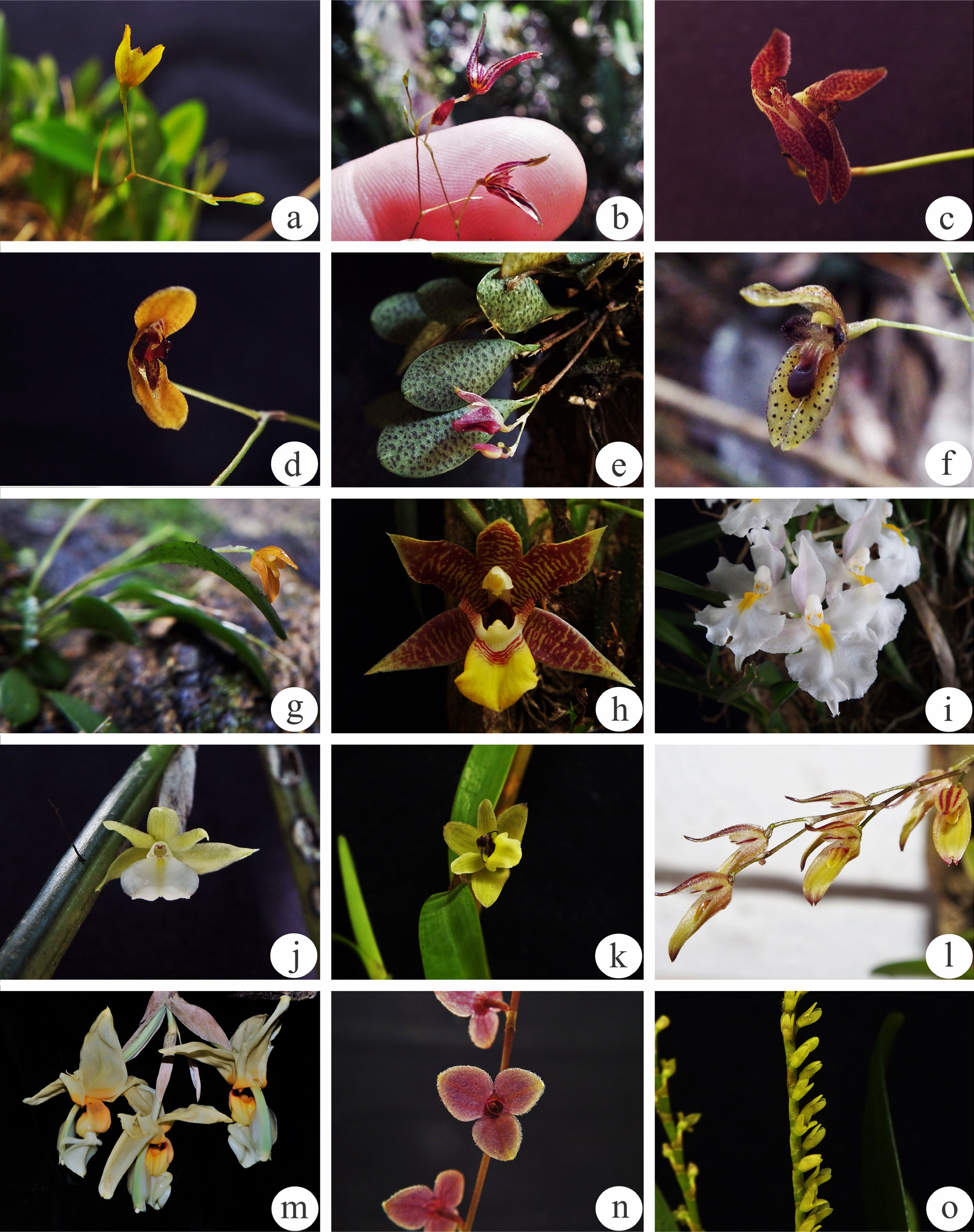
In the DBBR, we recorded 215 species, belonging to 92 genera and 18 families (table 1, figures 2-8). The richest families were Orchidaceae (84 species), Bromeliaceae (39), Polypodiaceae (21), Araceae (17) and Piperaceae (12 each). The richest genera were Aechmea and Peperomia (12 species each), Pabstiella (eight), Acianthera, Anthurium, Asplenium, Gomesa, Microgramma and Vriesea (seven each). According with the epiphyte's relationships with the phorophytes, the great majority of the species were characteristic holoepiphytes (176 species), followed by the facultative holoepiphytes (19), secondary hemiepiphytes (12), and primary hemiepiphytes (eight).
Vascular epiphytes species recorded in Duas Bocas Biological Reserve, Cariacica, Espírito Santo State, Southeastern Brazil. CH: characteristic holoepiphyte. FH: facultative holoepiphyte. PH: primary hemiepiphyte. SH: secondary hemiepiphyte. Voucher: ACG: A.C. Ghisolfi. APF: A.P. Fontana. AS: A. Salino. CNF: C.N. Fraga. GHM: G.H. Martins, GMM: G.M. Marcusso. GS: G. Sousa, JLMG: J.L.M. Gomes. GM: G. Martinelli. LK: L. Kollmann. MMS: M.M. Saavadera. PHL: P.H. Labiak. RCF: R.C. Forzza. TEA: T.E. Almeida. The acronyms BHCB, HRCB, MBML, RB, SP and VIES follow Thiers (2024). Threatened species were classified at national and state levels according to, respectively, Martinelli & Moraes (2013) and Fraga et al., (2019), by the following criteria: VU: vulnerable. EN: endangered. CR: critically endangered, and DD: data deficient.
Vascular epiphytes representatives of Duas Bocas Biological Reserve, Cariacica, Espírito Santo State, Brazil. a. Hippeastrum aulicum (Amaryllidaceae). b-m. Araceae: b. Anthurium cleistanthum. c. Anthurium comtum. d. Anthurium longifolium. e. Anthurium solitarium. f. Monstera adansonii. g. Philodendron hastatum. h. Philodendron hatschbachii. i. Philodendron ornatum. j. Philodendron pedatum. k. Rhodospatha latifolia. l. Syngonium vellozianum. m. Thaumatophyllum stenolobum. n-o. Aspleniaceae: n. Asplenium kunzeanum. o. Asplenium serratum.

Vascular epiphytes representatives of Duas Bocas Biological Reserve, Cariacica, Espírito Santo State, Brazil. a. Begonia convolvulacea (Begoniaceae). b-n. Bromeliaceae: b. Aechmea lamarchei. c. Aechmea phanerophlebia. d. Aechmea racinae. e. Aechmea ramosa. f. Aechmea roberto-seidelii. g. Billbergia euphemiae. h. Canistropsis billbergioides. i. Hohenbergia augusta. j. Nidularium longiflorum. k. Racinaea spiculosa. l. Tillandsia gardneri. m. Vriesea ensiformis. n. Vriesea simplex. o. Rhipsalis elliptica (Cactaceae).

Vascular epiphytes representatives of Duas Bocas Biological Reserve, Cariacica, Espírito Santo State, Brazil. a. Rhipsalis lindbergiana (Cactaceae). b. Thoracocarpus bissectus (Cyclanthaceae). c. Elaphoglossum amorimii (Dryopteridaceae). d-f. Gesneriaceae: d. Codonanthe devosiana. e. Codonanthe gracilis. f. Nematanthus albus. g-h. Hymenophyllaceae: g. Hymenophyllum caudiculatum. h. Vandenboschia rupestris. i. Phlegmariurus flexibilis (Lycopodiaceae). j. Spirotheca rivieri (Malvaceae). k-o. Orchidaceae: k. Acianthera auriculata. l. Acianthera glanduligera. m. Acianthera luteola. n. Acianthera oligantha. o. Acianthera tricarinata.

Vascular epiphytes representatives of Duas Bocas Biological Reserve, Cariacica, Espírito Santo State, Brazil. a-o. Orchidaceae: a. Anathallis barbulata. b. Bifrenaria mellicolor. c. Brasiliorchis picta. d. Campylocentrum ornithorrhynchum. e. Cattleya xanthina. f. Christensonella pumila. g. Cirrhaea fuscolutea. h. Cirrhaea nasuta. i. Dichaea brevicaulis. j. Dichaea mosenii. k. Dichaea pendula. l. Encyclia patens. m. Epidendrum proligerum. n. Epidendrum rigidum. o. Gomesa cruciata.

Vascular epiphytes representatives of Duas Bocas Biological Reserve, Cariacica, Espírito Santo State, Brazil. a-o. Orchidaceae: a. Gomesa pabstii. b. Gomesa recurva. c. Heterotaxis brasiliensis. d. Huntleya meleagris. e. Jacquiniella globosa. f. Laelia gloriosa. g. Masdevallia infracta. h. Mormolyca rufescens. i. Myoxanthus seidelii. j. Notylia pubescens. k. Octomeria crassifolia. l. Octomeria juncifolia. m. Octomeria linearifolia. n. Octomeria tricolor. o. Ornithocephalus myrticola.

Vascular epiphytes representatives of Duas Bocas Biological Reserve, Cariacica, Espírito Santo State, Brazil. a-o. Orchidaceae: a. Pabstiella biriricensis. b. Pabstiella fragae. c. Pabstiella hians. d. Pabstiella pellifeloidis. e. Pabstiella punctatifolia. f. Pabstiella seriata. g. Pabstiella trifida. h. Promenaea guttata. i. Rodriguezia pubescens. j. Scaphyglottis brasiliensis. k. Scaphyglottis modesta. l. Specklinia grobyi. m. Stanhopea lietzei. n. Stelis argentata. o. Stelis deregularis.

Vascular epiphytes representatives of Duas Bocas Biological Reserve, Cariacica, Espírito Santo State, Brazil. a-h. Orchidaceae: a. Stelis intermedia. b. Stelis papaquerensis. c. Trichocentrum pumilum. d. Trizeuxis falcata. e. Xylobium colleyi. f. Xylobium pallidiflorum. g. Xylobium undulatum. h. Zygostates lunata. i-m. Piperaceae: i. Peperomia catharinae. j. Peperomia corcovadensis. k. Peperomia hirtulicaulis. l. Peperomia obtusifolia. m. Peperomia turbinata. n-o. Polypodiaceae: n. Microgramma tecta. o. Pleopeltis furcata.
The species richness recorded, in comparison with the studies carried out in Espírito Santo, fits the DBBR as one of the richest areas (table 2). In the largest forest remnant (ca. 23,000 hectares) of the state, in the tabuleiros (seasonal semideciduous to evergreen forest, Saiter et al. 2017), Rolim et al. (2016b) recorded a near equal richness than we recorded in the DBBR (table 2), in a small area and collection effort. On the other side, in southern ES, Couto et al. (2016b) surveyed the epiphytes in a seasonal semideciduous forest and recorded even smaller numbers than DBBR. The epiphytic quotient in the studied area correspond to about 25.3% of the whole vascular flora of the DBBR (849 species, Marcusso et al. 2022c), a number above the average for the Atlantic Forest (Kersten 2010, Freitas et al. 2016), as well as for the Neotropical Region (Wolf & Flamenco-S 2003).
Local floristic surveys exclusively of vascular epiphytes in the Atlantic Forest, organized in descending order of species richness, according with Marcusso et al., (2022a), comparing with the present study in the Duas Bocas Biological Reserve, Cariacica, Espírito Santo, Southeastern Brazil. (BA: Bahia, ES: Espírito Santo, MG: Minas Gerais, PR: Paraná, RJ: Rio de Janeiro, SC: Santa Catarina, SP: São Paulo; Spp: species number, Gen: genera number, Fam: families number; NI Data not informed in the source; PF Pluvial Forest, SF Seasonal Forest; Arac: Araceae, Brom: Bromeliaceae, Cact: Cactaceae, Dryo: Dryopteridaceae, Gesn: Gesneriaceae, Hyme: Hymenophyllaceae, Mora: Moraceae, Pipe: Piperaceae, Poly: Polypodiaceae). Source: 1. Marcusso et al., (2022b). 2. Fontoura et al., (1997). 3. Blum et al., (2011). 4. Leitman et al., (2014). 5. Furtado & Menini Neto (2018). 6. Present study. 7. Rolim et al., (2016b). 8. Breier (2005). 9. Schutz-Gatti (2000). 10. Caglioni (2017). 11. Breier (2005). 12. Petean (2009). 13. Caglioni (2013). 14. Kersten & Waechter (2011) (*excluded mistletoes; **including only angiosperms).
Regarding the Atlantic Forest as a whole, the floristic surveys carried out exclusively on vascular epiphytes which recorded the highest richness, found between 359 to 140 species (table 2). This fact fits the DBBR as one of the richest areas in the AF. On the other hand, a small alpha diversity could be related for the DBBR, according with the surveys in the AF which sampled small areas (1 to 10 hectares) and recorded near equal richness (e.g., Schutz-Gatti 2000, Breier 2005, Petean 2009, Kersten & Waechter 2011, Caglioni 2013, 2017) (table 2) than we recorded in the DBBR. The low alpha diversity in DBBR must be due the seasonality of the climate (Alvares et al. 2013, INCAPER 2020). In the montane region of ES, Freitas & Assis (2013) registered few species in 120 phorophytes, corroborating that a low alpha-diversity of VE occurs in the ES mountains, although a high turnover (beta-diversity) appears to occur. Further communities' surveys, in delimited sample areas, will help to improve the knowledge regarding this issue. In this way, the present floristic checklist represents a first step for further studies about the vascular epiphyte's communities in the mountainous region of ES.
DBBR is a forest remnant situated in mountainous relief, with slopes, valleys, and inselbergs, without access and trails for the core areas, becoming a difficult area to access and study. Despite the high richness recorded in a small sampled area, additional species are expected to occur in the area, as exemplified by some species observed sterile during the study and therefore not included in the checklist (e.g. Araceae: Philodendron edmundoi G.M. Barroso, Thaumatophyllum corcovadense (Kunth) Sakur., Calazans & Mayo; Orchidaceae: Bifrenaria clavigera Rchb.f., Brasiliorchis cf. gracilis (Lodd.) R.B. Singer et al., Catasetum sp., Elleanthus brasiliensis (Lindl.) Rchb.f., Epidendrum avicula Lindl., Epidendrum cf. paranaense Barb.Rodr., Epidendrum vesicatum Lindl., Grandiphyllum sp., Leptotes tenuis Rchb.f.; Rubiaceae: Hillia sp.).
The families recorded in the DBBR (table 2) are in accordance with the studies carried out in the AF (Kersten 2010, Freitas et al. 2016), with few exceptions. Orchidaceae always is the richest family, followed for Bromeliaceae, which sometimes, according with the elevation, is replaced by Araceae in the low-latitude sites (Rolim et al. 2016b), and by Polypodiaceae in the high-altitude sites (Kersten & Waechter 2011, Furtado & Menini Neto 2018). Fontoura et al. (2012), also demonstrated the influence of the altitude and latitude in the distribution of Bromeliaceae, and Rocha (2011) also founded Araceae with high richness in low altitude sites in the Rio de Janeiro State. Varying the importance according with the geographical location, Piperaceae, Cactaceae, Hymenophyllaceae, and Dryopteridaceae (table 2) also represents important families in the AF (Kersten 2010, Freitas et al. 2016), that is corroborated here in the present study.
In DBBR, ten species are threatened of extinction at national level, being one of them - Myoxanthus seidelii (Pabst) Luer (figure 6i) - Critically Endangered (Martinelli & Moraes, 2013), and 39 threatened at state level, two of them - Bifrenaria mellicolor Rchb.f. and Cattleya pumila Hook. - Critically Endangered. Furthermore, 13 species are considered Data Deficient at state level (Fraga et al., 2019) (table 1), highlighting the importance of floristic studies in areas with few samples, like the DBBR, to bring new data about this poor know taxa. More than half of the recorded species are endemic to the Atlantic Forest (120 species or ca. 56%), of that, 14 are endemic to ES (according to BFG, 2018; Flora e Funga do Brasil, 2024) supporting the high levels of endemism for the Atlantic Forest (Stehmann et al. 2009, Freitas et al. 2016).
Overall, we improved the sampling of vascular epiphytes in the DBBR, which comprises the most important forest remnant of the windward slopes of the mountains of Espírito Santo, Southeast Brazil. Here, we demonstrate that this forest patch holds a relevant richness, demonstrating the necessity of this protected area as a refuge to the native species, surrounded by anthropic areas and pressed by the urban development.
Acknowledgement
We thanks the Instituto Estadual de Meio Ambiente e Recursos Hídricos (IEMA) for permission (process n° 77257804/17) to collect in the Duas Bocas Biological Reserve; Fundação de Amparo à Pesquisa do Estado de São Paulo (FAPESP) for the financial support (process n° 2018/04121-0), the Coordenação de Aperfeiçoamento de Pessoal de Nível Superior - Brasil (CAPES) - Finance Code 001 (for the scholarship to the first author); the taxonomists which helped us in the identification of the vascular epiphytes: Janaine Kunrath Hammes, Lívia Godinho Temponi, Marcus Nadruz Coelho, Rodrigo Theófilo Valadares (Araceae), Elton Leme, Dayvid R. Couto, Rafaela C. Forzza, Rebeca P. Romanini (Bromeliaceae), Alexandre Salino (Ferns and Lycophytes), Alain Chateums (Gesneriaceae), Felipe Gonzatti (Hymenophyllaceae), Benjamin Øllgaard (Lycopodiaceae), Antonio Toscano de Brito, Edlley Pessoa, Ludmila Pansarin, Nicolás Gutiérrez Morales, Wellington Forster (Orchidaceae); Henrique Lauand Ribeiro for the map design; and Fabiula Moreno Arantes, Janaine Kunrath Hammes, Renan Borgiani, and Vitor de Andrade Kamimura for the help in the field work.
Literature cited
- Almeida, R.A. & Mamede, M.C. 2014. Checklist, conservation status, and sampling effort analysis of Malpighiaceae in Espírito Santo State, Brazil. Brazilian Journal of Botany 37: 329-337.
- Alvares, C.A., Stape, J.L., Sentelhas, P.C., Gonçalves, J.L.M. & Sparovek, G. 2013. Köppen’s climate classification map for Brazil. Meteorologische Zeitschrift 22: 711-728.
- APG IV. 2016. An update of the Angiosperm Phylogeny Group classification for the orders and families of flowering plants: APG IV. Botanical Journal of the Linnean Society 181: 1-20.
- Bacci, L.F., Amorim, A.M. & Goldenberg, R. 2016. Three new species of Bertolonia (Melastomataceae) from Espírito Santo, Brazil. PeerJ.
- Barthlott, W., Mutke, J., Rafiqpoor, D., Kier, G. & Kreft, H. 2005. Global centers of vascular plant diversity. Nova Acta Leopoldina 92: 61-83.
- Benzing, D.H. 1990. Vascular epiphytes. General biology and related biota. Cambridge University Press, Cambridge.
- BFG - The Brazil Flora Group. 2018. Brazilian Flora 2020: Innovation and collaboration to meet Target 1 of the Global Strategy for Plant Conservation (GSPC). Rodriguésia 69: 1513-1527.
- Blum, C.T., Roderjan, C.V. & Galvão, F. 2011. Composição florística e distribuição altitudinal de epífitas vasculares da Floresta Ombrófila Densa na Serra da Prata, Morretes, Paraná, Brasil. Biota Neotropica 11: 141-159.
- Boni, R., Novelli, F.Z. & Silva, A.G. 2009. Um alerta para os riscos de bioinvasão de jaqueiras, Artocarpus heterophyllus Lam., na Reserva Biológica Paulo Fraga Rodrigues, antiga Reserva Biológica Duas Bocas, no Espírito Santo, Sudeste do Brasil. Natureza on line 7: 51-55.
- Breier, T.B. 2005. O epifitismo vascular em florestas do sudoeste do Brasil. Tese de Doutorado, Universidade Estadual de Campinas, Campinas.
- Caglioni, E. 2013. Florística e fitossociologia do componente arbóreo e epifítico em segmento de encosta e margem de rio no Parque Nacional da Serra do Itajaí - SC. Dissertação de Mestrado, Universidade Federal do Paraná, Curitiba.
- Caglioni, E. 2017. Gradientes ambientais e sua influência na variação da estrutura da vegetação no parque botânico do Morro do Baú - SC. Tese de Doutorado, Universidade Federal do Paraná, Curitiba.
- Carvalho-Silva, M., Guimarães, E.F., Pereira, L.A. & Sarnaglia Junior. 2015. Two new species of Piper section Ottonia (Piperaceae) from southeastern Brazil. Phytotaxa 212: 293-299.
- Camargo, A.C. & Goldenberg, R. 2011. Two new species of Leandra from Espírito Santo, Brazil. Brittonia 63: 220-226.
- Chiron, G.R. & Bolsanello, R.X. 2015. Orchidées du Brésil - As Orquídeas da Serra do Castelo (Espírito Santo - Brasil). 1ed. Tropicalia, Voreppe.
- Clarke, H.D. & Funk, V.A. 2005. Using checklists and collections data to investigate plant diversity: II. An analysis of five florulas from northeastern South America. Proceedings of the Academy of Natural Sciences of Philadelphia 154: 29-37.
- Colli-Silva, M., Bezerra, T.L., Franco, G.A.D.C., Ivanauskas, N.M. & Souza, F.M. 2016. Registros de espécies vasculares em unidades de conservação e implicações para a lista da flora ameaçada de extinção no estado de São Paulo. Rodriguésia 67: 405-425.
- Couto, D.R., Dias, H.M., Pereira, M.C.A., Fraga, C.N. & Pezzopane, J.E.M. 2016a. Vascular epiphytes on Pseudobombax (Malvaceae) in rocky outcrops (inselbergs) in Brazilian Atlantic Rainforest: basis for conservation of a threatened ecosystem. Rodriguésia 67: 583-601.
- Couto, D.R., Fontana, A.P., Kollmann, L.J.C., Manhães, V.C., Francisco, T.M. & Cunha, G.M. 2016b. Vascular epiphytes in seasonal semideciduous forest in the state of Espírito Santo and the similarity with other seasonal forests in Eastern Brazil. Acta Scientiarum Biological Science 38: 1-10.
-
CRIA 2024. Centro de Referência em Informação Ambiental. Available in http://www.cria.org.br (access in 1-III-2022).
» http://www.cria.org.br - Dutra, V.F., Alves-Araújo, A. & Carrijo, T.T. 2015. Angiosperm Checklist of Espírito Santo: using electronic tools to improve the knowledge of an Atlantic Forest biodiversity hotspot. Rodriguésia 66: 1145-1152.
- Fiaschi, P. & Pirani, J.R. 2005. Four new species of Schefflera (Araliaceae) from Espírito Santo state, Brazil. Kew Bulletin 60: 77-85.
- Fiaschi, P. & Pirani, J.R. 2009. Review of plant biogeographic studies in Brazil. Journal of Systematics and Evolution 47: 477-496.
-
Flora e Funga do Brasil. 2024. Jardim Botânico do Rio de Janeiro. Available in http://floradobrasil.jbrj.gov.br/ (access in 16-XII-2022).
» http://floradobrasil.jbrj.gov.br/ - Fontoura, T., Sylvestre, L.S., Vaz, M.A.S. & Vieira, C.M. 1997. Epífitas vasculares, hemiepífitas e hemiparasitas da Reserva Ecológica de Macaé de Cima. In: H.C. Lima, & R.R. Guedes-Bruni (eds.). Serra de Macaé de Cima: diversidade florística e conservação em Mata Atlântica. Editora do Jardim Botânico do Rio de Janeiro, Rio de Janeiro, pp 89-102.
- Fontoura, T., Scudeller, V.V. & Costa, A.F. 2012. Floristics and environmental factors determining the geographic distribution of epiphytic bromeliads in the Brazilian Atlantic Rain Forest. Flora 207: 662-672.
- Fraga, C.N. & Saavedra, M.M. 2014. A new cauliflorous white-flowered species of Ouratea (Ochnaceae) from the Brazilian Atlantic Forest. Phytotaxa 167: 119-126.
- Fraga, C.N., Formigoni, M.H. & Chaves, F.G. 2019. Fauna e flora ameaçadas de extinção no estado do Espírito Santo. 1 ed. Dante, Rio de Janeiro.
- Freitas, J. & Assis, A.M. 2013. Estrutura do componente epífito vascular em trecho de floresta atlântica na região serrana do Espírito Santo. Revista Árvore 37: 815-823.
- Freitas, L., Salino, A., Menini Neto, L., Almeida, T.E., Mortara, S.E., Stehmann, J.R., Amorim, A.M., Guimarães, E.F., Coelho, M.N., Zanin, A. & Forzza, R.C. 2016. A comprehensive checklist of vascular epiphytes of the Atlantic Forest reveals outstanding endemic rates. PhytoKeys 58: 65-79.
- Furtado, S.G. & Menini Neto, L. 2018. Diversity high up: a cloud forest of the Serra da Mantiqueira as a vascular epiphyte hotspot. Rodriguésia 69: 263-279.
- Garbin, M.L., Saiter, F.Z., Carrijo, T.T. & Peixoto, A.L. 2017. Breve histórico e classificação da vegetação capixaba. Rodriguesia 68: 1883-1894.
- Gentry, A.H. & Dodson, C.H. 1987. Diversity and biogeography of Neotropical vascular epiphytes. Annals of the Missouri Botanical Garden 74: 205-233.
- Giaretta, A. & Fraga, C.N. 2014. Two new Eugenia species (Myrtaceae) from the Brazilian Atlantic Forest. Phytotaxa 163: 113-120.
- Giaretta, A., Menezes, L.F.T. & Peixoto, A.L. 2015. Diversity of Myrtaceae in the southeastern Atlantic forest of Brazil as a tool for conservation. Brazilian Journal of Botany 38: 175-185.
-
INCAPER. 2020. Instituto Capixaba de Pesquisa, Assistência Técnica e Extensão Rural. Available in https://meteorologia.incaper.es.gov.br/mapas-de-chuva-normal-climatologica-album (access in 3-V-2020).
» https://meteorologia.incaper.es.gov.br/mapas-de-chuva-normal-climatologica-album -
Thiers, B. 2024 continuously updated. Index herbariorum: A worldwide index of 3,100 herbaria and 12,000 associated staff where a total of 390 million botanical specimens are permanently housed. New York Botanical Garden, New York. Available in http://sweetgum.nybg.org/ih/ (access in 28-II-2022).
» http://sweetgum.nybg.org/ih/ - IPEMA - Instituto de Pesquisas da Mata Atlântica. 2005. Conservação da Mata Atlântica no Espírito Santo: cobertura florestal e unidades de conservação. Vitória, IPEMA, Conservação Internacional.
- IBGE - Instituto Brasileiro de Geografia e Estatística. 2012. Manual técnico da vegetação brasileira. 2ed. IBGE, Coordenação de Recursos Naturais e Estudos Ambientais, Rio de Janeiro.
- Kersten, R.A. 2010. Epífitas vasculares - Histórico, participação taxonômica e aspectos relevantes, com ênfase na Mata Atlântica. Hoehnea 37: 9-38.
- Kersten, R.A. & Waechter, J.L. 2011. Florística e estrutura das epífitas vasculares em zona ecotonal entre as Florestas Ombrófilas Mista e Densa, vertente oeste da Serra do Mar paranaense. In: J.M. Felfili-Fagg, P.V. Eisenlohr, M.M.R.F. Melo, L.A. Andrade & J.A.A. Meira Neto (eds.). Fitossociologia no Brasil: métodos e estudos de caso. v.1. 1ed. Editora da Universidade Federal de Viçosa, Viçosa, pp. 479-503.
- Kessler, M. 2001. Patterns of diversity and range size of selected plant groups along an elevational transect in the Bolivian Andes. Biodiversity and Conservation 10: 1897-1921.
- Kollmann, L.J.C. & Peixoto, A.L. 2012. Begonia fragae L.Kollmann & Peixoto and Begonia wasshauseniana L.Kollmann & Peixoto (Begoniaceae), two new species from the state of Espírito Santo, Brazil. Candollea 67: 59-64.
- Leitman, P., Amorim, A., Menini Neto, L. & Forzza, R.C. 2014. Epiphytic angiosperms in a mountain forest in southern Bahia, Brazil. Biota Neotropica 14: 1-12.
- Lima, A.L. & Soares, J.J. 2003. Aspectos florísticos e ecológicos de palmeiras (Arecaceae) da Reserva Biológica de Duas Bocas, Cariacica, Espírito Santo. Boletim do Museu de Biologia Mello Leitão 16: 5-20.
- Lima, R.A.F, Mori, D.P., Pitta, G., Melito, M.O., Bello, C., Magnago, L.F., Zwiener, V.P., Saraiva, D.D., Marques, M.C.M., Oliveira, A.A. & Prado, P.I. 2015. How much do we know about the endangered Atlantic Forest? Reviewing nearly 70 years of information on tree community surveys. Biodiversity and Conservation 24: 2135-2148.
- Lomdardi, J.A. 2021. A new species of Peritassa (Celastraceae) from Espírito Santo, Brazil. Phytotaxa 491: 79-84.
- Magnago, L.F.S., Assis, A.M. & Fernandes, H.B.Q. 2007. Floresta Ombrófila Densa Submontana, Montana e Alto-montana. In: C.N. Fraga & M. Simonelli (eds.). Espécies da Flora Ameaçadas de Extinção no Estado do Espírito Santo. 1ed. IPEMA, Vitória, pp. 45-50.
- Marcusso, G.M., Kamimura, V.A., Borgiani, R., Menini Neto, L. & Lombardi, J.A. 2022a. Phytogeographic meta-analysis of the vascular epiphytes in the Neotropical Region. The Botanical Review 88: 388-412.
- Marcusso, G.M., Menini Neto, L. & Lombardi, J.A. 2022b. Augusto Ruschi Biological Reserve vascular epiphytes: a hotspot in the mountains of the Atlantic Forest of Southeastern Brazil. Phytotaxa 545: 1-29.
-
Marcusso, G.M., Biral, L., Almeida, R.F., Aona, L.Y.S., Azevedo, I.H.F., Bacci, L.F., Bovini, M.G., Cardoso, W.C., Fraga, C.N., Giaretta, A., Goldenberg, R., Kaehler, M., Koch, I., Labiak, P.H., Lima, H.C., Lírio, E.J., Lombardi, J.A., Monge, M., Morim, M.P., Pederneiras, L.C., Ribeiro, H.L., Salino, A., Silva, O.L.M., Stehmann, J.R., Toderke, M.L., Trevisan, R., Valadares, R.T., Viana, P.L. & Forzza, R.C. 2022c. Lista de espécies de plantas vasculares da Reserva Biológica de Duas Bocas. Catálogo de Plantas das Unidades de Conservação do Brasil. Jardim Botânico do Rio de Janeiro. Available in https://catalogo-ucs-brasil.jbrj.gov.br (access in 10-IX-2023).
» https://catalogo-ucs-brasil.jbrj.gov.br - Martinelli, G. & Moraes, M.A.(eds.). 2013. Livro vermelho da flora do Brasil, v 1. Instituto de Pesquisas Jardim Botânico do Rio de Janeiro, Rio de Janeiro.
- Menini Neto, L., Furtado, S.G., Zappi, D.C., Oliveira-Filho, A.T. & Forzza, R.C. 2016. Biogeography of epiphytic Angiosperms in the Brazilian Atlantic forest, a world biodiversity hotspot. Brazilian Journal of Botany 39: 261-273.
- Myers, N., Mittermeier, R.A., Mittermeier, C.G., Fonseca, G.A.B. & Kent, J. 2000. Biodiversity hotspots for conservation priorities. Nature 403: 853 858.
- Nascimento, F.H. & Vale, C.C. 2019. Efeito orográfico em um transecto entre Fundão e Santa Teresa no estado do Espírito Santo no ano hidrológico 2015/2016. Revista Geografares 29: 71-90.
- Novelli, F.Z. 2010. A Reserva Biológica de Duas Bocas e seus vínculos à história da conservação no Espírito Santo. Natureza on line 8: 57-59.
- Petean, M.P. 2009. As epífitas vasculares em uma área de Floresta Ombrófila Densa em Antonina, PR. Tese de Doutorado, Universidade Federal do Paraná, Curitiba.
- PPG I. 2016. The Pteridophyte Phylogeny Group. A community-derived classification for extant lycophytes and ferns. Journal of Systematics and Evolution 54: 563 603.
-
REFLORA - Herbário Virtual. 2024. Available in http://floradobrasil.jbrj.gov.br/reflora/herbarioVirtual/ (access 20-III-2022).
» http://floradobrasil.jbrj.gov.br/reflora/herbarioVirtual/ - Ribeiro, M.C., Metzger, J.P., Martensen, A.C., Ponzoni, F.J. & Hirota, M.M. 2009. The Brazilian Atlantic Forest: how much is left, and how is the remaining forest distributed? Implications for conservation. Biological Conservation 142: 1141-1153.
- Rocha, U.A. 2011. Estado atual e lacunas do conhecimento das epífitas do estado do Rio de Janeiro: estudo de caso com Araceae. Dissertação de Mestrado, Universidade Federal Rural do Rio de Janeiro, Rio de Janeiro.
- Rolim, S.G., Magnago, L.F.S., Saiter, F.Z., Amorim, A.M. & Abreu, K.M.P. 2016a. São as florestas do norte do Espírito Santo e sul da Bahia as mais ricas em espécies arbóreas no domínio da Floresta Atlântica? In: S.G. Rolim, L.F.T. Menezes & A.C. Srbek- Araujo (eds.). Floresta Atlântica de Tabuleiro: diversidade e endemismos na Reserva Natural Vale, pp. 91-100.
- Rolim, S.G., Sylvestre, L., Franken, E.P. & Coelho, M.A.N. 2016b. Epífitas vasculares nas fisionomias vegetais da Reserva Natural Vale, Espírito Santo. In: S.G. Rolim, L.F.T. Menezes, A.C. Srbek-Araujo (eds.). Floresta Atlântica de Tabuleiro: Diversidade e Endemismos na Reserva Natural Vale, pp. 269-281.
- Rosa, G.A.B., Farro, A.P.C., Barroso, F.G., Trarbach, J., Crepaldi, M.O.S., Nunes, S.F., Costalonga, S., Luber, U.J. & Formigoni, M.H. 2019. As áreas protegidas e os impactos ambientais sobre as espécies ameaçadas de extinção no Espírito Santo. In: C.N. Fraga, M.H. Formigoni & F.G. Chaves (eds.). Fauna e flora ameaçadas de extinção no estado do Espírito Santo. Santa Teresa, Instituto Nacional da Mata Atlântica, Espírito Santo, pp. 42-81.
- Saiter, F.Z., Rolim, S.G., Jordy Filho, S. & Oliveira-Filho, A.T. 2017. Uma revisão sobre a controversa classificação fisionômica da Floresta de Linhares, norte do Espírito Santo. Rodriguésia 68: 1987-1999.
- Saint-Hilaire, A. 1833. Voyage dans le district des diamans et sur le littoral du Brésil. Librairie-Gide, Paris.
- Santos, N.D., Costa, D.P., Kinoshita, L.S. & Shepherd, G.J. 2014. Windborne: Can liverworts be used as indicators of altitudinal gradient in the Brazilian Atlantic Forest? Ecological Indicators 36: 431-440.
- Schütz-Gatti, A.L. 2000. O componente epifítico vascular na Reserva Natural de Salto Morato, Guaraqueçaba, PR. Master Dissertation. Universidade Federal do Paraná, Curitiba.
- SOS Mata Atlântica. 2019. Atlas dos remanescentes forestais da Mata Atlântica período de 2017-2018. Fundação S.O.S Mata Atlântica, Instituto Nacional de Pesquisas Espaciais, São Paulo.
- Stehmann, J.R., Forzza, R.C., Salino, A., Sobral, M., Costa, D.P. & Kamino, L.H.Y. 2009. Plantas da Floresta Atlântica. Jardim Botânico do Rio de Janeiro, Rio de Janeiro.
- Thomaz, L.D. 2010. A Mata Atlântica no estado do Espírito Santo, Brasil: de Vasco Fernandes Coutinho ao século 21. Boletim do Museu de Biologia Mello Leitão 27: 5-20.
- Werneck, M.S., Sobral, M.E.G., Rocha, C.T.V., Landau, E.C. & Stehmann, J.R. 2011. Distribution and Endemism of Angiosperms in the Atlantic Forest. Natureza & Conservação 9: 188-193.
- Wied-Neuwied, M.A.P. zu. 1820. Reise nach Brasilien in den Jahren 1815 bis 1817. Erster Band. Frankfurt am Main, H.L. Brönner. (Quarto edition).
- Wolf, J.H.D. & Flamenco-S, A. 2003. Patterns in species richness and distribution of vascular epiphytes in Chiapas, Mexico. Journal of Biogeography 30: 1689 1707.
- Zotz, G. 2013. The systematic distribution of vascular epiphytes - a critical update. Botanical Journal of the Linnean Society. 171: 453-481.
- Zotz, G. 2016. Plants on Plants - The Biology of Vascular Epiphytes. Fascinating Life Sciences.
Edited by
-
Associate Editor:
Renata Sebastiani