Universal Screening of Newborns from a Tertiary Care Hospital in South India: A Prospective Analytical Study
Objective To estimate the prevalence of hearing impairment and significant risk factors for congenital loss in a tertiary hospital in South India.
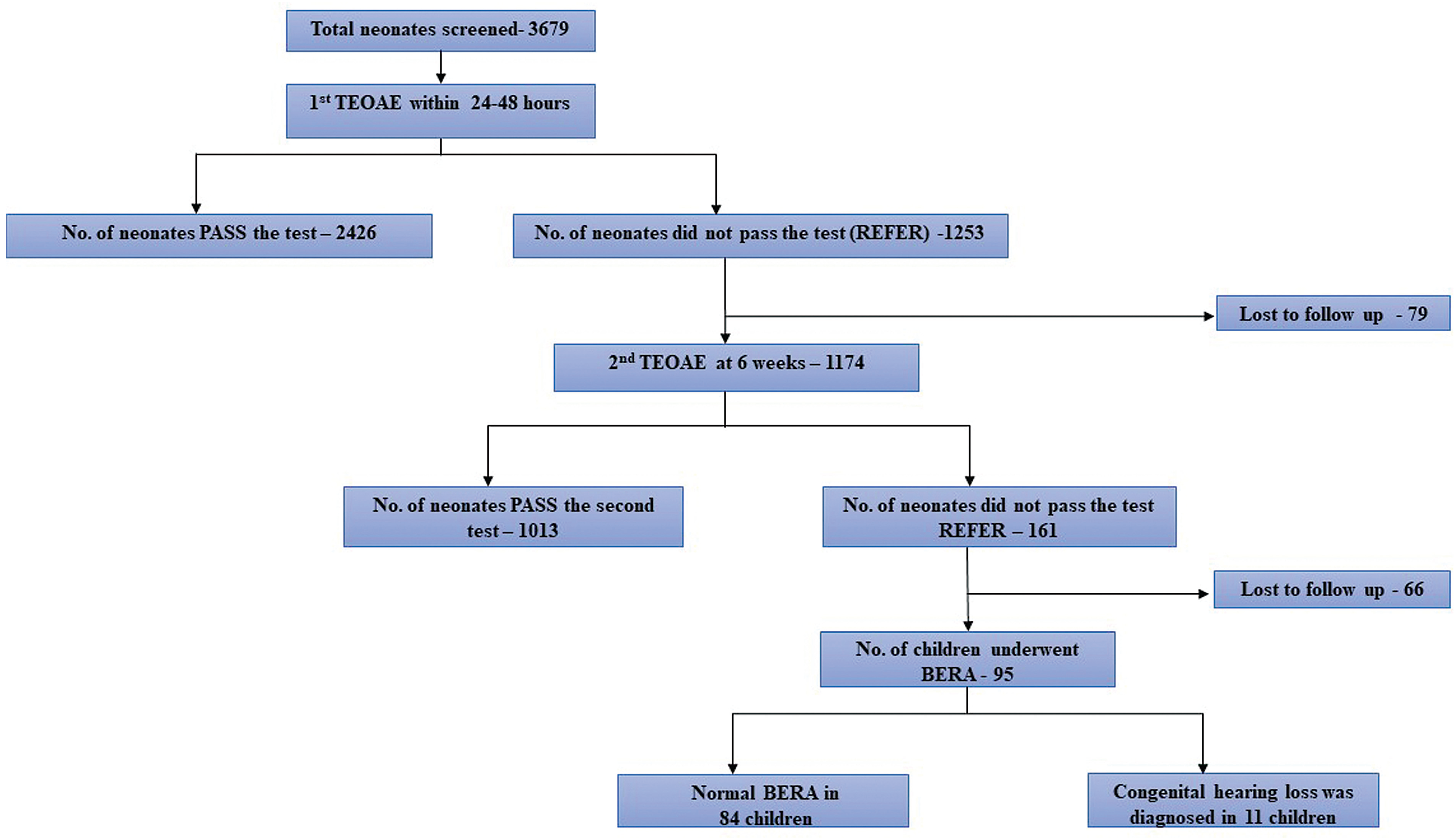
Methods Over 3 years, a prospective analytical study was conducted in the Department of Otorhinolaryngology in a tertiary hospital in South India. All newborns born in the hospital or those referred were initially screened using the Transient Evoked Otoacoustic Emissions (TEOAE) in a soundproof room by a trained audiologist at 24 to 48 hours of birth. Results were either "PASS" or "REFER." Those who did not pass the initial screening were retested with TEOAE at their 6-week vaccination appointment. If the second result was "REFER," the neonate underwent Brain Evoked Response Auditory (BERA) for confirmation.
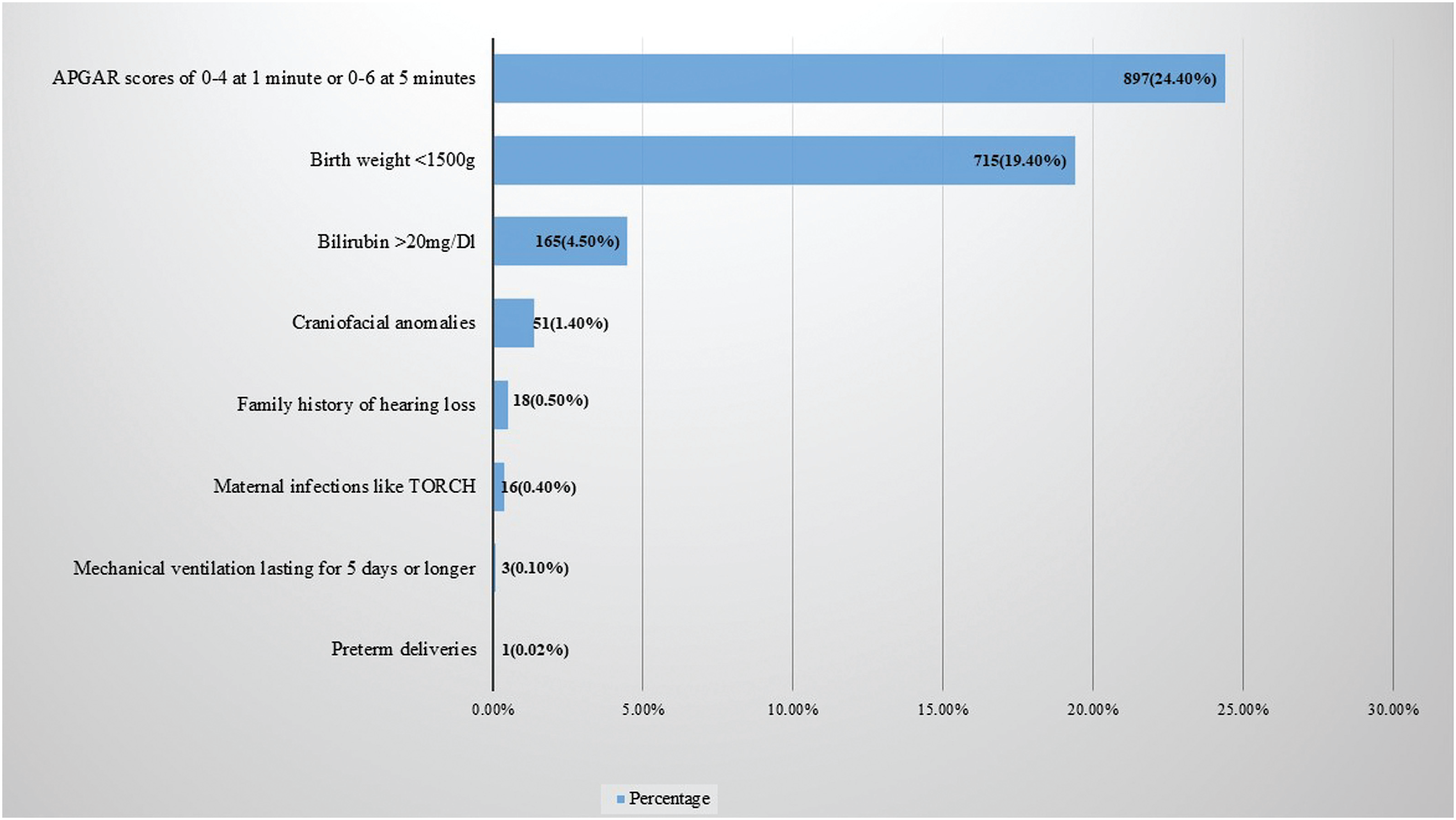
Results A total of 3,679 neonates (1,931 males, 1,748 females) underwent TEOAE testing. Of those, 2,426 (65.9%) passed the first test, and 1,253 (34.1%) were referred. The second TEOAE test was done for 1,174 patients, with results of 1,013 (86.29%) as "PASS" and 161 (13.71%) as "REFER." The BERA results of 95 neonates showed normal in 84 (88.42%), and 11 (11.58%) had profound hearing loss. The prevalence of hearing impairment in the present study was 0.29% (95% CI: 0.2–0.6%). Major risk factors such as maternal infections, like toxoplasmosis, others (syphilis, hepatitis B), rubella, cytomegalovirus, and herpes simplex (TORCH), craniofacial anomalies, low birth weight < 1,500 g, low Appearance, Pulse, Grimace, Activity and Respiration (APGAR) scores (0–4 at 1 minute and 0–6 at 5 minutes), and mechanical ventilation lasting for 5 days or longer, were significantly associated with hearing impairment at p < 0.05.
Conclusion Newborn hearing screenings must be made mandatory, irrespective of risk factors. This way, early diagnosis and necessary interventions can be implemented.
Keywords
congenital; hearing loss; newborn infant screenings; brainstem auditory evoked potential; audiologic rehabilitation
 Thumbnail
 Thumbnail