Timing Effect on Transient Evoked Otoacoustic Emission Referral Rates for Newborn Hearing Screening within and after 48 Hours of Birth
Introduction Newborn hearing screenings must be completed within 48 hours of birth.
Objective To determine the optimal timing for the first transient evoked otoacoustic emissions (TEOAEs) test by comparing the referral rates of infants tested between different time intervals.
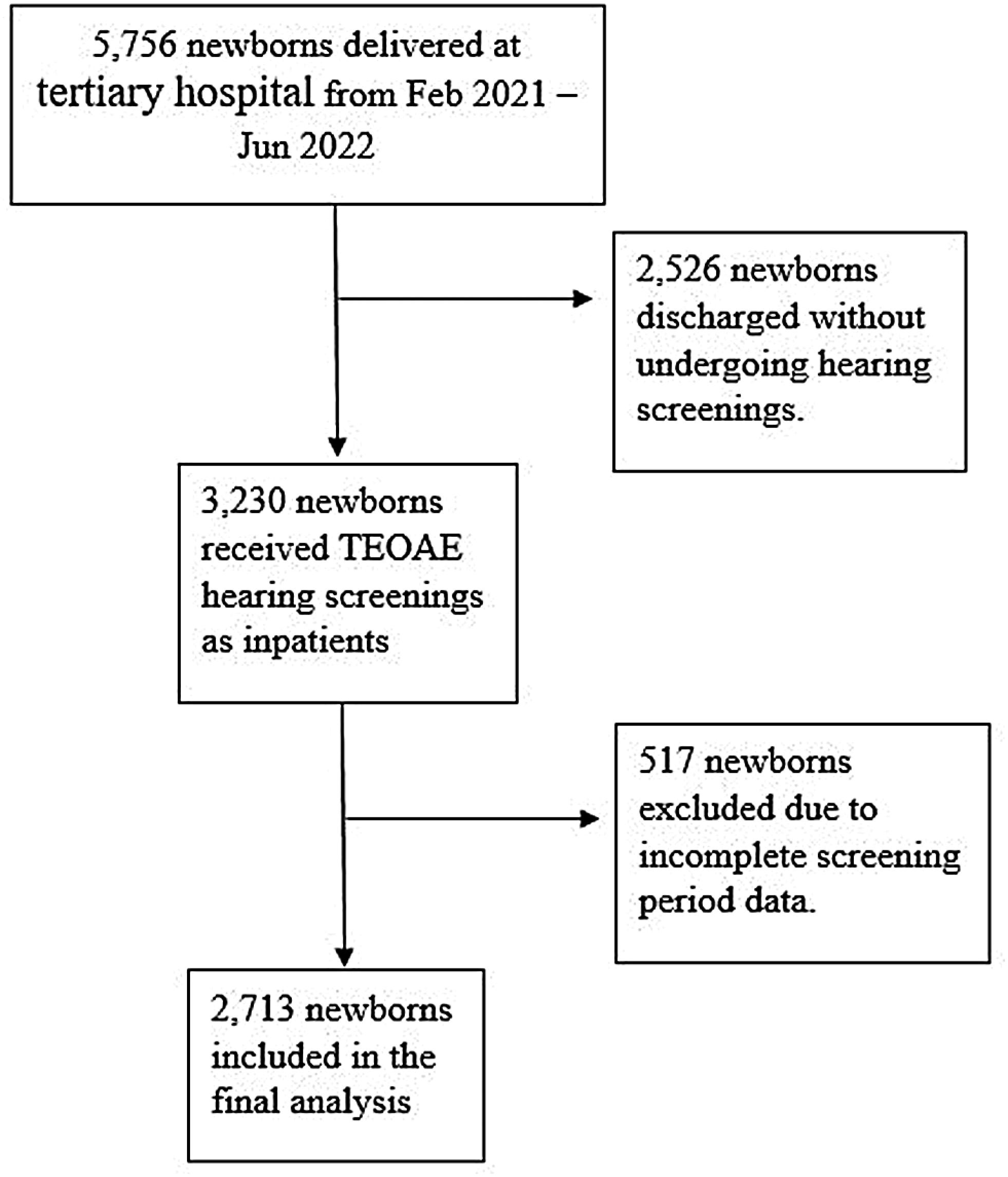
Methods The present study was a retrospective cohort analysis of 2,713 newborns who underwent TEOAE tests between February 2021 and June 2022. The infants were categorized into groups according to the age at which they were tested: 12 to 24 hours, 25 to 36 hours, 37 to 48 hours, and > 48 hours. We compared referral rates across these groups.
Results The overall referral rate for infants tested within 48 hours from birth was 53%, significantly higher than the rate for those tested after 48 hours (46%, p = 0.001). Notably, the highest referral rates were observed in neonates aged 25 to 36 hours. However, no significant difference in referral rates was found for high-risk infants tested either before or after 48 hours.
Conclusion Transient evoked otoacoustic emissions can be used to screen newborns' hearing within 48 hours, but the high referral rate suggests that Thailand should add automated auditory brainstem response (AABR) to its guidelines for hearing evaluation if newborns leave the hospital before 48 hours.
Keywords
hearing loss; neonatal screening; otoacoustic emissions
 Thumbnail