
 The Versatile Horizon: SiC Power Semiconductors in Electric Vehicles, Renewable Energy, Aeronautics, and Space Systems
ABSTRACT
This review article provides a concise view of the transformative role played by silicon carbide (SiC) semiconductors in the electric power industry, along with a description of their emerging applications in electric vehicles (EVs), renewable energy systems, aeronautics, and space. It highlights SiC chips’ ability to operate at high temperatures and frequencies, surpassing the limitations of traditional silicon chips and resulting in enhanced efficiency. Additionally, it also presents the capabilities of SiC devices to manage elevated power levels within reduced size and weight parameters, emphasizing their impact on augmenting power density in EVs and enhancing reliability and efficiency in renewable energy, aeronautics, and space applications. Finally, the review concludes by providing an overview of the prevailing trends, existing challenges, and the future trajectory of SiC semiconductors within these important sectors.
Keywords
Silicon carbide; Renewable energy; Aeronautics; Aerospace systems; Power systems
INTRODUCTION
The semiconductor technology field has undergone a remarkable evolution, echoing the trajectory that silicon (Si) embarked on over three decades ago (Siffert and Krimmel 2004). In this dynamic landscape, silicon carbide (SiC) has emerged as a frontrunner, marking a new era of technological advancement. This semiconductor, with its unique properties and capabilities, is reshaping diverse sectors including electric vehicles (EVs), renewable energy, aeronautics, and space. The impact of SiC has been significantly amplified by applications in EVs, renewable energy systems, and industrial applications. According to a McKinsey & Company report (Brothers et al. 2023), the SiC power device market is estimated to grow at a compound annual growth rate (CAGR) of 26% from 2022 to 2030. Particularly in the field of xEVs – which include battery EVs (BEVs), hybrid EVs (HEVs), plug-in hybrid EVs (PHEVs), and fuel-cell EVs (FCEVs) – the annual revenue is projected to increase from 0.9-1.1 billion USD in 2022 to 8.6-10.5 billion USD by 2030. In industrial and energy applications, the forecast is equally impressive, with projected growth from 0.8-1.1 billion USD to 11.4-14.4 billion USD over the same period. Innovative breakthroughs across these key industries have also accelerated the adoption of SiC technology (Brothers et al. 2023).
SiC stands out in the semiconductor domain for its combination of electrical, thermal, electro-optical, and physical properties, which make it more attractive than traditional silicon for electronic and electro-optical applications (La Via et al. 2023). Its robustness at high temperatures, resilience under intense electric fields, and superior thermal conductivity have led to the development of more efficient and compact devices capable of handling higher power densities than silicon-based counterparts (Fraga et al. 2013).
SiC exists in several polytypes, with the most common being 3C-SiC (cubic), 4H-SiC, and 6H-SiC (both hexagonal). The cubic 3C-SiC, also known as β-SiC, exhibits a zinc blende structure and is favored for its superior electron mobility, making it suitable for high-frequency and low-power devices. On the other hand, 4H-SiC and 6H-SiC, which belong to the wurtzite family, differ in stacking sequence but share high bandgap energy. 4H-SiC, with its higher electron mobility and uniform electrical characteristics, is extensively used in high-power and high-temperature applications, such as MOSFETs and Schottky diodes. In contrast, 6H-SiC, although it has lower electron mobility than 4H-SiC, is often employed in optoelectronics and medium-power devices. Table 1 compares the key physical properties of these polytypes with silicon, including bandgap energy, thermal conductivity, and electron mobility (Roccaforte et al. 2010).
Beyond its fundamental material properties, the enhanced performance of SiC is also a result of significant improvements in SiC wafer quality and device design technology, especially in high-voltage SiC Schottky barrier diodes (SBDs) and field-effect transistors (FETs), which outperform their silicon alternatives (Chen and Huang 2024; Damcevska et al. 2023; Kimoto et al. 2016).
The applicability of SiC extends beyond power devices, encompassing applications such as micro-electromechanical systems (MEMS) (Fraga and Pessoa 2020), photonics devices (Castelletto et al. 2022), radiation detectors (Jia et al. 2021), and biomedical devices (Saddow 2022), which arise from superior mechanical, optical, and radiation resistance properties, and biological compatibility. As already mentioned, the existence of various crystalline structures or polytypes of SiC, each possessing distinct physical properties, further expands SiC’s application range (Amorim et al. 2012; Pessoa et al. 2015). For example, the 4H-SiC polytype has gained prominence for its increasing utilization in diodes and MOSFETs for EVs (Brothers et al. 2023; Rafin et al. 2023). In contrast, the 3C-SiC polytype has been used for applications needing thin layers or suspended structures like MEMS and optical devices, owing to its compatibility with silicon substrates, which facilitates fabrication and reduces costs (Amorim et al. 2012; La Via et al. 2023).
Regarding integrated circuits (ICs) for space applications, SiC devices show promise, demonstrating stability at high temperatures even when subjected to particle radiation. SiC’s higher bandgap leads to lower leakage currents and increased radiation hardness, which is vital for detector applications (De Napoli 2022; Zetterling et al. 2019). The significant difference in electron and hole mobilities in SiC presents opportunities for innovative charge identification and rapid detector response in high particle flux environments (De Napoli 2022).
The opto-electronic properties of SiC render it an attractive material for photonic ICs (PICs) and quantum photonic ICs (QPICs). Its broad bandgap enables an extensive transmission window and effective second-harmonic generation, while its high refractive index facilitates strong light confinement and interaction (Pandraud et al. 2007; Pelucchi et al. 2022).
The chemical robustness of SiC also commends its application in in vivo biomedical devices, where its resistance to corrosive environments and minimal immune response render it suitable for long-term implantations (Chiappim et al. 2022; Saddow 2022).
SiC might be providing the foundation for the forthcoming generation of power electronics, giving rise to innovations that impact vital industries. The broad range of applications and the significant impacts of SiC semiconductors suggest these materials might play a crucial role in addressing some of today’s most pressing challenges, including the shift towards sustainable energy sources, the electrification of transportation, and the progression of aerospace technologies. This brief review attempts to provide a concise view of the applications of SiC semiconductors, highlighting their transformative influence in steering our world towards greater efficiency and technological advancement.
Comparative operational advantages of SiC chips over silicon and gallium nitride (GaN)
One of the key operational advantages of SiC chips over traditional silicon chips stems from the material properties of SiC, which allow for higher operating temperatures (Guo et al. 2019). SiC-based devices are suitable for applications that demand robust performance in harsh environments. The high thermal conductivity of SiC facilitates efficient heat dissipation, reducing overheating and enhancing the overall reliability of electronic systems (Brothers et al. 2023; Damcevska et al. 2023; Fraga et al. 2013).
Another major advantage of SiC chips is their ability to handle higher voltages and electric field strengths (Kimoto et al. 2016). This characteristic makes SiC devices ideal for power electronics applications, where they can operate at elevated voltage levels without compromising performance. By reducing power losses, SiC devices contribute to improved energy efficiency, which is particularly beneficial in sectors such as EVs and renewable energy systems (Yadlapalli et al. 2022).
SiC chips exhibit faster switching speeds compared to their silicon counterparts. This faster switching capability translates into improved performance in power electronics, enabling higher frequency operation and contributing to overall system efficiency. Additionally, SiC devices are known for lower on-state resistance, reducing conduction losses and enhancing the efficiency of power conversion processes (Toshiba Electronic Devices & Storage Corporation 2024).
The key differences between SiC and Si chips, highlighting the operational advantages of SiC chips, such as high-temperature resilience, increased voltage tolerance, and faster switching speeds, position them as a superior choice for applications demanding advanced performance, efficiency, and reliability in diverse and challenging operating conditions.
In Fig. 1a, material characteristics of SiC are compared with those of Si and GaN. The latter is also a wide bandgap semiconductor and a main competitor to SiC in high-frequency applications. SiC devices can operate at higher voltages compared to GaN, while GaN devices exhibit faster switching speeds than both Si and SiC. In general terms, GaN devices are more suitable for high-frequency applications, while SiC devices are preferred for applications requiring high voltage. The application ranges for SiC and GaN are summarized in Fig. 1b.
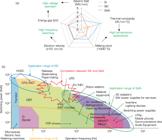
Comparison of properties and applicatione of SiC, Si, and GaN: (a) key material properties and (b) application ranges of semiconductor power devices.
Managing high power levels in compact forms
In the context of semiconductor chips, creating compact forms involves integrating chips into electronic systems with minimal physical footprint. The goal is to achieve a high-power density and efficiency within a limited space. Thus, compact forms can be defined as electronic devices or systems that are designed to occupy minimal physical space while delivering high-performance capabilities. Such forms are particularly important in applications where space constraints are critical including the automotive industry, renewable energy systems, power supplies, the aerospace industry, and data centers (Wang et al. 2023).
In the automotive industry, where available space is limited, compact forms of power electronics using SiC chips can enhance the efficiency and performance of EVs (Lovati 2024a).
Integrating SiC chips in compact forms in solar inverters, wind turbine converters, and other renewable energy applications allows for more efficient power conversion and higher power density. This is beneficial for installations where space is at a premium (Chen and Huang 2024).
Compact forms are essential in power supplies, where the demand for smaller, lighter, and more efficient devices is common. SiC chips contribute to achieving achieve higher power density, leading to more compact and lightweight power supplies (Lovati 2024b).
In the aerospace industry, the weight and size of electronic components are critical factors. Compact forms of SiC-based systems can contribute to the development of lightweight and efficient electronic systems for aircraft and spacecraft (Leuchter et al. 2018; Sahoo et al. 2020).
As data centers continue to grow in importance, the demand for compact and efficient power electronics is significant. SiC chips can be employed in power modules for servers and other data center equipment to enhance power density and energy efficiency (Horn 2023).
Managing high power levels in compact forms using SiC chips involves a combination of advanced design techniques, thermal management strategies, and leveraging the inherent properties of SiC. The key considerations are:
High thermal conductivity of SiC: this is a crucial factor in managing power levels. Efficient heat dissipation is essential to prevent overheating. Cooling systems such as advanced heat sinks, thermal vias, and other cooling technologies can be employed to dissipate heat effectively (Jones-Jackson et al. 2022).
Miniaturized packaging: utilizing compact and efficient packaging designs helps reduce thermal resistance and enhances the overall power density. Advanced packaging technologies, such as direct liquid cooling or immersion cooling, can be explored to manage heat in confined spaces (Birbarah et al. 2020).
Fast switching speeds: SiC chips exhibit fast switching speeds, enabling higher frequency operation. This can be leveraged to design power electronics with reduced component sizes, leading to more compact systems. However, it is crucial to optimize overall system design to take full advantage of these fast switching speeds (Shi et al. 2023).
High voltage handling capability: the ability of SiC to handle higher voltages allows for the development of power systems with increased power density. This is particularly advantageous in applications like EVs and renewable energy systems, where compact and high-power designs are essential (He et al. 2015).
Integration of SiC into power modules: SiC chips are often integrated into power modules that combine multiple components in a compact package. These modules can include additional features like gate drivers and protection circuits, streamlining the integration process and ensuring reliable operation at high power levels (Chen 2017).
Advanced control and monitoring systems: implementing sophisticated control and monitoring systems is crucial for managing power levels effectively. Real-time monitoring of temperature, voltage, and current allows for dynamic adjustments to optimize performance and prevent overloading (Ni et al. 2020).
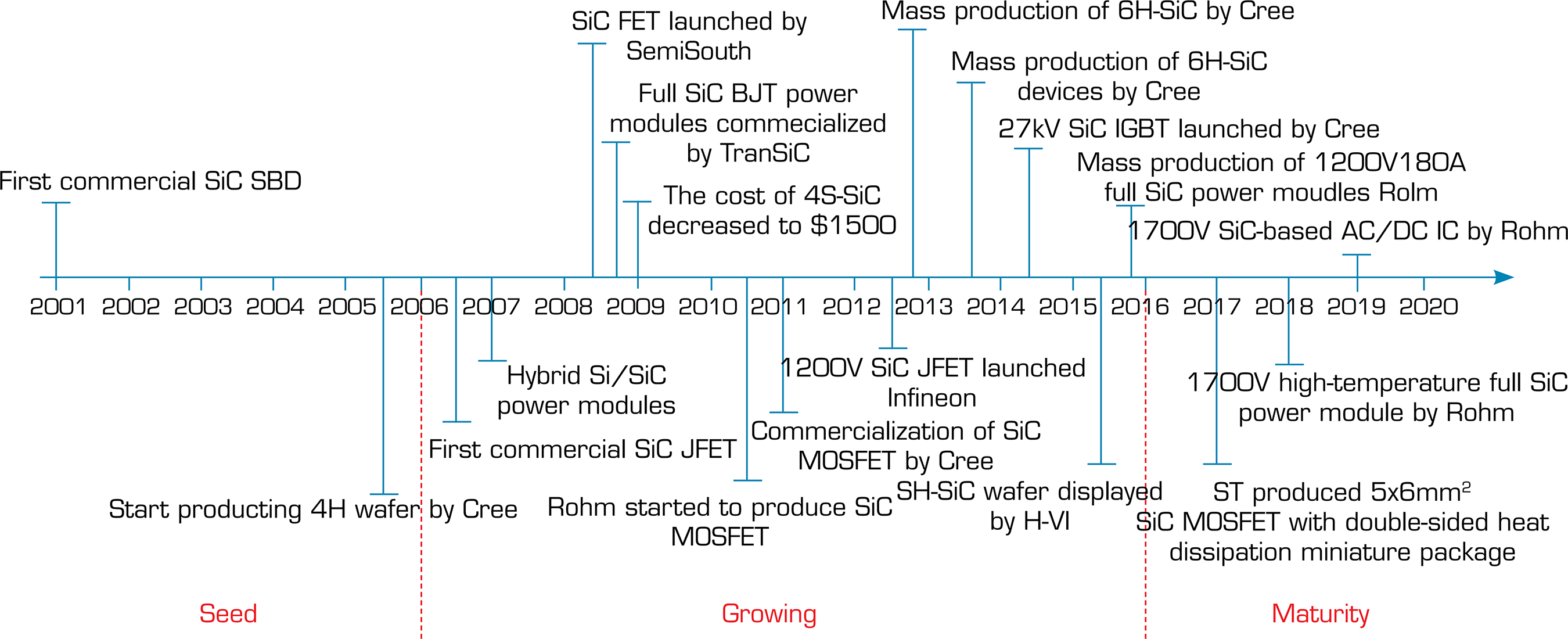
By combining these strategies, engineers can harness the benefits of SiC chips to manage high power levels efficiently in compact forms, enabling the development of innovative and high-performance electronic systems. Figure 2 summarizes the main milestones of SiC devices over the past 20 years, starting from SiC diodes and transistors for high power up to the second generation of SiC MOSFETs (Guo et al. 2019; Langpoklakpam et al. 2022).

As noted, the integration of SiC chips into compact electronic forms is an approach that addresses the critical need for high power density and efficiency in space-constrained applications. The outstanding properties of SiC, such as high thermal conductivity, fast switching speeds, and high voltage handling capabilities, allow for the development of power electronics that meet the requirements of industries like automotive, renewable energy, aerospace, and data centers. Continuous advancements in packaging, thermal management, and control systems further enhance the potential of SiC technology, paving the way for more compact, lightweight, and efficient electronic systems. This demonstrates that SiC is a promising candidate for the next generation of high-performance power electronics.
SiC semiconductors in EVs
SiC semiconductors are transforming the EV industry by enhancing the performance of EV power electronics. The quick recharging capabilities afforded by SiC semiconductors are becoming increasingly critical as the EV market expands and charging infrastructure evolves (Balocco 2021; GVE 2023) .
The transition to 800-volt vehicles has increased the demand for SiC MOSFETs, pushing automotive Original Equipment Manufacturers (OEMs) to deepen their involvement in SiC’s inverter supply and design. This has resulted in a rise in strategic partnerships and supply agreements between SiC manufacturers and automotive OEMs (GlobeNewswire 2023; Graf 2023).
Inverters based on SiC semiconductors can achieve over 95% of charging efficiency, which is essential for high-power rapid chargers in EVs. This efficiency is an important factor in enabling long-range EV operation and quick charging times (Brothers et al. 2023). The market projections for SiC in EVs indicate exponential growth from a value of approximately 0.9-1.1 billion USD in 2022 to 8.6-10.5 billion USD by 2030 (Brothers et al. 2023).
The EV sector is also seeing a transition to larger, eight-inch SiC wafers, with projections of achieving 50% market share by 2030. This shift is expected to yield cost and performance benefits, with gross margin improvements estimated at 5 to 10 percentage points for manufacturers, pending technological advancements like improved wafering techniques (GlobeNewswire 2023).
In a broad sense, the EV industry is shifting toward greater use of wide-bandgap semiconductors like SiC, which outperform silicon in high-voltage applications up to 1,200 V and can operate at temperatures up to 200 °C. The role of SiC is vital in various stages of the production chain for EVs, especially in on-board chargers and inverters, making it an indispensable component of modern vehicle designs (Hariman 2023).
Application in renewable energy
The integration of SiC semiconductors into renewable energy technologies is propelling the sector toward greater efficiency and reliability. SiC’s thermal conductivity and ability to withstand high temperatures and voltages make it well-suited for various renewable energy applications (PowerAmerica 2018).
In solar power systems, SiC-based semiconductors are used in photovoltaic (PV) inverters, which convert the DC output from solar panels into AC for the power grid. SiC MOSFETs in inverters can handle significant current while displaying low on-resistance, resulting in reduced losses of energy as heat (Infineon 2021). Such properties significantly increase the useful life of inverters. These advancements have been instrumental fundamental in driving the adoption of SiC in the solar industry. There are also other examples, such as the achievement of improved battery control in solar arrays, which help to conserve energy and extend the range of solar-powered applications (Allen 2022) .
Wind energy benefits equally from SiC technology, especially in power converters for wind turbines. SiC based inverters enable more stable energy conversion, even in the fluctuating conditions typical of wind power generation. This stability leads to improved power quality and could result in a reduction in heatsink volume by one-third, allowing for the removal of cooling fans and reducing energy losses by over 70% (Zhang and Tolbert 2011).
SiC semiconductors are transforming power electronics, particularly within energy storage systems such as batteries and supercapacitors, leading to enhancements in compactness, cost efficiency, and reliability (Daryanani 2022; Liu 2024). Current research on SiC nanomaterials places them as promising candidates for supercapacitor electrodes due to their electrochemical stability, mechanical strength, and resilience under extreme conditions. The nanostructures and porous architectures inherent to SiC significantly increase specific electrical capacitance and cycling stability. The exploration of SiC-based composite materials, such as SiC/carbon composites and SiC/metal oxide hybrids, might improve these characteristics. In addition to their impact on energy storage solutions, SiC semiconductors also find applications in grid infrastructure. SiC-based inverters efficiently manage the flow of electricity from renewable sources, ensuring grid stability and enabling a higher integration of renewable energy into the grid. This integration of SiC technology is setting the stage for more sustainable and efficient energy systems (Ando et al. 2017; ENERGY.GOV 2018).
The renewable energy sector’s drive to meet the demand for clean power is well complemented by SiC semiconductors, which stand out as a pivotal enabling technology. More efficient, cost-effective and compact renewable energy systems provide high-performance power conversion and significantly reduce the carbon footprint of energy production.
Advancements in aeronautics and space
The fields of aeronautics and space are witnessing a significant change of perspectives with the development of new semiconductor technologies, such as SiC, that can withstand extreme environmental conditions. SiC power devices have been explored for a variety of aircraft applications, including power generators, electric drives, lights, and power sources for instruments and motors (Leuchter et al. 2018). In space applications, SiC technology is being used in power management systems for satellites, propulsion systems for spacecraft, and in the development of durable electronics for planetary exploration missions (NASA – Glenn Research Center 2021). These advancements enhance the performance, efficiency, and reliability of systems operating in the harsh environments of space.
In their article on SiC power devices for aircraft electrical systems, Leuchter et al. (2018) present several open issues in the research and development of using SiC power devices in these systems. They discuss typical applications and compare the effects of using SiC devices instead of current silicon power devices. The article addresses the impact of electromagnetic radiation and interference from electronic systems with power electronics sources. It concludes that the rapid switching speeds of SiC devices can lead to harmful effects such as electromagnetic interference, harmonics, and voltage spikes, indicating that these power devices still require some design improvements for widespread deployment.
The National Aeronautics and Space Administration (NASA) Glenn Research Center has made a breakthrough by demonstrating the first prolonged operation of electronics under the harsh conditions found on Venus. This achievement marks a substantial advance in planetary exploration, enabling new scientific missions to this hostile environment (Military Aerospace Electronics 2023).
SiC-based ICs have successfully withstood temperatures of up to 500 °C for durations reaching 500 hours (Spry et al. 2018). This robustness is critical for missions to planets like Venus, where temperatures can be as high as 470 °C, and the atmospheric pressure is about 90 times larger than that of Earth. The longevity of these SiC-based electronics could significantly enhance future Venus lander designs, allowing them to operate for extended periods without the need for heavy cooling systems, reducing overall mission costs.
The practical implications of this technology stretch beyond Venus. SiC electronics could potentially be employed in the exploration of other celestial bodies with extreme conditions, such as gas giants or Mercury’s surface. On Earth, such advancements could transform industries that operate under high-temperature conditions, like deep oil well drilling or industrial processing (Homberger et al. 2004).
The technology development has been a collaborative effort, with contributions from multiple projects, including the Planetary Instrument Concepts for the Advancement of Solar System Observations (PICASSO) program and the Long-Life In-situ Solar System Explorer (LLISSE) project. These initiatives aim to refine and produce increasingly complex high-temperature SiC electronics, which are crucial for the LLISSE project and other applications in aeronautics and space (NASA Science 2017).
NASA’s pioneering work with SiC semiconductors represents a paradigm shift in our approach to space exploration and our ability to understand and operate in extreme environments. This advancement promises to open new frontiers, offering the potential for longer missions, more profound scientific insights, and a deeper understanding of the cosmos.
Market trends and predictions
There is a broader industry trend towards adopting wide-bandgap materials for various applications. This trend is driven by the need for higher efficiency, reduced power losses, and improved performance in electronic devices. Ongoing research and development efforts aim to create SiC devices with even higher power capabilities. The SiC ecosystem, encompassing semiconductor manufacturers, equipment suppliers, and research institutions, continuously improves SiC technology and introduces innovative products to the market through collaborations, partnerships, and investments (Compound Semiconductor 2023).
The demand for SiC chips in power electronics is expected to grow substantially, with applications centered in power supplies, renewable energy systems, and other high-power electronic devices. Within renewable energy systems, including solar inverters and wind turbine converters, SiC chips play an important role (Zhang and Tolbert 2011). The global push for cleaner energy sources and the expansion of renewable energy projects contribute to the increasing demand for SiC chips in these applications.
Another noteworthy market is data centers and telecommunications, where SiC chips are predicted to play a crucial role in meeting the demand for more efficient power electronics. The high-power density and energy efficiency offered by SiC contribute to the development of compact and high-performance systems for data storage and processing (Horn 2023).
The continuous advancements in SiC manufacturing processes are leading to steady cost reductions and increased production efficiency. As economies of scale take effect, the overall cost of SiC chips is expected to decrease, making them more accessible across a broader range of applications. SiC chips have gained significant traction in the automotive industry, particularly in EVs. The demand for EVs is expected to rise, driven by environmental concerns and government initiatives to reduce carbon emissions.
Government regulations promoting energy efficiency and sustainability are likely to further drive the adoption of SiC chips. Incentives and mandates encouraging the use of energy-efficient technologies are expected to exert a positive influence on market dynamics (ENERGY.GOV 2024)
The forecast for the market of SiC power devices from 2023 to 2029, divided among different applications, is summarized in Fig. 3. As noted, automotive and mobility applications constitute the largest market (Yole Group 2024).

Challenges and future outlook
The significance of SiC as an innovative material in electronic device technology represents a potential paradigm shift across various industries, including EVs, renewable energy systems, and aerospace engineering. Despite the technological superiority of SiC semiconductors, their commercial adoption has been hindered by significant economicbarriers. The fabrication of SiC-based devices entails substantial financial overheads, surpassing those associated with traditional silicon-based semiconductors. This disparity is largely attributable attributed to the intricate processes required for synthesizing high-fidelity SiC materials and the subsequent device manufacturing (Ayodele 2024). The imperative to devise and adopt cost-efficient production methodologies that minimize these financial burdens is critical for enhancing the accessibility and market competitiveness of SiC-based semiconductors (Comyn 2023).
Moreover, the distinctive electrical and thermal attributes of SiC necessitate a reevaluation and adaptation of conventional semiconductor design principles and system architectures (Wolfspeed 2020). This transition mandates a workforce adept in SiC technologies, a resource presently in scarcity (Veliadis 2022). The development of comprehensive educational programs and training initiatives aimed at expanding the pool of professionals proficient in SiC applications is crucial for the seamless assimilation of SiC technologies across various applications.
The assimilation of SiC-based technologies into existing markets presents a formidable challenge, characterized not only by the necessary technological transitions but also by shifts in market perceptions and the establishment of trust in this nascent technology. The cultivation of a robust ecosystem, encompassing manufacturers, end-users, and regulatory entities, is essential to facilitate the successful penetration and adoption of SiC semiconductors in the market (Vavra 2024).
Notwithstanding these challenges, the prospects for SiC semiconductors remain auspicious, with projections indicating a trajectory of substantial growth, underpinned by the critical role of SiC in the evolution of power electronics. The growing demand for energy-efficient solutions, particularly in the sectors of EVs, renewable energy systems, and advanced aerospace technologies, is expected to catalyze the expansion of SiC semiconductor applications.
Continued research and development efforts will likely yield innovative breakthroughs that address current limitations, with advancements in material science, manufacturing processes, and device engineering expected to reduce costs and augment the performance and reliability of SiC-based devices. Such progress, coupled with a growing recognition of the benefits offered by SiC technologies, is likely to expedite the widespread adoption of these technologies, heralding a new epoch of high-efficiency and high-performance semiconductor technologies.
In the current perspective, the confluence of technological innovation, skill enhancement, and ecosystem development will unlock the full potential of SiC semiconductors, driving the industry toward a future marked by heightened efficiency, sustainability, and technological sophistication.
ACKNOWLEDGMENTS
Not applicable.
-
Peer Review History: Single Blind Peer Review.
-
FUNDINGConselho Nacional de Desenvolvimento Científico e TecnológicoGrant No: 313482/2021-7MackPesquisaGrant No: 221060
DATA AVAILABILITY STATEMENT
All data sets were generated or analyzed in the current study.
REFERENCES
-
[GVE] Grand View Research (2023) Silicon carbide semiconductor devices market report 2030. [accessed Feb 01 2024]. www.grandviewresearch.com https://www.grandviewresearch.com/industry-analysis/silicon-carbide-semiconductor-devices-market-report
» www.grandviewresearch.com» https://www.grandviewresearch.com/industry-analysis/silicon-carbide-semiconductor-devices-market-report -
Allen N (2022) Your complete guide to solar batteries: are they worth it? Forbes Home. [accessed Feb 01 2024]. https://www.forbes.com/home-improvement/solar/what-is-a-solar-battery/
» https://www.forbes.com/home-improvement/solar/what-is-a-solar-battery/ -
Amorim MR, Savio M, Santiago MH (2012) Applications of SiC-based thin films in electronic and MEMS devices. Physics and Technology of Silicon Carbide Devices. https://doi.org/10.5772/50998
» https://doi.org/10.5772/50998 -
Ando Y, Shirahata Y, Oku T, Matsumoto T, Ohishi Y, Yasuda M, Shimono A, Takeda Y, Murozono M. (2017) Comparison between SiC- and Si-based inverters for photovoltaic power generation systems. J Energy Eng 5(1):30-40. https://doi.org/10.4236/jpee.2017.51003
» https://doi.org/10.4236/jpee.2017.51003 -
Ayodele A (2024) Silicon carbide (SiC) wafers: revolutionizing power electronics and beyond. Wevolver. [accessed Jul 15 2024]. https://www.wevolver.com/article/silicon-carbide-wafers
» https://www.wevolver.com/article/silicon-carbide-wafers -
Balocco D (2021) Exclusive technology feature. Demystifying three-phase PFC topologies. How2Power Today. [accessed Jan 28 2024]. https://www.onsemi.com/site/pdf/H2PToday2102_design_ONSemi.pdf
» https://www.onsemi.com/site/pdf/H2PToday2102_design_ONSemi.pdf -
Birbarah P. Gebrael T, Foulkes T, Stillwell A, Moore A, Pilawa-Podgurski R, Miljkovic N. (2020) Water immersion cooling of high power density electronics. Int J Heat Mass Transf 147:118918. https://doi.org/10.1016/j.ijheatmasstransfer.2019.118918
» https://doi.org/10.1016/j.ijheatmasstransfer.2019.118918 -
Brothers A, Burkacky O, Dragon J, Kakarwada J, Mahindroo A, Patel J, Suryanarayanan A (2023) New silicon carbide prospects emerge as market adapts to EV expansion. McKinsey & Company. [accessed Feb 15 2024]. https://www.mckinsey.com/industries/semiconductors/our-insights/new-silicon-carbide-prospects-emerge-as-market-adapts-to-ev-expansion#/
» https://www.mckinsey.com/industries/semiconductors/our-insights/new-silicon-carbide-prospects-emerge-as-market-adapts-to-ev-expansion -
Castelletto S, Peruzzo A, Bonato C, Johnson BC, Radulaski M, Ou H, Kaiser F, Wrachtrup J (2022) Silicon carbide photonics bridging quantum technology. ACS Photonics 9(5):1434-1457. https://doi.org/10.1021/acsphotonics.1c01775
» https://doi.org/10.1021/acsphotonics.1c01775 -
Chen C (2017) A review of SiC power module packaging: layout, material system and integration. CPSS Transactions on Power Electronics and Applications 2(3):170-186. https://doi.org/10.24295/cpsstpea.2017.00017
» https://doi.org/10.24295/cpsstpea.2017.00017 -
Chen Z, Huang AQ (2024) Extreme high efficiency enabled by silicon carbide (SiC) power devices. Mater Sci Semicond Process 172:108052. https://doi.org/10.1016/j.mssp.2023.108052
» https://doi.org/10.1016/j.mssp.2023.108052 -
Chiappim W, Pessoa RS, Fraga MA (2022) Silicon carbide technology for advanced human healthcare applications. Rio de Janeiro: Elsevier. Antimicrobial properties of SiC nanostructures and coatings; p. 309-335. https://doi.org/10.1016/b978-0-323-90609-8.00004-1
» https://doi.org/10.1016/b978-0-323-90609-8.00004-1 -
Compound Semiconductor (2023) The growth of power SiC partnerships. [accessed Feb 01 2024]. https://compoundsemiconductor.net/article/117486/The_growth_of_power_SiC_partnerships
» https://compoundsemiconductor.net/article/117486/The_growth_of_power_SiC_partnerships - Comyn R (2023) SiC power device competitive landscape: a patent perspective. Paper presented 2023 PCIM Europe 2023 International Exhibition and Conference for Power Electronics, Intelligent Motion, Renewable Energy and Energy Management. IEEE; Nuremberg, Germany.
-
Damcevska J, Dimitrijev S, Haasmann D, Tanner P (2023) The effect of wafer thinning and thermal capacitance on chip temperature of SiC Schottky diodes during surge currents. Sci Rep 13:19189. https://doi.org/10.1038/s41598-023-46538-6
» https://doi.org/10.1038/s41598-023-46538-6 -
Daryanani S (2022) SiC enables better energy storage. Power Electronics News. [accessed Jan 26 2014]. https://www.powerelectronicsnews.com/sic-power-devices-enabling-better-energy-storage/
» https://www.powerelectronicsnews.com/sic-power-devices-enabling-better-energy-storage/ -
De Napoli M (2022) SiC detectors: a review on the use of silicon carbide as radiation detection material. Front Phys 10. https://doi.org/10.3389/fphy.2022.898833
» https://doi.org/10.3389/fphy.2022.898833 -
ENERGY.GOV (2024) U.S. Department of Energy announces $2.25 million American-made silicon carbide (SiC) packaging prize. [accessed Oct 12 2024]. https://www.energy.gov/oe/articles/us-department-energy-announces-225-million-american-made-sic-semiconductor-prize
» https://www.energy.gov/oe/articles/us-department-energy-announces-225-million-american-made-sic-semiconductor-prize -
ENERGY.GOV (2018) Silicon carbide in solar energy. [accessed Jul 15 2024]. https://www.energy.gov/eere/solar/silicon-carbide-solar-energy
» https://www.energy.gov/eere/solar/silicon-carbide-solar-energy -
Fraga M, Pessoa R (2020) Progresses in synthesis and application of SiC films: from CVD to ALD and from MEMS to NEMS. Micromachines 11(9):799. https://doi.org/10.3390/mi11090799.
» https://doi.org/10.3390/mi11090799 -
Fraga MA, Furlan H, Pessoa RS, Massi M (2013) Wide bandgap semiconductor thin films for piezoelectric and piezoresistive MEMS sensors applied at high temperatures: an overview. Microsyst Technol 20(1):9-21. https://doi.org/10.1007/s00542-013-2029-z
» https://doi.org/10.1007/s00542-013-2029-z -
GlobeNewswire (2023) Driving the future: SiC market for electric vehicles witnessing exponential growth with superior semiconductors and expanded charging infrastructure. [accessed Jan 28 2024]. https://www.globenewswire.com/news-release/2023/09/14/2743438/0/en/Driving-the-Future-SiC-Market-for-Electric-Vehicles-Witnessing-Exponential-Growth-with-Superior-Semiconductors-and-Expanded-Charging-Infrastructure.html
» https://www.globenewswire.com/news-release/2023/09/14/2743438/0/en/Driving-the-Future-SiC-Market-for-Electric-Vehicles-Witnessing-Exponential-Growth-with-Superior-Semiconductors-and-Expanded-Charging-Infrastructure.html -
Graf M (2023) SBD explores: what are 800V EVs and should automakers be adopting it? SBD Automotive. [accessed Feb 09 2024]. https://www.sbdautomotive.com/post/sbd-explores-what-are-800v-evs-and-should-an-oem-be-implementing-this-technology
» https://www.sbdautomotive.com/post/sbd-explores-what-are-800v-evs-and-should-an-oem-be-implementing-this-technology -
Guo X, Xun Q, Li Z, Du S (2019) Silicon carbide converters and MEMS devices for high-temperature power electronics: a critical review. Micromachines 10(6):406. https://doi.org/10.3390/mi10060406
» https://doi.org/10.3390/mi10060406 -
Hariman G (2023) EV charging improved with sic. Power Electronics News. [accessed Jan 28 2024]. https://www.powerelectronicsnews.com/sic-devices-for-ev-chargers/
» https://www.powerelectronicsnews.com/sic-devices-for-ev-chargers/ - He S, Que L, Lv J, Ang S (2015) Silicon carbide power electronic module packaging. Paper presented 2015 16th International Conference on Electronic Packaging Technology. IEEE; Changsha, China.
- Homberger J, Lostetter A, Olejniczak KJ, McNutt T, Lal S, Mantooth A (2004) Silicon-carbide (SiC) semiconductor power electronics for extreme high-temperature environments. Paper presented 2004 IEEE Aerospace Conference Proceedings. IEEE; city, country.
-
Horn R (2023) Wide bandgap semiconductors drive efficiency in datacenters. DigiKey. [accessed Jul 05 2024]. https://www.digikey.com/en/articles/wide-bandgap-semiconductors-drive-efficiency-in-datacenters
» https://www.digikey.com/en/articles/wide-bandgap-semiconductors-drive-efficiency-in-datacenters -
Infineon (2021) Next-level power density in solar and energy storage with silicon carbide MOSFETs realizing the potential of CoolSiCTM MOSFETs for cost-effective power density in solar power generation and energy storage systems. [accessed Oct 12 2024]. https://www.infineon.com/dgdl/Infineon-Next_level_power_density_in_solar_and_energy_storage_with_silicon_carbide_MOSFETs-Whitepaper-v01_00-EN.pdf?fileId=5546d4627aa5d4f5017b71bcd9383a2b&da=t
» https://www.infineon.com/dgdl/Infineon-Next_level_power_density_in_solar_and_energy_storage_with_silicon_carbide_MOSFETs-Whitepaper-v01_00-EN.pdf?fileId=5546d4627aa5d4f5017b71bcd9383a2b&da=t -
Jia Y, Shen Y, Sun X, Shi Z, Jiang K, Wu T, Liang H, Cui X, Lü W, Li D (2021) Improved performance of SiC radiation detector based on metal–insulator – Semiconductor structures. Nucl Instrum Methods Phys Res A 997:165166. https://doi.org/10.1016/j.nima.2021.165166
» https://doi.org/10.1016/j.nima.2021.165166 -
Jones-Jackson S. Rodriguez R, Yang Y, Lopera L, Emadi A (2022) Overview of current thermal management of automotive power electronics for traction purposes and future directions. IEEE T Transp Electr 8(2):2412-2428. https://doi.org/10.1109/tte.2022.3147976
» https://doi.org/10.1109/tte.2022.3147976 -
Kimoto T, Yamada K, Niwa H, Suda J (2016) Promise and challenges of high-voltage SiC bipolar power devices. Energies 9(11):908. https://doi.org/10.3390/en9110908
» https://doi.org/10.3390/en9110908 -
La Via F, Alquier D, Giannazzo F, Kimoto T, Neudeck P, Ou H, Roncaglia A, Saddow SE, Tudisco S (2023) Emerging SiC applications beyond power electronic devices. Micromachines 14(6):1200. https://doi.org/10.3390/mi14061200
» https://doi.org/10.3390/mi14061200 -
Langpoklakpam C, Liu AC, Chu KH, Hsu LH, Lee WC, Chen SC. Sun CW, Shih MH, Lee KY, Kuo HC (2022) Review of silicon carbide processing for power MOSFET. Crystals 12(2):245. https://doi.org/10.3390/cryst12020245
» https://doi.org/10.3390/cryst12020245 - Leuchter J, Boril J, Blasch E (2018) Overview of silicon carbide power devices for aircraft electrical systems. Paper presented 2018 IEEE/AIAA 37th Digital Avionics Systems Conference. IEEE/AIAA; London, United Kingdom.
-
Liu Y, Li G, Huan L, Cao S (2024) Advancements in silicon carbide-based supercapacitors: materials, performance, and emerging applications. Nanoscale 16:504-526. https://doi.org/10.1039/D3NR05050E
» https://doi.org/10.1039/D3NR05050E -
Lovati S (2024a) SiC power devices for automotive applications. Power Electronics News. [accessed Oct 10 2024]. https://www.powerelectronicsnews.com/automotive-qualified-sic-power-devices/
» https://www.powerelectronicsnews.com/automotive-qualified-sic-power-devices/ -
Lovati S (2024b) SiC MOSFETs meet the requirements of high-efficiency and high-frequency applications. Power Electronics News. [accessed Oct 10 2024]. https://www.powerelectronicsnews.com/sic-mosfets-meet-the-requirements-of-high-efficiency-and-high-frequency-applications/
» https://www.powerelectronicsnews.com/sic-mosfets-meet-the-requirements-of-high-efficiency-and-high-frequency-applications/ -
Military Aerospace Electronics (2023) NASA seeks integrated circuits for extreme environments for Venus missions. [accessed Jan 28 2024]. https://www.militaryaerospace.com/home/article/14298611/nasa-seeks-integrated-circuits-for-extreme-environments-for-venus-missions
» https://www.militaryaerospace.com/home/article/14298611/nasa-seeks-integrated-circuits-for-extreme-environments-for-venus-missions -
NASA – Glenn Research Center (2021). Benefits. [accessed Jan 28 2024]. https://www1.grc.nasa.gov/research-and-engineering/silicon-carbide-electronics-and-sensors/benefits/
» https://www1.grc.nasa.gov/research-and-engineering/silicon-carbide-electronics-and-sensors/benefits/ -
NASA Science (2017) Electronics demonstrate operability in simulated Venus conditions. [accessed Jan 28 2024]. https://science.nasa.gov/science-research/science-enabling-technology/technology-highlights/electronics-demonstrate-operability-in-simulated-venus-conditions/
» https://science.nasa.gov/science-research/science-enabling-technology/technology-highlights/electronics-demonstrate-operability-in-simulated-venus-conditions/ -
Ni Z, Lyu X, Yadav OP, Singh BN, Zheng S, Cao D (2020) Overview of real-time lifetime prediction and extension for SiC power converters. IEEE Trans Power Electron 35(8): 7765-7794. https://doi.org/10.1109/tpel.2019.2962503
» https://doi.org/10.1109/tpel.2019.2962503 -
Pandraud G, Pham HTM, French PJ, Sarro PM (2007) PECVD SiC optical waveguide loss and mode characteristics. Opt Laser Technol 39(3):532-536. https://doi.org/10.1016/j.optlastec.2005.10.014
» https://doi.org/10.1016/j.optlastec.2005.10.014 -
Pelucchi E, Fagas G, Aharonovic I, Englund D, Figueroa E, Gong Q, Hannes H, Liu J, Lu CH, Matsuda N, et al. (2022) The potential and global outlook of integrated photonics for quantum technologies. Nat Rev Phys 4:194-208. https://doi.org/10.1038/s42254-021-00398-z
» https://doi.org/10.1038/s42254-021-00398-z -
Pessoa RS, Fraga MA, Santos LV, Massi M, Maciel HS (2015) Nanostructured thin films based on TiO2 and/or SiC for use in photoelectrochemical cells: a review of the material characteristics, synthesis and recent applications. Mater Sci Semicond Process 29:56-68. https://doi.org/10.1016/j.mssp.2014.05.053
» https://doi.org/10.1016/j.mssp.2014.05.053 -
PowerAmerica. (2018) PowerAmerica Strategic Roadmap for next generation wide bandgap power electronics. [accessed Jul 05 2024]. https://poweramericainstitute.org/wp-content/uploads/2018/02/PowerAmerica_Roadmap_Final-Public-Version-Feb-2018.pdf
» https://poweramericainstitute.org/wp-content/uploads/2018/02/PowerAmerica_Roadmap_Final-Public-Version-Feb-2018.pdf -
Rafin SR, Ahmed MD, Haque MD, Hossain MD, Haque OM (2023) Power electronics revolutionized: a comprehensive analysis of emerging wide and ultrawide bandgap devices. Micromachines 14(11):2045. https://doi.org/10.3390/mi14112045
» https://doi.org/10.3390/mi14112045 -
Roccaforte F, Giannazzo F, Raineri V (2010) Nanoscale transport properties at silicon carbide interfaces. J Phys D: Appl Phys 43(22):223001. https://doi.org/10.1088/0022-3727/43/22/223001
» https://doi.org/10.1088/0022-3727/43/22/223001 -
Saddow SE (2022) Silicon carbide technology for advanced human healthcare applications. Micromachines 13(3):346. https://doi.org/10.3390/mi13030346
» https://doi.org/10.3390/mi13030346 -
Sahoo S, Zhao X, Kyprianidis K (2020) A review of concepts, benefits, and challenges for future electrical propulsion-based aircraft. Aerospace 7(4):44. https://doi.org/10.3390/aerospace7040044
» https://doi.org/10.3390/aerospace7040044 -
Shi B, Ramones AI, Liu Y, Wang H, Li Y, Pischinger S, Andert J (2023) A review of silicon carbide MOSFETs in electrified vehicles: application, challenges, and future development. IET Power Electron 16(12):2103-2120. May, https://doi.org/10.1049/pel2.12524
» https://doi.org/10.1049/pel2.12524 -
Siffert P, Krimmel EF (2004) Silicon: evolution and future of a technology. Berlin/ Heidelberg: Springer. https://doi.org/10.1007/978-3-662-09897-4
» https://doi.org/10.1007/978-3-662-09897-4 -
Spry DJ, Neudeck PG, Lukco D, Chen LY, Krasowski MJ, Prokop NF, Chang CW, Beheim GM (2018) Prolonged 500°C operation of 100+ transistor silicon carbide integrated circuits. Mater Sci Forum 924:949-952. https://doi.org/10.4028/www.scientific.net/msf.924.949
» https://doi.org/10.4028/www.scientific.net/msf.924.949 - Syed-Khaja A (2018) Diffusion soldering for the high-temperature packaging of power electronics (doctoral thesis.) Boca Raton: FAU University.
-
Toshiba Electronic Devices & Storage Corporation (2024) The switching benefits derived from using SiC. [accessed Oct 10 2024]. https://toshiba.semicon-storage.com/eu/semiconductor/design-development/innovationcentre/articles/tcm0696_SiC_Snacks.html
» https://toshiba.semicon-storage.com/eu/semiconductor/design-development/innovationcentre/articles/tcm0696_SiC_Snacks.html -
ULVAC (2016) SiC power devices manufacturing. [accessed Feb 09 2024]. https://www.ulvac.co.jp/wiki/en/process_g_sic_power/
» https://www.ulvac.co.jp/wiki/en/process_g_sic_power/ -
Vavra C (2024) Future and emerging semiconductor adoption trends for EVs plant engineering. [accessed Oct 12 2024]. https://www.plantengineering.com/articles/future-and-emerging-semiconductor-adoption-trends-for-evs/
» https://www.plantengineering.com/articles/future-and-emerging-semiconductor-adoption-trends-for-evs/ -
Veliadis V (2022) Non-CMOS-compatible SiC power devices. Power Electronics News. [accessed Oct 12 2024]. https://www.powerelectronicsnews.com/non-cmos-compatible-sic-power-device-fabrication-in-volume-si-fabs/?trk=article-ssr-frontend-pulse_little-text-block
» https://www.powerelectronicsnews.com/non-cmos-compatible-sic-power-device-fabrication-in-volume-si-fabs/?trk=article-ssr-frontend-pulse_little-text-block -
Wang J, Ma Y, Yang M, Gong W (2023) A review of system-in-package technologies: application and reliability of advanced packaging. Micromachines 14(6):1149. https://doi.org/10.3390/mi14061149
» https://doi.org/10.3390/mi14061149 -
Wolfspeed (2020) SiC design tips from the power expert. [accessed Jul 05 2024]. https://www.wolfspeed.com/knowledge-center/article/design-considerations-for-silicon-carbide-power/
» https://www.wolfspeed.com/knowledge-center/article/design-considerations-for-silicon-carbide-power/ -
Yadlapalli RT, Kotapati A, Kandipati R, Koritala C S (2022) A review on energy efficient technologies for electric vehicle applications. J Energy Storage 50:104212. https://doi.org/10.1016/j.est.2022.104212.
» https://doi.org/10.1016/j.est.2022.104212 -
Yole Group (2024) Yole Group viewpoint – What’s next for SiC? The focus is shifting. [accessed Oct 12 2024]. https://www.yolegroup.com/yole-group-actuality/yole-group-viewpoint-whats-next-for-sic-the-focus-is-shifting/
» https://www.yolegroup.com/yole-group-actuality/yole-group-viewpoint-whats-next-for-sic-the-focus-is-shifting/ -
Zetterling CM, Kargarrazi S, Shakir M (2019) Wide bandgap integrated circuits for high power management in extreme environments. Cham: Springer. Next-generation ADCs, high-performance power management, and technology considerations for advanced integrated circuits; p. 167-178. https://doi.org/10.1007/978-3-030-25267-0_10
» https://doi.org/10.1007/978-3-030-25267-0_10 -
Zhang H, Tolbert LM (2011) Efficiency impact of silicon carbide power electronics for modern wind turbine full scale frequency converter. IEEE Trans Ind Electron 58:21-28. https://doi.org/10.1109/TIE.2010.2048292
» https://doi.org/10.1109/TIE.2010.2048292
Edited by
-
Section editor: Ana Morais https://orcid.org/0000-0003-0810-179X

 Source: Retrieved from
  Source: Retrieved from
  Source: Retrieved from