 A Comprehensive Multi-Method Approach to Investigating Simvastatin Forced Degradation: Integrating in silico Evaluation with HRMS, NMR, and UV-HPLC
Abstract
Simvastatin, developed in the 1980s, is a widely prescribed medication used to treat hyperlipidemias and lower the risk of cardiovascular diseases, earning its status as a blockbuster drug globally. However, simvastatin has points of instability, and there is limited research regarding the stability of this compound. The objective of this study was to evaluate potential degradation products generated from various stressors, such as pH, humidity, light, and heat, using in silico methods (via Zeneth®) and analytical techniques like high-resolution mass spectrometry (HRMS) and nuclear magnetic resonance (1H NMR). As a result, we identified the main points of reactivity and predicted seven possible degradation compounds in silico. Upon experimentally comparing the pure drug with its commercial formulation, we detected seven of these degradation products - primarily resulting from hydrolysis and oxidation, using HRMS and NMR. Additionally, we assessed the recovery of both formulations through high-performance liquid chromatography-ultraviolet (UV-HPLC), indicating that the excipients in the commercial form provide protection against basic agents; however, this protection is less effective under light stress. This study highlights the importance of combining in silico analysis with experimental techniques, emphasizing the need for careful handling of simvastatin, particularly concerning the formation of hydrolysis products, oxidation, and light exposure.
Keywords:
simvastatin; degradation products; forced stress tests; HRMS; NMR; UV-HPLC
Introduction
Statin therapy is recommended for both primary and secondary prevention of cardiovascular disease. These medications have consistently ranked among the most prescribed drugs worldwide. Statins work by reversibly inhibiting the enzyme 3-hydroxy-3-methylglutaryl coenzyme A (HMG-CoA) reductase, which plays a crucial role in converting HMG-CoA to mevalonate. This process represents the rate-limiting step in cholesterol synthesis.1 Among the various statins, simvastatin, chemically known as [1S-[1α,3α,7β,8β(2S*,4S*),8αβ]]-1,2,3,7,8,8a-hexahydro-3,7-dimethyl-8-[2-(tetrahydro-4-hydroxy-6-oxo-2H-pyran-2-yl)ethyl]-1-naphtalenyl-2,2-dimethylbutanoate, serves as an effective antilipemic agent. It is primarily used in the treatment of hyper-cholesterolemia, a condition characterized by elevated levels of cholesterol in the blood.1 This drug was introduced by Merck Laboratories in 1992 under the trade name Zocor® and has since become one of the best-selling statins in history. The World Health Organization (WHO) recognizes it as a safe and effective treatment for hypercholesterolemia, highlighting its importance in managing elevated cholesterol levels.2,3 It is a prodrug, and its active form is generated through hydrolytic enzymatic transformation in the stomach, resulting in the production of β-hydroxy acid. This acidic product acts as an inhibitor of 3-hydroxy-3-methylglutaryl coenzyme A (HMG CoA) reductase, an important regulator of cholesterol synthesis. Simvastatin is synthesized from lovastatin, which is produced biosynthetically from the fungus Aspergillus terreus, by replacing the 2-methylbutyryl side chain with a 2,2-dimethylbutyryl group.4
Forced degradation, or stress testing, is an effective strategy for demonstrating the degradation pathways and products formed during the storage of a drug or formulated product. These trials are designed to challenge and validate the specificity and selectivity of the analytical methods used to quantify the active ingredients in the medicine, ensuring that these characteristics are maintained throughout the stability study. Chemical changes and modifications in the organoleptic properties of a medicine can occur due to environmental factors such as exposure to light, air, heat, and humidity. These conditions can lead to the formation of potentially toxic reaction products or result in a loss of drug efficacy. Understanding the stability of pharmaceuticals is crucial for establishing their purity, potency, and safety.5,6 According to the International Conference on Harmonisation (ICH) guidelines (Q1A (R2), Q3A (R2), and Q3B (R2), 2006), it is essential to evaluate degradation products whenever they exceed the identification limit in a medicinal substance or product.5,6 Studies of forced degradation help researchers understand the impurity profile and the behavior of drug products under stress conditions, such as elevated temperature, humidity, and light exposure.
To study these degradation compounds, it is essential to use analytical methods that are sensitive, selective, and easily applicable. By compiling both target and non-target methods, researchers can gain insights into the degradation pathways of these compounds, allowing for the structural characterization of new compounds and an understanding of their origins. This knowledge can ultimately contribute to improved control during drug synthesis and the development of pharmaceutical formulations.7 Furthermore, degradation products can be isolated or synthesized, enabling the evaluation of their toxicity profiles through cytotoxicity tests. This process supports the research and development of new drugs.8,9 Degradation studies of the chemical structure of drugs using physicochemical methods are essential for the development and registration of new medicines. In this context, the most common degradation reactions include hydrolysis in alkaline or acidic media and oxidation, which occurs through exposure to oxygen in the air, a process known as autoxidation.
Computational methodologies play a crucial role in predicting molecular reactivity and structural stability under environmental conditions. These in silico approaches help elucidate potential degradation pathways and identify likely degradation products. The integration of computational predictions with experimental data provides a comprehensive understanding of drug stability and molecular reactivity, enabling better prediction of compound behavior under various conditions.10 For instance, when examining hydrolysis processes, it is recommended to use theoretical methods that involve molecular orbitals and Fukui functions. Similarly, when studying oxidative conditions, Fukui functions can also be utilized to predict susceptibility to radicals in reactions involving electron transfer and radical generation.10-12 These computational methods have been utilized in studies of forced degradation of drugs and serve as complementary tools to experimental procedures for identifying the products generated in the reactions applied.
Although simvastatin is one of the most widely consumed drugs in the world, there is limited information regarding its degradation, particularly given the points of concern in its chemical structure. Therefore, this study aims to identify the degradation pathways influenced by various stressors, such as pH, humidity, heating, and oxidation, in accordance with the ICH Q1A(R2) recommendations.13 The reactivity and potential degradation compounds were predicted in silico using Zeneth® software.14 These compounds were subsequently evaluated using methods such as liquid chromatography with a UV detector, high-resolution mass spectrometry (LC-HRMS), and nuclear magnetic resonance (NMR).
Experimental
Drugs and chemicals
Simvastatin standard (purity > 95%) was obtained from Sigma-Aldrich (Saint Louis, Missouri, USA). All other chemicals, including the solvents used for HPLC and NMR analysis in this study, were HPLC grade and purchased from Merck. Simvastatin tablets (label claim: 20 mg per tablet) were acquired from a local drugstore.
Forced degradation
Stress studies of simvastatin were conducted under various conditions including hydrolytic (Milli-Q® water), oxidative (H2O2), photolytic (220-400 nm), thermal (80 °C), acidic (HCl), alkaline (NaOH), and saline (FeCl3) environments, in accordance with ICH Q1A(R2) recommendations.13 Drug solutions were prepared in a 50% acetonitrile:H2O mixture and supplemented with degradation agents. The organic solvent was added to enhance solubility. The chemical stress agents were prepared at the following concentrations: HCl (0.1 mol L-1), NaOH (0.001 mol L-1), FeCl3 (0.1 mol L-1), and H2O2 (1.3 mol L-1, or 3% v/v), along with a 50% acetonitrile:H2O solution for thermolysis, hydrolysis, and photolysis. Simvastatin samples (0.7 mg mL-1) were placed in light glass vials and mixed with 1.0 mL of the chemical agent solutions for 24 h. Photodegradation studies involved exposing the drug solution to a wavelength of 254 nm for 14 days. Thermal studies were performed by heating the solution at 80 ± 1.0 °C for 24 h in a laboratory greenhouse. A similar degradation sequence was conducted with 20 mg simvastatin pellets, which were milled to obtain approximately 0.7 mg of powder for each experiment.
In silico
The in silico degradation evaluation was performed using the demo version of Zeneth® software.14 The software incorporates the physicochemical parameters from each experiment for the simulations, as shown in Table 1. The results identified probable and very probable degradation products, which were subsequently investigated using analytical method.
The main chemical conditions in liquid form for in silico simulation using Zeneth are outlined
Computational analyses utilizing the molecular structure of simvastatin and subsequent predictions of reactivity were performed using Spartan 08 version 116.2™ for Windows.15 This process involved constructing models with atoms and structural fragments through its molecular editor. Geometry optimization was carried out using the Merck Molecular Force Field (MMFF94) method, followed by the Austin Model (AM1). The structure underwent conformational analysis, where the torsion angle was incrementally adjusted by 30 degrees within a range of 0-360°. This systematic search was conducted using the Density Functional Theory (DFT) method at the B3LYP level of theory with the 6-311G*(d,f) basis set. The lowest energy conformer obtained was then subjected to further optimization using the same method at vibrational frequencies mode active. In this phase, the number of electrons was calculated using Natural Population Analysis (NPA) at a single-point energy calculation, maintaining the same level of theory as the DFT geometric optimization. From these data, the values of the condensed Fukui function (FF) derivatives,10 both positive (fj+) and negative (fj-), were derived using equations 1-3.
According to the equations, (qj) represents the number of electrons (obtained from Natural Population Analysis, NPA) at the jth atomic position in the neutral (N), cationic (N + 1), or anionic (N - 1) states of the chemical species. The local reactivity descriptor, known as the dual descriptor (Dual descriptor ∆f(r)), was calculated to identify preferential sites for nucleophilic (∆f(r) > 0) and electrophilic (∆f(r) < 0) attacks within the chemical system at point (r).16,17 This calculation was performed for the chemical structure of simvastatin using equation 4.
HRMS ESI-MS/MS
The chromatographic conditions for the liquid chromatography-mass spectrometry (LC-MS) study were identical to those used in the liquid chromatography-ultraviolet (LC-UV) method. Stressed drug solutions were prepared by dissolving them in a mixture of 50% (v/v) chromatographic-grade acetonitrile (Tedia, Fairfield, OH, USA), 50% (v/v) deionized water, and 0.1% ammonium formate at a concentration of 1.0 ppm. The solutions were individually infused directly into the electrospray ionization (ESI) source using a syringe pump (Harvard Apparatus) at a flow rate of 10 μL min-1. Both ESI-MS and tandem ESI MS/MS analyses were performed in negative and positive modes using a hybrid high-resolution mass spectrometer (HRMS), Bruker® MicroTof-QII. The capillary and cone voltages were set to 3500 V and +40 V, respectively, with a desolvation temperature of 180 °C. Data acquisition was carried out over a mass-to-charge (m/z) range of 70-1200 at a rate of two scans per second, achieving a resolution of 25,000 (FWHM) at m/z 200. Data acquisition and processing were performed using Bruker Compass 4.3® (Bruker Scientific).
1H NMR
Stressed solutions were concentrated using a rotary evaporator under vacuum at room temperature. Residual solvents were removed by freeze-drying for 24 h. However, samples containing ferric chloride (used as an oxidant) could not be analyzed using this technique because the metal is paramagnetic, making it incompatible with NMR analysis. Subsequently, the samples (including the simvastatin standard and tablets) were individually dissolved in deuterated chloroform (CDCl3) and analyzed using a Bruker Fourier 300 NMR® spectrometer operating at a frequency of 300.18 MHz for 1H. The spectra were acquired with 64 K data points and a spectral window of approximately 11.3 ppm, processed using the TOPSPIN (Bruker®) software, where exponential multiplication of free induction decays (FIDs) was applied at a factor of 0.3 Hz. Chemical shifts for 1H were calibrated against the residual CHCl3 signal (d 7.26 ppm). A method was developed using the zg30 pulse sequence, with a relaxation time of 1 s and a mixing time of 100 ms. For each experiment, 32 scans were performed, resulting in a total acquisition time of 3.5 min, which was sufficient for evaluating all spin relaxation.
HPLC-UV-Vis analysis
The HPLC-MS analysis was conducted in accordance with the US Pharmacopeia NF 321 using a Shimadzu 20A series HPLC system equipped with a binary solvent delivery system, a degas system, an auto-sampler, and an SPD-20A UV-Vis detector set to a wavelength of 238 nm. The separation method utilized a Shim-pack XR-ODS RP C-18 column (2.0 mm × 30 mm) with 2.2 µm particles at room temperature. The mobile phase operated in gradient mode, consisting of the following components: ACN:H2O:H3PO4 in a ratio of 49.95:49.95:0.10 (component A) and ACN:H3PO4 in a ratio of 99.9:0.10 (component B). The flow rate was set at 1.0 mL min-1, with the gradient profile as follows: A:B 100:0 (0.0-8.0 min), A:B 25:75 (8.5 9.0 min), and A:B 100:0 (9.5-10.0 min). Additionally, HPLC UV analysis of the degraded drug solution containing simvastatin and all degradation products was performed to establish purity and to extract the UV absorption spectrum of each peak in the chromatogram.
Results and Discussion
Impurities resulting from drug degradation are unwanted chemicals that form when a drug breaks down over time. This degradation can occur at various stages of the lifecycle of the drug, including manufacturing, storage, transportation, and throughout its shelf life. Consequently, the presence of degradation products can have significant implications for the quality, safety, and efficacy of a medicine. Degradation products can potentially be toxic and may lead to adverse effects in patients; for example, genotoxic compounds generated during pharmaceutical manufacturing have been reviewed by Szekely et al.18 The comprehension of drug degradation and its implications is crucial for ensuring the safety and effectiveness of pharmaceuticals throughout their lifecycle.
Reactivity studies
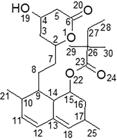
The results from the molecular modeling of simvastatin are presented in Figure 1, displaying both a 2D format and a 3D model in a molecular electrostatic potential (MEP) density map. This density map was calculated using the van der Waals surface and negative isopotential energy, providing insights into molecular electronic conjugation. The energy distribution results highlight regions with the highest negative and positive electrostatic potential, represented in red and blue, respectively. For simvastatin, the most electronegative regions are associated with the oxygen atoms in the lactone ring, as well as the carbonyl group of the dimethylbutanoate side chain. Conversely, the blue region, indicating positive electrostatic potential, is primarily located at the hydroxyl hydrogen of the lactone ring. The green color illustrates the connection between the electronegative and electropositive regions at the center of the compound. Thus, the MEP model indicates that the lactone ring and the dimethylbutanoate side chain are the most reactive regions, making them prime candidates for chemical reactions.

2D and 3D models of simvastatin were generated in electrostatic potential (MEP) map format and through a van der Waals isosurface (0.002 eV) using Spartan for Windows 08 software.15 The coloring scheme ranges from positive (blue) to negative (red) electrostatic potential values, spanning from -40,000 to 75,000 kcal mol-1.
The Fukui functions (f+) and (f-) for nucleophilic and electrophilic attacks serve as local reactivity descriptors, indicating the preferred molecular positions where chemical species can alter the number and density of electrons, thereby acting as reactive centers. These functions reflect the susceptibility of specific positions to undergo deformation via electron acceptor or donor processes,19 facilitating the understanding of molecular reactivity and predicting the locations of potential reactions. In this context, Table 1 presents the predicted sites for nucleophilic and electrophilic attacks on simvastatin. According to the results for (f+), the oxygen and carbon atoms O1, C10, and O24 are identified as the most susceptible sites for nucleophilic attacks, while O22 and C5 are highlighted for electrophilic attacks as indicated by (f-). Additionally, the dual descriptor ∆f(r) reveals that the regions around atoms O1 and O24 are more likely to serve as reaction initiation sites. Therefore, atom O1 of the lactone ring and atom O24 of the dimethylbutanoate side chain are predicted to be the most involved in hydrolysis reactions based on the descriptors (f+), (f-), and ∆f(r).
On the other hand, for the Fukui function (f0) used in simvastatin autooxidation reactions (Table 2), the most favorable regions are O20, O1, and O24. These regions are associated with the reactivity of the lactone ring and the side chain when interacting with oxidizing agents. These predictions indicate the likely positions where degradation is initiated; specifically, for this compound, the lactone and the ester side chain exhibit regions rich and deficient in electron density.
NPA values (neutral, positive, and negative population analysis), Fukui functions nucleophilic (f-) electrophilic (f+), ∆f(r) and auto-oxidation (f0) for simvastatin atoms were calculated using the DFT/B3LYP method with the 6-311G* (d, f) basis set, as outlined in equations 1, 2, and 3
Identification of degradation products
Many potential pathways for chemical degradation and likely degradation products were evaluated in silico using Zeneth® software, Scheme 1. This software incorporates the chemical conditions for each simulation experiment, as detailed in Table 1. The results were filtered to identify “probable” and “very probable” outcomes, which were then compared with high-resolution mass spectra to assign the degradation pathways. Recently, Hemingway et al.20 demonstrated the effectiveness of this software for accurately evaluating drug degradation products, using beclabuvir as a model.

Expected degradation pathways for simvastatin were analyzed using Zeneth® software under various physicochemical treatments.
In addition to the in silico determinations, it is essential to confirm the chemical structures of the compounds using analytical techniques. This task can be challenging due to the presence of compound mixtures. High-resolution mass spectrometry (HRMS) has been widely utilized to identify non-target compounds based on characteristics such as exact m/z ratios, isotopic ratio fitting, and fragmentation patterns. Recently, Thakkar et al.21 confirmed the presence of four hydrolysis products of the kinase inhibitor ruxolitinib using this technique.
In our study, each solution subjected to forced degradation was analyzed through direct infusion into the mass spectrometer with ESI ionization, in both negative (ESI(-)) and positive (ESI(+)) modes, as illustrated in Figure 2. This approach was selected to minimize the loss of cations and anions during the chromatographic process.

The individually degraded solutions of simvastatin were analyzed by direct infusion using high-resolution mass spectrometry (HRMS) in both negative ionization mode ESI(-), in (a) and positive ionization mode ESI(+), in (b).
In this study, six degradation products were identified using ESI-MS in both positive and negative detection modes, along with seven distinct adduct forms of simvastatin, as summarized in Table 3. The mass spectra indicated that the pure drug consistently produced the most intense signals. In ESI(-) mode, the observed anions were 463.2705, 881.5421, 497.2744, and 471.2516. These correspond to various adducts, including the monomeric form [M + HCOO]- and dimeric form [2M + HCOO]-, as well as the adducts involving water and formic acid [M + H2O + HCOO]- and the hydrochloride [M + HCl - H]-, which was only present under salt and acidic conditions. Continuing with the analysis, the main degradation product detected in this mode has an m/z of 435.2754 (referred to as compound 1 in the Scheme 1). This compound appears as [M + H2O - H]- and is formed through the hydrolysis of lactone (C25H39O6), which was predicted to be highly probable for Zeneth under both acidic and alkaline treatments and was predicted as hydrolysis reactions based on the descriptors (f+), (f-), and ∆f(r). Similarly, compound 2 was also detected, exhibiting an m/z of 321.2066 (C19H29O2) and appearing as [M - C6H8O]-, formed from ester hydrolysis. This compound was also indicated as highly probable based on in silico predictions for treatments under acidic and alkaline conditions.
Degradation products of simvastatin were identified using both ESI(-) and ESI(+) modes through direct infusion in high-resolution mass spectrometry (HRMS)
In ESI(+), the most prominent signal was the hydrogen adduct of simvastatin, [M + H]+, with an m/z of 419.2798. Additionally, the ammonium adduct [M + NH4]+ (m/z 436.3059) and the dimer [2M + NH2]+ (m/z 854.5771) were also present in the full spectrum. The in silico analysis revealed two possible oxidation by-products, which were confirmed by high-resolution mass spectrometry (HRMS). The first by-product was identified as compound 3 (entry 10 in Table 3), represented by the cation with an m/z of 494.3112, corresponding to the adduct of water and nitrile, [M + H2O + CH3CN + H]+. The second by-product was compound 4 (entry 11 in Table 3), which was indicated by the presence of the hydrogen adduct [M + H]+ with an m/z of 433.2584. Furthermore, compounds 5 (entry 12 in Table 3) and 6 (entry 13 in Table 3) were identified under acidic conditions, with m/z values of 303.1953 and 285.1646, respectively. The ESI-MS analysis of simvastatin degradation products strongly correlates with the reactivity profiles predicted by in silico modeling. This complementarity between experimental and computational approaches effectively identifies the molecular regions most susceptible to degradation under the investigated conditions.
From the identified by-products, it can be concluded that the primary degradation pathway for simvastatin is hydrolytic. In this pathway, water (H2O) acts as a nucleophile attacking the ester carbonyl group under both acidic and alkaline conditions, resulting in the formation of compounds 1 and 2 as the major products. This mechanism generates the active form of simvastatin (β-acid) in the stomach.22,23 The predicted dimeric form of simvastatin, identified in silico, was detected as an ammonium adduct [M + NH4]+ with an m/z of 857.5773. This dimer is also catalyzed by UV radiation and is present in the pure starting material. The light sensitivity of this drug poses a significant challenge, which is mitigated by the chemical protection provided by tablet coatings (containing red and black ferric oxide) and the incorporation of antioxidant agents such as ascorbic acid, butylated hydroxianisole, and dibutylhydroxytoluene.24,25
By-products resulting from oxidative pathways were observed in treatments involving oxidative, photolytic, acidic, saline, and heat conditions. These processes are associated with dissolved molecular oxygen and Lewis acids such as HCl and FeCl3, as well as UV radiation and temperature. Additionally, compounds arising from dehydration pathways were present in all experimental conditions, with a more pronounced expression during hydrochloric acid treatments, as reported by Malenovic et al.26 It should be noted that the mass spectrometry ionization source, ESI, can also induce dehydration, particularly when catalyzed by formic acid and high temperatures.
Results from HRMS were corroborated by 1H NMR analysis (Figure 3), which indicated the presence of oxidation and hydrolytic processes across five out of six treatment scenarios. Dehydration by-products were also identified in the acid, heat, oxidative, and photolytic experiments, as evidenced by the double bonds observed at d 5.8 ppm, Figure 3. In the case of alkaline hydrolysis, this process is likely reversible, especially concerning the lactone ring after the drying process. The saline treatment was not evaluated, as Fe3+ is a paramagnetic species that is incompatible with NMR analysis. Furthermore, Šagud et al.27 reported the degradation pathway of praziquantel due to mechanochemical activation, highlighting acid hydrolysis as a significant contributor to the formation of major degradation compounds.

1H NMR (300.18 MHz, CDCl3) spectra for both pure simvastatin and the samples subjected to forced degradation treatments (P, O, Hy, He, B, A).
The use of NMR spectroscopy for determining drug degradation products has been discussed in a review by Maggio et al.,28 where the authors emphasized its ability to provide qualitative information about unknown compounds, along with potential quantification through relative area measurements. Numerous studies have demonstrated the effectiveness of NMR in identifying and characterizing by-products generated during the degradation of some pharmaceuticals. For instance, Narayanam et al.29 combined NMR with HPLC-MS/time-of-flight (TOF) to investigate the degradation products of cilazapril, an angiotensin receptor blocker used in the treatment of hypertension. In this study, HPLC data revealed the degrees of degradation based on the amounts of stressors applied, while the m/z ratios and information obtained from oneand two-dimensional NMR (including chemical shifts, signal areas, and unfolding) were utilized to confirm the identity of the compounds formed, elucidating the mechanisms of degradation.
Determination of degradation by HPLC
Historically, HPLC-UV analysis has been extensively utilized for the quality control of pharmaceuticals. In this study, we applied this method to evaluate simvastatin in accordance with the US Pharmacopeia NF 32.1 In the initial step, we assessed the linearity of simvastatin, achieving a coefficient of determination (R2) value of 0.999, as illustrated in Figure 4.

The UV-Vis HPLC analysis produced a standard curve for simvastatin using concentrations ranging from 100 to 1800 µg mL-1.
Figure 5 compares the areas from forced degradation experiments in accordance with ICH Q1A(R2) recommendations13 for both the pure drug and its tablet form at the same concentrations. Notable differences were observed, particularly the nearly complete disappearance of simvastatin in the light treatment (photolysis) of the tablet form. This may be attributed to a more effective catalytic process due to the presence of certain agents that enhance the degradation of the active compound. Additionally, visual differences in degradation were evident between the pure compound and its pharmaceutical form during treatments such as salt and oxidative conditions, indicating changes in reactivity based on the medium. In general comparison, the excipients have protected the drug. Lakka et al.30 compared the tablet and pure dasatinib in forced degradation tests, identifying a lower number of impurities in the tablet form, particularly under acidic hydrolysis conditions.

UV-HPLC analysis was conducted for all degradation treatments: (a) for pure simvastatin and (b) for the commercial pellet.
The results for all treatments were normalized to percentage values of mass recovery and plotted in bar graphs, confirming that the degradation profiles of pure simvastatin and the tablet form are different, as shown in Figure 6. In hydrolytic treatments, both cases exhibited a slight degradation of approximately 5% of the reference molecule. However, in the case of alkaline hydrolysis, the drug showed greater degradation than the pharmaceutical formulation. This can be attributed to the presence of neutralizing agents such as ascorbic acid and citric acid, similar to findings in the case of dasatinib.30 The most significant by-product in this context is the β-hydroxy acid (1), which is generated from the opening of the lactone and represents the active form of the drug absorbed by the gastrointestinal tract.23,31 This protective effect is due to the presence of antioxidants in the final formulation.

Mass recovery results obtained by UV-HPLC after all treatments are presented for pure simvastatin in (a) and for the commercial form in (b).
Conversely, acid hydrolysis degraded the pharmaceutical formulation more than the isolated compound, likely due to the catalytic effect of the excipients. This was also observed in the photolysis experiment, which has been reported as a problem for this drug.26 The presence of photoactivated excipients likely catalyzes the degradation reaction of simvastatin by capturing electrons and generating free radicals through chain reactions. Acid hydrolysis studies demonstrated that the pharmaceutical formulation underwent more extensive degradation compared to the isolated compound, highlighting the critical role of excipients in product stability. This finding emphasizes the importance of careful excipient selection to minimize drug degradation under acidic conditions. The development of more stable formulations should integrate computational reactivity predictions with experimental stability data, enabling the identification of optimal excipients that enhance product stability under various environmental conditions. Finally, heating and iron salt catalysis did not show significant differences between the pure compound and the tablet form.
Conclusions
In summary, this is the first report of a simvastatin degradation study that combines computational calculations with analyses using NMR, HRMS, and UV-HPLC. The computational methods allowed for the investigation of molecular reactivity and identified the primary potential sites involved in the generation of simvastatin degradation products. These studies enhance our understanding of susceptibility to hydrolysis and molecular oxidation reactions, enabling us to propose mechanisms for the observed degradation products. Predictions made using Zeneth® software showed strong agreement with the reactivity studies.
During forced degradation tests, we identified seven compounds using HRMS, which were subsequently confirmed by 1H NMR. These methods can be applied for quality control of both the pure product and the pharmaceutical formulation. The hydrolysis products 1 and 2 were formed due to the higher reactivity of the lactone and the ester of the side chain, respectively, as identified in the in silico tests. Additionally, in the mass balance via HPLC-UV, we observed variations between the two treatments. The active ingredient showed protection against the effects of bases and oxidizing agents, but it was more susceptible to degradation, particularly under light and acidic conditions. Based on these results, we emphasize the need to protect this drug from light exposure, which can generate by-products that may be as active or even more active than simvastatin itself. Furthermore, it is crucial to note that pharmaceutical degradation can adversely affect the pharmacological treatment of patients, potentially reducing therapeutic efficacy.
Data Availability Statement
Data will be made available on request.
Acknowledgments
The authors are grateful for the financial support provided by CNPq, FAPERGS, and CAPES.
References
- 1 The United States Pharmacopoeia (USP), USP 32, US Pharmacopeia NF 32, 2008.
-
2 Brekke, K. R.; Grasdal, A. L.; Holmås, T. H.; Eur. Econ. Rev. 2009, 53, 170. [Crossref]
» Crossref -
3 World Health Organization (WHO); WHO Model List of Essential Medicines, 23rd list, 2023. [Link] accessed in July 2025
» Link -
4 Ellison, D. K.; Moore, W. D.; Petts, C. R.; Anal. Profiles Drug Subst. Excipients 1993, 22, 359. [Crossref]
» Crossref -
5 International Conference on Harmonisation of Technical Requirements for Registration of Pharmaceuticals for Human Use; ICH Harmonised Tripartite Guideline, Impurities In New Drug Substances Q3A(R2), 2006. [Link] accessed in July 2025
» Link -
6 European Medicines Agency (EMEA); ICH Topic Q 3 B (R2) Impurities in New Drug Products; EMEA: London, 2006. [Link] accessed in July 2025
» Link -
7 Sasaki, R. R.; Lee, M. S.; Murry, C. L.; Pharr, B.; Drug Discovery Today 2014, 19, 1691. [Crossref]
» Crossref -
8 U.S. Department of Health and Human Services Food and Drug Administration; Guidance for Industry Q1B Photostability Testing of New Drug Substances and Products; ICH: 1996. [Link] accessed in July 2025
» Link -
9 Chiguru, V.; Lingesh, A.; Srinivas, R.; Satheeshkumar, N.; J. Pharm. Biomed. Anal. 2016, 128, 9. [Crossref]
» Crossref -
10 Kieffer, J.; Brémond, E.; Lienard, P.; Boccardi, G.; J. Mol. Struct.: Theochem 2010, 954, 75. [Crossref]
» Crossref -
11 Andersson, T.; Broo, A.; Evertsson. E.; J. Pharm. Sci. 2014, 103, 1949. [Crossref]
» Crossref -
12 Lienard, P.; Gavartin, J.; Boccardi, G. M.; Pharm. Res 2015, 32, 300. [Crossref]
» Crossref -
13 European Medicines Agency (EMEA); ICH Topic Q 1 A (R2) Stability Testing of New Drug Substances and Products; EMEA: London, 2003. [Link] accessed in July 2025
» Link -
14 Zeneth, version 7.1.3; Lhasa Limited, UK, 2025. [Link] accessed in July 2025
» Link - 15 Spartan 08, version 116.2; Wavefunction, Inc., Irvine, CA, 2015.
-
16 Cárdenas, C.; Rabi, N.; Ayers, P.; Morell, C.; Jaramillo, P.; Fuentealba, P.; J. Phys. Chem. A 2009, 113, 8660. [Crossref]
» Crossref -
17 Morell, C.; Hocquet, A.; Grand, A.; Jamart-Grégoire, B.; J. Mol. Struct.: Theochem. 2008, 849, 46. [Crossref]
» Crossref -
18 Szekely, G.; Amores de Souza, M. C.; Gil, M.; Ferreira, F. C.; Heggie, W.; Chem. Rev 2015, 115, 8182. [Crossref]
» Crossref -
19 Mendoza-Huizar, L. H.; Quim. Nova 2015, 38, 71. [Crossref]
» Crossref -
20 Hemingway, R.; Baertschi, S. W.; Benstead, D.; Coombs, J. M.; Campbell, M.; Huang, Z.; Khalaf, R.; Ott, M. A.; Ponting, D. J.; Stevenson, D. L.; Reid, N. G.; Webb, S. J.; White, A.; Zelesky, T.; Org. Process Res. Dev 2024, 28, 674. [Crossref]
» Crossref -
21 Thakkar, H.; Sharma, K.; Goyal, N.; Shah, R. P.; Anal. Methods 2022, 14, 480. [Crossref]
» Crossref -
22 Mauro, V. F.; Clin. Pharmacokinet 1993, 24, 195. [Crossref]
» Crossref -
23 Desager, J.; Horsmans, Y.; Clin. Pharmacokinet 1996, 31, 348. [Crossref]
» Crossref -
24 Sinvastatina, https://sandoz-com-br.cms.sandoz.com/sites/default/files/Media%20Documents/Sinvastacor_bula_VPS15.pdf, accessed in July 2025.
» https://sandoz-com-br.cms.sandoz.com/sites/default/files/Media%20Documents/Sinvastacor_bula_VPS15.pdf -
25 Revastin, https://uploads.consultaremedios.com.br/drug_leaflet/bula-revastin-paciente-consulta-remedios.pdf, accessed in July 2025.
» https://uploads.consultaremedios.com.br/drug_leaflet/bula-revastin-paciente-consulta-remedios.pdf -
26 Malenovic, A.; Jancic-Stojanovic, B.; Ivanovic, D.; Medenica, M.; J. Liq. Chromatogr. Relat. Technol 2010, 33, 536. [Crossref]
» Crossref -
27 Šagud, I.; Zanolla, D.; Perissutti, B.; Passerini, N.; Škorić, I.; J. Pharm. Biomed. Anal. 2018, 159, 291. [Crossref]
» Crossref -
28 Maggio, R. M.; Calvo, N. L.; Vignaduzzo, S. E.; Kaufman, T. S.; J. Pharm. Biomed. Anal. 2014, 101, 102. [Crossref]
» Crossref -
29 Narayanam, M.; Sahu, A.; Singh, S.; J. Pharm. Biomed. Anal. 2015, 111, 190. [Crossref]
» Crossref -
30 Lakka, N. S.; Kuppan, C.; Srinivas, K. S.; Yarra, R.; Chromatographia 2020, 83, 947. [Crossref]
» Crossref - 31 Sweetman, C. S.; Blake, P. S.; Martindale: The Complete Drug Reference, 36th ed.; Pharmaceutical Press: London, Chicago, 2009.
Edited by
-
Editor handled this article:
Adriana Nunes Correia (Associate)