 Synthetic Strategies Enabling Access to Minor Phytocannabinoids of Cannabis sativa L.
Abstract
Minor phytocannabinoids constitute a structurally diverse class of natural products derived from Cannabis sativa L.; however, their study remains limited due to their low abundance in the plant and the challenges associated with isolation. Consequently, numerous compounds with unique molecular architectures still possess unexplored biological profiles. Herein, we comprehensively review the principal minor phytocannabinoids reported in the literature, addressing their isolation histories, proposed biosynthetic pathways, and reported biological activities, with particular emphasis on their synthetic routes, highlighting key steps. By contextualizing these advances, this review emphasizes the central role of organic synthesis in enabling access to rare phytocannabinoids, thereby facilitating more in-depth pharmacological studies and contributing to the discovery of new bioactive natural products.
Keywords:
minor phytocannabinoids; Cannabis sativa; organic synthesis; biosynthesis; biological activity
1. Introduction
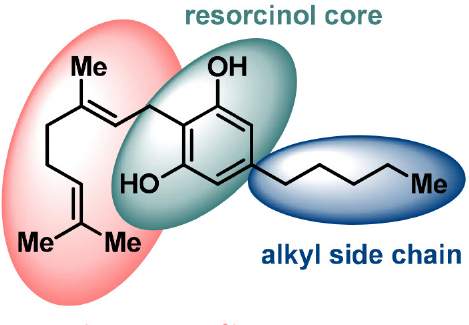
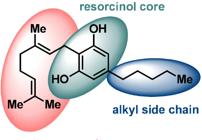
Cannabis sativa L., commonly known as marijuana or hemp, is an ancient plant valued for its therapeutic effects and has attracted the attention of researchers worldwide.1 Its pharmacological properties are primarily associated with compounds found in the plant known as cannabinoids. The definition of cannabinoids has undergone changes over the past few decades. Initially, the term referred exclusively to compounds found in C. sativa. Following research into the pharmacological action of ∆9-tetrahydrocannabinol (THC (1), Scheme 1),2 one of the main constituents of marijuana, the CB1 cannabinoid receptor was discovered.3 This led to the identification of a complex signaling system mediated by various substances, including endogenous ligands now known as endocannabinoids.4 Compounds isolated from C. sativa came to be referred to as phytocannabinoids,5 which are typically characterized by a monoterpene unit, a resorcinol core, and an alkyl side chain (Figure 1).6
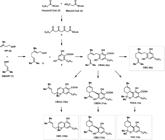
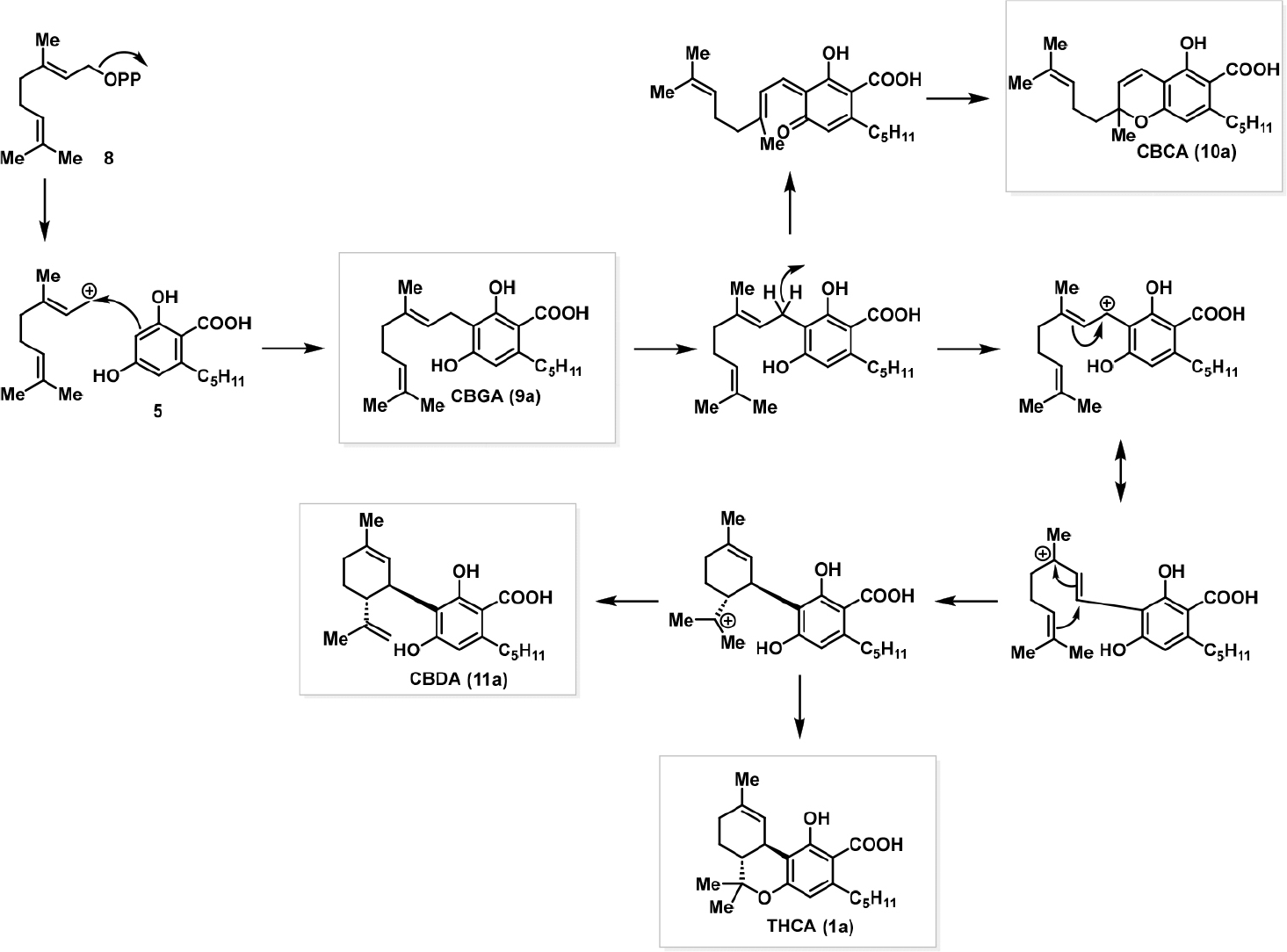
The biosynthesis of phytocannabinoids is proposed to proceed via their corresponding acidic forms. The resorcinol core is formed through the coupling of hexanoyl-CoA (2) with malonyl-CoA (3), generating polyketide intermediate 4, which undergoes cyclization and aromatization to provide olivetolic acid (5), (Scheme 1).7,8 Isopentenyl diphosphate (IPP, 6) and dimethylallyl diphosphate (DMAPP, 7) furnish the key monoterpene 8. Olivetolic acid (5) and monoterpene 8 lead to the formation of cannabigerolic acid (CBGA, 9a), the main precursor of cannabichromenic acid (CBCA, 10a), cannabidiolic acid (CBDA, 11a), and tetrahydrocannabinolic acid (THCA, 1a). Their corresponding neutral forms, CBG (9b), CBC (10b), CBD (11b), and THC (1b), without the carboxylic acid group, are most likely formed via non-enzymatic decarboxylation reactions involving thermal or photodegradation.9 These neutral compounds are considered the major phytocannabinoids and are commonly referred to as the “Big Four”. Additionally, the length of the alkyl side chain in phytocannabinoids can vary depending on the biosynthetic precursor.6
The mechanisms for the enzymatic transformations involved in the biosynthesis of the phytocannabinoids CBGA (9a), CBCA (10a), CBDA (11a), and THCA (1a) are depicted in Scheme 2. Prenylation of olivetolic acid (5) by the carbocation generated from monoterpene 8 leads to the formation of CBGA (9a).10 CBGA (9a) can undergo hydride abstraction to generate CBCA (10a)11 through a concerted mechanism, or alternatively form a benzylic-allylic carbocation intermediate that enables the formation of CBDA (11a) and THCA (1a) via electrophilic cyclizations.12 It is noteworthy that the products obtained via electrophilic cyclization, CBDA (11a) and THCA (1a), are converted into the phytocannabinoids CBD (11b) and THC (1b), which are isolated in their enantiopure forms,13,14 whereas the product derived from concerted cyclization, CBCA (10a), leads to the formation of the phytocannabinoid CBC (10b), which is isolated in a scalemic form.15
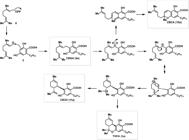
Mechanisms involved in the biosynthesis of the phytocannabinoids CBGA (9a), CBCA (10a), CBDA (11a), and THCA (1a).
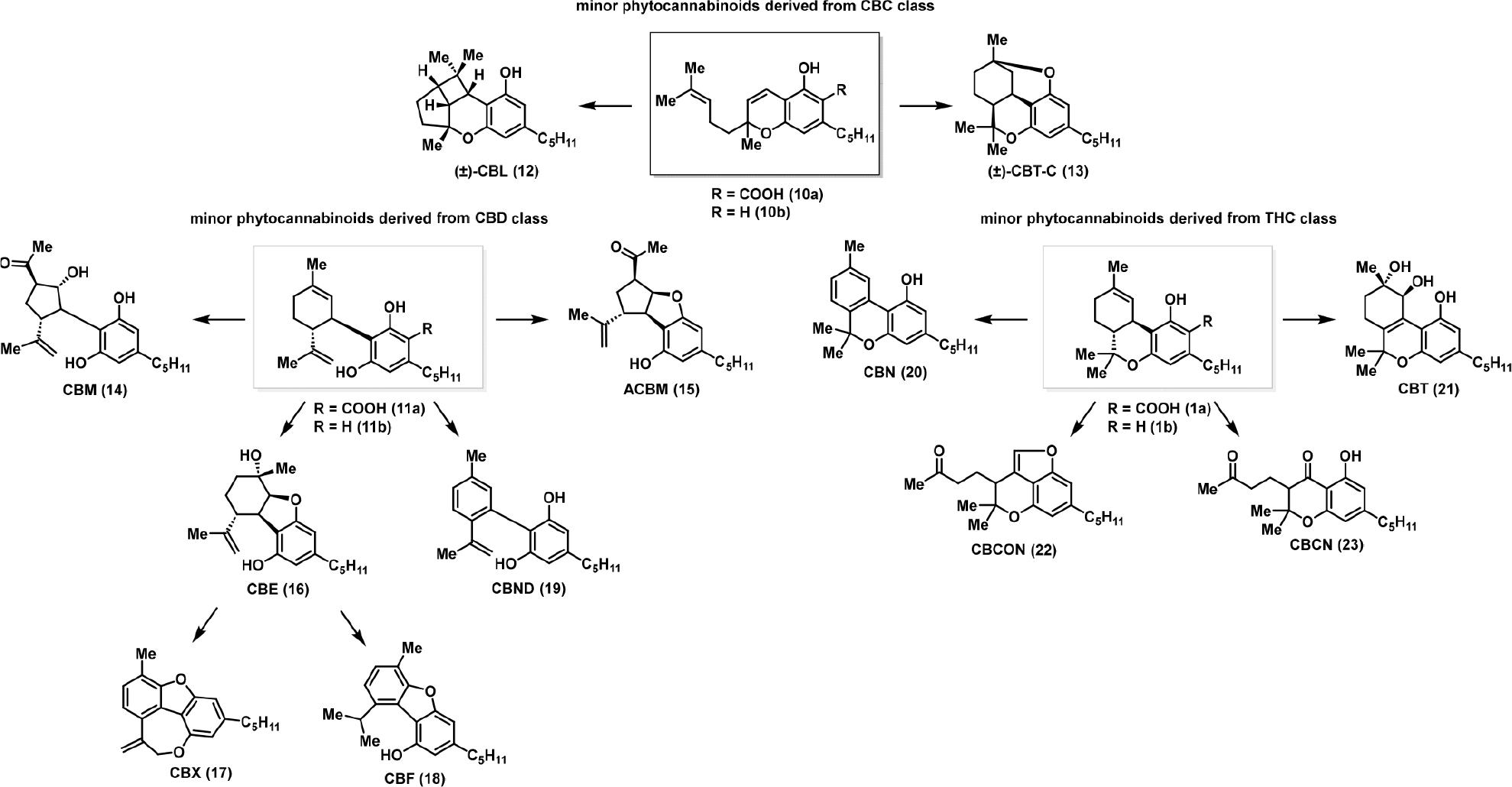
The major phytocannabinoids, in either their acidic or neutral forms (Scheme 1), serve as precursors to other compounds classified as minor phytocannabinoids shown in Scheme 3.
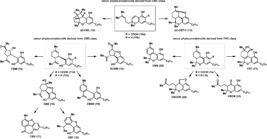
It was believed that the classification of CBG (9b), CBC (10b), CBD (11b), and THC (1b) as the major phytocannabinoids resulted from their occurrence as the most abundant compounds in the plant. Consequently, the other phytocannabinoid were considered minor (or even rare). However, according to reports in the literature, C. sativa typically contains low concentrations of CBG (9b) and CBC (10b).16,17 The inclusion of these phytocannabinoids among the “Big Four” is associated with their early isolation, as their structures were elucidated around the same time as CBD (11b) and THC (1b) (1963 1966),16 in addition to their well-established and extensively explored synthetic routes. As a result, the definition of minor phytocannabinoids has been used to refer to cannabinoids with less investigated biological profiles and synthetic routes.18
Minor phytocannabinoids are compounds isolated from the cannabis plant in limited amounts, which has hindered comprehensive investigations into their pharmacological properties. Consequently, most reports have focused only on preliminary studies describing the therapeutic profiles of these rare phytocannabinoids. In this context, synthetic approaches are essential to obtain minor phytocannabinoids in sufficient quantities to enable more comprehensive studies of their biological activities. In this review, we provide an overview of the history of minor phytocannabinoids, highlighting the year of their isolation and their proposed biosynthetic pathways. We also present the studies conducted to date on their biological activities, with an emphasis on the synthetic approaches developed over the years to obtain these natural products.
2. Minor Phytocannabinoids Derived from CBC (10b)
2.1. Cannabicyclol [(±)-CBL, 12]
Cannabicyclol [(±)-CBL, 12], first isolated in 1964,19 was initially characterized as a cannabinoid derived from THC (1b). However, a subsequent study published in 1968 suggested that the formation of (±)-CBL (12) occurs through a nonenzymatic process involving the thermal and/or photoinduced conversion of CBC (10b).20 In nature, (±)-CBL (12) is found as a racemic mixture and is present only in small amounts in C. sativa.21,22
The therapeutic potential of (±)-CBL (12) was first investigated in 1970, when in vivo studies revealed its low toxicity.23 A 50-year gap in the literature followed until 2024, when (±)-CBL (12) was tested against severe acute respiratory syndrome coronavirus (SARS-CoV-2), showing moderate antiviral activity.24 In addition, in silico analyses indicated that (±)-CBL (12) has therapeutic potential for Parkinson’s disease.25 A study published in 2025 demonstrated the affinity of (±)-CBL (12) for the serotonin 5-HT1A receptor and its low affinity for the cannabinoid receptors CB1 and CB2.26
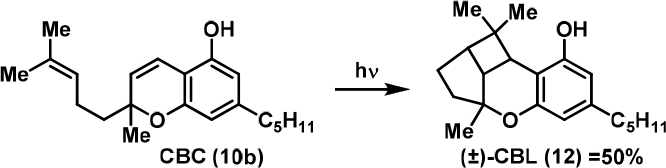
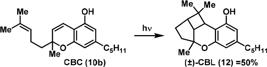
The first syntheses of (±)-CBL (12) were reported in 1968 and 1971 and involved the [2 + 2] cycloaddition of CBC (10b) under photochemical conditions.20,27 However, this strategy, which required UV irradiation, afforded (±) CBL (12) in yields of ≤ 50% (Scheme 4).
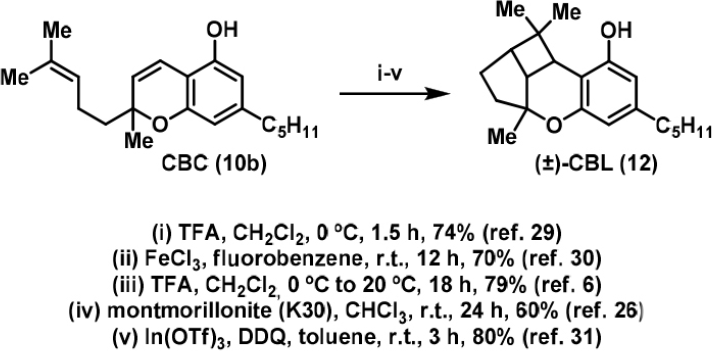
Preparations of (±)-CBL (12) from the reaction between citral (24) and olivetol (25),27,28 as well as via the acid-promoted cyclization of CBC (10b),27 were also explored between 1968 and 1971, but (±)-CBL (12) was obtained in yields of ≤ 5%. Since 2013, the cyclization of CBC (10b) to (±)-CBL (12) has been extensively investigated,6,26,29-31 as illustrated in Scheme 5. The use of different acids at temperatures ranging from 0 °C to room temperature led to formation of (±)-CBL (12) in yields of 60-69%.6,26,29,30 In 2025, Li and co-workers31 reported an innovative In(OTf)3-catalyzed oxidative radical annulation strategy for the transformation of CBC (10b) to (±)-CBL (12). Notably, the use of acids is superior to UV irradiation (Schemes 4 and 5).
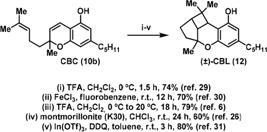
Synthetic strategies for the preparation of (±)-CBL (12). TFA: trifluoroacetic acid, r.t.: room temperature, DDQ: 2,3-dichloro-5,6 dicyano-1,4-benzoquinone.
2.2. Canabicitran [(±)-CBT-C, 13]
Canabicitran [(±)-CBT-C, 13] was first isolated in 1974 and is a phytocannabinoid found in small quantities in C. sativa.32,33 Similar to (±)-CBL (12), it has been hypothesized that this compound is derived from THC (1b). However, since it occurs as a racemate in nature,34 (±)-CBT-C (13) is believed to be biosynthesized from CBC (10b). The latter is found as a scalemic mixture,15 whereas THC (1b) is isolated as a single enantiomer.14
Only limited information is currently available on the biological activities of (±)-CBT-C (13). The main study addressing this topic was published in 1984,35 in which the authors reported that (±)-CBT-C (13) reduces intraocular pressure in rabbits. This effect was associated with activation of the GPR18 receptor, a target known to interact with other phytocannabinoids.
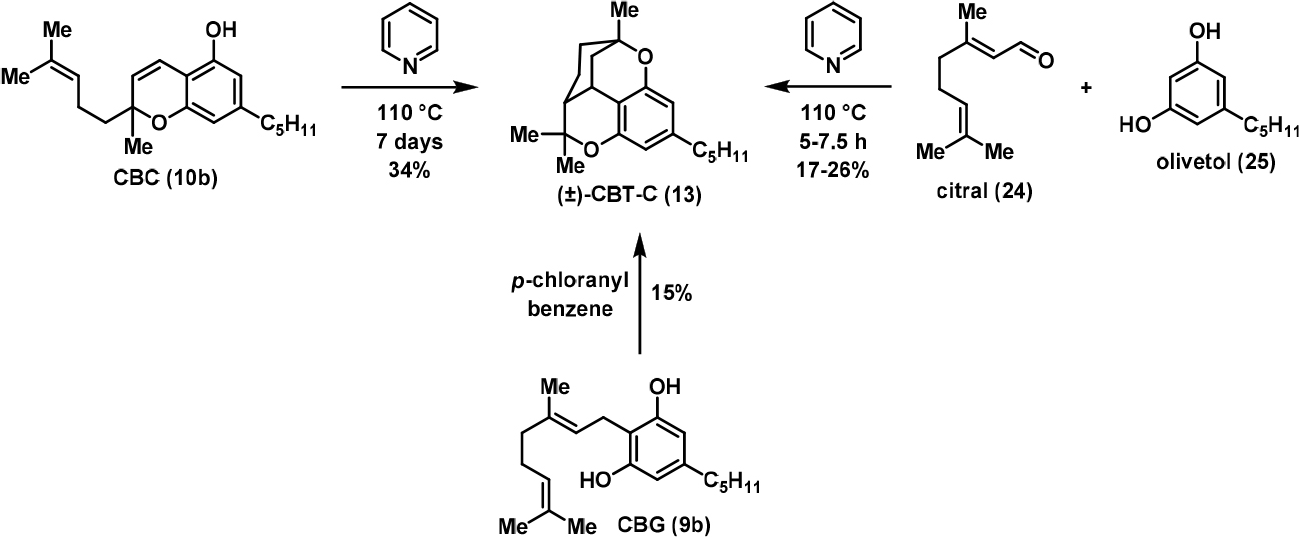
The synthesis of (±)-CBT-C (13) began to be explored even before its isolation, and it is therefore considered an anticipated natural product. Studies published since 1968,27,36 which aimed at the synthesis of various phytocannabinoids using different starting materials in pyridine at elevated temperatures and employing p-chloranil as an oxidizing agent for the phytocannabinoid CBG (9b), resulted in the formation of (±)-CBT-C (13) in low yields (Scheme 6). Apparently, in these studies,27,36 (±)-CBT-C (13) was obtained only as an undesired byproduct.
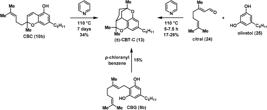
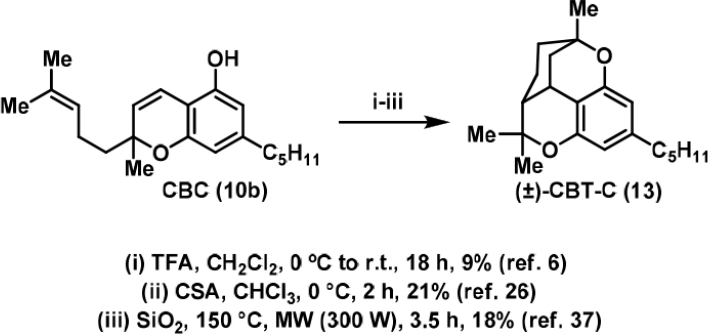
A gap in the literature persisted until 2013, when (±)-CBT-C (13) began to be produced as a by-product of the cyclization of CBC (10b) (Scheme 7).6,26,37 To the best of our knowledge, no efficient synthetic route to (±)-CBT-C (13) has been developed to date.
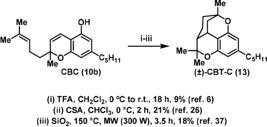
Synthetic strategies for the preparation of (±)-CBT-C (13). CSA: camphorsulfonic acid, MW: microwave.
The reported syntheses of (±)-CBL (12) and (±)-CBT-C (13) highlight the lack of stereoselective approaches to access both enantiomers of these phytocannabinoids, representing a challenge to be addressed. Biological evaluations of each enantiomer would enable significant progress in pharmacological investigations.
3. Minor Phytocannabinoids Derived from CBD (11b)
3.1. Cannabimovone (CBM, 14)
Cannabimovone (CBM, 14) was first isolated in 2010.38 Its biosynthesis (Scheme 8) likely involves the cleavage of the endocyclic olefin of CBD (11b), followed by an intramolecular aldol reaction.38 Although the amounts of CBM (14) in C. sativa plants have not been reported, the extraction process requires a substantial amount of plant material (500 g), indicating that this phytocannabinoid is not abundant.38

The therapeutic profile of cannabimovone (CBM, 14) is still under investigation. Although it exhibits low affinity for the cannabinoid receptors CB1 and CB2, CBM (14) can act as an agonist of the transient receptor potential vanilloid 1 (TRPV1) ion channel,38 which mediates part of human nociception, as well as of the peroxisome proliferator-activated receptor gamma (PPARγ) receptor, a key regulator of several inflammatory processes.39 Its anti-inflammatory activity was further supported by a 2022 in vitro study demonstrating the inhibitory effects of CBM (14) on inflammatory biomarkers.40
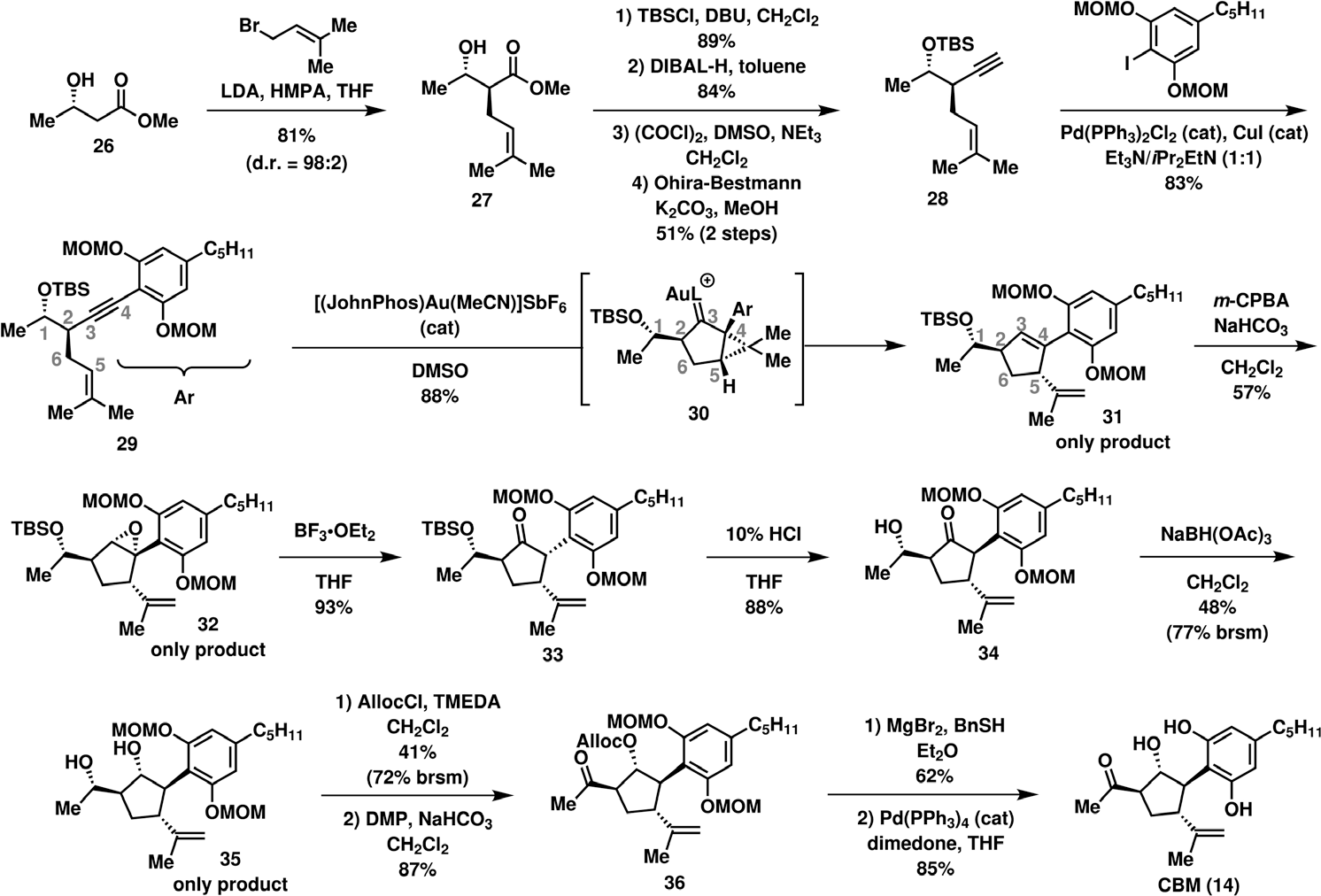
The first asymmetric total synthesis of CBM (14) was reported in 2016 by Echavarren and co-workers41 through a 15-step linear route with an overall yield of 0.9%. The synthesis started from (S)-(+)-methyl 3-hydroxybutyrate (26) and featured a highly stereoselective gold(I)-catalyzed cycloisomerization as a key step, which afforded intermediate 31 in 88% yield and established two of the four stereocenters of CBM (14) (Scheme 9).
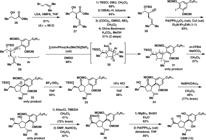
First total synthesis of CBM (14). LDA: lithium diisopropylamide, HMPA: hexamethylphosphoramide, THF: tetrahydrofuran, TBSCl: tert-butyldimethylsilyl chloride, DBU: 1,8-diazabicycloundec-7-ene, DIBAL-H: diisobutylaluminum hydride, MOM: methoxymethyl, TMEDA: tetramethylethylenediamine, AllocCl: allyl chloroformate, DMP: Dess-Martin periodinane.
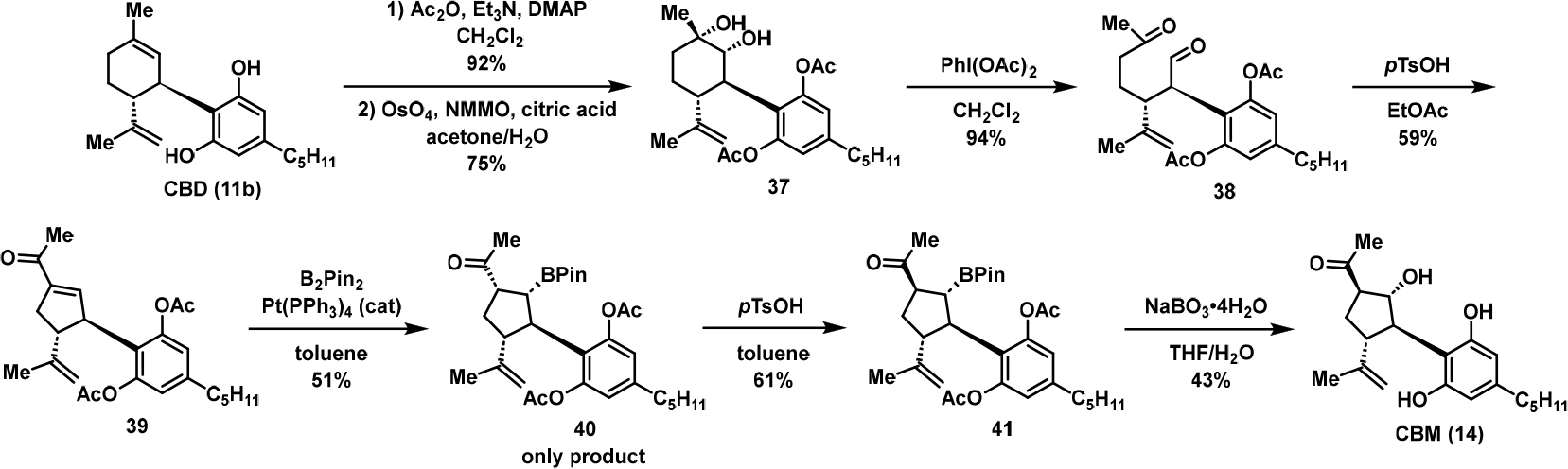
In 2022, Sarlah and co-workers40 reported the synthesis of CBM (14) from CBD (11b) in 7 steps and 5% overall yield. The key step in the route involved a platinum-catalyzed installation of a boryl group, furnishing intermediate 40 in 51% yield as the only product. Subsequent treatment with p-toluenesulfonic acid promoted epimerization, affording a separable 5:1 mixture of diastereomers 41 and 40, from which 41 was isolated in 61% yield (Scheme 10).
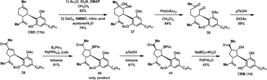
Synthesis of CBM (14) from CBD (11b). DMAP: 4-(dimethylamino)pyridine, NMMO: N-methylmorpholine N-oxide, pTsOH: p-toluenesulfonic acid.
In the total synthesis of CBM (14) reported by Echavarren and co-workers41 a gold(I)-catalyzed cycloisomerization enabled the development of an innovative approach, albeit over a 15-step linear sequence; in contrast, the straightforward semi-synthesis of CBM (14) from CBD (11b) reported by Sarlah and co-workers40 proved slightly more efficient (Schemes 9 and 10).
3.2. Anhydrocannabimovone (ACBM, 15)
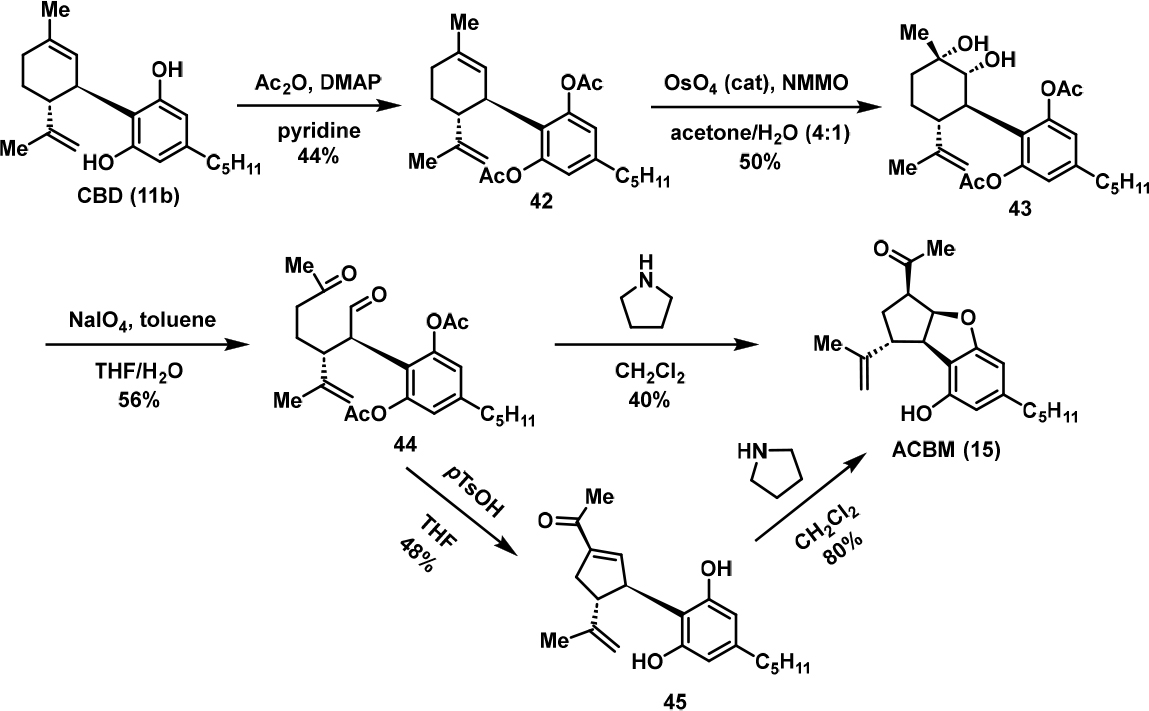
Anhydrocannabimovone (ACBM, 15) was first isolated in 2022.42 Similar to (±)-CBT-C (13), ACBM (15) is also an example of an anticipated natural product, having been synthesized twelve years earlier. Its biosynthesis has not yet been elucidated, given its late isolation. However, synthetic evidence suggests that ACBM (15) may be derived from CBD (11b), similar to CBM (14).40-42 To date, no published data report the amount or concentration of this phytocannabinoid in plant extracts.
ACBM (15) showed high affinity for the cannabinoid receptors CB1 and CB2, as well as for the transient receptor potential ankyrin 1 (TRPA1) and the transient receptor potential subfamily M member 8 (TRPM8) ion channels, in a manner similar to THC (1).38 Additionally, ACBM (15) exhibits pro-inflammatory activity, which contrasts with the anti-inflammatory profile of CBM (14).40 This is an interesting observation, given that both phytocannabinoids may share a common biosynthetic pathway.
Upon the isolation of CBM (14), Taglialatela Scafati et al.38 attempted to synthesize this phytocannabinoid in order to mimic its proposed biosynthesis from CBD (11b). However, this attempt led to the formation of ACBM (15), thereby constituting the first synthesis of this compound, as shown in Scheme 11.
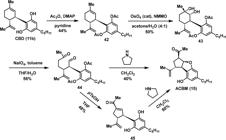
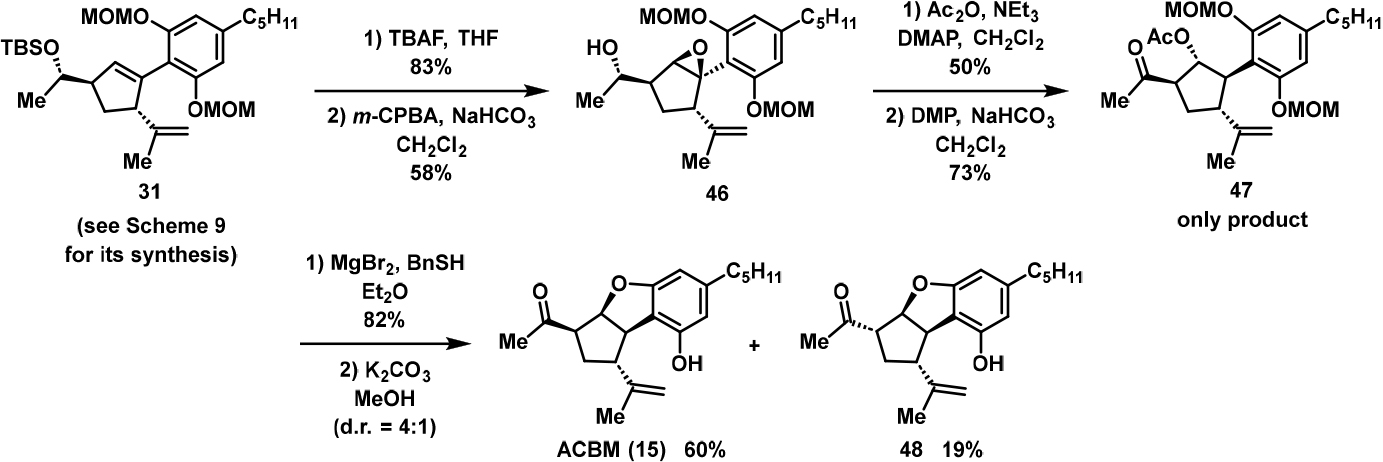
After developing the first synthesis of CBM (14), Echavarren and co-workers41 also synthesized ACBM (15) using the same synthetic approach, with variations in the final steps of the synthetic route. Intermediate 31 was subjected to a sequence of reactions, including an oxa-Michael addition (likely involved in the conversion of 47 to 15 and 48), affording ACBM (15) along with its epimer 48 (Scheme 12).
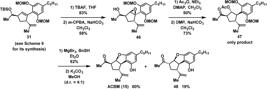
Synthesis of ACBM (15) from compound 31. TBAF: tetrabutylammonium fluoride, BnSH: benzyl mercaptan.
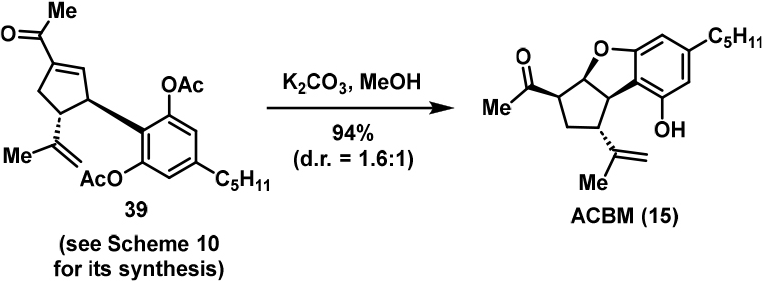
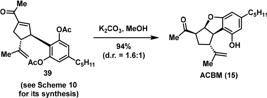
Sarlah and co-workers40 also carried out the synthesis of ACBM (15) from CBD (11b). After first synthesizing CBM (14), they employed intermediate 39 shown in Scheme 10 in a sequence of reactions consisting of methanolysis followed by an oxa-Michael addition, affording ACBM (15) (Scheme 13).
3.3. Cannabielsoin (CBE, 16)
Cannabielsoin (CBE, 16) was named in recognition of Elsa Boyanova, who isolated the first phytocannabinoids related to CBE (16) before her passing.43 CBE (16) was isolated in 1973 and can be obtained in small amounts from cannabis.44,45 Although its biosynthesis has not yet been fully elucidated, CBE (16) is believed to be formed from the photo-oxidation and/or pyrolysis of CBD (11b).43,46 However, an enzymatic process cannot be ruled out, as substances derived from CBE (16) have been reported in other plant species.47
Studies conducted in 1974 and 1988 indicate that CBE (16) has no psychotropic effects.48,49 CBE (16), along with other phytocannabinoids discussed in this review, reduced intraocular pressure in rabbits and inhibited the production of pro-inflammatory biomarkers in an in vitro study.35,40 Compound 16 effects on TRP type receptors, ion channels responsible for nociception and thermoregulation, have also been investigated.50,51 CBE (16) exhibited an agonistic effect on the TRPA1 channel, weak inhibition of the TRPV1 channel, and strong inhibitory activity against the TRPM8 channel.50 Additionally, CBE (16) partially activates the CB1 receptor, as reported in an in vitro study.51
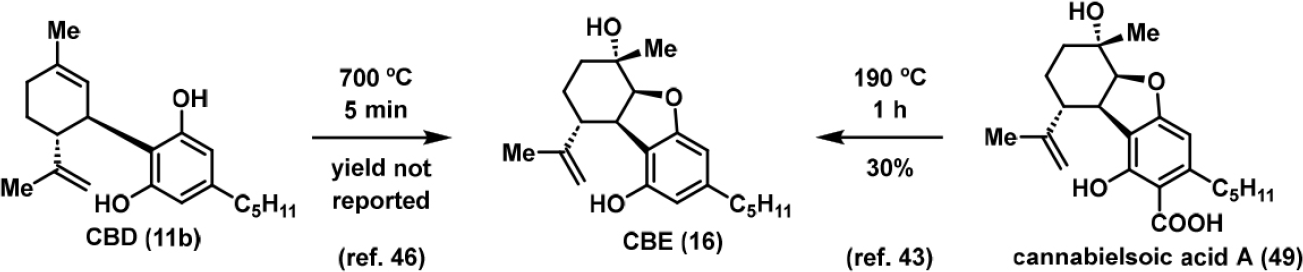
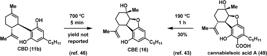
The first reported syntheses of CBE (16) consisted of heating cannabinoids from which it can be derived (Scheme 14). In 1973, Salemink and co-workers46 conducted a series of experiments on cannabis pyrolysis, since smoking is the plant’s primary route of administration. When CBD (11b) was heated, CBE (16) was obtained as product, along with several byproducts. In 1974, Shani and Mechoulam43 synthesized several phytocannabinoids related to CBE (16), which was obtained by high-temperature decarboxylation of cannabielsoic acid A (49).
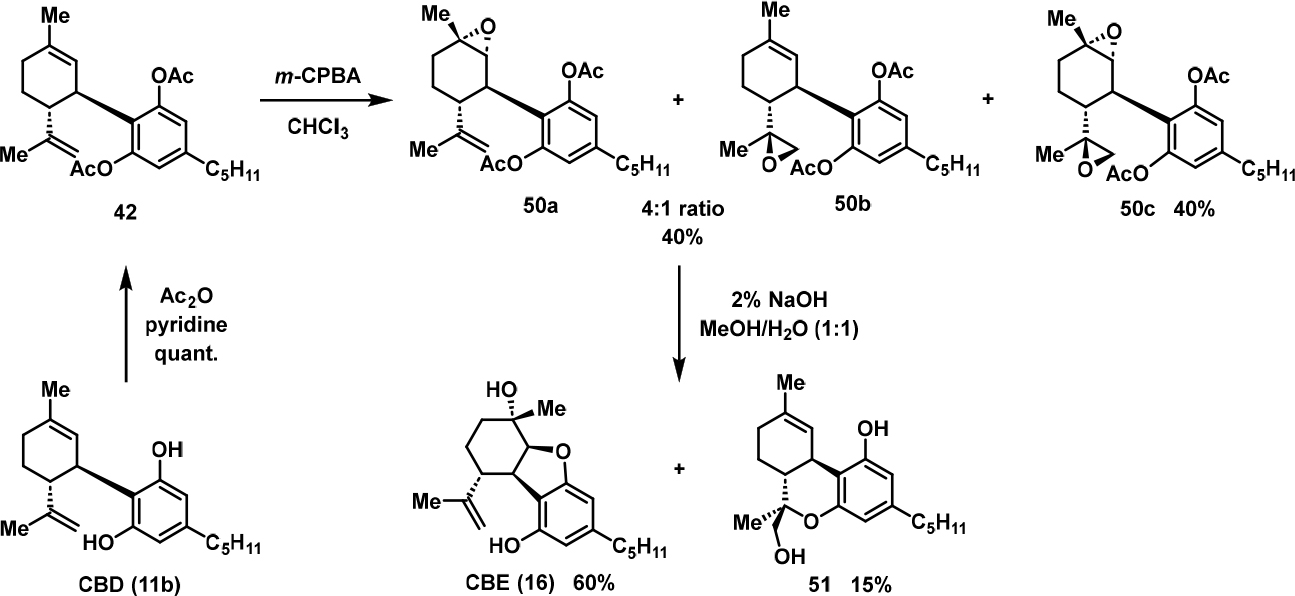
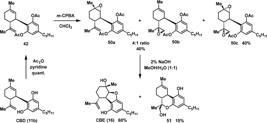
Also in 1974, Razdan and co-workers48 carried out the first stereoselective synthesis of CBE (16) (Scheme 15). CBD (11b) was used as the starting material, and its diacetate was oxidized with m-CPBA to give a 4:1 mixture of epoxides 50a and 50b, respectively, which was separated from the diepoxide 50c. After treatment with 2% NaOH, the mixture containing 50a and 50b afforded CBE (16) in 60% yield and byproduct 51 in 15% yield. The authors highlighted that the conversion of epoxide 50a into CBE (16) involves a trans-diaxial cleavage at the less substituted carbon of the epoxide, determining the stereochemistry of the product.
The first biocatalyzed synthesis of CBE (16) was developed in 1983.52 Interestingly, this is the first reported biotransformation of a phytocannabinoid in the literature. CBD (11b) was incubated with Cannabis sativa L. and Saccharum officinarum L., a sugarcane species, for 11 days, resulting in CBE (16) and its stereoisomer 52 (Scheme 16). The authors propose that the reaction mechanism involves epoxidation of the endocyclic double bond of CBD (11b), followed by a nucleophilic attack, which might include the phenoxide ion.

It is noteworthy that other cultures, in addition to cannabis, can produce CBE (16), reaffirming its classification as a natural product and suggesting that its biosynthetic mechanism may be common rather than specific to a single species.52
After three decades, Morgan and co-workers53 reported new synthetic strategies for the preparation of CBE (16) (Scheme 17). Strategy A begins with CBD (11b) and involves protection of the phenolic groups, followed by epoxidation and subsequent deprotection, affording CBE (16) in 72% yield. Strategy B, which uses ozone,54 was revisited and optimized, enabling conversion of CBD (11b) into CBE (16) in 24% yield. Strategy C employs Payne epoxidation of diacetylated CBD (42), affording CBE (16) in 59% yield.

Synthetic strategies developed for the preparation of CBE (16). BSTFA: N,O-bis(trimethylsilyl)trifluoroacetamide, PhCN: benzonitrile.
In 2022, Sarlah and co-workers40 published the synthesis of CBE (16) from CBD (11b) via chemoselective epoxidation of the endocyclic olefin in intermediate 42, followed by treatment with K2CO3 in MeOH, affording CBE (16) in three steps and 50% overall yield (Scheme 18).

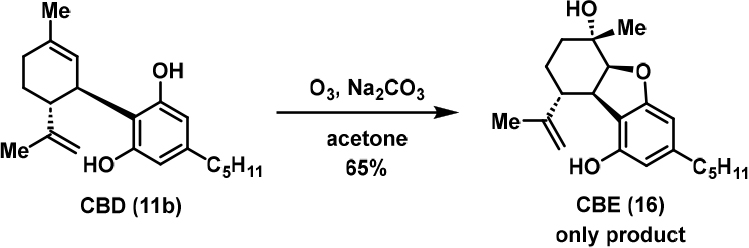
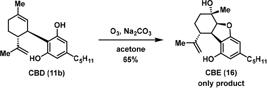
In 2024, Porta and co-workers55 reported the preparation of CBE (16) from CBD (11b) through a stereoselective, protecting-group-free, one-pot approach (Scheme 19), distinguishing it from previously reported strategies. The authors employed O3 in acetone as the epoxidizing agent and Na2CO3 as the base. CBE (16) was obtained in 65% yield.
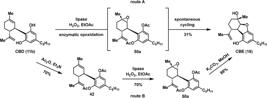
Also in 2024, Parmeggiani and co-workers56 reported two (chemo)enzymatic syntheses of CBE (16) using CBD (11b) as the starting material. The approach involves the use of peracetic acid as the epoxidizing reagent, generated in situ via immobilized lipase B (Novozyme® 435)-catalyzed perhydrolysis (Scheme 20). The authors carried out a one-pot epoxidation of CBD (11b), affording CBE (16) in 31% yield (route A). By protecting the hydroxyl groups, they achieved a 70% isolated yield for the epoxidation, resulting in a three-step synthesis of CBE (16) with an overall yield of 47% (route B).
3.4. Cannabioxepane (CBX, 17)
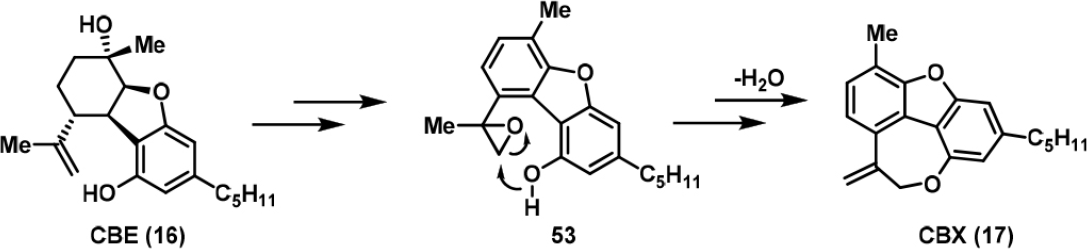
Cannabioxepane (CBX, 17) was first isolated in 2011 by Taglialatela-Scafati and co-workers57 The phytocannabinoid was obtained in very small amounts from a specific Cannabis sativa strain. Although it features an unprecedented tetracyclic skeleton with a seven-membered ring, its structure shows similarity to that of CBE (16). Therefore, the authors proposed that CBX (17) could be derived from CBE (16) via the formation of epoxide 53, not yet reported in the literature, followed by a sequence of reactions including epoxide ring-opening accompanied by seven-membered ring cyclization and dehydration (Scheme 21).57
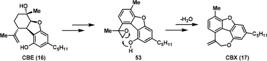
CBX (17) does not exhibit significant affinity for CB1, CB2, and TRPA1 receptors.57 The interaction of CBX (17) with other receptors and molecular targets has not yet been investigated.
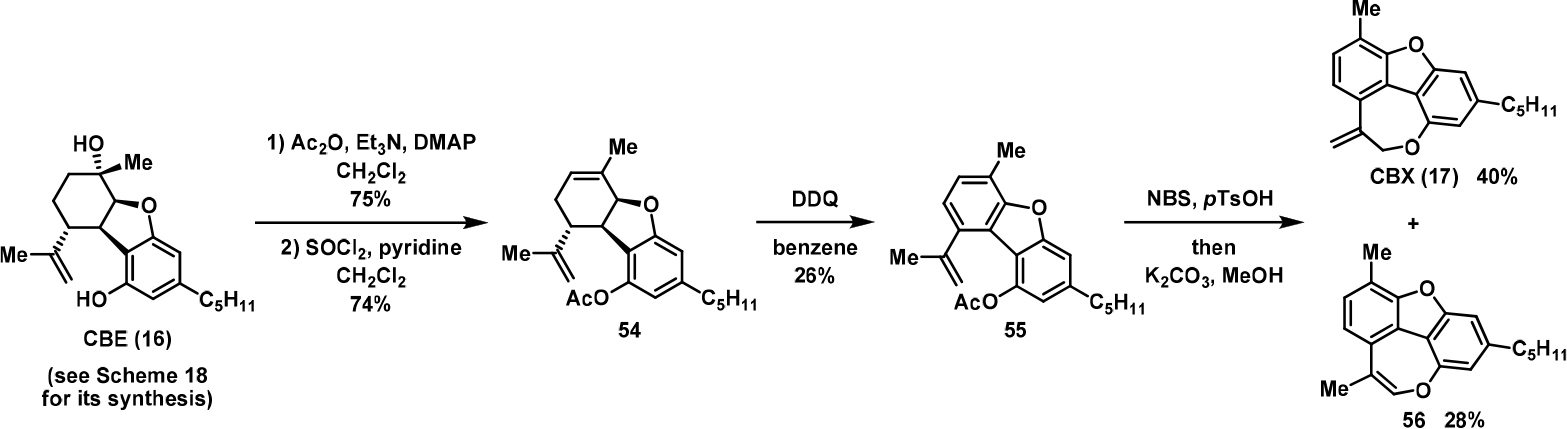
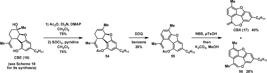
The first synthesis of CBX (17) was described by Sarlah and co-workers40 in 2022. The authors used CBE (16), obtained according to the reactions shown in Scheme 18, as the starting material, employing, in the key step of the synthesis, an oxidation with 2,3-dichloro-5,6-dicyano-1,4-benzoquinone (DDQ) to afford CBX (17) in four steps and 6% overall yield (Scheme 22).
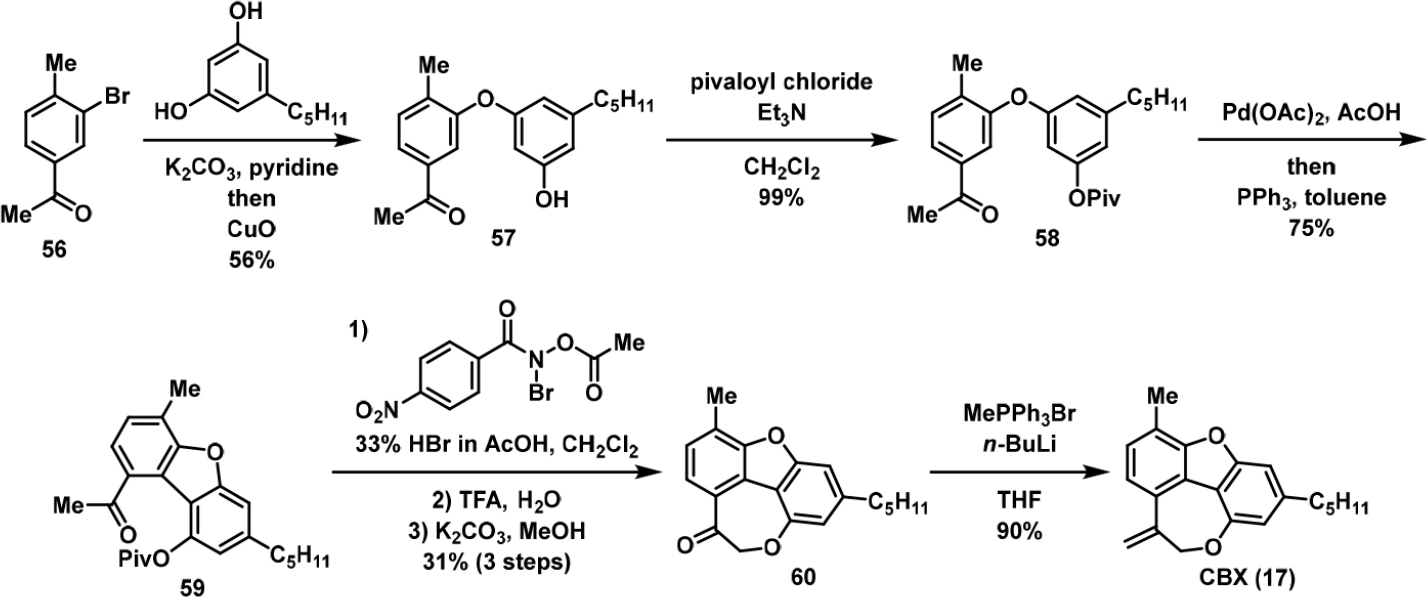
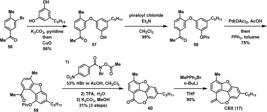
In 2026, Hernandez-Olmos and co-workers58 synthesized CBX (17), starting with the Ullmann ether coupling of brominated aromatic ketone 56 with olivetol (25) to afford biaryl ether 57, which upon esterification gave intermediate 58. Compound 58 was then subjected to a key Pd-catalyzed oxidative cyclization, furnishing dibenzofuran 59 in 75% yield. Final cyclization and functional group manipulations afforded CBX (17) in an overall yield of 12% over eight steps (Scheme 23).
3.5. Cannabifuran (CBF, 18)
There are discrepancies in the literature regarding the year of the first isolation of the phytocannabinoid cannabifuran (CBF, 18). Although some authors place this event in 1975,59 Van Ginneken et al.60 reported the isolation of CBF (18) in 1972. However, the compound was initially misidentified as cannabinodiol (CBND, 19). There are no reports on its biosynthesis; CBF (18) is nevertheless believed to be formed via oxidative cyclization of CBD (11b),61 with CBE (16) possibly acting as an intermediate.62 To date, no quantitative studies on the concentration of CBF (18) in the plant have been reported.
Only two studies have preliminarily explored the pharmacological activity of this phytocannabinoid. Although dibenzofuran derivatives have been reported to exhibit anti-inflammatory activity,63 CBF (18) increased the expression of an inflammatory mediator in an in vitro study, suggesting a potential pro-inflammatory effect.40 Additionally, an in silico study indicated that CBF (18) has a high radical-scavenging capacity in aqueous medium at physiological pH, suggesting potential antioxidant activity under biological conditions.64
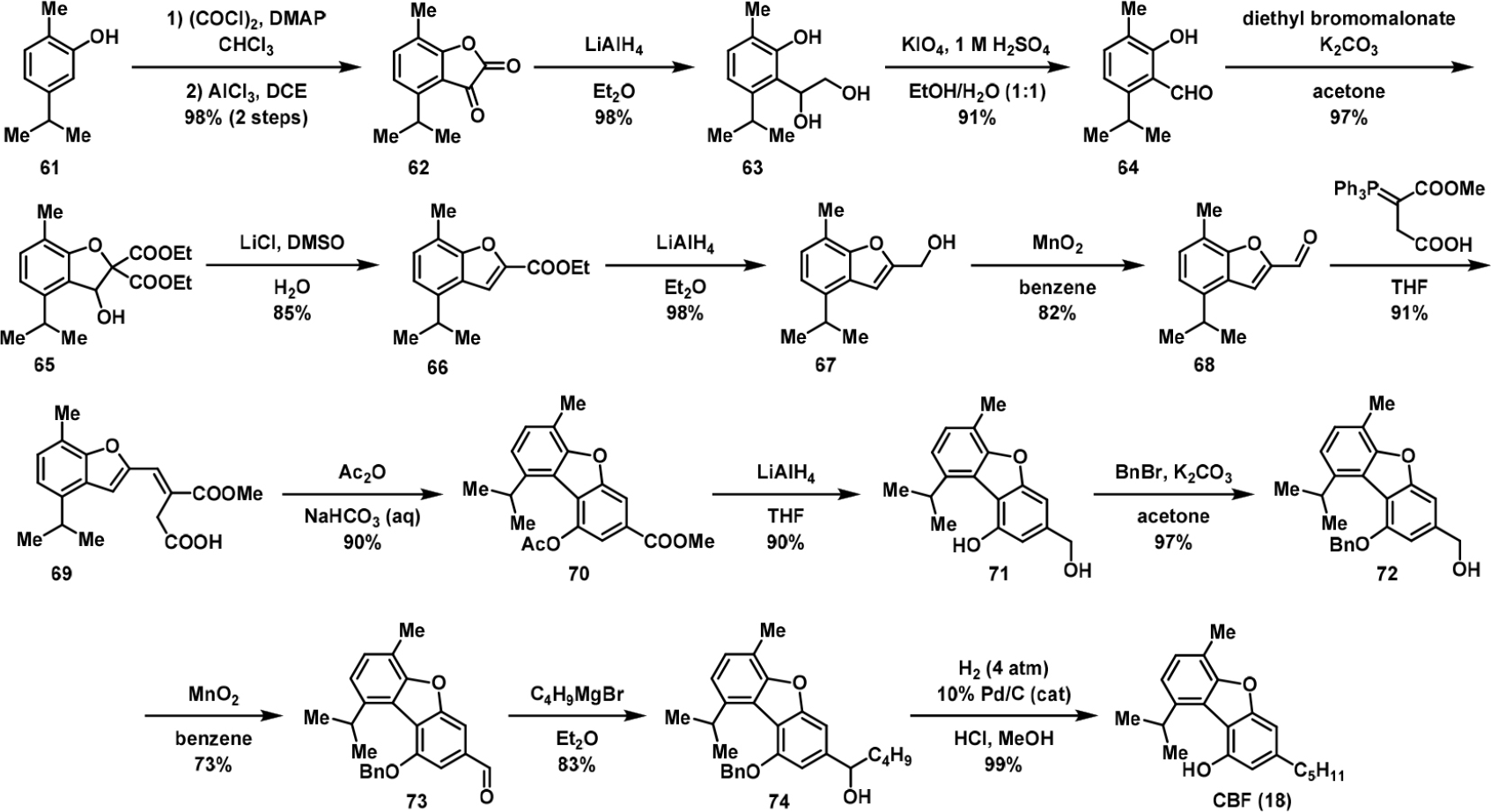
The first synthesis of CBF (18) was reported in 1982 by Sargent and Stransky,65 using carvacrol (61), a phenolic monoterpene, as the starting material (Scheme 24). The key step of the linear route is a Wittig reaction, which converts compound 68 into intermediate 69. The latter enables formation of compound 70 bearing the second aromatic ring. Subsequent functional group transformations ultimately afford CBF (18) in 14 steps, with an overall yield of 25%.
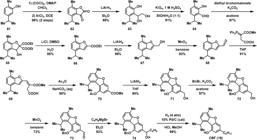
First synthesis of CBF (18). DCE: 1,2-dichloroethane, DMSO: dimethyl sulfoxide, BnBr: benzyl bromide.
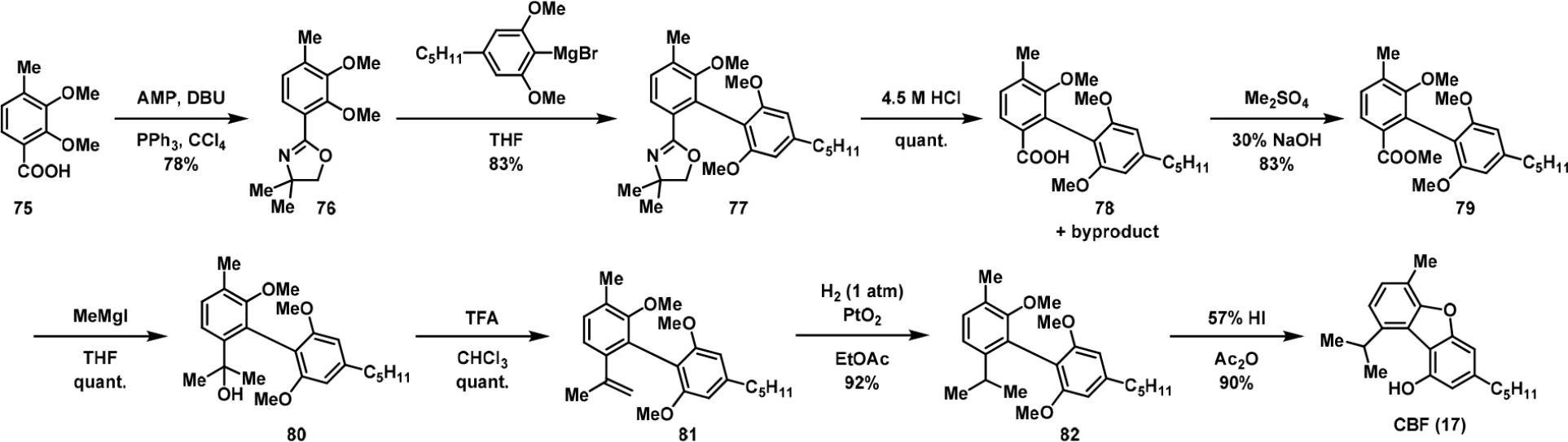
In 1983, Novák and Salemink,66,67 reported a synthetic route to CBF (18) using dimethoxylated benzoic acid 75 as the starting material (Scheme 25). The key step of the synthesis involves the formation of the aryl-aryl bond through the reaction of dihydro-oxazole 76 with an aryl Grignard reagent, leading to the biaryl intermediate 77 in high yield (83%). A sequence of functional group transformations and intramolecular cyclization, resulting in the closure of the furan ring under strongly acidic conditions (57% HI/Ac2O), afforded CBF (18) over a total of eight reaction steps, with an overall yield of 44%.
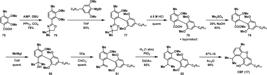
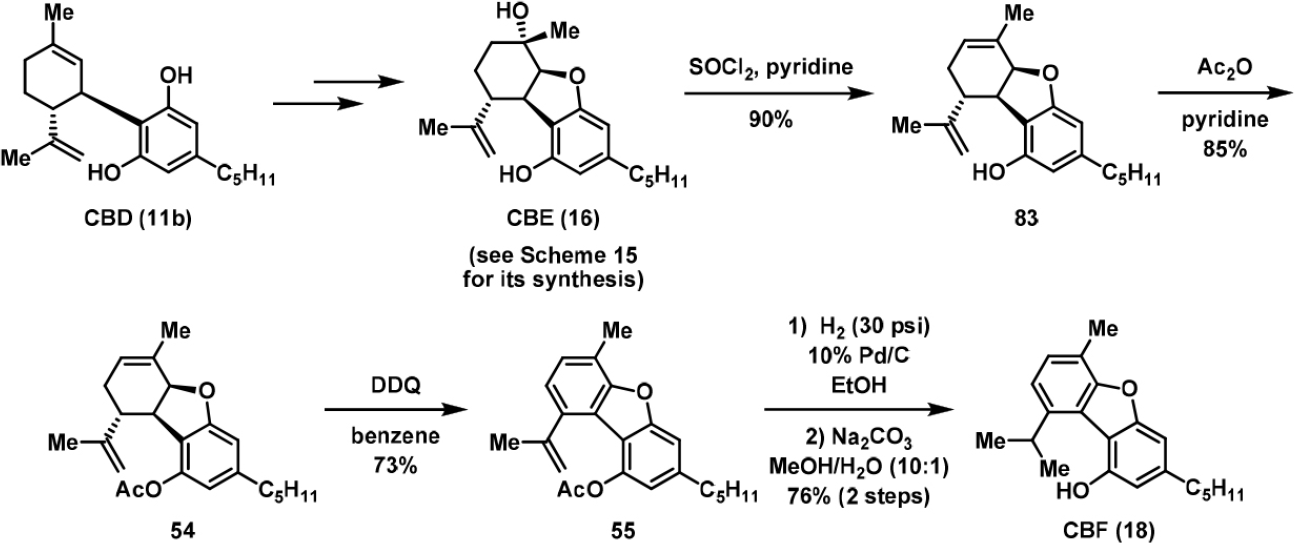
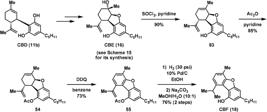
The following year, Razdan and co-workers62 reported the synthesis of CBF (18) from CBD (11b), using CBE (16) as an intermediate via the synthetic strategy previously developed by their group (Scheme 15).48 CBE (16) was initially subjected to dehydration with thionyl chloride, followed by acetylation and subsequent oxidative dehydrogenation with DDQ, as illustrated in Scheme 26. The final steps involved catalytic hydrogenation (H2, 10% Pd/C) using a Parr hydrogenator, followed by basic hydrolysis, affording CBF (18) (Scheme 26).
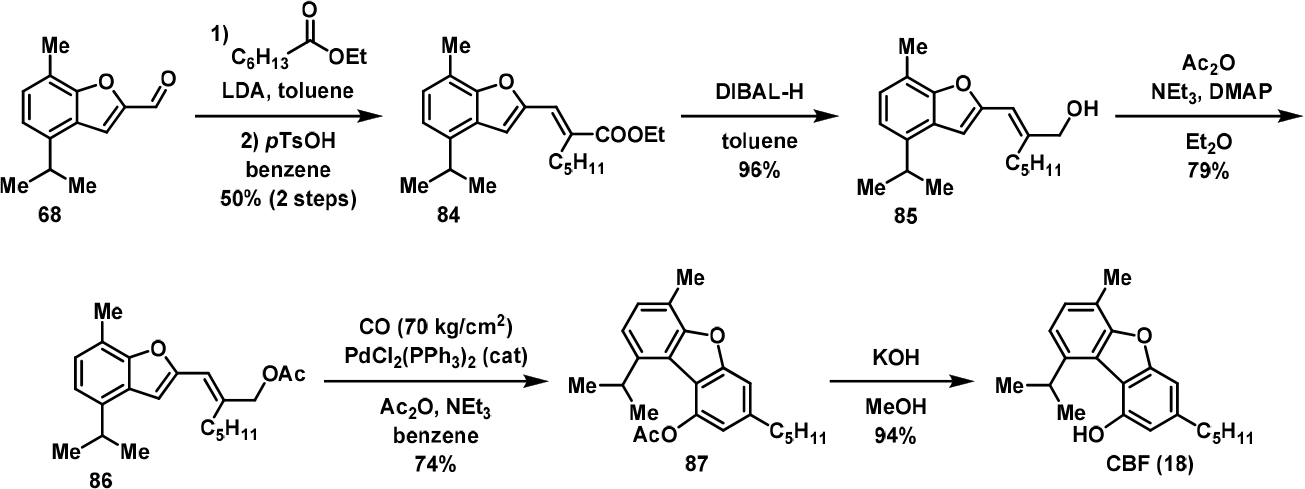
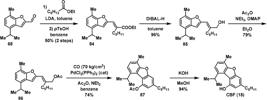
In 1991, Hidai and co-workers68 employed the synthetic route previously developed by Sargent and Stransky64 to obtain heteroaromatic aldehyde 68, which served as the starting material for the synthesis of CBF (18). The key step of this synthetic route involves a palladium-catalyzed intramolecular cyclization that converts compound 86 into intermediate 87 bearing the second aromatic ring of the cannabinoid framework (Scheme 27). The authors reported the synthesis of CBF (18) from compound 68 in six steps with an overall yield of 26%.
In 2003, Serra and Fuganti69 reported a synthesis of CBF (18) using carvacrol (61) as the starting material (Scheme 28). The key step of the synthesis involves the regioselective formation of the furan and aromatic rings upon treatment of enyne 90, obtained via a Wittig reaction, with Ac2O and NaOAc in the presence of a catalytic amount of hydroquinone, affording dibenzofuran 91. CBF (18) was obtained in 11 reaction steps with an overall yield of 12%.

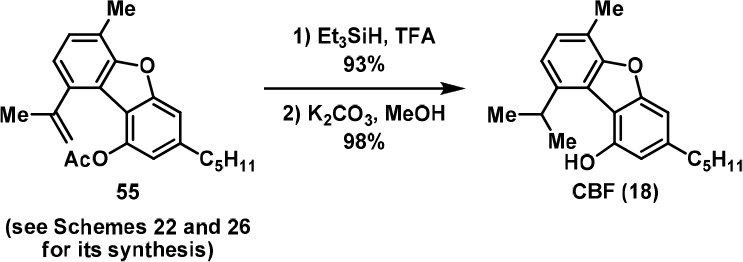
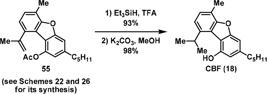
In 2022, Sarlah and co-workers40 reported the most recent synthesis of CBF (18) (Scheme 29). Intermediate 55, obtained as described in Schemes 22 and 26, was subjected to reduction with Et3SiH and trifluoroacetic acid (TFA), followed by a deprotection step, affording CBF (18) in 91% yield over the two steps.
The synthetic strategies reported for CBF (18) demonstrate innovation in terms of the methods employed. However, the development of more convergent approaches could enable more efficient syntheses.
3.6. Cannabinodiol (CBND, 19)
Following an incorrect report published in 1972,60 the phytocannabinoid cannabinodiol (CBND, 19) was isolated, and its structure was elucidated in 1977 by Lousberg et al.70 The concentration of CBND (19) in Cannabis sativa tissues has not been determined, and only small amounts of this compound have been reported in the plant. Its biosynthesis remains to be fully understood; however, there is evidence that CBND (19) is derived from CBD (11b) via aromatization of the terpenoid portion upon exposure to oxygen and light.71 To date, no study has addressed the pharmacological profile of CBND (19).
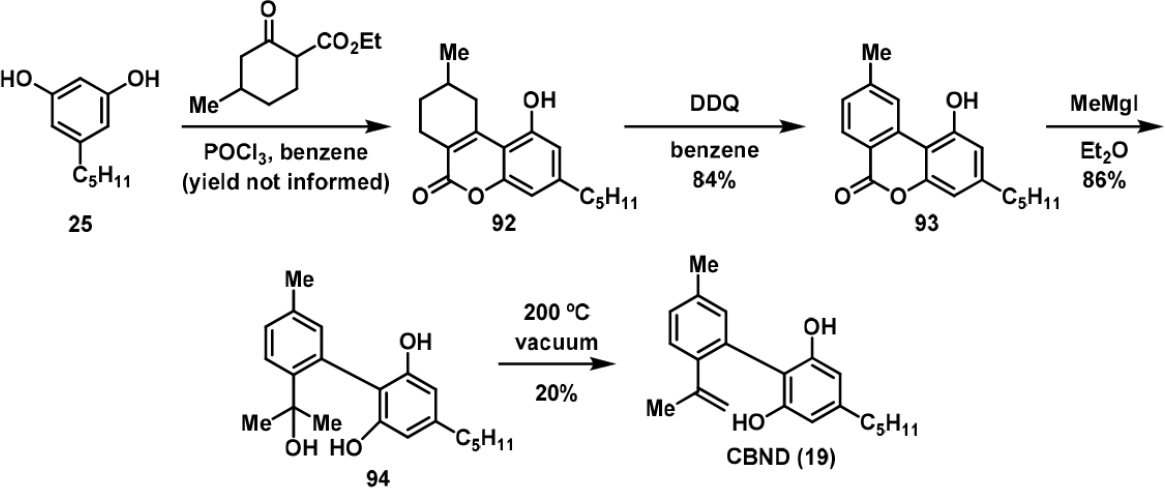
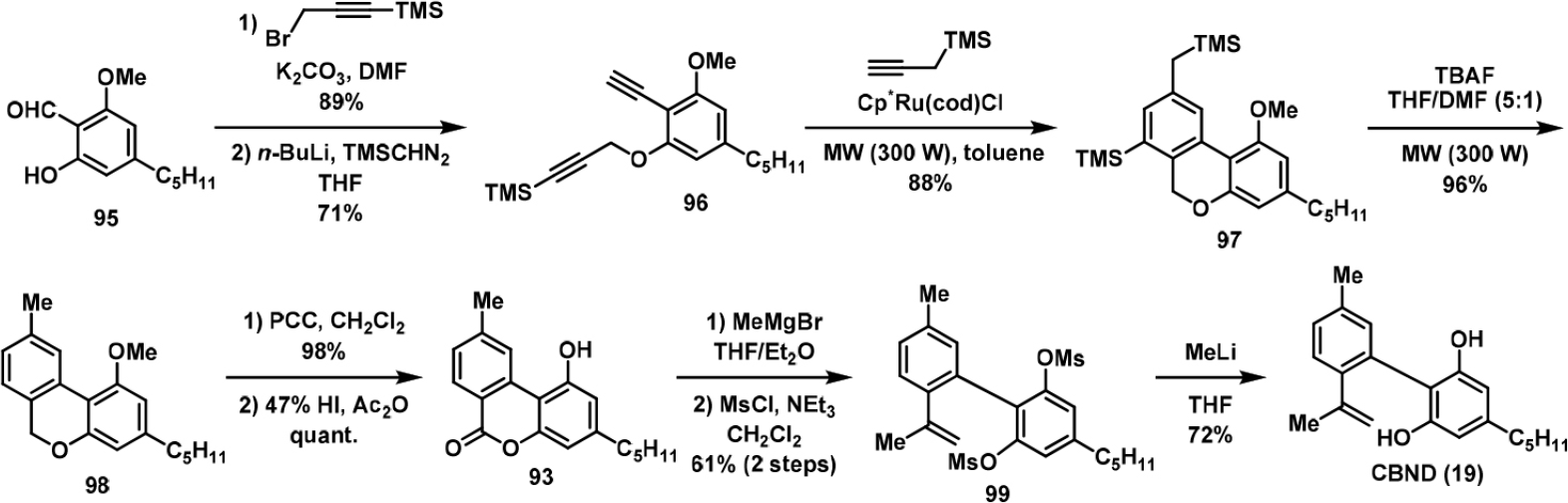
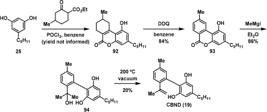
In the same publication, Lousberg et al.70 also reported the first synthesis of CBND (19) (Scheme 30). Olivetol (25) was employed as the starting material, which was subjected to a POCl3-mediated condensation, leading to the tricyclic intermediate 92. Aromatization in the presence of DDQ or sulfur afforded the substituted 6H-benzo[c]chromen-6-one 93, which was then treated with a Grignard reagent. Dehydration of the tertiary alcohol 94 resulted in CBND (19), synthesized in four reaction steps.
The most recent synthesis of CBND (19) was reported by Teske and Deiters in 2008.72 The key step of this route involves a ruthenium-catalyzed cyclotrimerization of diyne intermediate 96 under microwave irradiation, leading exclusively to isomer 97 bearing the tricyclic framework of CBND (19) (Scheme 31). The phytocannabinoid was obtained in nine reaction steps with an overall yield of 23%.
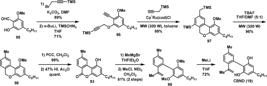
Synthesis of CBND (19) using ruthenium catalysis in the key step. DMF: dimethylformamide, TMSCHN2: trimethylsilyldiazomethane, TMS: trimethylsilyl, Cp*Ru(cod)Cl: chloro(1,5-cyclooctadiene)(pentamethylcyclopentadienyl)ruthenium(II), PCC: pyridinium chlorochromate, MsCl: methanesulfonyl chloride.
4. Minor Phytocannabinoids Derived from THC (1b)
4.1. Cannabinol (CBN, 20)
Cannabinol (CBN, 20) was the first phytocannabinoid isolated from cannabis in 1896.73 Accordingly, it has been synthesized through several approaches (vide infra). In fresh plant material, it is present only in small amounts and is therefore classified as a minor cannabinoid.74 However, in samples subjected to prolonged storage, CBN (20) can be found in higher amounts, a finding directly related to its origin. Several studies7577 have shown that exposure of THC (1b) to oxygen and light over time promotes its gradual oxidation, leading to increased concentrations of CBN (20), which supports a non-enzymatic formation pathway.
Pharmacological studies indicate that cannabinol (CBN, 20) exhibits low affinity for the CB1cannabinoid receptor and relatively high affinity for the CB2 receptor.78,79 In addition, it can interact with ion channels of the TRP family, acting as a TRPM8 antagonist, which reduces the release of pro-inflammatory cytokines in human cell models.80,81 In vivo studies in rodents have shown that CBN (20) induces sedative effects and modulates sleep patterns, suggesting a potential improvement in sleep quality.78 Additional evidence points to a neuroprotective role for CBN (20), with potential attenuation of age-related cognitive decline.82 CBN (20) also exhibits antioxidant activity, along with antimicrobial and cytotoxic effects in vitro, including antiproliferative effects against tumor cell lines, underscoring the broad therapeutic potential of this phytocannabinoid.83,84
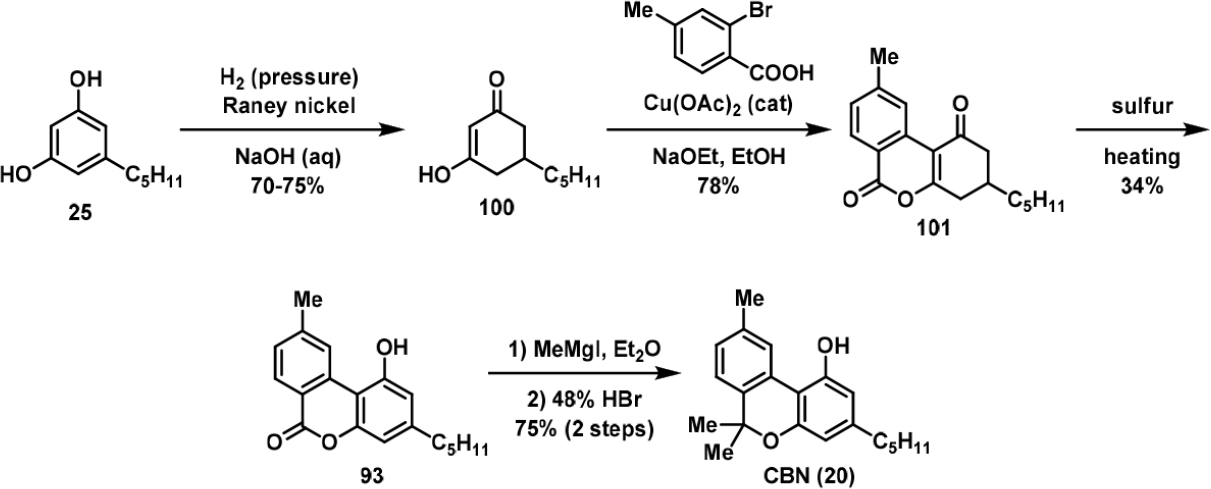
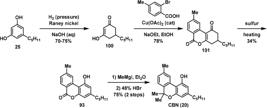
The first synthesis of CBN (20) was reported in 1940 by Wearn and co-workers85 (Scheme 32). The synthetic strategy involves the reduction of olivetol (25), followed by the condensation of intermediate 100 with 4-methyl-2-bromobenzoic acid, leading to the formation of dicarbonyl intermediate 101, which features the characteristic cannabinoid core. CBN (20) was obtained in five steps, with an overall yield of approximately 15%.
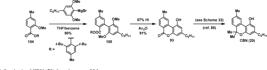
In 1982, Novák and Salemink86 reported the synthesis of CBN (20), starting with aryl-aryl bond formation through the reaction of dihydro-oxazole 102 with an aryl Grignard reagent, affording the biaryl intermediate 103 in 87% yield. This strategy is closely related to the chemistry outlined in Scheme 25. Treatment of compound 103 with 57% HI in Ac2O promotes sequential deprotections of the carboxylic acid and the phenolic hydroxyls groups, leading to the formation of the dicarbonyl intermediate 93, which upon reaction with MeMgI followed by acidification provides CBN (20) (Scheme 33).

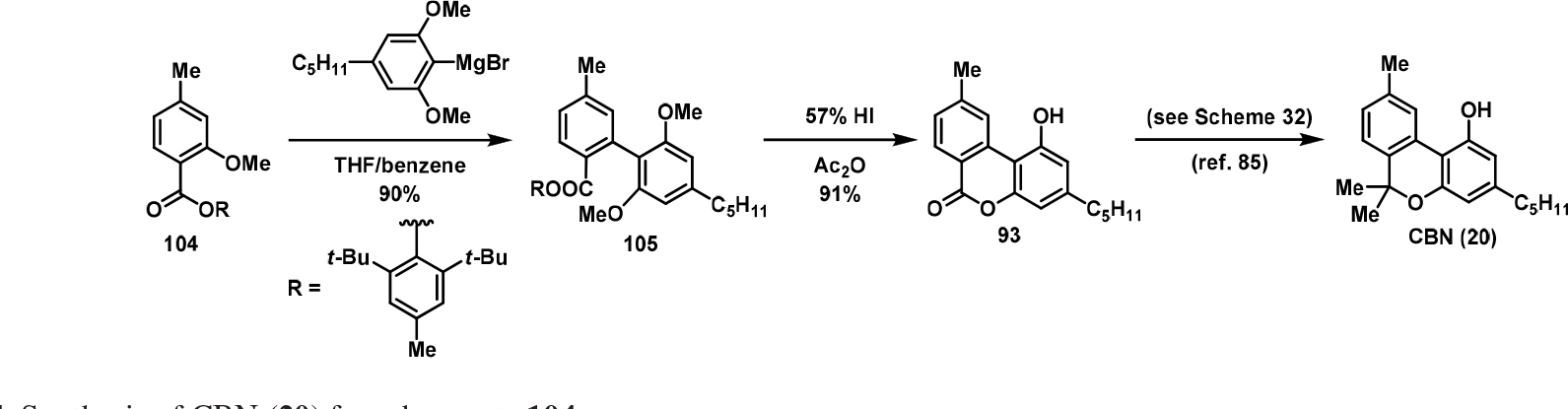
In 1991, Miyano and co-workers87 developed a formal synthesis of cannabinol (CBN, 20) employing a practical and efficient method for constructing the biphenyl framework (Scheme 34). In this route, benzoate 104 is used as the starting material, enabling formation of the biphenyl core present in intermediate 105 via a key nucleophilic aromatic substitution, followed by treatment with 57% HI in Ac2O to give intermediate 93. Compound 93 has been previously converted into CBN (20) according to literature procedures (methylation followed by acidic treatment)85 (Scheme 32).
In a study published in 2008, Teske and Deiters72 reported the synthesis of CBN (20) using intermediate 98, obtained according to the strategy outlined in Scheme 31. Compound 98 was subjected to oxidation, methylation, cyclization, and deprotection steps, efficiently leading to the formation of the target phytocannabinoid (Scheme 35).

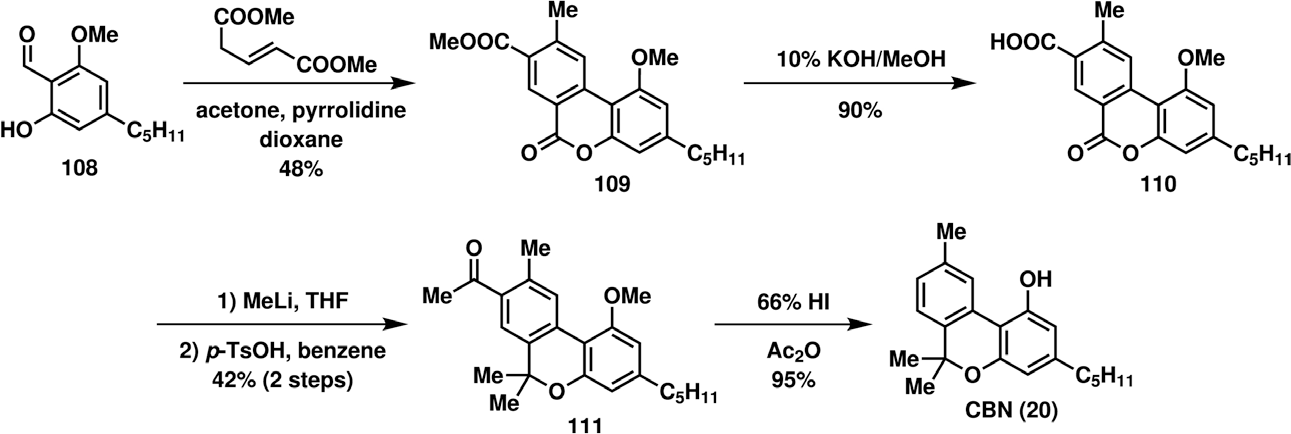
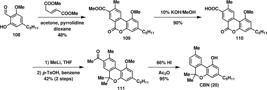
In 2012, Nandaluru and Bodwell88 employed a multicomponent reaction-based strategy for the synthesis of CBN (20) (Scheme 36). Salicylaldehyde derivative 108 was reacted with dimethyl glutaconate, acetone, and pyrrolidine, resulting in the formation of a 6H-dibenzo[b,d]pyranone derivative 109, which contains the tricyclic framework present in CBN (20), via a sequence of reactions involving an inverse electron demand Diels-Alder (IEDDA) reaction. Regarding the functional group manipulations, the target phytocannabinoid 20 was obtained by reacting 111 with 66% HI in Ac2O, which effected both demethylation and deacylation. This seldom-used retro-Friedel-Crafts reaction relies upon the presence of an adjacent methyl group. CBN (20) was obtained in five steps, with an overall yield of 17%.
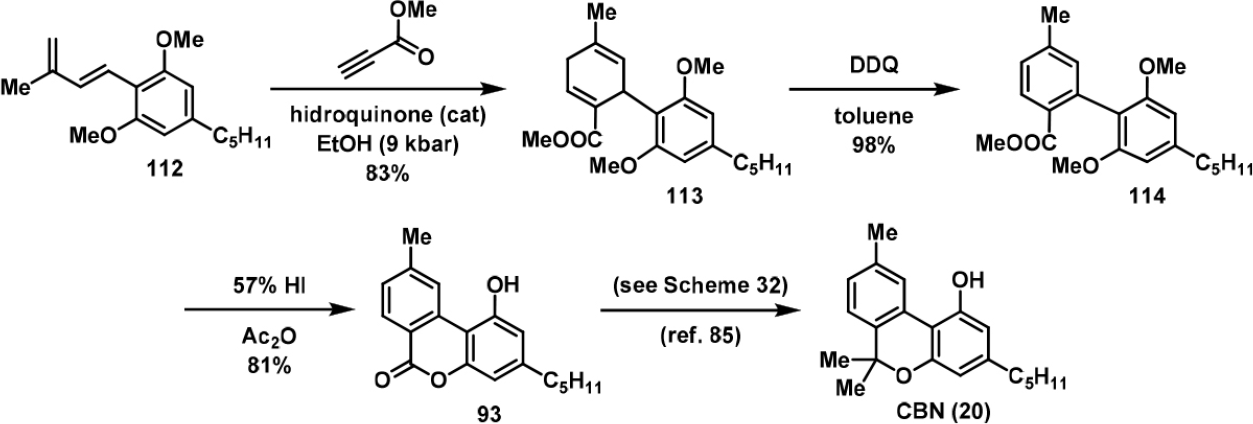
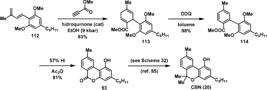
Also in 2012, Minuti et al.89 reported a high-pressure-promoted Diels-Alder-based approach to the formal synthesis of CBN (20) (Scheme 37). The olivetol-derived diene 112 was reacted with methyl propiolate under high pressure (9 kbar), affording intermediate 113. This intermediate, upon a sequence of two transformations, namely oxidation with DDQ and demethylative lactonization using 57% HI in Ac2O, furnished compound 93. Conversion of compound 93 into CBN (20) by reaction with methyl magnesium iodide followed by acidification has been described in the literature (Scheme 32).84
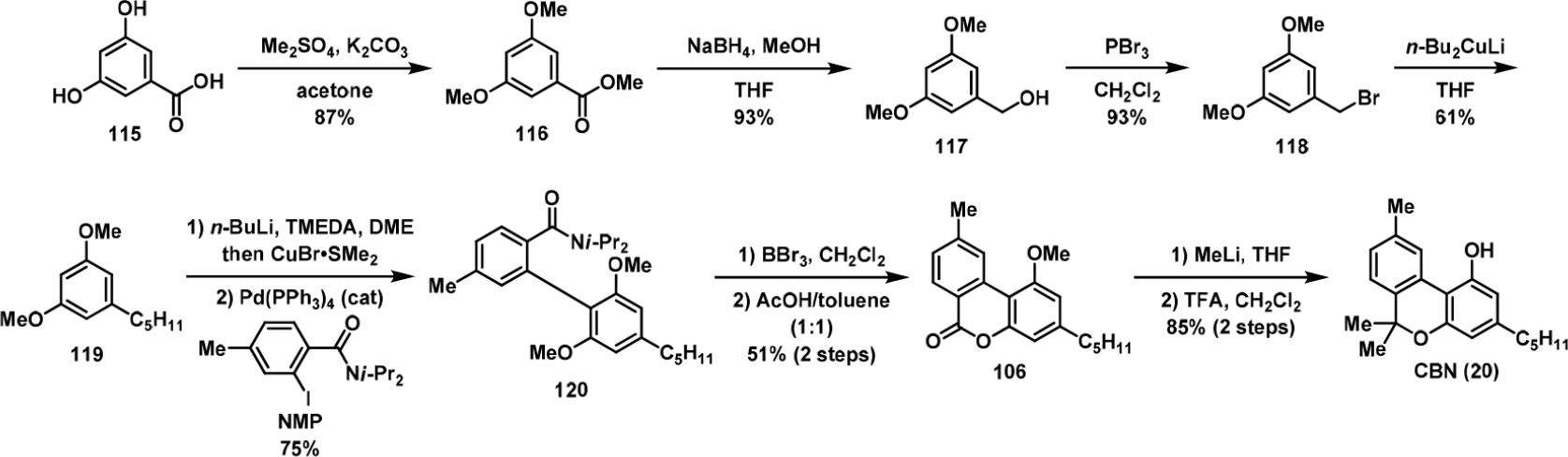
In 2013, Nüllen and Göttlich90 reported a synthetic route to CBN (20) employing a modified Ullmann-Ziegler cross-coupling. In this approach, the key reaction involved the coupling between protected olivetol 119 and an iodinated aromatic amide catalyzed by Pd(PPh3)4, affording intermediate 120, which, through a sequence of transformations, led to CBN (20), obtained over nine steps in an overall yield of 15% (Scheme 38).
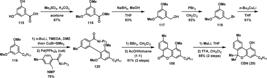
Synthesis of CBN (20) from 3,5-dihydroxybenzoic acid (115). n-Bu2CuLi: lithium dibutylcuprate, DME: dimethoxyethane, NMP: N-methyl-2-pyrrolidone.
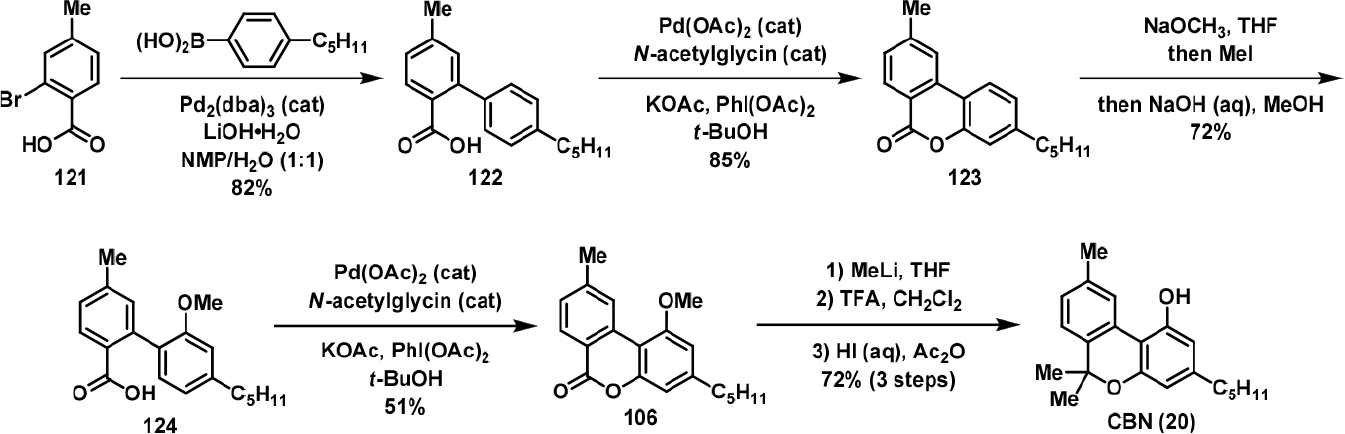
Also in 2013, Wang and co-workers91 reported the synthesis of CBN (20) via a palladium-catalyzed intramolecular C-H lactonization (Scheme 39). The synthetic route was initiated by a Suzuki-Miyaura coupling between 2-bromo-4-methylbenzoic acid (121) and (4-pentylphenyl)boronic acid, affording the coupling product 122. Intermediate 122 gave biaryl lactone 123 through the key palladium-catalyzed intramolecular C-H activation. Interestingly, lactone 123 was opened by nucleophilic attack of NaOMe, followed by methylation with MeI and hydrolysis with aqueous NaOH to afford the corresponding acid 124, which was transformed into methoxylated biaryl lactone 106 by palladium-catalyzed intramolecular C-H activation. Intermediate 106 was subsequently converted to the target phytocannabinoid through a sequence of well-established transformations. CBN (20) was obtained over seven steps in an overall yield of 18% (Scheme 39).
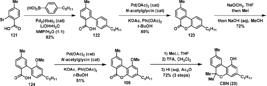
Synthesis of CBN (20) from 2-bromo-4-methylbenzoic acid (121). Pd2(dba)3: tris(dibenzylideneacetone)dipalladium(0), t-BuOH: tert-butanol.
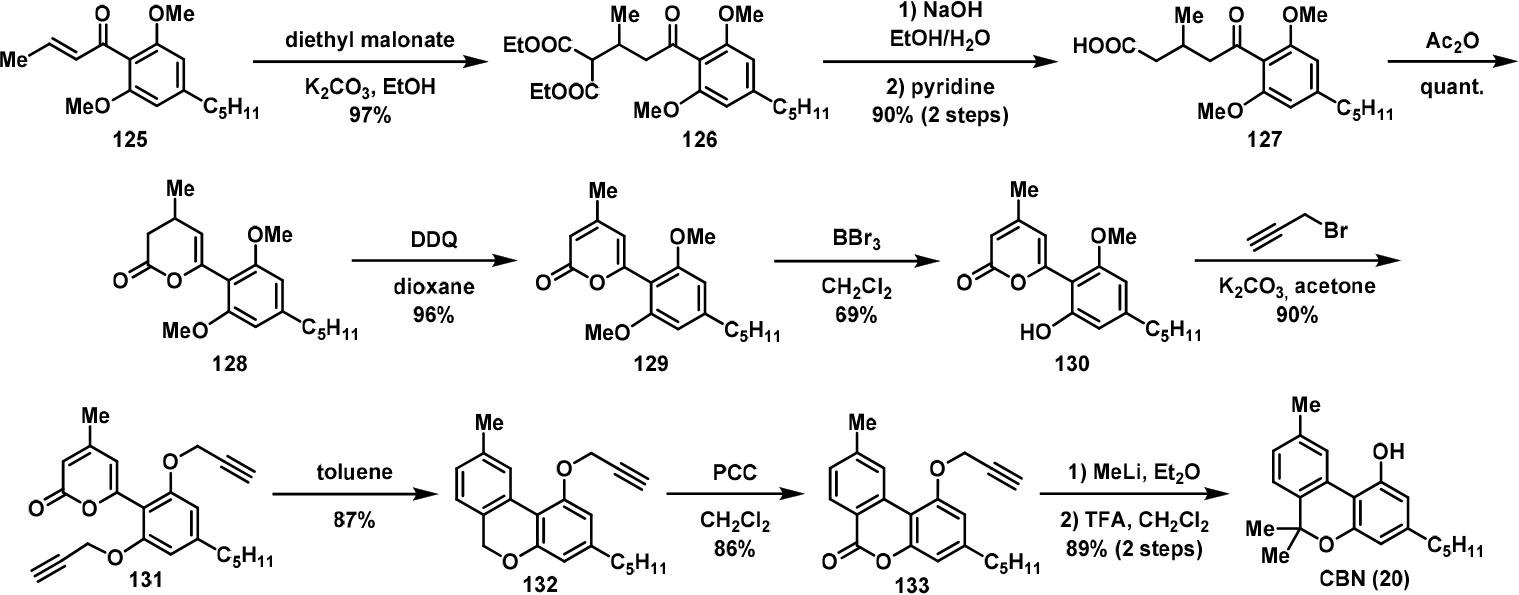
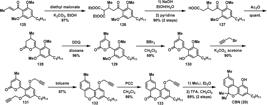
In 2013, Chang and co-workers92 reported the total synthesis of CBN (20) starting from a functionalized olivetol derivative (125). The key step involves an intramolecular Diels-Alder reaction followed by CO2 elimination and aromatization of 2-pyranone 131, enabling the construction of the characteristic tricyclic core of the target phytocannabinoid (intermediate 132). CBN (20) was obtained in 11 steps with an overall yield of 35%(Scheme 40).
In 2016, Chi and co-workers93 reported a short and efficient total synthesis of CBN (20) starting from a salicylaldehyde derivative (134) (Scheme 41). The key step of the synthetic route involves the construction of a new benzene ring through a base-mediated formal [4 + 2] cycloaddition reaction followed by air oxidation from coumarin 135, affording intermediate 106, which was converted to CBN (20) through a sequence of well-established transformations. CBN (20) was obtained over five steps in an overall yield of 53%.

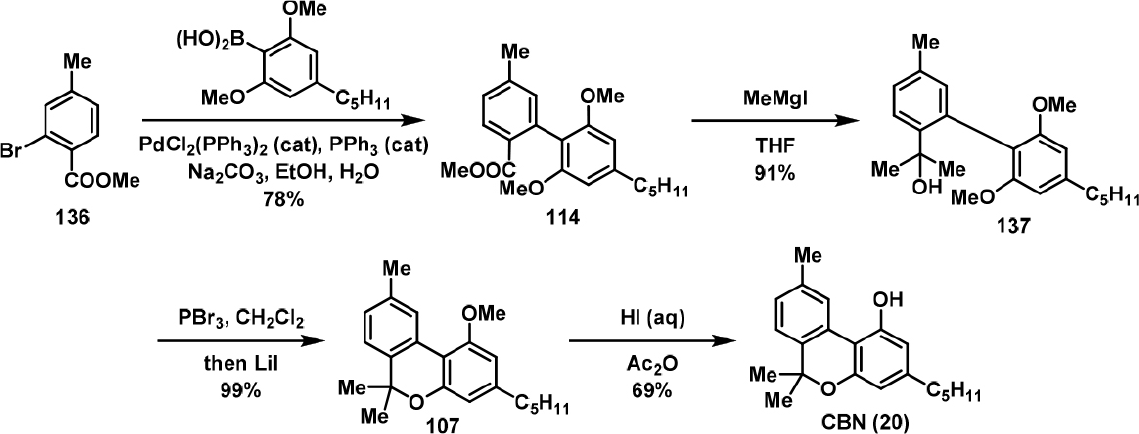
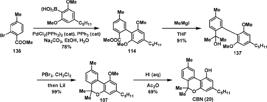
Also in 2016, Tummatorn and co-workers94 reported a short and efficient total synthesis of CBN (20), in which the key step involves an intramolecular cyclization via selective ether cleavage, converting intermediate 137 into the CBN derivative 107. CBN (20) was obtained in four steps with an overall yield of 48% (Scheme 42).
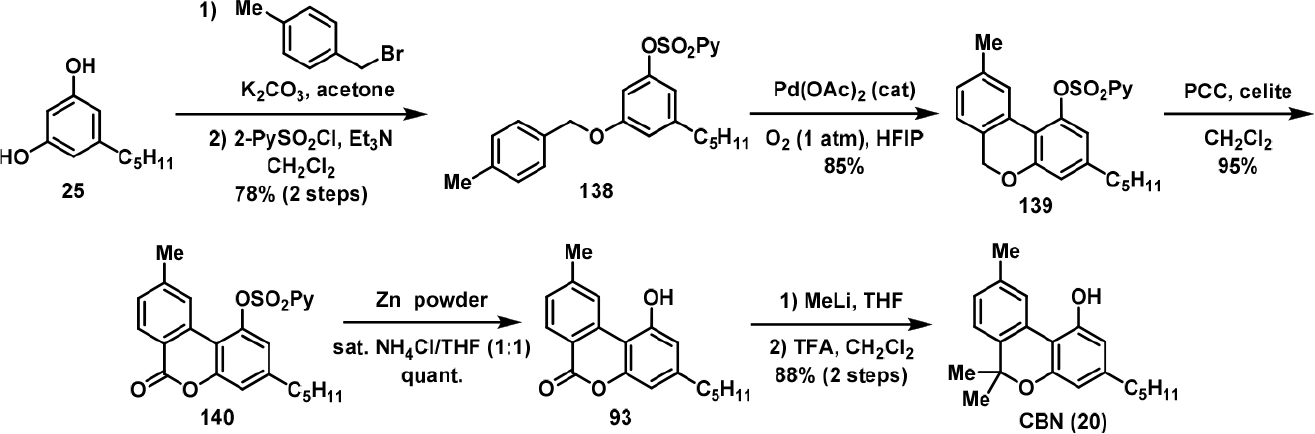
In 2017, Wang et al.95 reported another short and efficient total synthesis of CBN (20), featuring a palladium-catalyzed intramolecular dehydrogenative coupling between aryl groups as the key step, which converted intermediate 138 into the tricyclic compound 139. CBN (20) was obtained in seven steps with an overall yield of 55% (Scheme 43).
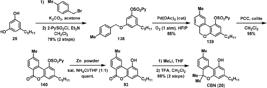
Short total synthesis of CBN (20) from olivetol (25). 2-PySO2Cl: 2-pyridinesulfonyl chloride, HFIP: hexafluoroisopropanol.
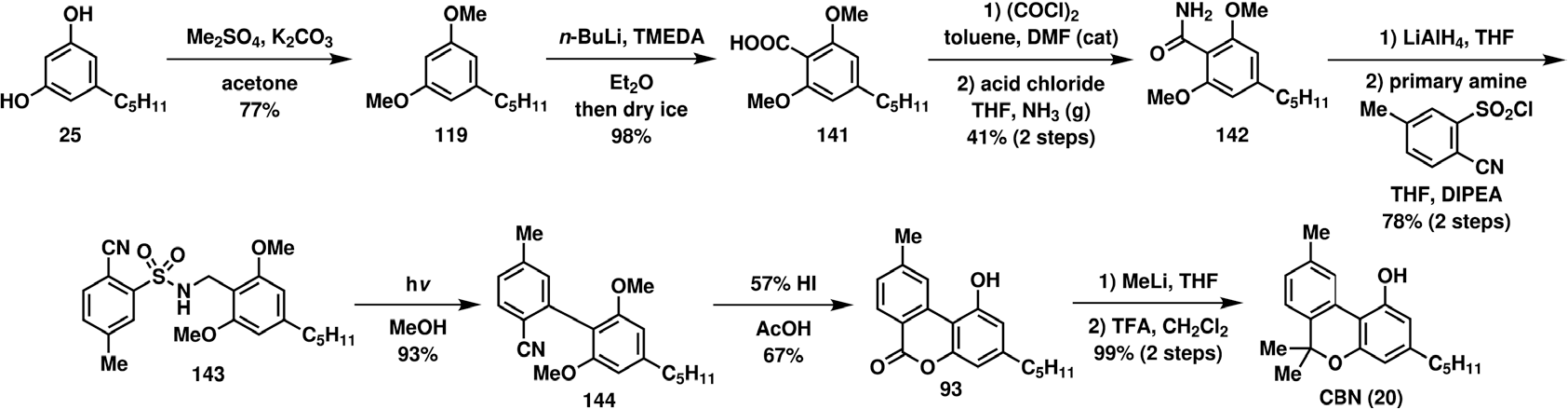
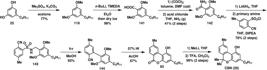
In 2018, Hertweck and co-workers96 reported the total synthesis of CBN (20) from olivetol (25). Although the synthetic route is relatively long, the key step involves an innovative metal-free approach to biaryl formation via a highly selective photosplicing process (143 to 144). Using this strategy, CBN (20) was obtained in ten steps with an overall yield of 15% (Scheme 44).
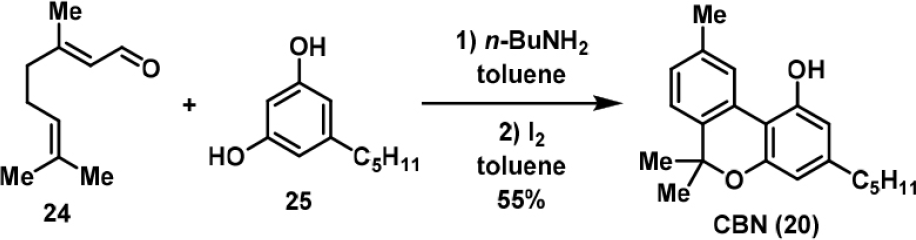
In 2019, Appendino and co-workers37 reported a considerably short synthetic route to CBN (20). The approach involved the reaction of citral (24) with olivetol (25) in the presence of n butylamine, followed by oxidation with iodine, affording the target phytocannabinoid in 55% overall yield (Scheme 45).

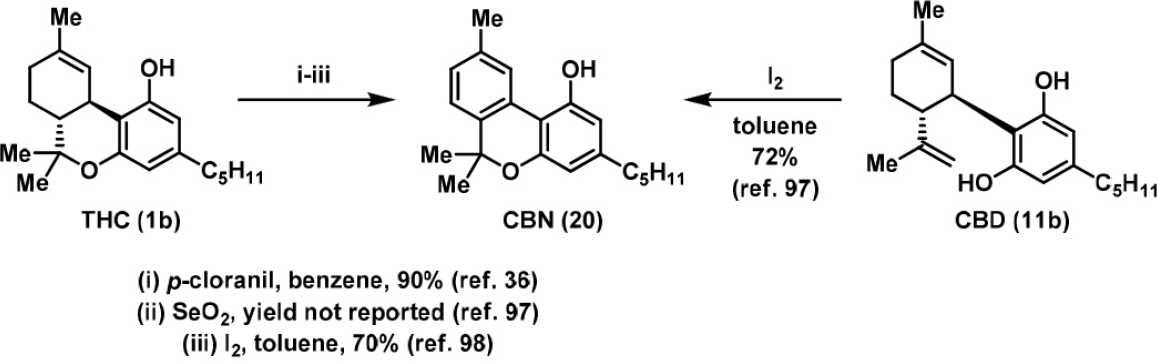
Additionally, the preparation of CBN (20) from the phytocannabinoids THC (1b) and CBD (11b) has also been investigated, as summarized in Scheme 46.36,97,98
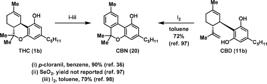
A comparative analysis of the synthetic approaches to CBN (20) reveals a progressive evolution of the methods employed, accompanied by increasingly shorter synthetic routes. Most syntheses have been based on linear sequences involving the stepwise construction of the tricyclic framework from relatively simple aromatic precursors. In contrast, some approaches have focused on the development of step-economical strategies, often relying on innovative transformations such as metal-catalyzed reactions. Syntheses employing naturally occurring phytocannabinoids, namely THC (1b) and CBD (11b), benefit from the inherent structural complexity of these substrates, thereby enabling one-step conversions to CBN (20). In line with this, one-pot protocols have significantly reduced the number of steps required for the synthesis of this phytocannabinoid. Overall, the syntheses reported to date demonstrate substantial advances toward the preparation of CBN (20).
4.2. Canabitriol (CBT, 21)
Cannabitriol (CBT, 21) was first isolated from Cannabis sativa L. in 1966.99 Subsequent studies have shown that CBT (21) is formed during the oxidative degradation of THC (1b), suggesting that this cannabinoid may act as an intermediate in the formation of CBN (20).100 To date, no quantitative studies have determined its concentration in C. sativa, which is attributed to its low abundance in the plant.
According to in vitro studies, CBT (21) does not activate the CB1 cannabinoid receptor.101 Additionally, an in silico study suggested that this phytocannabinoid may exhibit antiestrogenic and anticancer activities, along with low cytotoxicity.102 However, until now, these remain the only studies reported in the literature. The interaction of CBT (21) with other molecular targets commonly associated with this class of natural products remains unexplored.
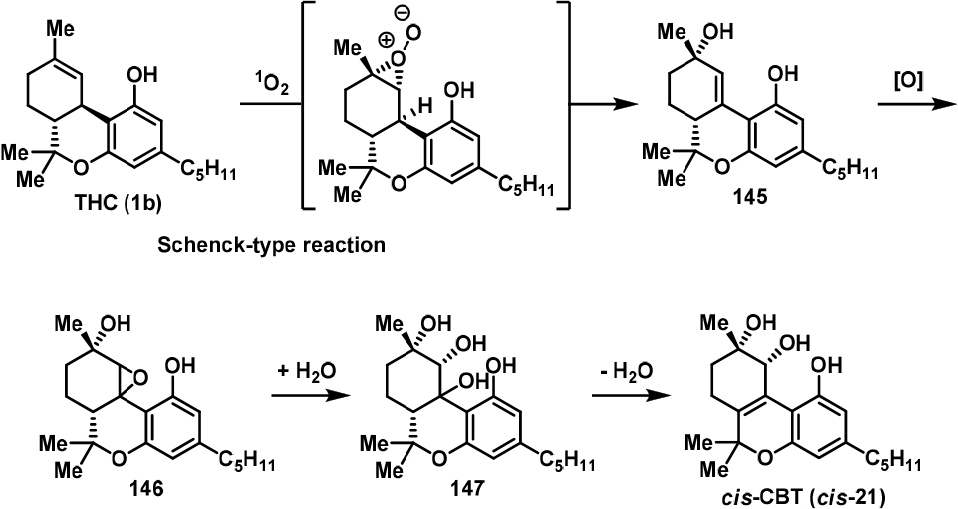
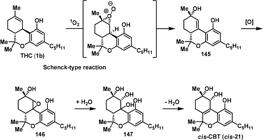
The only synthesis of cis-CBT (cis-21) was reported by Janda and co-workers103 in 2007 and involves the oxidative degradation of THC (1b) using antibodies capable of catalyzing the generation of singlet oxygen (1O2) under white light irradiation. In this study, a solution containing THC (1b), antibodies, and riboflavin in phosphate buffer was irradiated for four days. cis-CBT (cis-21) was identified as the major degradation product, and the proposed pathway for its formation involves the participation of singlet oxygen, generated in situ by the antibodies (Scheme 47).
4.3. Cannabicoumaronone (CBCON, 22)
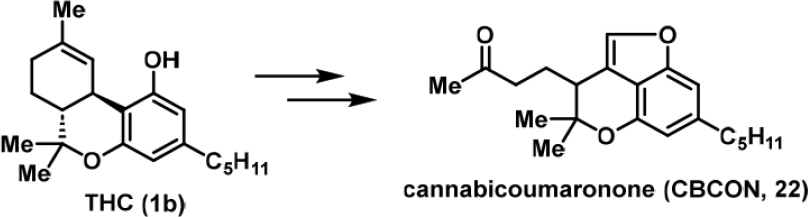
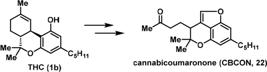
Cannabicoumaronone (CBCON, 22) was first isolated from Cannabis sativa L. in 1978.104 Although its biosynthesis has not been fully elucidated, evidence indicates that this phytocannabinoid is derived from THC (1b) (Scheme 48).105 Until now, no studies have determined the concentration of CBCON (22) in C. sativa, which reinforces its low abundance in the plant. The biological activity of CBCON (22) has not been experimentally evaluated, and only an in silico molecular docking study has suggested potential interactions with inflammation-related targets.106 CBCON (22) has no reported syntheses.
4.4. Cannabichromanone (CBCN, 23)
Cannabichromanone (CBCN, 23) was first isolated from Cannabis sativa L. in 1975.59 Its biosynthesis has not yet been elucidated; however, some review articles suggest that this phytocannabinoid is derived from THC (1b).107,108 No studies have been published quantifying CBCN (23) in C. sativa L. samples.
Only a single in vitro study has reported the biological activity of CBCN (23). In this study, the phytocannabinoid exhibited antioxidant and moderate antileishmanial activities, whereas no antimicrobial or antimalarial effects were observed.109 To the best of our knowledge, no other studies have described the interaction of CBCN (23) with cannabinoid receptors or other molecular targets.
The first preparation of CBCN (23) was reported in 1981 by Merlini and co-workers110 using chromanone 148 as the starting material. A Michael addition of compound 148 to methyl vinyl ketone in the presence of DBN resulted in a 50% conversion to CBCN (23) and byproduct 149 formed in a 1:1 ratio (Scheme 49).

In 1983, Anand and Ranjan111 reported the synthesis of CBCN (23) from olivetol (25) (Scheme 50). Chromanone 148 was formed via a condensation reaction, establishing the heterocyclic core characteristic of the target compound. The intermediate 148 was then subjected to a Michael-type alkylation, affording CBCN (23) after two reaction steps, with an overall yield of 43%.

5. Conclusions
The expanding medicinal use of Cannabis sativa L. has driven significant interest in phytocannabinoids and the need to explore, beyond THC and CBD, the complex chemical diversity produced by this plant. Although over 120 phytocannabinoids have been identified, most are minor constituents due to their low concentration, limiting studies of their biosynthesis, biological activity, and therapeutic potential. As discussed throughout this review, many of these rare phytocannabinoids exhibit pharmacological profiles distinct from major phytocannabinoids, interacting with non-classical cannabinoid receptors, TRP ion channels, and other molecular targets. However, data for most of these molecules are limited to preliminary in vitro or in silico studies, reflecting the scarcity of material from natural sources. In this context, synthetic strategies are essential, not only to obtain these compounds in sufficient amounts, but also to enable elucidation of proposed biosynthetic pathways and generation of analogues. The evolution of synthetic approaches, from classical routes to recent methods based on metal catalysis, biotransformations, and one-pot strategies, underscores the progress of organic chemistry applied to minor phytocannabinoids. Nevertheless, important challenges remain, particularly with regard to the development of sustainable, scalable, and stereoselective synthetic approaches. Future advances, including catalytic methods and asymmetric synthesis, are expected to further expand access to these compounds and enable more comprehensive pharmacological investigations. Overall, advancing the chemical and biological understanding of these compounds depends on the integration of isolation, synthesis, and pharmacological evaluation. This overview is expected to stimulate interest in the synthesis of minor phytocannabinoids, positioning these substances as a promising source of new bioactive compounds.
-
This publication is part of the special issue “Organic Synthesis - BMOS”
Acknowledgments
The authors are grateful to FAPESP (grant number 2023/03611-2) and CNPq (grant number 302454/2025-0). K.R. thanks the CAPES for a fellowship.
Data Availability Statement
The authors declare that all data presented herein are available in the text.
References
-
1 Zuardi, A. W.; Rev. Bras. Psquiatr 2006, 28, 153. [Crossref]
» Crossref - 2 Flemming, T.; Muntendam, R.; Steup, C.; Kayser, O. In Topics in Heterocyclic Chemistry, vol. 10; Khan, M. T. H., ed.; Springer: Berlin, Heidelberg, 2007.
-
3 Matsuda, L. A.; Lolait, S. J.; Brownstein, M. J.; Young, A. C.; Bonner, T. I.; Nature 1990, 346, 561. [Crossref]
» Crossref -
4 Devane, W. A.; Hanus, L.; Breuer, A.; Pertwee, R. G.; Stevenson, L. A.; Griffin, G.; Gibson, D.; Mandelbaum, A.; Etinger, A.; Mechoulam, R.; Science 1992, 258, 1946. [Crossref]
» Crossref - 5 ElSohly, M.; Gul, W. In Handbook of Cannabis. Constituents of Cannabis sativa; Pertwee, R. G., ed.; Oxford University Press: Oxford, 2014.
-
6 Nguyen, G.; Jordan, E. N.; Kayser, O.; J. Nat. Prod. 2022, 85, 1555. [Crossref]
» Crossref -
7 Shoyama, Y.; Yagi, M.; Nishioka, I.; Yamauchi, T.; Phytochemistry 1975, 14, 2189. [Crossref]
» Crossref -
8 Gagne, S. J.; Stout, J. M.; Liu, E.; Boubakir, Z.; Clark, S. M.; Page, J. E.; Proc. Natl. Acad. Sci. 2012, 109, 12811. [Crossref]
» Crossref -
9 Moreno, T.; Dyer, P.; Tallon, S.; Ind. Eng. Chem. Res. 2020, 59, 20307. [Crossref]
» Crossref -
10 Fellermeier, M.; Zenk, M. H.; FEBS Lett. 1998, 427, 283. [Crossref]
» Crossref -
11 Morimoto, S.; Komatsu, K.; Taura, F.; Shoyama, Y.; Phytochemistry 1998, 49, 1525. [Crossref]
» Crossref -
12 Taura, F.; Sirikantaramas, S.; Shoyama, Y.; Yoshikai, K.; Shoyama, Y.; Morimoto, S.; FEBS Lett. 2007, 581, 2929. [Crossref]
» Crossref -
13 Mechoulam, R.; Shvo, Y.; Tetrahedron 1963, 19, 2073. [Crossref]
» Crossref -
14 Gaoni, Y.; Mechoulam, R.; J. Am. Chem. Soc. 1964, 86, 1646. [Crossref]
» Crossref -
15 Calcaterra, A.; Cianfoni, G.; Tortora, C.; Manetto, S.; Grassi, G.; Botta, B.; Gasparrini, F.; Mazzoccanti, G.; Appendino, G.; J. Nat. Prod. 2023, 86, 909. [Crossref]
» Crossref -
16 Filipiuc, L. E.; Ababei, D. C.; Alexa-Stratulat, T.; Pricope, C. V.; Bild, V.; Stefanescu, R.; Stanciu, G. D.; Tamba, B. I.; Pharmaceutics 2021, 13, 1823. [Crossref]
» Crossref -
17 Pollastro, F.; Caprioglio, D.; Del Prete, D.; Rogati, F.; Minassi, A.; Taglialatela-Scafati, O.; Muñoz, E.; Appendino, G.; Nat. Prod. Commun 2018, 13, 1189. [Crossref]
» Crossref -
18 Caprioglio, D.; Amin, H. I. M.; Taglialatela-Scafati, O.; Muñoz, E.; Appendino, G.; Biomolecules 2022, 12, 1084. [Crossref]
» Crossref -
19 Korte, F.; Sieper, H.; J. Chromatogr. 1964, 13, 90. [Crossref]
» Crossref -
20 Crombie, L.; Ponsford, R.; Shani, A.; Yagnitinskyand, B.; Mechoulam, R.; Tetrahedron Lett. 1968, 55, 5771. [Crossref]
» Crossref -
21 Claussen, U.; Spulak, F.; Korte, F.; Tetrahedron 1968, 24, 1021. [Crossref]
» Crossref -
22 Tran, J.; Elkins, A. C.; Spangenberg, G. C.; Rochfort, S. J.; Molecules 2022, 27, 742. [Crossref]
» Crossref -
23 Mechoulam, R.; Shani, A.; Edery, H.; Grunfeld, Y.; Science 1970, 169, 611. [Crossref]
» Crossref -
24 Classen, N.; Pitakbut, T.; Schöfbänker, M.; Kühn, J.; Hrincius, E. R.; Ludwig, S.; Hensel, A.; Kayser, O.; Planta Med 2024, 90, 717. [Crossref]
» Crossref -
25 Aziz, M.; Rehman, H.; Iqbal, A.; Nawaz, A.; Hussain, M.; Siddique, T.; Sehgal, S. A.; Sajid, M.; bioRxiv, 2023. [Crossref] accessed in April 2026
» Crossref -
26 Haghdoost, M.; DePorre, Y.; Figi, M.; Young, S.; Krebs, C.; Bonn-Miller, M. O.; J. Nat. Prod. 2025, 88, 58. [Crossref]
» Crossref -
27 Crombie, L.; Ponsford, R.; J. Chem. Soc. 1971, 796. [Crossref]
» Crossref -
28 Kane, V. V.; Razdan, R. K.; J. Am. Chem. Soc. 1968, 90, 6551. [Crossref]
» Crossref -
29 Yeom, H. S.; Li, H.; Tang, Y.; Hsung, R. P.; Org. Lett. 2013, 15, 3130. [Crossref]
» Crossref -
30 Li, X.; Lee, Y. R.; Org. Biomol. Chem. 2014, 12, 1250. [Crossref]
» Crossref -
31 Jiang, T.; Wu, F.; Xie, R.; Che, Y.-L.; Luo, H.; Li, R.-T.; Org. Lett 2025, 27, 5188. [Crossref]
» Crossref -
32 Bercht, C. A. L.; Lousberg, R. J. J. C.; Kuppers, F. J. E. M.; Salemink, C. A.; Phytochemistry 1974, 13, 619. [Crossref]
» Crossref -
33 Hourfane, S.; Mechqoq, H.; Bekkali, A.Y.; Rocha, J. M.; El Aouad, N. A.; Plants 2023, 12, 1245. [Crossref]
» Crossref -
34 Wood, J. S.; Gordon, W. H.; Morgan, J. B.; Williamson, R. T.; Chirality 2023, 35, 540. [Crossref]
» Crossref -
35 ElSohly, M. A.; Harland, E. C.; Benigni, D. A.; Waller, C. W.; Curr. Eye Res. 1984, 3, 841. [Crossref]
» Crossref -
36 Mechoulam, R.; Yagnitinsky, B.; Gaoni, Y.; J. Am. Chem. Soc. 1968, 90, 2418. [Crossref]
» Crossref -
37 Caprioglio, D.; Mattoteia, D.; Minassi, A.; Pollastro, F.; Lopatriello, A.; Muňoz, E.; Taglialatela-Scafati, O.; Appendino, G.; Org. Lett. 2019, 21, 6122. [Crossref]
» Crossref -
38 Taglialatela-Scafati, O.; Pagani, A.; Scala, F.; Petrocellis, L.; Di Marzo, V.; Grassi, G.; Appendino, G.; Eur. J. Org. Chem. 2010, 11, 2067. [Crossref]
» Crossref -
39 Iannotti, F. A.; de Maio, F.; Panza, E.; Appendino, G.; Taglialatela-Scafati, O.; De Petrocellis, L.; Amodeo, P.; Vitale, R. M.; Molecules 2020, 25, 1119. [Crossref]
» Crossref -
40 Dennis, D. G.; Anand, S. D.; Lopez, A. J.; Petrovcic, J.; Das, A.; Sarlah, D.; J. Org. Chem. 2022, 87, 6075. [Crossref]
» Crossref -
41 Carreras, J.; Kirillova, M. S.; Echavarren, A. M.; Angew. Chem., Int. Ed. 2016, 55, 7121. [Crossref]
» Crossref -
42 Chianese, G.; Sirignano, C.; Benetti, E.; Marzaroli, V.; Collado, J. A.; Vega, L.; Appendino, G.; Muñoz, E.; Taglialatela-Scafati, O.; J. Nat. Prod. 2022, 85, 1089. [Crossref]
» Crossref -
43 Shani, A.; Mechoulam, R.; Tetrahedron 1974, 30, 2437. [Crossref]
» Crossref -
44 Bercht, C. A. L.; Lousberg, R. J. J.; Küppers, F. J. E. M.; Salemink, C. A.; Vree, T. B.; Van Rossum, J. M.; J. Chromatogr 1973, 81, 163. [Crossref]
» Crossref -
45 Gul, W.; Ibrahim, E. A.; Gul, S. W.; Shahzadi, I.; Radwan, M. M.; Chandra, S.; Lata, H.; ElSohly, M. A.; Planta Med. 2023, 89, 683. [Crossref]
» Crossref -
46 Küppers, F. J. E. M.; Lousberg, R. J. J. C.; Bercht, C. A. L.; Salemink, C. A.; Terlouw, J. K.; Heerma, W.; Laven, A.; Tetrahedron 1973, 29, 2797. [Crossref]
» Crossref -
47 Seephonkai, P.; Popescu, R.; Zehl, M.; Krupitza, G.; Urban, E.; Kopp, B.; J. Nat. Prod. 2011, 74, 712. [Crossref]
» Crossref -
48 Uliss, D. B.; Razdan, R. K.; Dalzell, H. C.; J. Am. Chem. Soc 1974, 96, 7372. [Crossref]
» Crossref -
49 Yamamoto, I.; Gohda, H.; Narimatsu, S.; Yoshimura, H.; J. Pharmacobio-Dyn. 1988, 11, 833. [Crossref]
» Crossref - 50 Jiu’an, L.; Hailong, Z.; Weimin, T.; Lei, L.; China pat. CN202111052504, 2021
-
51 Haghdoost, M.; Young, S.; Roberts, M.; Krebs, C.; Bonn-Miller, M. O.; Biomedicines 2024, 12, 1551. [Crossref]
» Crossref -
52 Hartsel, S. C.; Loh, W. H. T.; Robertson, L. W.; Planta Med 1983, 48, 17. [Crossref]
» Crossref -
53 Monroe, A. Z.; Gordon, W. H.; Wood, J. S.; Martin, G. E.; Morgan, J. B.; Williamson, R. T.; Chem. Commun 2021, 57, 5658. [Crossref]
» Crossref -
54 Nallia, Y.; Dar, M. S.; Bano, N.; Rasoolb, J. U.; Sarkara, A. R.; Bandaya, J.; Bhat, A. Q.; Rafia, B.; Vishwakarma, R. A.; Dar, M. J.; Ali, A.; Bioorg. Med. Chem. Lett. 2019, 29, 1043. [Crossref]
» Crossref -
55 Capucciati, A.; Casali, E.; Bini, A.; Doria, F.; Merli, D.; Porta, A.; J. Nat. Prod 2024, 87, 869. [Crossref]
» Crossref -
56 Fiorito, D.; Tessaro, D.; Sangalli, F.; Nobbio, C.; Nebuloni, M.; Vezzini, M.; Brenna, E.; Parmeggiani, F.; Green Chem 2024, 26, 5211. [Crossref]
» Crossref -
57 Pagani, A.; Scala, F.; Chianese, G.; Grassi, G.; Appendino, G.; Taglialatela-Scafati, O.; Tetrahedron 2011, 67, 3369. [Crossref]
» Crossref -
58 Warmutz, C. H.; Proschak, E.; Hernandez-Olmos, V.; Org. Lett. 2026, 28, 3787. [Crossref]
» Crossref -
59 Friedrich-Fiechtl, J.; Spiteller, G.; Tetrahedron 1975, 31, 479. [Crossref]
» Crossref -
60 van Ginneken, C. A. M.; Vree, T. B.; Breimer, D. D.; Thijssen, H. W. H.; van Rossum, J. M.; Proc. Int. Symp. GC-MS 1972, 109. [Link] accessed in May 2026
» Link -
61 Lewis, M. M.; Yang, Y.; Wasilewski, E.; Clarke, H. A.; Kotra, L. P.; ACS Omega 2017, 2, 6091. [Crossref]
» Crossref -
62 Jorapur, V. S.; Duffley, R. P.; Razdan, R. K.; Synth. Commun. 1984, 14, 203. [Crossref]
» Crossref -
63 Ayoub, A. J.; El-Achkar, G. A.; Ghayad, S. E.; Hariss, L.; Haidar, R. H.; Antar, L. M.; Mallah, Z. I.; Badran, B.; Grée, R.; Hachem, A.; Hamade, E.; Habib, A.; Int. J. Mol. Sci 2023, 24, 10399. [Crossref]
» Crossref -
64 Boulebd, H.; Phytochemistry 2023, 208, 113608. [Crossref]
» Crossref -
65 Sargent, M. V.; Stransky, P. O.; J. Chem. Soc. 1982, 1, 1605. [Crossref]
» Crossref -
66 Novák, J.; Salemink, C. A.; Tetrahedron Lett. 1983, 24, 101. [Crossref]
» Crossref -
67 Novák, J.; Salemink, C. A.; J. Chem. Soc., Perkin Trans. 1 1983, 15, 2873. [Crossref]
» Crossref -
68 Iwasaki, M.; Kobayashi, Y.; Li, J-P.; Matsuzaka, H.; Ishii, Y.; Hidai, M.; J. Org. Chem 1991, 56, 1922. [Crossref]
» Crossref -
69 Serra, S.; Fuganti, C.; Synlett 2003, 13, 2005. [Crossref]
» Crossref -
70 Lousberg, R. J. J. C.; Bercht, C. A. L.; Ooyen, R.; Spronck, H. J. W.; Phytochemistry 1977, 16, 595. [Crossref]
» Crossref -
71 Bini, A.; Salerno, S.; Protti, S.; Pollastro, F.; Profumo, A.; Morini, L.; Merli, D.; Photochem. Photobiol. Sci. 2024, 23, 1239. [Crossref]
» Crossref -
72 Teske, J. A.; Deiters, A.; Org. Lett. 2008, 10, 2195. [Crossref]
» Crossref -
73 Wood, T. B.; Spivey, W. T. N.; Easterfield, T. H.; J. Chem. Soc., Trans 1896, 88, 539. [Crossref]
» Crossref -
74 Wishart, D. S.; Hiebert-Giesbrecht, M.; Inchehborouni, G.; Cao, X.; Guo, A. C.; LeVatte, M. A.; Torres-Calzada, C.; Gautam, V.; Johnson, M.; Liigand, J.; Wang, F.; Zahraei, S.; Bhumireddy, S.; Wang, Y.; Zheng, J.; Mandal, R.; Dyck, J. R. B.; J. Agric. Food Chem. 2024, 72, 14099. [Crossref]
» Crossref -
75 Turner, C. E.; Elsohly, M. A.; J. Heterocyc. Chem 1979, 16, 1667. [Crossref]
» Crossref -
76 Harvey, D. J.; J. Ethnopharmacol 1990, 28, 117. [Crossref]
» Crossref -
77 Zamengo, L.; Bettin, C.; Badocco, D.; Marco, V.; Miolo, G.; Frison, G.; Forensic Sci. Int. 2019, 298, 131. [Crossref]
» Crossref -
78 Arnold, J. C.; Hanbury-Brown, C. V. O.; Anderson, L. L.; Bedoya-Pérez, M. A.; Udoh, M.; Sharman, L. A.; Raymond, J. S.; Doohan, P. T.; Ametovski, A.; McGregor, I. S.; Neuropsychopharmacology 2025, 50, 586. [Crossref]
» Crossref -
79 Munro, S.; Thomas, K. L.; Abu-Shaar, M.; Nature 1993, 365, 61. [Crossref]
» Crossref -
80 De Petrocellis, L.; Ligresti, A.; Moriello, A. S.; Allarà, M.; Bisogno, T.; Petrosino, S.; Stott, C. G.; Di Marzo, V.; Br. J. Pharmacol 2011, 163, 1479. [Crossref]
» Crossref -
81 Di Meo, C.; Tortolani, D.; Standoli, S.; Ciaramellano, F.; Angelucci, B. C.; Tisi, A.; Kadhim, S.; Hsu, E.; Rapino, C.; Maccarrone, M.; Biofactors 2025, 51, e2122. [Crossref]
» Crossref -
82 Dar, N. J.; Currais, A.; Taguchi, T.; Andrews, N.; Maher, P.; Redox Biol 2025, 84, 103692. [Crossref]
» Crossref -
83 Dawidowicz, A. L.; Olszowy-Tomczyk, M.; Typek, R.; Fitorerapia 2021, 152, 104915. [Crossref]
» Crossref -
84 Kadriya, A.; Forbes-Robertson, S.; Falah, M.; Molecules 2024, 29, 5970. [Crossref]
» Crossref -
85 Adams, R.; Baker, B. R.; Wearn, W. H.; J. Am. Chem. Soc. 1940, 62, 2204. [Crossref]
» Crossref -
86 Novák, J.; Salemink, C. A.; Tetrahedron Lett. 1982, 23, 253. [Crossref]
» Crossref -
87 Hattori, T.; Suzuki, T.; Miyano, S.; J. Chem. Soc. Chem. Commun 1991, 1375. [Crossref]
» Crossref -
88 Nandaluru, P. R.; Bodwell, G.; J. Org. Lett. 2012, 14, 310. [Crossref]
» Crossref -
89 Minuti, L.; Temperini, A.; Ballerini, E.; J. Org. Chem. 2012, 77, 7923. [Crossref]
» Crossref -
90 Nuellen, M. P.; Gottlich, R.; Synlett 2013, 24, 1109. [Crossref]
» Crossref -
91 Li, Y.; Ding, Y. J.; Wang, J. Y.; Su, Y. M.; Wang, X. S.; Org. Lett. 2013, 15, 2574. [Crossref]
» Crossref -
92 Fan, F.; Dong, J.; Wang, J.; Song, L.; Song, C.; Chang, J.; Adv. Synth. Catal. 2014, 356, 1337. [Crossref]
» Crossref -
93 Mou, C.; Zhu, T.; Zheng, P.; Yang, S.; Song, B. A.; Chi, Y. R.; Adv. Synth. Catal 2016, 358, 707. [Crossref]
» Crossref -
94 Norseeda, K.; Tummatorn, J.; Krajangsri, S. Thongsornkleeb, C.; Ruchirawat, S.; Asian J. Org. Chem. 2016, 5, 792. [Crossref]
» Crossref -
95 Guo, D. D.; Li, B.; Wang, D. Y.; Gao, Y. R.; Guo, S. H.; Pan, G. F.; Wang, Y. Q.; Org. Lett 2017, 19, 798. [Crossref]
» Crossref -
96 Kloss, F.; Neuwirth, T.; Haensch, V. G.; Hertweck, C.; Angew. Chem., Int. Ed. 2018, 57, 14476. [Crossref]
» Crossref -
97 Inayama, S.; Sawa, A.; Hosoya, E.; Chem. Pharm. Bull. 1974, 22, 1519. [Crossref]
» Crossref -
98 Pollastro, F.; Caprioglio, D.; Marotta, P.; Moriello, A. S.; De Petrocellis, L.; Taglialatela-Scafati, O.; Appendino, G.; J. Nat. Prod. 2018, 81, 630. [Crossref]
» Crossref -
99 Obata, Y.; Ishikawa, Y.; Agric. Biol. Chem. 1966, 30, 619. [Crossref]
» Crossref -
100 Carbone, M.; Castelluccio, F.; Daniele, A.; Sutton, A.; Ligresti, A.; Di Marzo, V.; Gavagnin, M.; Tetrahedron 2010, 66, 9497. [Crossref]
» Crossref -
101 Walsh, K. B.; Holmes, A. E.; Receptors 2022, 1, 3. [Crossref]
» Crossref -
102 Baroi, S.; Saha, A.; Bachar, R.; Bachar, S. C.; Dhaka Univ. J. Pharm. Sci 2020, 19, 47. [Crossref]
» Crossref -
103 Brogan, A. P.; Eubanks, L. M.; Koob, G. F.; Dickerson, T. J.; Janda, K. D.; J. Am. Chem. Soc. 2007, 129, 369. [Crossref]
» Crossref -
104 Grote, H.; Spiteller, G.; Tetrahedron 1978, 34, 3207. [Crossref]
» Crossref -
105 Gargiulo, E.; Moriello, A. S.; Benetti, E.; Pagni, L.; Arnoldi, L.; De Petrocellis, L.; Chianese, G.; Vitale, R. M.; Taglialatela Scafati, O.; J. Nat. Prod. 2024, 87, 722. [Crossref]
» Crossref -
106 Metouekel, A.; Zejli, H.; Chebaibi, M.; Lefrioui, Y.; Bousta, D.; El Amri, H.; El Fahime, E.; El Kazzouli, S.; El Brahmi, N.; Sci. Pharm 2024, 92, 36. [Crossref]
» Crossref -
107 Hanus, L. O.; Meyer, S. M.; Munoz, E.; Taglialatela-Scafati, O.; Appendino, G.; Nat. Prod. Rep 2016, 33, 1357. [Crossref]
» Crossref -
108 Lange, B. M.; Zager, J. J.; Phytochem. Rev. 2022, 21, 1273. [Crossref]
» Crossref -
109 Ahmed, S. A.; Ross, S. A.; Slade, D.; Radwan, M. M.; Khan, I. A.; ElSohly, M. A.; Tetrahedron Lett. 2008, 49, 6050. [Crossref]
» Crossref -
110 Chiodini, L.; Ciommo, M.; Merlini, L.; Heterocycles 1981, 16, 1899. [Crossref]
» Crossref -
111 Anand, R. C.; Ranjan, H.; Monatsh. Chem 1983, 114, 123. [Crossref]
» Crossref
Edited by
-
Editor handled this article:
Fernanda Gadini Finelli (Guest)